

There's something undeniably captivating about running your fingers across the cool, smooth surface of a handcrafted chess piece carved from natural stone. Whether you're a beginner learning the fundamentals or an intermediate player refining your skills, the chess set you choose becomes more than just a gaming tool. It transforms into a statement piece, a conversation starter, and for many players, an investment in their chess journey. Stone chess sets have graced the homes of enthusiasts for centuries, and their appeal shows no signs of fading in 2026. But what makes these sets so special, and how do you choose the right one for your needs?
The Enduring Appeal of Stone Materials
When you're considering a stone chess set, you're not just buying pieces and a board. You're investing in a piece of history that connects you to the ancient roots of chess itself. The history of chess reveals that players have long valued sets crafted from premium materials, with stone and marble featuring prominently among the most prestigious options.
Stone sets offer several distinct advantages that plastic or wooden alternatives simply can't match. First, there's the weight. Each piece has a substantial heft that prevents accidental movement during those intense middlegame calculations. Second, the natural variations in the stone mean no two sets are truly identical. Your set becomes genuinely one-of-a-kind.
Why Players Choose Stone Over Other Materials
The decision to purchase a stone chess set often comes down to three primary factors:
- Durability: Stone pieces can last for generations with proper care, making them genuine heirlooms
- Aesthetic Appeal: The natural patterns and colours create visual interest that enhances any space
- Playing Experience: The tactile satisfaction of moving substantial, cool stone pieces across the board
- Investment Value: Quality stone sets often appreciate in value over time
Have you ever played a game where the pieces felt too light, too plasticky, too forgettable? That's the problem stone sets solve beautifully. When you're studying chess openings for white or practising complex endgame positions, the physicality of your set matters more than you might think.
Popular Stone Types and Their Characteristics
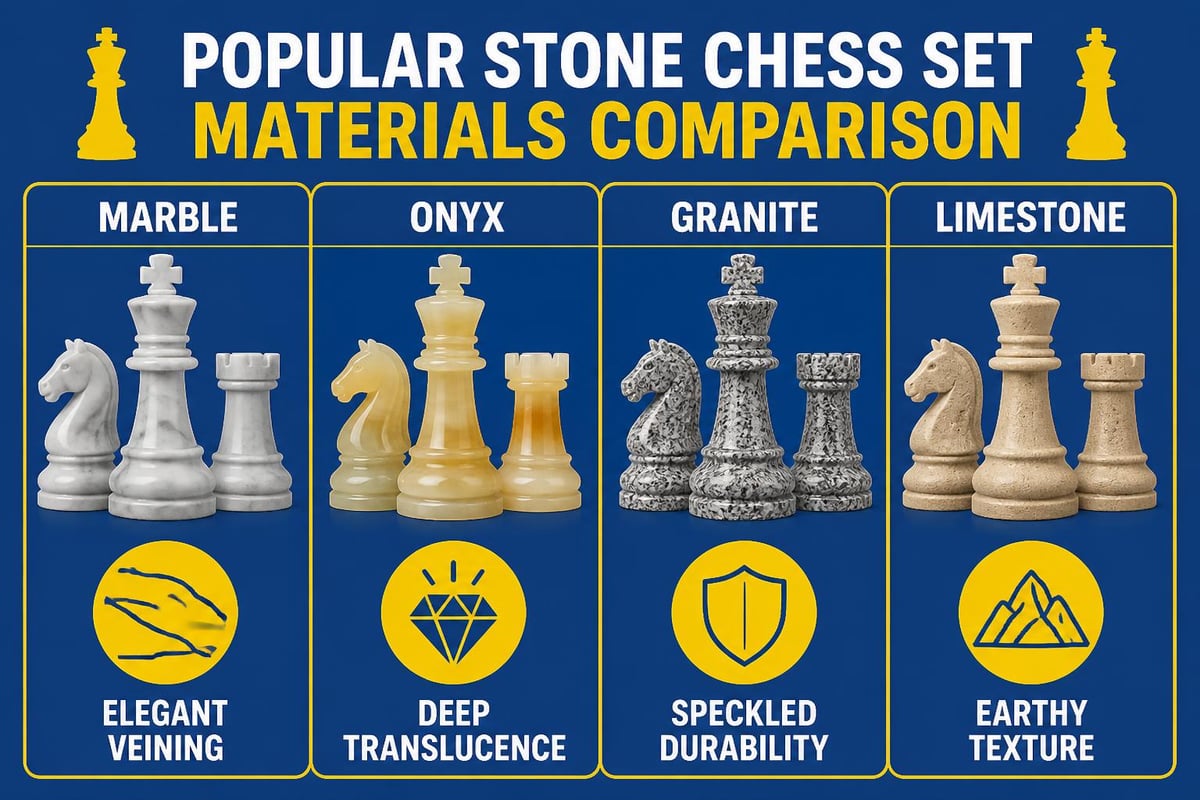
Not all stone chess sets are created equal. The material you choose dramatically affects both the appearance and performance of your set. Let's explore the most common options and what makes each one special.
Marble Chess Sets: Classic Elegance
Marble remains the most popular choice for stone chess sets, and for good reason. The natural veining creates stunning visual effects, with each piece displaying unique patterns. Marble and stone chess sets come in countless colour combinations, from classic black and white to exotic greens, reds, and browns.
The primary advantage of marble is its workability. Craftsmen can achieve fine detail in the carving, producing pieces with crisp, clean lines. However, marble is relatively soft as stones go, which means it can chip or scratch if mishandled.
| Stone Type | Hardness | Visual Appeal | Price Range | Best For |
|---|---|---|---|---|
| Marble | Medium | High (veined patterns) | ££-£££ | Display and regular play |
| Onyx | Medium-Soft | Very High (translucent) | £££-££££ | Collectors and display |
| Granite | Very High | Medium (speckled) | ££-£££ | Outdoor and heavy use |
| Limestone | Medium | Medium (earthy tones) | £-££ | Budget-conscious buyers |
Onyx: The Premium Choice
If you're looking to make a statement, onyx might be your material. Gemstone chess sets crafted from onyx offer an almost translucent quality when light passes through them. These sets often feature dramatic colour contrasts, with honey-coloured pieces opposing deep green or black ones.
The downside? Onyx is brittle and expensive. These sets are best suited for display or occasional play rather than daily tournament practice. When you're working through the complexities of what opening does Magnus Carlsen use, you probably want something more robust.
Granite and Other Durable Options
For players who want the look of stone with maximum durability, granite delivers. It's harder than marble, resistant to scratching, and can even withstand outdoor placement. The handcrafted stone chess set made from limestone and concrete demonstrates how modern craftsmen are exploring alternative materials that balance aesthetics with practicality.
Granite's primary drawback is its density. Sets can be extremely heavy, making them less portable. The natural speckled appearance also lacks the dramatic visual impact of marble's veining or onyx's translucence.

Choosing the Right Size and Style
Size matters when selecting your stone chess set. Too small, and you'll struggle to move pieces comfortably. Too large, and storage becomes problematic. Most sets designed for actual play feature boards between 12 and 16 inches square, with king heights ranging from 3 to 4 inches.
Tournament Size vs. Display Size
If you're serious about improving your game and regularly practising positions from your London System opening guide, stick with tournament-proportioned sets. The standard ratio suggests the king's base diameter should be roughly 75-80% of the square size.
Display sets, however, can be much larger. Some magnificent stone sets feature boards over 20 inches square with towering 5 or 6-inch kings. These make stunning centrepieces but prove impractical for serious study.
Traditional vs. Modern Design
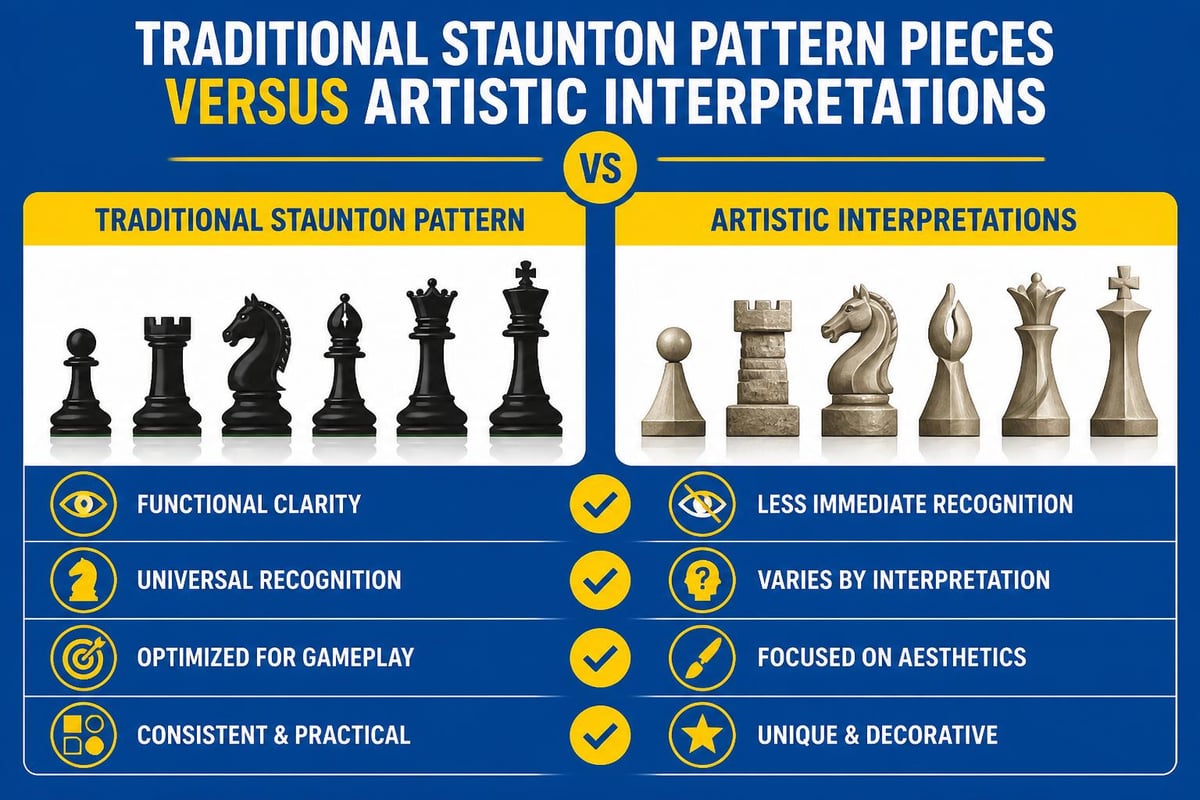
Stone chess sets generally fall into two design categories:
Traditional Staunton Pattern:
- Recognisable piece shapes used in professional tournaments
- Knight's head carved in realistic detail
- Bishop's mitre clearly defined
- Ideal for players transitioning between tournament and home play
Artistic Interpretations:
- Abstract or minimalist designs
- Cultural themes (Egyptian, Roman, Medieval)
- More sculptural than functional
- Better suited for collectors than serious players
Practical Considerations for Buyers
Before you invest in a stone chess set, let's talk practicality. These aren't impulse purchases. You need to consider several factors beyond just aesthetics and price.
Weight and Portability
A complete marble chess set can easily weigh 10-15 kilograms or more. Are you planning to move it regularly? Do you have a permanent location where it can remain set up? These questions matter. Some players maintain multiple sets: a portable wooden set for study sessions at cafés or clubs, and a beautiful stone set for home play.
Surface Protection
Stone pieces can damage wooden tables if moved carelessly. Many sets include felt-bottomed pieces, but this isn't universal. You might need to add felt pads yourself or ensure you're playing on an appropriate surface. The board itself, if also stone, requires a stable, level surface capable of supporting significant weight.
Maintenance Requirements
Here's what many sellers won't emphasise: stone chess sets require maintenance. Different stone types need specific care approaches:
- Regular dusting with a soft, dry cloth prevents buildup
- Periodic cleaning with appropriate stone cleaners (never harsh chemicals)
- Immediate attention to spills, especially on porous stones like marble
- Protective storage when not in use to prevent chips and cracks
The Ajuny handcrafted stone chess set and similar products often come with care instructions, but these can be basic. Research your specific stone type's requirements before cleaning.
Price Ranges and Value Assessment
Stone chess sets span an enormous price range. You can find basic marble sets for under £50, whilst extraordinary handcrafted pieces like the 'Triumph' collectible set command prices in the thousands.
Budget-Friendly Options (£30-£100)
Entry-level stone sets typically feature:
- Machine-carved pieces with less detail
- Common stone types (basic marble, limestone)
- Smaller board sizes (10-12 inches)
- Simple Staunton patterns
These sets work perfectly well for casual play and offer a taste of stone's appeal without breaking the bank. They're excellent starter options if you're unsure whether you'll appreciate stone's qualities long-term.
Mid-Range Quality (£100-£300)
This sweet spot offers the best value for serious players. You'll find:
- Hand-finished pieces with crisp detail
- Interesting stone varieties with attractive patterns
- Tournament-appropriate sizing
- Weighted and felted pieces
- Attractive storage options
Most intermediate players find this range provides everything they need. The quality is sufficient for daily use whilst studying resources from Chess Cheat Sheets, and the pieces feel substantial and professional.
Premium and Collector Sets (£300+)
At the high end, you're paying for exceptional craftsmanship and rare materials. These sets feature:
- Rare stone varieties (lapis lazuli, malachite, exotic onyx)
- Master artisan carving with minute detail
- Museum-quality presentation
- Matching stone storage boxes
- Documentation and certificates of authenticity
Are these necessary for improving your chess? Absolutely not. But they represent the pinnacle of chess set craftsmanship and can be genuine investment pieces.
Matching Your Set to Your Playing Style
Your ideal stone chess set should complement how you actually use it. Be honest with yourself about your playing habits.
For the Serious Student
If you're regularly working through best openings for black or analysing grandmaster games, you need a functional set. Prioritise:
- Clear piece differentiation
- Appropriate sizing for easy handling
- Durable stone that withstands frequent use
- Neutral colours that don't cause eye strain
Fancy artistic pieces might look impressive, but they can actually hinder your study sessions. When you're deep into calculating variations, you need pieces you can move instinctively without conscious thought.
For Display and Occasional Play
Perhaps you play once a week with friends or family. Your set spends most of its time as décor. In this case, aesthetics can take priority:
- Dramatic colour contrasts
- Interesting stone patterns
- Artistic or themed designs
- Larger, more impressive sizing
You're not sacrificing functionality entirely, but you can afford to favour visual impact over pure practicality.
Where Stone Sets Fit in Your Chess Journey
As you progress from beginner to intermediate player, your relationship with your chess set evolves. Initially, any set suffices for learning piece movement and basic tactics. But as you delve deeper into the game's subtleties, the physical experience of play gains importance.
Building Your Chess Environment
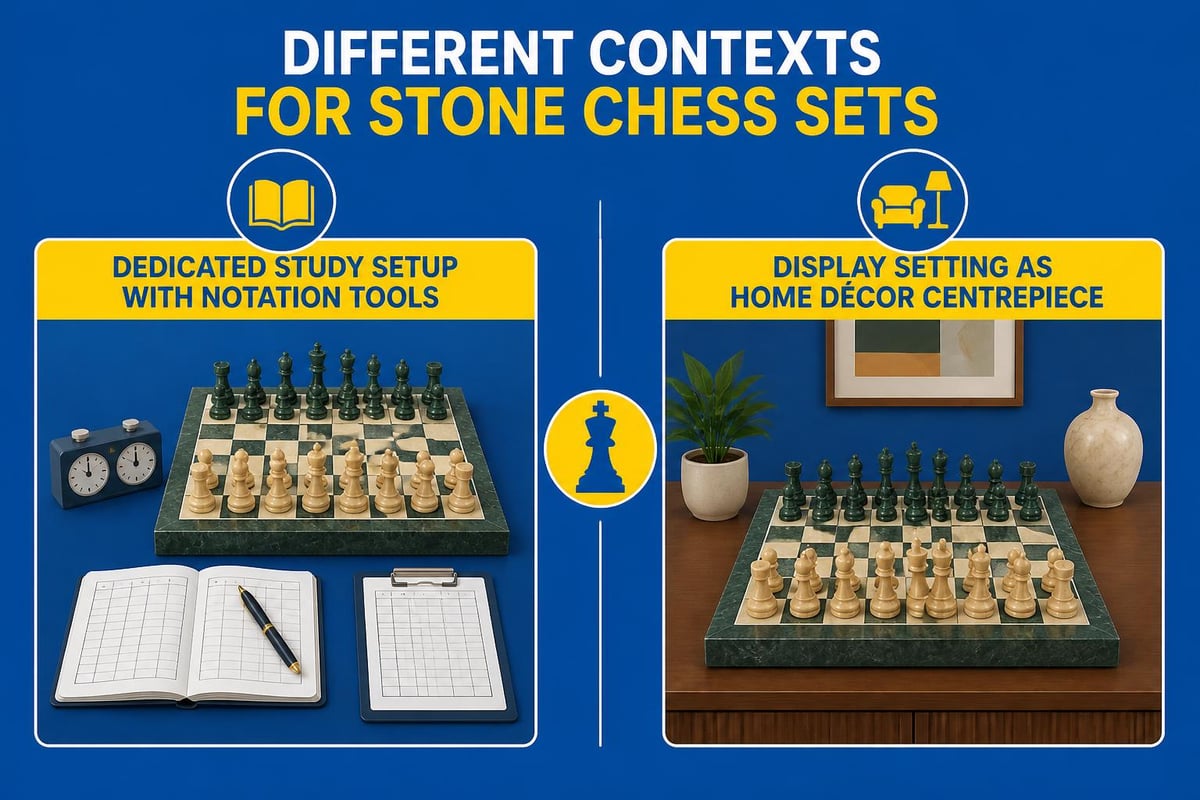
Creating a dedicated chess space at home can significantly enhance your improvement rate. A beautiful stone chess set becomes the centrepiece of this environment, making you more likely to sit down and work through positions. It's similar to how a well-organised study space improves productivity.
Many players find that investing in quality equipment demonstrates commitment to improvement. When you've spent serious money on a proper set, you're more motivated to use it, to study, to improve. It's psychology, perhaps, but it works.
Multiple Sets for Different Purposes
Serious players often maintain several sets:
| Set Type | Primary Use | Typical Material | Location |
|---|---|---|---|
| Study Set | Daily practice and analysis | Wood or basic stone | Study area |
| Display Set | Aesthetic appeal and casual games | Premium stone | Living room |
| Portable Set | Club play and travel | Folding wood/plastic | Bag |
| Teaching Set | Demonstrating concepts to others | Demonstration board | Variable |
Your stone chess set might serve as your display piece whilst you use more practical options for intensive study of the pros and cons of the Queen's Gambit or other openings.
Common Mistakes When Buying Stone Sets
Let's address the errors that buyers frequently make, so you can avoid them.
Prioritising Appearance Over Functionality
It's easy to fall in love with an exotic-looking set online, only to discover it's impractical for actual play. Those translucent onyx pieces might photograph beautifully, but can you easily distinguish the bishop from the queen during a complex middlegame?
Always consider how you'll actually use the set. If you're planning serious study sessions, function must come first.
Ignoring Piece Weight Distribution
Some cheaper sets feature pieces with wildly inconsistent weights. The pawns might feel solid, but the knights could be hollow or thin. This inconsistency affects the playing experience. When possible, verify that pieces are solid throughout or at least uniformly constructed.
Overlooking Storage Solutions
Stone pieces shouldn't be tossed in a drawer or box where they'll chip and scratch against each other. Proper storage is essential. Some sets include fitted boxes with individual compartments. If yours doesn't, budget for appropriate storage separately.
Buying Too Small
Perhaps the most common regret is purchasing a set that's too small. Those 10-inch boards with tiny pieces might seem adequate initially, but they quickly become frustrating. The standard tournament size exists for good reason. It's comfortable for adult hands and allows for smooth, accurate piece placement.
Stone Sets for Teaching and Learning
If you're teaching chess to others or learning alongside friends and family, stone sets offer unique advantages and challenges.
Visual Learning Benefits
The substantial, three-dimensional nature of stone pieces helps beginners understand spatial relationships on the board. The weight and presence of each piece reinforces its importance. Capturing a heavy stone queen feels more significant than knocking over a lightweight plastic piece.
This tactile feedback can enhance learning, particularly for younger players or those who learn best through physical interaction.
Potential Drawbacks for Beginners
However, stone sets present some challenges for absolute beginners:
- Heavier pieces can be awkward for small hands
- The cost makes accidental damage more stressful
- Fragile materials discourage the exploratory handling that aids learning
- The formality might intimidate nervous new players
For teaching absolute fundamentals to children or casual learners, a less precious set might serve better initially. Save the beautiful stone set for once basic competence is established.
The Intersection of Art and Strategy
What makes a stone chess set special isn't just the material. It's the intersection of aesthetic beauty with strategic depth. Every game you play on such a set becomes a blend of mental challenge and sensory experience.
This fusion matters more than you might think. Chess can be mentally exhausting. Having a pleasant physical environment makes those long study sessions more enjoyable. When you're working through complex positions from advanced chess books, the beauty of your set provides a small but meaningful source of pleasure that helps sustain your effort.
Conversation and Community
A distinctive stone chess set invariably attracts attention and conversation. Guests want to touch the pieces, ask about the materials, perhaps play a game. This social dimension can expand your chess network and create opportunities for casual games that supplement your formal study.
These informal games, played in a relaxed atmosphere over your beautiful set, can be surprisingly instructive. They let you experiment with ideas and test theoretical knowledge in a low-pressure environment.
Making Your Final Decision
You've absorbed a lot of information about stone chess sets. How do you actually choose?
Your Decision Framework
Start by answering these questions honestly:
- How often will I actually play on this set? Daily, weekly, monthly, or primarily display?
- What's my realistic budget? Include storage and maintenance costs
- Where will it live? Do I have a stable, appropriate location?
- What's my skill level and improvement trajectory? Am I committed to serious study?
- What aesthetic preferences do I have? Traditional or modern, subtle or dramatic?
Your answers will guide you toward the appropriate stone type, size, and price range.
Testing Before Buying
If possible, handle sets in person before purchasing. Many speciality chess shops and some larger retailers stock stone sets. Pick up the pieces. Move them around. See how they feel. A set that looks perfect online might feel wrong in your hands.
Pay attention to:
- Weight and balance of individual pieces
- Ease of distinguishing similar pieces (bishop vs. queen)
- Surface finish (too slippery? Too rough?)
- Overall aesthetic appeal in person vs. photographs
Online Purchase Considerations
When buying online, which you'll likely do for the best selection and prices, scrutinise several factors:
- Multiple photographs from different angles and lighting conditions
- Detailed specifications including exact dimensions and weights
- Return policies in case the set doesn't meet expectations
- Customer reviews mentioning quality and accuracy of descriptions
- Seller reputation and experience with stone sets specifically
Don't hesitate to contact sellers with questions. Reputable vendors should happily provide additional information or photographs.
A stone chess set represents a meaningful investment in both your playing environment and your commitment to the game. Whether you choose elegant marble, dramatic onyx, or durable granite, the right set will enhance your chess experience for years to come. As you continue developing your skills and deepening your understanding of the game, having quality resources makes all the difference. That's where Chess Cheat Sheets comes in, offering comprehensive guides and resources that help players master chess openings and improve efficiently. Combined with a beautiful set that makes every study session more enjoyable, you'll have everything you need to take your chess to the next level.


