

Have you ever imagined playing chess against an opponent who isn't physically there, watching pieces glide across the board as if moved by invisible hands? That's exactly what a phantom chess board offers. This innovative technology transforms how we interact with the classic game, merging traditional craftsmanship with cutting-edge robotics. Whether you're practising against powerful AI engines, analysing your games in real-time, or playing remote opponents with a tangible experience, the phantom chess board represents a fascinating leap forward in chess technology that's capturing the imagination of players worldwide.
What Exactly Is a Phantom Chess Board?
At its core, a phantom chess board is a robotic chessboard that moves physical pieces automatically without any visible mechanism touching them. Unlike electronic boards that simply record moves or display them on a screen, these boards actually manipulate real wooden pieces across a genuine playing surface.
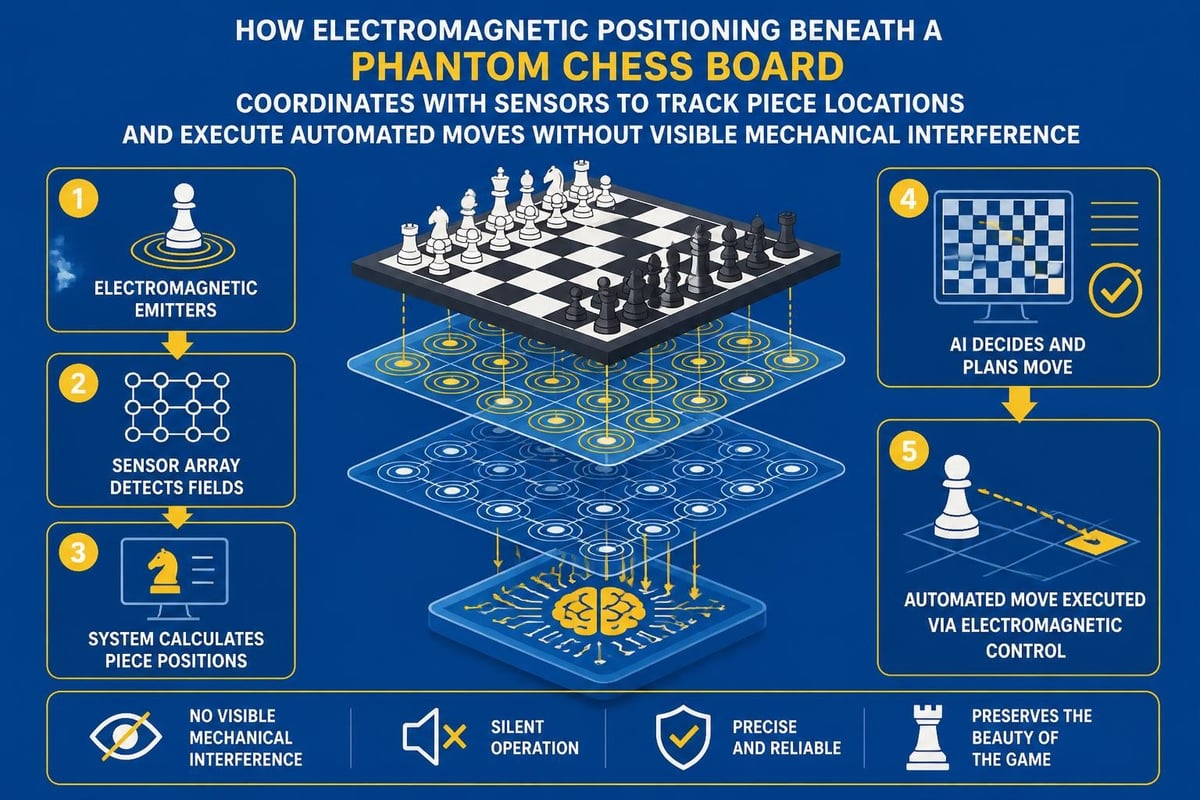
The technology relies on electromagnetic systems hidden beneath the board. Each piece contains a magnet, and a sophisticated robotic arm or gantry system underneath the board moves these magnets, creating the illusion that pieces are moving on their own. When you're playing against a computer opponent or a remote player, their moves appear automatically on your board, just as your moves appear on theirs.
The world's first robotic chessboard achieved this remarkable feat through years of engineering refinement. What makes it truly special isn't just the robotics, though. It's the seamless integration of technology into a beautifully crafted wooden board that maintains the aesthetic appeal chess players cherish.
The Technology Behind the Magic
How does a phantom chess board actually work? The system combines several key components:
- Electromagnetic positioning system that precisely controls piece movement
- Computer vision or sensors to detect where pieces currently sit on the board
- Integrated chess engine or connectivity to external engines and platforms
- Mechanical actuation system hidden beneath the playing surface
- Wireless connectivity for online play and software updates
Each move involves complex calculations. The system must determine the optimal path for a piece to travel, avoid colliding with other pieces, handle captures by removing pieces from the board, and execute castling or en passant moves that involve multiple pieces simultaneously.
Training Benefits for Improving Players
Why would you want a phantom chess board when you could simply play on a screen? The answer lies in how we learn and retain information. Physical interaction with chess pieces creates stronger neural pathways than digital play alone.
When you're working through chess openings for white, having a phantom chess board allows you to practise variations against an AI opponent that responds instantly on a real board. You get the tactile experience of moving pieces whilst receiving immediate, challenging responses. This combines the best of both worlds: the learning benefits of physical play with the analytical power of chess engines.
Practical Applications for Skill Development
The training possibilities are genuinely exciting. Imagine setting up a specific position from your last tournament game, then watching the board replay the continuation whilst you analyse what went wrong. Or picture practising endgame techniques where the board automatically sets up different scenarios for you to solve.
Here's how different skill levels can benefit:
| Skill Level | Primary Use | Key Advantage |
|---|---|---|
| Beginner | Learning piece movement and basic tactics | Visual reinforcement of legal moves |
| Intermediate | Opening preparation and pattern recognition | Hands-free practice against varying strengths |
| Advanced | Deep analysis and engine training | Physical interaction with engine lines |
For players studying resources like those found on Chess Cheat Sheets, a phantom chess board transforms static information into dynamic practice. You're not just reading about the Sicilian Defense; you're experiencing it against an opponent that never tires of playing it differently.
Comparing Traditional and Robotic Chess Experiences
Does technology enhance or diminish the chess experience? This question deserves serious consideration. Traditional chess boards offer simplicity, reliability, and that timeless connection to centuries of chess history. You'll never worry about battery life or software updates with a wooden board from your grandfather's collection.
Yet the phantom chess board doesn't replace that experience. Rather, it extends it into new territories. When you're studying what opening does Magnus Carlsen use, wouldn't it be valuable to have a board that can play through his games move by move whilst you watch? The pieces moving automatically let you focus entirely on understanding the positions rather than setting them up manually.
The Craftsmanship Element
One aspect that sets premium phantom chess boards apart is their commitment to traditional materials. The solid walnut and maple construction proves that cutting-edge technology needn't sacrifice aesthetic beauty. These aren't plastic gaming peripherals; they're handcrafted furniture pieces that happen to contain remarkable engineering.
The attention to detail extends to every aspect:
- Hand-selected wood grains for visual appeal
- Precision-weighted pieces for perfect balance
- Seamless integration of technology within classic design
- Tournament-standard square sizes and proportions
When you invest in quality chess equipment, you're making a statement about how seriously you take the game. A phantom chess board represents the pinnacle of that investment for players who want both tradition and innovation.
Remote Play and Social Connectivity
Playing chess online has become the norm, but something feels missing when you're staring at a screen instead of a proper board. The phantom chess board bridges this gap beautifully. You're playing against someone across the world, yet you're moving real pieces on a real board.
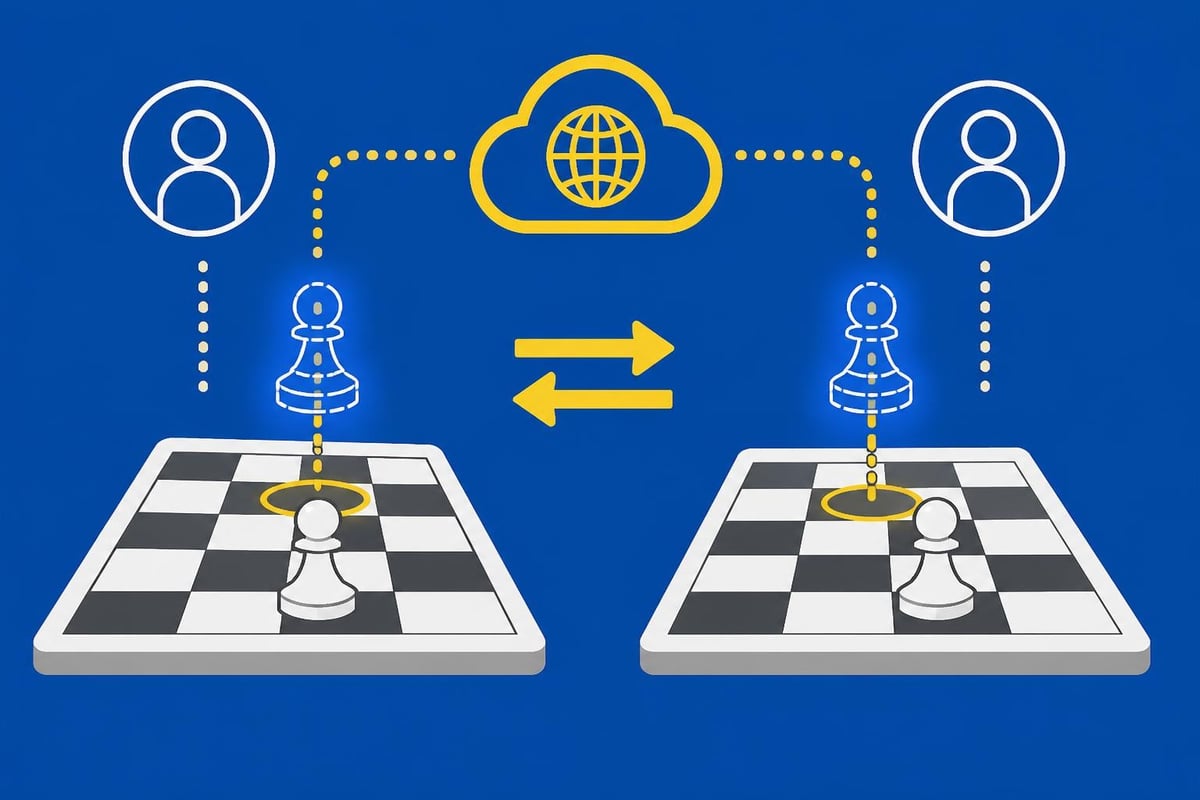
This technology particularly shines for players who split their time between digital resources and physical practice. Perhaps you're studying free online chess courses during your lunch break, then coming home to practise those concepts on your phantom chess board against opponents from those same platforms.
The Social Dimension
Chess has always been a social game, and technology shouldn't isolate us. When your moves automatically appear on your opponent's board hundreds of miles away, whilst theirs appear on yours, you're creating a shared physical experience despite the distance.
Consider these connectivity features:
- Platform integration with major chess websites and apps
- Multiple player support for simultaneous exhibitions
- Spectator mode allowing others to watch games unfold
- Game recording automatically saved to cloud services
- Analysis integration with popular chess engines
The ability to play physical chess against opponents worldwide transforms how we think about practice partners. You're no longer limited to your local chess club or family members who'll tolerate another game.
AI Integration and Engine Analysis
Here's where things get really interesting for serious students of the game. Modern chess engines like Stockfish play at superhuman levels, and having one control pieces on a physical board creates unique training opportunities. You can explore what opening does Stockfish use not by reading analysis, but by actually playing against these variations on your board.
The phantom chess board becomes your tireless training partner. Set it to play like a 1200-rated player whilst you're developing your fundamentals, then gradually increase the difficulty as your skills improve. The physical nature of the interaction makes the learning stick better than screen-based alternatives.
Analysing Your Games in Real Time
Imagine finishing an online tournament game, then watching your phantom chess board replay the entire match whilst providing engine commentary. The pieces move themselves through the game as you review critical moments, alternative lines appearing physically on the board rather than just in notation.
This feature transforms how you conduct post-game analysis:
- Visual learning through watching pieces move through variations
- Hands-on exploration by manually trying different continuations
- Comparative analysis seeing your moves versus engine recommendations
- Pattern recognition observing recurring tactical motifs physically
For intermediate players working to understand complex positions from guides like the Sicilian Defense, having variations play out automatically on a real board accelerates comprehension dramatically.

Investment Considerations and Practicality
Let's address the elephant in the room: phantom chess boards aren't cheap. Premium models represent a significant investment, ranging from several hundred to several thousand pounds. Is it worth it? That depends entirely on how you value your chess development and what role the game plays in your life.
| Feature | Value Proposition | Best For |
|---|---|---|
| Automated piece movement | Hands-free practice and analysis | Serious students and coaches |
| Premium materials | Aesthetic appeal and durability | Chess enthusiasts and collectors |
| Engine integration | Advanced training capabilities | Competitive players |
| Remote play | Physical experience with online opponents | Players with limited local opponents |
| Educational features | Structured learning programmes | Beginners and intermediates |
Think about your current chess expenditure. Perhaps you're investing in chess books for advanced players or paying for coaching sessions. A phantom chess board complements these investments by providing a superior practice environment that you'll use daily.
Long-Term Value
Unlike software subscriptions that require ongoing payments, a quality phantom chess board is a one-time purchase that serves you for years. The technology improves through firmware updates, and the physical construction withstands regular use far better than electronic screens prone to obsolescence.
Consider also the versatility. This isn't just a training tool; it's entertainment for family and friends, a conversation piece for your home, and potentially an heirloom that introduces future generations to chess. The comprehensive engineering behind these boards ensures they're built to last.
Setup and User Experience
One concern many players have about technology-heavy chess equipment is complexity. Will you need a computer science degree to use it? Fortunately, modern phantom chess boards prioritise user-friendly design. Initial setup typically involves connecting to your Wi-Fi network and pairing with an app, processes that take minutes rather than hours.
The day-to-day experience is remarkably simple. Most boards feature:
- Touch-sensitive controls for mode selection
- LED indicators showing system status
- Automatic calibration ensuring accurate piece detection
- Voice commands for hands-free operation
- Intuitive mobile apps for advanced configuration
When you're ready to play, simply turn on the board, select your preferred mode (local play, online opponent, engine practice, etc.), and start moving pieces. The system handles everything else automatically.
Maintenance and Care
Maintaining a phantom chess board requires minimal effort beyond what you'd give any quality wooden chessboard. Regular dusting, occasional conditioning of the wood surface, and keeping the charging port clean cover most needs. The internal mechanisms are sealed and don't require user maintenance.
Software updates download automatically when connected to the internet, adding new features and improving performance without any action required on your part. This ensures your board remains current with evolving chess platforms and maintains compatibility with new devices.
Educational Applications Beyond Solo Practice
Chess coaches are discovering that phantom chess boards revolutionise how they teach. Imagine demonstrating a concept to students whilst the board automatically shows variations, or running a blindfold training session where students call out moves and watch them appear on the board without touching a piece.
The educational potential extends to:
- Simultaneous exhibitions where a coach plays multiple students on connected boards
- Lecture demonstrations with automated piece movement for clarity
- Puzzle solving where positions appear automatically for students to solve
- Historical game replay bringing classic matches to life physically
- Tournament preparation practising specific opponents' repertoires
For players working through structured programmes from resources like Chess Cheat Sheets, the ability to have positions automatically set up and variations demonstrated physically accelerates the learning curve substantially.
Schools and chess clubs can leverage these boards to create engaging group lessons that combine traditional instruction with modern technology. Students who grew up with tablets and smartphones often engage more readily when technology enhances rather than replaces physical chess.
The Evolution of Chess Technology
The phantom chess board didn't appear overnight. It represents decades of development in robotic chess systems, building on earlier attempts that, whilst innovative, lacked the refinement and aesthetic appeal of modern versions. Early robotic chessboards paved the way, each iteration solving new challenges and pushing the boundaries of what's possible.
What's particularly exciting is where this technology might lead. Current research into augmented reality chess analysis and advanced neural networks for chess suggests future phantom chess boards might offer even more sophisticated training features. Imagine a board that analyses your playing style in real-time, identifies weaknesses, and automatically generates targeted training positions.
Integration with Broader Chess Ecosystems
Modern phantom chess boards don't exist in isolation. They're part of a broader ecosystem of chess improvement tools. You might watch chess videos for beginners on your tablet, then immediately practise those concepts on your board against an AI tuned to that skill level.
This integration creates a seamless learning experience where theoretical knowledge translates directly into practical skill. The gap between studying and doing narrows considerably when your practice board can automatically demonstrate anything you've been reading about or watching.
Making the Decision
Should you invest in a phantom chess board? Ask yourself these questions: How much time do you dedicate to chess improvement weekly? Do you struggle to find practice partners at your level? Would you benefit from unlimited engine practice on a physical board? Does the aesthetic appeal of a premium chess set matter to you?
If you're answering yes to most of these, and you have the budget, a phantom chess board could transform your chess experience. It's not merely a luxury; for dedicated players, it's a comprehensive training system that pays dividends in accelerated improvement and enhanced enjoyment.
The detailed reviews from actual users consistently highlight how these boards exceed expectations, particularly in build quality and the tangible improvement in their chess understanding through regular use.
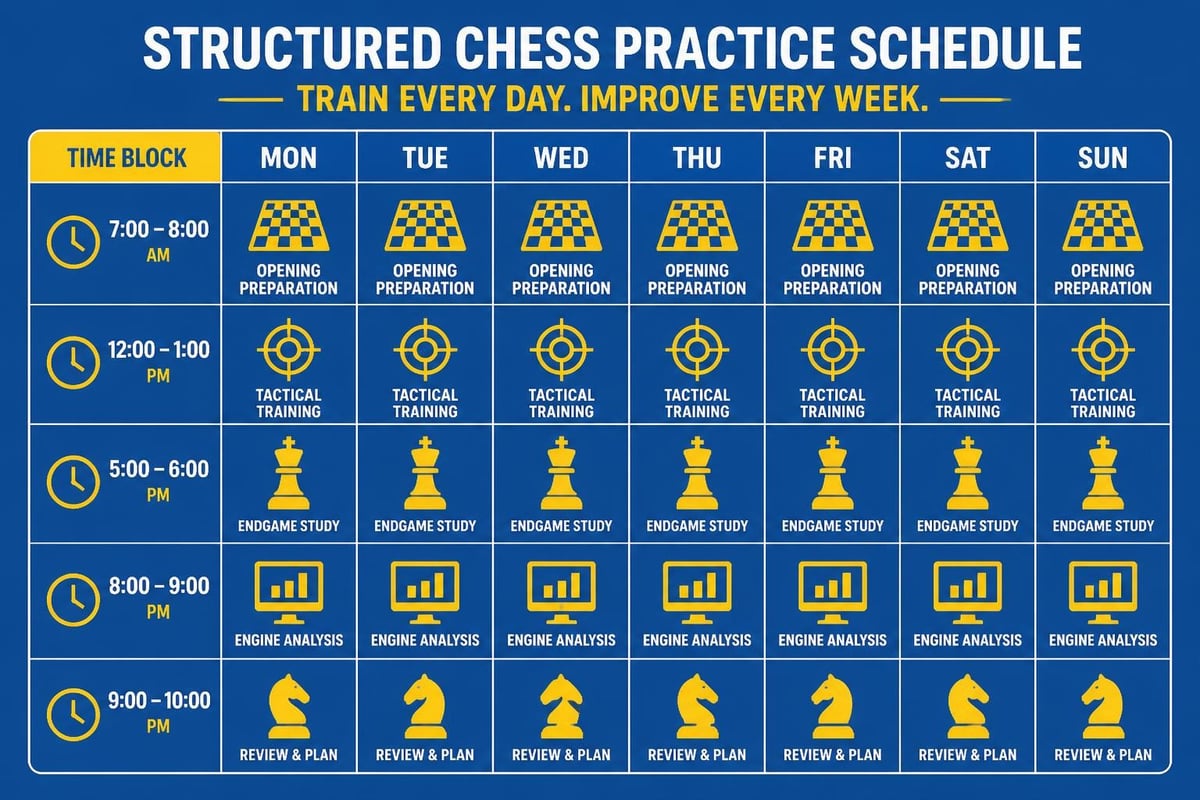
For players who treat chess as more than casual entertainment, who are committed to systematic improvement through studying openings, tactics, and endgames, the phantom chess board represents the logical next step in creating an optimal learning environment at home.
The phantom chess board stands at the intersection of tradition and innovation, offering chess players a unique tool for improvement that respects the game's heritage whilst embracing modern technology. Whether you're working through opening theory, practising against world-class engines, or enjoying games with distant friends, this technology enhances every aspect of the chess experience. If you're serious about taking your chess to the next level, complement your phantom chess board training with comprehensive resources from Chess Cheat Sheets, where you'll find opening guides, tactical puzzles, and endgame resources designed to accelerate your improvement efficiently.


