

Have you ever finished a chess game and felt that rush of satisfaction knowing you played brilliantly? Those moments when everything clicks, when your opening preparation pays off, when you spot a tactical sequence your opponent misses completely. Those are the games we remember, analyse, and learn from most effectively. Looking back at my best games of chess has taught me more about improvement than any amount of passive study could. Today, I want to share some of those memorable battles with you, breaking down what made them special and how reviewing your own best performances can transform your understanding of the game. Whether you're just starting out or working to reach the next level, there's something powerful about understanding why certain games stand out in your chess journey.
What Makes a Game One of Your Best
Not every victory belongs in your personal hall of fame. A win where your opponent blunders their queen on move twelve? That's nice for your rating, but it doesn't teach you much. The games that truly matter are those where you execute a strategic plan, overcome resistance, or demonstrate genuine understanding of chess principles.
When I think about my best games of chess, several criteria come to mind. First, there's the quality of opposition. Beating a strong player always means more than defeating someone significantly below your level. Second, the complexity of the position matters tremendously. Did you navigate unclear waters successfully, or was the path straightforward?
The Elements That Define Excellence
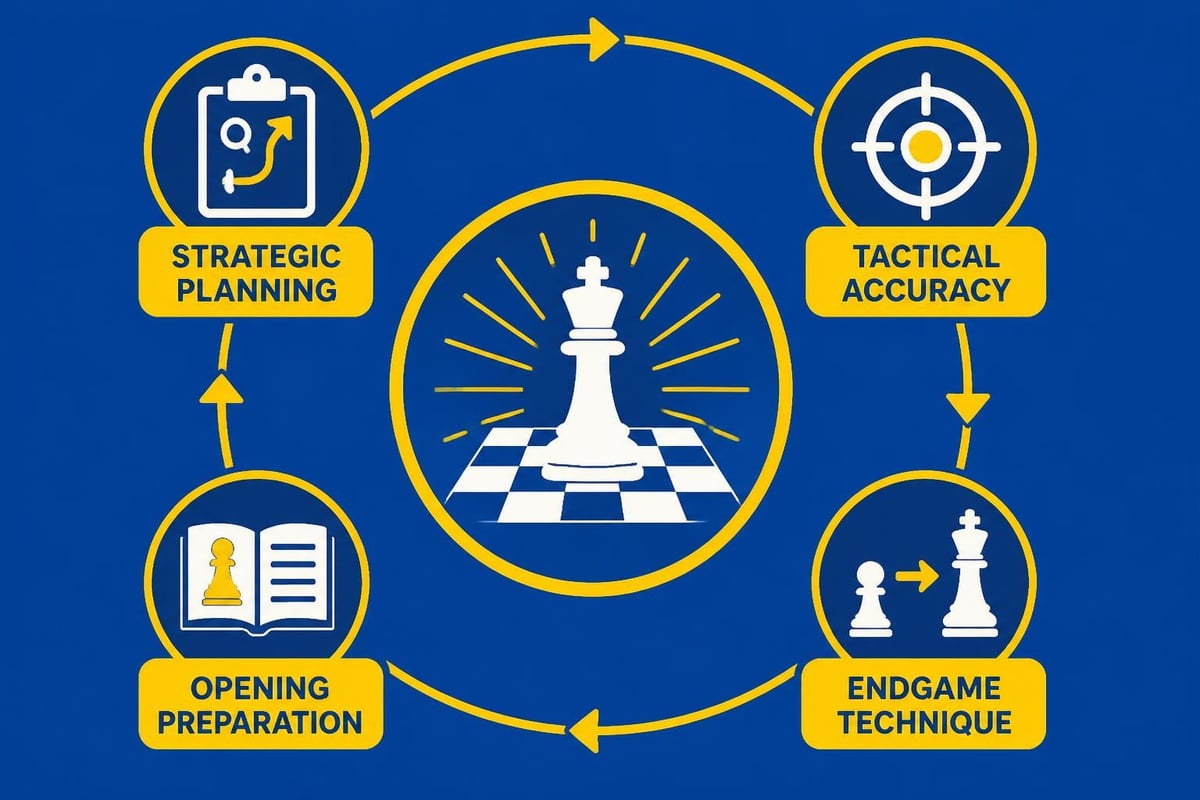
Here's what I look for when evaluating whether a game deserves recognition:
- Strategic coherence: Did you maintain a clear plan throughout the game?
- Tactical precision: Were your calculations accurate during critical moments?
- Opening preparation: Did your knowledge give you an advantage out of the opening?
- Psychological resilience: How did you handle pressure or difficult positions?
- Endgame technique: Did you convert your advantage cleanly?
The beauty of chess is that you don't need to tick every box. Sometimes a game stands out because of one brilliant tactical blow. Other times, it's the patient accumulation of small advantages that makes it memorable. Much like the famous games analysed by experts, your best performances often teach you something new about your own playing style.
My Most Memorable Attacking Victory
One of my best games of chess came against a club player rated about 150 points above me. I had white and chose the Ruy Lopez, an opening I'd been studying intensively that month. The preparation paid immediate dividends when my opponent chose a sideline I'd specifically examined.
By move fifteen, I'd achieved everything an attacking player dreams of: my pieces were coordinated, my king was safely castled, and Black's king remained stubbornly in the centre. The position demanded concrete calculation rather than general principles. I sacrificed a knight on f7, opening lines towards the exposed king.
The Critical Moment
What made this game special wasn't just the sacrifice itself but what followed. My opponent had defensive resources I needed to overcome through precise move order. The sequence required calculating five moves deep, considering multiple defensive tries at each junction.
| Move Stage | White's Plan | Black's Resources | Critical Decision |
|---|---|---|---|
| Moves 16-18 | Open the f-file | Castle queenside | Prevent king escape |
| Moves 19-21 | Bring rook to attack | Defensive knight | Remove defender |
| Moves 22-24 | Deliver checkmate | Counter-sacrifice | Calculate precisely |
The game concluded with a forced checkmate sequence. What I learned from this encounter extended beyond the specific tactics. It reinforced how critical opening knowledge can be in setting up favourable middlegame positions. If you're looking to strengthen your opening repertoire, exploring resources like chess opening guides can provide that foundation.
The Power of Strategic Squeeze
Not all my best games of chess feature fireworks and sacrifices. Sometimes, the most satisfying victories come from slowly suffocating your opponent's position until resistance becomes impossible. I achieved this against a persistent defender who rarely makes tactical errors.
Playing Black, I employed the Sicilian Defense, aiming for the complex positions it typically generates. My opponent chose a safe system, avoiding the sharpest theoretical lines. This suited me perfectly because I wanted to demonstrate positional understanding rather than relying on memorised variations.
The game evolved into a structure where I held the bishop pair and space advantage. Every ten moves, my position improved slightly. A better-placed knight here, a weak pawn created there, gradually expanding space on the queenside whilst keeping the centre under control.
Technique Over Tactics
What impressed me most about this performance was patience. Three times my opponent offered pawn sacrifices trying to create complications. Three times I declined, maintaining the strategic pressure instead. The statistical analysis of chess games shows how space control correlates with winning chances, and this game exemplified that principle perfectly.
Around move thirty-five, my opponent's position had become so constricted that tactical opportunities emerged naturally. I won a clean pawn, simplified into a winning endgame, and demonstrated proper technique in converting the advantage. The entire process taught me that patience combined with accurate positional assessment often proves more reliable than hunting for immediate tactics.

Learning From a Defensive Masterpiece
Sometimes your best game isn't about dominating your opponent but surviving their onslaught. One of my proudest performances came when facing a dangerous attacking player known for aggressive opening choices.
My opponent launched a speculative pawn storm against my kingside, sacrificing material for attacking chances. For twenty moves, I faced constant threats, each requiring precise defensive resources. One inaccuracy would have resulted in disaster.
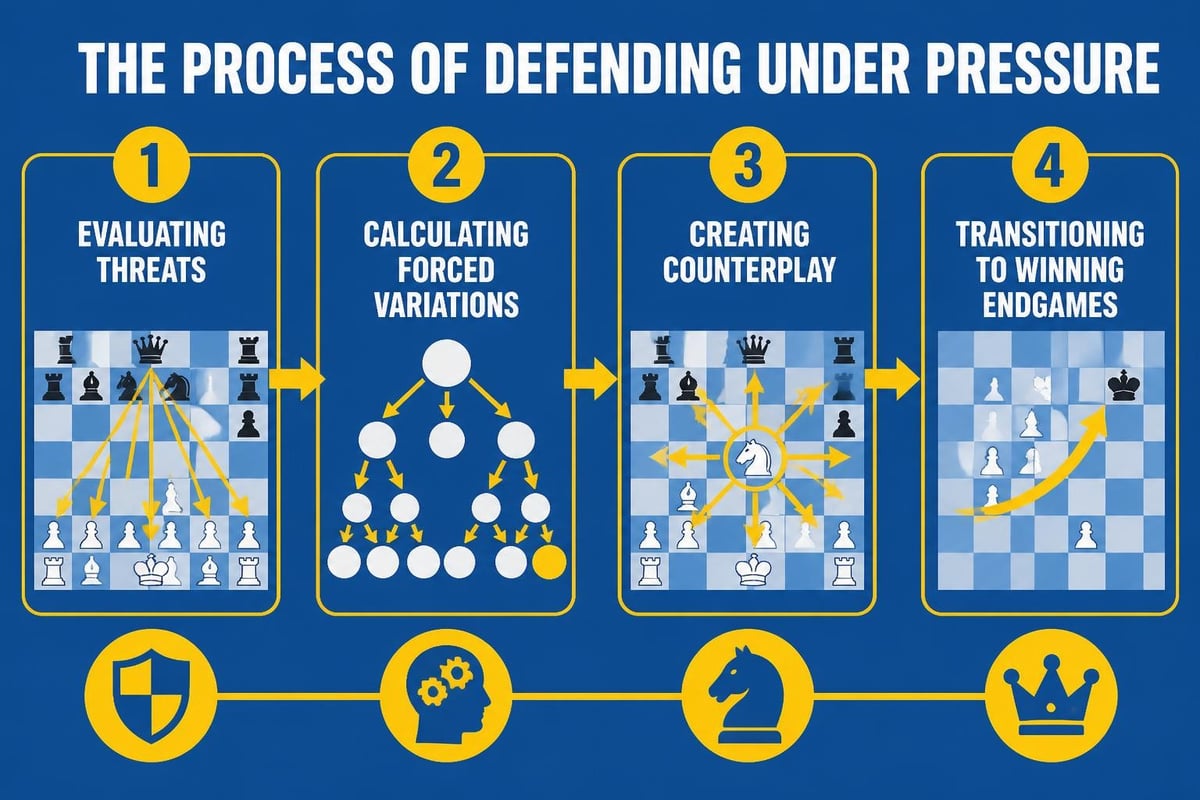
The keys to surviving this assault were:
- Maintaining composure under pressure - Not panicking when threats appeared everywhere
- Calculating forcing variations - Checking every sacrifice before declining it
- Creating counter-chances - Finding active piece play on the opposite flank
- Trusting evaluation - Believing in my extra material despite the attacking pieces
- Transitioning to endgame - Exchanging pieces to reduce attacking potential
By move forty, the storm had passed. I'd successfully defended everything, and my extra piece decided the game in the endgame. This victory taught me that defensive skills matter just as much as attacking prowess. Understanding how to defend difficult positions separates improving players from those who plateau.
The Endgame That Changed My Understanding
Among my best games of chess, one endgame stands out for completely transforming how I approach simplified positions. The game had been relatively balanced throughout, with both sides making reasonable moves in a symmetrical pawn structure.
We traded pieces systematically until reaching a rook and pawn endgame. Most club players would assess this as drawn due to the material balance and symmetry. However, subtle pawn placement differences created winning chances for me.
The Nuances of Rook Endgames
Rook endgames have a reputation for being drawn, but they're actually incredibly nuanced. Small differences in king activity, rook placement, and pawn structure can mean everything. In this position, my rook occupied a more active square, and my king reached the centre one tempo faster than my opponent's.
| Factor | My Advantage | Opponent's Weakness | Result |
|---|---|---|---|
| King activity | Centralised first | Delayed entry | Created passed pawn |
| Rook placement | Behind passed pawn | Passive defence | Won opponent's pawn |
| Pawn structure | Compact formation | Isolated weakness | Simplified to win |
Those small advantages compounded over twenty endgame moves. I created a passed pawn, my opponent's king became tied to stopping it, and I captured pawns on the opposite flank. The victory demonstrated that endgame understanding isn't just about memorising theoretical positions but recognising subtle advantages and converting them methodically.
This game motivated me to study endgames more seriously. Resources like puzzles focused on specific positions help develop the pattern recognition needed for these critical phase transitions.
What Reviewing Your Best Games Teaches You
Analysing my best games of chess has revealed patterns about my playing style I never noticed during the games themselves. For instance, I perform strongest when I achieve active piece coordination early in the middlegame. Conversely, I struggle more in closed positions requiring long-term manoeuvring.
These insights shape my study priorities. Instead of randomly studying chess concepts, I focus on areas where my best performances demonstrate natural strengths and work to shore up weaknesses revealed by games that didn't go as well.
When reviewing games, I recommend this approach:
- Analyse without an engine first - Understand your thought process during the game
- Identify candidate moves - What alternatives did you consider at critical moments?
- Check with computer analysis - Discover tactical possibilities you missed
- Extract key positions - Save instructive moments for future review
- Note recurring themes - Pattern recognition improves through repetition
The interactive replays of classic games demonstrate how master players extract lessons from their best performances. You can apply the same analytical approach to your own games, regardless of your current level.
Opening Preparation That Pays Dividends
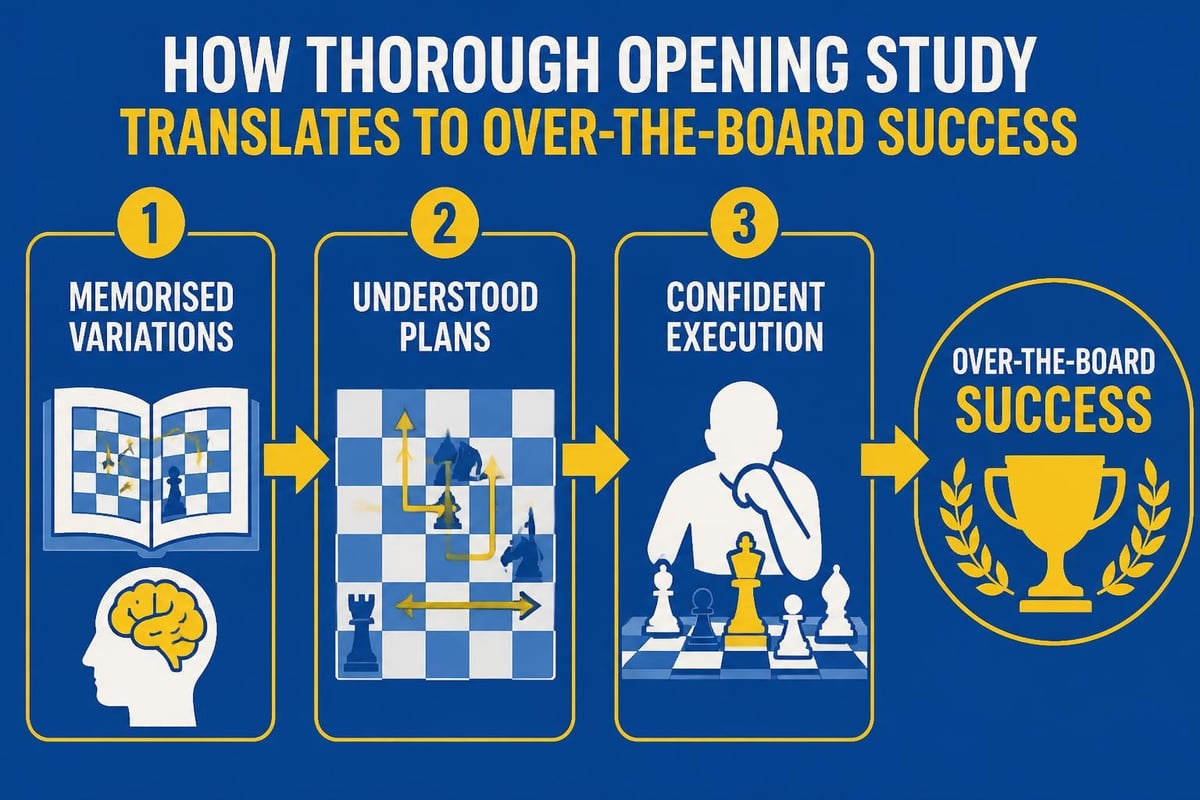
Several of my best games of chess stemmed directly from effective opening preparation. When you study an opening deeply enough to understand the typical plans, pawn structures, and piece placements, you enter the middlegame with confidence and purpose.
I remember one game where I had studied a specific variation in the Italian Game just days before facing it over the board. My preparation extended to move twenty, and I'd examined the exact pawn sacrifice my opponent tried. Because I knew the refutation, I gained a decisive advantage within the first hour of play.
Building Your Opening Repertoire
Rather than learning dozens of openings superficially, focus on building depth in a core repertoire. For White, perhaps you specialise in one or two first moves. For Black, select reliable responses to both 1.e4 and 1.d4. Within those frameworks, develop understanding rather than just memorising moves.
Here's how I structure my opening study:
- Choose openings matching my playing style
- Study master games in those systems
- Learn typical middlegame structures
- Practice through puzzles and training positions
- Review and update preparation regularly
When you're exploring which openings suit you best, examining resources on the most common chess openings can provide direction. The goal isn't to know everything but to know your chosen systems deeply.
Tactical Alertness in Complex Positions
One characteristic uniting my best games of chess is tactical awareness during critical moments. Chess rewards those who spot opportunities when they arise, even in strategically oriented positions.
I played a memorable game where the position appeared quiet and manoeuvring for thirty moves. Both sides had completed development, no immediate threats existed, and positional jockeying continued. Then, in one move, everything changed.
My opponent shifted a rook to what seemed like a reasonable square, preparing to contest an open file. However, this created a tactical vulnerability I'd trained myself to recognise. A knight fork pattern appeared, winning the exchange. The entire game swung from balanced to winning in one tactical blow.
Training Pattern Recognition
Tactical vision isn't innate; it develops through deliberate practice. The patterns you've seen in puzzles, previous games, and training positions become the patterns you spot during actual play. This is why consistent tactical training matters more than sporadic intense study sessions.
Working through thematic puzzle collections helps tremendously. When you solve hundreds of puzzles featuring similar tactical motifs, those patterns become second nature during your games. Whether you're working on opening-specific puzzles or general tactical exercises, consistency builds recognition speed.
The Psychology Behind Memorable Games
What separates my best games of chess from ordinary victories often comes down to psychological factors. These games occurred when I felt confident, well-prepared, and mentally sharp. Conversely, some games I should have won slipped away because of psychological factors like time pressure, overconfidence, or emotional reactions to surprises.
In one particularly memorable game, I fell into an opening trap, losing a pawn by move eight. Many players would have become discouraged, playing the rest of the game half-heartedly. Instead, I viewed it as a challenge. I found active piece play compensating for the material deficit, created complications my opponent struggled to navigate, and eventually won a brilliant game.
The lesson? Your mental approach matters as much as your chess knowledge. Resilience, confidence tempered with realism, and emotional control all contribute to peak performance. The games where everything clicks often coincide with optimal psychological states.
Sharing and Discussing Your Games
One aspect that's enhanced my appreciation of my best games of chess is sharing them with stronger players and receiving feedback. What I considered brilliant might contain improvements I hadn't spotted. Conversely, moves I thought were forced often had interesting alternatives worth considering.
Chess clubs, online communities, and coaching sessions all provide opportunities for game analysis with others. When someone explains why a particular move was strong or suggests an improvement, the lesson sticks far better than reading about abstract concepts in isolation.
Looking at annotated collections of famous games shows how much depth exists in even seemingly simple positions. The annotations reveal plans, ideas, and nuances that might escape notice during casual review. Applying this same analytical rigour to your own games accelerates improvement significantly.
How Best Games Reflect Your Chess Journey
Reviewing my best games of chess chronologically reveals clear improvement over the years. Early victories often featured tactical oversights by opponents or simple strategic plans. More recent strong performances demonstrate deeper understanding, better calculation, and more sophisticated positional play.
This progression isn't always linear. Sometimes I play brilliantly for months, then struggle during a slump. However, the overall trajectory trends upward when measured by the quality of my best performances. Each new game that enters my personal highlight reel represents a new level reached or maintained.
Your best games create benchmarks for measuring progress. When you play a game better than anything you've achieved before, that's evidence of improvement regardless of rating changes or tournament results. Those performances prove you're developing new skills and understanding deeper concepts.
Reflecting on my best games of chess has been more than nostalgia; it's been education. Each memorable victory, hard-fought draw, or well-defended position taught me something valuable about chess and about my own playing tendencies. The process of analysis, review, and learning from these games continues to drive my improvement. If you're ready to enhance your own chess journey with structured learning resources, Chess Cheat Sheets offers comprehensive guides, puzzles, and opening systems designed to help you achieve your own memorable victories without overwhelming study requirements.


