

There's something undeniably captivating about playing chess on a board that feels like a work of art. If you've ever admired a beautifully crafted chess set in someone's study or seen one displayed in a shop window, chances are it was made from marble. These sets have been treasured for centuries, and they're experiencing a remarkable resurgence in 2026. But marble chess isn't just about aesthetics-it's about how the weight, texture, and presence of natural stone can transform your entire chess experience, whether you're studying openings or playing casual games with friends.
What Makes Marble Chess Sets Special
When you think about traditional chess sets, you might picture plastic pieces or wooden boards. But marble chess represents something different entirely. These sets are crafted from natural stone, typically featuring contrasting colours like white and black marble, or sometimes onyx, travertine, and other semi-precious stones.
The appeal goes beyond looks. When you pick up a marble chess piece, you immediately notice the difference. The weight feels substantial in your hand, giving each move a sense of deliberation and importance. This tactile quality actually affects how you play-you're less likely to make hasty moves when each piece feels like it matters.
The Craftsmanship Behind Marble Chess
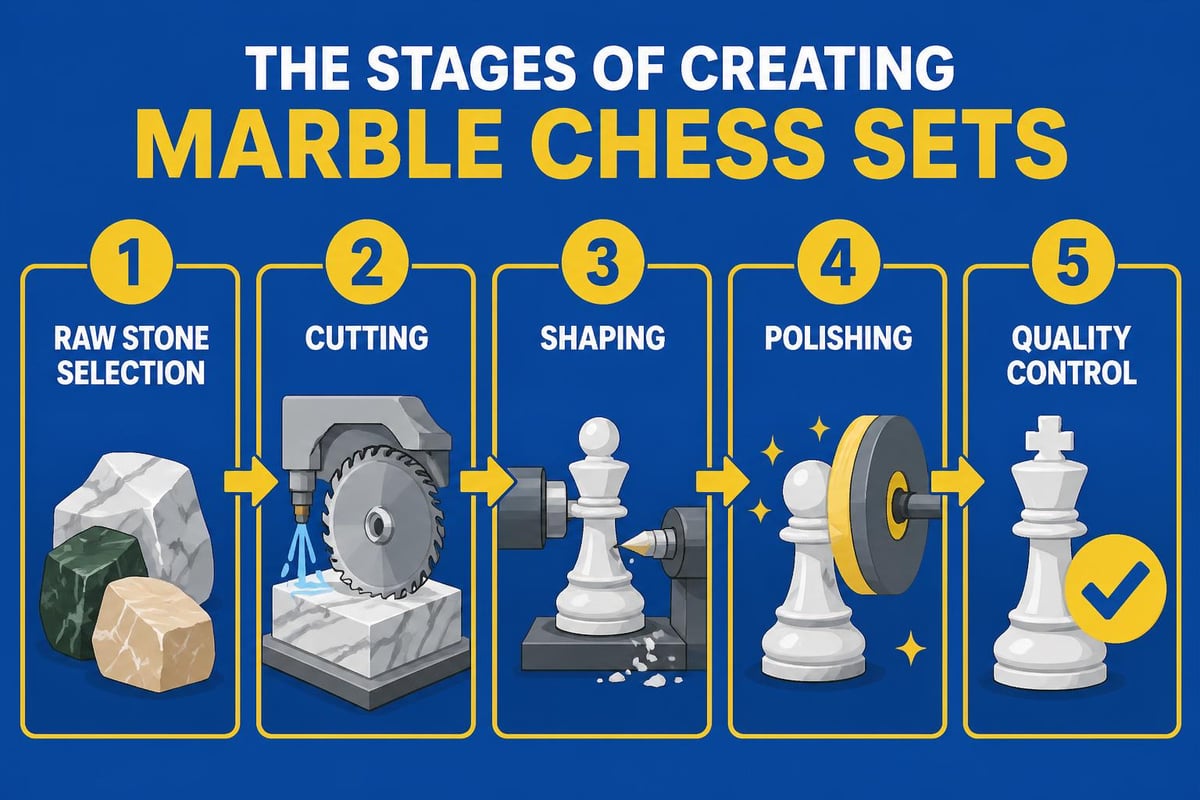
Creating a quality marble chess set isn't a quick process. If you're curious about the meticulous process of creating marble chess sets, you'll discover that artisans spend considerable time selecting the right stone, cutting each piece, and polishing them to perfection.
The manufacturing involves several key stages:
- Stone selection – Choosing marble blocks with the right colour consistency and minimal flaws
- Cutting and shaping – Using precision tools to create each piece according to traditional chess designs
- Hand-finishing – Smoothing edges and adding detail to knights and other complex pieces
- Polishing – Achieving that distinctive glossy finish
- Quality control – Ensuring pieces are balanced and boards are perfectly level
This labour-intensive approach explains why marble chess sets command higher prices than their wooden or plastic counterparts.
Types of Marble Used in Chess Sets
Not all marble is created equal, and the type used significantly impacts both appearance and durability. When you're considering a marble chess set, understanding these differences helps you make an informed choice.
| Marble Type | Characteristics | Common Colours | Durability |
|---|---|---|---|
| White Carrara | Classic Italian marble with subtle grey veining | White, light grey | High |
| Black Marquina | Deep black Spanish marble | Black with white veining | Very high |
| Green Onyx | Translucent with rich colour variation | Green, jade | Medium |
| Travertine | Porous texture with natural patterns | Beige, cream, brown | Medium-high |
| Red Jasper | Dense stone with vivid colour | Red, burgundy | Very high |
The best marble chess sets available in 2026 often combine two contrasting stone types to create the classic light-versus-dark aesthetic that chess demands.

How Marble Chess Enhances Your Playing Experience
You might wonder whether marble chess actually improves your game or if it's purely decorative. The truth lies somewhere in between. Whilst the material won't magically improve your tactics, the experience of playing on marble can influence your approach to the game.
The Psychology of Premium Materials
When you sit down to play on a marble chess board, there's an inherent sense of occasion. You're more likely to take your time, think through your moves, and avoid casual blunders. This mindset aligns perfectly with mastering chess openings, where careful preparation and thoughtful execution make all the difference.
The weight of the pieces provides instant feedback. Unlike lightweight plastic pieces that can feel inconsequential, marble chess pieces demand intentional placement. This physical aspect reinforces good habits-no more knocking over pieces or making ambiguous moves.
Display Value Between Games
Let's be honest: marble chess sets spend more time on display than in active play for many owners. That's not a criticism-it's part of their appeal. These sets serve dual purposes as both functional game equipment and stunning decorative pieces.
A well-chosen marble chess set can become a conversation starter in your home or office. It signals an appreciation for both intellectual pursuits and fine craftsmanship. As recent trends show rising demand for unique chess sets, including marble versions, these pieces have become increasingly popular as both functional games and decorative art.
Choosing the Right Marble Chess Set
With countless options available, selecting your first (or next) marble chess set requires consideration of several factors. Here's what you should keep in mind.
Size Matters
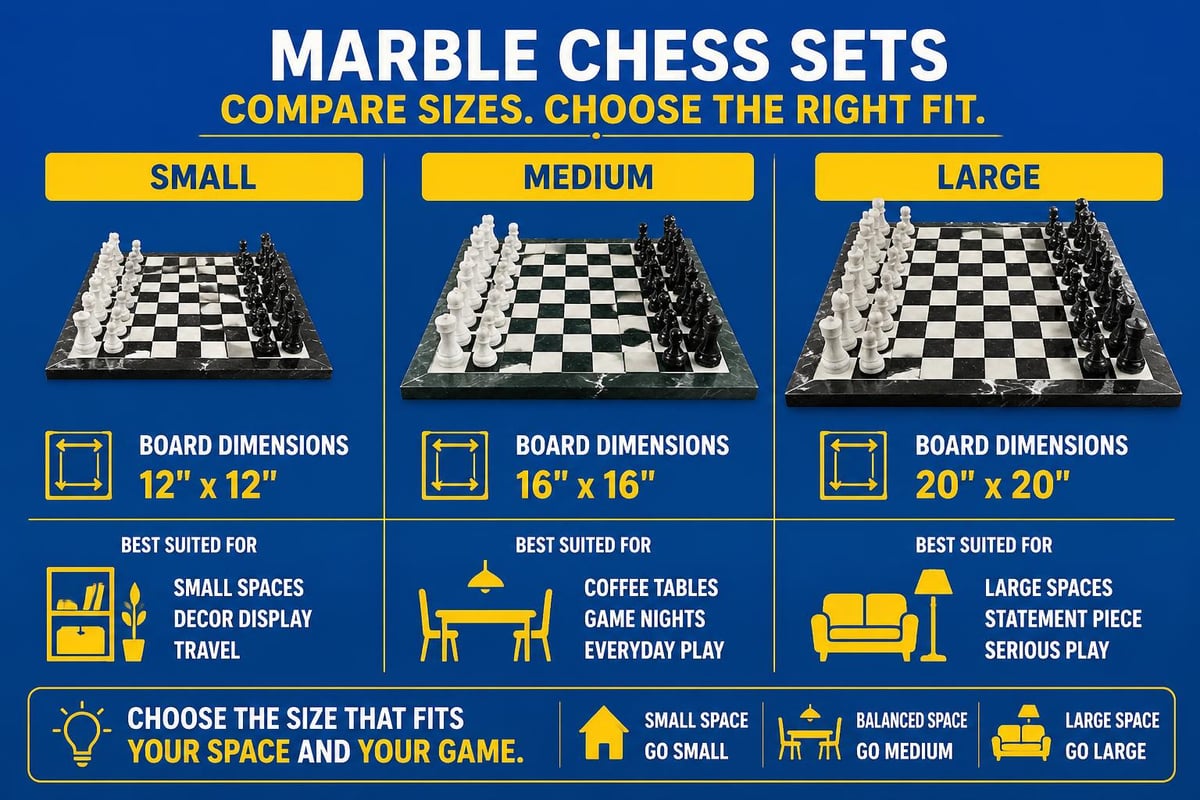
Marble chess sets come in various sizes, from compact 12-inch boards to imposing 20-inch statement pieces. Consider where you'll place it:
- Small sets (12-14 inches): Perfect for tight spaces, travel, or casual play
- Medium sets (16-18 inches): The sweet spot for most homes-playable without dominating a room
- Large sets (20+ inches): Impressive display pieces that command attention
Think about practicality too. If you're genuinely going to use it for studying chess openings for intermediate players, you'll want a size that's comfortable for extended sessions.
Weight and Stability
Quality marble chess sets are heavy-often weighing 10-30 pounds or more. This weight prevents accidental bumps from disrupting your game, but it also means you'll want to choose a permanent home for your set rather than moving it frequently.
The board itself should sit flat and stable. Check that the base has proper support, whether through rubber feet or felt padding, to protect your furniture.
Piece Design and Playability
When it comes to the actual chess pieces, you'll encounter various design philosophies. Traditional Staunton patterns remain most popular because players instantly recognise each piece. Some marble chess sets feature more ornate or artistic interpretations, which look stunning but can occasionally make piece identification trickier during play.
Consider how the pieces feel when you pick them up. Are the knights well-balanced? Can you easily distinguish pawns from other pieces at a glance? These practical concerns matter if you're planning actual gameplay rather than purely decorative display.
Maintaining Your Marble Chess Set
Marble might be durable, but it still requires proper care to maintain its beauty over years or even decades. Here's how to keep your set looking pristine.
Regular Cleaning
For routine maintenance, simply wipe pieces and the board with a soft, damp cloth. Avoid harsh chemicals or abrasive materials that could scratch the polished surface. If you notice dust accumulating in the carved details of knights or rooks, a soft-bristled brush works perfectly.
Dealing with Stains
Marble is porous, which means it can absorb liquids and stain. Always keep drinks away from your marble chess set. If a stain occurs, address it quickly:
- Blot (don't wipe) any spills immediately
- Use a pH-neutral cleaner specifically designed for marble
- For stubborn stains, create a poultice with baking soda and water
- Never use vinegar, lemon juice, or acidic cleaners on marble
Protection from Damage
Despite its hardness, marble can chip or crack if pieces are dropped on hard surfaces. Handle pieces carefully, especially the more delicate knights and bishops. When not in use, some collectors store pieces in felt-lined boxes to prevent contact damage.
The Investment Value of Marble Chess
Quality marble chess sets aren't cheap, with prices ranging from £100 for basic sets to several thousand pounds for premium artisan pieces. But are they worth the investment?
Durability and Longevity
Unlike wooden sets that can warp or plastic sets that yellow with age, properly maintained marble chess sets essentially last forever. The stone won't degrade, colours won't fade, and the pieces will feel just as substantial in fifty years as they do today. This longevity makes the per-use cost remarkably low if you genuinely appreciate and use your set.
Collectability
Certain marble chess sets, particularly those crafted by renowned artisans or featuring rare stone combinations, can appreciate in value. Whilst you shouldn't buy a marble chess set purely as an investment, knowing that quality pieces tend to hold or increase their value provides some financial justification for the initial expense.
The fusion of artistry and gameplay in marble chess sets means you're acquiring both a functional game and a piece of decorative art-essentially two products in one.
Marble Chess for Different Skill Levels
Does your chess ability affect which marble chess set you should choose? Somewhat, yes.
For Beginners
If you're just learning to play chess, you might want to develop your skills on a more affordable set before investing in marble. However, some beginners find that owning a beautiful set motivates them to practice more regularly and take the game seriously.
For newcomers who do choose marble, stick with traditional Staunton-style pieces where piece identification is intuitive. This allows you to focus on learning strategy rather than figuring out which piece is which.
For Intermediate Players
Intermediate players often get the most from marble chess sets. You're past the beginner stage where you might knock pieces over frequently, but you're still actively studying and improving. A marble set can make your practice sessions feel more significant.
When you're working through chess resources or studying the London System, having a quality board enhances the experience. The tactile feedback helps reinforce your learning as you physically move pieces through different variations.
For Advanced and Casual Players
Advanced players might use marble sets for casual games rather than serious study-it's hard to quickly test variations when pieces are so weighty. Meanwhile, casual players who simply enjoy occasional games often find marble sets perfect, as the sets sit beautifully on display between infrequent playing sessions.
Comparing Marble Chess to Other Materials
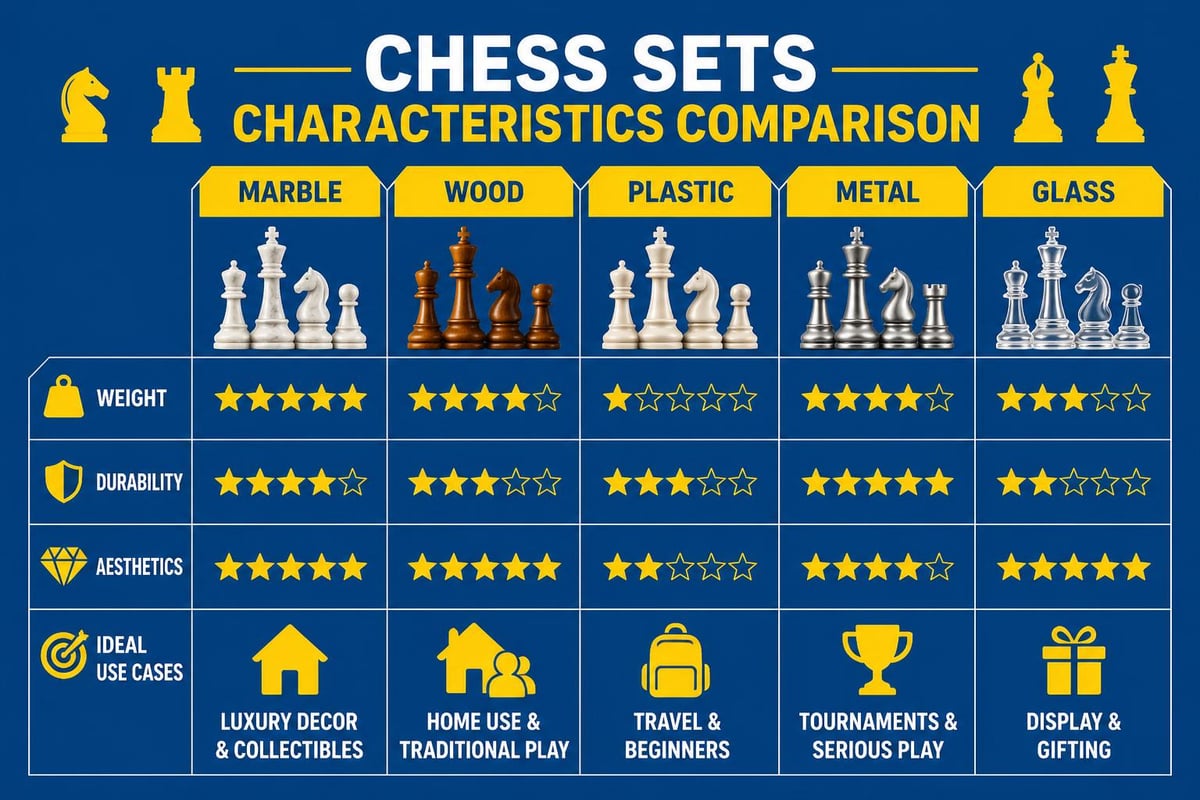
How does marble chess stack up against other popular chess set materials? Let's break it down.
| Material | Weight | Durability | Aesthetics | Price Range | Best For |
|---|---|---|---|---|---|
| Marble | Very heavy | Excellent | Stunning | £100-£2000+ | Display & serious players |
| Wood | Medium | Good | Classic | £50-£500 | Traditional players |
| Plastic | Light | Fair | Basic | £10-£50 | Beginners, travel |
| Metal | Heavy | Excellent | Modern | £80-£600 | Contemporary style |
| Glass | Medium | Fragile | Elegant | £60-£400 | Display primarily |
Each material has its place, but marble chess occupies a unique niche combining permanence, beauty, and substantial heft that affects how you interact with the game.
Where to Display Your Marble Chess Set
Once you've invested in a quality marble chess set, placement becomes important. These pieces deserve prominence, but they also need to be positioned thoughtfully.
Ideal Locations
Consider these display options:
- Living room side tables: Accessible for spontaneous games whilst adding sophistication to your space
- Home office desks: Projects intellectual seriousness (just ensure your desk can handle the weight)
- Library or study shelves: Natural fit alongside books and learning materials
- Dedicated game room: Obvious choice if you have the space
- Entryway console tables: Makes an immediate impression on visitors
Avoid placing marble chess sets in direct sunlight, as prolonged UV exposure can affect certain types of marble. Similarly, keep sets away from humid areas like bathrooms or poorly ventilated basements.
Creating the Right Environment
Your marble chess set will look most impressive when the surrounding environment complements it. Consider the aesthetic: modern marble sets with clean lines suit contemporary spaces, whilst more ornate classical designs fit traditional décor.
Lighting matters too. A well-placed spotlight or nearby lamp can make the polished marble gleam, highlighting the natural veining and colour variations that make each set unique.
Understanding Quality Indicators
When you're shopping for marble chess, knowing what separates exceptional sets from mediocre ones helps you make smart purchasing decisions. Understanding the manufacturing process of marble chess sets provides insight into quality indicators.
What to Look For
- Consistent piece weighting: All pawns should feel similar, all rooks should match
- Smooth finishes: No rough edges or unpolished surfaces
- Stable boards: The board shouldn't wobble on a flat surface
- Natural stone variation: Identical pieces suggest artificial materials rather than genuine marble
- Detailed carving: Knights especially should show crisp, defined features
- Proper proportions: Pieces should be sized appropriately for the board squares
Red Flags
Watch out for these warning signs of lower-quality sets:
- Extremely low prices (genuine marble sets require labour-intensive crafting)
- Pieces that feel hollow or unusually light
- Visible seams or joints in pieces
- Boards with uneven squares or poor alignment
- Pieces that don't sit flat on the board
The Cultural Significance of Marble Chess
Marble chess sets carry historical weight. For centuries, marble has been associated with luxury, permanence, and artistic achievement. The ancient Greeks and Romans used marble for their most important sculptures and buildings, and this association with grandeur extends to chess sets crafted from the same material.
When you own a marble chess set, you're participating in this long tradition. It's a connection to the past whilst enjoying a thoroughly modern pursuit. This historical resonance adds another layer of meaning to your games, especially when you're exploring what openings historical players used.
Practical Considerations Before Buying
Before you purchase a marble chess set, think through these practical questions to ensure you're making the right choice.
Budget Planning
Quality marble chess sets represent significant investments. Decide your budget beforehand and stick to it. Remember that you're buying something that should last decades, so amortised over its lifetime, even expensive sets become reasonable purchases.
Factor in potential additional costs like shipping (these sets are heavy) or display furniture if you don't have an appropriate surface.
Space Assessment
Measure your intended display space carefully. A 20-inch marble chess board might look manageable in photos but dominate a small room. Consider not just the board dimensions but also the space needed for comfortable play if you'll use it functionally.
Also check that your furniture can support the weight. A delicate antique table might not be suitable for a 25-pound marble chess set.
Usage Intentions
Be honest about how you'll use the set. If you want a tournament-quality board for serious study and rapid play, marble might not be ideal-wooden tournament sets are lighter and easier to manipulate quickly. But if you want something for leisurely games and beautiful display, marble excels.
Alternative Marble Chess Options
Beyond traditional full-sized sets, several alternative formats might suit your needs.
Travel and Compact Sets
Some manufacturers create smaller marble chess sets designed for travel or limited spaces. These retain the beauty and weight of marble whilst being more portable. They're perfect for players who want marble's aesthetic but can't accommodate a full-sized board.
Marble Board with Alternative Pieces
Another option is purchasing a marble board paired with wooden or metal pieces. This approach gives you the stunning playing surface that marble provides whilst keeping pieces lighter and easier to handle during gameplay. It's a practical compromise that many serious players prefer.
Custom and Artisan Sets
For those seeking truly unique pieces, custom marble chess sets offer endless possibilities. Artisans can create sets with specific stone combinations, custom sizing, or personalised piece designs. These bespoke sets represent the pinnacle of marble chess, though prices reflect the additional labour involved.
The allure of marble chess sets extends beyond standard offerings, with custom pieces allowing personal expression through stone selection and design choices.
Integrating Marble Chess into Your Chess Practice
If you're serious about improving your game, you might wonder how a marble chess set fits into structured practice. The answer depends on your approach.
For Position Analysis
Marble sets work wonderfully when analysing critical positions or studying endgames. The deliberate pace required by the weighty pieces actually encourages careful thought. When you're working through how to improve your positional skills, this slower, more thoughtful interaction can deepen your understanding.
For Blitz and Rapid Games
Marble isn't ideal for fast-paced games. The weight of pieces makes rapid movement challenging, and you risk damage if you're moving quickly and carelessly. Save your marble set for classical time controls or analysis rather than blitz sessions.
For Opening Preparation
When you're memorising new opening lines, particularly complex systems like the Sicilian Defense or the Grünfeld Defense, having a physical board helps cement the patterns in your mind. The tactile experience of moving marble pieces can enhance memory retention compared to purely digital study.
Whether you're drawn to marble chess for its aesthetic beauty, substantial feel, or the prestige it brings to your chess practice, these sets offer something that goes beyond ordinary gaming equipment. They transform chess from a simple board game into an experience that engages multiple senses and adds gravitas to your playing sessions. If you're ready to deepen your chess knowledge beyond just equipment and truly master the strategic aspects of the game, Chess Cheat Sheets provides comprehensive guides, opening resources, and puzzle collections designed specifically for players who want to improve efficiently. Our streamlined resources complement your beautiful marble board by giving you the knowledge to make those carefully weighted moves count.


