

Imagine sitting at your desk, mastering every move of digital chess while connecting with players from every corner of the globe. In 2026, you have access to powerful tools and thriving online communities that make improving your skills easier than ever. This guide will show you how to harness these resources, break down the evolution of online chess, and give you a clear path to success. Curious about rapid improvement, global competition, and the future of digital chess? Let’s dive in and start your journey to mastery.

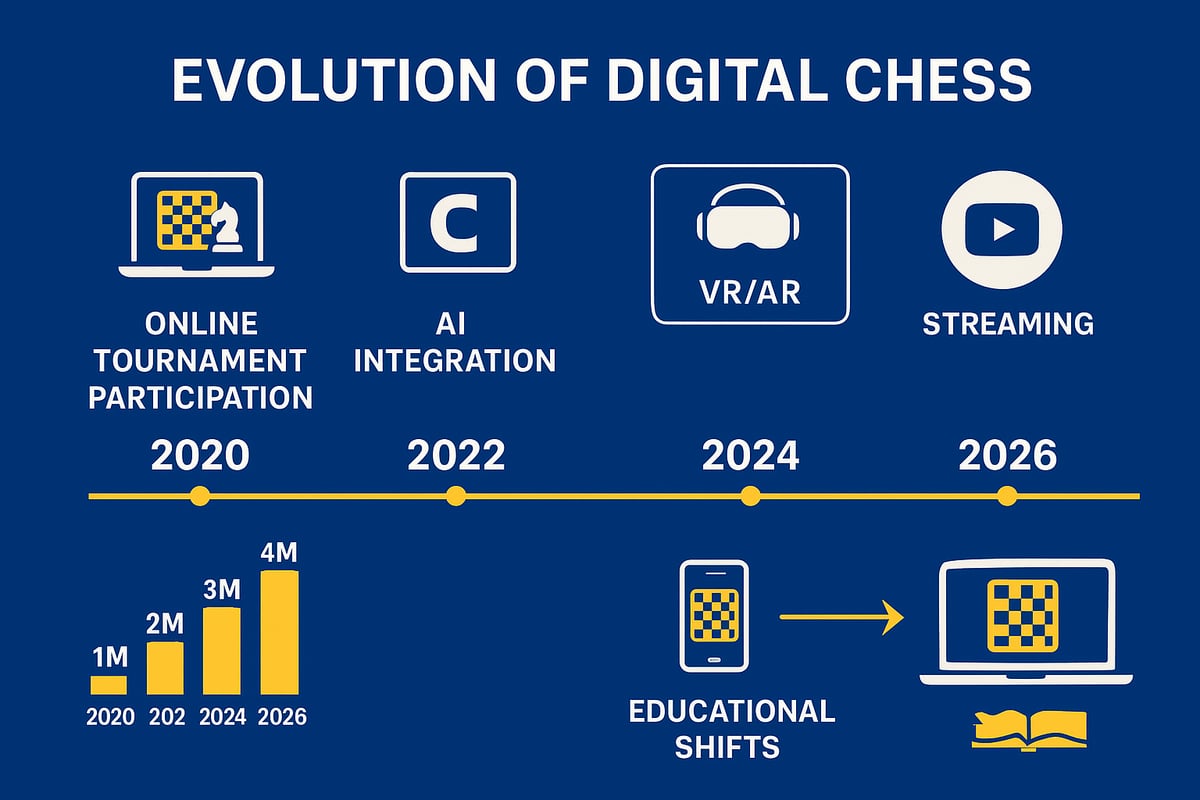
The Evolution of Digital Chess: 2020–2026
Imagine looking back just a few years and seeing how much digital chess has changed. The transformation is nothing short of remarkable. Let’s explore how we got here and what made this revolution possible.
The Rise of Online Chess Platforms
The story of digital chess in the last few years is anchored by the explosive growth of platforms like Chess.com, Lichess, and Chess24. After the global chess boom in 2020, sparked by “The Queen’s Gambit,” millions flocked online. By 2025, Chess.com alone surpassed 100 million members.
What made these platforms so attractive? For one, they invested in smarter matchmaking algorithms and user-friendly interfaces. Lichess’s open-source model drew a global audience, offering free tools and an ad-free experience. The integration of AI for fair matchmaking and real-time analysis made digital chess both accessible and competitive.
According to Online Chess Platform Market Growth, the surge in user numbers and technological advancements has solidified digital chess as a global phenomenon.
Technological Innovations Transforming Play
Technology has changed how you experience digital chess. Real-time analysis tools, cloud-based databases, and mobile apps have become standard. Now, players can review games instantly, access opening theory on the go, and never miss a move.
AI-powered coaching tools like Stockfish and Leela Chess Zero offer insights once reserved for grandmasters. You can even try chess in virtual or augmented reality, making the game more immersive than ever. Stronger anti-cheating measures and fair play policies help ensure a level playing field for all digital chess enthusiasts.
The Changing Landscape of Chess Education
The way you learn digital chess has evolved, too. Gone are the days when thick books were your only guides. Interactive courses, streaming, and YouTube lessons now dominate. Top players and coaches share knowledge through online courses, making advanced strategies available to everyone.
Communities on Discord, Twitch, and Reddit provide peer support and feedback. Forums and live streams turn learning digital chess into a collaborative, social experience. You’re never alone on your improvement journey, and there’s always someone ready to analyze a game or answer a question.
Notable Digital Tournaments and Events
Online tournaments have redefined competition. Events like Titled Tuesday, the PRO Chess League, and the Chess.com Global Championship attract thousands of players and huge audiences. Prize pools have grown, and participation records are broken nearly every year.
Hybrid events, combining online and over-the-board play, are now common. This blend of digital chess and traditional competition brings even more players into the fold. The sheer scale and accessibility of these tournaments have made digital chess a truly global sport.
Essential Digital Tools and Resources for Every Player
Ready to level up your digital chess experience? The right tools can turn casual play into serious growth, no matter your starting point. With so many resources available, it can feel overwhelming. Let’s break it down and help you choose the best digital chess platforms, apps, and communities for your journey.
Must-Have Online Chess Platforms
Choosing the right digital chess platform is like finding the perfect chessboard for your style. Each site offers unique features that can shape your experience.
Here’s a quick comparison of top platforms:
| Platform | User Interface | Analysis Tools | Community Size | Unique Feature |
|---|---|---|---|---|
| Chess.com | Intuitive | Personalized puzzles | 100M+ | Puzzle Rush, Insights |
| Lichess | Minimalist | Free engine analysis | 10M+ | Open-source, no ads |
| Chess24 | Professional | Video lessons | Large | Live event coverage |
| Play Magnus | Modern | Training vs Magnus | Growing | Challenge Magnus AI |
No matter your level, these digital chess platforms make it easy to play, learn, and connect. Try a few to see which fits your needs.
Chess Engines and Analysis Software
Ever wondered how grandmasters spot hidden moves? Chess engines are your secret weapon in the digital chess world. Powerful tools like Stockfish, Komodo, and Leela Chess Zero analyze your games, highlight blunders, and suggest improvements.
- Use engines for post-game analysis to understand mistakes.
- Engines help spot tactical ideas and missed opportunities.
- Ethical use means engines are for learning, not cheating during live games.
Remember, engines are best for review, not for real-time play. They’re like having a super-smart coach who never sleeps.
Digital Training Resources
If you want to accelerate your digital chess improvement, interactive training is a game-changer. Platforms like Chessable, iChess, and TheChessWorld offer structured courses that break down concepts step by step.
- Puzzle trainers and tactics apps sharpen your pattern recognition.
- Video tutorials and online curriculums let you learn at your own pace.
- Many resources adjust difficulty based on your progress.
Mixing digital chess lessons and hands-on practice helps you retain skills much faster than reading alone.
Community and Social Learning
Chess is more fun when you’re not alone. Digital chess communities bring players together for learning, feedback, and friendly competition.
- Join online chess clubs and Discord servers to find study partners.
- Share your games for peer review on forums like Reddit’s r/chess.
- Collaborative study groups help you tackle tough concepts together.
You’ll find that discussing digital chess with others often reveals new insights and keeps motivation high.
Tracking Progress and Personal Analytics
Serious about getting better at digital chess? Analytics tools like Chess.com Insights and Lichess Stats let you track your growth.
- Set rating goals and monitor improvement over time.
- Use data to pinpoint weaknesses, like missed tactics or endgames.
- Create a plan based on real results, not just guesswork.
A data-driven approach keeps you focused and ensures every digital chess session moves you forward.
Chess Cheat Sheets: Visual Learning and Rapid Improvement
Want a shortcut to mastering digital chess? Chess Cheat Sheets delivers visually-driven guides for openings, endgames, and tactics.

- Opening cheat sheets simplify complex theory into easy visuals.
- Endgame guides make tough positions crystal clear.
- Over 1.5 million puzzles support rapid skill growth.
Many players report that using Chess Cheat Sheets leads to faster recall and improved performance in digital chess games. The no-memorization approach and lifetime access make it a must-have for efficient improvement.
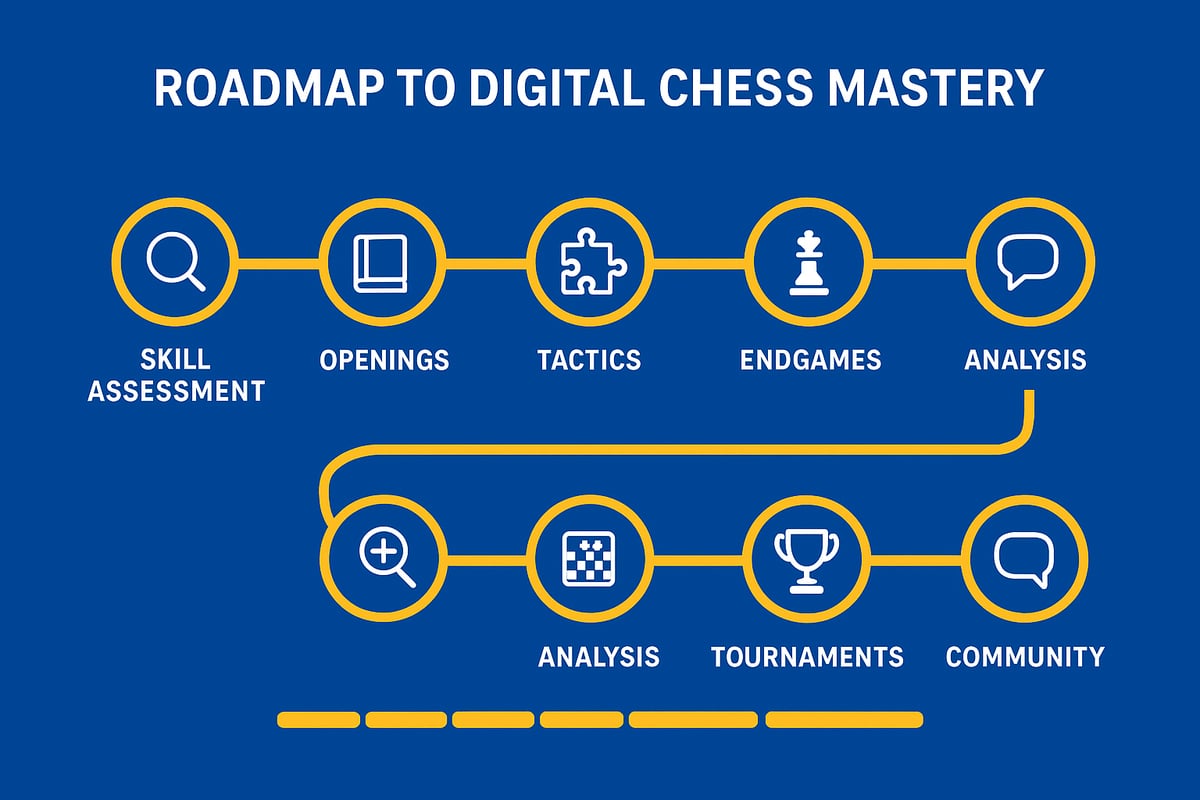
Step-by-Step Roadmap to Digital Chess Mastery
Ready to level up your digital chess journey? Let’s break down a practical roadmap that takes you from casual player to confident competitor. Think of each step as a square on your chessboard, each move building toward mastery. No matter where you start, this approach will help you see steady gains, avoid common pitfalls, and enjoy the process.
Step 1: Assess Your Current Skill Level
To start your digital chess improvement, you need to know where you stand. Use the rating systems on platforms like Chess.com or Lichess to get a baseline. These ratings reflect your performance in real games against a global pool of opponents.
Take advantage of built-in analytics tools such as Chess.com’s Insights or Lichess’s detailed statistics. These tools can spotlight your strengths, like strong endgame play, or weaknesses, such as missing tactics under time pressure.
Ask yourself: What’s my current rating? Do I struggle in the opening, middlegame, or endgame? Honest self-assessment is your launchpad for growth.
Step 2: Build a Solid Opening Repertoire
A reliable opening repertoire gives your digital chess games a strong foundation. Focus on a couple of openings for both white and black. This way, you become comfortable with typical positions and plans, rather than scrambling for moves.
Use online trainers and visual resources to reinforce ideas. For an efficient and structured way to build your openings, consider the Ultimate Chess Openings Bundle, which offers plug-and-play guides and helps you avoid rote memorization.
Practice your chosen openings with puzzles and quick games. Remember, the goal is not just to memorize moves, but to understand the ideas behind them.
Step 3: Master Tactical and Strategic Fundamentals
Digital chess is a tactics-rich environment. Daily practice with tactics trainers, puzzle rush modes, and pattern recognition exercises will sharpen your calculation skills.
Study classic games to see how top players combine tactical shots with solid strategy. Notice how Magnus Carlsen, for example, relies on pattern recognition and deep understanding, not just brute calculation.
Make it a habit to review positions where you missed tactics. Over time, you’ll spot threats and opportunities faster, turning blunders into brilliancies.
Step 4: Improve Endgame Knowledge
Endgames can decide half your digital chess results. Focus on mastering basic checkmates, pawn endgames, and key theoretical positions.
Interactive endgame simulators or guided modules on sites like Lichess are excellent for drilling these concepts. Track your stats to see which endgames you’ve mastered and which need more work.
A strong endgame skillset means you can confidently convert small advantages and save tough positions, even against higher-rated opponents.
Step 5: Analyze Your Games Regularly
Every digital chess game is a learning opportunity. After each match, use analysis tools and chess engines to review your moves. Look for patterns in your mistakes, such as repeated tactical oversights or missed chances in the middlegame.
Don’t just rely on engine evaluations. Annotate your games with your own thoughts, then share them in online forums for feedback. Peer review exposes you to new perspectives and helps solidify your understanding.
Game analysis turns short-term setbacks into long-term success.
Step 6: Participate in Online Tournaments and Events
Testing your skills in digital chess tournaments is both fun and essential for improvement. Platforms like Chess.com and Lichess host weekly or monthly events, ranging from casual arenas to high-stakes competitions.
Playing under time pressure helps you develop nerves and decision-making skills. Plus, you’ll get a feel for the competitive landscape and meet players at your level.
Track your tournament results to spot progress and set new goals.
Step 7: Engage with the Chess Community
Digital chess is more than just solo study. Join online clubs, Discord servers, or Twitch streams to connect with like-minded enthusiasts.
Collaborate on analysis, share resources, and participate in group study sessions. Engaging with the community keeps you motivated and exposes you to fresh ideas.
You’ll find that learning together is not only more effective, but also more enjoyable.
Advanced Digital Chess Strategies for 2026
Ready to level up your digital chess skills? In 2026, advanced strategies revolve around harnessing technology, psychology, and smart study habits. Let’s explore the most effective ways to stay ahead of the competition in the world of digital chess.

Leveraging Artificial Intelligence for Training
AI is transforming digital chess by offering personalized feedback and adaptive learning. Today’s AI tools can highlight blunders, suggest improvements, and even create custom lessons based on your play style.
For example, platforms like Chess.com provide “Game Review” features that break down your games, while Stockfish and Leela Chess Zero deliver deep analysis. AI doesn’t just point out mistakes, it helps you understand why they happened and how to avoid them.
Curious about the impact of AI in chess? Check out recent AI in Chess Training Research to see how these innovations are shaping digital chess improvement worldwide.
Deep Opening Preparation with Databases
Gone are the days of flipping through books for opening theory. With digital chess, you can access massive cloud-based opening databases in seconds.
Tools like Lichess Opening Explorer and ChessBase Online let you study the latest opening trends and find rare lines. Preparing novelties and anti-cheat variations has never been easier.
Want a quick comparison? Here’s a table:
| Tool | Database Size | Unique Features |
|---|---|---|
| Lichess | Millions | Free, crowd-sourced |
| ChessBase | Millions | Advanced search tools |
| Chess.com | Millions | Integrated lessons |
Smart use of these resources will keep your digital chess openings sharp and unpredictable.
Psychological Preparation and Tilt Management
Mastering digital chess isn’t just about tactics, it’s about mindset too. Staying focused, managing frustration, and bouncing back from losses are crucial for consistent improvement.
Many players use mindfulness apps or short meditation sessions to reset between games. Studies have shown that guided meditation reduces “tilt,” which is that spiral of bad decisions after a tough loss.
Simple habits like taking deep breaths, stepping away for a minute, or journaling your thoughts can make a huge difference. In digital chess, your brain is your most important piece.
Multi-Platform Play and Device Optimization
Flexibility is key in digital chess. Whether you play on desktop, tablet, or mobile, optimizing your setup can boost your performance.
Adjust your screen brightness, use a comfortable chair, and minimize notifications to stay focused. Many players prefer larger screens for analysis and mobile devices for quick games.
Did you know that mobile chess play surged in 2025? Being able to switch platforms keeps you active in digital chess, no matter where you are.
Staying Updated with Evolving Digital Trends
Digital chess platforms are always evolving. Keeping up with new features, patch notes, and community feedback ensures you’re never left behind.
Sign up for beta tests, follow update blogs, and vote on new features when possible. For example, Chess.com frequently rolls out upgrades based on user feedback, so your voice matters.
By staying engaged with these trends, you’ll always get the most out of your digital chess experience and stay ahead of the competition.
The Future of Digital Chess: Trends and Predictions for 2026 and Beyond
Picture yourself in 2026, where digital chess is not just a game but a global phenomenon connecting millions. The landscape is evolving at lightning speed, with technology reshaping how we learn, compete, and experience chess. Let's explore the key trends that will shape your digital chess journey in the years ahead.
AI and Human Collaboration in Chess Learning
Imagine training with an AI that adapts to your skill level, offering personalized feedback after every match. In digital chess, AI is quickly becoming your study partner, not just an opponent. You can now co-train with smart algorithms that pinpoint your unique patterns and weaknesses.
Hybrid coaching models blend expert human insight with precise machine analysis. This means your learning path is tailored to your needs, helping you grow faster than ever. As digital chess platforms roll out more adaptive tools, your improvement can feel almost effortless.
Virtual Reality (VR) and Augmented Reality (AR) Chess
Step into a virtual chess club from your living room. VR and AR are transforming digital chess into an immersive, social adventure. Whether you're moving pieces in a 3D space or analyzing games in augmented overlays, the experience is more engaging than ever.
Players can challenge friends worldwide, explore iconic tournament halls, or even join VR chess tournaments. Early feedback shows that these technologies make learning and competing in digital chess more fun and interactive, breaking down barriers for players everywhere.
Gamification and Engagement Innovations
Who doesn't love a good quest or trophy? Gamification is at the heart of digital chess's future, turning practice into play. Platforms now feature achievements, leaderboards, and daily challenges to keep you motivated.
For example, Chess.com's Quest system and Lichess trophies reward consistency and creativity. This approach boosts engagement and encourages friendly competition. As digital chess continues to innovate, expect even more creative ways to celebrate your progress and keep you coming back for more.
Expanding Accessibility and Global Participation
Digital chess is reaching corners of the world that once had little access to organized play. Thanks to language localization, mobile-first design, and inclusive community initiatives, chess is more accessible than ever. The global chess market is booming, with platforms expanding into over 200 countries.
Recent Global Chess Market Analysis highlights impressive growth and predicts even broader participation in the near future. This surge means you'll find fresh opponents and vibrant communities, no matter where you log in from.
The Role of Blockchain and NFTs in Chess
Blockchain is making digital chess more secure and transparent. Players benefit from verified digital identities, which help maintain fair play and prevent cheating. Some tournaments now use blockchain for ticketing and anti-cheat verification.
NFTs are also entering the scene, offering collectible chess items and unique event memorabilia. While still new, these technologies have the potential to add another layer of excitement and trust to your digital chess experience, especially as adoption grows.
Data Security and Fair Play Developments
With more players comes greater responsibility to protect data and ensure fair competition. Leading platforms are investing in advanced anti-cheat algorithms and real-time monitoring to keep digital chess honest.
Transparency reports and user privacy controls are now standard. As you compete online, you can trust that your information and the integrity of your games are priorities. This commitment to fair play is helping digital chess earn the respect and trust of players worldwide.
So, after taking in all these new digital chess strategies and seeing how much the game is evolving, it’s totally normal to feel inspired—but maybe also a bit overwhelmed, right? The good news is you don’t have to figure everything out on your own. If you’re ready to take the next step and make your chess journey in 2026 smoother and more fun, why not start by sharpening your openings? It’s one of the fastest ways to see progress. I love having a simple, visual roadmap for my games, and you can too—just Start Improving Your Openings. Give yourself that head start!


