

You've probably seen them at chess tournaments or in online broadcasts: those sleek electronic boards that automatically record every move without players pressing a single button. That's the magic of DGT chess sets, and if you're serious about improving your game, understanding how these innovative sets work could change the way you practice and analyse chess. Whether you're transitioning from online play to over-the-board games or looking to elevate your training routine, these sets bridge the gap between traditional chess and modern technology in ways that benefit players at every level.

What Makes DGT Chess Sets Different from Standard Chess Sets
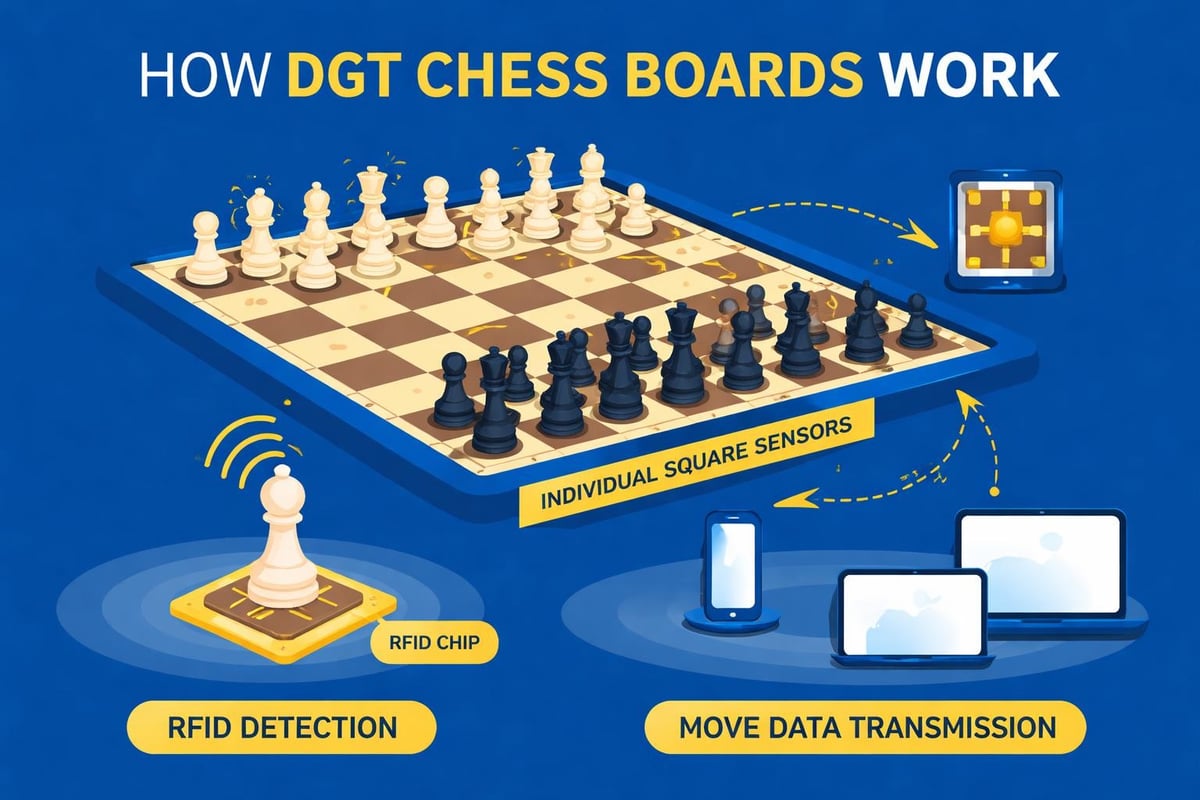
Traditional chess sets serve their purpose beautifully, but DGT chess sets bring something entirely different to the table. The core innovation lies in the electronic board itself, which contains sensors beneath each square that detect when pieces are placed or moved. Combined with specially designed electronic pieces that communicate with the board, this creates a system that automatically captures your games in digital format.
Think about this for a moment: every game you play is instantly saved, ready for analysis without manually entering moves into a computer. That's the fundamental advantage here.
The Technology Behind Electronic Chess Recording
Each DGT electronic board contains 64 individual sensors that monitor piece placement. The electronic chess pieces from DGT contain small RFID chips that the board identifies when placed on any square. This two-way communication system allows the board to know exactly which piece occupies which square at any given moment.
The board then connects to your computer, tablet, or smartphone via USB or Bluetooth, depending on the model. Your moves appear in real-time in chess software, allowing you to:
- Record tournament games automatically
- Analyse positions instantly during casual games
- Broadcast games online to friends or audiences
- Build a personal database of your games
- Review your thought process immediately after playing
Types of DGT Chess Sets Available in 2026
Not all dgt chess sets are created equal, and choosing the right one depends on your specific needs, budget, and how you plan to use the technology. Let's break down the main categories you'll encounter.
Tournament-Grade DGT Boards
These represent the premium tier, designed for serious players and professional use. The flagship models include wooden boards with exceptional build quality that you'd be proud to display in your home. They typically feature larger square sizes (between 50mm and 57mm) and come with weighted pieces that feel substantial in hand.
Tournament boards often include multiple connectivity options and faster response times. They're the boards you'll see at major chess events and in chess clubs worldwide.
Portable and Travel-Friendly Options
If you're constantly on the move or want to practise at different locations, portable DGT chess sets offer impressive functionality in compact formats. These usually feature folding boards with smaller squares (around 40mm to 45mm) and lighter pieces that still maintain electronic functionality.
The DGT Smart Board represents a popular middle ground, offering full electronic capabilities in a more affordable package that's still suitable for serious study.
Electronic Piece Variations
Here's where things get interesting. DGT offers several piece designs, each with distinct characteristics:
| Piece Set | Weight | Style | Best For |
|---|---|---|---|
| Classic Weighted | Heavier | Traditional Staunton | Tournament play, serious study |
| Royal Weighted | Medium-heavy | Elegant Staunton | Display and regular practice |
| Modern Staunton | Medium | Contemporary design | Everyday use, club play |
| Official FIDE | Regulation weight | FIDE-approved design | Official competition |
The Official Weighted FIDE Set represents the standard for competitive play, while the Classic Weighted pieces offer excellent value for regular training sessions.
How DGT Chess Sets Enhance Your Training Routine
You might be wondering whether the investment in dgt chess sets actually translates to measurable improvement. Based on feedback from players across skill levels, the answer is a resounding yes, but perhaps not for the reasons you'd initially expect.
Immediate Game Analysis and Pattern Recognition
The ability to review your games immediately after playing changes everything. Instead of relying on memory or hastily scribbled notes, you can replay the entire game move by move whilst the positions are still fresh in your mind. This immediacy helps you identify patterns in your play, both good and bad.
When you're working through chess openings or studying specific lines, the electronic board allows you to quickly set up positions and test variations. This hands-on approach, combined with digital recording, accelerates the learning process significantly.
Building Your Personal Game Database
Every game becomes part of your permanent record. Over time, you'll accumulate hundreds or even thousands of games, creating a unique database that reveals:
- Your most frequently played openings
- Positions where you consistently struggle
- Time management patterns
- Opening preparation gaps
- Endgame conversion rates
This data-driven approach to improvement aligns perfectly with modern chess training methods. Rather than guessing which areas need work, you have concrete evidence from your own games.

Compatible Software and Applications
DGT chess sets work seamlessly with popular chess platforms and software. Whether you prefer ChessBase, Lichess, Chess.com, or other platforms, your board integrates smoothly. This versatility means you can:
- Play against chess engines at various strengths
- Access opening databases whilst playing over the board
- Participate in online tournaments using a physical board
- Conduct remote coaching sessions with instructors
- Broadcast your games for educational purposes

Choosing the Right DGT Chess Set for Your Level
Your playing level and goals should drive your purchasing decision. Let's explore what makes sense for different types of players.
For Beginners and Improvers (Under 1400 Rating)
If you're relatively new to serious chess study, you don't necessarily need the most expensive setup. A mid-range DGT board with standard electronic pieces provides all the functionality you need to develop good habits early.
Focus on these priorities:
- Reliable move detection
- Easy software connectivity
- Comfortable piece size for learning
- Clear board squares for pattern recognition
The DGT Chess Box offers a good entry point if you want to start with a quality non-electronic set before upgrading.
For Intermediate Players (1400-1800 Rating)
At this level, you're likely working seriously on your game and might be playing in local tournaments. This is where investing in quality dgt chess sets pays significant dividends. You'll benefit from:
Superior build quality that withstands regular use
Weighted pieces that improve your physical playing experience
Faster sensor response for blitz and rapid games
Multiple connectivity options for different training scenarios
Consider the Royal Weighted pieces paired with a solid electronic board. This combination offers tournament quality without the absolute premium price point.
For Advanced Players and Coaches
Serious players, coaches, and club organizers have different requirements. You might need multiple boards for simultaneous exhibition, teaching, or club use. The DGT Club Pack becomes relevant here, offering economies of scale for multiple sets.
Premium features worth considering include:
- Bluetooth connectivity for wire-free setups
- Larger board squares (55mm+) for comfortable long sessions
- Professional-grade pieces with perfect balance
- Extended warranty and support options
Practical Considerations Before Purchasing
Beyond the technical specifications, several practical factors deserve your attention when selecting dgt chess sets.
Space and Storage Requirements
Electronic boards with sensors are thicker than standard boards. Measure your playing space and storage area before purchasing. A tournament-size board (with 55mm squares) requires approximately 60cm x 60cm of table space, plus room for captured pieces and a clock.
Folding boards solve storage issues brilliantly but typically cost more than flat boards with equivalent features.
Software Compatibility and Technical Support
Verify that your preferred chess software supports DGT boards. Most major platforms do, but checking compatibility specifications prevents frustrating discoveries after purchase. DGT provides regular firmware updates, so factor in the company's track record for supporting older models.
Battery Life and Power Options
Some DGT models operate on batteries whilst others require constant power connections. Consider your typical usage:
- Battery-powered: Excellent for teaching, demonstrations, portable use
- USB-powered: Ideal for home study, always available, no battery concerns
- Dual power options: Maximum flexibility, higher cost
Piece Recognition and Accuracy
Modern dgt chess sets boast impressive accuracy rates exceeding 99.9%, but physical factors can affect performance. Ensure pieces are placed centrally on squares, keep the board surface clean, and avoid placing electronic devices that might interfere with RFID signals directly next to the board.
Maintenance and Long-Term Care
Your investment deserves proper care to ensure years of reliable service. These aren't complicated requirements, but consistency matters.
Cleaning and Physical Maintenance
Wood boards require occasional treatment with appropriate wood care products. Avoid excessive moisture, which can warp the board and potentially damage sensors. Clean pieces with a soft, slightly damp cloth rather than submerging them in water.
The sensors are robust but not indestructible. Don't slam pieces down forcefully, and avoid sliding pieces harshly across squares, which can scratch the board surface.
Software Updates and Firmware
DGT releases firmware updates periodically to improve functionality and fix bugs. Check the manufacturer's website quarterly for updates, which typically install quickly and painlessly through their software.
Troubleshooting Common Issues
Most problems with dgt chess sets stem from simple causes:
Piece not detected: Ensure the piece is centred on the square, check battery levels (if applicable), verify the piece contains an RFID chip
Connection drops: Try different USB ports, check cable integrity, restart the software application
Incorrect piece identification: Verify you're using a complete matched set, confirm pieces aren't damaged
Integration with Online Learning Resources
The real power of electronic chess sets emerges when you combine them with quality educational content. If you're studying specific openings, the ability to practice over the board whilst referencing digital resources creates a powerful learning loop.
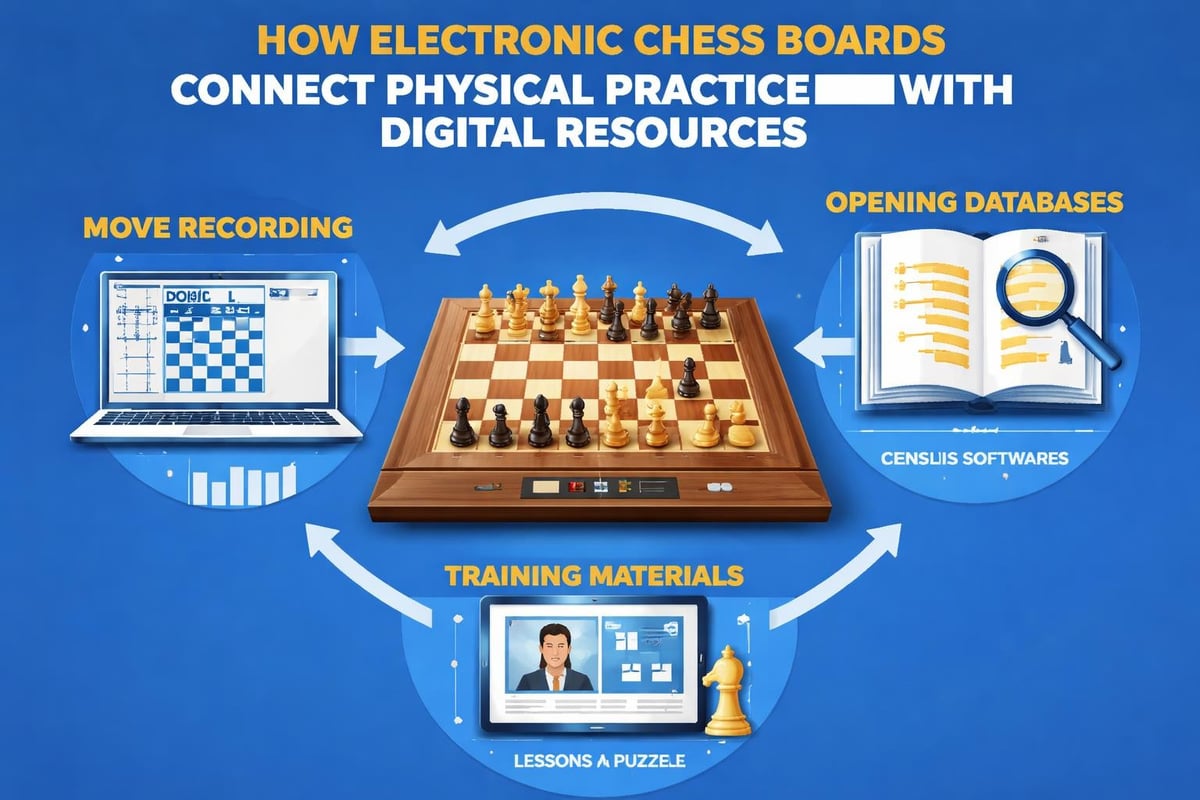
For instance, when working through the most common chess openings, you can set up positions on your DGT board, play through variations, and immediately see the moves recorded in your software. This tactile learning reinforces memory far better than clicking through moves on a screen alone.
Similarly, if you're exploring whether you should play the Sicilian Defense, testing different lines over a physical board helps you develop the muscle memory and board vision essential for confident play in tournaments.
Investment Value and Cost Considerations
Let's address the elephant in the room: dgt chess sets aren't cheap. A quality electronic board with good pieces represents a significant financial commitment. Is it worth it?
Comparing Costs to Chess Training Alternatives
Consider what you're getting for your investment:
- Private coaching: £40-£100 per hour, limited sessions per month
- Tournament entry fees: £15-£50 per event, several times yearly
- Chess software subscriptions: £10-£30 monthly
- DGT chess set: One-time cost, unlimited use
A mid-range electronic board costs roughly equivalent to 10-15 hours of private coaching, but provides years of training support. The value proposition becomes clearer when viewed through this lens.
Budget-Friendly Alternatives and Upgrade Paths
If the full electronic board exceeds your current budget, consider these approaches:
- Start with non-electronic DGT pieces and a standard board
- Add an electronic board later when budget allows
- Look for used or refurbished models from reputable sellers
- Join a chess club that provides DGT boards for member use
- Consider sharing costs with a chess partner or study group
Real-World Applications Beyond Individual Training
DGT chess sets serve purposes beyond personal improvement. Understanding these applications helps you evaluate whether the technology fits your chess ambitions.
Chess Coaching and Teaching
If you teach chess or plan to, electronic boards transform the instructional experience. Students can play whilst you observe in real-time on a connected device, allowing you to provide commentary without hovering over the board. Games save automatically for later review sessions.
For group instruction, projecting the board display onto a screen lets an entire class follow along as students play demonstration games. This technology has become standard in serious chess schools and coaching environments.
Tournament and Club Use
Many chess clubs have transitioned to electronic boards for regular play. The benefits include automatic tournament pairings software integration, accurate game records for rating calculations, and the ability to broadcast featured games to spectators.
If you're involved in chess organization or thinking of starting a club, having several sets of electronic chess pieces creates a professional environment that attracts serious players.
Online Content Creation and Streaming
The growing chess content creator community relies heavily on DGT technology. Broadcasting over-the-board games whilst providing commentary has become a popular format on platforms like YouTube and Twitch. The board handles the technical aspects whilst you focus on explaining ideas and engaging with your audience.
Making Your Decision: Key Questions to Answer
Before clicking that purchase button, ensure you can confidently answer these questions:
What's my primary use case? Personal training, teaching, tournament play, or content creation each favour different models and features.
How often will I realistically use it? Daily practice justifies premium models; occasional use might warrant more modest investment.
What's my upgrade timeline? If you plan to upgrade within a year or two, starting with a mid-range model makes sense. For a long-term investment, stretch for higher quality initially.
Do I need portability? Your primary playing location determines whether compact, foldable designs matter.
Which piece style do I prefer? The tactile experience affects your enjoyment. If possible, handle different piece sets before deciding. The Modern Staunton pieces offer a contemporary feel, whilst traditional Staunton designs suit classical tastes.
The Future of Electronic Chess Sets
Technology continues advancing, and DGT regularly introduces innovations. Current trends suggest future developments in wireless charging for pieces, enhanced mobile app integration, and improved AI-powered analysis features built directly into boards.
For chess education specifically, the trend towards hybrid physical-digital learning environments means electronic boards will likely become increasingly central to structured improvement programs. Understanding these tools now positions you well for the evolving chess education landscape.
Whether you're working through difficult chess openings or building your tactical awareness, having the right tools accelerates progress. DGT chess sets represent one of the most versatile tools available to modern chess players, combining the irreplaceable experience of moving physical pieces with the analytical power of digital technology.
Electronic chess boards have revolutionised how players train, analyse, and enjoy chess, making sophisticated game recording accessible to everyone from club players to serious competitors. The investment in quality equipment pays dividends through enhanced learning, comprehensive game records, and the seamless integration of physical practice with digital resources. If you're ready to accelerate your chess improvement with structured guidance, Chess Cheat Sheets offers comprehensive opening guides, tactical puzzles, and endgame resources designed specifically for players who want to improve efficiently without overwhelming study requirements.


