

There's something magical about playing chess on a board that's truly yours, isn't there? A custom chess board isn't just a playing surface; it's a statement about your relationship with the game. Whether you're looking to enhance your study sessions, create a stunning centrepiece for your home, or gift something extraordinary to a chess enthusiast, understanding the world of personalised boards can transform how you experience the game. Let's explore what makes these boards special and how you can find or create the perfect one for your needs.
Why Choose a Custom Chess Board Over Standard Options?
You might be wondering why anyone would invest in a custom chess board when perfectly functional sets are available everywhere. The answer lies in the intersection of functionality and personal expression.
Standard tournament boards serve their purpose brilliantly for competitive play and serious study. They're standardised for a reason, making them familiar and comfortable. But when you're spending hours working through chess opening sequences or analysing endgame positions, your board becomes part of your daily environment.
The Personal Connection Factor
A custom chess board creates a deeper connection with the game. When you've selected every detail, from the wood grain to the square size, the board becomes an extension of your chess journey. This isn't superficial; many players report that their personalised boards motivate them to study more consistently and enjoy their practice sessions more thoroughly.
Benefits of personalisation include:
- Perfect sizing for your available space and vision requirements
- Material choices that match your aesthetic preferences
- Colour schemes that reduce eye strain during long study sessions
- Durability tailored to your usage patterns
- Integration with your existing pieces or new custom sets
The tactile experience matters more than many players initially realise. The feel of premium materials beneath your fingertips as you move pieces can enhance your focus and enjoyment during those crucial moments when you're working through complex positions.
Materials That Make Your Board Unique
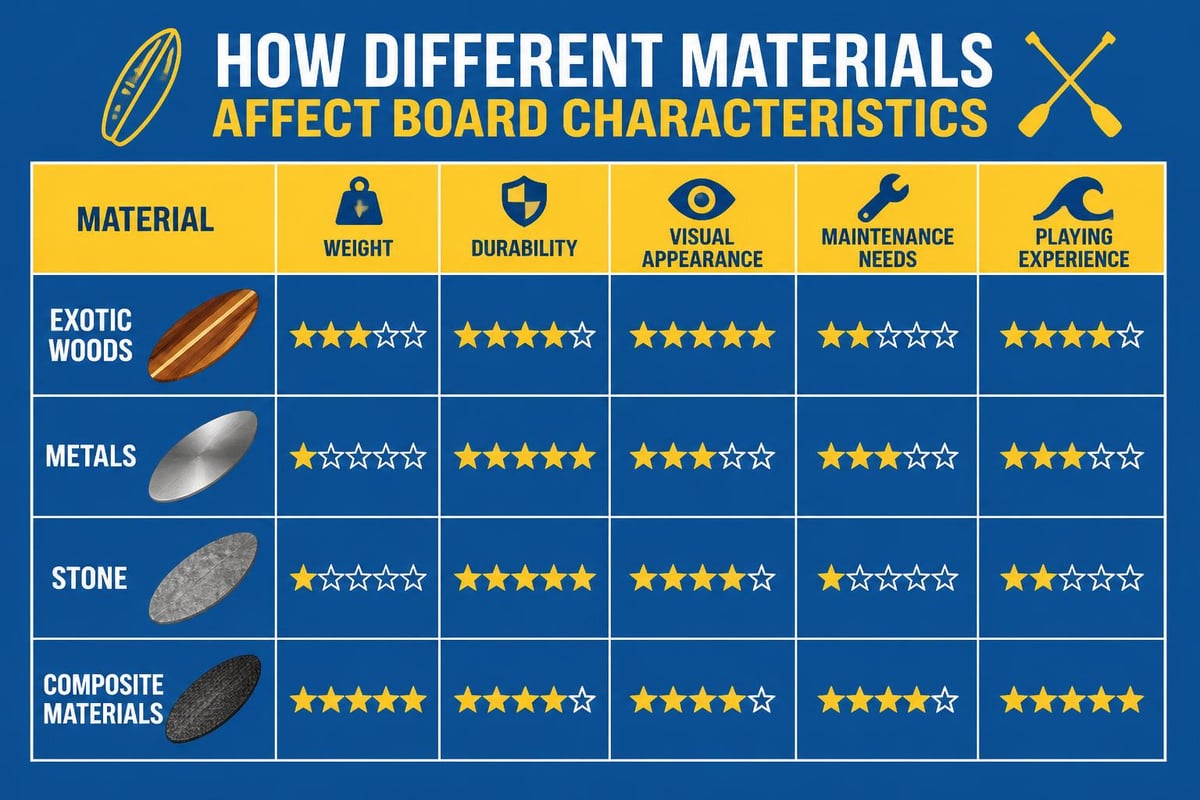
Choosing materials for a custom chess board opens up a world of possibilities that extends far beyond the standard rosewood and maple combinations.
Traditional Wood Options
Wood remains the classic choice, and for good reason. Handmade chess sets crafted from premium woods offer warmth and character that synthetic materials struggle to match. Each piece of wood carries unique grain patterns, making every board genuinely one-of-a-kind.
| Wood Type | Characteristics | Best For |
|---|---|---|
| Walnut | Rich dark tones, excellent durability | Traditional aesthetics, frequent use |
| Maple | Light colour, tight grain, hardwearing | Classic contrast boards, tournament feel |
| Ebony | Deep black, dense and heavy, luxurious | High-end boards, collectors |
| Cherry | Warm reddish tones, ages beautifully | Decorative boards, display pieces |
| Oak | Strong grain pattern, extremely durable | Rustic designs, heavy use |
The beauty of wood is how it ages. Unlike plastic or vinyl boards that deteriorate, quality wooden boards develop character over time. That subtle patina from years of use becomes part of your chess story.
Modern Material Innovations
We're living in an exciting time for chess board materials. Composite materials, specially treated woods, and even metal-inlaid boards have entered the market. These innovations aren't just about aesthetics; they solve practical problems too.
Glass boards with frosted or coloured squares create stunning visual effects whilst remaining remarkably durable. Stone boards, particularly those using marble or granite, offer incredible weight and stability, perfect if you have enthusiastic players who tend to knock pieces about.

Design Elements That Reflect Your Chess Style
Your custom chess board should complement how you actually play and study chess. This is where personalisation becomes strategic rather than purely aesthetic.
Square Size and Board Dimensions
Getting the proportions right matters enormously. If you're working through opening theory with reference materials spread around your board, you'll want different dimensions than someone who primarily plays quick games.
Standard sizing guidelines:
- Tournament standard: 2 to 2.5 inches per square
- Analysis boards: 1.75 to 2.25 inches (easier to fit on desks)
- Display boards: 2.5 to 3 inches (commanding presence)
- Travel boards: 1.5 inches or less (portability focus)
The relationship between your pieces and squares matters too. Your king should fit comfortably within a square with room to spare. Too tight and the board feels cramped; too loose and pieces look lost on the expanse.
Notation and Coordinate Options
Here's where your study habits influence design choices. Algebraic notation around the board edges helps tremendously when you're working through chess videos for beginners or following written analysis.
Some players prefer clean boards without coordinates, finding them less distracting during play. Others want prominent notation for teaching purposes or rapid position recording. Your custom chess board can accommodate either preference, with notation options including:
- Engraved coordinates on the frame
- Printed notation on the border
- Subtle markers at square corners
- Removable notation strips
- No notation for purist aesthetics
Creating Your Custom Board: The Process
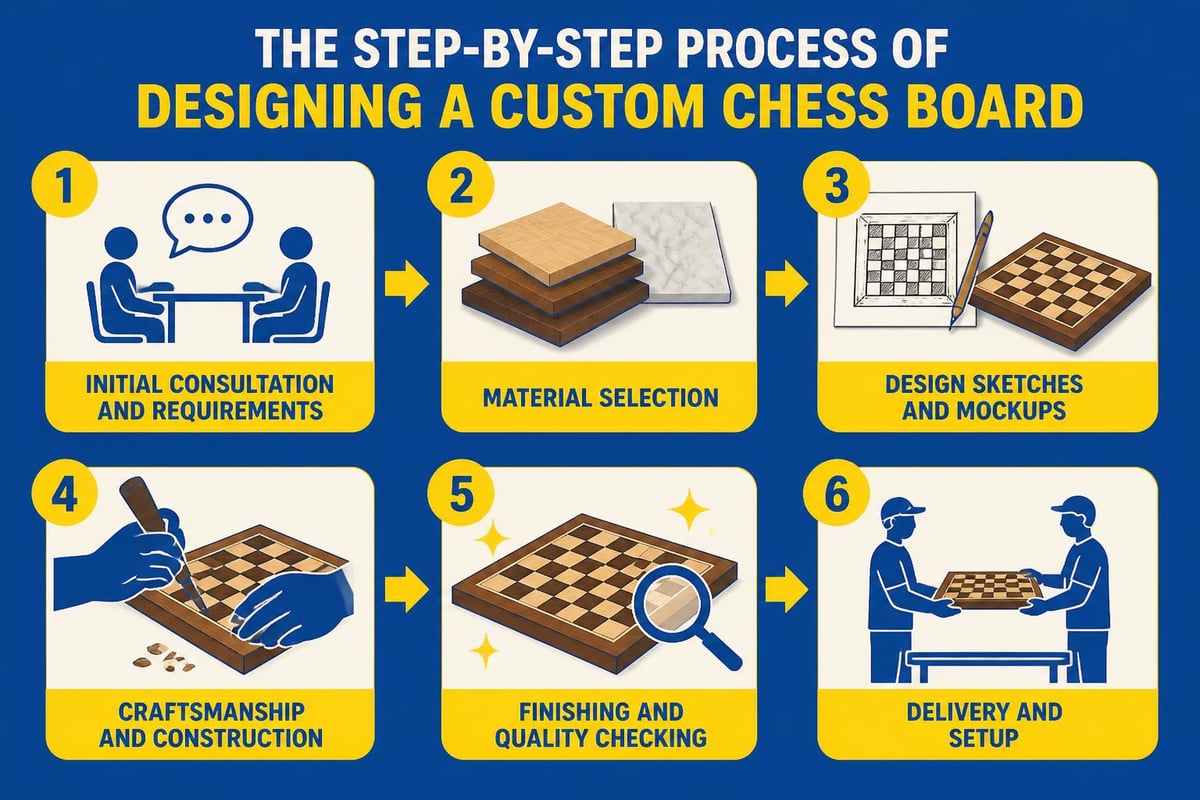
Understanding how bespoke chess sets are created helps you make informed decisions about your own commission or purchase.
Working with Craftspeople
The best custom boards come from artisans who understand chess as a game, not just as a design opportunity. When you're discussing your requirements, they should ask about your playing style, study habits, and how you'll use the board.
Quality craftspeople will guide you through decisions about wood selection, finish types, and structural considerations. They'll explain why certain combinations work better than others, drawing on their experience with how materials behave over time.
Timeline Expectations
Creating something truly custom takes time. Rush jobs rarely produce the quality you're investing in. Typical timelines break down like this:
- Consultation and design (1-2 weeks): Discussing requirements, selecting materials, finalising specifications
- Material sourcing (1-3 weeks): Acquiring specific woods or materials, especially rare varieties
- Construction (2-6 weeks): Actual building, allowing for proper drying and curing between stages
- Finishing (1-2 weeks): Applying protective coatings, often requiring multiple layers with drying time
- Quality checking (3-5 days): Final inspection and any necessary adjustments
The total timeframe typically ranges from six weeks to four months, depending on complexity and material availability. If you're planning a custom chess board as a gift, order well in advance.
Matching Your Board to Your Pieces
Your board and pieces should work together harmoniously. This doesn't mean they must match perfectly, but they should complement each other's style and scale.
Piece-to-Square Proportions
Professional designers follow the rule that a piece's base diameter should be roughly 75-80% of the square size. This creates visual balance and practical stability. When you're deep in concentration analysing why Magnus Carlsen uses certain openings, you don't want pieces toppling over.
If you're creating custom chess pieces alongside your board, you can optimise these proportions perfectly. If you're matching to existing pieces, provide detailed measurements to your board maker.
Style Coordination
Traditional Staunton pieces suit classic wooden boards with clean lines. Artistic or themed pieces might pair better with boards featuring unique inlays or unconventional materials. The key is intentional design rather than accidental clash.
| Piece Style | Complementary Board Styles |
|---|---|
| Classic Staunton | Traditional wood, clean borders, standard proportions |
| Modern minimalist | Glass, metal accents, sleek profiles |
| Ornate decorative | Inlaid woods, detailed borders, luxury materials |
| Themed sets | Coordinated materials, matching colour palettes |
Practical Considerations for Daily Use
A custom chess board isn't just for display; it should enhance your actual chess practice and study sessions.
Durability for Frequent Study
If you're serious about improvement, your board will see heavy use. Working through positions from chess books for advanced players means pieces sliding across squares hundreds of times per session.
Choose finishes that resist wear without becoming slippery. A subtle texture helps pieces grip slightly, reducing accidental movements whilst maintaining smooth play. Lacquered boards look gorgeous initially but can become slick over time, whilst oiled finishes maintain their playing characteristics better.
Maintenance Requirements
Different materials demand different care levels. Understanding this before commissioning helps ensure your custom chess board remains beautiful for decades.
Low-maintenance options:
- Sealed wood boards (occasional dusting only)
- Glass boards (simple cleaning with standard glass cleaner)
- Stone boards (wipe clean, minimal upkeep)
Higher-maintenance choices:
- Oiled wood (periodic re-oiling needed)
- Inlaid boards (careful cleaning around details)
- Metal-accent boards (polishing to prevent tarnish)
Be honest about how much maintenance you'll actually do. A gorgeous board that requires frequent care might deteriorate if you're too busy studying the best openings for Black to maintain it properly.
Budget Considerations and Value
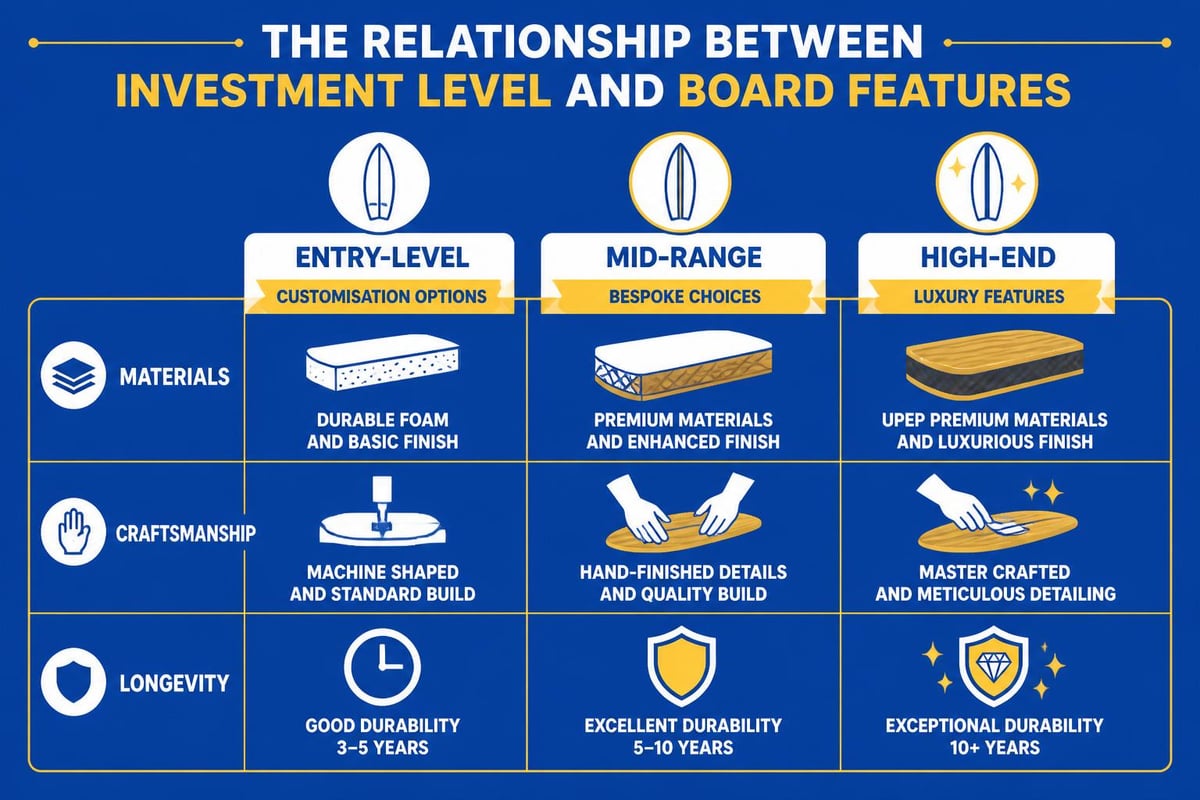
Custom doesn't automatically mean expensive, though it certainly can be. Understanding what drives costs helps you make informed decisions about where to invest.
What Affects Pricing
The spectrum of custom chess board prices is remarkably wide, from a few hundred pounds to several thousand. Several factors influence where your board falls:
- Material rarity: Exotic woods cost more than common varieties
- Construction complexity: Inlays and detailed work increase labour time
- Craftsperson reputation: Established artisans command premium prices
- Size and weight: Larger boards require more material and shipping costs
- Finishing details: Hand-applied finishes cost more than sprayed options
- Timeline urgency: Rush orders typically incur additional fees
Balancing Custom Elements with Budget
You don't need to customise every aspect to create something special. Prioritising a few key elements often produces better results than spreading your budget too thin.
Consider which aspects matter most to your chess experience. Perhaps perfect square sizing for your vision is crucial, but frame decoration is less important. Maybe you want specific woods for their warmth and feel, but simple edges suit your aesthetic just fine.
Integration with Your Chess Study Space
Your custom chess board exists within a larger chess ecosystem. How it fits into your study environment affects both its usefulness and your enjoyment.
Creating an Inspiring Study Station
A thoughtfully designed board becomes the centrepiece of your chess workspace. When you're settled in to work through complex positions or study endgame theory, your surroundings influence your focus and motivation.
Position your board where natural light falls without creating glare on the squares. If you're frequently referencing materials from Chess Cheat Sheets or other resources, ensure you have space for books or tablets alongside your board.
Essential workspace elements:
- Adequate lighting from multiple angles
- Comfortable seating for extended study sessions
- Easy access to reference materials
- Space for note-taking
- Storage for pieces when not in use
Portable Versus Permanent Setups
Some custom boards are designed to stay put, becoming furniture pieces in their own right. Others balance quality with portability. Custom chess tables represent the ultimate permanent solution, integrating board and furniture.
If you study in different locations or attend club meetings, a more portable custom board makes sense. These can still feature quality materials and thoughtful design whilst remaining manageable to transport.
Special Features Worth Considering
Modern custom boards can incorporate features that enhance functionality without compromising aesthetics.
Storage Solutions
Integrated piece storage is enormously practical. Drawers beneath the board or compartments in the frame keep your set together and protected. When you finish analysing positions late at night, everything stores neatly in one place rather than requiring separate boxes and bags.
Some designs include compartments specifically sized for different piece types, speeding up setup for your next study session. Others feature simple wells that accommodate any piece arrangement.
Technology Integration
We're seeing fascinating innovations in how traditional boards incorporate modern technology. Some custom boards include subtle LED backlighting for evening study, wireless charging zones for devices, or even integrated digital clocks for timed practice.
These features remain optional, but they're worth considering if they'll genuinely enhance your chess practice. Technology should serve the game, not distract from it.
Finding the Right Craftsperson or Source
The relationship you build with your board's creator significantly impacts the final result. Finding someone who understands your vision matters enormously.
Questions to Ask Potential Makers
Before commissioning, interview several craftspeople or companies. Their responses reveal their expertise and whether they're right for your project.
- How do you source your materials?
- What's your experience with chess specifically?
- Can you show examples of similar projects?
- What's included in your warranty or guarantee?
- How do you handle revisions during the process?
- What maintenance will the finished board require?
Quality makers welcome these questions and provide detailed, thoughtful answers. Vague responses or reluctance to discuss specifics are warning signs.
Understanding What "Custom" Actually Means
The term "custom" covers vast territory. Some companies offer customisation within preset templates, selecting from specific wood combinations or size options. Others create entirely bespoke designs from scratch.
Neither approach is inherently better; they serve different needs and budgets. Template-based customisation delivers faster turnaround and lower costs whilst still offering personalisation. Fully bespoke work provides unlimited creative freedom but requires more time and investment.
Clarify exactly what level of customisation you're getting before committing. Understanding whether you're selecting from options or creating something entirely unique prevents disappointment later.
Caring for Your Investment Long-Term
A well-made custom chess board should outlast you, potentially becoming an heirloom piece. Proper care ensures it remains beautiful and functional for generations.
Cleaning and Maintenance Routines
Establish regular, gentle maintenance habits rather than occasional intensive cleaning sessions. For wooden boards, this typically means:
- Weekly dusting with a soft, dry cloth
- Monthly inspection for any damage or wear
- Quarterly conditioning with appropriate wood treatment (if applicable)
- Annual professional assessment for valuable boards
Avoid common mistakes like using harsh chemicals, excessive moisture, or abrasive materials. These can permanently damage finishes or wood surfaces.
Environmental Considerations
Wood responds to its environment, expanding in humidity and contracting in dryness. Extreme fluctuations can cause warping, cracking, or joint separation in even well-made boards.
Maintain moderate, stable conditions where your board lives. Avoid placing it near radiators, in direct sunlight, or in damp basements. If you live somewhere with dramatic seasonal changes, consider a room humidifier or dehumidifier to moderate conditions.
When a Custom Board Becomes an Heirloom
The finest custom chess boards transcend their original purpose, becoming family treasures passed down through generations. What transforms a playing surface into an heirloom?
Design Choices That Age Gracefully
Timeless design principles ensure your board remains attractive decades hence. Whilst trendy details might appeal now, classic proportions and quality materials maintain their beauty regardless of changing fashions.
This doesn't mean boring or conservative. It means intentional design that prioritises enduring appeal over momentary trends. Luxury chess boards often demonstrate this balance, combining distinctive character with timeless elegance.
Documentation and Provenance
Creating a record of your custom chess board adds to its future value and significance. Document the maker, materials, date of creation, and the story behind its commission. Include care instructions and any special features.
This information becomes part of the board's history, enriching its meaning for future owners. When your grandchildren inherit it, they'll appreciate understanding its origins and the thought behind its creation.
Choosing or creating a custom chess board represents more than acquiring equipment; it's an investment in your chess journey and playing environment. Whether you prioritise studying complex positions, displaying your passion for the game, or combining both, a personalised board enhances every aspect of your chess experience. Ready to deepen your chess knowledge whilst enjoying your perfect playing surface? Explore the comprehensive guides and resources at Chess Cheat Sheets, where you'll find everything from opening theory to endgame mastery, all designed to complement your study sessions on whatever board you choose.


