

If you're a parent or educator looking for a safe, engaging way to introduce chess to young players, you've probably come across chesskid com in your research. This platform has become the go-to destination for children learning chess, but what makes it stand out from the countless other chess websites? More importantly, how can it fit into your child's chess education journey? Let's dive deep into what chesskid com offers and how it can transform the way young players engage with the game.
What Makes ChessKid Com Different from Other Chess Platforms?
The chess education landscape is crowded with options, but chesskid com has carved out a unique niche. Unlike general chess platforms that cater to all ages, this website focuses exclusively on creating a child-friendly environment.
Safety Features That Put Parents at Ease
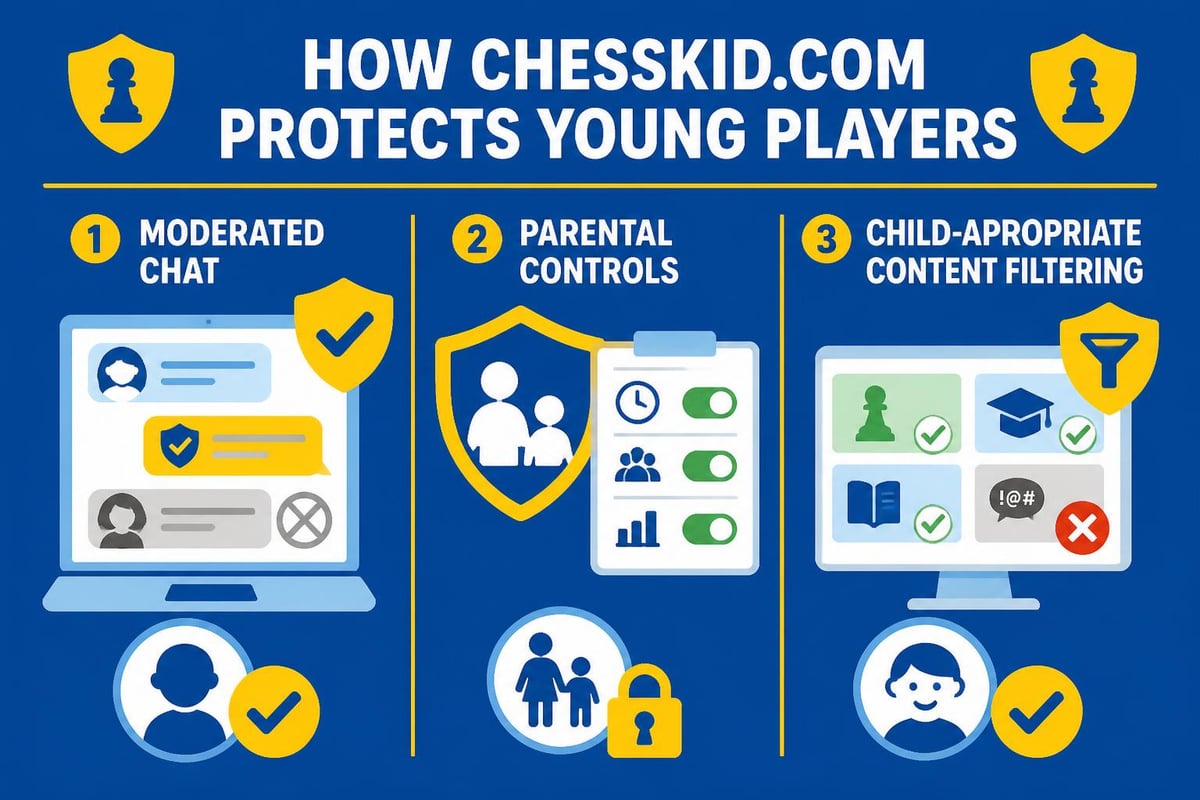
When you're letting your child explore online platforms, safety is paramount. ChessKid com implements multiple layers of protection that differentiate it from adult-oriented chess sites. The platform uses moderated chat functions, ensuring that all communication remains appropriate and constructive. You won't find the sometimes toxic behaviour that can plague online gaming communities here.
The key differences between ChessKid.com and Chess.com highlight how the platform prioritizes child safety whilst maintaining all the educational benefits of chess. Every feature is designed with young learners in mind, from the colorful interface to the age-appropriate challenges.
A Gamified Learning Experience
Let's be honest: traditional chess instruction can feel dry, especially for children with short attention spans. ChessKid com tackles this challenge head-on with gamification elements that keep kids coming back. The platform uses a Stars and Gems reward system that celebrates every achievement, no matter how small.
How the Stars and Gems system works is brilliantly simple. Children earn rewards for completing lessons, solving puzzles, and playing games. These virtual currencies unlock new features and customization options, creating a sense of progression that mirrors video games kids already love.
The Educational Framework Behind ChessKid Com
What separates casual chess play from genuine learning? Structure. ChessKid com doesn't just throw kids into random games and hope they improve. The platform offers a comprehensive curriculum that takes beginners from their first pawn push to intermediate-level play.
Structured Lessons That Build Skills Progressively
The ChessKid.com curriculum is impressive in its scope and organization. Rather than overwhelming young players with advanced concepts, it introduces ideas in digestible chunks. Early lessons focus on piece movement and basic checkmate patterns, whilst later modules tackle opening principles and tactical motifs.
Here's what makes the lesson structure effective:
- Video instruction from experienced chess educators who know how to engage children
- Interactive exercises that immediately reinforce concepts
- Progress tracking that shows children how far they've come
- Adaptive difficulty that adjusts to each learner's pace
This structured approach complements resources like those available at Chess Cheat Sheets, which provide quick-reference guides for specific openings and tactics. Together, they create a comprehensive learning ecosystem.
Puzzle Collections for Tactical Development
Tactics are the building blocks of chess improvement, and chesskid com offers thousands of puzzles organized by theme and difficulty. Unlike random puzzle generators, these exercises are carefully curated to match children's skill levels.
The puzzle library covers essential patterns:
- Basic forks and pins for beginners
- Discovered attacks and skewers for intermediate players
- Complex combinations involving multiple tactical themes
- Endgame puzzles that develop calculation skills
Think of puzzles as the chess equivalent of times tables in mathematics. They build pattern recognition that becomes automatic with practice. When your child encounters a knight fork in a real game, they'll spot it instantly because they've solved dozens of similar puzzles.

How ChessKid Com Supports Different Learning Styles
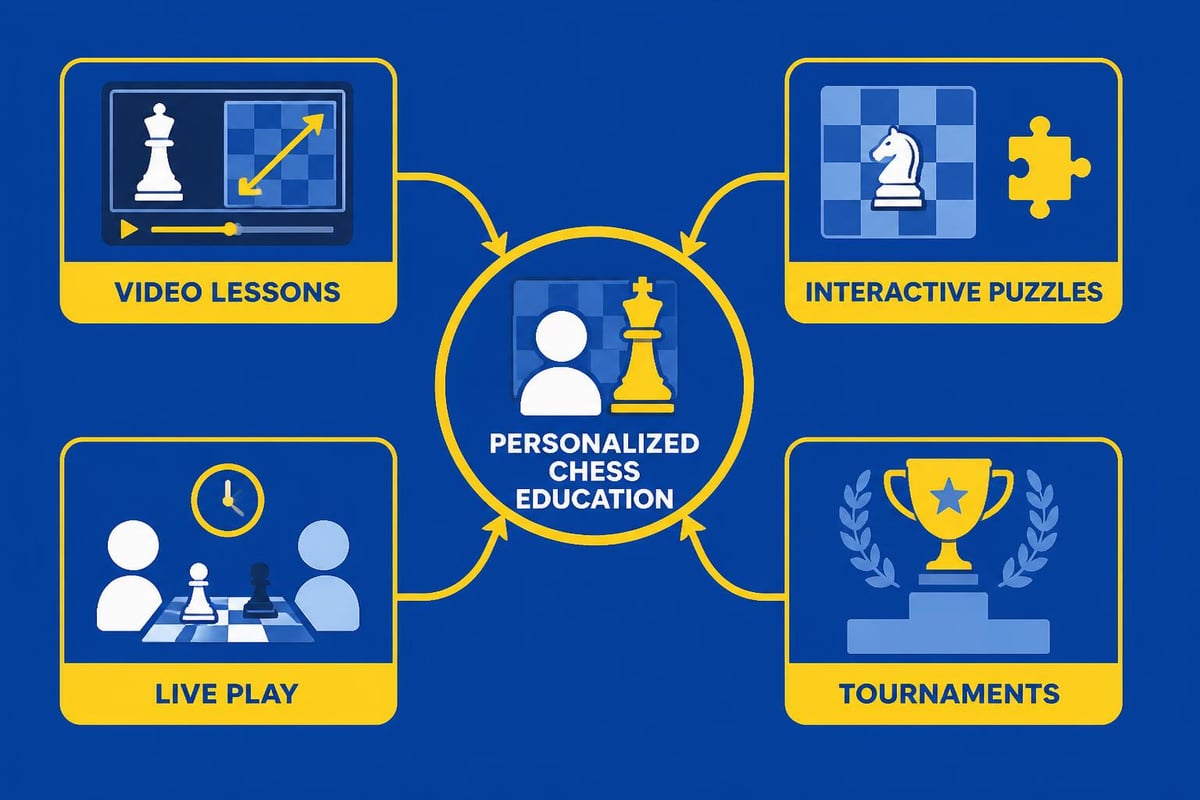
Not every child learns the same way. Some thrive with video instruction, whilst others prefer hands-on experimentation. ChessKid com recognizes this diversity and provides multiple pathways to improvement.
Playing Options for Practice and Competition
The platform offers various playing modes that cater to different goals and temperaments:
| Play Mode | Best For | Key Features |
|---|---|---|
| Live Games | Quick practice, testing openings | Timed matches against opponents worldwide |
| Daily Chess | Thoughtful play, busy schedules | Move when convenient, multiple simultaneous games |
| Computer Play | Pressure-free learning | Adjustable difficulty levels, no time pressure |
| Tournaments | Competitive experience | Age-appropriate events with clear rules |
This variety ensures that whether your child wants a quick game before dinner or a serious tournament challenge, chesskid com has options. The ability to explore different playing formats helps children discover which aspects of chess they enjoy most.
Video Lessons and Interactive Content
Some children absorb information better through visual instruction. The video library on chesskid com features engaging presentations from top chess educators who understand how to maintain young learners' attention. These aren't dry lectures-they're entertaining, informative sessions that feel more like watching their favorite educational content creators.
The interactive elements extend beyond passive watching. Children can pause videos to try positions themselves, test their understanding with quizzes, and revisit challenging concepts at their own pace. This combination of entertainment and education hits the sweet spot for sustained engagement.
The Cognitive Benefits That Extend Beyond the Board
Why should you invest time and energy into your child's chess education? The answer goes far beyond winning games. Research consistently shows that chess develops transferable skills that benefit children in academics and life.
Critical Thinking and Problem-Solving Skills
Every chess position is a puzzle waiting to be solved. When children play on chesskid com, they're constantly evaluating options, predicting consequences, and adjusting strategies. These analytical skills transfer directly to mathematics, science, and logical reasoning in other subjects.
The cognitive benefits of chess for children are well-documented. Studies show improvements in:
- Pattern recognition that helps with mathematical thinking
- Planning abilities that support academic organization
- Concentration that extends to classroom settings
- Memory retention that aids in all learning areas
As someone who works in chess education, I've seen countless examples of children who struggle with focus in traditional settings but can concentrate for extended periods on chess problems. The game provides intrinsic motivation that textbooks often lack.
Character Development Through Competition
Chess teaches children how to win gracefully and lose constructively. On chesskid com, every game becomes a lesson in sportsmanship. The platform encourages good etiquette, from saying "good game" after matches to analyzing mistakes without making excuses.
These character-building experiences are invaluable. When your child loses a close game because of a blunder, they're learning resilience. When they fight back from a difficult position to secure a draw, they're developing perseverance. These lessons shape character in ways that extend far beyond the chessboard.
Integrating ChessKid Com with Other Learning Resources
Whilst chesskid com provides an excellent foundation, combining it with complementary resources creates a more robust chess education. Think of the platform as your child's primary classroom, with additional materials serving as textbooks and homework.
Supplementing with Opening Guides and Cheat Sheets
Once your child has grasped basic principles through chesskid com, introducing them to specific openings can accelerate improvement. Resources that focus on common chess openings provide quick-reference guides that children can review before games.
For example, if your child consistently plays 1.e4, having a cheat sheet for responding to common defenses gives them confidence. They'll recognize when opponents play the French Defense or Sicilian and know the key ideas. This targeted knowledge complements the general principles taught on chesskid com.
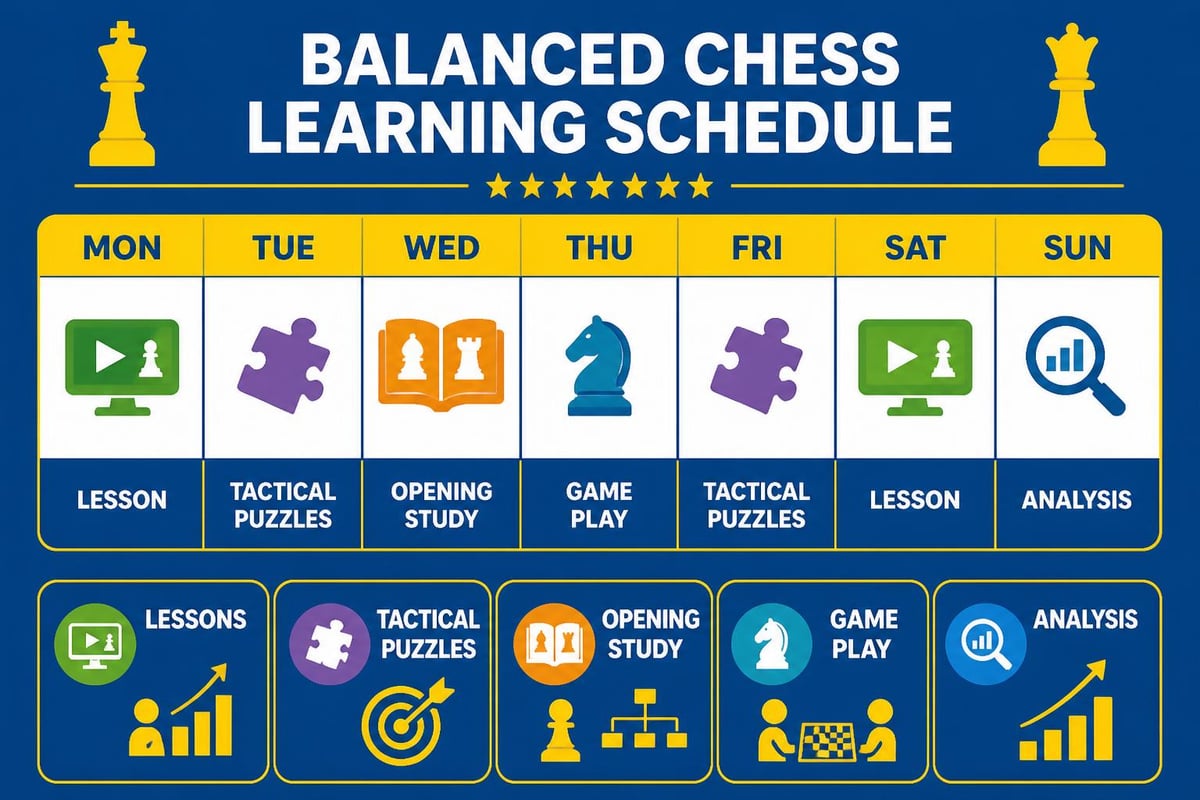
Creating a Balanced Study Routine
How should you structure your child's chess time? Here's a framework that balances different learning modes:
Daily (15-20 minutes):
- 3-5 puzzles on chesskid com to maintain tactical sharpness
- Review one lesson or watch one short video
- Play one quick game to apply learned concepts
Weekly (1-2 hours):
- Deeper study of one opening system using guides
- Participate in a tournament or longer time control games
- Analyze 1-2 recent games to identify patterns
Monthly:
- Review progress and celebrate achievements
- Adjust focus areas based on recurring weaknesses
- Set new goals and challenges
This structure prevents burnout whilst maintaining consistent exposure to chess concepts. The variety of learning resources available means you can always find fresh angles to keep study sessions interesting.
How Educators and Coaches Use ChessKid Com
If you're a teacher or chess coach, chesskid com offers tools specifically designed for classroom and club settings. The platform recognizes that group instruction has different needs than individual learning.
Classroom-Friendly Features
The educator tools on chesskid com simplify managing multiple students. You can create class rosters, assign specific lessons or puzzles, track progress across your entire group, and organize internal tournaments. These features transform chess from an individual pursuit into a collaborative classroom activity.
Many schools have integrated chess into their enrichment programs precisely because platforms like chesskid com make implementation straightforward. You don't need to be a chess master to guide students through the curriculum-the structured lessons do the heavy lifting whilst you facilitate and encourage.
Monitoring Progress and Identifying Areas for Improvement
One challenge in teaching chess is understanding where each student struggles. ChessKid com's analytics provide insights into common mistake patterns, puzzle completion rates, and game performance metrics. This data helps you tailor instruction to address specific weaknesses.
For instance, if multiple students in your class struggle with back-rank checkmate patterns, you can dedicate a session to that specific tactic. The platform's flexibility allows you to supplement the standard curriculum with targeted interventions based on actual student data.
Making the Most of Your ChessKid Com Subscription
So you've decided to try chesskid com-excellent choice! But how do you maximize the value and ensure your child stays engaged? Here are strategies from parents and educators who've successfully integrated the platform into learning routines.
Setting Achievable Goals and Celebrating Progress
Children thrive on concrete achievements. Rather than vague aspirations like "get better at chess," set specific, measurable goals:
- Complete one lesson per week for consistent learning
- Solve 50 puzzles per month to build tactical vision
- Play 20 games to apply learned concepts
- Achieve a rating milestone (e.g., reach 800, then 900)
- Learn one new opening thoroughly each month
Celebrate when your child hits these milestones. The built-in rewards system on chesskid com helps, but external recognition from you matters even more. A special treat after completing a difficult lesson unit reinforces the value of effort and persistence.
Balancing Screen Time with Over-the-Board Play
Whilst chesskid com offers tremendous convenience, don't neglect physical chess experiences. Playing on an actual board develops different skills, particularly visualization and spatial awareness. The tactile experience of moving pieces reinforces learning in ways that clicking a mouse cannot replicate.
Consider this balance:
- 70% digital for convenience, puzzle variety, and structured lessons
- 30% physical for tournaments, club play, and family games
This ratio ensures your child gets the best of both worlds. The principles learned on chesskid com transfer perfectly to over-the-board play, and vice versa. Some families establish traditions like Sunday afternoon chess matches using a physical set whilst daily practice happens online.
Comparing Subscription Tiers and Features
ChessKid com offers different membership levels, each with varying features. Understanding these tiers helps you choose the option that best fits your child's needs and your budget.
Free vs. Premium Membership
The free version provides substantial value, but premium membership unlocks the full learning potential. Here's how they compare:
| Feature | Free | Premium |
|---|---|---|
| Basic Lessons | Limited | Full Library |
| Daily Puzzles | 5 per day | Unlimited |
| Live Games | Available | Available |
| Video Library | Sample videos | Complete access |
| Tournaments | Some | All |
| Progress Tracking | Basic | Detailed analytics |
For serious learners, premium membership becomes worthwhile quickly. The unlimited puzzle access alone justifies the cost, considering how crucial tactical training is for improvement. However, the free tier provides enough to determine whether your child enjoys chess before committing financially.
How ChessKid Com Builds Confidence in Young Players
Perhaps the most underrated benefit of chesskid com is how it builds genuine confidence through competence. Unlike participation trophies, chess achievements feel earned. Your child knows that puzzle they solved required real thinking. That game they won came from applying learned principles.
Creating a Positive Learning Environment
The platform's design emphasizes growth over perfection. When children make mistakes, the system frames them as learning opportunities rather than failures. Lost a game because of a blunder? The analysis feature shows exactly where things went wrong, turning defeat into a lesson.
This growth mindset approach, combined with the life skills chess develops, creates resilient learners who embrace challenges. They understand that every grandmaster started as a beginner who didn't know how knights moved. The path to improvement involves countless mistakes, and that's perfectly okay.
Connecting with a Global Community
Chess transcends language and cultural barriers. On chesskid com, your child might play opponents from dozens of different countries. This exposure broadens their worldview and demonstrates that shared interests can unite people across vast distances.
Many children form friendships through the platform, finding peers who share their passion for chess. These connections can be particularly valuable for kids who don't have chess-playing friends locally. The community aspect transforms what could be a solitary pursuit into a social experience.
Advanced Features for Growing Players
As children progress beyond basics, chesskid com scales with their development. The platform includes features that challenge intermediate players whilst maintaining the accessible interface that works for beginners.
Opening Explorer and Game Database
Understanding opening theory becomes important as players advance. The opening explorer tool on chesskid com shows popular continuations, win rates, and key ideas for major openings. This feature bridges the gap between beginner play and more sophisticated opening preparation.
Pairing this with detailed guides on specific systems-like understanding the pros and cons of the Queen's Gambit-gives developing players a complete picture. They see the moves in the explorer and understand the strategic reasoning behind them.
Analysis Tools for Self-Improvement
The game analysis feature might be the most valuable tool for serious improvement. After each game, children can review their moves with computer assistance, identifying mistakes and missed opportunities. This self-directed learning develops critical analytical skills.
Encourage your child to analyze at least one game per week thoroughly. Ask questions like:
- Where did you first get into trouble?
- What alternative move might have been stronger?
- Did you miss any tactical opportunities?
- What will you do differently next time?
This reflective practice accelerates improvement far more than simply playing game after game without review.
Addressing Common Concerns About Online Chess for Children
Parents naturally have concerns about screen time, online safety, and whether digital chess provides genuine educational value. Let's address these thoughtfully.
Managing Screen Time Effectively
Yes, chesskid com involves screen time, but it's cognitively active rather than passive consumption. Unlike watching videos, chess requires constant decision-making and problem-solving. That said, balance remains important.
Set clear boundaries around chess time, just as you would with other activities. The structure suggested earlier-15-20 minutes daily for younger children, up to an hour for older, more serious players-prevents chess from dominating all free time. Treat it as you would music practice or sports training: valuable when balanced with other activities.
Ensuring Positive Online Interactions
The moderated environment on chesskid com significantly reduces risks associated with online interaction. However, maintaining open communication with your child about their online experiences remains essential. Regularly ask:
- Who did you play against today?
- Did anyone say anything that made you uncomfortable?
- Did you learn anything interesting?
- What was your favorite game?
These conversations keep you informed whilst teaching your child to reflect on their experiences. They also reinforce that you're interested and involved in their chess journey.
The Long-Term Impact of Early Chess Education
What happens when children start chess young and stick with it through chesskid com and beyond? The research and anecdotal evidence paint a compelling picture.
Children who engage seriously with chess tend to develop stronger academic performance, particularly in mathematics and reading comprehension. The critical thinking skills transfer directly to problem-solving in other domains. Moreover, the discipline required to improve at chess-consistent practice, studying from mistakes, persevering through challenges-builds character traits that benefit every area of life.
Even children who eventually move on from competitive chess retain these benefits. The cognitive development doesn't disappear when they stop playing tournaments. Chess becomes part of their mental toolkit, a framework for approaching complex problems throughout their lives.
Whether your child becomes a titled player or simply enjoys casual games, the skills developed through platforms like chesskid com provide lasting value. And honestly, isn't that what we want from any educational investment? Not just immediate results, but foundational skills that serve them for decades to come.
ChessKid com provides an exceptional foundation for young chess learners, combining safety, structure, and engagement in ways that keep children motivated whilst building genuine skills. However, supplementing platform lessons with targeted resources can accelerate progress even further. That's where Chess Cheat Sheets comes in, offering streamlined opening guides, tactical puzzles, and quick-reference materials that complement ChessKid's curriculum perfectly. Whether your child is just starting their chess journey or looking to sharpen specific aspects of their game, combining these resources creates a comprehensive learning ecosystem that makes improvement both efficient and enjoyable.


