

Imagine achieving your first flawless chess win in 2026. What if you had a clear blueprint to make that dream a reality? This guide is designed to give you exactly that, packed with the newest strategies, expert insights, and proven training methods you need for success.
You’ll discover everything from opening theory and tactical tricks to psychological preparation and the latest digital training tools. Recent trends like the surge of chess prodigies and new online platforms are changing the game, and you can use these changes to your advantage.
Ready to unlock the secrets champions use? Take the first step and dive into this guide. Your breakthrough chess win could be just a few moves away.

Understanding the Modern Chess Landscape in 2026
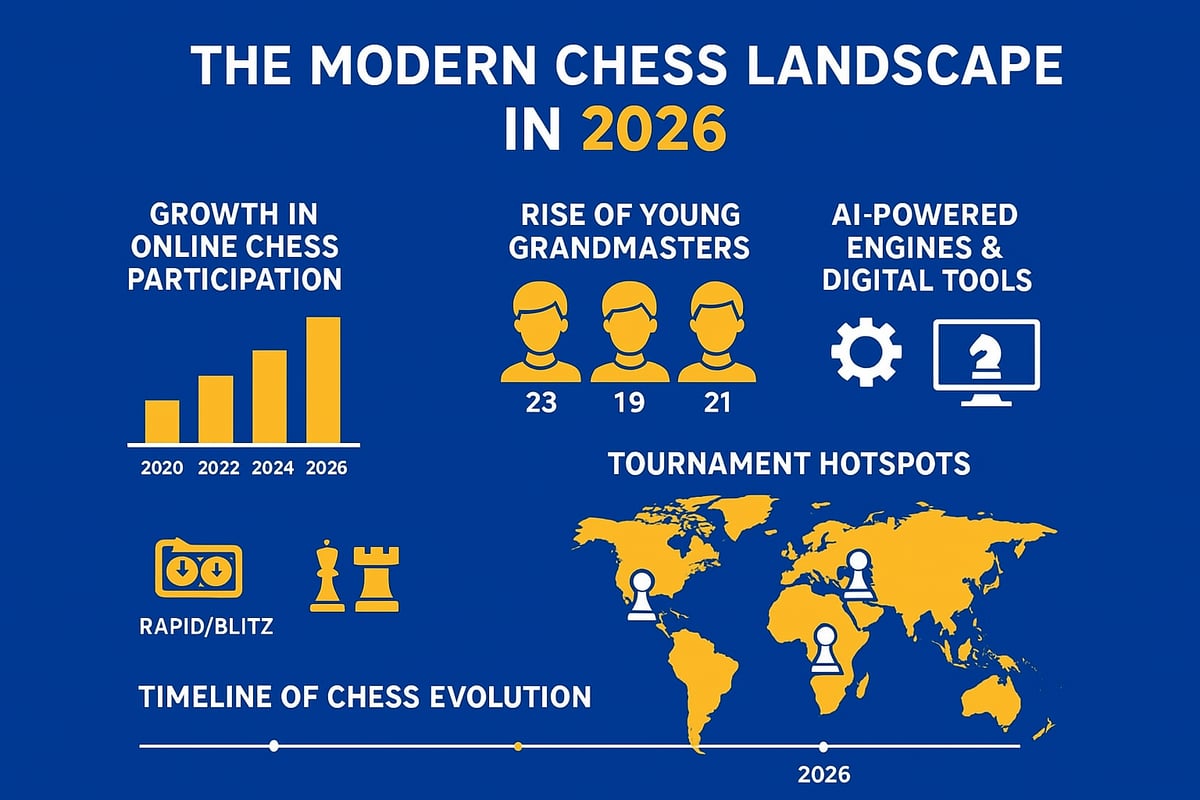
The world of chess in 2026 feels more dynamic and accessible than ever before. Whether you’re just starting out or aiming for your next big chess win, the modern scene offers exciting opportunities and fresh challenges. Let’s take a closer look at how the chess landscape has transformed and what it means for your own pursuit of victory.
The Evolution of Chess Since 2020
Chess has experienced a remarkable transformation over the past few years. The surge in online platforms has made it easier than ever to play, learn, and prepare for a chess win from anywhere in the world. Since 2020, global participation has skyrocketed, with millions joining digital tournaments and casual games alike.
You’ve probably noticed the explosion of streaming and online content. These resources have brought high-level concepts to everyday players, making the journey to a chess win more approachable and fun. The chess community has never been more connected or supportive, opening doors for players of all backgrounds.
The Impact of Technology and AI
Technology is truly at the heart of chess in 2026. AI-powered engines, smart analysis tools, and interactive training apps are now part of every player’s toolkit. These digital resources help you break down your games, spot tactical patterns, and even simulate real tournament conditions.
Online platforms like Chess.com and Lichess host daily events and provide instant feedback, which is critical for anyone aiming for a chess win. The Chess.com Improvement Challenge 2026 is a perfect example, offering structured paths and community support to help you sharpen your skills and track progress.
Rise of Young Grandmasters and New Champions
One of the most exciting changes in recent years is the surge of young grandmasters. Players like Praggnanandhaa and Goryachkina have shown that age is just a number when it comes to chasing a chess win. Their creative play and fearless approach have inspired countless others to push their limits.
This youth movement has also intensified competition at every level. If you want to keep up, it’s vital to study their games and learn from their adaptability. The hunger for innovation and relentless improvement is a hallmark of today’s top players.
Lessons from Recent Championships
The past two years have delivered some unforgettable moments. Magnus Carlsen’s dominance in rapid formats has set a new standard for consistency and preparation. Meanwhile, Goryachkina’s tactical brilliance and resilience under pressure have become case studies for anyone seeking a chess win.
Tactical trends are shifting too. More games are decided by sharp middlegame tactics and creative endgame play. Analyzing these championship matches can reveal practical ideas and psychological tricks you can use in your own games.
Adapting to Rapid and Blitz Formats
Modern chess isn’t just about slow, methodical play. Fast-paced rapid and blitz formats are more popular than ever. These time controls demand quick thinking, solid opening knowledge, and nerves of steel if you want to secure a chess win.
Continuous learning is the secret ingredient. The best players are always updating their repertoires, studying new ideas, and embracing the latest tech tools. If you stay curious and keep adapting, you’ll be ready for whatever the 2026 chess world throws your way.
Step 1: Mastering the Opening—Setting Up for Success
Starting your journey toward a chess win begins with mastering the opening. The opening is your first impression on the board, setting the stage for everything that follows. If you want to consistently outplay your opponents in 2026, you need to treat the opening as the launchpad for your entire strategy.
The Importance of Opening Preparation
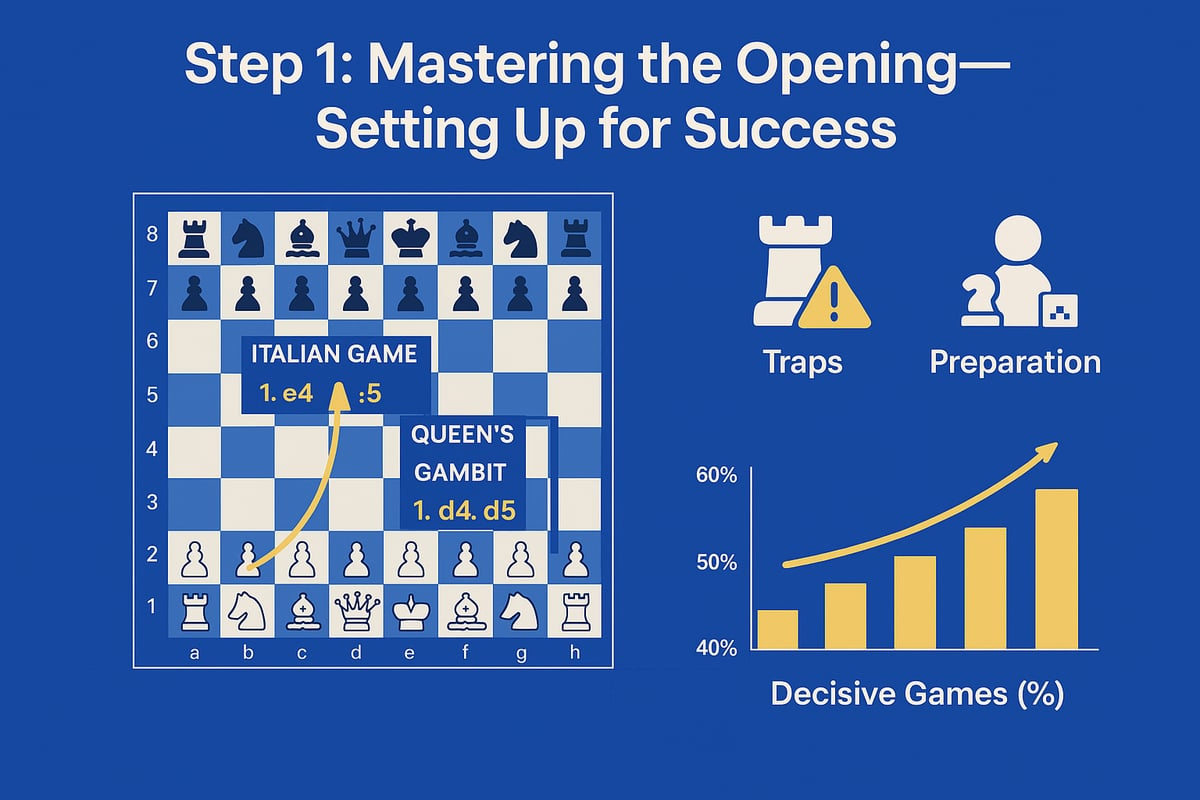
Have you ever wondered why some games slip away before you even reach the middlegame? Opening preparation is the foundation of a chess win. Research shows that a significant percentage of decisive games at every level are influenced by early mistakes or overlooked opportunities.
Let’s say you fall into a common trap like the Blackburne Shilling Gambit. One careless move and your opponent is already ahead. That’s why focusing on solid, reliable opening lines gives you the confidence to steer the game into familiar territory.
When you’re prepared, you save time on the clock and start your chess win journey with momentum.

Popular Openings for 2026
The chess landscape in 2026 is buzzing with fresh trends, but some classics never fade. The Italian Game is making a big comeback, especially because top players like Carlsen have used it to secure rapid victories. The Queen’s Gambit remains a powerhouse, offering dynamic play and control of the center.
The Sicilian Defense is still a favorite for players craving complexity and counterplay. Engines have refined these openings, so knowing the latest move orders is crucial for a chess win.
Here’s a quick comparison:
| Opening | Key Idea | Notable Example |
|---|---|---|
| Italian Game | Rapid development | Carlsen in rapid events |
| Queen’s Gambit | Central control | Goryachkina’s victories |
| Sicilian Defense | Counterattack options | 2026 Blitz Championships |
Keeping up with these trends ensures you’re never caught off guard in your quest for a chess win.
Avoiding Common Traps and Mistakes
Even seasoned players can stumble into notorious traps like Scholar’s Mate or the Blackburne Shilling Gambit. Recognizing these early threats is essential if you want your chess win to be smooth and stress-free.
Here are some traps to watch for:
- Scholar’s Mate: Quick mate threat on f7 or f2.
- Blackburne Shilling Gambit: Tempts you with a pawn, then springs a fork.
- Fried Liver Attack: Sudden assault on f7, often seen in open games.
To avoid these pitfalls, always double-check for threats before grabbing material. Studying recent tournament games also helps you spot new traps that are trending in 2026.
Stay alert, and you’ll sidestep these blunders on your way to a chess win.
Building an Opening Repertoire
Building your personal opening repertoire is like assembling a custom playbook for a chess win. Start by choosing openings that fit your style—are you aggressive or do you prefer solid, positional play? Balance mainline theory with a few surprise weapons to keep opponents guessing.
Consistency matters more than memorizing dozens of lines. Focus on depth, not just breadth. Update your repertoire regularly by reviewing games from top tournaments and adapting to new trends.
For a shortcut to mastering openings, explore resources like the Opening Toolkits for Success, which offer curated guides and visual aids. These tools can help you streamline your preparation and boost your chances of a chess win.
Keep your repertoire sharp, and you’ll always be a step ahead when the clock starts ticking.
Step 2: Tactical and Strategic Mastery—Winning the Middlegame
Ready to turn your chess win dreams into reality? The middlegame is where magic and mayhem meet, and your decisions here shape the entire outcome. Let’s dive into the secrets that separate consistent winners from the rest.
Essential Tactical Patterns Every Winner Must Know
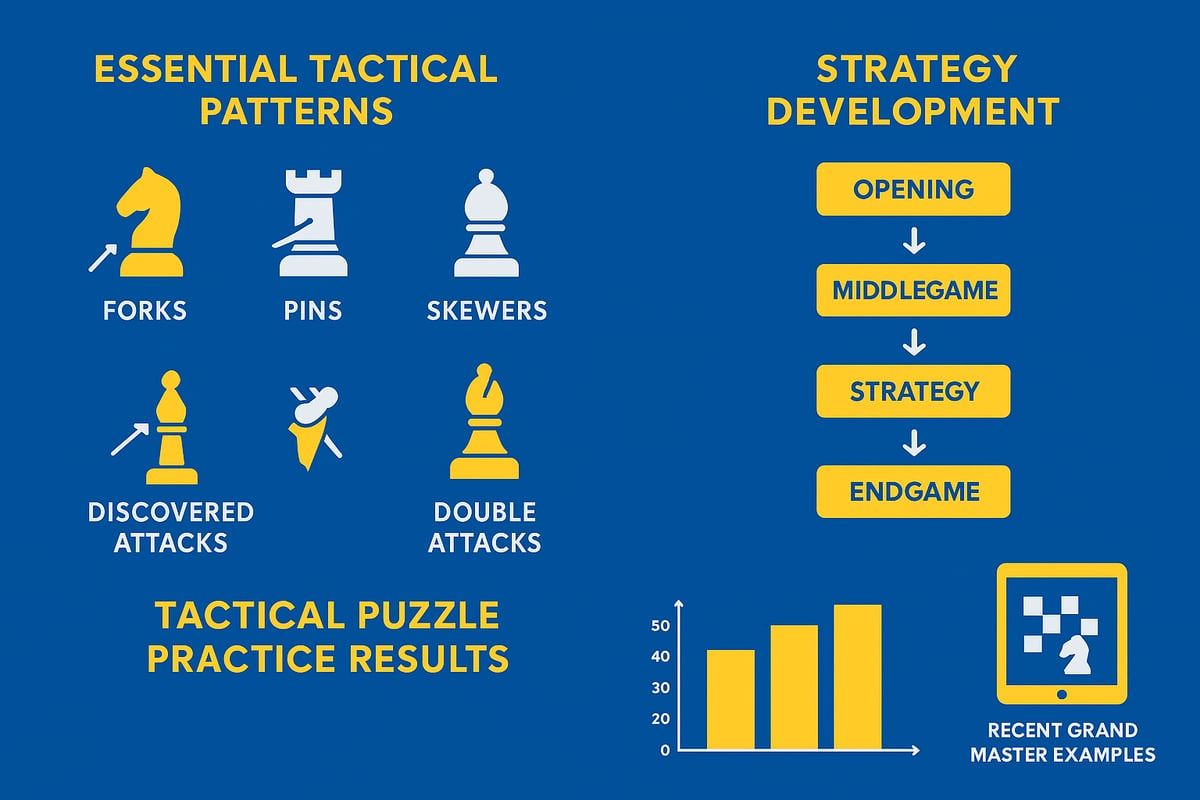
Tactics are the heartbeat of every chess win. Whether you’re just starting out or aiming for master status, you need to spot key patterns fast. Forks, pins, skewers, discovered attacks, and double attacks are your bread and butter.
Think of tactics like secret handshakes in the chess world. If you know them, you’re in the club. For example, a fork lets one piece attack two targets, while a pin freezes a piece in place. In Carlsen vs. Niemann (2025), a single discovered attack shifted the balance and led to a decisive chess win.
Here’s a quick reference table:
| Pattern | Description | Example |
|---|---|---|
| Fork | One piece attacks two | Knight fork |
| Pin | Piece can’t move without loss | Bishop pin |
| Skewer | Attack through a valuable piece | Rook skewer |
| Discovered Attack | Hidden threat revealed | Bishop move |
| Double Attack | Two threats at once | Queen attack |
Mastering these patterns is step one to making your next chess win feel effortless.
Strategic Concepts for Dominating the Board
Tactics may win material, but strategy wins the war. To secure a chess win, you must understand pawn structures, weak squares, and the power of outposts.
Imagine your pawns as the skeleton of your army. Their placement shapes the entire battle. Weak squares are like holes in your defense that opponents target. Outposts are powerful squares where your pieces can anchor and dominate.
Piece activity is another pillar. It’s not just about having more pieces, but about making them work together. Transitioning smoothly from the opening, always have a plan. When you coordinate your pieces and understand these concepts, you’re one step closer to your next chess win.
Practice Methods for Tactical Improvement
How do you actually get better at tactics and boost your chess win rate? It all comes down to practice. Solving daily puzzles trains your brain to recognize patterns in real games.
There are tons of apps and online databases packed with thousands of puzzles. Consistency is key. Track your progress, and you’ll quickly spot your strengths and weaknesses. Want a focused resource? The Tactical Chess Puzzle Collection is a treasure trove designed to sharpen your tactical edge and accelerate your journey to a chess win.
Don’t forget to challenge yourself with puzzles from recent tournaments. This keeps your skills sharp and relevant.
Learning from Recent Grandmaster Games
Ever wondered how the best players turn the tide during the middlegame? Studying grandmaster battles, especially from 2025 and 2026, is like having a roadmap to a chess win.
Analyze how Carlsen outmaneuvered rivals with subtle positional moves. Look at games where a single strategic decision led to victory. Notice the recurring themes—control of key squares, creative sacrifices, or patiently building pressure.
Break down these games move by move. Ask yourself, “Why did they choose this plan?” By thinking like a grandmaster, you’ll unlock new pathways to your own chess win.
Using Digital Tools for Tactical Training
Modern chess win strategies thrive on technology. AI-driven analysis platforms can break down your games, highlight missed tactics, and even suggest training exercises tailored for you.
It’s tempting to rely solely on engines, but balance is crucial. Use feedback to guide your studies, not replace your thinking. Online communities and training partners can provide fresh challenges and new perspectives.
Join online blitz arenas, share positions for feedback, and use digital tools to simulate tournament pressure. These resources make tactical growth smoother and keep your pursuit of the next chess win both fun and effective.
Step 3: Endgame Techniques—Converting Advantages into Wins
Mastering the endgame is your secret weapon for turning promising positions into a hard-earned chess win. Even if you dominate the opening and middlegame, a shaky endgame can let your opponent slip away with a draw or even snatch victory. In 2026, understanding endgame strategies is more crucial than ever, as games continue to be closely contested at every level.
Why Endgames Matter in 2026
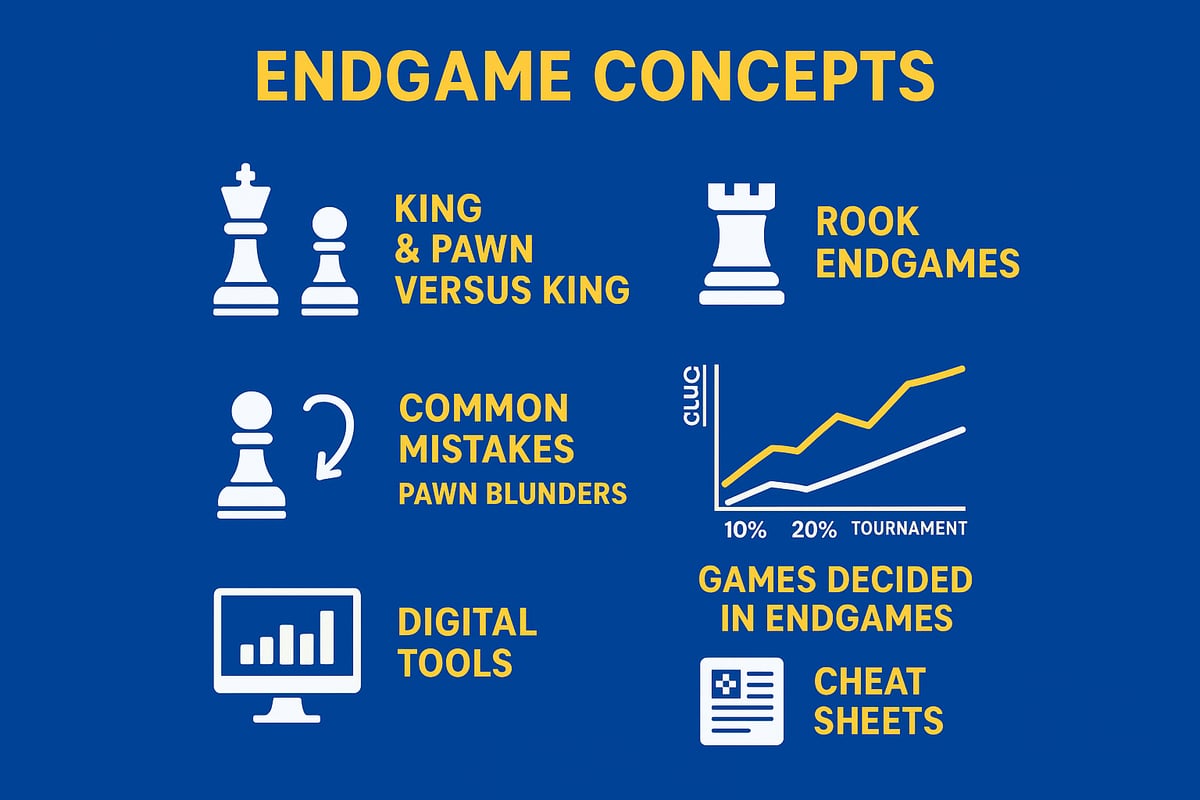
Why focus on the endgame? In today’s tech-savvy chess world, players at every level have easy access to opening theory and tactics, making the endgame the true battleground for a chess win. Recent data shows that over 30% of tournament games are decided in the endgame, especially in rapid formats where precision counts.
Consider Magnus Carlsen’s recent rapid championship runs. His ability to outplay opponents in equal or slightly better endgames is legendary, often turning small advantages into a decisive chess win. As engines and training tools level the playing field, your edge will come from endgame confidence and technique.
Core Endgame Principles and Patterns
Solid endgame fundamentals are your foundation for a chess win. Key principles include the concept of opposition, which lets you control critical squares, and triangulation, a clever way to gain the move in king and pawn endings. Zugzwang, where any move weakens your opponent, is another powerful weapon.
Let’s break down some essential endgame patterns:
| Principle | Description | Example Scenario |
|---|---|---|
| Opposition | King controls key square | King and pawn vs. king |
| Triangulation | Forcing opponent into zugzwang | King and pawn endings |
| Zugzwang | Opponent must make a losing move | Rook endgames |
Mastering these ideas helps you confidently steer the game toward a chess win, even against tough opposition.
Training for Endgame Excellence
Ready to sharpen your endgame skills and secure that elusive chess win? Consistent practice is key. Digital resources make it easier than ever to drill fundamental positions, review classic studies, and test your memory with spaced repetition.
For a focused boost, the Endgame Expertise Collection offers visual guides and practical cheat sheets, making even complex endings easy to remember. Set aside time each week to practice with online trainers, review your games, and revisit challenging positions. Small, regular efforts pay off big when it’s time to convert your next advantage into a chess win.
Common Endgame Mistakes and How to Avoid Them
Even strong players can stumble in the endgame, letting a chess win slip away. Here are a few frequent errors and how to dodge them:
- Pushing pawns too quickly, creating weaknesses
- Misplacing your king far from the action
- Overlooking elementary checkmates or stalemate tricks
Want to avoid these pitfalls? After every game, review your endgame decisions. Pay attention to missed tactics or poor king activity. Top players recover from mistakes by analyzing and learning, ensuring their next chess win is even more convincing.
Step 4: Psychological Preparation and Competitive Mindset
You can master every tactic and memorize every opening, but without the right mindset, that elusive chess win may still slip through your fingers. Psychological preparation is your secret weapon. Let’s break down how to build the mental edge you need to win, stay resilient, and thrive in every game.
Building Confidence and Focus
Confidence is often the invisible driver behind a chess win. Have you ever sat at the board, second-guessing every move? That doubt can be your biggest opponent. Top players use visualization, deep breathing, and pre-game routines to set a positive tone before the first move.
Try this: before your next match, close your eyes and picture how you’ll handle tricky positions. Focusing on your strengths, not your fears, helps you play with clarity. Even simple rituals, like reviewing your favorite opening, can reinforce your mindset.
A calm, focused mind makes it easier to spot opportunities for a chess win. Build these habits into your routine and watch your confidence grow game by game.
Handling Pressure in Critical Moments
Every player faces tense moments where the clock ticks down and the outcome hangs in the balance. How you deal with these situations can be the difference between a blunder and a brilliant chess win.
Start by practicing time management in online blitz games. This teaches you to make sound decisions quickly. When you feel the pressure rising, pause for a second, breathe, and remind yourself of your plan.
Learn from the greats. For example, Goryachkina’s ability to regroup after a setback in tiebreaks shows that composure can be trained. Remember, every chess win often comes down to staying cool when it matters most.
Developing Resilience and Learning from Losses
Not every game will end in a chess win, and that’s okay. The true champions turn losses into stepping stones. After each match, ask yourself: What went right? What can I improve next time?
Post-game analysis is your friend. Top grandmasters keep detailed notes, reviewing missed opportunities and clever tactics. By reflecting honestly, you’ll bounce back stronger and avoid repeating mistakes.
Stories of famous comebacks remind us that resilience is key. When you approach every game as a lesson, you’ll find that every loss brings you closer to your next chess win.
The Role of Sportsmanship and Ethics
A true chess win is built on respect, fairness, and integrity. Good sportsmanship means congratulating your opponent, playing by the rules, and handling disputes calmly. In today’s digital era, cheating concerns have made ethics even more important.
Being a role model in your chess community inspires others and creates a positive playing environment. FIDE’s continued efforts, highlighted in their global survey on chess education, show that ethics and fair play are central to the future of chess.
By upholding these values, you not only increase your chances of a chess win but also help shape a better game for everyone.
Step 5: Leveraging Technology and Resources for Faster Improvement
In 2026, your journey to a chess win is powered by technology. With so many resources at your fingertips, you can learn, train, and compete faster than ever before. The right tools can shave months off your learning curve and help you stay ahead of the competition.
The Best Digital Tools and Platforms in 2026
If you want a chess win, you need the best tools in your arsenal. In 2026, platforms like Chess.com and Lichess offer live play, interactive lessons, and AI-driven analysis.
Look for features such as deep puzzle libraries, personalized feedback, and vibrant communities. Some apps even track your progress and suggest areas for improvement. The right platform makes it easy to review games, challenge friends, and join global events.
With these digital resources, you can practice anytime and anywhere, turning every spare moment into a step closer to your next chess win.
Integrating Chess Cheat Sheets for Efficient Learning
Ever wished you could glance at a quick guide during a tough game? Cheat sheets are your shortcut to a chess win. These visual aids break down openings, tactics, and endgames into easy-to-remember chunks.
Using a Chess Cheat Sheets Collection gives you fast access to essential patterns and strategies. With over 1.5 million puzzles and lifetime access, you can reinforce knowledge without getting bogged down in textbooks.
Cheat sheets are perfect for reviewing before matches or while commuting. They help you remember key moves and avoid common mistakes, keeping your path to a chess win clear and efficient.
Building a Personalized Training Plan
A personalized training plan is your secret weapon for a chess win. Start by analyzing your strengths and weaknesses with built-in analytics from digital platforms.
Set realistic milestones, like mastering a new opening or solving a set number of tactical puzzles each week. Balance your time between online study and over-the-board practice to reinforce learning.
Stick to your plan, review your progress, and adjust as needed. This focused approach ensures every minute you invest moves you closer to your next chess win.
Participating in Online and OTB Tournaments
Regular competition is crucial for a chess win. Online tournaments are more accessible than ever, offering formats like rapid, blitz, and classical to suit your style.
Sign up for events on your favorite platforms, or join local clubs for over-the-board (OTB) action. Each game is a chance to test new ideas, build resilience, and learn from live opponents.
The thrill of real competition accelerates your growth. Use every tournament as a stepping stone toward a confident chess win.
Learning from the Global Chess Community
The chess community is your support system on the road to a chess win. Engage in forums, join Discord servers, and connect with players worldwide.
Follow top players and coaches on social media for daily inspiration and tips. Share your games, ask questions, and offer advice—learning is a two-way street.
By tapping into this collective wisdom, you’ll pick up fresh perspectives, avoid pitfalls, and keep your motivation high as you chase that next chess win.
Step 6: Game-Day Execution—How to Secure the Win
You have prepared, trained, and studied. Now, it is game day. This is where your efforts turn into a real chess win. Let us break down the essential steps for executing your plan and turning preparation into victory.
Pre-Game Preparation Checklist
Game-day success starts before the first move. A solid pre-game routine primes your mind and body for a chess win. Start by reviewing your opening lines and studying your opponent’s recent games. This helps you anticipate surprises and build confidence.
Check off these essentials:
- Sleep well and eat a light meal.
- Arrive early, set up your board, and relax.
- Visualize key positions and imagine yourself achieving a chess win.
- Run through tactical motifs you have practiced.
A calm, focused start gives you the best chance to control the board from the very first move.
Time Management and Decision-Making Under Pressure
Time trouble is the enemy of a chess win. Managing your clock is as crucial as any tactical shot. Use your time wisely in the opening, but avoid overthinking easy moves. Save time for critical middlegame and endgame decisions.
Key tips:
- Allocate more time to unfamiliar positions.
- Use move increments to avoid panic.
- Practice rapid calculation to boost speed and accuracy.
Emerging digital trends, like Emerging Trends in Chess Game Development, are shaping how players train for time management and cross-platform play. Stay updated with these tools to refine your decision-making under pressure.
Recognizing and Capitalizing on Opponent Mistakes
Spotting mistakes quickly is often the difference between a draw and a chess win. Stay alert for tactical blunders, missed threats, or weak moves. When your opponent slips, do not hesitate—seize the initiative.
How to capitalize:
- Watch for undefended pieces and loose pawns.
- Double-check for hidden tactics before executing your plan.
- Keep your emotions in check, even after gaining an advantage.
Real-world games show that many victories in 2026 come from sharp observation and immediate action when an opportunity arises.
Maintaining Focus Through All Game Phases
Focus is your secret weapon for a consistent chess win. Whether you are ahead or fighting from behind, mental clarity matters at every stage.
To stay sharp:
- Take deep breaths between moves.
- Avoid distractions at the board or online.
- Remind yourself of your plan after each phase transition.
If you find your mind wandering, gently bring your attention back to the board. Consistent focus helps you avoid careless blunders and maintain momentum.
Post-Game Review and Continuous Improvement
Every chess win—or loss—is a chance to grow. After the game, analyze your moves to identify strengths and areas for improvement. Digital tools now make this process easier than ever.
Best practices:
- Use analysis boards and engines to replay key moments.
- Try tools like CVChess: Converting Chessboard Images to FEN for turning physical board positions into digital reviews.
- Write down lessons learned and set goals for your next match.
This habit of reflection ensures that every game, win or lose, brings you closer to mastery.
So, after walking through all these strategies for dominating your next chess game in 2026, you’re probably wondering, “What’s my next step?” If you’re like me, having everything in one organized spot makes learning so much easier. That’s where a complete resource library really shines—you can brush up on openings, practice tactical puzzles, and revisit endgame guides anytime. If you’re ready to level up and want the most efficient path to chess improvement, why not Get The FULL Chess Mastery Bundle? It’s your all in one toolkit for turning those 2026 chess goals into wins!


