

Searching for a "chess tournament near me" used to mean ringing up your local chess club or scanning notice boards in community centres. In 2026, the landscape has transformed completely, with dozens of online platforms and resources making it easier than ever to find competitive chess opportunities right on your doorstep. Whether you're a complete beginner ready to test your skills or an intermediate player looking to improve your rating, discovering the right tournament can feel overwhelming. Let's walk through exactly how to find, choose, and register for chess tournaments in your area, so you can start competing with confidence.
Why Playing in Local Chess Tournaments Matters
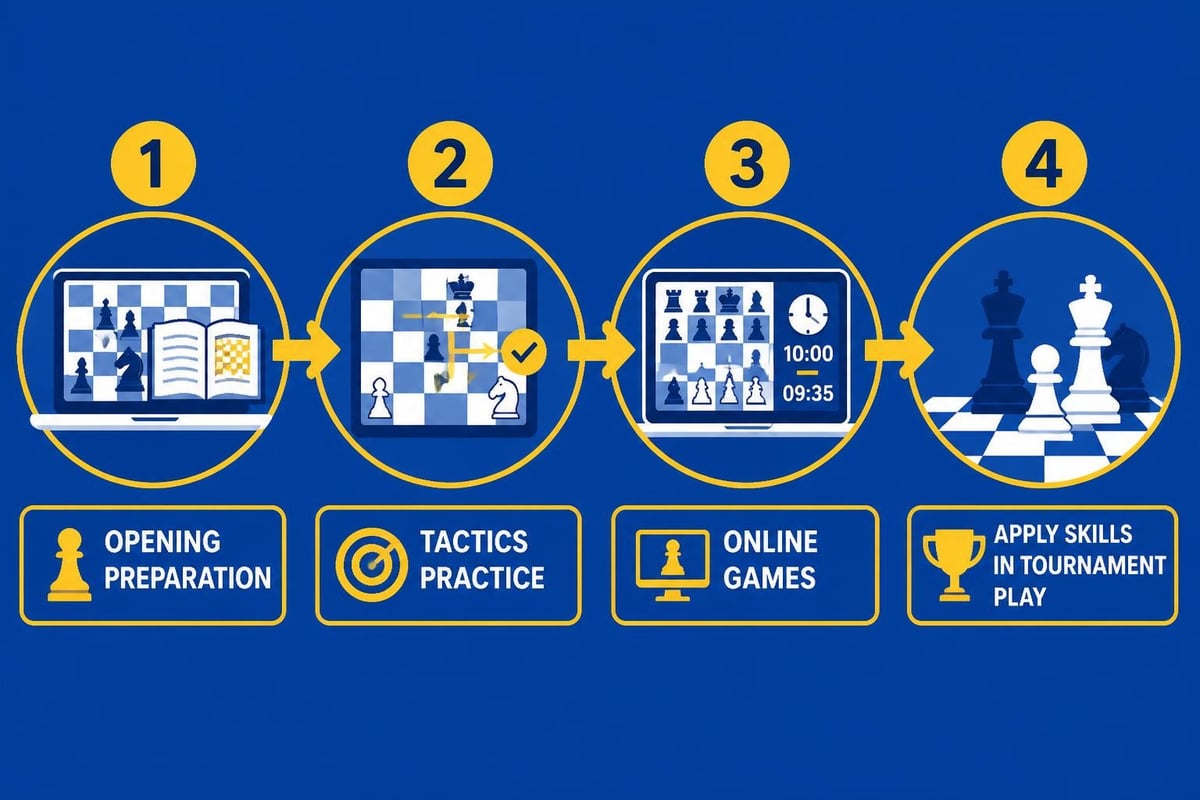
You've probably spent hours studying openings, working through tactics puzzles, and analysing your games online. But nothing compares to the experience of sitting across from a real opponent, clock ticking, in a proper tournament setting.
Local tournaments offer benefits that online chess simply can't match. The nervous energy before your first move, the handshake after a hard-fought game, and the conversations with fellow players during breaks all contribute to your development as a chess player. Plus, you'll quickly discover which parts of your preparation actually hold up under pressure.
Building Your Tournament Experience
When you're searching for a chess tournament near me, you're not just looking for a competition. You're seeking:
- Rating opportunities to establish or improve your official chess rating
- Face-to-face learning from observing stronger players between rounds
- Social connections with your local chess community
- Practical experience that reveals gaps in your preparation
- Motivation to maintain consistent study habits
How to Find Chess Tournaments in Your Area
The search for local chess events has become remarkably straightforward thanks to several dedicated platforms and resources. Let's explore the most effective methods for 2026.
Online Directories and Platforms
Several websites have emerged as essential tools for finding chess tournaments. ChessPlaces maintains a global directory of chess clubs where you can locate clubs in your area and access their event calendars. Similarly, Find Local Chess operates as a community-driven platform specifically designed to help players discover local events, tournaments, and casual meetups.
If you're looking for structured guidance, this comprehensive tournament finding guide offers current strategies for locating events through official federation websites and regional chess organisations.

Your National and Regional Chess Federations
Every established chess nation has a federation that sanctions tournaments and maintains event calendars. In the UK, the English Chess Federation, Chess Scotland, and the Welsh Chess Union all publish tournament schedules months in advance. These organisations ensure tournaments follow proper rules and that your performance affects your official rating.
The beauty of federation websites? They list everything from small weekend events to major championships, all properly categorised by rating sections and time controls.
| Resource Type | Best For | Update Frequency |
|---|---|---|
| National Federations | Official rated tournaments | Weekly |
| Chess Club Websites | Local recurring events | Monthly |
| Community Platforms | Casual and serious events | Daily |
| Social Media Groups | Last-minute opportunities | Real-time |
Local Chess Clubs and Societies
Your nearest chess club remains one of the most reliable sources for tournament information. Many clubs host monthly tournaments and maintain connections with other regional clubs. When you join a club, you're not just gaining access to practice games – you're tapping into a network of players who know about every upcoming event in the area.
Don't overlook university chess societies either. Even if you're not a student, many university tournaments welcome external players, and they often feature competitive prize funds.
Understanding Different Tournament Formats
Not all chess tournaments follow the same structure. Before you search "chess tournament near me" and register for the first event you find, let's clarify what you might encounter.
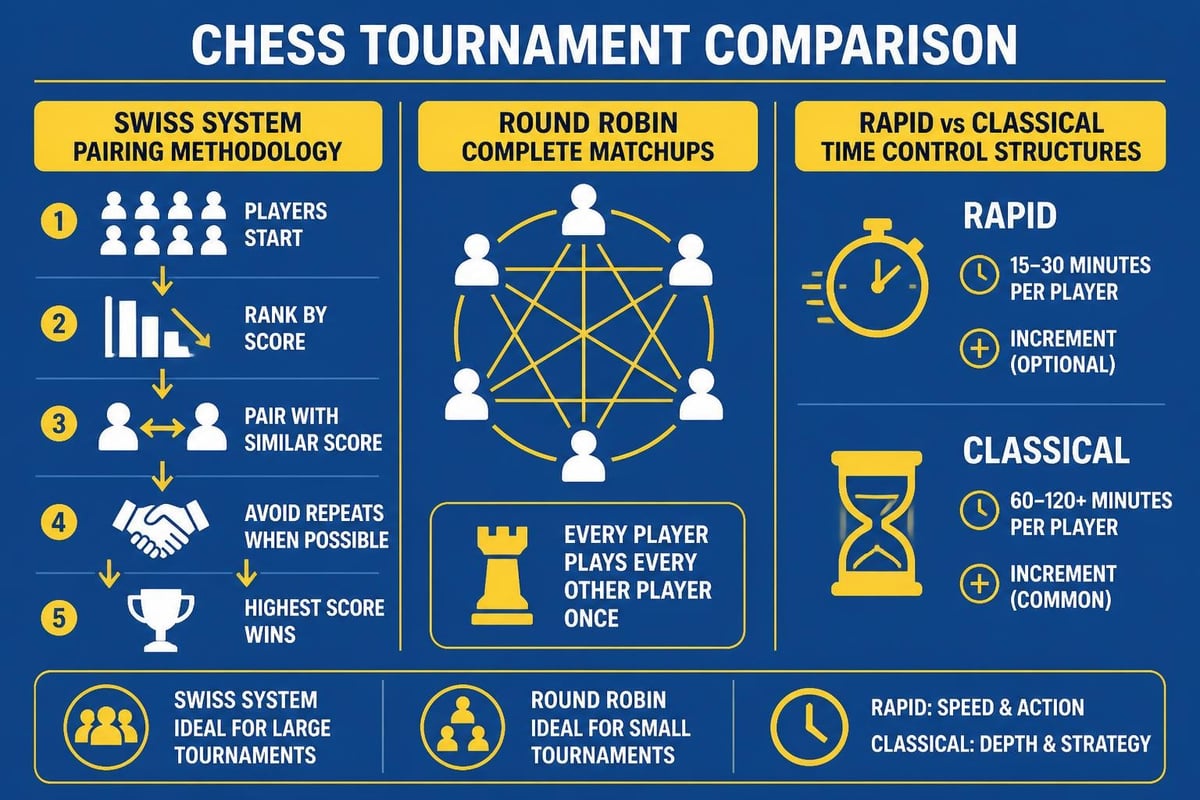
Swiss System Tournaments
The Swiss system is the most common format you'll find at local tournaments. Rather than elimination rounds, you'll play a set number of games (typically 4-7) against opponents with similar scores. Win your first game? You'll likely face another winner in round two.
Recent research has shown that Swiss-system tournaments maintain fairness when organisers use an even number of rounds and balance colour assignments properly. This matters because you want your results to genuinely reflect your playing strength.
Round Robin Events
Smaller clubs sometimes organise round robin tournaments where every player faces every other player. These work brilliantly for groups of 6-12 players and guarantee you'll get plenty of games regardless of your results.
Rapid and Blitz Competitions
Time controls vary significantly. Classical tournaments might give you 90 minutes plus increments, whilst rapid events often use 15 or 25 minutes per player. Blitz tournaments (typically 3-5 minutes) offer fast-paced action but demand quick decision-making.
Consider which format suits your current preparation. If you've been studying opening theory for White extensively, classical time controls give you more opportunity to apply that knowledge accurately.
The Registration Process Explained
You've found a promising chess tournament near me – now what? The registration process follows a fairly standard pattern, but there are crucial details to understand.
Getting Your Chess Federation Membership
Most rated tournaments require federation membership. In the UK, this means joining the relevant national federation (ECF, Chess Scotland, etc.). The membership fee is typically modest (£15-30 annually for adults) and unlocks access to rated tournaments throughout the country.
This detailed registration guide walks through the complete process, including common mistakes to avoid when signing up for your first event.
Choosing the Right Section
Many tournaments divide players into sections based on rating:
- Open section: All players welcome, usually attracts the strongest competition
- Major section: Typically for players rated under 2000
- Intermediate section: Often capped at 1600-1800
- Beginner section: For unrated or low-rated players
Be honest about your current level. Playing in a section slightly above your rating can be educational, but jumping too high leads to frustration rather than learning.
What You'll Need to Bring
Most tournaments require:
- Chess set and clock (though some events provide these)
- Notation sheets (often provided by organisers)
- Proof of membership (membership card or number)
- Entry fee (cash or card, depending on the venue)
- Photo ID (occasionally requested)
Check the tournament details beforehand. Some events specify board and piece dimensions, whilst others are more relaxed about equipment specifications.
Preparing for Your First Tournament
Finding a chess tournament near me is one thing. Showing up prepared is another entirely. Let's talk about what actually matters when tournament day approaches.
Sharpening Your Opening Repertoire
You don't need to memorise 20 moves deep in every variation. What you do need is a solid, reliable repertoire that you genuinely understand. Focus on openings that suit your style and that you've practised extensively.
For instance, if you're playing Black, having confidence in your response to 1.e4 and 1.d4 is essential. Resources like our guide to the best openings for Black can help you choose systems that balance solid foundations with winning chances.
Tactical Sharpness
Tournament games often hinge on tactical opportunities. Spend the week before your event solving puzzles at the appropriate difficulty level. You want your pattern recognition sharp without exhausting yourself mentally.
Physical and Mental Preparation
This might sound excessive for a local tournament, but chess demands stamina. A typical weekend Swiss tournament involves 5-6 games of intense concentration. Consider:
- Getting proper sleep the night before (and during multi-day events)
- Bringing snacks and water for energy between rounds
- Planning your travel to arrive with time to spare
- Knowing when to offer draws or push for wins based on tournament standings
Common Tournament Rules and Etiquette
Every chess tournament operates under the FIDE Laws of Chess, but local events may have specific house rules. Understanding these prevents awkward situations during your games.
Touch-Move Rule
Once you deliberately touch a piece, you must move it if legal. This rule catches many casual players off guard. If you need to adjust a piece on its square, say "I adjust" (or "j'adoube") before touching it.
Recording Your Games
Most classical tournaments require notation. You'll need to record each move until either player has less than five minutes remaining. Your scoresheet becomes the official record if disputes arise about positions or moves.
Mobile Phones and Electronic Devices
Leave your phone in your bag, switched off. Having a phone on your person (even switched off) can result in automatic loss in many tournaments. The rules are strict and enforced consistently.
Claiming Draws
Threefold repetition and the fifty-move rule don't happen automatically. You must claim these draws by informing the arbiter before making the move that would create the situation.
What Happens After the Tournament
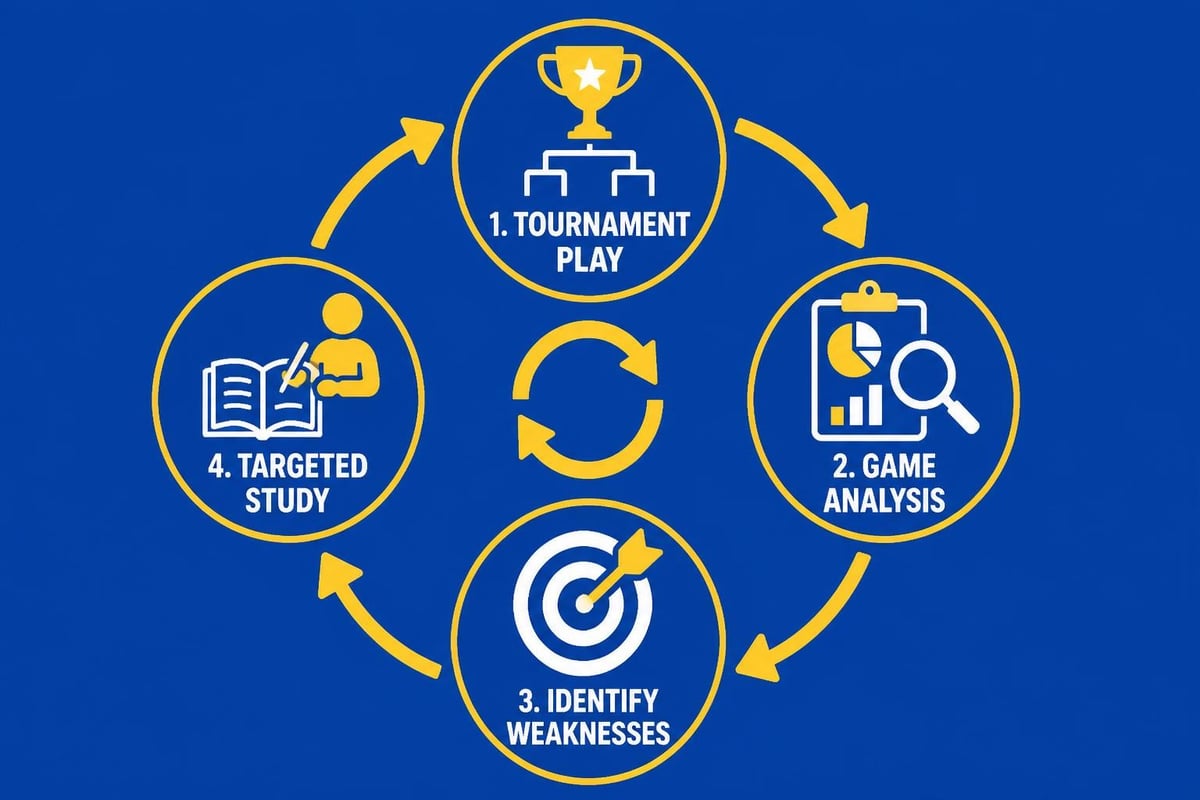
Your first chess tournament near me experience doesn't end when the final game finishes. The real learning begins during post-tournament analysis.
Analysing Your Games
Most players take photos of critical positions or reconstruct their games immediately after play. Modern chess software makes analysis straightforward, but focus on understanding your mistakes rather than just seeing the computer's suggested moves.
Pay special attention to:
- Opening choices: Did your preparation hold up? Where did you deviate from known theory?
- Middlegame plans: Were you following concrete plans or hoping for the best?
- Time management: Did you rush moves or fall into time trouble unnecessarily?
- Tactical oversights: Which patterns did you miss?
Rating Changes and Progress Tracking
Your official rating will update after the tournament results are submitted. Don't obsess over rating points, but do use rating changes as feedback on your overall performance level.
Create a simple spreadsheet tracking your tournament results. After 5-10 events, patterns emerge that reveal your genuine strengths and weaknesses.
| Tournament Date | Section | Score | Rating Change | Key Lessons |
|---|---|---|---|---|
| Jan 2026 | Intermediate | 3.5/5 | +24 | Time trouble in games 4-5 |
| Feb 2026 | Intermediate | 4/5 | +31 | Opening prep effective |
| Mar 2026 | Major | 2.5/5 | -8 | Need endgame study |
Finding the Right Balance: Tournament Frequency
How often should you play in tournaments? There's no universal answer, but most improving players benefit from competing once every 4-8 weeks.
Too frequent tournament play leaves insufficient time for study and skill development. Too infrequent, and you lose the competitive sharpness that only comes from regular over-the-board play.
Seasonal Considerations
The tournament calendar varies throughout the year. Summer often brings larger events and longer time controls, whilst autumn and winter feature more frequent weekend tournaments. Plan your tournament schedule around your study goals and personal commitments.
Building Momentum
Many successful improvers follow a pattern: intense study for 3-4 weeks, followed by a tournament to test their preparation. This cycle creates natural milestones and keeps motivation high.
Resources for Continued Improvement
Playing in tournaments reveals exactly where your chess knowledge needs development. Between events, focused study accelerates your improvement dramatically.
If tournament games exposed weaknesses in your opening preparation, systematic study pays dividends. Our comprehensive opening resources provide structured guidance without overwhelming you with unnecessary variations.
The key is matching your study to the actual problems you encounter over the board. Losing games because you don't understand typical middlegame plans in your openings? That's more valuable feedback than any online rating could provide.
For players building their tournament repertoire, having quick-reference materials proves invaluable. When you've got a week until your next event and need to refresh a specific opening, accessible guides beat encyclopaedic theory books.
Tournament Chess as a Long-Term Journey
Searching for your first chess tournament near me represents the beginning of a rewarding journey. Each event teaches you something new about your chess and yourself. The player who loses every game in their first tournament but learns from each loss progresses faster than the player who avoids competition entirely.
Remember that even world champions started with local club tournaments. Magnus Carlsen, whose opening choices many players study, began his path at small Norwegian tournaments. Bobby Fischer's legendary opening repertoire was forged through countless tournament games before he became world champion.
Your local chess scene offers more than you might expect. Small tournaments build communities, create friendships, and provide the competitive environment that transforms theoretical knowledge into practical skill.
Finding a chess tournament near me in 2026 has never been easier, thanks to online directories, federation websites, and community platforms that connect players with local events. The real question isn't whether tournaments exist in your area, but rather which ones suit your current level and goals. Between tournaments, focused preparation makes the difference between repeated frustration and steady improvement. Chess Cheat Sheets offers exactly the kind of streamlined, practical resources that tournament players need – opening guides, tactical patterns, and endgame principles you can actually remember and apply when the clock is ticking and your opponent is waiting for your move.


