

Are you searching for reliable chess reviews to guide your next move in the world of chess products? In 2025, the options for sets, books, software, and learning tools are more diverse than ever. This guide is here to help you cut through the noise, offering expert-backed insights and practical tips for every player and enthusiast.
You’ll discover how to evaluate products, learn what trends are shaping the chess landscape, and get actionable advice straight from seasoned experts. Ready to make smarter choices and level up your chess experience? Let’s dive in together.

The Evolution of Chess Reviews in 2025
Have you noticed how much buying chess products has changed lately? If you’re searching for the most reliable chess reviews, it’s easy to feel overwhelmed by endless choices and opinions. Let’s break down how the chess market, review platforms, and trust factors have shifted as we head into 2025.

The Changing Chess Market Landscape
The chess world has exploded with new products and innovations since 2020. Online chess platforms have brought millions of new players into the fold, which means more options than ever before. This shift has made chess reviews more crucial, as buyers need help to navigate the crowded marketplace.
Let’s look at what’s driving these changes:
- Growth of online chess communities worldwide
- An influx of digital products like apps, e-books, and online courses
- Surging sales of digital chess boards and smart gadgets
- Product saturation, making reliable chess reviews essential
For example, after 2020, digital chess board sales skyrocketed, with many brands introducing smart, app-connected boards. According to recent data, chess-related searches and purchases have doubled since 2022, showing just how valuable up-to-date chess reviews are for both beginners and seasoned players.
Review Platforms: From Print to Digital
Remember when chess reviews were only found in printed magazines? Now, the landscape is digital and interactive. Major shifts have happened thanks to YouTube, Twitch, blogs, and even Instagram, where influencers break down new products in real time.
Let’s explore how these platforms have changed the game:
- Chess review channels and blogs now reach global audiences instantly
- Social media reviews and influencer endorsements guide buying decisions
- Interactive platforms allow users to ask questions and share feedback
For instance, popular YouTube channels and Twitch streamers regularly review new software and boards, offering honest takes and live demonstrations. It’s no wonder that over 85% of chess buyers consult online chess reviews before making a purchase. Platforms like Visual chess learning resources have also gained traction, providing visual guides and cheat sheets that reviewers and influencers often recommend.
What Makes a Trusted Chess Review?
With so many opinions online, how can you spot a trustworthy chess review? It all starts with transparency and expertise. The most reliable chess reviews clearly disclose any sponsorships and highlight the reviewer’s background in chess.
Here are some hallmarks of a solid review:
- Detailed, unbiased product evaluations
- Transparent criteria and real-world testing
- Honest pros and cons, not just marketing hype
Watch out for red flags like overly positive sponsored content or fake reviews with little detail. Community-driven review platforms often provide more balanced insights than commercial sites. Recent surveys show users have higher trust in peer-generated chess reviews than in expert reviews tied to brands, making community feedback a valuable resource for every chess enthusiast.
Key Criteria for Evaluating Chess Products
Choosing the best chess products can feel overwhelming. With so many options, it helps to know exactly what to look for in chess reviews. Let’s break down the key factors that help you make confident buying decisions, whether you’re eyeing a new chess set, software, or learning resource.
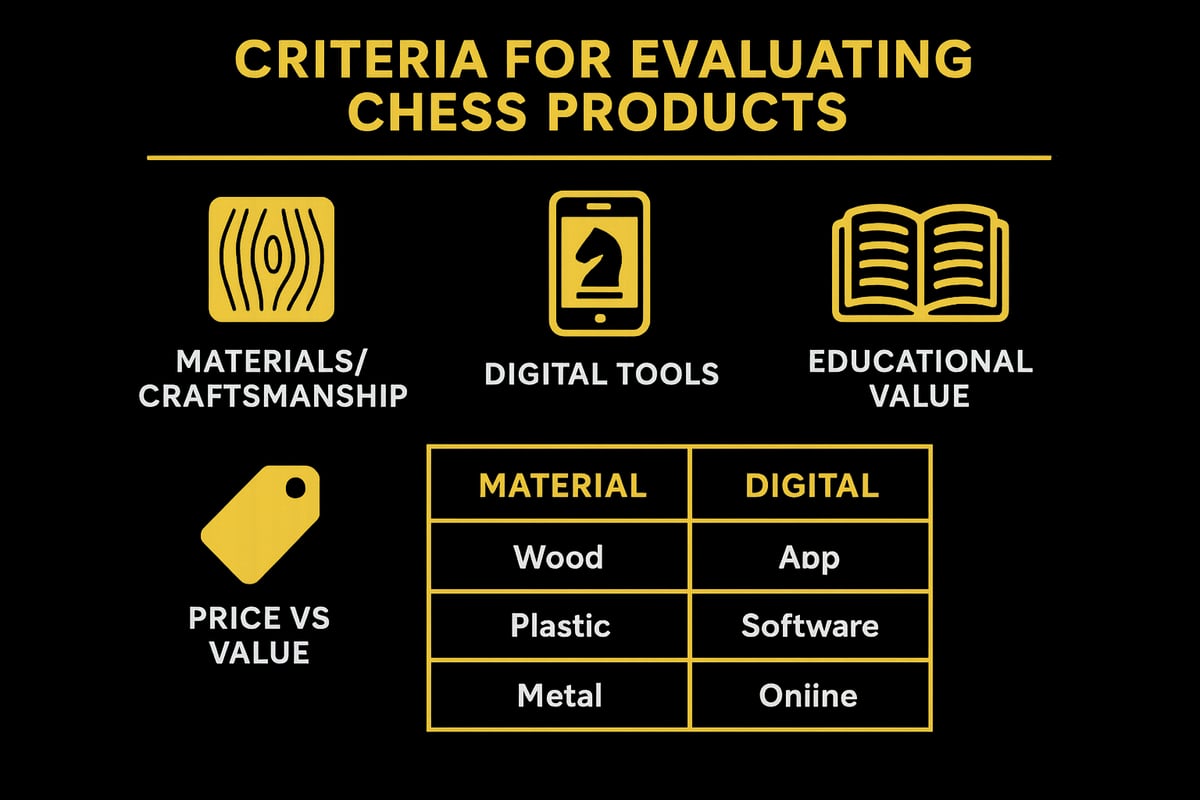
Materials and Craftsmanship: Sets & Boards
When you read chess reviews about sets and boards, pay close attention to the materials used. Wood remains a favorite for its classic look and feel, but modern plastics and luxury composites also have a strong following.
Look for details on durability, weight, and how pieces feel in your hand. A well-crafted chess set can last decades. Popular materials in 2025 include sustainably sourced woods, high-grade plastics, and even metallic finishes. Evaluate craftsmanship by checking for smooth finishing, balanced pieces, and thoughtful design touches.
If you’re comparing products, consider a table like this:
| Material | Durability | Weight | Aesthetic |
|---|---|---|---|
| Wood | High | Medium | Classic |
| Plastic | Moderate | Light | Modern |
| Composite | High | Varies | Luxury |
Chess reviews often highlight these factors to help you choose a set that fits both your budget and style.
Digital Tools: Software, Apps, and Online Platforms
Chess reviews in 2025 devote significant space to digital tools. Software and apps now offer advanced analysis engines, interactive training, and user-friendly interfaces.
Look for features like strong analysis engines, intuitive training modules, and seamless compatibility with your devices. User interface and experience can make or break your enjoyment. Security is also critical, so check for privacy policies and secure logins.
Top chess reviews compare features such as cloud storage, AI-powered feedback, and cross-platform support. If you’re new to digital chess, start with tools that have a simple interface and clear tutorials. Remember to check device compatibility before purchasing.
Educational Value: Books, Courses, and Guides
Not all chess learning resources are made equal. Expert chess reviews dig deep into content quality, author or instructor credentials, and the effectiveness of the teaching style.
Are you a beginner, intermediate, or advanced player? Make sure the product matches your level. Interactive formats, like eBooks and video courses, are gaining popularity for their flexibility. Highly rated instructional products often combine theory, practical examples, and puzzle exercises.
For those interested in sharpening their skills, Improve with chess puzzles is a practical resource highlighted in many chess reviews. It’s a great way to evaluate and reinforce what you learn from books or courses.
Price vs. Value: Making Smart Purchases
Budget is always a consideration, but true value goes beyond price tags. In chess reviews, you’ll often find advice on balancing initial costs with long-term quality and usefulness.
Watch for hidden costs like subscriptions or upgrade fees. For example, some digital platforms have free basic versions but require payment for advanced features. In 2025, the average price range for chess sets and software has widened, so compare what’s included before you commit.
To spot genuine deals, read both expert and user chess reviews. Look for products with clear warranties and return policies. A little research can save you money and help you avoid overpriced options.
User Experience and Community Feedback
What do other players say? Community-driven chess reviews provide valuable, real-world insights. User ratings and feedback often highlight recurring issues or unexpected benefits.
Analyze feedback trends to see if multiple users mention the same strengths or weaknesses. Community rankings can be especially helpful, as they reflect collective experience rather than just one person’s opinion.
When reading chess reviews, focus on patterns in user comments. This helps you identify products that consistently deliver satisfaction or, alternatively, have common drawbacks. Trust the wisdom of the chess community to guide your choices.
Expert Insights on Top Chess Products for 2025
Ready to make the smartest chess decisions in 2025? Let’s explore the top picks from experts, masters, and trusted reviewers. Whether you’re looking for sets, software, books, or gadgets, these insights from leading chess reviews will help you find the right fit for your needs and budget.
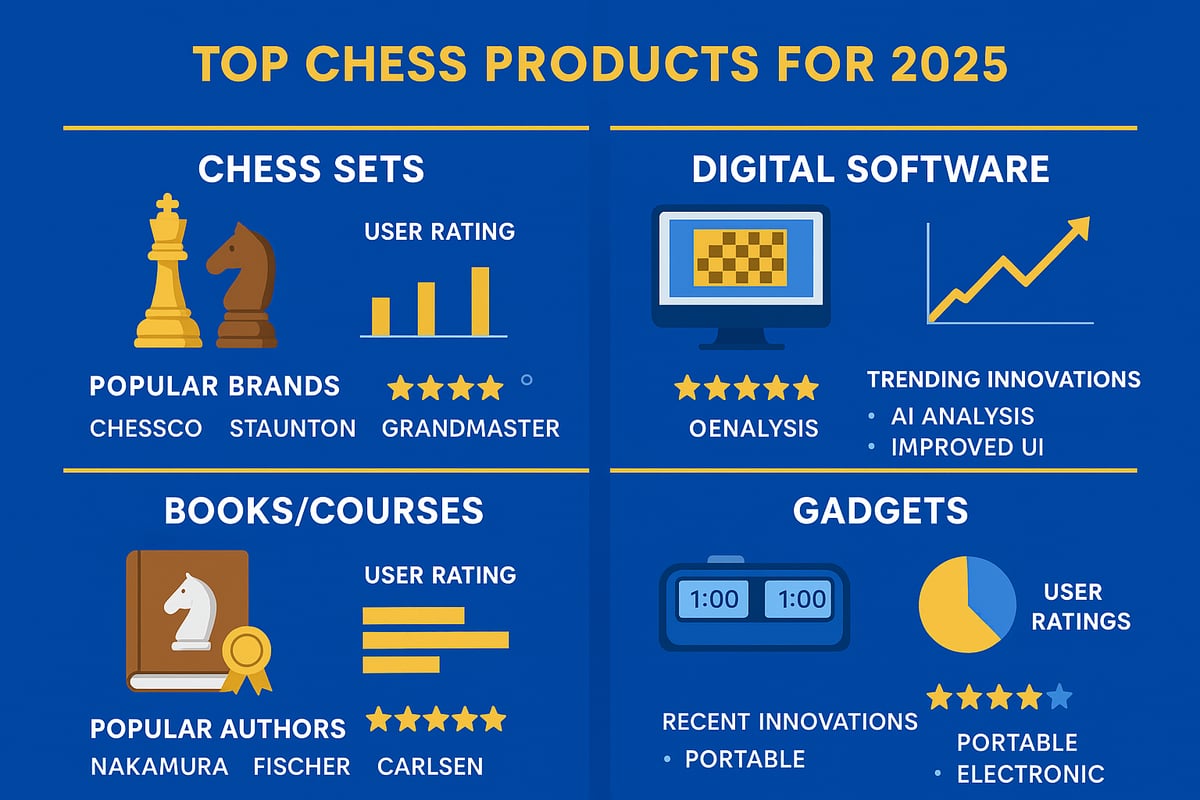
Chess Sets and Boards: Best Picks
Choosing the right chess set can be overwhelming with so many options in today's market. Recent chess reviews highlight a few standouts for different needs.
For tournament play, experts often recommend Staunton-style wooden sets, prized for balance and durability. Club players lean toward weighted plastic sets for affordability and resilience, while home enthusiasts appreciate luxury boards made from exotic woods or marble.
Here’s a quick comparison of top-rated chess sets for 2025:
| Set Type | Material | Best For | Notable Brand |
|---|---|---|---|
| Tournament | Boxwood/Rosewood | Precision Play | House of Staunton |
| Club | Weighted Plastic | Daily Practice | DGT |
| Home/Luxury | Walnut/Maple | Display/Leisure | ChessBazaar |
Pay attention to craftsmanship, finish, and the tactile feel of pieces. Many chess reviews stress the importance of quality, especially for pieces you’ll handle often.
Increasingly, digital boards are gaining ground. Models like the DGT Smart Board are praised for their seamless integration with online play, making them a favorite in recent chess reviews.
Chess Software and Online Tools
If you’re looking to up your game, modern chess reviews point to software as a game-changer. The best platforms combine powerful analysis engines, rich training modules, and user-friendly interfaces.
In 2025, top choices include ChessBase, Lichess, and Chess.com. Each offers unique strengths:
- ChessBase: Deep databases and advanced analysis tools.
- Lichess: Free, open-source, with robust training and puzzles.
- Chess.com: Massive online community, lessons, and adaptive learning.
Here’s a quick table comparing features:
| Software | Analysis Engine | Training | Device Support | Price Model |
|---|---|---|---|---|
| ChessBase | Stockfish | Yes | Windows/Mac | Paid |
| Lichess | Stockfish | Yes | All | Free |
| Chess.com | Komodo/Stockfish | Yes | All | Freemium |
Recent chess reviews emphasize the importance of privacy and regular updates. Look for platforms with active communities and responsive support. Many experts also recommend trying free trials to see which interface feels most intuitive.
Books and Learning Resources
Chess reviews in 2025 consistently highlight the value of well-curated books and courses. For all levels, instructional materials remain a cornerstone of improvement.
Top picks this year include new editions of classics like "My System" and innovative video courses from grandmasters. Interactive eBooks and online classes are particularly popular with beginners and intermediates.
When evaluating resources, consider author credentials, clarity, and whether the format matches your learning style. If you’re interested in mastering openings, check out the Mastering chess openings guide for a comprehensive look at top-rated materials. This resource is frequently recommended in chess reviews for its structured approach and up-to-date content.
Accessories and Gadgets
Accessories can make your chess experience smoother and more enjoyable. Recent chess reviews praise digital clocks with pre-set increments, smart scorebooks, and portable chess sets.
Smart boards with Bluetooth connectivity are trending, letting you play online with physical pieces. Gadgets like piece recognition cameras and app-connected timers are also gaining traction, with users highlighting their convenience.
When reading chess reviews, look for consistent praise for durability, accuracy, and ease of use. Community-driven rankings can reveal which gadgets stand out in real-world settings.
How to Read and Interpret Chess Reviews Like an Expert
Want to get the most out of chess reviews before you buy? Learning how to read and interpret these reviews like an expert can save you money, avoid frustration, and help you find the best chess gear for your needs.
This section breaks down the process into manageable steps, so you can confidently separate hype from genuine insight in the world of chess reviews.
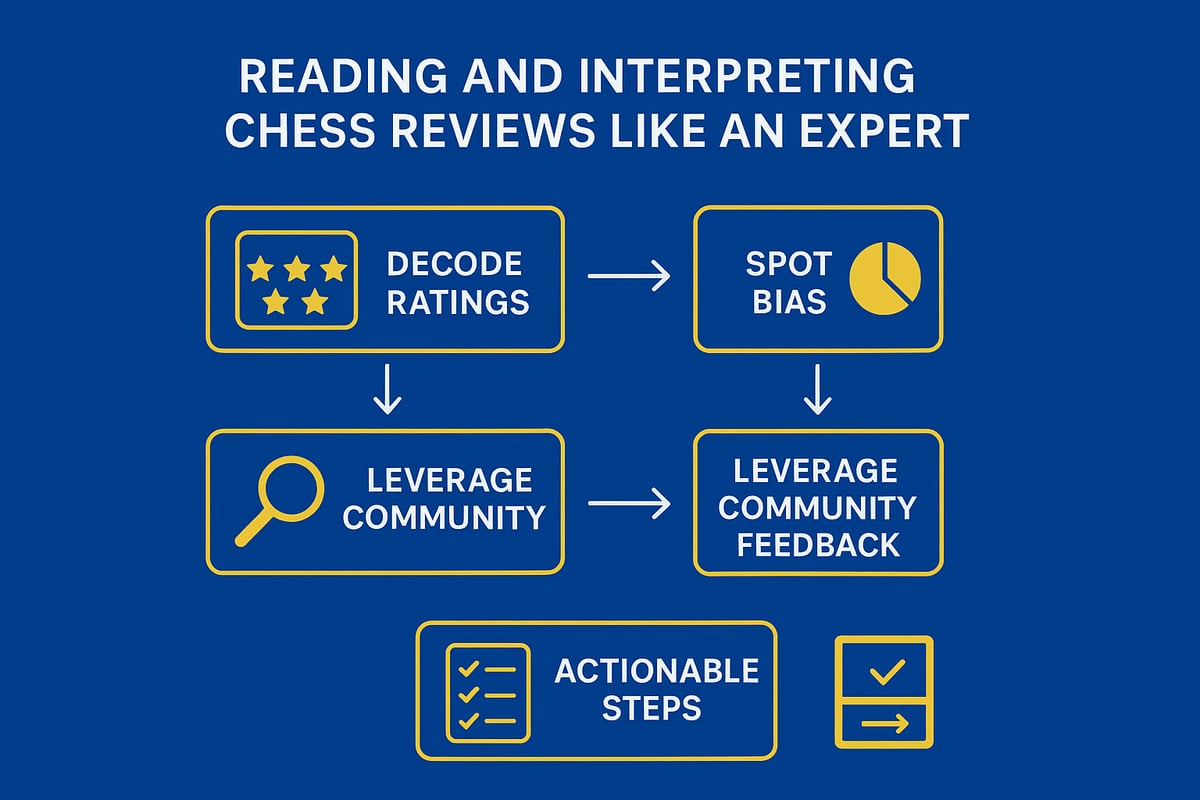
Decoding Review Terminology and Ratings
When you dive into chess reviews, you will spot a variety of terms and rating systems. Some reviews use star ratings, while others offer pros and cons lists or detailed feature breakdowns. Understanding these elements is key to making sense of what each review really means.
Objective evaluations often focus on measurable factors, such as build quality, software features, or durability. Subjective reviews, on the other hand, include opinions about feel, aesthetics, or personal experience. Recognizing this difference helps you know what feedback is based on facts and what is personal taste.
For example, some chess reviews might reference technical aspects, similar to how evaluation function in chess quantifies position strength using material, mobility, and other factors. In product reviews, look for clear explanations of why a product scores high or low in a certain category.
Always check if the review explains its rating system. Are five stars truly excellent, or just above average? Understanding how reviewers rate products will help you compare options effectively.
Identifying Reviewer Bias and Authenticity
Not all chess reviews are created equal. Some reviewers might have incentives to promote certain products, leading to subtle bias. Watch for red flags, such as excessive praise without any mention of drawbacks, or language that sounds like advertising.
To spot authenticity, look for transparency. Does the reviewer disclose any sponsorships or free products? Reliable chess reviews often mention both strengths and weaknesses. If every review on a site is glowing, that is a warning sign.
Cross-referencing multiple sources is your best friend. Compare what different reviewers say about the same product. Are there consistent themes, or do opinions wildly differ? Also, check the reviewer’s credentials. Do they have experience with chess, or are they general product reviewers? The more knowledgeable the reviewer, the more you can trust their insights.
If unsure, look for peer reviews or feedback from actual users in forums. Genuine chess reviews tend to be detailed, balanced, and honest about limitations.
Leveraging Community Wisdom
The chess community is a powerful resource for evaluating products. Forums like Reddit, chess.com groups, and dedicated discussion boards are full of real players sharing their experiences. These conversations can reveal insights you will not find in official chess reviews.
Consensus picks, where many users recommend the same product, are usually safe bets. At the same time, pay attention to outlier opinions. Sometimes a unique perspective highlights a flaw or feature that matters to you.
Community-driven reviews also tend to be more up to date. If a product develops issues after launch, you will hear about it quickly from fellow players. This kind of feedback is especially valuable for digital products, which can change rapidly.
Remember, while expert chess reviews are helpful, the wisdom of the crowd offers practical, real-world insights that can make or break your buying decision.
Actionable Steps for Making Informed Decisions
Ready to put your knowledge into action? Here is a quick checklist for reading chess reviews like an expert:
- Scan for balanced feedback, noting both positives and negatives.
- Prioritize reviews that explain their criteria and rating system.
- Cross-reference expert reviews with user feedback on forums.
- Check reviewer credentials and look for disclosure of sponsorships.
- Test products yourself when possible, using return policies or trials.
If you are evaluating learning tools, try interactive resources like the chess openings quiz for players to gauge their effectiveness firsthand. This extra step gives you a practical sense of whether a tool matches your needs.
By following these steps, you will make smart, confident decisions based on trustworthy chess reviews. With a little practice, you will spot quality products and avoid common pitfalls, turning every purchase into a strategic win.
Future Trends in Chess Products and Reviews
The world of chess reviews is evolving at lightning speed. If you want to make smart choices in 2025 and beyond, you need to know which trends to watch. Let’s explore the future of chess products and reviews so you can stay ahead of the curve.
AI and Technology: Shaping the Next Generation
Artificial intelligence is becoming the backbone of next-gen chess products. You’ve probably seen smart boards that recognize moves instantly or apps that analyze your games in real time. In 2025, AI is not just for analysis engines — it’s woven into everything from online platforms to physical chess sets.
One fascinating example is the Chessboard and piece recognition study, which uses neural networks to digitize physical games. This tech is making it easier to broadcast, review, and even learn from over-the-board matches. Expect chess reviews to focus more on how well products integrate with AI features, like adaptive training or personalized feedback.
AI is also helping aggregate and filter chess reviews, highlighting patterns in user feedback and flagging fake reviews. As these tools improve, you’ll get more accurate and relevant insights before making a purchase.
Sustainability and Ethical Sourcing
Eco-friendly chess sets are quickly moving from niche to mainstream. Players and collectors are asking tough questions: Is this board made from sustainable wood? Were the workers paid fairly? Transparency is now a selling point, and brands that ignore ethical sourcing risk losing trust.
Here’s a quick look at what’s trending:
| Trend | What It Means for You |
|---|---|
| Recycled materials | More sustainable options |
| Ethical labor | Brands disclose practices |
| Minimal packaging | Less waste, greener choices |
Chess reviews increasingly highlight these factors. If you care about the planet, you’ll find it easier to spot products that match your values in 2025.
The Role of Community and Social Influence
Social media is shaping the chess world in ways we couldn’t imagine a few years ago. Product launches happen on Twitch streams, and influencer endorsements can make or break a new chess set. The community has more power than ever in guiding trends and creating buzz.
Crowdsourced feedback loops are becoming the norm. Companies listen to real user input on forums and adapt products on the fly. Chess reviews now often include community rankings, and you’ll see more user-driven “best of” lists every year.
So, if you trust your favorite streamer or chess forum, you’re not alone — their voice is influencing the marketplace in real time.
Anticipated Shifts in Review Practices
Chess reviews are getting a makeover. Static text is giving way to dynamic video reviews, interactive demos, and even live Q&A sessions. These new formats make it easier for you to get a real feel for a product before buying.
To combat fake reviews, platforms are rolling out verification systems. Some use AI to spot suspicious patterns, while others require proof of purchase before posting. This shift helps ensure the chess reviews you read are authentic and trustworthy.
For those interested in understanding mistakes and decision-making, studies like Assessing human error in chess are informing review criteria, making evaluations more data-driven and objective.
Preparing for the Chess Marketplace of Tomorrow
How do you thrive in this fast-changing landscape? First, stay curious. Subscribe to trusted review channels and join chess communities that share honest opinions. Build a personal network of fellow players who can offer recommendations based on experience.
Keep an eye out for new platforms and be ready to adapt. The best chess reviews will blend expert analysis with user feedback, so learn to synthesize both. Remember, lifelong learning is the secret weapon for every chess enthusiast navigating the evolving marketplace.
So after diving into all these expert tips and review secrets, you might be wondering, “What’s my next step toward mastering chess in 2025?” Honestly, the fastest way to level up is to focus on your openings—those first few moves set the whole tone for your game. If you’re ready to put what you’ve learned into practice and start seeing real improvement, why not take advantage of some streamlined resources? You don’t have to memorize endless lines or get overwhelmed. Just Start Improving Your Openings and see how much smoother your chess journey can be.


