

Have you noticed how chess is everywhere these days? With more players joining the game and new tactics emerging, the world of chess feels fresher than ever in 2026. Whether you are a beginner or a seasoned enthusiast, keeping up with the latest chess player moves is essential if you want to stay ahead.
In this guide, you will discover proven strategies, expert insights, and up-to-date move recommendations for every stage of the game. We will break down the fundamentals, share practical tips, and introduce digital tools that can help you master your next match.
Ready to sharpen your skills and make smarter moves? Dive in and see how modern chess player moves can elevate your play, from the opening to the final checkmate.

Understanding Chess Moves: Fundamentals and Principles
Mastering chess player moves starts with understanding the basics. Whether you are just beginning or aiming to sharpen your skills, knowing how each piece moves, the rules of notation, and the foundational principles can transform your gameplay.
The Anatomy of a Chess Move
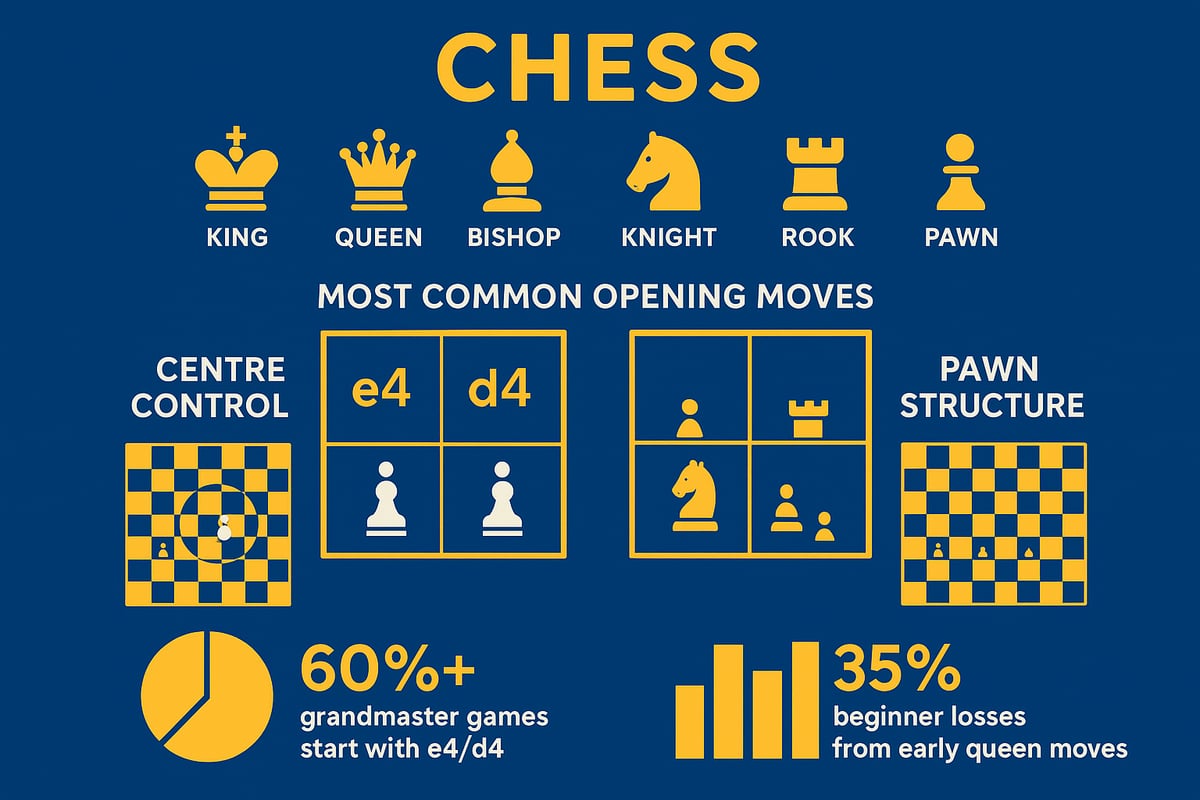
Each chess piece follows unique movement patterns. The king moves one square in any direction, the queen covers any number of squares along ranks, files, or diagonals, bishops move diagonally, knights jump in an L-shape, rooks travel horizontally or vertically, and pawns advance forward, capturing diagonally.
Understanding the legality of chess player moves is crucial. Moves must not leave your king in check, and notation helps you record and review games. Algebraic notation, like e4 or Nf3, is widely used. Here is a quick example:
1. e4 e5
2. Nf3 Nc6
Tempo and initiative play a big role. Choosing moves that develop your position while putting pressure on your opponent gives you the upper hand. In fact, over 60% of grandmaster games begin with 1.e4 or 1.d4, highlighting their popularity. If you want to see the full landscape of popular chess player moves, check out the most common chess openings for practical insights and trends.
Core Principles Behind Effective Moves
Effective chess player moves are built on timeless principles. Controlling the centre (squares like e4, d4, e5, d5) allows your pieces to influence the board and gain space. Rapid piece development is vital—bring out your knights and bishops before moving the same piece twice or launching early attacks.
King safety is another key. Castling early shields your king and connects your rooks, making your position sturdier. Pawn structure shapes your strategy. Avoid creating weaknesses like isolated or doubled pawns, and use your pawn chain to support attacks or defend key squares.
Classic openings like the Italian Game and Queen’s Gambit perfectly showcase these ideas. In the Italian Game, for instance, you develop knights and bishops quickly, control the centre, and prepare to castle—all essential chess player moves for a strong start.
Mistakes to Avoid with Early Moves
It is easy to make mistakes in the opening phase. One common error is moving the same piece multiple times before completing development, which wastes tempo and can leave you behind. Deploying your queen too early can backfire, as it becomes a target for your opponent’s minor pieces.
According to lichess.org, 35% of beginner losses come from early queen moves that expose vulnerabilities. Neglecting development or ignoring king safety can quickly lead to trouble. Here are some practical tips for building solid habits with chess player moves:
- Develop minor pieces before major ones.
- Castle early to secure your king.
- Focus on centre control with your first few moves.
- Avoid unnecessary pawn moves unless they support development.
By keeping these guidelines in mind, you will create a strong foundation and make smarter chess player moves from the very first turn.
Step-by-Step Guide to Strong Chess Moves in Every Game Phase
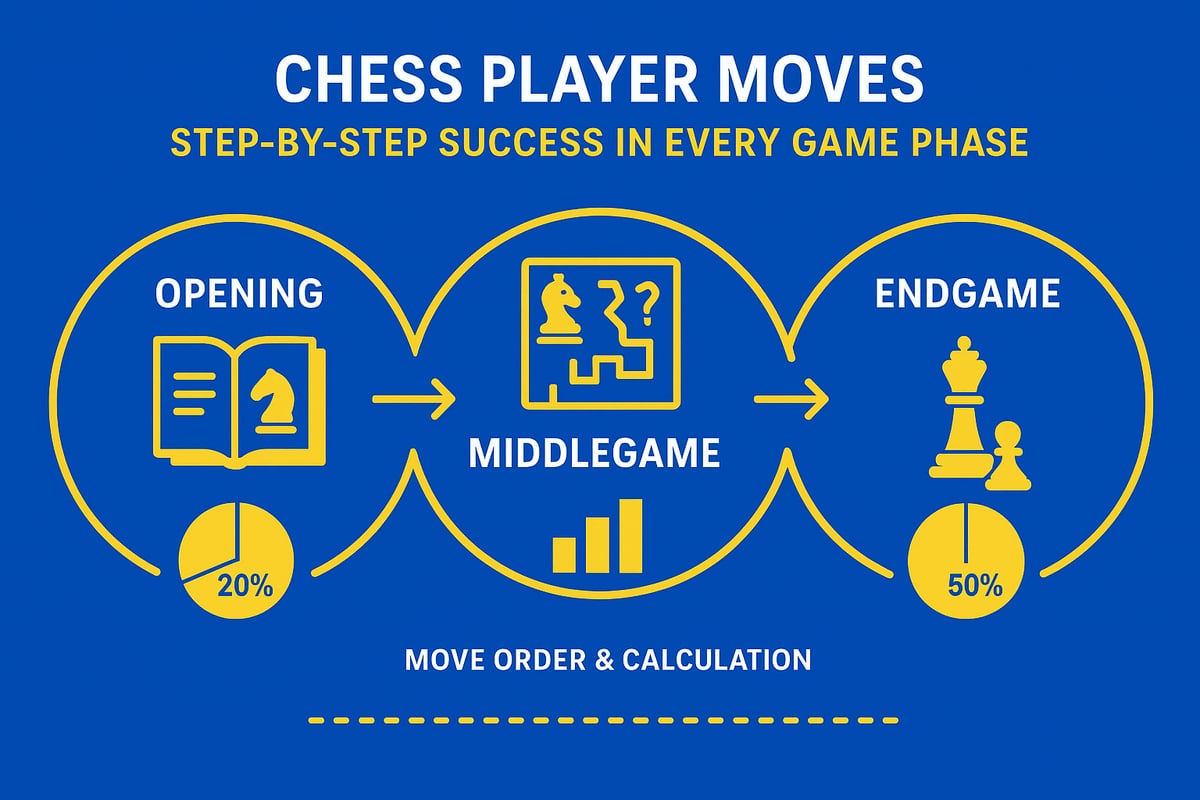
Ready to level up your chess player moves? Let’s break the game down into its three main phases: opening, middlegame, and endgame. Each phase demands a different mindset and skill set. By mastering these steps, you’ll not only avoid common traps but also develop a sense of confidence and flow in your games.
Opening Moves: Building a Solid Foundation
Think of the opening as the launchpad for your chess player moves. Rather than memorising endless lines, focus on the underlying principles. Develop your minor pieces (knights and bishops) before the major ones (rooks and queen). This helps you control key central squares, like e4 and d4, which are the battlegrounds for most games.
Here’s a checklist for strong opening play:
- Control the centre with pawns and pieces.
- Develop your minor pieces quickly.
- Castle early for king safety.
- Don’t move the same piece twice unless necessary.
Let’s use the Four Knights Game as an example. Both sides develop knights to f3/f6 and c3/c6, supporting central control and smooth development. If your opponent plays something unexpected, don’t panic. Stick to these principles, and adapt as needed.
A surprising fact: at club level, openings influence roughly 20% of game outcomes. That means your opening choices set the tone, but it’s your understanding of chess player moves that really makes the difference.
Middlegame Moves: Creating Plans and Tactics
Now the board is alive with possibilities. Your chess player moves should shift towards creating threats, finding tactical opportunities, and coordinating your pieces. Spotting tactics like forks, pins, and skewers can swing the game in your favour.
Here’s how to approach the middlegame:
- Look for tactical motifs: forks, pins, discovered attacks.
- Plan pawn breaks to open lines for your pieces.
- Balance attack and defence, don’t overextend.
- Coordinate your pieces for maximum activity.
Imagine you spot a discovered attack: moving your knight reveals a check from your bishop, catching your opponent off guard. Remember, 80% of decisive games involve a tactical error in the middlegame, so sharpen your tactical vision.
Don’t just react—create a plan. Whether you’re launching a kingside attack or defending a weakness, purposeful chess player moves will keep you in control.
Endgame Moves: Securing Victory
You’ve navigated the complications, and now fewer pieces remain. The endgame is where precise chess player moves truly shine. It’s less about flashy tactics and more about technique and understanding.
Key endgame concepts:
- King activity: Use your king as a fighting piece.
- Opposition: Outmanoeuvre your opponent’s king.
- Pawn promotion: Convert pawn advantages into queens.
- Recognise classic positions like Lucena and Philidor.
Pawn structure is crucial now. A single pawn can decide everything. Did you know 50% of intermediate games are lost due to endgame mistakes? If you want a deeper dive into common errors and how to avoid them, check out the Top 3 Endgame Mistakes.
Mastering the endgame is your ticket to converting advantages and saving tough positions. Every accurate move counts, so stay focused and trust your training.
Move Order and Calculation in All Phases
No matter the phase, the process behind your chess player moves matters. Start by identifying candidate moves, then calculate each line as far as you can. Weigh up threats, opportunities, and risks.
Create a mental checklist:
- List candidate moves.
- Calculate each variation step by step.
- Choose the move that fits your plan and the position.
Avoid time trouble by managing your clock and trusting your intuition when calculation gets tough. Grandmasters like Magnus Carlsen excel by blending deep calculation with practical decision-making, always keeping move order in mind.
No matter where you are in the game, remember: every move is a fresh chance to improve your position and outplay your opponent.
Advanced Chess Strategies and Modern Trends for 2026
The chess world is always evolving. If you want to keep your chess player moves sharp in 2026, it pays to understand the newest trends and strategies shaping the game. Let’s break down how openings, middlegames, endgames, and even the mental side of chess are changing, so you can stay one step ahead.
Adapting to Modern Opening Theory
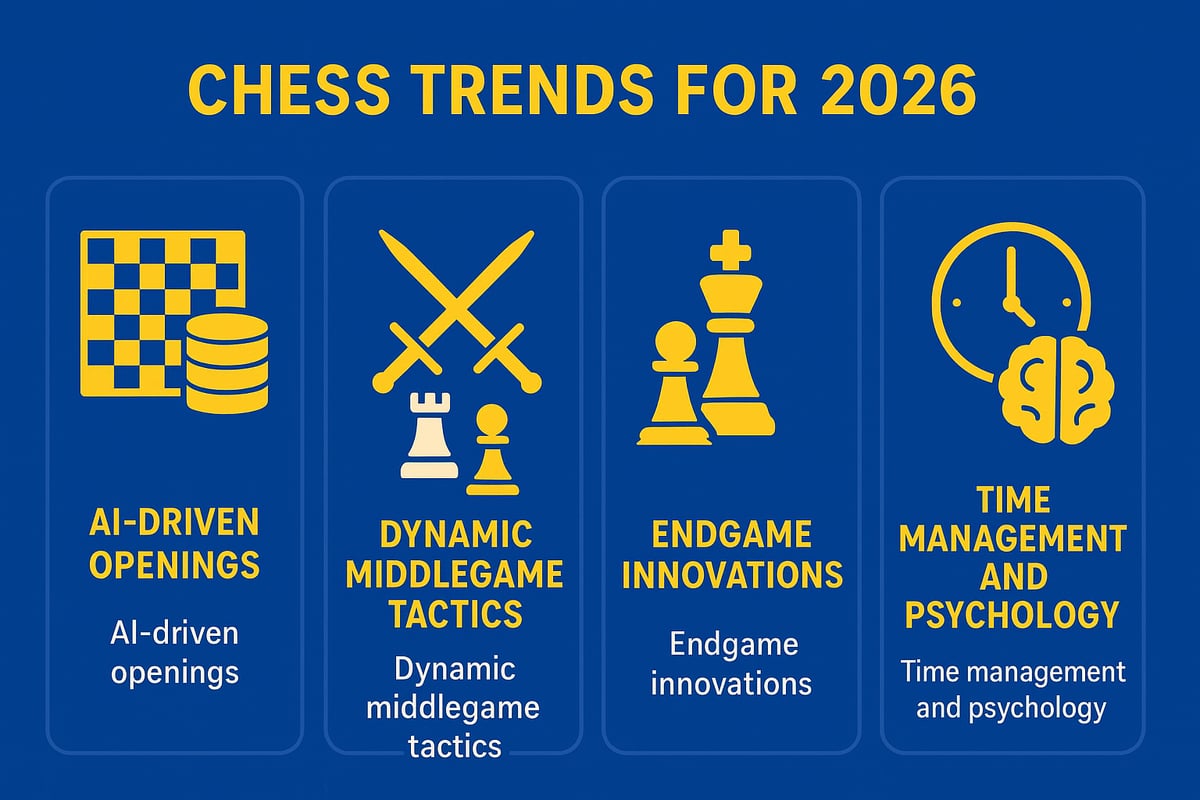
AI and massive databases have completely transformed how players prepare their chess player moves. Now, with just a few clicks, you can explore millions of games and discover which openings are trending. In 2026, the London System, Sicilian Defence, and Catalan are among the most popular choices at every level.
Curious about what’s hot right now? According to the FICS 2024 Chess Statistics, these openings dominate both online and over-the-board play. Players are also experimenting with anti-computer lines, aiming to take engines out of book early.
It’s not enough to memorise lines. You need to understand the ideas behind each move. Keep your repertoire fresh by regularly checking which chess player moves are scoring well in current databases. That way, you’ll never get caught off guard by a surprise in the opening.
Dynamic Middlegame Strategies
Once you’re out of the opening, the real battle begins. Modern middlegame play is all about creating imbalances—think material, pawn structure, or piece activity. The best chess player moves in this phase often revolve around seizing the initiative or making your opponent uncomfortable.
Have you noticed more creative sacrifices? That’s thanks in part to AlphaZero’s influence, showing us that even unorthodox moves can pay off if they create chaos. Prophylaxis—anticipating your opponent’s plans—is more important than ever. If you want your chess player moves to stand up against tough opposition, always ask, “What is my opponent threatening?”
Don’t just attack blindly. Balance your aggression with solid defence. Look for tactical motifs like forks, pins, and skewers, but also watch for ways to neutralise your opponent’s threats before they become dangerous.
Endgame Innovations
Endgames are no longer just about basic techniques. With engines and tablebases, new patterns and winning ideas are emerging all the time. If you want your chess player moves to shine in this phase, you need to keep up with the latest discoveries.
Recent tournaments have shown that positions once thought drawn can now be won with precise play. Tablebases have uncovered hidden resources, especially in rook and pawn endings. Practical studies, like the Lucena and Philidor positions, are still crucial—but now you’ll find new twists in engine analysis.
Don’t neglect king activity or pawn structure. These factors often decide the outcome. To master modern endgames, regularly review annotated examples and try to apply those lessons to your own games. It’s the surest way to turn close games into wins.

Psychological and Practical Considerations
Even if your chess player moves are technically sound, psychology and time management can tip the scales. In the fast-paced world of online play, increment clocks and time scrambles are now the norm. Did you know that 70% of online games are decided by time management?
Handling pressure is a skill in itself. Top players use strategies like deep breathing, positive self-talk, or even deliberate bluffing to keep their cool. The mental game is just as important as any tactical trick.
Want to improve? Practise with different time controls, and always review your games to spot where nerves or the clock affected your decisions. The strongest chess player moves come from a calm, focused mind—so don’t overlook this vital aspect as you aim for mastery.
Leveraging Digital Tools and Resources for Move Mastery
In today’s chess world, digital tools have completely changed how you learn and improve your chess player moves. Whether you’re just starting out or already playing at a club level, technology offers practical shortcuts and deeper insights to boost your skills. Wondering how to get started or what tools really make a difference? Let’s break it down together.
Chess Engines and Analysis Software
Let’s start with chess engines, the powerhouse behind modern chess player moves improvement. Tools like Stockfish and Leela Chess Zero analyse positions far deeper than most humans can. After each game, you can feed your moves into these engines and instantly spot mistakes, missed tactics, or even brilliant finds you didn’t realise.
Most titled players (a whopping 90%) use engines for post-game analysis. But don’t just copy what the engine suggests. Use their evaluations to understand why a move works or fails. For example, run a blunder check after your game, then replay the critical moments and ask yourself, “What was I missing here?” This way, you improve your intuition for chess player moves, not just your memory.
Here’s a quick comparison of top engines:
| Engine | Strength | Best Use Case |
|---|---|---|
| Stockfish | Ultra-strong | Game analysis, tactics |
| Leela Chess Zero | Creative | Strategy, unique plans |
| Cloud Analysis | Fast, shared | Deep post-game review |
Online Databases and Opening Repertoires
If you’ve ever wondered why certain openings keep popping up in tournaments, online databases hold the answer. Sites like ChessBase, Lichess, and Chess.com let you search millions of games, filter by player level, and see which chess player moves score best.
Building your own opening repertoire is now as simple as dragging and dropping moves into a digital notebook. Tools like Opening Explorer show move popularity and success rates, helping you decide which lines to focus on. Want to keep up with your rivals’ latest tricks? Update your repertoire regularly based on what you see in their games.
With these resources, you won’t just memorise moves. You’ll understand the ideas behind them, making your chess player moves more resilient when opponents step off the beaten path.
Training Platforms and Puzzle Solvers
Puzzle trainers are like the gym for your chess brain. Platforms such as Chess.com and Lichess offer daily puzzles, tactical trainers, and even spaced repetition apps to sharpen your calculation skills. Did you know players who solve 10 or more puzzles a day improve their ratings 15% faster?
If you want to focus on specific skills, try puzzle sets that target positional understanding. For example, How to improve positional skills offers curated puzzles that develop your sense for strong chess player moves in complex situations.
And if you like a challenge, try Puzzle Rush or streak modes. They add a fun, competitive edge, making learning feel more like a game than a chore.
Chess Cheat Sheets: Visual Learning for Efficient Move Mastery
Sometimes, you just want a quick reference to remember key chess player moves. That’s where visual cheat sheets come in. These plug-and-play guides break down openings, endgames, and tactical motifs into colourful, easy-to-read pages.

Thousands of players in over 20 countries trust visual guides to simplify complex move sequences. For example, using a cheat sheet, you can memorise the main lines of the Scandinavian Defence in minutes, not hours. It’s like having a coach in your pocket.
If you’re looking to speed up your learning curve, check out the chess cheat sheets for move mastery. They’re designed to cut down on rote memorisation and help you apply new moves immediately in your games.
Expert Tips and Common Pitfalls: How to Improve Your Chess Moves in 2026
Are you looking to level up your chess player moves in 2026? The path to consistent improvement is all about smart practice, learning from mistakes, and building habits that stick. Let’s dive into proven strategies, pitfalls to sidestep, and expert-backed routines to help you unlock your potential on the board.
Practical Improvement Techniques
To boost your chess player moves, start by reviewing your own games. Analysing your play helps you spot recurring errors and missed opportunities. Keeping a move journal is another effective habit. Write down positions that challenged you and the reasoning behind your moves.
Set realistic improvement goals. Instead of aiming for a massive rating jump, focus on incremental progress. For example, try annotating your games after each session. This practice reveals tactical patterns you might overlook during play.
- Analyse games after every session
- Keep a dedicated move journal
- Annotate games to find missed tactics
By making these habits routine, your chess player moves will become sharper and more reliable.
Avoiding Typical Mistakes in 2026
Modern chess brings new traps for players at every level. One common pitfall is over-relying on computer-generated moves. If you mimic engine lines without understanding the ideas, your chess player moves might fall flat in practical games.
Time management is another stumbling block. Fast time controls tempt you to rush, but neglecting your clock can cost you the game. Failing to adapt to new opening trends is also costly, with 45% of players plateauing due to repeating the same mistakes (ChessBase, 2023).
- Don’t blindly copy engine moves
- Practise effective time management
- Stay updated with current opening trends
Learning from recent tournaments, like those highlighted in the World Rapid Chess Championship 2024 Results, can expose you to how top players avoid these pitfalls.
Incorporating Feedback and Coaching
Nothing accelerates your chess player moves like quality feedback. Regularly discuss your games with peers, join online forums, or seek coaching for a tailored improvement plan. Players who receive regular coaching improve 25% faster (Chess.com, 2024).
When you get feedback, focus on understanding the ‘why’ behind suggested moves. This deepens your grasp of positions and helps you avoid similar mistakes in future games.
- Share annotated games in communities
- Ask stronger players for advice
- Invest in coaching for targeted guidance
Remember, every strong player you learn from offers a shortcut to better chess player moves.
Building a Personal Move Repertoire
Your repertoire is your signature on the chessboard. Selecting openings and defences that suit your style is key. Regularly update your choices based on your results and new trends.
For example, building a repertoire around the Italian Game gives you a solid, adaptable foundation. You can explore detailed strategies in this classic opening with the Italian Game chess opening guide.
- Pick openings that fit your strengths
- Update your repertoire after tough games
- Study trusted guides for new ideas
A well-tuned repertoire makes your chess player moves more confident and less predictable.
Staying Motivated and Consistent
Improvement is a marathon, not a sprint. To keep your chess player moves progressing, celebrate small wins and set up weekly challenges with friends. This keeps practice enjoyable and helps you avoid burnout.
Mix up your routines with puzzles, online tournaments, or friendly matches. Tracking your progress in a move journal can highlight how far you’ve come, fuelling your motivation to keep going.
- Celebrate every milestone
- Challenge yourself and others regularly
- Reflect on your growth in a journal
By staying consistent, you’ll see steady improvement in your chess player moves and enjoy every step of the journey.
So, now that you’ve got a handle on the latest strategies and tips for making stronger chess moves in 2026, why not take your learning a step further? If you’re keen to actually put these ideas into practice and see real results, mastering your openings is a great place to start. Think about it—having a reliable opening toolkit can give you that early edge and boost your confidence in every game. Ready to upgrade your chess routine and start playing smarter from the very first move? Start Improving Your Openings and see how much progress you can make.


