

So you've decided to take your chess game seriously. Smart move! One of the fastest ways to improve is by understanding what happens in those critical first few moves. But here's the thing: simply memorising opening moves without understanding the principles behind them won't get you far. That's where chess opening courses come in. They provide structured learning pathways that help you grasp not just the "what" but the "why" behind each move. Whether you're a complete beginner or an intermediate player looking to expand your repertoire, choosing the right course can make all the difference between random memorisation and genuine understanding.
Why Chess Opening Courses Matter More Than Ever
You might be wondering, can't you just learn openings from books or free YouTube videos? Sure, you could. But think about how much time you'd spend piecing together information from scattered sources. Chess opening courses offer something fundamentally different: a curated learning journey.
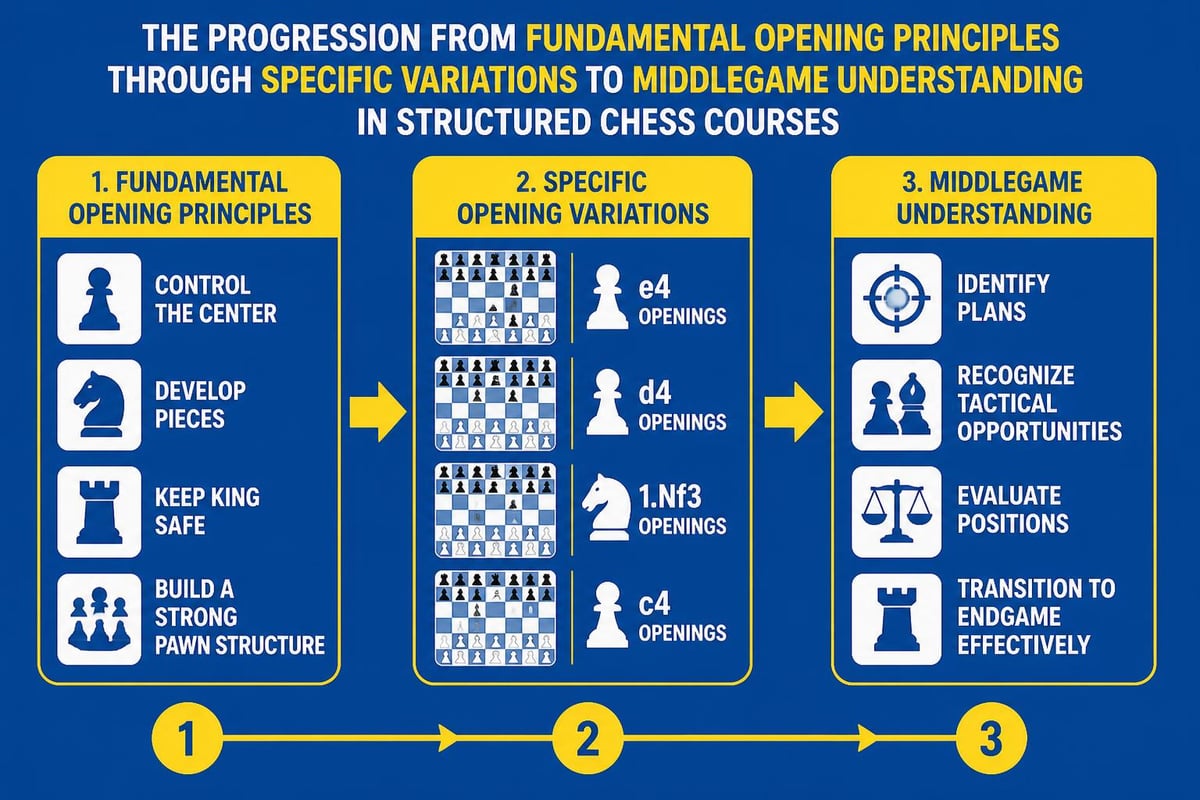
The structured approach helps you build knowledge progressively. You start with fundamental principles, then move to specific variations, and finally understand the middlegame positions that arise from your chosen openings. This methodical progression is what separates courses from random content consumption.
The Learning Curve Advantage
Here's what makes courses particularly valuable:
- Systematic progression from basic concepts to advanced nuances
- Reduced decision fatigue when choosing what to study next
- Tested pedagogical methods developed by experienced instructors
- Practice exercises integrated at appropriate difficulty levels
- Feedback mechanisms to identify and correct mistakes early
Studies examining chess opening complexity and similarity show that understanding opening patterns requires more than surface-level memorisation. You need to grasp the underlying strategic concepts that connect seemingly different positions.
Types of Chess Opening Courses Available
Not all courses are created equal. Let's break down the main categories you'll encounter in 2026.
Free Online Courses and Resources
Starting with free resources makes perfect sense if you're testing the waters. Platforms like Alison offer fundamental chess opening courses that cover basic principles without costing a penny. These work brilliantly for absolute beginners who need to understand concepts like centre control, piece development, and king safety.
The challenge? Free courses often lack depth and personalised feedback. They're excellent starting points but might leave you wanting more as you progress.
Platform-Specific Structured Programmes
Major chess platforms have invested heavily in educational content. Chess.com's MoveTrainer courses use interactive technology to reinforce learning through repetition and immediate feedback. Their collection of 50 opening lessons developed by master-level players represents a significant resource for intermediate learners.
These platform-integrated courses offer several advantages:
- Seamless integration with your online play
- Immediate practice opportunities against real opponents
- Progress tracking across your learning journey
- Community support through forums and discussion boards
Self-Paced Video Courses
Video-based chess opening courses have exploded in popularity. They combine visual demonstration with expert commentary, making complex concepts more digestible. The best ones don't just show you moves-they explain the reasoning behind each decision.
What sets quality video courses apart is their production value and instructor expertise. You want courses that show multiple perspectives, common mistakes, and typical opponent responses.

Choosing the Right Course for Your Level
This is where many players go wrong. They either pick something too advanced (hoping to accelerate progress) or too basic (worried about missing fundamentals). Let's get this right.
For Beginners (Under 1200 Rating)
Your priority should be understanding core principles rather than memorising specific variations. Look for courses that emphasise:
- Opening principles like centre control and development
- Common tactical patterns that appear in the opening
- Recognition of typical mistakes and how to avoid them
- Transition to the middlegame from various opening positions
Resources like Chess.com's opening principles lessons provide exactly this foundation. You'll also benefit from understanding how different openings work for Black to give you both sides of the board.
For Intermediate Players (1200-1800 Rating)
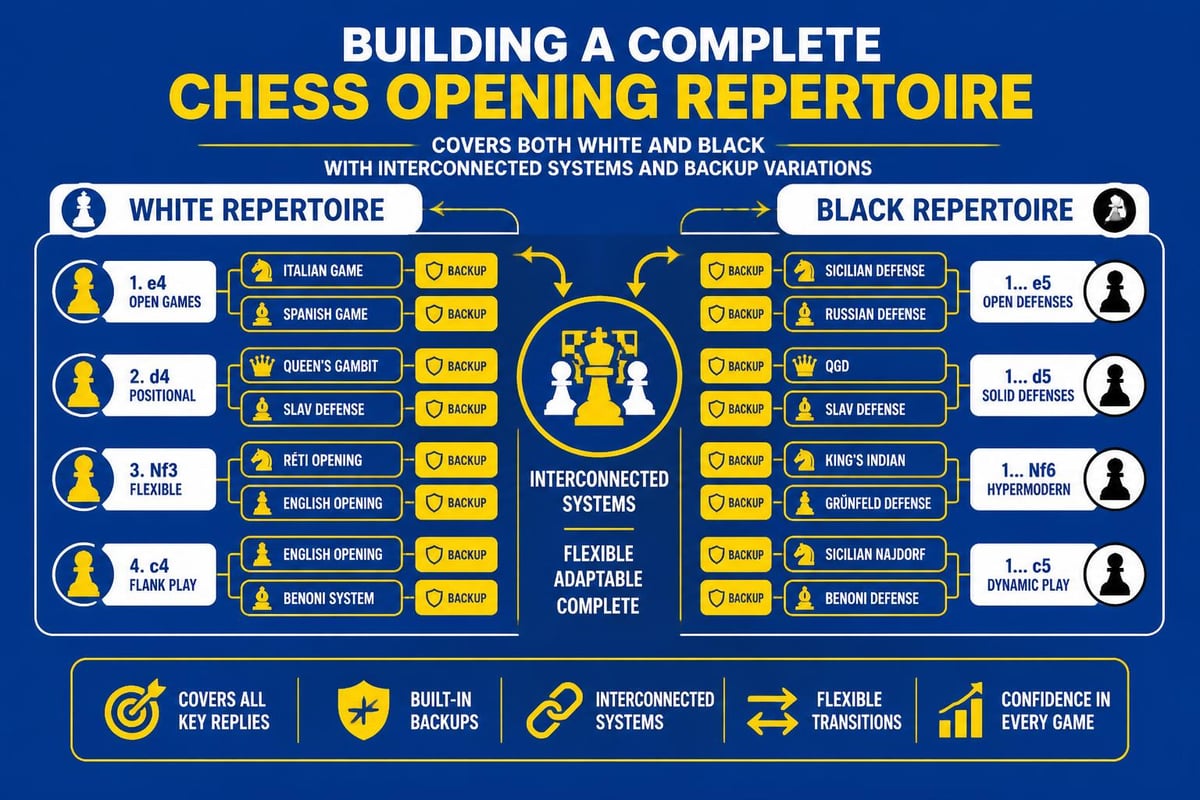
You've got the basics down. Now it's time to develop a proper opening repertoire. Chess opening courses at this level should help you:
| Focus Area | What to Look For | Why It Matters |
|---|---|---|
| Repertoire building | Courses covering complete systems | Creates consistency in your play |
| Understanding plans | Middlegame strategies from openings | Connects opening to overall game plan |
| Opponent preparation | Handling different responses | Reduces surprise factor |
| Theoretical depth | Key variations and move orders | Prevents early disadvantages |
Exploring specific openings in depth becomes valuable here. Understanding the pros and cons of the Queen's Gambit or investigating systems like the London Opening helps you make informed repertoire choices.
What Makes an Effective Chess Opening Course
You're investing time and possibly money, so let's identify what separates excellent courses from mediocre ones.
Quality Indicators to Watch For
Instructor credentials matter. Courses taught by titled players (International Masters, Grandmasters) typically offer deeper insights. They've navigated these positions at high levels and can share practical wisdom that goes beyond book knowledge.
Interactive elements boost retention. Passive watching doesn't cut it. The best courses include:
- Quiz sections testing your understanding
- Position-solving exercises
- Practice games with feedback
- Spaced repetition systems for key moves
Comprehensive coverage balances breadth and depth. You don't want surface-level overviews of fifty openings. Better to deeply understand three or four systems than poorly grasp twenty.
Common Pitfalls to Avoid
Watch out for courses that focus exclusively on "tricks and traps." While knowing common opening traps has value, relying on opponent mistakes won't build lasting skills. Similarly, avoid courses that promise "instant mastery"-chess doesn't work that way.
Another red flag? Courses that ignore transpositions or move-order flexibility. Real games don't follow single paths, and your course should prepare you for various routes to similar positions.
Maximising Your Learning From Opening Courses
Taking a course is one thing. Actually improving from it? That requires intentional practice.
Active Learning Strategies
Don't just watch-engage. Pause videos before the instructor reveals the next move and think through it yourself. This active participation builds genuine understanding rather than passive recognition.
Keep a learning journal. After each lesson, jot down:
- Key principles covered
- Specific positions or move orders you found tricky
- Questions that arose during study
- Plans to address gaps in understanding
Play training games focusing on your studied openings. This means deliberately choosing the openings you've been learning, even if you have favourite alternatives. You'll discover which concepts clicked and which need reinforcement.
Integrating Multiple Resources
Chess opening courses work best when combined with other tools. The Encyclopaedia of Chess Openings provides reference material for deeper dives into specific variations. Meanwhile, quick-reference materials from Chess Cheat Sheets offer at-the-board reminders without requiring extensive re-study.
Research on comparing chess openings quantitatively suggests that understanding relationships between different opening systems enhances overall comprehension. This means your Italian Game knowledge can inform your understanding of other e4 openings.
Structuring Your Opening Study Schedule
Time management separates players who steadily improve from those who spin their wheels.
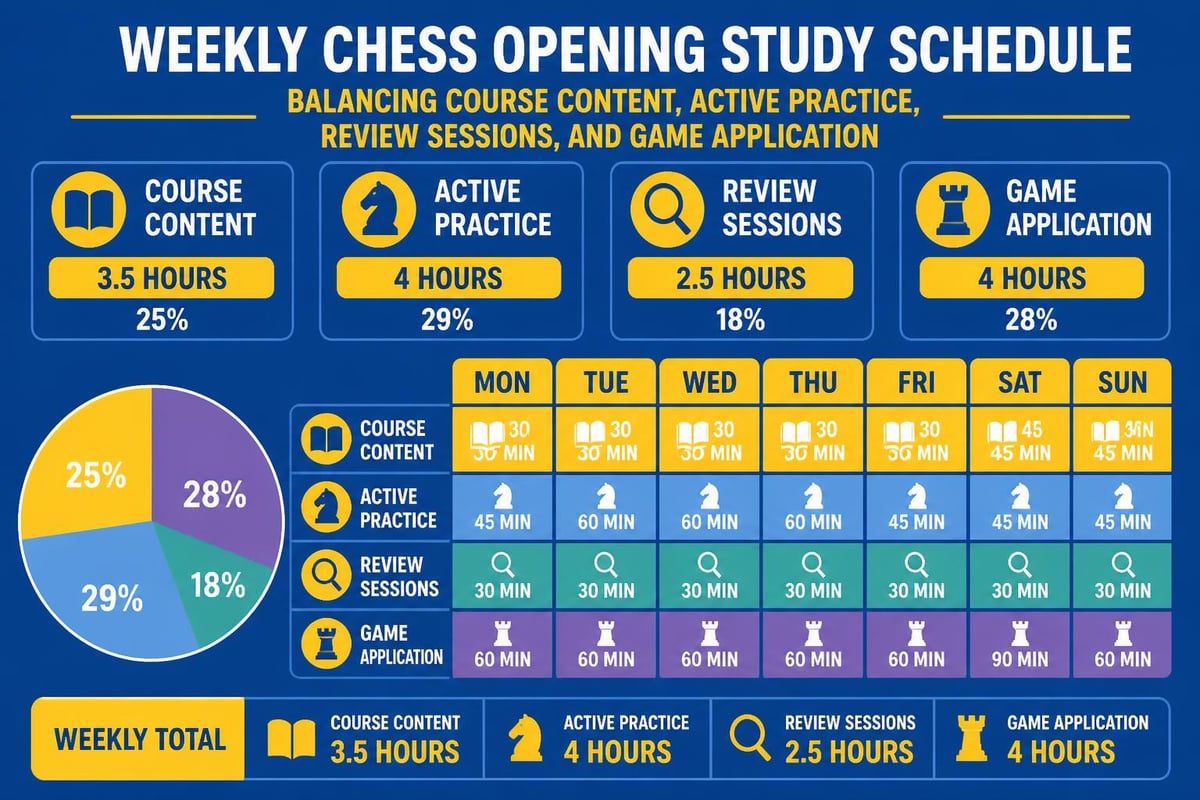
Weekly Study Framework
Here's a practical approach that works for most improving players:
Monday & Thursday (30 minutes each): Core course content consumption. Watch lessons, take notes, work through instructor examples.
Tuesday & Friday (20 minutes each): Active practice through puzzles and position-solving specifically related to your studied openings.
Wednesday (15 minutes): Review and revision of previously covered material. Spaced repetition solidifies knowledge.
Weekend (45 minutes): Play longer time-control games using your studied openings. Analyse these games afterwards, comparing your choices to course recommendations.
This totals roughly 3 hours weekly-sustainable for most schedules while providing meaningful progress.
Tracking Progress and Adjusting
Set measurable goals. Instead of "learn the Sicilian," try "understand the main ideas in the Najdorf variation and play five games reaching typical middlegame positions." Specific targets create accountability.
Every month, assess which openings feel comfortable and which still confuse you. Don't hesitate to revisit earlier lessons-repetition builds mastery.
Finding the Best Chess Opening Courses in 2026
Where should you actually look for quality courses? Let's explore the current landscape.
Top Platform Recommendations
Chess.com's comprehensive lessons platform offers extensive opening coverage suitable for various skill levels. Their courses integrate seamlessly with playing opportunities, allowing immediate practical application.
For those seeking free options, exploring free online chess courses can provide excellent starting points without financial commitment.
Niche and Specialised Courses
Beyond general platforms, specialist courses focusing on single openings or opening families offer tremendous depth. Want to understand how elite players approach openings? Investigating what opening Magnus Carlsen uses or exploring Stockfish's opening choices provides fascinating insights into high-level opening preparation.
Courses dedicated to specific systems allow you to understand every nuance. Whether it's the tactical complexity of the Sicilian Defense or the strategic richness of the King's Indian Defense, specialised study builds genuine expertise.
Complementary Resources to Enhance Course Learning
Chess opening courses form your study foundation, but supplementary materials accelerate progress.
Reference Materials and Quick Guides
Having condensed reference materials proves invaluable during games or quick review sessions. Detailed guides covering openings like the Italian Game, Ruy Lopez, or English Opening provide move-by-move breakdowns without requiring full course re-engagement.
For offline study, exploring free chess books in PDF format or investigating advanced chess books adds theoretical depth to course-based learning.
Community and Coaching
Even the best self-study courses benefit from external perspectives. Finding the best online chess coach provides personalised feedback on your specific weaknesses and repertoire choices.
Online communities discussing course content help clarify confusing concepts and expose you to different interpretations of positions.
Building Long-Term Opening Knowledge
Chess opening courses aren't magic pills-they're tools for building lasting understanding. Your goal shouldn't be completing courses but developing pattern recognition and strategic comprehension that persists across your chess career.
Creating Personal Opening Files
As you progress through chess opening courses, compile personal notes organising what you've learned:
- Key positions with embedded understanding of typical plans
- Critical variations requiring precise move knowledge
- Thematic ideas appearing across different variations
- Personal trouble spots needing extra attention
These files become invaluable reference materials customised to your specific needs and understanding level.
Periodic Repertoire Reviews
Every three to six months, critically evaluate your opening repertoire. Are certain openings consistently leading to comfortable middlegames? Do others frequently leave you confused about plans? This honest assessment guides which courses or sections deserve revisiting and which openings might need replacing.
Understanding trade-offs in different systems helps here. Exploring pros and cons of the French Defense or evaluating strengths and weaknesses of the Vienna Game enables informed decisions about repertoire composition.
Chess opening courses provide structure, expertise, and efficiency to what could otherwise be overwhelming self-study. By choosing courses matched to your skill level, engaging actively with material, and complementing coursework with practical play and reference resources, you'll build opening knowledge that genuinely improves your results. Ready to transform your opening play with clear, actionable guidance? Chess Cheat Sheets offers comprehensive guides, quick-reference materials, and practical resources designed specifically for players looking to master openings without drowning in endless theory-giving you confidence from move one.


