

Chess has fascinated minds for centuries, with its layers of strategy and subtle psychological battles. Yet, what separates an average player from a true master often comes down to one thing: how deeply they understand each move and pattern.
This guide dives into the world of chess notes, revealing how a structured approach to note-taking can unlock your game’s hidden insights. You’ll discover how modern tools, digital platforms, and proven methods can help you grow faster, learn from every win or loss, and gain a real edge over your competition.
Curious about how to turn scribbled moves into a powerful learning tool? Ready to explore the secrets top players use to improve? Let’s get started—you’re about to transform the way you study, analyze, and master chess.

The Evolution of Chess Notes: From Paper to Digital
Chess notes have a long and fascinating history that mirrors the evolution of the game itself. Imagine, centuries ago, players scribbling down moves in descriptive notation, using phrases like "Queen’s bishop to king’s knight three." These early systems, while charming, often led to confusion and inconsistency.
As chess matured, so did chess notes. The algebraic system emerged, bringing clarity and universal understanding. This shift not only made recording moves easier but also set the foundation for modern analysis. If you’ve ever wondered how to efficiently record moves and grow your understanding, resources like Help with chess moves can offer practical guidance rooted in this tradition.
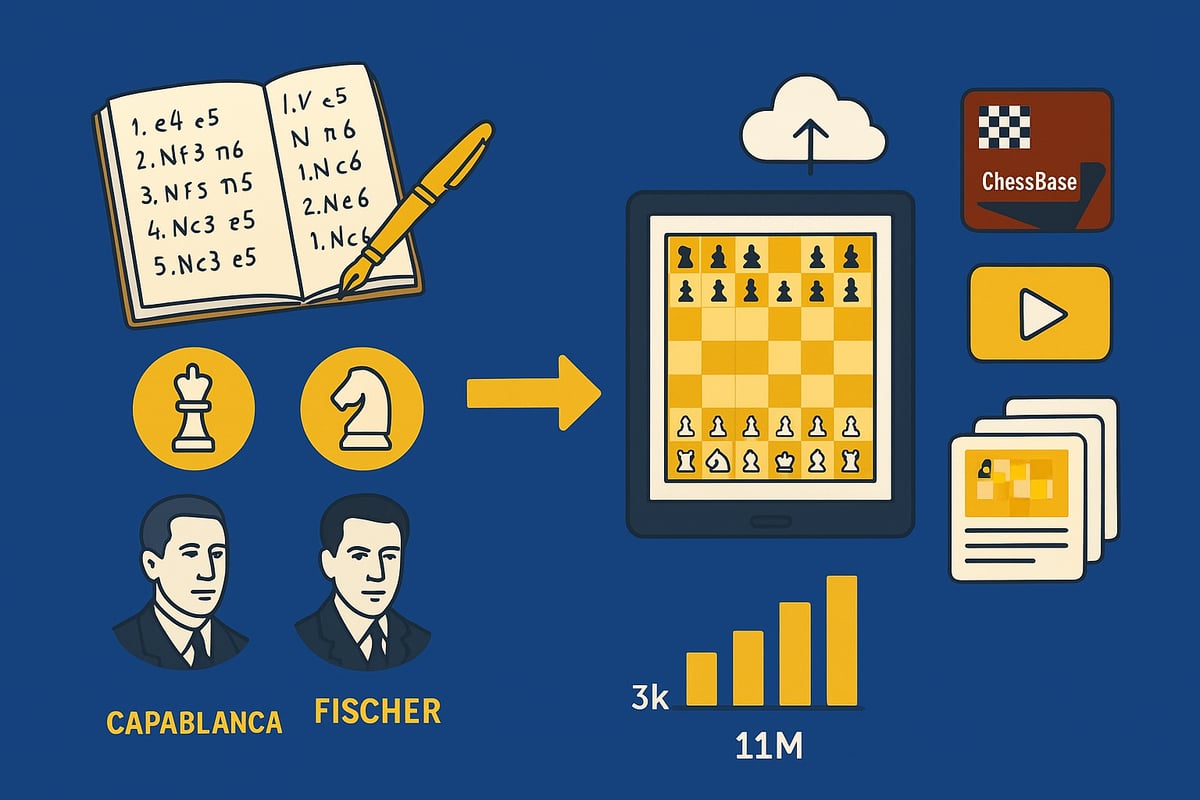
Some of the greatest minds in chess history, such as Capablanca and Fischer, relied on personal chess notes to sharpen their play. They meticulously documented their games, reflecting on each decision and learning from every mistake. Their handwritten annotations became blueprints for improvement, capturing not just what happened on the board but why.
With the rise of technology, the way we approach chess notes underwent a seismic shift. Gone are the days of bulky scorebooks and fading ink. Today, digital platforms like ChessBase and Mega Database have made it possible to store, search, and analyze millions of games at lightning speed. In fact, over 11 million games are now archived in leading chess databases, making insights more accessible than ever before.
This digital revolution didn’t stop at simple move recording. Online resources and mobile apps have transformed chess notes into living documents. You can now capture positions, add diagrams, and even append voice memos or video commentary. Multimedia integration means your chess notes can be as rich and detailed as your learning style demands.
Let’s take a moment to appreciate the scale and thoroughness achievable today. Edward Winter’s Chess Notes archive, with over 8,000 meticulously documented entries, stands as a testament to the power of organized insight. His work blends historical context, fact-checking, and deep analysis, serving as a model for anyone looking to elevate their own chess notes.
Here’s a quick comparison to highlight the transformation:
| Era | Tools & Methods | Features |
|---|---|---|
| Early Chess | Paper, descriptive notation | Handwritten moves, basic comments |
| Modern Chess | Digital platforms, databases, apps | Searchable, multimedia, AI support |
No matter where you are on your chess journey, the evolution of chess notes offers inspiration and practical tools. From the careful records of the past to today’s interactive, multimedia-rich systems, the possibilities for learning and improvement have never been greater.
Why Chess Notes Matter: Unlocking Game Insights
Ever wondered why some players seem to recall every game, spot patterns in a flash, and improve faster than others? The answer often lies in how they use chess notes. Taking time to jot down your thoughts, moves, and lessons is not just busywork—it's a proven method for unlocking your chess potential.
The Power of Memory and Pattern Recognition
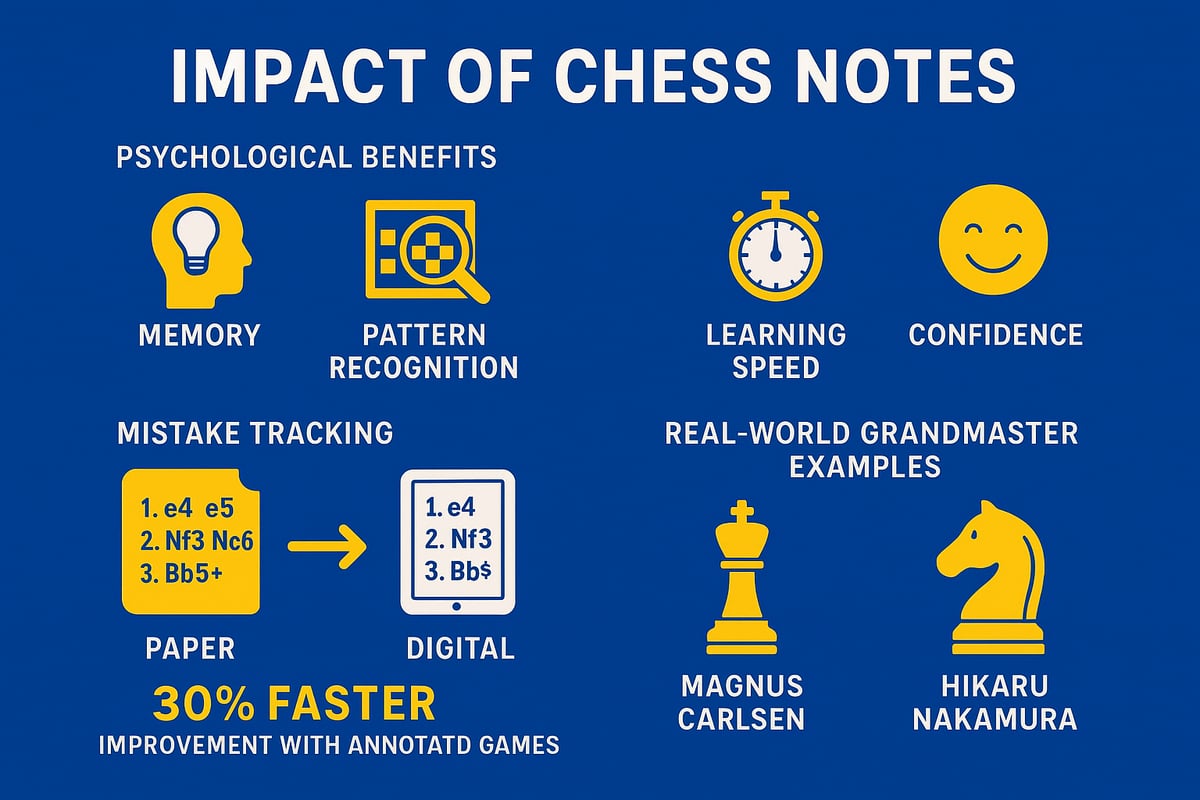
Chess notes are your personal memory bank. Each time you record a game or annotate a position, you strengthen neural pathways that help you remember patterns and typical plans. Over time, this habit makes it easier to recall critical lines and recognize similar scenarios in new games.
Recent research supports this approach. Studies like A study of memory effects in a chess database reveal that consistent note-taking and reviewing past games greatly enhance long-term memory and pattern recognition for players at all levels.
- Record openings, tactics, and endgames to spot recurring themes.
- Annotate why you chose certain moves to reinforce learning.
- Use symbols and diagrams to make patterns stand out.
Accelerating Growth and Fixing Mistakes
Imagine having a personal coach who points out your blind spots after every game. Chess notes serve this purpose. By systematically noting down your wins, losses, and the reasoning behind your moves, you create a feedback loop that accelerates improvement.
Players who regularly review their chess notes can:
- Identify recurring blunders and weak spots.
- Build personalized improvement plans based on their actual play.
- Track progress over time with concrete evidence.
A study from leading chess training platforms shows that players who annotate and review their games improve up to 30% faster than those who don't.
| Benefit | How Chess Notes Help |
|---|---|
| Memory retention | Reinforces recall of key patterns |
| Faster improvement | Highlights mistakes and lessons |
| Strategic planning | Builds personalized study plans |
Psychological Edge: Confidence and Focus
Chess is as much a mental game as a strategic one. Keeping chess notes gives you a psychological edge. By organizing your thoughts and reflecting on your decisions, you boost your confidence and reduce anxiety before tournaments.
- Reviewing notes before a match sharpens your focus.
- Seeing your progress over time increases motivation.
- Preparedness from notes leads to calmer, more confident play.
Grandmasters often credit their breakthroughs to detailed note-taking. Whether it's annotating a critical endgame or reflecting on a tough loss, these habits set champions apart.
From Theory to Practical Mastery
The real magic of chess notes is how they bridge the gap between what you know and how you play. Tournament prep, post-game analysis, and everyday training all become more effective with a structured approach to note-taking.
By making chess notes a regular part of your routine, you turn every game into a learning opportunity. The result? Steady progress, deeper understanding, and a real competitive advantage.
Modern Tools and Techniques for Chess Note-Taking
The landscape of chess notes has changed dramatically in recent years. If you still picture scribbling in a battered scorebook, it is time to explore how modern digital tools have revolutionized the way players capture and analyze their chess notes.
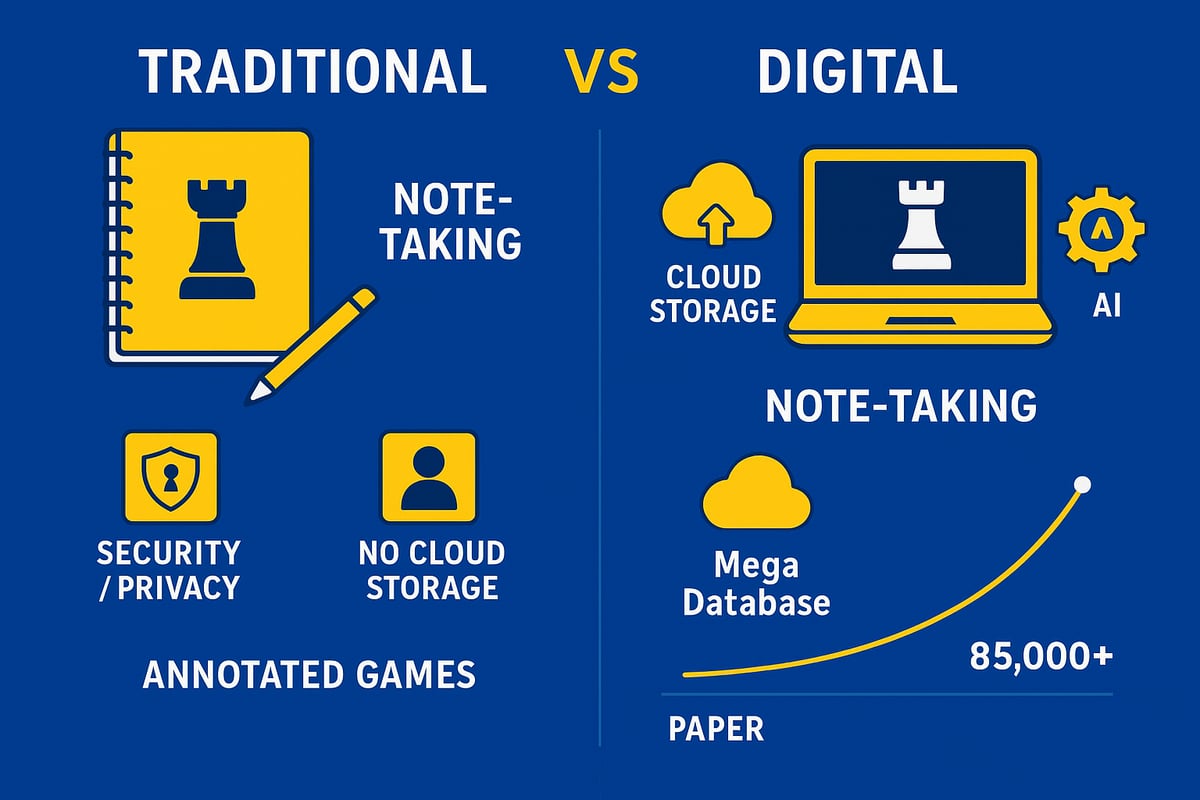
Today, platforms like ChessBase, Lichess Studies, and various online scorebooks make capturing chess notes easier and more efficient than ever. With these tools, you can record every move, annotate positions, and store your entire game library in the cloud. This means your chess notes are accessible anytime, anywhere, whether you are studying at home or traveling for a tournament.
One standout advantage of digital chess notes is cloud-based storage. You never have to worry about losing your work to spilled coffee or misplaced notebooks. Your notes are automatically backed up and can be shared with coaches, friends, or teammates for collaborative analysis. Search and tagging features let you organize games by opening, tactic, or opponent, so you can find key insights in seconds.
The integration of AI engines like Fritz has pushed chess notes to the next level. Imagine having a grandmaster in your pocket, ready to analyze your moves, flag blunders, and suggest powerful alternatives. You can add engine evaluations directly into your notes, then layer in your personal thoughts for a complete picture of your decision-making. This blend of objective analysis and subjective reflection helps you turn every game into a valuable learning experience.
Multimedia is another game-changer for chess notes. You can insert diagrams, upload screenshots, and even add voice memos or video clips to capture your ideas visually and audibly. This not only makes your chess notes more engaging but also helps you spot patterns and remember key moments more vividly. Many players now customize their note formats for different phases of the game, such as opening prep, middlegame tactics, or endgame studies, using color coding or templates for clarity.
Let us look at a quick comparison of popular digital note-taking features:
| Platform | Cloud Storage | AI Analysis | Multimedia | Tagging/Search | Privacy Options |
|---|---|---|---|---|---|
| ChessBase | Yes | Yes | Yes | Yes | Advanced |
| Lichess Studies | Yes | Yes | Yes | Yes | Good |
| Online Scorebooks | Yes | Varies | Limited | Yes | Varies |
The scale of digital chess notes is staggering. For example, the Mega Database 2020 contains over 85,000 annotated games, showing just how much knowledge is at your fingertips. With so much information, it is vital to keep your notes organized and actionable. If you are looking for practical strategies, check out these effective note-taking techniques during chess study for tips on structuring and reviewing your chess notes.
Security is important too. Protect your analysis by enabling two-factor authentication, using strong passwords, and regularly backing up your files. Some platforms even allow you to keep certain chess notes private, so your opening secrets stay safe from prying eyes.
In short, the right mix of digital tools, AI support, and smart organization can transform your chess notes from a simple record into a powerful engine for improvement. Whether you are a beginner or a seasoned competitor, exploring these modern techniques will help you make the most of every lesson your games have to offer.
Step-by-Step Guide: Mastering Game Insights Through Chess Notes
Ready to dive deeper and truly master your chess notes? Let’s break the process down into six clear, actionable steps. Whether you’re just starting or leveling up your note-taking game, these steps will help you turn every match into a goldmine of insight.
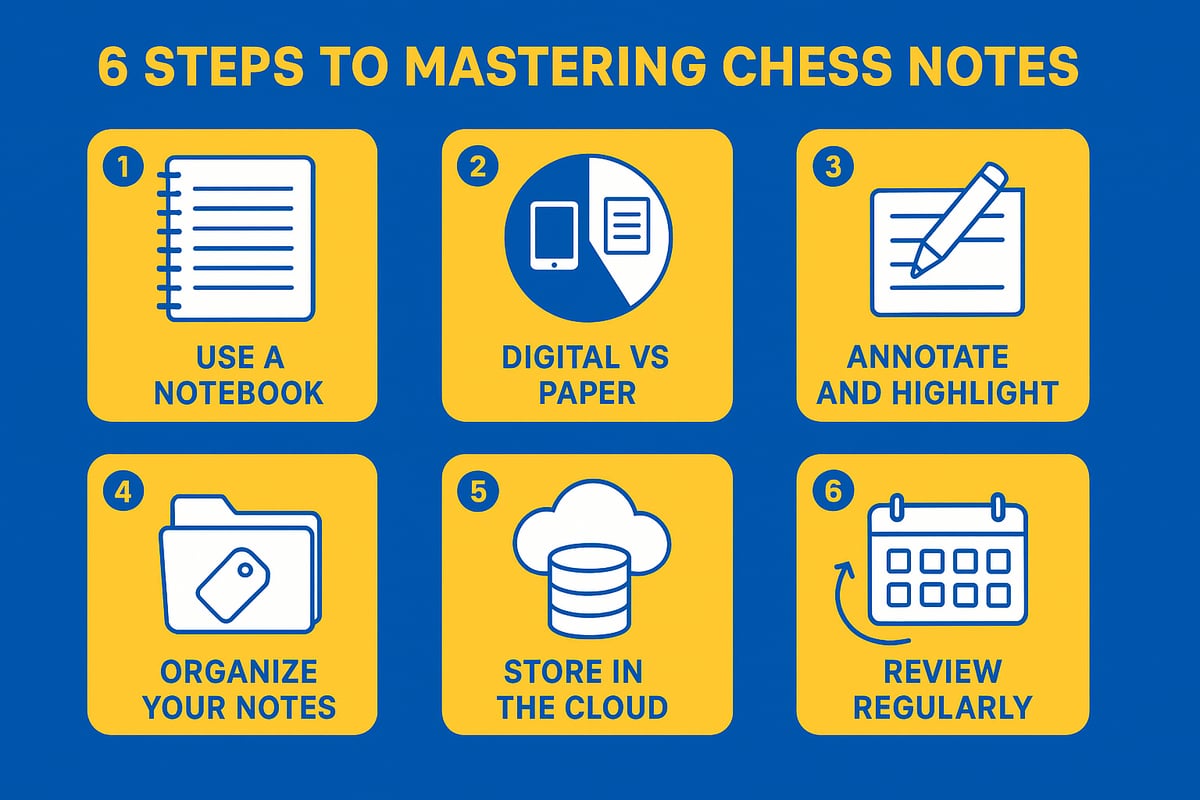
Step 1: Setting Up Your Note-Taking System
The first step in mastering chess notes is to choose the right system for your needs. Are you a fan of classic pen and paper, or do you prefer the flexibility of digital tools? Consider your goals and comfort level. For many, a hybrid approach works best—jotting quick thoughts in a notebook, then organizing detailed analysis on a laptop or tablet.
Decide on your primary note-taking method and stick to a consistent format. This might include sections for openings, middlegame plans, endgame ideas, and personal reflections. Templates and color coding can help you spot patterns at a glance.
Research shows that keeping detailed chess notes not only improves your understanding but also boosts memory retention. For practical tips, check out Chess and memory: tips to remember your games to see how note-taking can help you recall critical positions and strategies.
Remember, the best system is one you’ll actually use. Start simple and refine as you go. Consistency is key to making your chess notes a powerful learning tool.
Step 2: Recording the Game Accurately
Accurate recording is the backbone of effective chess notes. During your games, make it a habit to notate every move clearly, whether you’re playing over-the-board or online. Use standard algebraic notation, and don’t forget to include time spent per move if possible.
Develop your own shorthand for quick observations. For example, use symbols like ! for good moves, ? for mistakes, and !! or ?? for brilliant or blunder-level plays. This helps you quickly spot patterns when reviewing your chess notes later.
Avoid common pitfalls like illegible handwriting or forgetting to record moves when the game gets intense. If you’re using a digital device, double-check that your inputs are correct. The goal is to capture a faithful record that you can trust for post-game analysis.

Step 3: Annotating Key Moments and Decisions
Now, let’s make your chess notes truly insightful. After the game, revisit your moves and highlight critical positions. Ask yourself: Where did the tide turn? Which decisions felt uncertain? What did you miss?
Add engine evaluations to see how your thoughts matched up with objective analysis. For example, you might annotate a blunder with a note like, “Missed Nf6+, which would have forced a draw.” Then add your personal reflection: “Focused too much on material, overlooked king safety.”
Here’s a simple annotation template for your chess notes:
Move: 23...Qd4??
Engine eval: -3.2
My thought: Expected to win a pawn, but missed a tactical shot.
Lesson: Double-check for checks before capturing.
By combining objective feedback with your own reasoning, you’ll turn every game into a personalized lesson.
Step 4: Analyzing and Categorizing Insights
Once you’ve annotated your chess notes, it’s time to extract the gold. Review your notes to identify recurring themes, like common tactical motifs or strategic blind spots. Categorize your insights: was the issue an opening misstep, a middlegame oversight, or an endgame slip?
Use tags, folders, or color codes to keep your chess notes organized. For example:
| Category | Tag | Example |
|---|---|---|
| Opening | #Sicilian | Missed early d4 push |
| Middlegame | #Tactics | Overlooked knight fork |
| Endgame | #Technique | Poor rook activity |
This structure makes it easy to retrieve and compare your chess notes over time, helping you spot trends and target your study.
Step 5: Building a Personal Chess Knowledge Base
Now, bring everything together into your own searchable database. Store all your annotated games, thematic insights, and improvement plans in one place. Digital tools make it easy to back up your chess notes and access them from any device.
Create special folders for your opening repertoire, favorite tactical themes, and endgame checklists. For example, an “Opening Repertoire” folder might include annotated lines, key traps, and common opponent responses.
This personal knowledge base becomes your chess library, tailored to your strengths and weaknesses. Over time, your chess notes will not only document your journey but also serve as a roadmap for future growth.
Step 6: Reviewing and Iterating for Continuous Improvement
The real power of chess notes comes from regular review. Set aside time each week to revisit past games, update your notes with new discoveries, and correct outdated ideas. This process reinforces learning and helps you track your progress.
Don’t hesitate to revise your study plan based on what your chess notes reveal about your evolving strengths and weaknesses. Adjust your focus as needed, and celebrate milestones along the way.
Remember, improvement is a cycle. By consistently reviewing and refining your chess notes, you’ll ensure that every game—win or lose—moves you closer to mastery.
Real-World Examples: How Top Players Use Chess Notes
Chess notes are the secret weapon behind many of the world’s best players. Have you ever wondered what separates a chess enthusiast from a true master? It’s often the careful, ongoing habit of recording, reviewing, and refining ideas through chess notes. Let’s dive into how top players use these notes to elevate their game, and what you can learn from their approaches.
Edward Winter and the Art of Meticulous Documentation
Edward Winter stands out as a model for chess notes in action. His legendary Chess Notes archive spans over 8,000 entries, each packed with fact-checked analysis, rare game discoveries, and historical context. Winter’s approach is a masterclass in organization and depth.
He doesn’t just jot down moves. Instead, he creates a living archive, cross-referencing sources, adding personal reflections, and posing critical questions for future research. His chess notes are a goldmine for anyone wanting to understand the details that shape great chess thinking.
Lessons from Historical Archives: John Hilbert’s Insights
John Hilbert, a noted chess historian, offers another perspective on the value of chess notes. Through his analysis of historical archives, Hilbert reveals how players of the past meticulously recorded games, insights, and even emotions tied to key positions.
These archives show that effective chess notes are more than move lists. They capture the reasoning, doubts, and breakthroughs experienced during play. By revisiting such records, players can trace patterns in their thinking and spot areas for growth. For anyone serious about improvement, this historical lens highlights the lasting impact of thoughtful documentation.
Modern Grandmasters: Digital Workflows and Game Preparation
Today’s grandmasters blend tradition with technology, using digital tools to streamline their chess notes. Players like Magnus Carlsen rely on advanced databases, cloud platforms, and engine-assisted analysis to prepare for matches and study opponents.
A typical workflow might involve:
- Annotating games directly in a database
- Tagging positions by theme or opening
- Collaborating with coaches online
- Integrating engine evaluations and personal thoughts
This hybrid approach allows for rapid searching, sharing, and updating of chess notes. According to a recent study on quantifying human performance in chess, structured note-taking and review correlate strongly with improved strategic growth and performance.
Chess Notes in Tournament Play and Famous Games
Chess notes play a critical role in tournament preparation. Top players build detailed files on openings, opponent tendencies, and recurring tactical motifs. These notes become invaluable during high-stakes events, acting as a personal playbook under pressure.
Consider the annotated games of world champions. Their chess notes reveal not only the logic behind brilliant moves but also honest assessments of mistakes. This transparency helps bridge the gap between theory and practice, making every game a learning opportunity.
Here’s a quick comparison of tournament outcomes:
| Player Type | Average Success Rate | Typical Note System |
|---|---|---|
| Structured Note-Takers | 68% | Digital and annotated |
| Minimal Note-Takers | 50% | Sparse or memory-based |
Structured chess notes give players a clear edge, especially when preparing for new challenges.
Chess notes are more than a record—they’re a roadmap to mastery. Whether you’re building archives like Winter, learning from history with Hilbert, or leveraging digital tools like today’s grandmasters, the right approach can elevate your chess journey.
Common Pitfalls and How to Avoid Them
Ever feel like your chess notes are more confusing than helpful? You are not alone. Even experienced players can stumble into some common traps when it comes to documenting their games. Let’s walk through the biggest pitfalls, so your chess notes become a true tool for growth.
Overcomplicating Your Chess Notes
One of the biggest mistakes is making your chess notes too detailed or cluttered. If you find yourself writing long paragraphs for every move, it is easy to lose track of what really matters.
Instead, focus on clarity. Use symbols, abbreviations, and color coding to highlight key moments. Keep your language simple and direct. Remember, the best chess notes are those you can quickly review and understand—even months later.
Quick Checklist:
- Summarize critical positions.
- Limit detailed analysis to turning points.
- Use templates for consistency.
Neglecting Regular Review and Updates
Writing chess notes is just the first step. If you rarely look back at your notes, you miss out on their real value. Many players write detailed notes after a game, then never review them. This leads to repeated mistakes and slow progress.
Set aside time each week to revisit your past games. Update your chess notes with new insights or corrected lines. By making review a habit, you reinforce patterns and ideas, turning your notes into a living study tool.
Relying Solely on Engines
Modern engines are powerful, but letting them do all the work can weaken your growth. If your chess notes are just lists of engine evaluations, you might miss the chance to develop your own thinking.
Balance engine analysis with personal reflections. Ask yourself, “Why did I choose this move?” or “What was my plan here?” Annotate blunders with both engine feedback and your own thoughts. This way, your chess notes help you become a more independent and creative player.
Overlooking Emotions and Security
Chess is as much a mental game as a technical one. Ignoring your emotional state during games can limit what you learn from your chess notes. Were you feeling nervous, rushed, or overconfident? Jotting down these feelings can help you spot psychological patterns over time.
Security matters too. Digital chess notes are valuable, so back them up regularly and use strong passwords. Consider encrypting sensitive files or using platforms with robust privacy features. Better safe than sorry!
Making Your Notes Actionable
Your chess notes should not just gather dust—they should drive improvement. Write down specific goals and questions for your next session. For example, “Review this opening line before the next tournament” or “Practice this tactical motif with puzzles.”
Want to put your analysis into action? Try using Chess puzzles for practice to test your understanding and reinforce the lessons from your notes. By connecting your chess notes to practical exercises, you will turn insights into real game strength.
Summary Table:
| Pitfall | Solution |
|---|---|
| Overcomplicated notes | Use clear, concise annotations |
| Not reviewing or updating | Schedule regular review sessions |
| Engine-only analysis | Add personal reflections and questions |
| Ignoring emotions and security | Note feelings, secure and back up notes |
| Passive, unused notes | Set actionable goals, use in practice |
By staying mindful of these pitfalls, you can ensure your chess notes truly help you grow as a player.
So, after diving into all these ways to take better chess notes and really get the most out of every game, you might be wondering, “What’s my next move?” Well, if you’re serious about mastering your openings and want a real shortcut to deeper understanding, why not grab a toolkit that’s designed to make your learning smoother? I’ve found that starting with clear, practical resources instantly boosted my own confidence and made reviewing games a lot less overwhelming. If you’re ready to level up your openings and see faster improvement, Start Improving Your Openings is a great place to begin.


