

London's chess scene is one of the most vibrant in the world, with dozens of clubs scattered across the city offering everything from casual games to serious competitive play. Whether you're a complete beginner who's just learned how the pieces move or an intermediate player looking to sharpen your skills, finding the right chess club in London can transform your chess journey. The city's rich chess heritage dates back centuries, and today's clubs continue that tradition whilst welcoming players from all backgrounds and abilities. Let's explore what makes London's chess clubs special and how you can find the perfect fit for your playing style.

The Rich History of Chess Clubs in London
London's relationship with chess stretches back further than you might imagine. Historical venues like Old Slaughter's Coffee House, established in 1692, served as gathering places for chess enthusiasts long before formal clubs existed. These coffee houses were the social media of their day, where intellectuals, artists, and chess players would meet to discuss ideas and play games.
The formalization of chess clubs came later. The Athenaeum Chess Club, established in 1873, holds the distinction of being London's oldest surviving chess club. Operating from Covent Garden, it continues to compete in multiple leagues and welcomes new members who want to experience chess in a traditional setting.

Why Historical Context Matters for Modern Players
Understanding this heritage isn't just about nostalgia. Many of London's established clubs have developed teaching methods and playing cultures refined over decades. When you join a club with history, you're benefiting from generations of accumulated chess wisdom. These clubs often have extensive libraries, archived games from past members, and coaching traditions that have successfully developed thousands of players.
The Streatham & Brixton Chess Club, with roots dating back to 1871, recently celebrated its 150th anniversary. Clubs like these offer continuity and stability that newer organizations simply can't match.
Types of Chess Clubs Available Across London
Not all chess clubs are created equal, and that's actually brilliant news for players. London's diversity means you'll find clubs tailored to different needs, preferences, and skill levels.
Traditional League-Focused Clubs
Many established clubs participate in the London Chess League, founded in 1886. These clubs take competitive chess seriously, fielding teams across various divisions. If you're looking to test yourself against rated opposition and track your progress formally, these venues are ideal.
What league clubs typically offer:
- Regular team matches during the season
- Internal club championships
- Access to stronger players for practice games
- Formal coaching and improvement programs
- Rating systems to track progress
The Metropolitan Chess Club, founded in 1890, exemplifies this approach. They offer league competitions, internal tournaments, and notably, free coaching for beginners. That last point is crucial because it shows how traditional clubs are adapting to welcome newcomers.
Casual and Social Chess Venues
Perhaps you're not ready for league chess yet. Maybe you just want to enjoy the game in a relaxed atmosphere without the pressure of timed matches and ratings. Several London clubs prioritize the social aspect of chess over competition.
Chess For All specifically focuses on creating inclusive, welcoming environments for players from all backgrounds. These clubs understand that chess can be intimidating, especially if you're walking into a room full of experienced players.
| Club Type | Best For | Typical Format | Pressure Level |
|---|---|---|---|
| League-Focused | Competitive players wanting ratings | Timed matches, tournaments | High |
| Social Clubs | Casual players, beginners | Friendly games, flexible time | Low |
| Hybrid Clubs | Players wanting options | Both competitive and casual | Medium |
| Coaching-Focused | Rapid improvement seekers | Structured lessons, practice | Medium |
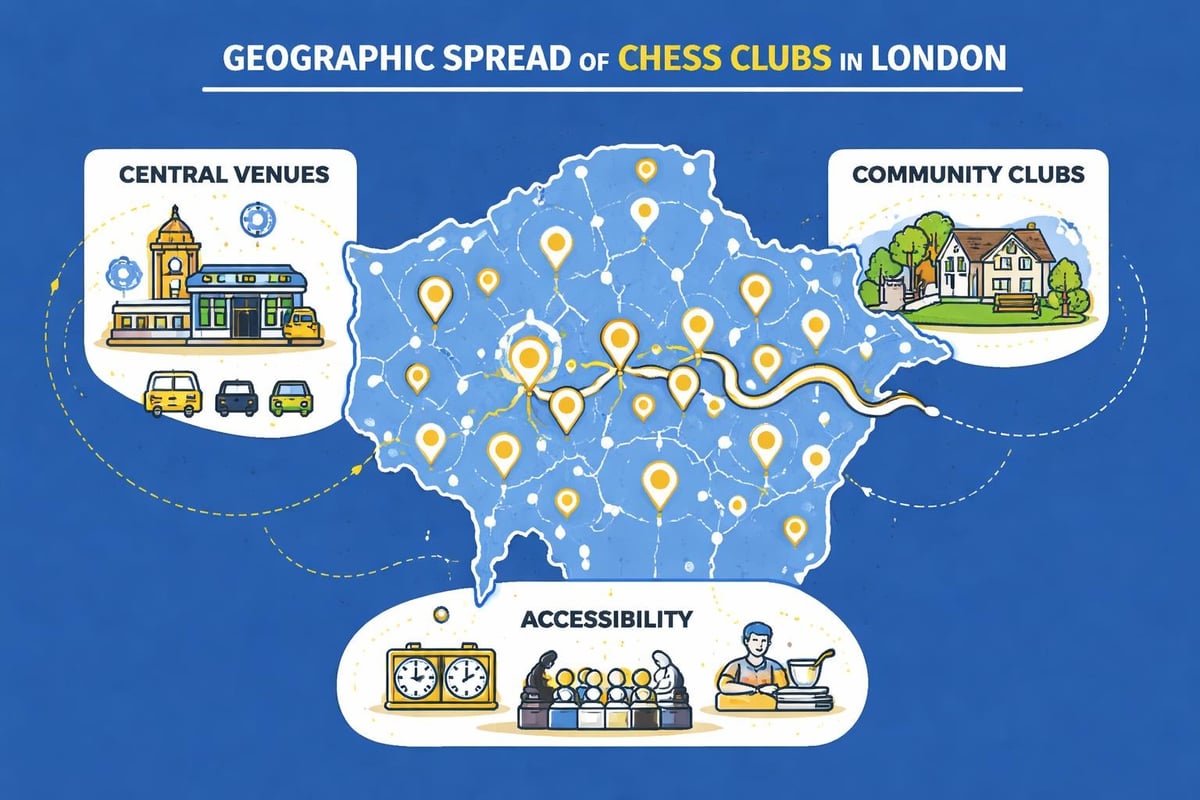
Geographic Distribution: Finding a Chess Club in London Near You
London's sprawling geography means you'll want to consider location seriously. Commuting across the city for a two-hour chess session isn't sustainable long-term.
Central London Options
The Greater London Chess Club operates in central London, making it accessible for those who work in the city center or can easily reach it via public transport. Originally established as a works club for the Greater London Council, it now welcomes all players and offers league teams, internal tournaments, and special events.
Central locations offer excellent transport links but may have higher venue costs, which can translate to slightly higher membership fees. The trade-off is convenience and often access to more frequent events.
South London Chess Communities
South London has particularly strong chess representation. The Dulwich Chess Club describes itself as friendly and expanding, actively seeking new members. This south-east London club offers both casual and league chess, giving you flexibility as your skills develop.
South London clubs often have a neighborhood feel, with many members living locally. This creates stronger community bonds and makes it easier to arrange informal practice sessions outside official club nights.
North, East, and West London Venues
The English Chess Federation's online club finder provides comprehensive listings across all London areas. This tool is invaluable for finding clubs near your home or workplace.
Factors to consider when choosing by location:
- Journey time from home or work
- Availability of evening transport
- Parking facilities if you drive
- Safety of the area for evening travel
- Proximity to other amenities

What to Expect on Your First Visit
Walking into a chess club for the first time can feel daunting. You're entering a space where everyone seems to know each other, and you might worry about your playing strength. Here's what actually happens.
Most clubs have designated beginners' nights or welcome sessions. You'll typically be greeted by a club officer who'll explain how things work. Many clubs offer a free trial session, so you can experience the atmosphere before committing to membership.
During your first visit, expect to play some casual games. Don't worry about your rating or winning. The goal is to meet people, understand the club culture, and determine if it feels right for you. Strong players at good clubs remember being beginners themselves and are usually happy to offer advice.
Questions to Ask During Your Visit
- What coaching options are available?
- How often does the club meet?
- What are the membership costs?
- Can I play in league matches as a beginner?
- Are there internal tournaments for different skill levels?
- What's the average age range of members?
- Do you have any chess resources or a club library?
How Chess Clubs Help You Improve Faster
Playing online has its place, but joining a physical chess club in London accelerates improvement in ways that digital chess can't match. The immediate feedback from over-the-board opponents, the ability to discuss positions after games, and the motivation that comes from being part of a community all contribute to faster skill development.
Structured Learning Opportunities
Many clubs offer coaching sessions, either included in membership or for a small additional fee. This structured approach complements self-study beautifully. You might be working through the most common chess openings at home, then getting immediate feedback on your opening choice in a club game.
How club play enhances study:
- Test opening preparation against real opponents
- Receive post-game analysis from stronger players
- Learn from watching higher-rated games
- Practice time management in competitive situations
- Build pattern recognition through regular play
The Social Motivation Factor
Studying chess alone requires significant discipline. When you're part of a club, you've made a commitment. Your teammates depend on you for league matches. You've arranged to meet specific people for games. This social contract provides external motivation that keeps you engaged even when your enthusiasm dips.
Membership Costs and What You're Actually Paying For
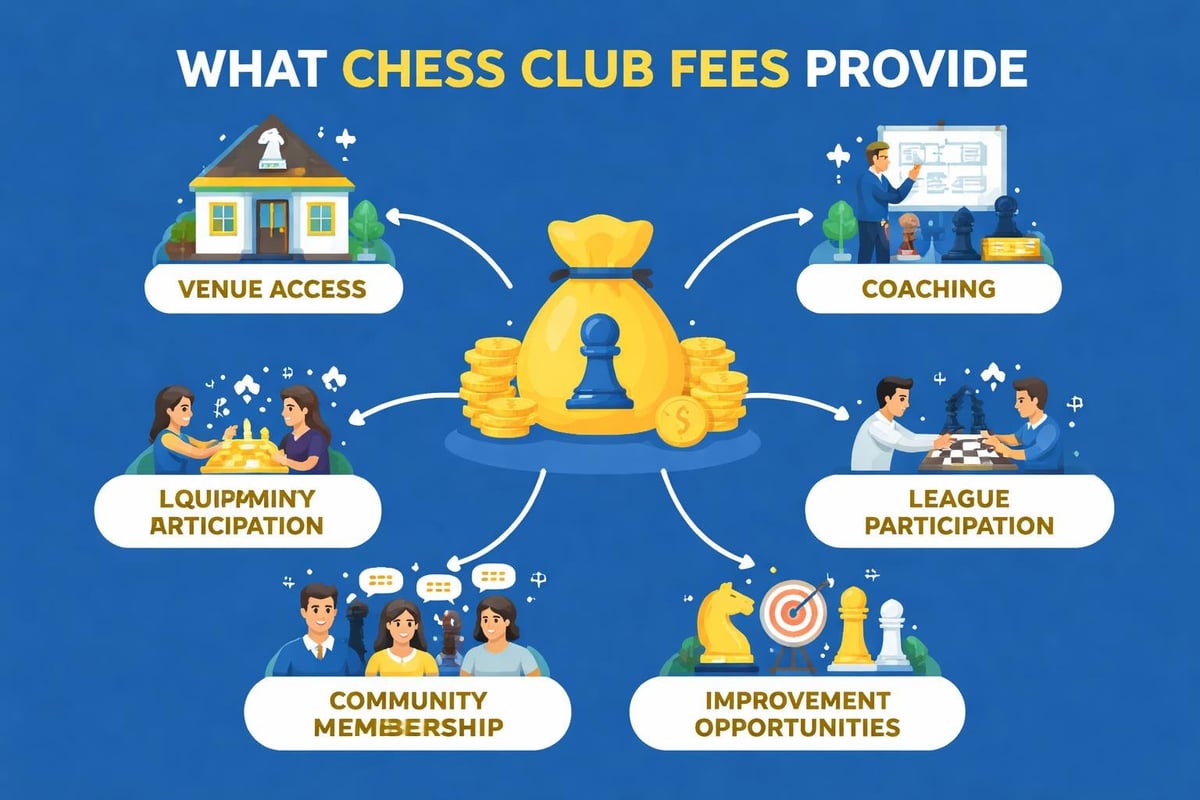
Let's talk about money, because it matters. Chess club memberships in London vary considerably, typically ranging from £30 to £150 annually, with some premium clubs charging more.
What determines these costs? Venue hire in London is expensive. Clubs meeting in central locations with dedicated facilities naturally cost more than those using community centers in outer boroughs. You're also paying for:
- League entry fees
- Chess equipment (boards, clocks, pieces)
- Website and administrative costs
- Coaching and guest speakers
- Tournament prizes and trophies
- Insurance and affiliation fees
Consider the cost per session. A £90 annual membership for a club meeting weekly works out at roughly £1.73 per session. Compare that to other hobbies or entertainment options in London, and chess represents exceptional value.
Balancing Club Play with Online Chess and Home Study
You don't need to choose between club chess and online play. The most effective approach combines both, along with structured study at home.
Use online chess for:
- Quick games when you can't reach your club
- Tactical training and puzzles
- Opening preparation
- Playing against varied styles from around the world
Reserve club sessions for:
- Serious, slow games with reflection time
- Getting feedback from stronger players
- Building relationships within the chess community
- Playing for your league team
Your home study should focus on systematic improvement. Resources like best openings for Black help you build a repertoire that you then test in club games. This creates a virtuous cycle: study at home, test in club games, identify weaknesses, return to focused study.
Special Considerations for Different Player Types
Complete Beginners
If you've only recently learned the rules, look for clubs that explicitly mention beginner coaching. The Metropolitan Chess Club's free coaching for beginners is particularly noteworthy. Don't be afraid to contact clubs directly and ask about their beginner programs.
Some clubs run separate beginner sections or training groups. This removes the intimidation factor of playing much stronger opponents every week whilst you're still learning basic tactics.
Intermediate Players Seeking Improvement
You're the sweet spot for most clubs. You can contribute to lower league teams whilst learning from stronger players in practice games. Focus on clubs with active league participation, as this gives you regular competitive experience.
This is where having a solid opening repertoire becomes crucial. Club games give you the perfect environment to develop consistency in your opening choices.
Returning Players
Perhaps you played years ago and want to return. London's chess clubs welcome returning players warmly. You might be surprised how much you remember, and modern clubs often use online platforms that make it easier to stay connected between meetings.
Parents Looking for Junior Clubs
Many adult clubs also run junior sections or can recommend dedicated junior clubs. The social and educational benefits of chess for young people are well-documented, and London has excellent provision for junior players.
Making the Most of Your Membership
Simply showing up isn't enough. Active participation multiplies the value of your chess club membership.
Maximizing your club experience:
- Play regularly - Attend consistently rather than sporadically
- Volunteer - Help with administration or event organization
- Ask questions - Strong players enjoy discussing chess
- Record your games - Review them later or with club mates
- Participate in internal events - Tournaments, simultaneous displays, lectures
- Connect outside club nights - Arrange practice sessions or study groups
The players who improve fastest are those who engage fully with their club community. They don't just play their game and leave; they watch other games, discuss positions, and build relationships with players of various strengths.
The Future of Chess Clubs in London
The pandemic accelerated changes that were already underway. Many clubs now have hybrid models, offering both in-person and online participation. This flexibility helps maintain membership during busy periods and allows players to stay connected even when they can't attend physically.
London's chess community continues growing, driven partly by increased interest following popular chess content online. Clubs are modernizing whilst maintaining their core purpose: bringing chess players together to enjoy the game and improve their skills.
The diversity of London's population is reflected in its chess clubs. You'll find clubs that cater to specific communities, languages, and cultural groups, alongside traditional clubs that pride themselves on welcoming everyone regardless of background.
Practical Steps to Join Your First Chess Club in London
Ready to take the plunge? Here's your action plan:
Step 1: Research Options Use the English Chess Federation's club finder and individual club websites to create a shortlist of three to five clubs within reasonable traveling distance.
Step 2: Contact Clubs Email or call your shortlisted clubs. Ask about:
- When they meet
- Whether visitors are welcome
- If there's a trial period
- What to bring for your first visit
Step 3: Visit Multiple Clubs Don't commit to the first club you visit. Try at least two or three to compare atmospheres, member demographics, and facilities.
Step 4: Evaluate Your Experience After each visit, consider:
- Did you feel welcomed?
- Were there players at your level?
- Did the location and timing work for your schedule?
- Could you see yourself fitting into this community?
Step 5: Join and Commit Once you've found the right fit, join formally and commit to attending regularly for at least three months. This gives you enough time to integrate into the community and see real improvement in your play.
| Timeline | Action | Goal |
|---|---|---|
| Week 1 | Research and shortlist | Identify 3-5 potential clubs |
| Week 2-4 | Visit clubs | Experience different atmospheres |
| Week 5 | Decision and joining | Choose best fit and register |
| Month 2-3 | Regular attendance | Establish routine and relationships |
| Month 4+ | Full participation | League games, tournaments, study groups |
Finding the right chess club in London transforms chess from a solitary activity into a rich social experience. The combination of regular play, structured competition, and access to stronger players creates an environment where improvement happens naturally. London's chess clubs represent over a century of tradition whilst remaining vibrant, welcoming communities for the 21st century. Whether you're drawn to the historic atmosphere of establishments like the Athenaeum or prefer the inclusive approach of newer organizations, there's a chess club in London perfectly suited to your needs and aspirations.
Choosing the right chess club accelerates your improvement through regular over-the-board play, post-game analysis, and community support. To complement your club experience with structured opening preparation and tactical training at home, Chess Cheat Sheets provides comprehensive guides, puzzles, and endgame resources designed specifically for beginners to intermediate players. Our streamlined cheat sheets help you build confidence in your opening repertoire, so you can focus on playing your best chess when you sit down at the board in your new club.


