

You've probably spent countless hours studying opening lines, memorising tactical patterns, and improving your chess game the traditional way. But what if I told you there's an entirely different way to experience chess strategy? Enter the world of the chess card-a fascinating hybrid that's been gaining momentum in 2026, combining the timeless depth of chess with the dynamic flexibility of card games. Whether you're a dedicated chess player looking for fresh challenges or someone curious about innovative game design, this intersection of two classic game formats offers something genuinely intriguing.
What Exactly Is a Chess Card Game?
Let's clear up any confusion straight away. A chess card game isn't simply chess pieces printed on cards-it's a thoughtfully designed gaming experience that takes the strategic principles of chess and reimagines them through card game mechanics.
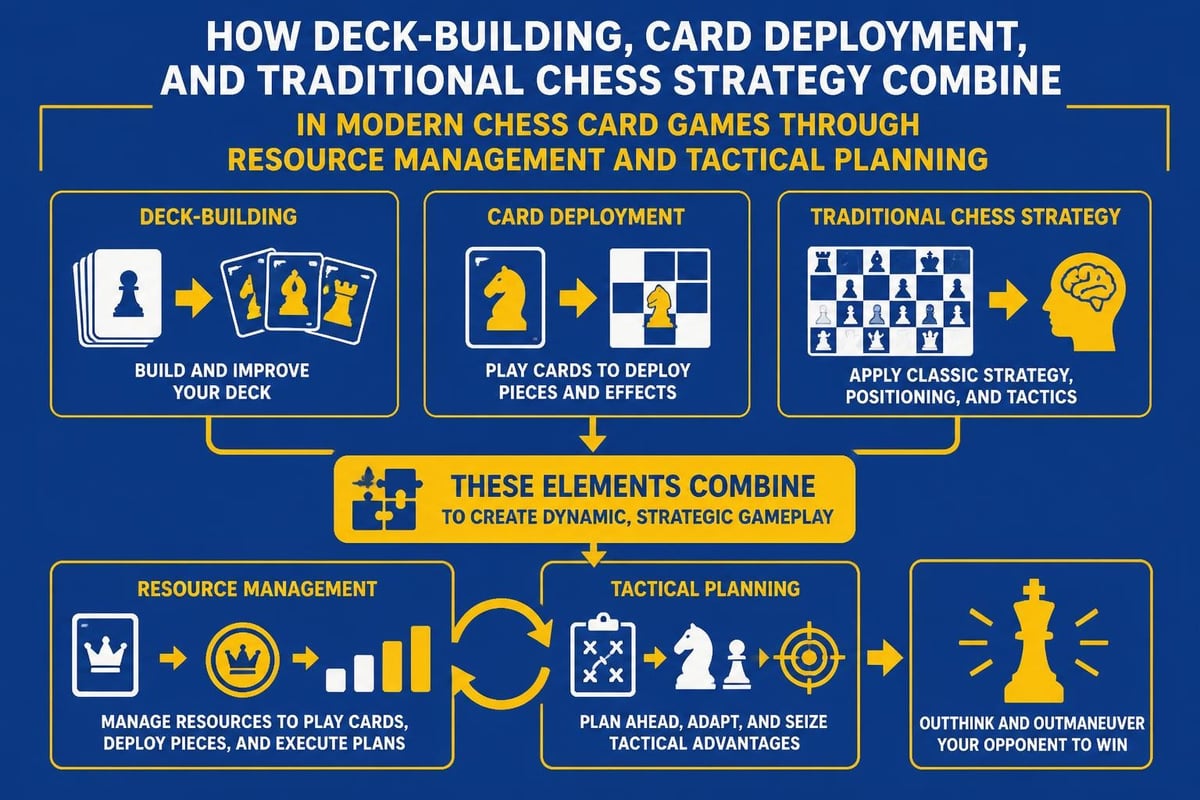
These games typically feature cards representing chess pieces, special moves, or strategic advantages. Players build decks, draw hands, and deploy their forces in ways that echo chess's tactical depth whilst introducing elements of unpredictability and deck-building strategy.
The beauty of this concept lies in its versatility. Some chess card games maintain a traditional 64-square board, whilst others create entirely new spatial frameworks for strategic battles.

Core Mechanics That Define Chess Card Games
What makes a game qualify as a chess card experience? Here are the essential elements you'll typically find:
- Piece representation through cards: Each card often represents a chess piece with its traditional movement patterns
- Deck-building components: Players customise their collection of pieces and abilities before matches -- Strategic deployment: Deciding when and where to play cards becomes crucial
- Resource management: Cards in hand, cards in deck, and board position all demand attention
- Tactical combinations: Just like traditional chess, multi-move sequences determine outcomes
The chess card concept appeals to players who appreciate strategic depth but want more variety than a standard chess starting position offers. Chess: The Card Game exemplifies this approach, allowing players to use cards for unique effects whilst maintaining chess-like strategic thinking.
Popular Chess Card Games You Should Know About
The chess card landscape has expanded significantly, with several standout titles offering distinct takes on this hybrid concept. Let's explore what makes each approach unique.
Card Chess: The Competitive PvP Experience
Card Chess represents the competitive edge of this genre. This online PvP strategy game lets you deploy pieces and control the board using a custom 60-card deck. Think of it as bringing the customisation of collectible card games into the chess world.
What's particularly clever about this approach? You're not just reacting to your opponent's moves-you're anticipating what cards they might have in their deck. This adds an entirely new layer of psychological gameplay beyond traditional chess.
| Feature | Traditional Chess | Card Chess |
|---|---|---|
| Starting position | Always identical | Varies by deck composition |
| Available pieces | Fixed 16 pieces | Depends on cards drawn |
| Strategic variety | Opening theory | Deck-building options |
| Match-to-match variation | Limited | Extensive |
Chess-à-Tête: The Deck-Building Alternative
If you prefer games that reward long-term strategic planning, Chess-à-Tête offers something special. This two-player chess card game emphasises deck-building mechanics, letting you craft your perfect chess army before battle even begins.
The genius here is how it maintains chess's strategic essence whilst giving you control over your piece composition. Should you load up on powerful pieces or maintain flexibility with pawns and minor pieces? These decisions mirror the strategic thinking required when selecting chess openings for white.
Strategic Variations Worth Exploring
Beyond these flagship titles, the chess card ecosystem includes fascinating variants:
Chards takes a pure strategy approach, focusing on chess-like battles using cards without random mechanics. Chards appeals to players who want the predictability of chess combined with the variety of card deployment.
Capto Chess introduces another twist entirely. Capto Chess layers cards onto traditional chess matches, creating unpredictable strategic situations. One moment you're playing standard chess theory, the next you're adapting to card-induced complications.
How Chess Card Games Improve Your Traditional Chess
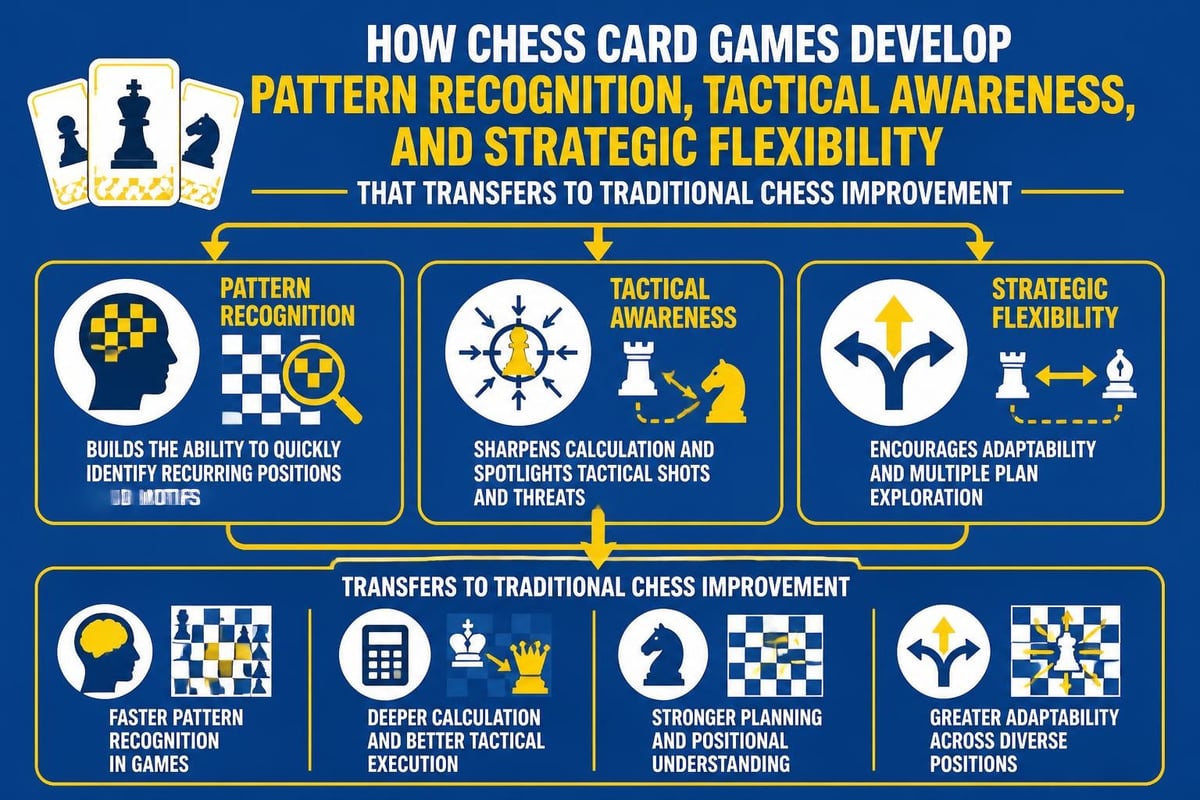
Here's something you mightn't expect: playing chess card games can actually strengthen your conventional chess skills. I've found this works in several surprising ways.
Pattern Recognition Across Different Formats
When you play a chess card game, you're constantly evaluating piece interactions, tactical opportunities, and positional concepts-just like in regular chess. The difference? You're seeing these patterns in varied contexts, which reinforces your fundamental understanding.
Consider how The Pawn's Gambit uses opening cards, piece cards, and imbalance cards. These categories mirror actual chess concepts: opening preparation, piece coordination, and strategic imbalances. By engaging with these ideas through a different medium, you're deepening your chess intuition.
Adaptability and Creative Thinking
Traditional chess sometimes becomes formulaic, especially if you're grinding through the same opening lines repeatedly. Chess card games force you to think creatively because you can't rely on memorised sequences.
This adaptability translates beautifully back to standard chess. When you face an unexpected move in a tournament game, you'll find yourself more comfortable navigating unfamiliar positions.
Designing Your Chess Card Strategy
Whether you're playing competitively or casually, developing a coherent strategy separates winning players from those who struggle. Let's break down the strategic thinking required.
Deck Construction Principles
Building a chess card deck shares similarities with preparing an opening repertoire. You need:
- Balance between aggression and defence: Too many attacking cards leave you vulnerable; too defensive and you'll never create winning chances
- Flexibility for different scenarios: Your deck should handle both tactical complications and strategic manoeuvres
- Synergies between cards: Certain piece combinations work better together, just like piece coordination in regular chess
- Resource curve considerations: Can you deploy your strategy early, or do you need time to develop?
Think about how you'd study best openings for black-you're looking for systems that suit your style whilst remaining objectively sound. The same principle applies to chess card deck building.
In-Game Tactical Decisions
Once the game begins, your tactical acumen takes centre stage. Here's where your chess training really shines:
- Tempo management: Playing cards at the right moment versus saving them for crucial tactical shots
- Board control: Just like central control in chess, dominating key squares or zones matters tremendously
- Piece value calculations: Is trading your knight card for their bishop card worthwhile in this position?
- Threat recognition: Spotting your opponent's tactical possibilities before they materialise
The beautiful thing? These skills directly mirror what you've learned from studying traditional chess. Your experience with chess opening guides teaches you pattern recognition that applies perfectly to chess card scenarios.
The Educational Value of Chess Card Formats
As someone passionate about chess education, I find the chess card concept particularly valuable for learners. These games offer teaching opportunities that traditional chess sometimes struggles to provide.
Breaking Down Intimidation Barriers
Let's be honest: chess intimidates many beginners. The sheer number of possible moves, the depth of theory, and the fear of making catastrophic mistakes can paralyse new players. Chess card games often feel more approachable because they:
- Limit options through hand size (you can't feel overwhelmed by infinite possibilities)
- Introduce chess concepts gradually through different card types
- Feel less serious, reducing performance anxiety
- Provide natural learning progression as you acquire new cards
Focused Skill Development
Different chess card games emphasise different skills. This targeted practice can accelerate improvement in specific areas:
| Chess Skill | How Chess Card Games Develop It |
|---|---|
| Tactical vision | Spotting card combinations that create threats |
| Strategic planning | Building decks around coherent game plans |
| Risk assessment | Deciding when to deploy key cards versus holding them |
- Positional understanding | Evaluating which board squares or zones to contest | | Adaptability | Responding to draws and opponent's unexpected plays |
You can think of chess card games as specialised training tools-similar to how working through chess puzzles develops your tactical sharpness.
Chess Card Variants and Special Rules
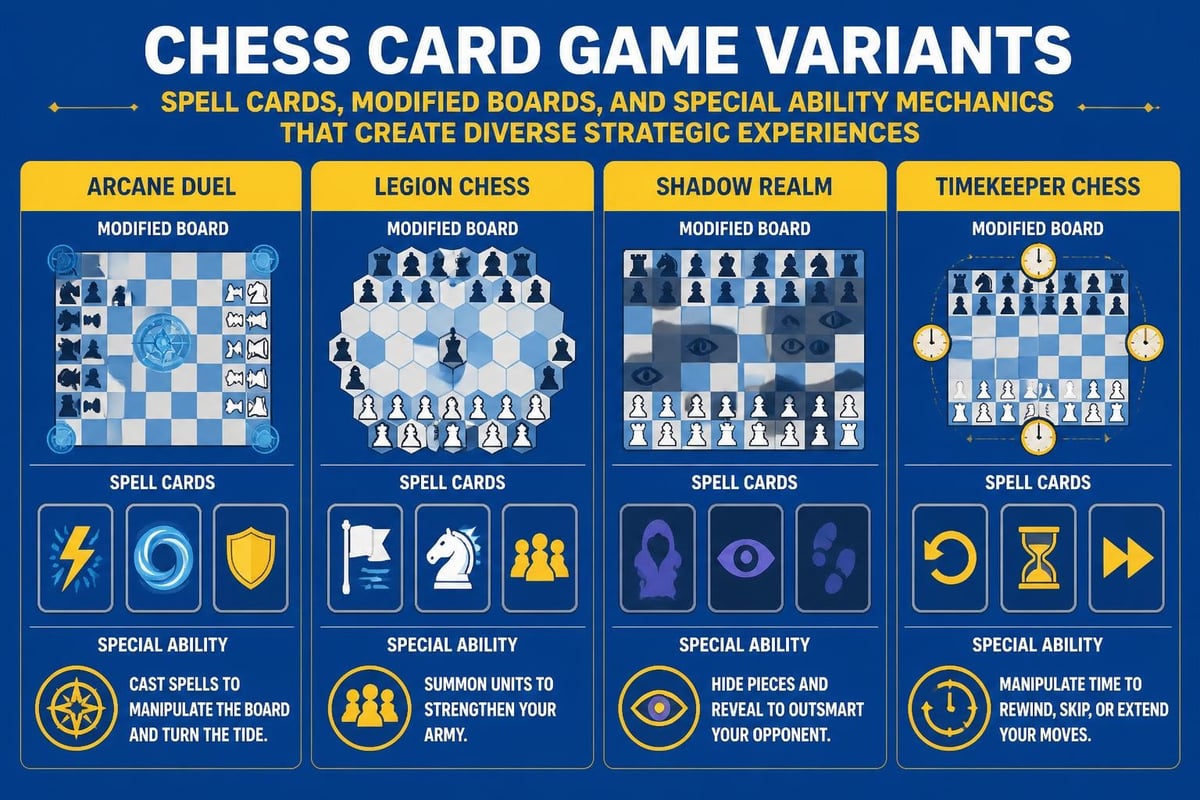
The creativity within the chess card space is genuinely impressive. Designers have experimented with countless rule modifications, creating unique gameplay experiences.
Spell and Ability Cards
Some games introduce cards that don't represent pieces at all. These special ability cards might:
- Modify piece movement temporarily
- Create tactical complications on specific squares
- Alter the rules for a single turn
- Generate card advantage or resource benefits
This concept appears in games like Wizards' Chess, which incorporates magical elements into standard chess gameplay. These additions create decision points that don't exist in traditional chess, demanding different strategic thinking.
Hybrid Board Systems
Not all chess card games use the standard 64-square board. Some innovate with:
- Smaller tactical arenas (5x5 or 6x6 grids) for faster, more aggressive gameplay
- Modular board construction where the playing field itself varies
- Zone-based systems replacing traditional squares entirely
- Three-dimensional spaces adding vertical layers to strategic considerations
These variations keep the strategic essence of chess whilst creating fresh tactical environments. It's somewhat analogous to how studying different chess opening systems exposes you to varied strategic landscapes.
Building Your Chess Card Collection
If you're intrigued by the chess card concept and want to start exploring these games, here's practical advice for getting started.
Where to Begin
Start with free or low-cost options to determine which style appeals to you. Many chess card games offer:
- Demo versions letting you test core mechanics
- Free-to-play models with optional purchases
- Single-purchase games without ongoing costs
- Community variants you can play with standard playing cards
I'd recommend sampling different approaches before investing heavily. Just as you wouldn't commit to a single chess opening without exploring alternatives, try various chess card formats to find your preference.
Growing Your Understanding
Once you've found a chess card game you enjoy, deepen your engagement through:
- Community forums where experienced players share strategies
- Tutorial content explaining advanced concepts
- Practice matches against varied opponents
- Deck experimentation testing different strategic approaches
This learning process mirrors traditional chess improvement. You're developing pattern recognition, learning from stronger players, and refining your strategic understanding through experience.
Balancing Chess Card Games with Traditional Study
Here's an important question: should chess card games replace your regular chess practice? Absolutely not. Instead, view them as complementary activities.
I suggest structuring your chess time like this:
- 70% traditional chess: Study, play, and analysis of standard chess
- 20% targeted training: Puzzles, endgames, specific openings
- 10% chess variants: Including chess card games and other alternatives
This balance maintains your core chess development whilst providing refreshing variety. After intensive work on opening preparation, a chess card game session can feel relaxing yet still chess-related.
The Social Aspect of Chess Card Gaming
One underappreciated benefit of chess card formats is their social dynamic. These games often create different interpersonal experiences than traditional chess.
Casual Accessibility
Traditional chess can feel intensely competitive, even in friendly games. Chess card games often cultivate a more relaxed atmosphere where:
- Players chat more freely during matches
- The luck element provides conversation topics
- Deck-building discussions happen between games
- The learning curve feels less steep for newcomers
This accessibility makes chess card games excellent for introducing non-chess players to strategic thinking. You're building a bridge between casual gaming and serious chess study.
Tournament and Competitive Scenes
Despite their approachability, many chess card games support competitive play. Online rankings, tournaments, and competitive communities have emerged around popular titles.
If you enjoy the competitive aspect of chess, you'll find similar satisfaction in chess card tournaments. The preparation, psychological gameplay, and strategic depth all translate, whilst the format adds novel challenges.
Future Developments in Chess Card Gaming
Looking ahead in 2026, the chess card space continues evolving. Several trends suggest where this hybrid format might be heading.
Digital Integration
Online platforms increasingly support chess card games, offering:
- Matchmaking systems connecting players globally
- Digital card collections eliminating physical storage concerns
- Automated rule enforcement reducing disputes and errors
- Statistical tracking showing your strategic tendencies
These digital implementations make chess card games more accessible than ever. You can explore these concepts without significant financial investment or physical space requirements.
Educational Applications
I'm particularly excited about chess card games' potential in chess education. Teachers and coaches are discovering these formats can:
- Engage students who find traditional chess intimidating
- Teach specific concepts in isolation
- Create varied lesson content
- Motivate through collection and progression mechanics
- Bridge to traditional chess naturally
If you're interested in chess improvement through diverse methods, exploring chess card formats alongside resources like chess videos for beginners provides comprehensive skill development.
Cross-Pollination with Traditional Chess
Finally, I expect we'll see more interaction between chess card concepts and traditional chess. Some possibilities include:
- Training tools using card mechanics to teach opening principles
- Variant tournaments combining both formats
- Educational products leveraging card game appeal for chess instruction
- Hybrid competitions testing skills across multiple strategic formats
This evolution benefits everyone passionate about strategic games, whether your primary interest is traditional chess or you're exploring the broader landscape of strategic thinking.
The chess card concept represents a fascinating evolution of strategic gaming, blending chess's timeless principles with modern game design innovation. Whether you're looking to refresh your chess experience, develop strategic skills through varied formats, or simply explore creative game design, these hybrid formats offer genuine value. If you're serious about chess improvement, Chess Cheat Sheets provides the streamlined guides, opening resources, and strategic tools you need to elevate your game efficiently-giving you the solid foundation that makes exploring variants like chess card games even more rewarding.


