

You've set up the board, your pieces gleam in anticipation, and now comes the moment of truth. What's your opening move? This single decision shapes the entire game, influencing everything from piece development to endgame possibilities. Whether you're sitting down for your first tournament or looking to refine your opening repertoire, understanding the best first move in chess can give you that crucial psychological and positional edge. Let's explore the moves that have dominated chess for centuries and help you choose the one that matches your playing style.
Why Your First Move Matters More Than You Think
The opening move sets the tone for the next 40 or 50 moves. It's not just about pushing a piece forward, it's about committing to a strategic vision. Will you fight for the centre aggressively? Will you develop quietly and strike later? Your first move is a promise to yourself about how you'll conduct the game.
What makes one move better than another? The first-move advantage in chess has been debated for centuries, with white scoring approximately 52-56% in master-level games. This statistical edge doesn't come from magic, it comes from thoughtful opening choices that create immediate problems for your opponent.
The Three Pillars of Strong Opening Moves
Before we dive into specific moves, let's establish what makes an opening move effective:
- Centre control: Dominating the centre squares (e4, d4, e5, d5) gives your pieces more mobility
- Piece development: Your move should facilitate getting knights, bishops, and other pieces into the game
- King safety: The best openings allow for smooth castling and defensive structure
These principles aren't just theory, they're battle-tested wisdom from millions of games played across all levels.
The Big Three: Most Popular First Moves
Walk into any chess club in 2026, and you'll see these three moves being played repeatedly. There's a reason for their popularity.
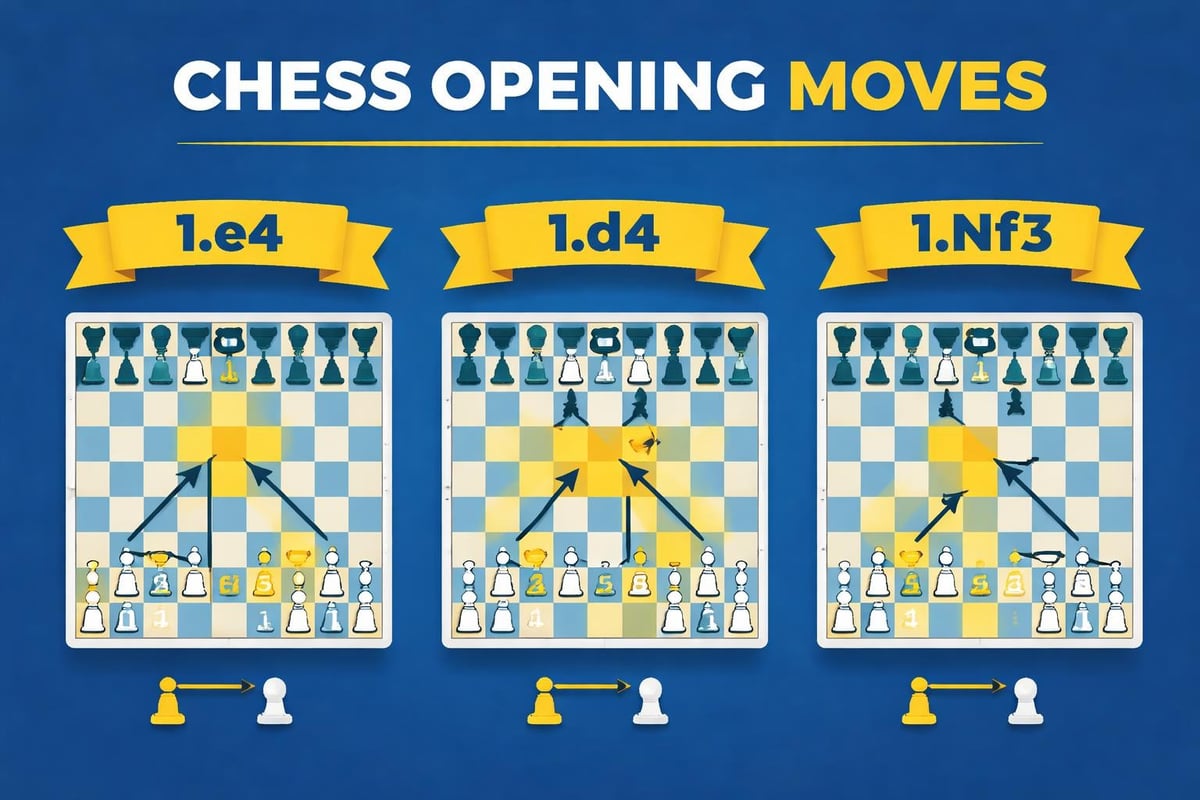
1.e4: The King's Pawn Opening
This is the move that beginners learn first, and for good reason. When you push your king's pawn two squares forward, you're staking an immediate claim to the centre whilst simultaneously opening lines for your queen and bishop. It's direct, it's aggressive, and it leads to some of the most tactical chess you'll ever play.
Advantages of 1.e4:
- Opens up your position immediately
- Leads to sharp, tactical positions
- Creates clear plans for piece development
- Historically favoured by attacking players like Bobby Fischer and Garry Kasparov
The beauty of 1.e4 is its transparency. You're not hiding your intentions, you're declaring war on the centre and inviting your opponent to fight for it. This move leads to legendary openings like the Italian Game and the Ruy Lopez, giving you a rich tapestry of middle-game possibilities.
However, 1.e4 does have its challenges. Black has numerous sharp defences, including the Sicilian Defense and Caro-Kann Defense, each requiring significant theoretical knowledge. If you're not prepared for these responses, you might find yourself in unfamiliar territory quickly.
1.d4: The Queen's Pawn Game
Many players transition to 1.d4 as they gain experience, and it's easy to see why. This move offers a more positional approach to the best first move in chess, creating long-term advantages rather than seeking immediate tactics. You control the centre just as effectively as with 1.e4, but you keep more pieces back, making it harder for black to create immediate counterplay.
The strategic benefits are compelling:
- Safer king position from the start
- Less forcing variations mean you can outplay opponents positionally
- Flexible pawn structure that adapts to black's setup
- Better control over the game's pace and complexity
Former World Champion Vladimir Kramnik famously said that 1.d4 is the choice of players who want to "play chess" rather than just "know chess". The positions that arise from 1.d4 tend to reward understanding over memorisation, making it ideal if you want to rely on your positional skills rather than extensive opening preparation.
If you explore what makes 1.d4 attractive, you'll find it leads to systems like the London System and Catalan Opening, both known for their solid foundations and gradual buildup of advantage.
1.Nf3: The Reti Opening
Here's where things get interesting. Rather than immediately occupying the centre with pawns, 1.Nf3 develops a piece whilst maintaining maximum flexibility. You're essentially saying, "I'll decide my pawn structure after seeing what you do." This hypermodern approach gained popularity in the 20th century and remains a sophisticated weapon.
| Opening Move | Centre Control | Flexibility | Theoretical Burden | Tactical Complexity |
|---|---|---|---|---|
| 1.e4 | Immediate | Moderate | High | Very High |
| 1.d4 | Immediate | Moderate | High | Moderate |
| 1.Nf3 | Delayed | Very High | Moderate | Moderate |
The knight move can transpose into nearly any opening system, depending on your second and third moves. Want to play an English Opening? You can. Prefer a King's Indian Attack? That's available too. This flexibility makes 1.Nf3 particularly valuable if you prefer to adapt to your opponent's style rather than imposing your own from move one.
Choosing the Best First Move for Your Playing Style
Now comes the personal bit. What works brilliantly for Magnus Carlsen might feel awkward for you, and that's perfectly fine. Your best first move in chess depends on who you are as a player.
Are You an Aggressive Attacker?
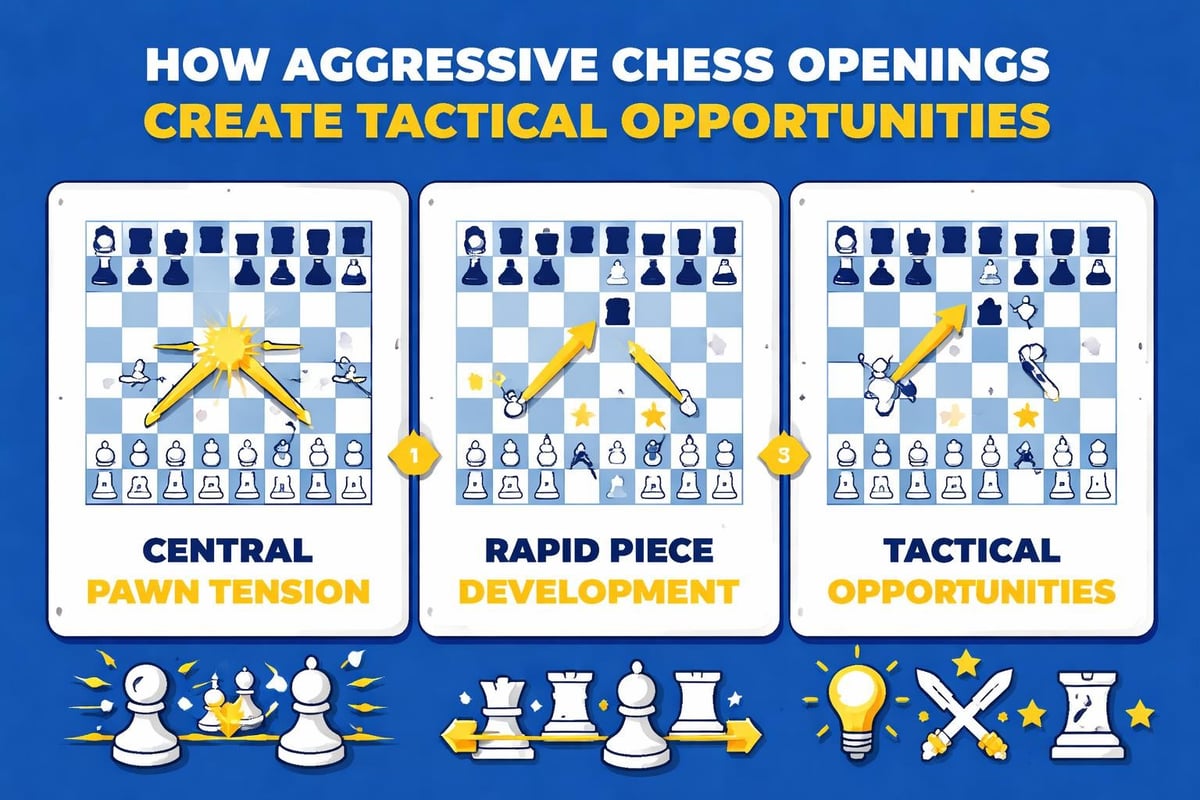
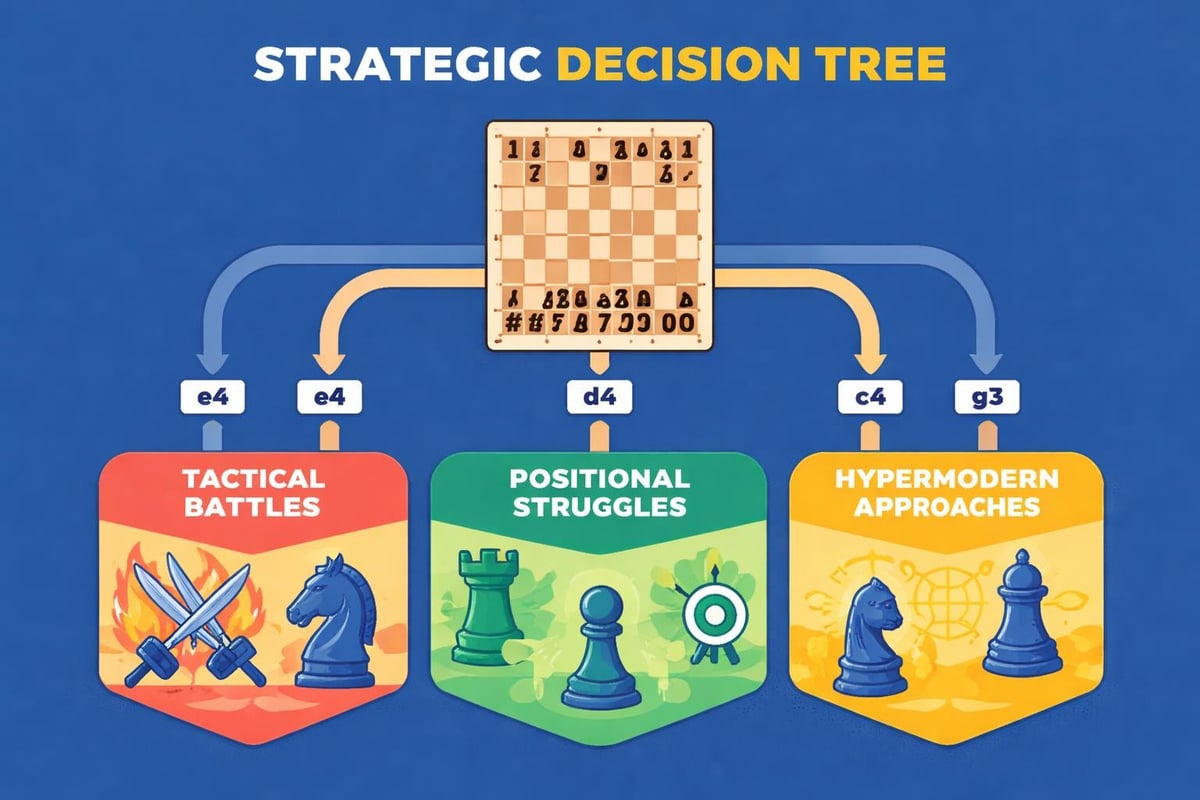
If you love tactics, sacrifices, and kingside attacks, 1.e4 is calling your name. This move creates the sharpest positions and gives you the best chance to launch early attacks. You'll need to study your openings thoroughly, especially the most common responses black can deploy, but the payoff is games full of excitement and decisive results.
Do You Prefer Positional Squeezes?
Positional players often gravitate towards 1.d4. You'll build small advantages, restrict your opponent's pieces, and grind them down in the endgame. The positions are less likely to blow up in your face, and you can often outplay less experienced opponents through superior understanding rather than calculation. Understanding how to approach different defensive systems helps you prepare your 1.d4 repertoire effectively.
Want Maximum Adaptability?
The flexible player chooses 1.Nf3. You can steer the game into familiar waters whilst keeping your opponent guessing about your intentions. This move works brilliantly if you're still developing your style or if you like to switch between aggressive and positional play depending on your mood and your opponent.
What the Statistics Tell Us
Let's look at some revealing numbers from master-level databases in 2026:
- 1.e4: Played in approximately 40% of games, scoring 54.25% for white
- 1.d4: Played in approximately 37% of games, scoring 55.95% for white
- 1.Nf3: Played in approximately 12% of games, scoring 55.8% for white
- 1.c4: Played in approximately 8% of games, scoring 56.3% for white
Notice something interesting? Whilst 1.e4 is the most popular, it actually scores slightly lower than the alternatives. This doesn't make it worse, it reflects that black's defensive resources against 1.e4 are extremely well-developed. The slightly higher scores for 1.d4 and 1.Nf3 might indicate that fewer players have deeply prepared against these moves, or that they offer more subtle ways to build an advantage.

Common Mistakes When Choosing Your Opening Move
You might think choosing your first move is straightforward, but I see players make these errors repeatedly:
Playing what's "objectively best" rather than what suits you: Just because Stockfish 17 evaluates certain positions favourably doesn't mean you'll play them well. Your comfort and understanding matter more than computer evaluations at the club level.
Switching first moves too frequently: If you play 1.e4 one week, 1.d4 the next, and 1.Nf3 the week after, you'll never build the deep understanding that comes from repetition. Pick one move and stick with it for at least six months.
Ignoring black's responses: Your first move is only half the equation. If you play 1.e4 but haven't studied what to do when black plays the Sicilian Dragon, you're setting yourself up for trouble. Whether you're facing the Caro-Kann or French Defense, preparation matters.
Building Your Opening Repertoire Around Your First Move
Once you've chosen your first move, the real work begins. You need a complete repertoire that covers all of black's reasonable responses. Here's a practical framework:
- Choose your main first move (1.e4, 1.d4, or 1.Nf3)
- Select one system against each major black defence (don't try to learn everything)
- Study the first 8-10 moves of each system thoroughly
- Learn the key middlegame plans that arise from your openings
- Review your games to identify where your opening knowledge failed you
This systematic approach prevents the overwhelming feeling that comes from trying to learn everything at once. You're building a sustainable foundation, not cramming for an exam.
How Top Players View the Best First Move in Chess
It's fascinating to see how elite players' preferences have evolved. Bobby Fischer exclusively played 1.e4 with white, believing it was the "best by test." Anatoly Karpov and Garry Kasparov both favoured 1.e4 in their prime, creating some of the most brilliant attacking games in chess history.
However, the modern era shows more diversity. Magnus Carlsen plays all three main moves, choosing based on his opponent and the tournament situation. Fabiano Caruana tends towards 1.e4, whilst Ding Liren has shown preference for 1.d4 systems. This variety at the highest level tells us something important: there is no single best first move in chess that works for everyone in every situation.
The debate continues in online forums, with players passionately defending their choices. Some argue that certain moves deserve more recognition, whilst others maintain traditional preferences based on decades of practice.
Alternative First Moves Worth Considering
Whilst 1.e4, 1.d4, and 1.Nf3 dominate serious chess, other first moves have their adherents and can be surprisingly effective.
1.c4: The English Opening
This move, favoured by Botvinnik and Kasparov at various points in their careers, offers a sophisticated way to begin the game. You control d5 from the side rather than occupying the centre immediately. The English Opening can transpose into many other openings or maintain its unique character, giving you exceptional flexibility.
When to consider 1.c4:
- You want to avoid your opponent's prepared lines in 1.e4 or 1.d4
- You're comfortable with reversed Sicilian positions
- You prefer strategic complexity over tactical sharpness
Less Common but Playable Moves
Moves like 1.b3, 1.g3, and even 1.f4 have their place in chess. Whilst not considered among the absolute best choices, they can be effective surprise weapons or fit specific playing styles. Just remember that these moves generally offer white a smaller advantage than the main three options.
Practical Tips for Mastering Your Chosen First Move
Knowing which move to play is one thing; playing it well is another. Here are some practical steps to truly master your opening:
Study complete games, not just theory: Watch how grandmasters develop their positions from your chosen first move. Notice how they handle the middlegame positions that arise. Understanding the full arc of the game makes your opening play more purposeful.
Practice against the toughest defences first: If you play 1.e4, start by learning what to do against the Sicilian. If you choose 1.d4, master your responses to the King's Indian and Nimzo-Indian. These critical defences appear frequently, so getting comfortable with them pays immediate dividends.
Keep an opening notebook: Every time you face a new variation or lose because of opening unfamiliarity, write it down. Review these notes weekly and gradually plug the holes in your repertoire. This simple habit accelerates your learning dramatically.
Use the right resources: Quality opening materials make learning faster and more enjoyable. Rather than piecing together information from random YouTube videos and forum posts, investing in comprehensive guides gives you structured, reliable knowledge that you can trust.
The Psychology of Opening Choice
Here's something rarely discussed: your first move sends a psychological message to your opponent. When you play 1.e4, you're announcing your intentions clearly. It's a statement of confidence, saying "I'm ready to fight tactically." Conversely, 1.d4 can suggest a more patient, strategic approach that some opponents find frustrating.
Players who vary their first move strategically can gain psychological edges. If you typically play 1.d4 but surprise an aggressive opponent with 1.e4 in a must-win situation, you've changed the game's entire character and potentially disrupted their preparation.
However, don't let psychological gamesmanship override sound chess principles. Your best first move in chess should primarily be the one you understand deeply and can play confidently across multiple games.
Choosing your first move is just the beginning of your chess journey, but it's a choice that shapes every game you play. Whether you embrace the tactical complexity of 1.e4, the strategic depth of 1.d4, or the flexibility of 1.Nf3, the key is to commit to your choice and study it thoroughly. If you're ready to build a comprehensive opening repertoire without spending months on theoretical study, Chess Cheat Sheets offers streamlined guides and resources that help you master your chosen openings efficiently and boost your confidence at the board.


