

Why does chess never lose its magic, even after centuries? The answer lies in its endless depth and the stories told through all chess games, from the classics to modern masterpieces.
In this post, you’ll discover nine essential all chess games that every player should explore. These legendary matches, pivotal moments, and instructive battles offer lessons that can change how you see the board and help you grow as a player.
Ready to uncover the secrets hidden in these timeless games? Dive in, study these classics, and watch your chess understanding reach new heights.

The Importance of Studying Classic Chess Games
Have you ever wondered why so many top players, from grandmasters to club enthusiasts, dedicate hours to reviewing the past? The secret lies in the power of learning from all chess games that have stood the test of time. Classic games are more than old battles, they are living textbooks packed with lessons you can use today.
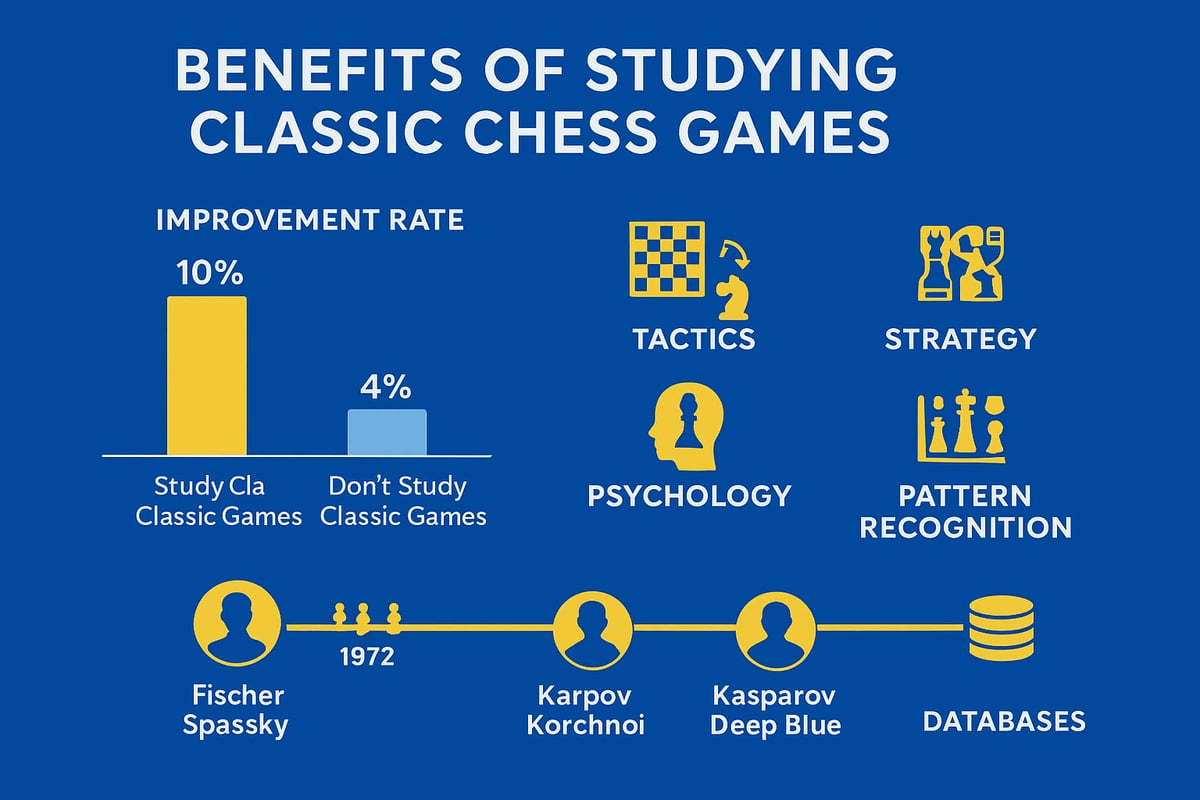
Why Study Classic Games?
When you analyze all chess games from history, you gain access to a treasure trove of ideas. Legendary players like Magnus Carlsen and Garry Kasparov often credit their growth to studying the masterpieces of those who came before them.
Classic games teach you to recognize patterns, spot recurring tactics, and sense the flow of a position. This pattern recognition is a cornerstone for improving at all chess games, whether you are a beginner or advanced competitor. Plus, exploring chess history adds depth to your understanding and connects you to the game's rich culture.
Strategic and Tactical Lessons
What makes all chess games from the past so instructive? Each one is packed with strategic gems and tactical fireworks. You will see sacrifices that reshape the board, positional maneuvers that squeeze out small advantages, and psychological battles where nerves are tested.
Consider how often you encounter similar themes: the classic queen sacrifice, the art of defense, or the slow buildup of pressure. By studying these moments, you sharpen your ability to spot opportunities in your own games. In fact, research shows that top players spend a significant portion of their training time analyzing historic matches. For more on these findings, check out Quantifying human performance in chess.
Methods and Resources
Ready to dive into all chess games that shaped the sport? Start by replaying annotated games, using chess engines to double-check your ideas, and discussing positions with fellow enthusiasts. Break down key moments, ask yourself questions, and try predicting the masters' moves before revealing them.
Some players prefer books packed with commentary, while others use online databases or puzzle trainers. Whichever method you choose, make it a habit to study a few classic games each week. Over time, you will notice your decision-making and pattern recognition improve, making you a stronger, more confident player in all chess games.
9 Essential Chess Games Every Player Should Explore
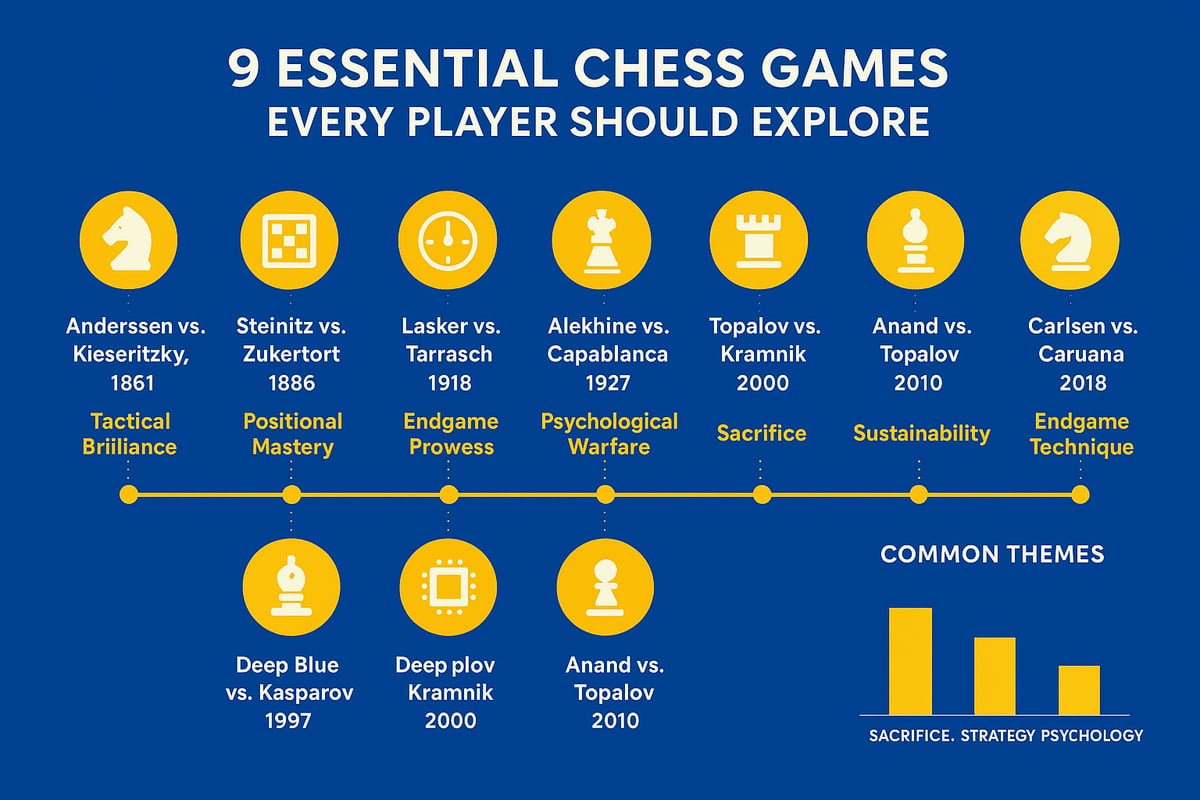
Chess has a way of capturing the imagination like few other games. When you study all chess games that have shaped the world’s understanding of the board, you start to see patterns, themes, and ideas that repeat across decades. Let’s dive into nine classic encounters that every player, no matter your level, should explore if you want to grow your skills and develop a deeper appreciation for the game’s artistry.
1. [Kasparov vs. Topalov, Wijk aan Zee 1999]
Kasparov vs. Topalov is one of those all chess games that gets studied again and again. Played in Wijk aan Zee in 1999, this battle is often called Kasparov’s Immortal for good reason. Garry Kasparov, already a legend, faced Veselin Topalov, a rising star. The game is famous for its breathtaking queen sacrifice and a string of relentless attacking moves.
Kasparov’s queen sacrifice on move 24 is a moment that leaves viewers in awe. He gave up his most powerful piece, banking on precise calculation and the activity of his remaining pieces. The resulting combinations are a tactical masterclass, showing how initiative and dynamic play can overcome material deficits.
The game is a goldmine for learning about calculation under pressure. Every player who wants to improve should analyze how Kasparov kept the attack alive, never letting Topalov breathe. If you’re looking for a deeper dive, this annotated analysis of Kasparov vs. Topalov 1999 breaks down the key tactical themes and instructive moments.
All chess games have something to teach, but this one stands out for its creativity and boldness. It’s a must-study for anyone wanting to sharpen their attacking instincts and calculation skills.
2. [Fischer vs. Byrne, New York 1956 (“The Game of the Century”)]
What happens when a 13-year-old prodigy takes on a seasoned master? You get one of the most celebrated all chess games in history. Bobby Fischer’s win over Donald Byrne in 1956 stunned the chess world and signaled the arrival of a future legend.
The heart of this game is Fischer’s brilliant queen sacrifice. He gives up the queen not for immediate material, but to unleash a devastating sequence of moves. The tactical vision displayed here is a perfect example of how all chess games can hide deep, hidden resources, waiting to be uncovered by a sharp mind.
Fischer’s rapid development and control of the board made it impossible for Byrne to recover. Each move is a lesson in piece activity and king safety. If you’re ever in doubt about the power of initiative, this game will show you how quickly things can turn with precise calculation.
This is one of those all chess games that every aspiring player should know by heart. It teaches the value of boldness, foresight, and never underestimating your opponent—no matter their age.
3. [Morphy vs. Duke Karl/Count Isouard, Paris 1858 (“The Opera Game”)]
Imagine playing all chess games in front of an audience, with legends watching from the wings. That was the scene when Paul Morphy took on Duke Karl and Count Isouard in Paris. The Opera Game is a showcase of rapid development and how to punish slow play.
Morphy’s play here is a masterclass in using all your pieces. He brings every piece into the attack, opening up lines and seizing the initiative. This classic shows you why development and central control are fundamental in all chess games, especially when your opponent is slow to mobilize.
The sacrifices Morphy makes are instructive for new and experienced players alike. He gives up material not for show, but because it leads to a swift, coordinated assault on the enemy king. If you ever want to see how to punish your opponent for neglecting development, the Opera Game is your blueprint.
It’s no surprise this is often the first of all chess games that beginners study. The lessons are timeless, and the tactics are easy to follow yet deeply instructive.

4. [Deep Blue vs. Kasparov, Game 6, New York 1997]
Few all chess games have made headlines around the world, but Deep Blue vs. Kasparov did exactly that. In 1997, for the first time, a computer defeated the reigning world champion in a match setting. This game marked a turning point for chess and technology.
The opening preparation was intense, with both sides trying to outmaneuver the other before the middlegame. Deep Blue’s play was precise, exploiting small weaknesses and never missing a tactical shot. The psychological pressure on Kasparov was immense—he knew he was not just playing a machine, but also representing human intuition.
The turning point came when Kasparov played a surprising move, only for Deep Blue to respond with machine-like accuracy. This game is a lesson in adapting to new tools and how all chess games are now influenced by computer analysis and preparation.
If you want to understand how technology has changed the landscape of all chess games, this encounter is essential viewing. It also reminds us that preparation and adaptability are just as important as raw skill.
5. [Karpov vs. Unzicker, Nice Olympiad 1974]
Not all chess games are about wild tactics. Some, like Karpov vs. Unzicker, are slow burns that showcase the power of positional play. Anatoly Karpov was known for squeezing small advantages into victories, and this game is a perfect illustration.
Throughout the game, Karpov applies constant pressure, maneuvering his pieces to optimal squares. He practices prophylaxis, anticipating his opponent’s threats before they become dangerous. These are the kinds of quiet moves that often get overlooked in all chess games, yet they make the difference at the highest level.
Karpov’s transition from the opening to the endgame is seamless. He never rushes, waiting for the perfect moment to strike. This game is a model for players who want to improve their strategic understanding and patience.
If you want to see how to win all chess games without fireworks, study this battle. The lessons are subtle but incredibly powerful for anyone aiming to master positional play.
6. [Tal vs. Botvinnik, World Championship 1960, Game 6]
Mikhail Tal was known as the “Magician from Riga,” and this game against Botvinnik is one of the most dazzling all chess games ever played. Tal’s reputation as an attacking genius was cemented in this World Championship match, where he took risks few others would dare.
From the opening, Tal seeks complications. He sacrifices material to open lines and create threats, forcing Botvinnik to defend accurately at every turn. The psychological pressure is palpable, showing how all chess games are as much about nerves as they are about calculation.
The key lesson here is that creativity and courage can turn the tables, even against a world champion. Tal’s unpredictability and willingness to sacrifice for the initiative make this a must-study for players who want to add dynamism to their own all chess games.
If you’re ever stuck in a rut, watching Tal weave his magic will inspire you to take more chances and trust your intuition.
7. [Aronian vs. Anand, Wijk aan Zee 2013]
Modern all chess games often feature deep opening preparation and razor-sharp middlegame play. The clash between Levon Aronian and Viswanathan Anand in 2013 is a shining example of how creativity and preparation intersect at the highest level.
Both players bring their theoretical knowledge to the board, navigating a complex middlegame with subtle maneuvers and tactical shots. The game shifts gears quickly, moving from preparation to improvisation as both search for ways to outwit the other.
The endgame is where the lessons really shine. Anand’s resourcefulness and Aronian’s persistence create a fascinating struggle. This game teaches you how all chess games can hinge on a single idea or hidden tactic, even after many pieces have been traded.
If you want to see how modern grandmasters think and adapt, this encounter is a treasure trove of insights for your own all chess games.
8. [Steinitz vs. von Bardeleben, Hastings 1895]
Wilhelm Steinitz, the first official World Chess Champion, was a pioneer of positional chess. His game against von Bardeleben is one of those all chess games that beautifully illustrates attacking principles against a passive defense.
Steinitz builds up his position patiently, never rushing the attack. He makes sure his pieces are perfectly placed before launching a final tactical blow. The game is a textbook example of how to exploit weaknesses and keep your king safe, important lessons in all chess games.
The final combination is a sight to behold. Steinitz’s patience pays off as he finishes with a flurry of precise moves. This is the kind of game that shows you the importance of planning and timing in all chess games, especially when going for the kill.
If you enjoy seeing a slow buildup explode into action, this classic is essential viewing.
9. [Carlsen vs. Caruana, World Championship 2018, Game 1]
No list of all chess games would be complete without a nod to the modern era. Magnus Carlsen and Fabiano Caruana’s first game in their 2018 World Championship match is a perfect example of the depth and resilience required at the highest level.
Both players are impeccably prepared, showing a deep understanding of opening theory and strategic planning. The middlegame becomes a battle of ideas, with both sides probing for weaknesses and looking for chances to seize the advantage.
What stands out in this game is the endgame resourcefulness. Carlsen defends a difficult position with precision, while Caruana pushes for the win. The game ends in a draw, but the lessons in defense, resilience, and technique are invaluable for anyone studying all chess games today.
If you want to see how the world’s best adapt and fight for every inch, this is the game to watch. It encapsulates the complexity and beauty of all chess games at the elite level.
How to Analyze and Learn from Essential Chess Games
Studying all chess games, especially the classics, is one of the smartest ways to level up your skills. But where do you begin? If you want to transform your understanding, you need a clear, practical approach that helps you get the most out of every move, tactic, and turning point.
Why Analyze Essential Games?
Have you ever wondered why top players dedicate hours to reviewing all chess games from history? Classic games are packed with lessons in strategy, tactics, and psychological warfare. When you break down these masterpieces, you start to see recurring themes and ideas that pop up in your own games.
By analyzing all chess games from different eras, you expose yourself to a wide variety of styles and solutions. This broadens your chess vocabulary and helps you recognize patterns faster during play.
Step-by-Step Guide to Studying Classics
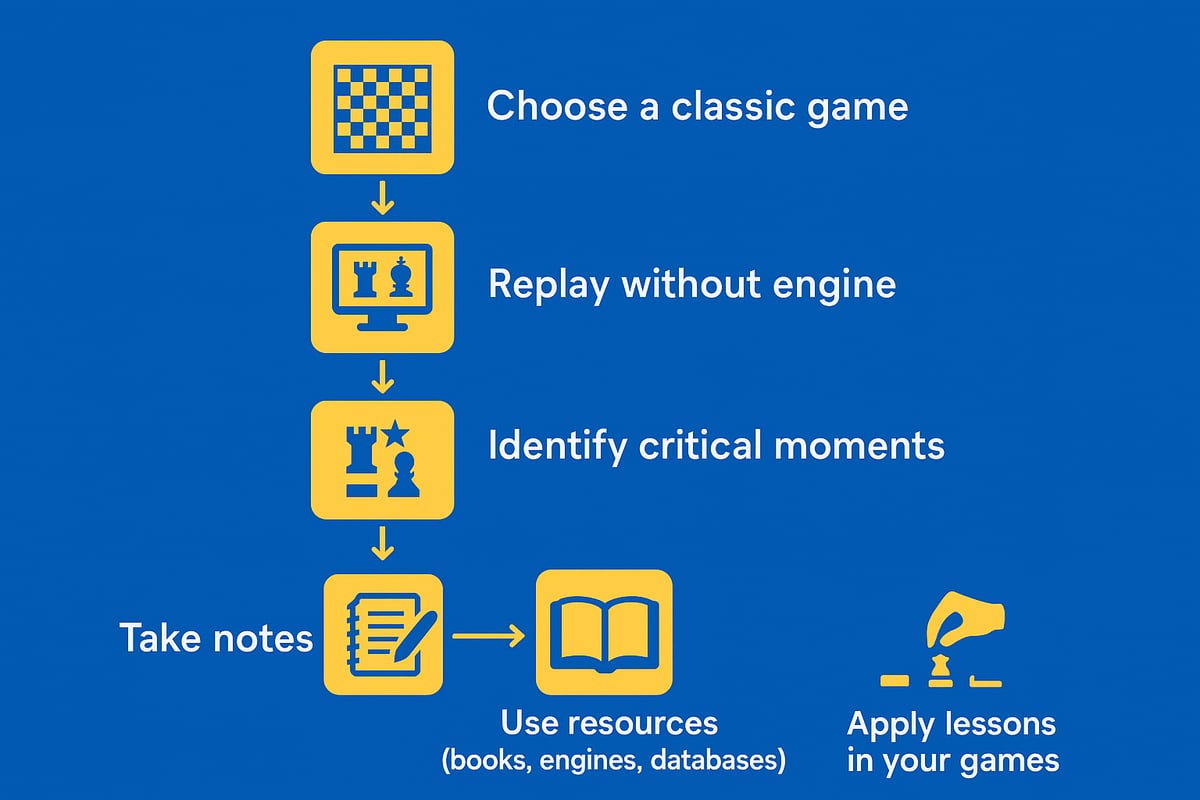
Ready to analyze all chess games effectively? Start by choosing a classic game that matches your interests or current challenges. Set up the board and replay the moves on your own, without any digital help at first. Try to guess the next move for each side, pausing to ask yourself, "Why was this move played?"
Next, identify the critical moments. Look for turning points—key decisions, sacrifices, or blunders. Ask yourself what alternatives were available and why the player chose a specific path. This habit sharpens your calculation and intuition for all chess games.
Tools and Resources for Game Analysis
To dive deeper, take advantage of modern tools. Chess engines, annotated books, and online databases are invaluable for understanding all chess games in greater detail. Engines can reveal tactical nuances you might miss, while annotated books provide expert insight into strategic ideas and historical context.
If you ever feel stuck, resources like Help with Chess Moves can clarify confusing positions or moves. Mixing digital analysis with good old-fashioned board work gives you the best of both worlds.
Extracting Lessons and Patterns
As you analyze, keep a notebook or digital file handy. Jot down key lessons from all chess games you review—whether it’s a tactical motif, a positional idea, or a psychological trick. Over time, you’ll notice patterns emerging, and your ability to spot these in your own play will skyrocket.
For focused improvement, try solving puzzles that reinforce the concepts you’ve just learned. If you want to boost your positional understanding, check out tips from How to Improve Your Positional Skills to see how grandmasters master space, control, and long-term planning.
Building Your Study Routine
Consistency is key. Set aside regular time to review all chess games, mixing famous classics with modern gems. Alternate between replaying games from memory and using notes, as this strengthens both recall and understanding.
Avoid the common mistake of rushing through moves without asking "why." Instead, focus on the reasoning behind each decision. Over time, you’ll not only play stronger but also enjoy a deeper appreciation for the art and science behind all chess games.
Integrating Lessons from Classic Games into Your Own Play
Have you ever wondered how to turn insights from all chess games into real improvements on the board? Studying legendary matches is only the first step. The real transformation happens when you actively weave those lessons into your own games. Let’s break down how to make classic knowledge work for you, one move at a time.
Applying Classic Lessons to Your Games
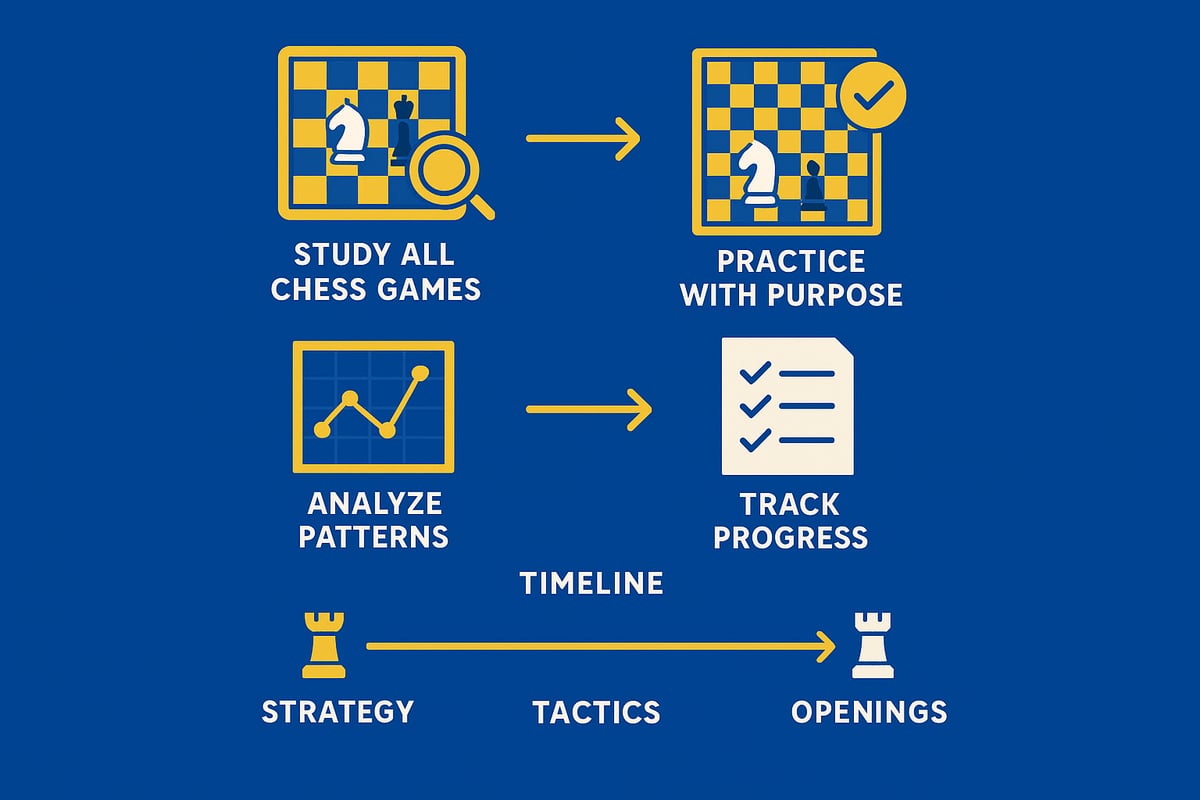
Start by reviewing annotated versions of all chess games you admire. Focus on the moments that define each battle: brilliant sacrifices, positional shifts, and endgame finesse. Ask yourself, “How did this player spot the opportunity?” or “What triggered this turning point?”
Next, look for recurring themes and try to apply them in your own games. For example, if you notice a pattern in how grandmasters handle open files or set up pins, intentionally look for those chances in your next match. This conscious mimicry builds your pattern recognition, making it easier to spot winning moves in real time.
When it comes to openings, classic games offer a treasure trove of ideas. If you want to deepen your understanding, the Master Chess Openings Guide is a great resource to connect theory with practical play.
Building Skills Through Practice and Review
Practice is where the magic happens. After studying all chess games, set up key positions from these classics and play them out against a friend or chess engine. Try to replicate the decision-making process of the masters, asking yourself how you’d react in their shoes.
Use a chess journal or digital note-taking app to record what you tried, what worked, and what didn’t. This helps you spot gaps in your understanding and track your progress over time. Reviewing your own games alongside classics creates a feedback loop, reinforcing new skills and ideas.
Consistency matters more than perfection. Even a few minutes a day spent revisiting classic motifs or replaying crucial endgames from all chess games can lead to lasting improvement.
Bridging the Past and Present in Chess
Modern chess is a blend of timeless wisdom and fresh innovation. As you study all chess games, compare historical strategies with current trends. Notice how today’s top players adapt old ideas to new situations. This mindset keeps your play flexible and your learning relevant.
Try creating a simple table to track which concepts from all chess games you’ve used and how often they appear in your games.
| Classic Concept | Example Game | Used in My Games? (Y/N) |
|---|---|---|
| Queen Sacrifice | Kasparov vs. Topalov 1999 | Y |
| Rapid Development | Morphy’s Opera Game | N |
| Positional Squeeze | Karpov vs. Unzicker 1974 | Y |
This visual approach makes it easy to see which lessons are sticking.
Keep Growing with All Chess Games
Remember, growth in chess is a journey, not a sprint. Every time you revisit all chess games, you add another layer to your understanding. Stay curious, keep experimenting, and let the classics inspire your best moves.
So, after exploring these nine legendary chess games, you’re probably itching to dive deeper and really put those lessons into practice, right? That’s the best part—chess isn’t just about memorizing moves, it’s about building your own toolkit of strategies and ideas you can use every time you play. If you’re ready to keep leveling up and want a straightforward way to master more openings (without the endless study sessions), why not take the next step? You can Start Improving Your Openings and see just how much more confident and creative your chess can become.


