

Imagine unlocking your chess potential with just one resource trusted by champions and beginners alike for centuries. The chess book is that timeless guide, holding secrets that have shaped the world’s greatest players.
Why does every chess player need the chess book on their shelf? In this article, you’ll discover seven compelling reasons, from mastering tactics to exploring chess history, that make this classic tool irreplaceable.
Get ready to see how the chess book can transform your approach to the game, spark your curiosity, and inspire you to take your skills to the next level.

The Enduring Relevance of Chess Books in the Digital Age
The Historical Authority of Chess Literature
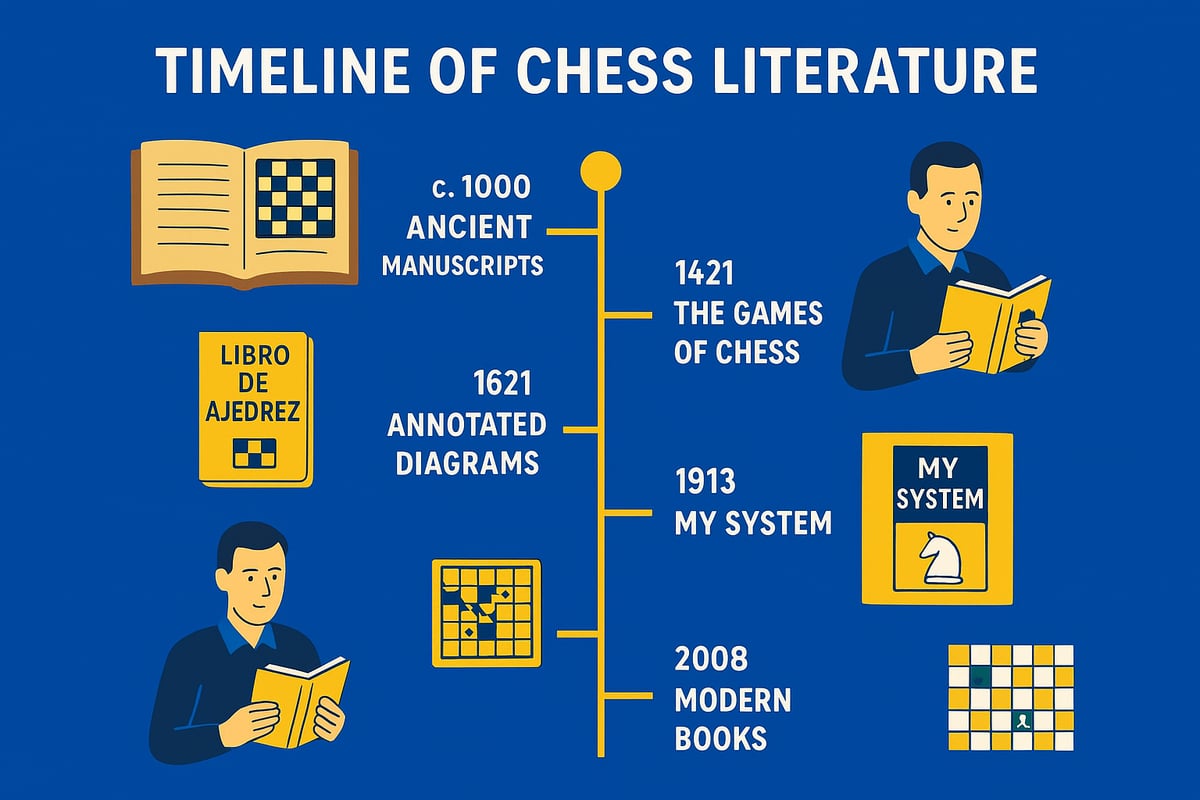
When you think about the chess book, you’re tapping into more than a thousand years of accumulated wisdom. Chess books have been documenting legendary games, strategies, and stories for centuries, shaping how the game is played and taught.
Many world-class players, like Garry Kasparov, credit classic chess literature as the bedrock of their learning. These books offer a curated, time-tested approach, blending deep analysis with engaging storytelling. Take Kasparov’s “My Great Predecessors,” for instance—it weaves history with practical lessons, making each page a bridge between eras.
Printed annotations often go beyond what you’ll find online, offering insights passed down through generations. To see how chess literature has evolved, check out the History of Chess by H. J. R. Murray, a foundational work tracing the game’s fascinating journey.
Chess books remain a mainstay in modern lessons, referenced by coaches and players alike.
Why Books Remain Essential Despite Online Resources
It’s tempting to think that the chess book is less important now that so much content is online. But books offer something digital platforms can’t—structured, focused learning without distractions.
When you study from a book, you get deep dives into topics like openings, tactics, or endgames in a logical order. There’s no risk of getting sidetracked by ads or unrelated videos. Many classic texts, including “Logical Chess: Move by Move,” aren’t fully available online, making physical or digital books irreplaceable.
There’s also a unique sense of accomplishment in finishing a book and seeing your progress marked by well-worn pages or digital bookmarks. Coaches still recommend the chess book as a cornerstone for improvement, and thousands of players in online communities agree.
The Unique Learning Experience of Physical and Digital Books
What sets the chess book apart is how it adapts to your style. With a physical book, you can scribble notes, highlight key moves, and mark diagrams that challenge you. This hands-on approach makes learning active and memorable.
Digital chess books, meanwhile, are portable and searchable, letting you study on the go. Both formats let you revisit concepts at your own pace, whether you’re annotating puzzles in “Bobby Fischer Teaches Chess” or reviewing strategy chapters before a tournament.
Combining book study with digital tools—like using an app to replay annotated games—boosts retention. The chess book is also perfect for offline study, making it your companion for travel or quiet evenings.
Chess Books as Collectibles and Motivational Tools
Beyond learning, the chess book becomes a treasured part of your chess journey. Collectors value signed editions or rare prints, and many titled players proudly display their libraries in interviews.
Owning a chess book signals your commitment to improvement and connects you to the wider chess community. These books often serve as daily motivation, inspiring you to return to the board and strive for mastery.
They’re more than just study aids—they’re reminders of your goals, your progress, and your place in a tradition shared by players worldwide.
7 Reasons Why the Chess Book Belongs on Every Player’s Shelf
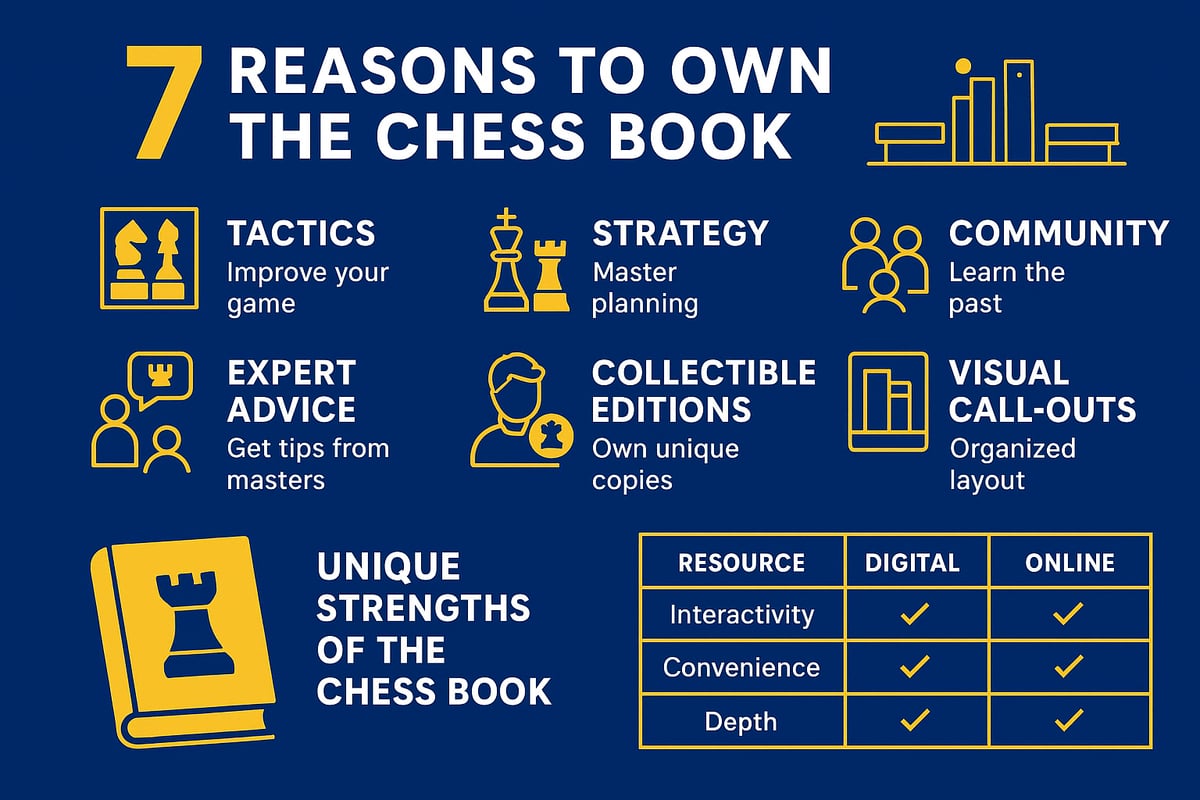
Ever wondered why the chess book still holds a special place in the hearts of chess players everywhere? Despite all the apps, videos, and online platforms, the chess book remains a trusted companion for anyone serious about the game. Let’s dive into the seven reasons why adding the chess book to your shelf is an unbeatable move, whether you’re just learning the ropes or already dreaming of checkmate glory.
1. Deepens Understanding of Chess Fundamentals
If you’re looking to build a rock-solid foundation, nothing beats the chess book for breaking down fundamentals. Books like “How to Win at Chess” walk you through the basic rules, essential tactics, and core strategies in a way that’s easy to follow. Unlike quick tips found online, the chess book takes the time to explain the logic behind each move, so you’re not just memorizing—you’re truly understanding.
Many classic books use step-by-step explanations and annotated diagrams. For example, “Simple Chess” is famous for making complex ideas approachable for intermediate players. By working through the chess book at your own pace, you reinforce your knowledge with puzzles and practical examples.
Here’s a quick table summarizing what you gain from studying fundamentals with the chess book:
| Benefit | Example Book | How it Helps |
|---|---|---|
| Clear rule explanations | How to Win at Chess | Builds understanding |
| Tactical puzzles | Bobby Fischer Teaches Chess | Sharpens skills |
| Strategic concepts | Simple Chess | Develops intuition |
By consistently returning to the chess book, you create a foundation that holds up under pressure, both online and over-the-board.
2. Offers Structured, Progressive Learning Paths
Have you ever felt lost in a maze of random chess videos or scattered advice? The chess book stands out by offering a clear, organized path for learning. Books are usually grouped by skill level, topic, or theme, making it easy to find your footing and steadily climb the ladder of chess mastery.
Series like “My Great Predecessors” or “Silman’s Complete Endgame Course” walk you through concepts in a logical order. Each chapter builds on the last, so you’re never overwhelmed. Many books include exercises and quizzes at the end of each section to test your progress.
A typical learning journey with the chess book might look like this:
- Start with basic tactics and rules.
- Progress to strategy and positional play.
- Dive into middlegames and endgame theory.
- Tackle advanced concepts and famous games.
This structured approach makes it easy to track improvement, especially when you use bookmarks or notes. If you want even more guidance, check out resources on building a chess study routine to complement your book learning.
3. Preserves and Teaches Chess History and Culture
The chess book is more than a manual—it’s a time machine. From the earliest records to modern classics, chess books capture the evolution of the game, legendary matches, and the stories behind the world’s greatest players.
Historical books analyze famous games move by move, shedding light on why certain lines became popular and how chess theory evolved. “My Great Predecessors” is a perfect example, detailing the contributions of world champions and bringing the drama of past tournaments to life.
Reading about chess history in the chess book deepens your appreciation for the game. You’ll discover cultural anecdotes, pivotal matches, and the personalities who shaped chess through the ages. These stories aren’t just entertaining—they provide context that helps you understand why certain strategies endure today.
List of what you gain from the chess book’s historical perspective:
- Insights into legendary players and their styles
- Understanding of how openings and tactics evolved
- Appreciation for the cultural impact of chess
The chess book connects you to a global tradition that spans centuries.
4. Enhances Tactical and Strategic Skills
If you’re aiming to level up your tactical sharpness or strategic thinking, the chess book is your secret weapon. Many books are packed with curated puzzles, annotated games, and thematic lessons designed to build your pattern recognition and calculation abilities.
Titles like “100 Endgames You Must Know” focus on real-world positions you’ll actually encounter. The chess book explains the reasoning behind each tactic, so you’re not just guessing—you’re learning to spot opportunities and anticipate threats.
For a hands-on boost, consider resources that help you improve with chess puzzles alongside your favorite chess book. Solving puzzles, annotating your answers, and revisiting tricky positions are all part of the process.
Let’s break down the benefits:
- Practice with real-life examples
- Clear explanations of tactical motifs
- Exercises for both short-term and long-term planning
By keeping the chess book close, you’ll spot forks, pins, and checkmates before your opponent knows what hit them.

5. Fosters Independent, Reflective Learning
Have you ever noticed how studying with the chess book feels more personal than scrolling through endless videos? That’s because books encourage you to pause, reflect, and analyze positions on your own. You’re not just following along—you’re actively engaging with the material.
Books like “The Seven Deadly Chess Sins” go beyond the board, exploring the psychological and emotional side of the game. The chess book challenges you to think critically, question your assumptions, and develop your own style.
Self-paced study means you can revisit complex ideas as often as needed, building discipline and focus. Research shows that independent learning from the chess book leads to better retention and deeper understanding. You’ll start spotting your own mistakes and learning from them, rather than relying on a computer or coach for every answer.
The chess book is your personal training partner, always ready when you are.
6. Provides Expert Guidance and Timeless Advice
One of the greatest strengths of the chess book is the access it gives you to expert minds. Many books are written by grandmasters, masters, or legendary coaches who share their thought processes and hard-earned lessons.
Classic titles like “How to Reassess Your Chess” by Jeremy Silman are packed with insights that remain relevant year after year. The chess book distills decades of tournament experience into practical advice, annotated games, and training routines you can apply right away.
You’ll find that the chess book often reveals ideas you won’t get from quick online tutorials. The annotations are more detailed, the advice is timeless, and the lessons are designed to help you avoid common pitfalls.
Why trust the chess book for expert advice?
- Written by top players and coaches
- Detailed explanations of complex ideas
- Training routines designed for real improvement
With the chess book, you’re learning from the best—no matter where you are.
7. Inspires Lifelong Passion and Community Connection
Finally, the chess book isn’t just about study—it’s about inspiration and connection. Reading about epic battles and legendary players can spark your competitive fire and remind you why you fell in love with the game in the first place.
Many players share their favorite chess book recommendations in clubs, forums, and study groups, creating a sense of community. Book clubs often form around popular titles, and you’ll find that discussing a classic game or idea from the chess book brings players together, regardless of skill level.
The chess book also encourages you to set personal goals and dream big. Whether you aspire to play in tournaments or simply want to improve for fun, the chess book is a constant source of motivation.
So, if you want to join a global community of learners and keep your passion burning, make space for the chess book on your shelf.
How to Choose the Right Chess Book for Your Level
Choosing the chess book that fits your needs can feel overwhelming, but with a little guidance, you can find the perfect match for your chess journey. Whether you are just starting or aiming to master advanced strategies, the right resource will make all the difference.
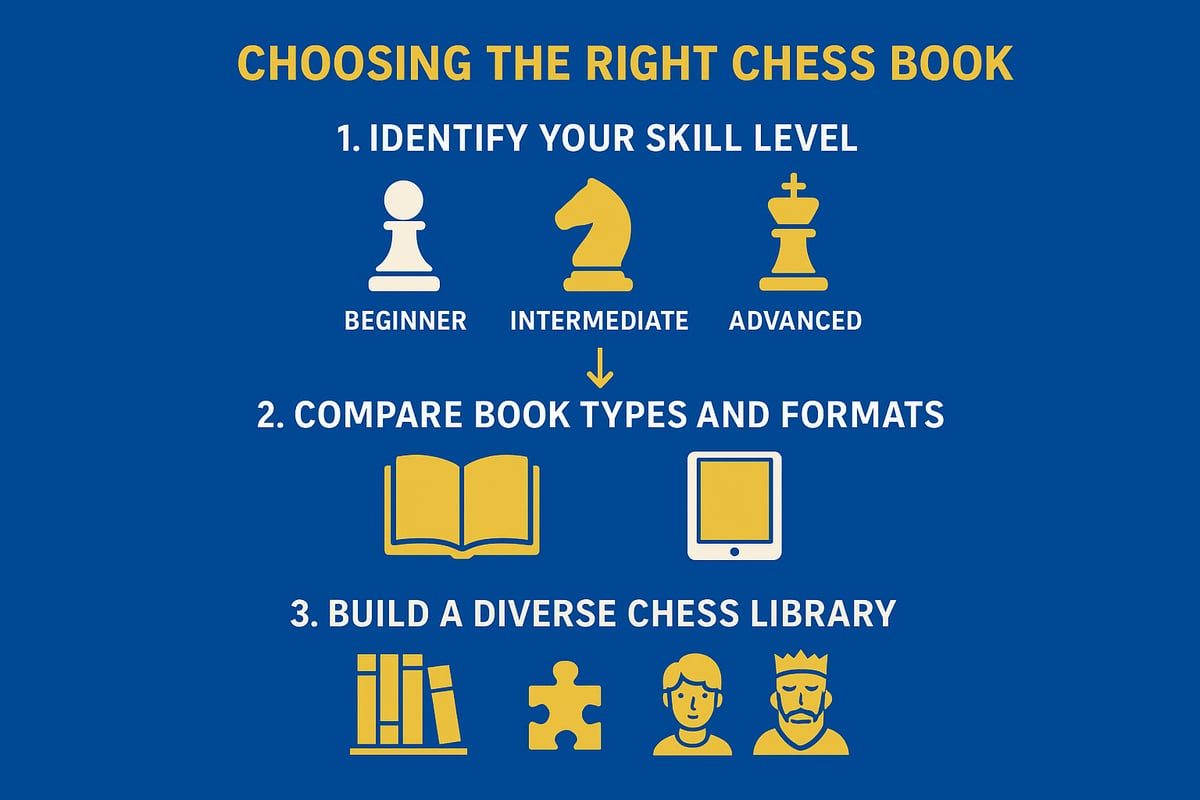
Identifying Your Skill Level and Goals
Start by honestly assessing where you stand as a player. Are you a beginner who needs step-by-step basics, or an intermediate player eager to sharpen your tactics? Maybe you crave deep dives into complex endgames. Define your chess goals—do you want to master openings, improve calculation, or explore chess history?
For example, if you are new, consider the chess book "Bobby Fischer Teaches Chess." If you are a bit more advanced, try "Logical Chess: Move by Move." Setting clear objectives helps you avoid frustration and ensures steady progress. Remember, the chess book you pick should always align with your current level and ambitions.
Evaluating Book Types and Formats
Next, take a close look at the different types of chess books available. Some are instructional guides, others are collections of annotated games, while puzzle books help you train specific skills. Physical books are great for hands-on note-taking and marking diagrams, while digital versions offer portability and easy searches.
Check that the chess book you choose includes clear diagrams and uses language you find accessible. Reading reviews or asking for recommendations can also help. If you want to focus on openings, consider exploring Chess openings for all levels for a deeper understanding before picking your next book.
Building a Diverse Chess Library
Don’t stop at just one book. Building a well-rounded chess library means collecting resources on tactics, strategy, endgames, and even chess history. Rotate between different types of books to keep your learning fresh and engaging.
- Mix instructional books with puzzle collections.
- Include historical works to understand the evolution of the game.
- Update your library as your skills grow.
For practical study aids that complement the chess book selection process, check out the Essential chess cheat sheets collection. A diverse library keeps you motivated and supports your growth at every stage.
Maximizing the Value of Your Chess Book Collection
Building a collection is just the beginning. To get the most out of the chess book, you need to blend study, practice, and community into your chess journey. Wondering how to turn those pages into real improvement? Let’s break it down.

Integrating Book Study with Practice
To truly benefit from the chess book, it’s essential to connect what you read with how you play. Don’t just passively absorb information—apply concepts from annotated games and puzzles directly to your practice sessions. For example, after reading about an endgame motif, set up a similar position on your board and play it out several times.
Try solving exercises from books like “100 Endgames You Must Know” before your next online match. According to a Stanford study on chess improvement, structured lessons and consistent practice lead to noticeable gains. Discuss your insights with friends or online groups to deepen your understanding.
Creating a Sustainable Study Routine
Consistency beats intensity when it comes to the chess book. Set aside regular, manageable chunks of time—maybe 20 minutes a day or one chapter per week. Use bookmarks or sticky notes to track your progress and jot down key takeaways.
Mix theory with practice by alternating between reading chapters and working through puzzles. Don’t forget to revisit older sections, as repetition cements learning. This approach keeps the chess book from gathering dust and helps you steadily build your skills without feeling overwhelmed.
Leveraging Community and Technology
Maximizing the chess book collection means using every tool at your disposal. Join a local club or online community where you can swap recommendations and discuss favorite titles. Platforms like Chess.com offer forums and groups dedicated to book lovers.
Use digital resources—like chess engines or databases—to supplement your study. Share your progress, ask questions, and celebrate milestones with peers. The chess book becomes even more powerful when paired with community support and modern tech, making your learning more interactive and enjoyable.
So, after talking through all the ways a great chess book can transform your game, maybe you’re wondering, “Okay, but where do I actually start?” That’s the big question, right? If you’re ready to put these ideas into practice and build a well rounded chess library that actually helps you play better (not just gather dust), you’ll love having access to guides, cheat sheets, puzzles, and more—all in one place. Why not make the most of your learning journey and Access The FULL Library For The Best Price? It’s like having every essential chess book at your fingertips, minus the guesswork.


