

If you've ever sat down at a chess board, you've probably played with a Staunton chess set without even realising it. These pieces have become so ubiquitous that they're synonymous with chess itself. But have you ever wondered why chess pieces look the way they do? Unlike the ornate, sometimes confusing designs that preceded them, the Staunton pattern revolutionised how we play chess. Whether you're just learning to play chess or you're looking to invest in your first quality set, understanding what makes a Staunton chess set special can enhance your appreciation for the game.
The Revolutionary Design That Changed Chess Forever
Back in the mid-19th century, chess sets were all over the place. Some featured elaborate carvings of kings and queens in flowing robes, whilst others depicted historical battles with intricate detail. Beautiful? Absolutely. Practical for actual play? Not so much.
The Staunton chess set emerged in 1849, designed by Nathaniel Cook and endorsed by Howard Staunton, who was the leading chess player of his era. Cook's brilliant insight was that chess pieces should be instantly recognisable, stable on the board, and comfortable to handle during long games. This wasn't just about aesthetics; it was about functionality.
Why the Design Works So Well
The genius of the Staunton pattern lies in its practical features:
- Distinctive silhouettes that make each piece instantly recognisable from any angle
- Weighted bases that prevent pieces from tipping during rapid play
- Proportional sizing where piece height corresponds to its importance in the game
- Comfortable grips designed for the human hand during extended play sessions
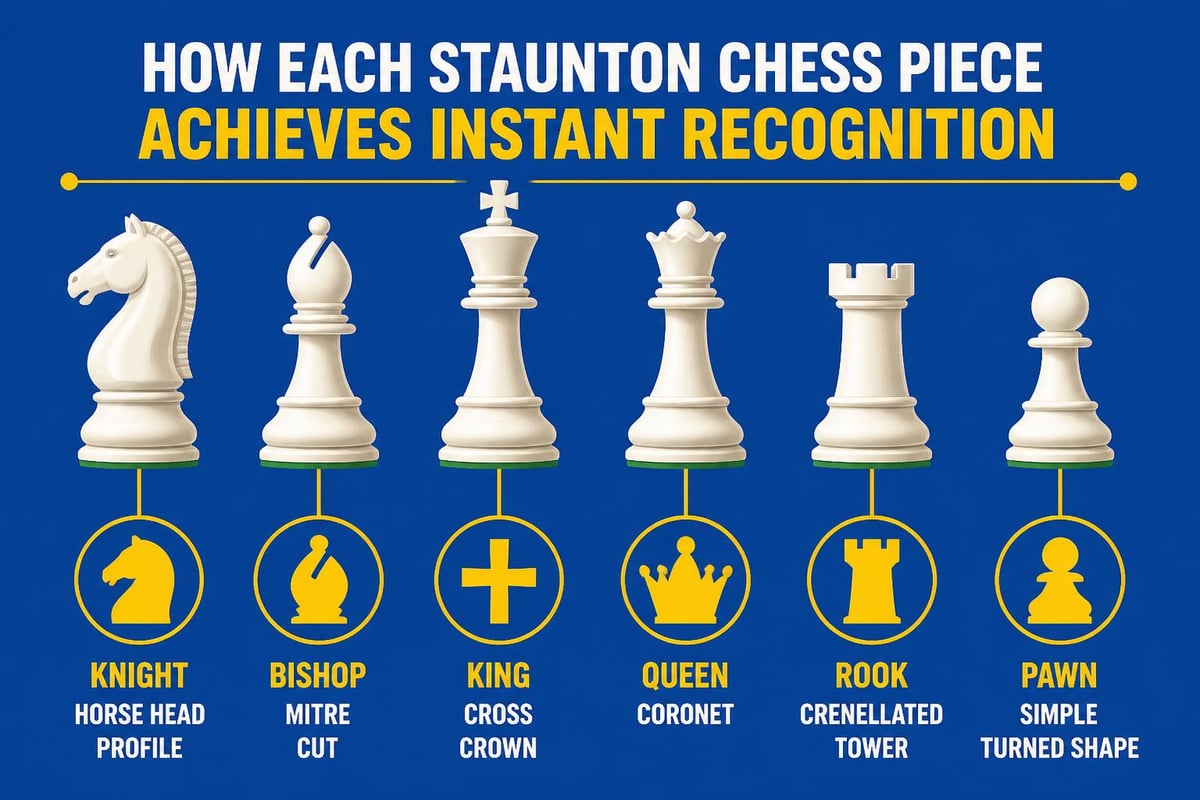
Each piece has unique characteristics. The knight's horse head is carved with enough detail to be beautiful but simple enough to be clear. The bishop's mitre is unmistakable. The king stands tallest, crowned with a cross, whilst the queen's coronet is slightly smaller but equally regal.
What Makes a Set Officially Staunton?
You might think any chess set with horses for knights qualifies as Staunton, but there's more to it than that. The Staunton design has specific proportions and features that manufacturers must follow for tournament use.
Official Tournament Standards
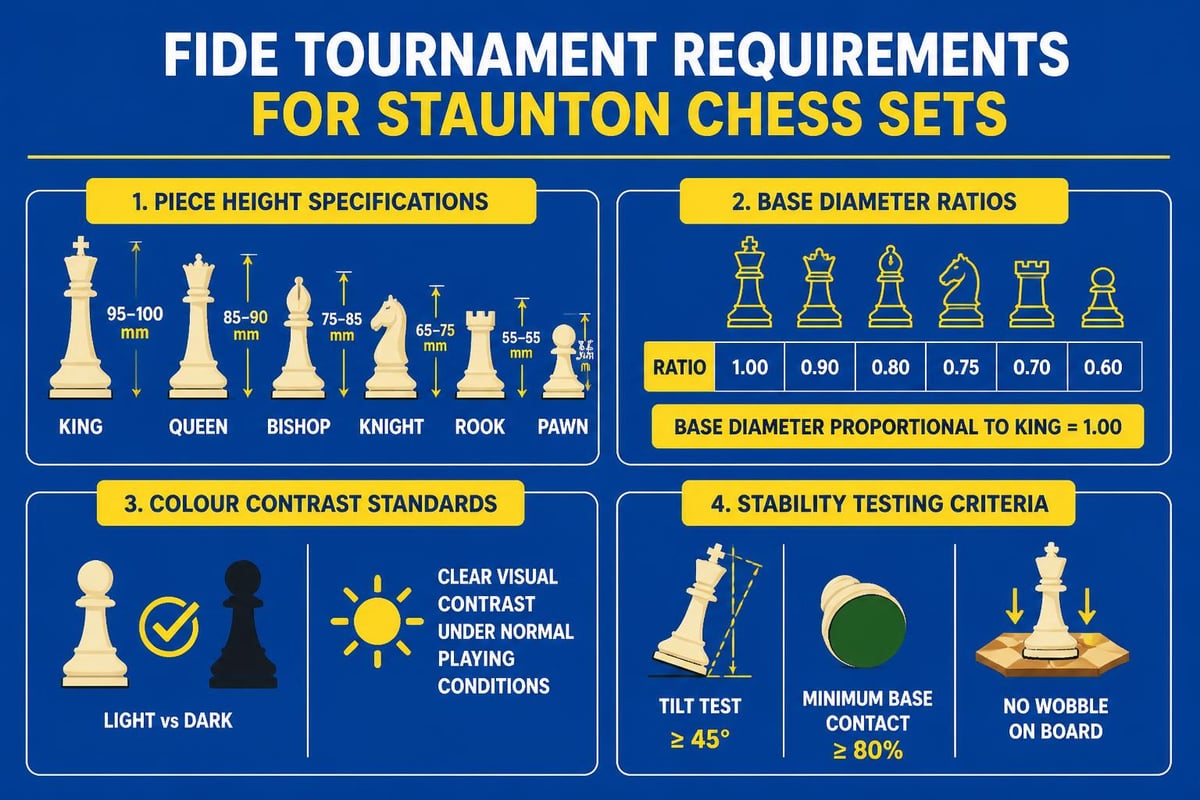
FIDE (the World Chess Federation) has strict requirements for tournament chess sets. The king should be between 85mm and 105mm tall, and all pieces must maintain the classic Staunton proportions. The base diameter of each piece should be approximately 40-50% of its height, ensuring stability without crowding the squares.
Here's how proper proportions typically break down:
| Piece | Relative Height | Base Diameter |
|---|---|---|
| King | 100% (tallest) | 40-50% of height |
| Queen | 85-90% | 40-50% of height |
| Bishop | 70-75% | 35-45% of height |
| Knight | 70-75% | 35-45% of height |
| Rook | 55-60% | 35-45% of height |
| Pawn | 50% | 30-40% of height |
These measurements aren't arbitrary. They create a visual hierarchy that mirrors the pieces' strategic value, helping players quickly assess the board position.
Materials and Craftsmanship: From Budget to Luxury
One of the brilliant aspects of the Staunton chess set design is its adaptability to different materials and price points. You can find Staunton sets ranging from £15 plastic versions to handcrafted ebony and boxwood masterpieces costing thousands.
Common Materials and Their Characteristics
Plastic sets are perfect for beginners and casual play. Modern manufacturing has made these surprisingly durable and attractive. They're weighted, often with sand or metal, and can withstand the enthusiasm of learning players who might be a bit rough with the pieces.
Wood sets represent the classic choice. Boxwood and sheesham combinations offer warmth and character that plastic simply can't match. These develop a lovely patina over time, becoming more beautiful with use.
Luxury materials like ebony, rosewood, and even ivory (in antique sets) appeal to collectors and serious players. The weight, balance, and feel of these pieces can make every game feel special. When you're studying complex opening variations, playing with quality pieces adds to the experience.
The finish matters too. Some players prefer lacquered pieces for their glossy appearance and protection, whilst others favour natural wood finishes that feel warmer to the touch.

Choosing Your First Staunton Chess Set
Right, so you're convinced that a proper Staunton chess set is the way to go. But how do you choose amongst hundreds of options? Let me walk you through the decision-making process.
Match the Set to Your Board
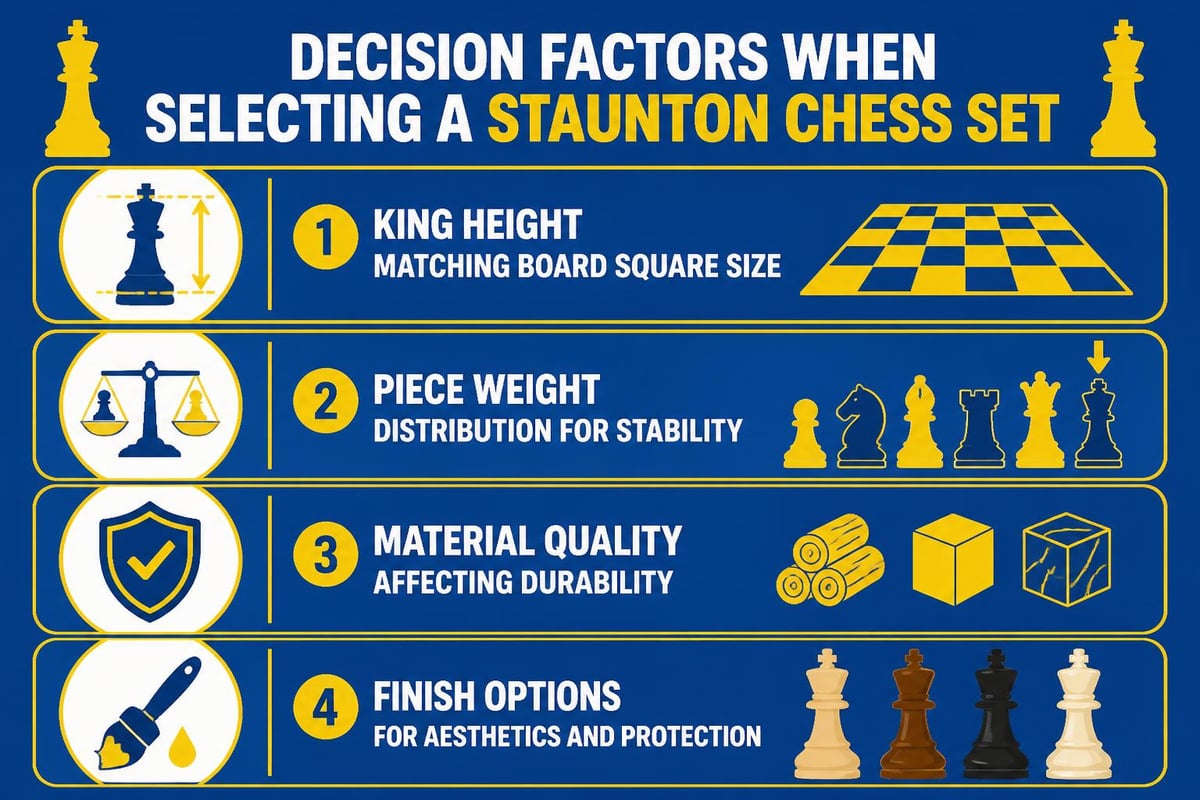
This is crucial and often overlooked. The king's base should fit comfortably within a square, occupying roughly 75-80% of the square's width. Too small, and pieces look lost on the board. Too large, and they'll constantly knock into each other.
For a standard 2-inch square board (which is common for home sets), you'll want a king that's around 3.75 inches tall. Tournament boards typically have 2.25-inch squares, requiring a king between 3.75 and 4.25 inches.
Weight and Stability Considerations
Have you ever played with unweighted pieces? They tip over at the slightest touch, disrupting your concentration and the position. Quality Staunton sets use various weighting methods:
- Lead weights embedded in the base
- Metal discs or washers inserted during manufacturing
- Solid metal cores running through the piece
- Sand or metal shot filling hollow pieces
Heavier isn't always better, though. Pieces should feel substantial without being cumbersome. A good test is to place a piece on the board and give the board a gentle shake. The pieces should stay put without sliding around.
The Impact on Your Chess Development
You might wonder whether the type of chess set actually affects your playing ability. Whilst a beautiful set won't magically improve your tactical vision, there's something to be said for the psychological benefits of playing with proper equipment.
Creating the Right Learning Environment
When you sit down to study chess openings or work through puzzles, your environment matters. A quality Staunton chess set creates a sense of occasion. It signals that you're taking your chess seriously, which can positively influence your mindset and focus.
Many players report that they analyse positions more carefully when using quality pieces. There's a tactile pleasure in moving well-balanced pieces across a proper board. This engagement can lead to longer, more productive study sessions.
Training Your Pattern Recognition
The standardised Staunton design helps develop visual pattern recognition. When you study famous games or work through opening theory, using consistent piece shapes helps your brain catalogue positions more effectively. This is why even top-level players like Magnus Carlsen train with standard tournament-style Staunton sets.
Your brain learns to recognise piece configurations instantly. The distinctive knight silhouette, the bishop's diagonal stance, the rook's solid presence-these become part of your chess vocabulary at a subconscious level.
Caring for Your Staunton Chess Set
Once you've invested in a quality set, you'll want to keep it in top condition. Proper care isn't complicated, but it does require some attention.
Basic Maintenance Guidelines
Wood sets benefit from occasional treatment with a quality furniture polish or pure carnauba wax. Avoid silicone-based products, which can leave residue. Dust regularly with a soft, dry cloth, and never expose your set to direct sunlight for extended periods, as this can cause fading and wood damage.
Plastic sets are more forgiving but still deserve care. Wash them occasionally with mild soap and warm water, then dry thoroughly. Avoid harsh chemicals that might degrade the plastic or remove printed details.
Storage matters enormously. Keep your pieces in individual compartments if possible, preventing them from knocking against each other. Felt-lined boxes are ideal. If you're using a storage bag, ensure it's not too tight, which can cause pressure marks on wooden pieces.
When to Clean and When to Replace
Examine your pieces periodically for:
- Loose weights or rattling sounds inside pieces
- Cracks in the wood or plastic structure
- Worn or damaged felt on the bases
- Chips or significant scratches affecting piece recognition
Felt pads can be replaced relatively easily, extending your set's life significantly. However, structural damage often means it's time to retire a piece or the entire set, especially for tournament use where uniformity matters.
Tournament Play and the Staunton Standard
If you're considering tournament play, understanding the Staunton requirements becomes essential. The universal adoption of the Staunton pattern means you'll encounter these pieces in every serious competitive environment.
FIDE Regulations and Requirements
Tournament organisers must provide Staunton chess sets meeting specific criteria. Beyond size requirements, pieces must be:
- Stable and well-balanced
- Easily distinguishable from one another
- Aesthetically pleasing and non-distracting
- Uniform in design across all pieces
The standardisation extends to colour as well. Whilst home sets might feature brown and cream, tournament pieces are strictly black (or very dark) and white (or very light). This maximum contrast aids players and spectators alike.
Modern Variations and Collectible Sets
The Staunton design's flexibility has led to numerous variations over the decades. Some manufacturers have created signature styles whilst maintaining the essential Staunton characteristics.
Notable Variants Worth Knowing
The Dubrovnik pattern, used in the famous 1950 chess match, features a sleeker, more modern interpretation of Staunton principles. The knight is particularly distinctive, with a more stylised profile.
British Chess Company sets from the late 19th century represent some of the finest Staunton craftsmanship ever produced. Original sets command extraordinary prices amongst collectors, with pristine examples selling for tens of thousands of pounds.
Triple-weighted sets have become popular in recent years, particularly for blitz and rapid chess. The extra weight prevents pieces from sliding during quick moves, though some players find them too heavy for classical time controls.
Building a Collection
For those interested in collecting, early Staunton sets made by John Jaques of London (the original manufacturer) are highly sought after. Look for the characteristic red-stamped signatures on the kings and often on other pieces as well.
Later manufacturers like Lardy, Ayres, and British Chess Magazine produced excellent quality sets that are more affordable entry points for collectors. Authentication can be tricky, so consider consulting experienced chess collectors before making significant investments.
Digital Age and Physical Chess Sets
In 2026, with online chess platforms dominating the landscape and numerous learning resources available digitally, you might question the relevance of physical chess sets. Yet Staunton sets remain as popular as ever.
Why Physical Sets Still Matter
There's something irreplaceable about the tactile experience of chess. Moving physical pieces engages different neural pathways than clicking a mouse or tapping a screen. Many players find that positions "stick" better in their memory when they've physically arranged the pieces.
For study sessions, particularly when working through opening preparation or endgame theory, a physical board allows you to explore variations without the constraints of software. You can leave a position set up overnight, returning to it fresh the next day.
Professional players universally maintain physical sets for training, even as they embrace digital tools for other aspects of preparation. The combination of online resources for learning and physical sets for deep analysis represents the ideal approach for serious improvement.
Price Ranges and Value Propositions
Let's talk about what you'll actually spend on a Staunton chess set and what you get at different price points.
| Price Range | What You Get | Best For |
|---|---|---|
| £15-£40 | Basic plastic weighted sets | Beginners, schools, casual play |
| £40-£100 | Quality plastic or entry-level wood | Regular players, club use |
| £100-£300 | Premium wood sets, good craftsmanship | Serious players, home study |
| £300-£1000 | Luxury woods, exceptional finish | Collectors, enthusiasts |
| £1000+ | Handcrafted masterpieces, rare materials | Serious collectors |
The sweet spot for most improving players falls between £100 and £300. These sets offer excellent quality without the premium you pay for rare woods or collector status. They'll last decades with proper care and provide all the practical benefits you need.
Budget sets have their place too. If you're just exploring whether chess is for you, or if you need a portable set for the park, there's no shame in starting with an affordable option. Many successful players began with basic sets.
The Psychology of Piece Design
Here's something fascinating: the Staunton design's success isn't just about practical recognition. It taps into deeper psychological principles that make it satisfying to use.
Visual Clarity and Cognitive Load
When you're calculating a complex tactical sequence, perhaps exploring whether the Italian Game's attacking chances justify the pawn sacrifice, your brain is already working hard. The last thing you need is confusion about which piece is which.
The Staunton pattern reduces cognitive load by making piece identification instantaneous. Your conscious mind can focus entirely on calculation and strategy rather than parsing visual information. This efficiency compounds over the course of a game, reducing mental fatigue.
Studies of chess visualization have shown that players develop mental models based on the physical pieces they use most frequently. Training with Staunton pieces, then encountering them in tournament play, creates consistency that enhances performance.
The Staunton chess set represents one of those rare instances where design perfection was achieved on the first attempt and has endured for nearly two centuries. Whether you're working through opening theory, solving puzzles, or playing casual games with friends, using a proper Staunton set connects you to chess history whilst providing the practical benefits that made it the global standard. Ready to deepen your chess knowledge beyond just the pieces? Chess Cheat Sheets offers comprehensive opening guides, tactical puzzles, and streamlined resources that help you improve efficiently without overwhelming study schedules, complementing your physical board work with targeted learning tools designed for rapid improvement.


