

You've probably seen it in those classic Star Trek episodes: Captain Kirk and Spock hunched over a peculiar, multi-layered chessboard that looks like something straight out of a futuristic museum. That's star trek chess, and whilst it might seem like pure science fiction, it's actually a playable game with real rules, real strategy, and a fascinating history that bridges the gap between entertainment and actual chess theory. Whether you're a chess enthusiast curious about this three-dimensional variant or a Trekkie wanting to understand the game your favourite characters play, there's more to this iconic prop than meets the eye.
The Origins of Star Trek Chess
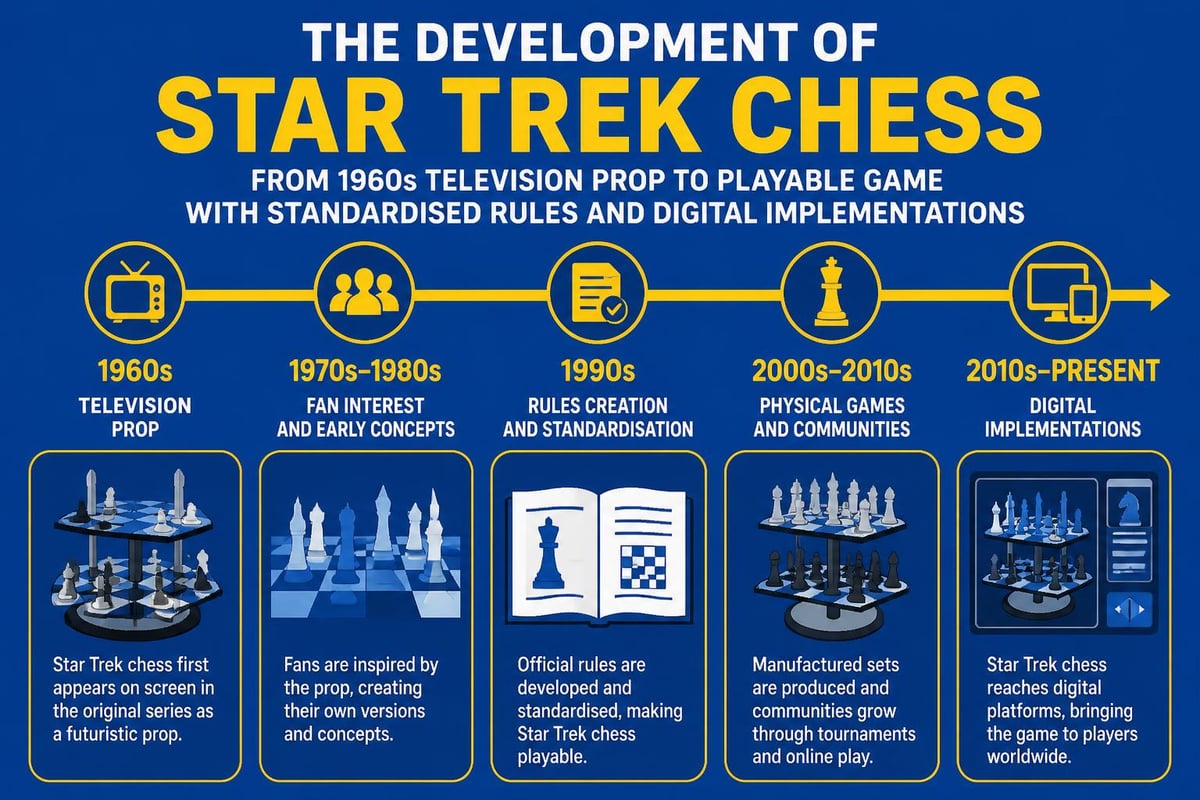
When Star Trek: The Original Series first aired in the 1960s, the show's creators wanted to showcase futuristic versions of familiar activities. Chess was the perfect candidate. The game already symbolised intelligence and strategic thinking, so naturally, a 23rd-century version would need to be more complex and visually striking.
The prop designers created what became officially known as Tri-Dimensional Chess, and it first appeared in the episode "Where No Man Has Gone Before" in 1966. The design featured multiple playing boards stacked at different heights, with smaller "attack boards" that could be positioned around the main playing area. It looked brilliantly complicated, which was exactly the point.
What's interesting is that the original prop appeared on screen without official rules. The game existed purely as a visual element to make the characters appear sophisticated. According to Screen Rant's exploration of 3D chess history, the production team never intended for anyone to actually play it. They just needed something that looked impressive on camera.
From Props to Playable Games
Fans weren't satisfied with just admiring the game from afar. Almost immediately after the show aired, chess enthusiasts and Star Trek devotees began creating their own rule sets. The most notable contributor was Andrew Bartmess, who developed comprehensive rules in 1976 that many players still use today.
The challenge was enormous. How do you create sensible rules for a game that was designed purely for visual appeal? The original prop had seven boards: three main boards stacked vertically and four smaller "attack boards" that could be positioned on pegs around the structure. Game Rant's explanation of Tri-Dimensional Chess highlights how the symbolic role of the game evolved as fans developed actual gameplay mechanics.
Several rule sets emerged over the decades, each attempting to balance complexity with playability. Some versions stayed closer to traditional chess principles, whilst others embraced the three-dimensional aspect more dramatically.
How Star Trek Chess Actually Works
Let's get into the mechanics. If you're familiar with playing the game of chess, you'll recognise many familiar elements, but the three-dimensional aspect adds fascinating layers of complexity.
The Board Setup
The standard star trek chess set consists of:
- Three main boards: These are 4x4 squares stacked at different levels
- Four attack boards: Smaller 2x2 platforms that can be positioned around the main boards
- 64 total squares: The same number as traditional chess, but arranged very differently
The pieces start on the top and bottom main boards, with the middle board initially empty. Each player has the standard chess army: one king, one queen, two rooks, two bishops, two knights, and eight pawns.
Movement Rules
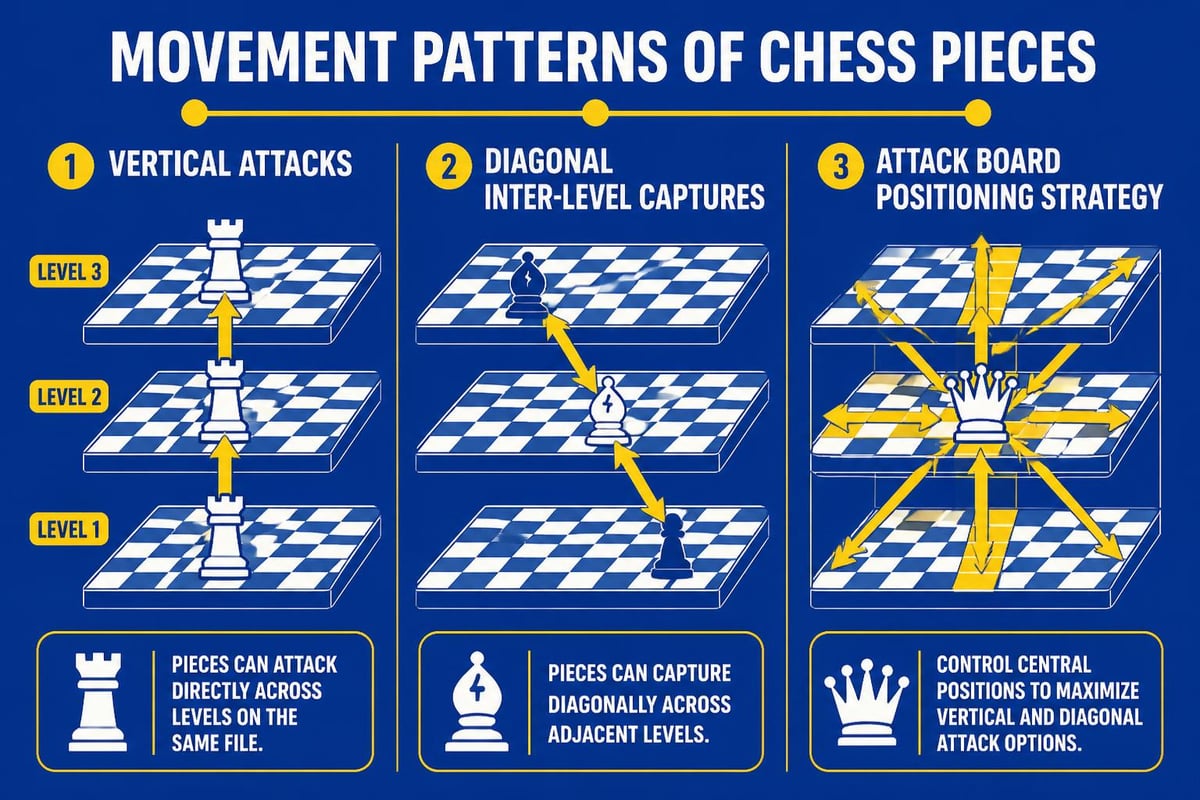
Here's where things get genuinely interesting. Pieces can move:
- Horizontally across their current board (just like regular chess)
- Vertically between different levels
- Diagonally in three-dimensional space
- To and from attack boards under specific conditions
| Piece | Special 3D Movement |
|---|---|
| Queen | Can move between levels along diagonals, creating complex vertical attacks |
| Rook | Moves vertically between boards in straight lines |
| Bishop | Diagonal movement includes vertical components |
| Knight | L-shaped moves can incorporate level changes |
| Pawn | Can move to adjacent levels under certain conditions |
The attack boards create additional strategic complexity. They can be moved during the game, repositioned to create new attack angles or defensive formations. Think of them as floating platforms that extend the battlefield in unexpected directions.
Strategic Differences
Playing star trek chess requires thinking in ways that traditional two-dimensional chess simply doesn't. You're not just protecting your pieces from lateral attacks; you're also considering threats from above and below.
This multi-level awareness changes everything. A piece that appears safe on one board might be vulnerable to an attack from two levels up. Controlling the centre still matters, but now you're controlling the centre across multiple vertical planes.
For players used to traditional chess strategy, the adjustment can be significant. The positional skills you've developed in regular chess still apply, but you need to expand your vision to encompass the entire three-dimensional space.

Learning to Play: Resources and Approaches
Want to give star trek chess a try? You're in luck. The game has experienced a renaissance in recent years, with both physical sets and digital versions becoming more accessible.
Digital Versions
Several software implementations allow you to play without investing in the expensive physical set. Commence Software offers a digital version that faithfully recreates the Star Trek aesthetic whilst providing a playable experience. There's also a Tri-D Chess application available on the App Store, complete with tutorials that walk you through the basics.
These digital versions are brilliant for beginners because they enforce the rules automatically. You can't make illegal moves, which helps you internalise the movement patterns more quickly.
Rule Sets and Guides
The most comprehensive resource is probably the updated rules and sample game available from enthusiasts who've spent decades refining the gameplay. These rules attempt to create a balanced, competitive experience whilst staying true to the Star Trek aesthetic.
Different rule sets exist, and there's ongoing debate about which version is "official." The truth is, since the game was never properly defined in the original series, there's no single authoritative version. Pick the rules that make sense to you and that your opponent agrees to use.
The Connection Between Star Trek Chess and Traditional Chess Mastery
Whilst star trek chess might seem like a novelty, it actually reinforces important chess concepts. The need for spatial awareness, pattern recognition, and strategic planning all carry over from traditional chess.
Skills That Transfer
Playing three-dimensional chess can actually improve your regular game:
- Visualisation: Tracking pieces across multiple levels enhances your ability to calculate variations in your mind
- Tactical awareness: The expanded attack possibilities force you to consider more potential threats
- Pattern recognition: You learn to spot familiar tactical motifs in unfamiliar spatial arrangements
- Strategic planning: Long-term planning becomes even more critical when the battlefield expands vertically
Many strong chess players find that star trek chess challenges them in new ways. It's not just about applying existing knowledge; it's about adapting that knowledge to a fundamentally different playing environment.
Opening Principles
Interestingly, many traditional opening principles still apply. Control the centre, develop your pieces quickly, castle your king to safety. The execution looks different, but the underlying concepts remain valid.
If you're working on mastering chess openings, you'll find that the same analytical approach helps when exploring three-dimensional variants. Understanding why certain moves work matters more than memorising specific sequences.
The Cultural Impact and Historical Context
Star trek chess didn't emerge in a vacuum. The concept of three-dimensional chess actually predates Star Trek by several decades. Dr. Ervand Kogbetliantz, a mathematician, invented a three-dimensional chessboard in the 1950s, though his version looked quite different from the Star Trek variant.
Variations Throughout History
The Wikipedia entry on three-dimensional chess documents numerous attempts to add vertical dimension to chess, dating back over a century. Star Trek's version became the most famous, but it's part of a longer tradition of chess innovation.
What made the Star Trek version stand out wasn't necessarily superior gameplay, but rather its visibility. Millions of viewers saw Kirk and Spock playing this mysterious game, sparking curiosity and inspiring people to create working versions.
Chess in Popular Culture
Star trek chess represents chess's broader role in popular culture as a symbol of intelligence and strategic thinking. Just as advanced chess concepts distinguish strong players from beginners in regular chess, the ability to play three-dimensional chess became a marker of futuristic sophistication in the Star Trek universe.
The game appears throughout the franchise, from The Original Series through The Next Generation and beyond. Characters use it for recreation, but also as a metaphor for complex problem-solving and strategic thinking.
Practical Tips for Your First Games
Ready to try star trek chess yourself? Here's what you need to know to get started without feeling completely overwhelmed.
Start Simple
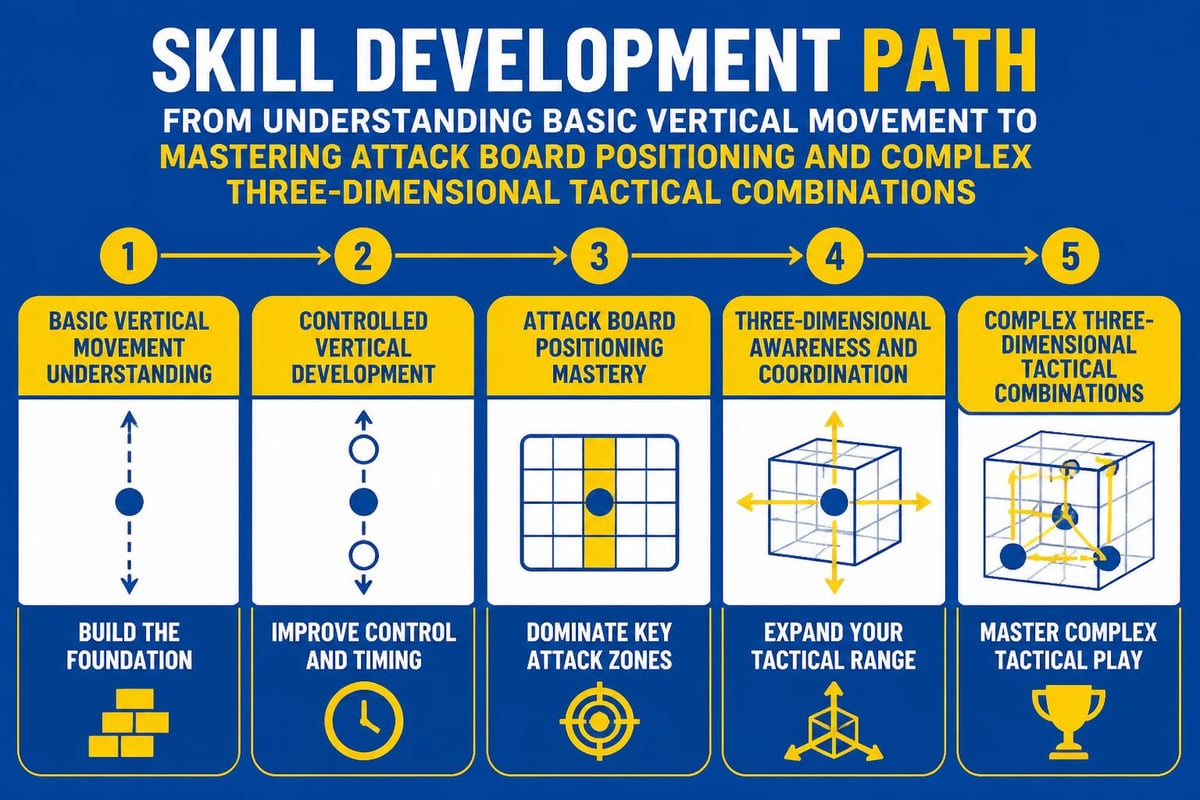
Don't try to master all the rules at once. Begin with just the main boards and save the attack boards for later. This gives you a chance to get comfortable with vertical movement before adding the complexity of moveable platforms.
Focus on basic tactical patterns first:
- Vertical forks: Using the height dimension to attack multiple pieces
- Level control: Dominating specific boards to restrict opponent movement
- Inter-level pins: Pinning pieces between different vertical levels
Common Beginner Mistakes
Watch out for these pitfalls:
- Forgetting vertical threats: Beginners often focus on lateral movement and miss attacks from above or below
- Neglecting attack board positioning: These moveable platforms are powerful tools; use them strategically
- Overextending pieces: The expanded board makes pieces more vulnerable to being cut off from support
- Ignoring the middle board: That empty central level becomes crucial battleground in the middlegame
Building Pattern Recognition
Just as you might use chess puzzles to improve tactical vision in regular chess, create simple positions in star trek chess to practice recognising common patterns. Set up basic checkmate positions, then solve them. Work through simple tactical motifs adapted for three dimensions.
The learning curve is steep, but it's also rewarding. Each "aha moment" when you spot a vertical tactic feels like a genuine breakthrough.
Comparing Rule Variations
One challenge with star trek chess is the lack of standardisation. Different groups have developed different rule sets, each with its own approach to handling edge cases and ambiguities.
Major Rule Set Differences
| Aspect | Traditional Approach | Alternative Approach |
|---|---|---|
| Attack board movement | Only during player's turn | Can be moved before or after piece moves |
| Pawn vertical movement | Restricted to adjacent levels | Can move multiple levels forward |
| Castling | Adapted for multi-level play | Not permitted at all |
| En passant | Complex multi-level version | Simplified or omitted |
Some versions prioritise gameplay balance, whilst others aim for thematic consistency with the Star Trek aesthetic. There's no wrong choice; it depends on what you and your opponents prefer.
Finding Your Preferred Version
The best approach is to try different rule sets and see what works for your group. Start with a well-documented version like the Bartmess rules, then experiment with modifications. The beauty of star trek chess is that it's still evolving, with no rigid orthodoxy constraining innovation.
The Future of Star Trek Chess
Interest in star trek chess has grown significantly in recent years, driven partly by renewed Star Trek popularity and partly by increasing appreciation for chess variants generally. Digital implementations have made the game more accessible than ever.
We're seeing more tournaments, more online communities, and more refined rule sets. The game that started as a prop has become a legitimate chess variant with a dedicated following.
For chess players looking to expand their horizons whilst still working on core skills, star trek chess offers a fascinating middle ground. It's different enough to be challenging and novel, but similar enough that your chess knowledge transfers meaningfully.
Whether you approach it as a serious chess variant or a fun novelty, star trek chess rewards the same qualities that make someone good at traditional chess: careful thought, pattern recognition, and strategic planning. The three-dimensional aspect adds complexity, but the fundamental game remains recognisably chess.
If you're intrigued by how chess principles adapt to different contexts, exploring star trek chess might deepen your appreciation for why certain strategic concepts work across different variations of the game.
Star trek chess demonstrates how classic strategy games can evolve whilst maintaining their essential character, offering both mental challenge and entertainment value. Whether you're looking to sharpen your tactical vision or simply try something new, this three-dimensional variant provides a fresh perspective on familiar chess principles. If you want to strengthen your foundational chess skills whilst exploring new strategic dimensions, Chess Cheat Sheets offers comprehensive guides and resources designed to help you master chess concepts efficiently, building the pattern recognition and strategic thinking that transfers across all chess variants.


