

Have you noticed how chess is everywhere in 2025? More and more beginners are joining the game, but many quickly hit a wall when trying to practice chess openings. If you’ve ever felt lost after the first few moves, you’re not alone.
Mastering openings is a crucial step if you want to improve and enjoy your games more. This guide will help you practice chess openings with a clear, step-by-step approach designed for beginners.
Inside, you’ll discover why openings matter, learn key principles, explore top beginner openings, and get practical methods to boost your confidence. Ready to level up your chess journey? Let’s dive in!

Why Chess Openings Matter for Beginners
The Role of Openings in Chess Success
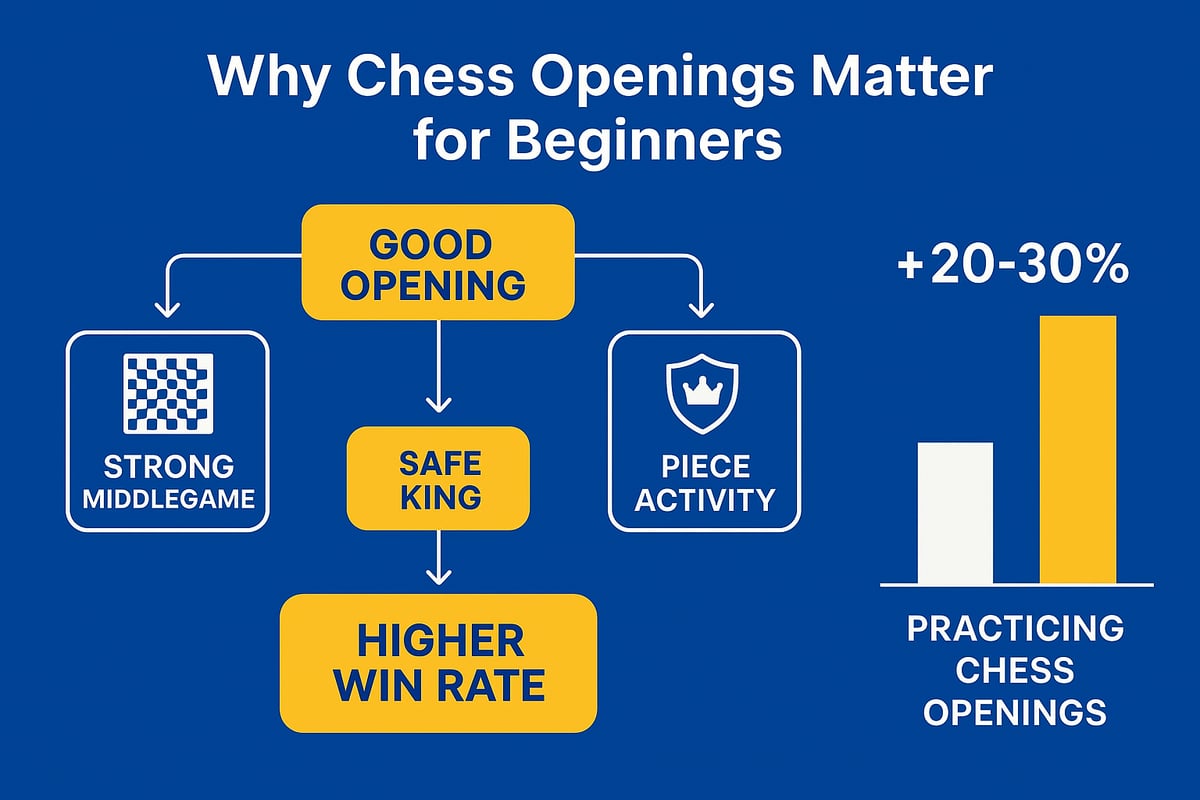
Ever wondered why the first few moves in chess seem to carry so much weight? When you practice chess openings, you’re not just memorizing moves, you’re laying the foundation for everything that comes after. The opening phase shapes your middlegame and endgame possibilities, setting you up for success or struggle based on your choices.
Statistics from platforms like Lichess and Chess.com show that players who actively practice chess openings and understand core ideas win 20–30% more games at the beginner level. Imagine two players: one knows basic opening principles, the other just “wings it.” More often than not, the prepared player comes out ahead, simply because their pieces are better developed and their king is safer.
Let’s say you start a game and quickly lose a piece to a simple trap. That one misstep can decide the game before it really begins. Practicing chess openings isn’t just about memorizing a string of moves—it’s about understanding why each move matters. This understanding helps you manage your time better, as you’ll recognize familiar positions and avoid getting stuck thinking too long in the opening.
Beyond the practical side, knowing your openings builds confidence. When you face an unfamiliar board, having practiced chess openings gives you a plan, reducing anxiety and helping you stay calm. There’s a common myth that only masters benefit from openings, but in reality, beginners see some of the fastest improvement by focusing here. Over time, this early investment leads to stronger skills and higher ratings down the road.
Common Opening Challenges for Beginners
If you’re just starting to practice chess openings, you might have already run into a few roadblocks. One of the biggest beginner mistakes is trying to memorize long sequences without understanding the purpose behind each move. This approach often backfires when your opponent plays something unexpected, leaving you lost and out of your comfort zone.
Another common challenge is overextending pawns or neglecting piece development. You might push pawns too far or move the same piece multiple times, only to fall behind in development. Real-life scenarios like falling into the Scholar’s Mate or losing material in the first ten moves happen all the time, especially since 60% of beginners report struggling most with these opening moves.
Practicing chess openings should be about learning principles, not just memorizing lines. It’s crucial to prepare for common traps and learn how to respond to them confidently. If you want to dive deeper into typical mistakes and ways to avoid them, check out this helpful list of Common Beginner Chess Mistakes, which breaks down pitfalls like neglecting development and king safety.
The best way forward is a balanced approach: focus on understanding why moves are played, not just what the moves are. By doing this, you’ll build opening skills that hold up in real games, no matter what surprises your opponent throws at you.
Fundamental Principles of Chess Openings
Chess openings can feel mysterious, right? But when you break them down into simple, repeatable principles, you can practice chess openings with confidence and clarity. Let’s unlock the foundational ideas that will make your opening play stronger and more consistent.
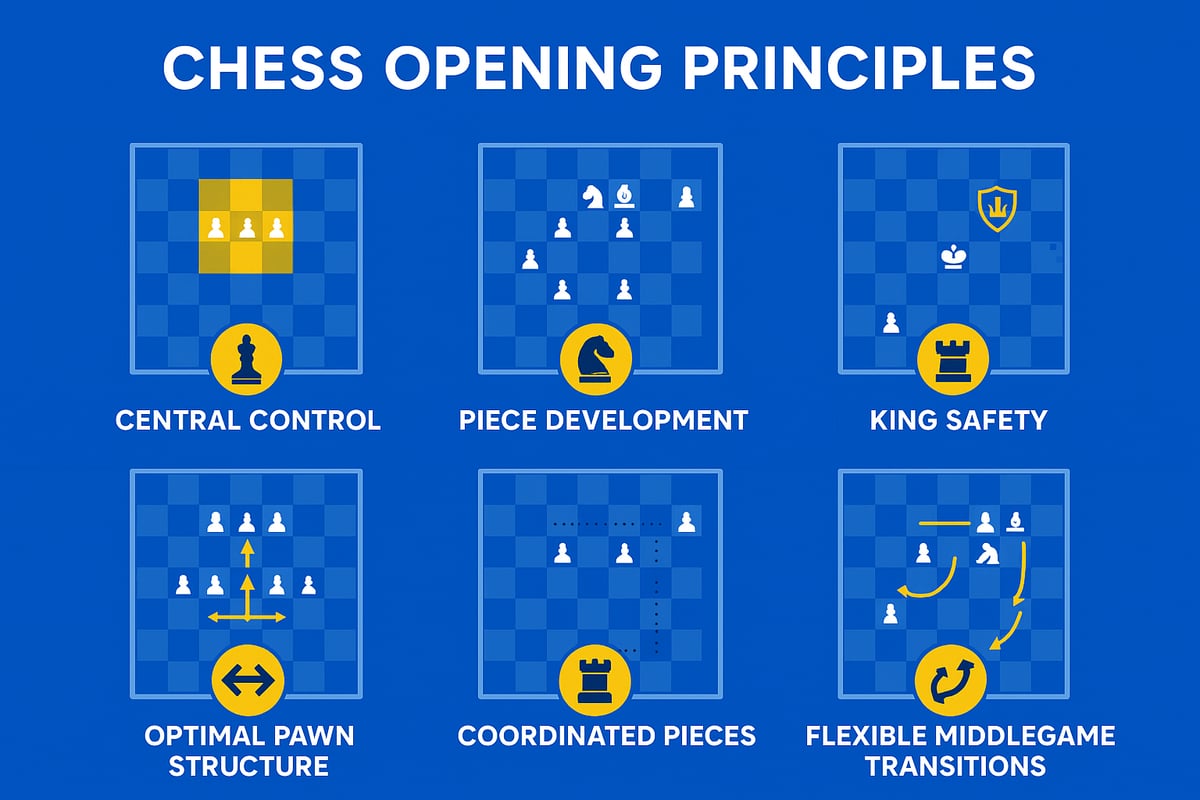
Control of the Center
The heart of every chess battle is the center: e4, d4, e5, and d5. Controlling these squares lets your pieces breathe and gives you more options later. Imagine the center as the main intersection in a busy city. Whoever controls it can move anywhere easily.
Classic games often show how early central control leads to powerful attacks or smooth development. For example, after playing 1.e4 or 1.d4, your pieces have more space to develop and pressure your opponent.
When you practice chess openings, always ask: do my moves help me claim the center? Prioritizing this principle sets you up for success.
Piece Development
Getting your knights and bishops out quickly is critical. The general rule: develop minor pieces before moving the same piece twice. Moves like Nf3, Nc3, Bc4, or Bg5 help you prepare for castling and connect your pieces.
If you keep moving the same piece or focus only on pawns, you’ll fall behind. Remember, every move is precious in the opening. When you practice chess openings, focus on bringing out your army efficiently, not just reacting to threats.
A quick checklist:
- Knights before bishops (usually)
- Don’t move the same piece twice unless necessary
- Develop towards the center
King Safety and Castling
Your king is the most important piece, so keeping it safe should be a top priority. Castling early not only tucks your king behind a wall of pawns but also brings a rook towards the center. Studies show that delaying castling often leads to early attacks and lost games.
Consider famous blunders where players skipped castling and paid the price. When you practice chess openings, plan to castle within your first 10 moves unless there’s a good reason not to.
A good rule: castle before launching any big attacks.
Avoiding Premature Pawn Moves
It’s tempting to push lots of pawns at the start, but overextending can create weaknesses. Excessive pawn moves can leave holes in your position or block your own pieces.
Let’s compare:
| Approach | Outcome |
|---|---|
| Many pawn moves | Weak squares, slow development |
| Few, purposeful pawns | Solid structure, active pieces |
When you practice chess openings, limit pawn moves to those that help piece development or control the center. This keeps your position flexible and strong.
Coordination and Connection of Pieces
Well-coordinated pieces support each other, both in defense and attack. Developing with coordination means your pieces work as a team.
Pay special attention to connecting your rooks by clearing the back rank (moving the queen and castling). In beginner games, connected rooks often signal a successful opening phase.
To practice chess openings well, look at your pieces and ask: are they supporting each other? Coordination leads to safer kings and more creative attacks.
Flexibility and Preparation for the Middlegame
Strong openings don’t lock you into rigid plans. Flexibility means your pieces can adapt to your opponent’s moves and set up for the middlegame.
Openings that let you switch strategies or respond to threats are ideal for beginners. When you practice chess openings, focus on moves that keep your options open. For more on these essential concepts, check out the Master Chess Openings Guide for a deeper dive into practical strategies and examples.
By mastering these principles, your opening play will become a reliable launchpad for the rest of your chess journey.
Top Chess Openings Every Beginner Should Practice
Learning how to practice chess openings is a game-changer for any beginner. With so many choices, it can feel overwhelming at first. The good news? Mastering just a handful of openings gives you a huge head start and makes every game feel less intimidating. Let's break down the top openings you should focus on as you practice chess openings and build a rock-solid foundation.
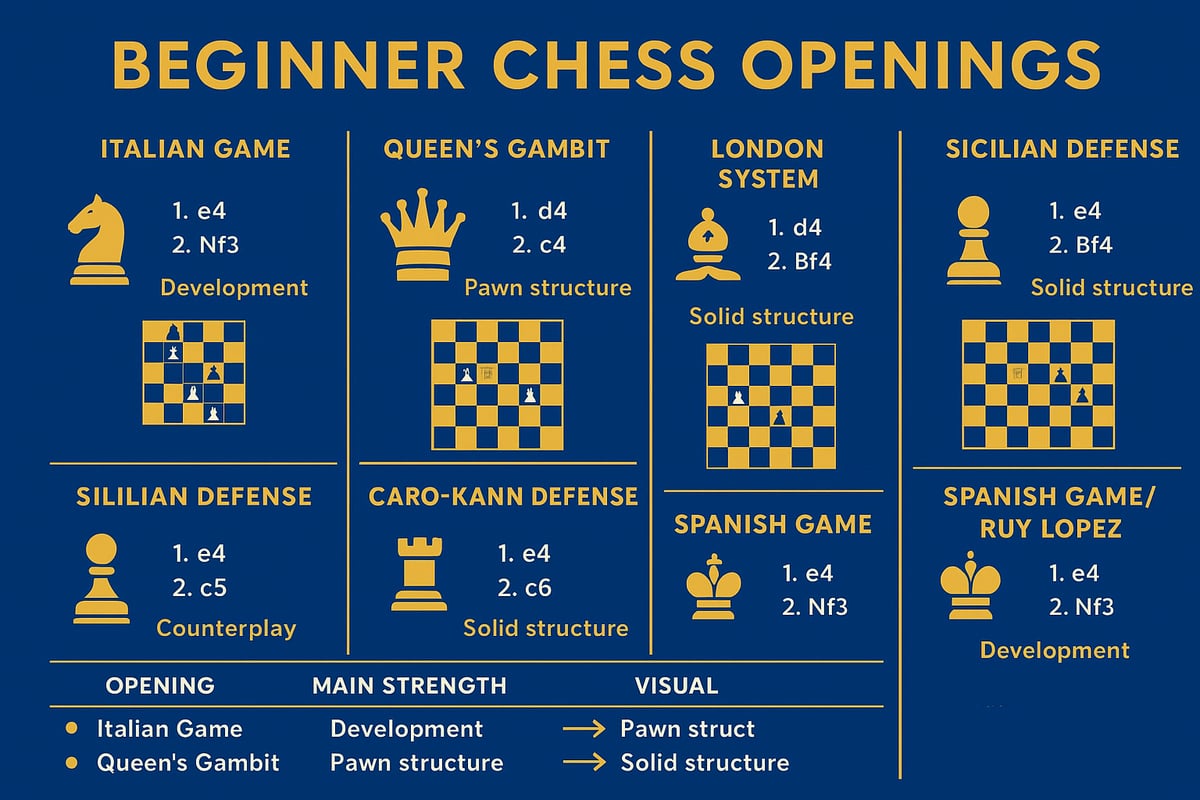
Italian Game (Giuoco Piano)
Ready to jump into your first games and practice chess openings that teach the basics? The Italian Game is a classic starting point. Its moves are straightforward: 1.e4 e5 2.Nf3 Nc6 3.Bc4 Bc5. This opening helps you grasp rapid development and control of the center right away.
- Key ideas: Quick piece development, pressure on f7, and simple plans.
- Why it's great: You'll learn to coordinate your pieces and avoid early traps.
If you want a step-by-step walkthrough, check out this Italian Game Opening Basics guide for beginners.
Queen’s Gambit
When you practice chess openings as White, the Queen’s Gambit (1.d4 d5 2.c4) is a must-try. This opening is famous for teaching you how to handle pawn structures and think about positional play.
- Key ideas: Offering a pawn to gain control of the center, setting up long-term pressure.
- Beginner bonus: Featured in 30% of beginner games, so you'll face it often.
With the Queen’s Gambit, you build confidence in both attack and defense, which is crucial as you continue to practice chess openings.
London System
Want an opening that’s both solid and simple to remember? The London System starts with 1.d4 and 2.Bf4 (or 2.Nf3, then 3.Bf4). It's loved by beginners because it offers a safe setup without memorizing dozens of lines.
- Key ideas: Strong pawn structure, consistent development, and easy-to-learn plans.
- Why it works: You can use the London System against almost any reply, making it a reliable choice as you practice chess openings.
Try playing a few games with the London System, and you’ll see your understanding grow with every move.
Sicilian Defense (for Black)
Facing 1.e4 as Black? The Sicilian Defense (1.e4 c5) is your go-to for active counterplay. Even at the beginner level, practicing chess openings like the Sicilian helps you learn to fight for the center and avoid passive positions.
- Key ideas: Counterattack, controlling the d4 square, and flexible pawn structures.
- Beginner tip: Start with the Closed Sicilian for simpler play.
As you practice chess openings with the Sicilian Defense, you’ll quickly spot patterns and build resilience against aggressive opponents.
Caro-Kann Defense (for Black)
The Caro-Kann (1.e4 c6 2.d4 d5) is all about solidity and clear plans. If you prefer a more structured approach when you practice chess openings, this defense gives you a safe king and logical development.
- Key ideas: Solid pawn formation, early piece development, and minimal weaknesses.
- Why beginners love it: The Caro-Kann teaches patience and helps you avoid wild tactics in the opening.
Playing the Caro-Kann regularly will help you practice chess openings with confidence, even under pressure.
Spanish Game (Ruy Lopez)
Another time-tested classic, the Spanish Game (1.e4 e5 2.Nf3 Nc6 3.Bb5) is perfect for learning how to create tension and apply pressure early. Practicing chess openings like this one builds your strategic thinking and piece coordination.
- Key ideas: Attacking the knight to pressure e5, developing pieces efficiently, and setting up for a strong middlegame.
- Beginner bonus: Many famous games start with the Ruy Lopez, so you’ll see it often.
Try using the Spanish Game to practice chess openings that require both patience and tactical awareness.
How to Choose Which Openings to Practice
So, which opening should you pick? The best way to practice chess openings is to start with one or two for each color that match your playing style. Do you like open, tactical positions? Go for the Italian Game or Sicilian. Prefer structure and safety? Try the London or Caro-Kann.
- Focus tip: Specializing helps you improve faster and makes your practice chess openings sessions more productive.
- Survey says: 70% of beginners see quicker progress when they stick to a small, focused repertoire.
Keep things simple, build confidence, and add new openings as you grow. That’s the smartest way to practice chess openings and see real improvement.
Step-by-Step Guide: How to Practice Chess Openings Effectively
Mastering how to practice chess openings can feel intimidating, but breaking the process into manageable steps makes it much easier. If you’re ready to build confidence and improve your results, follow this practical, beginner-friendly guide to make opening study both effective and fun.
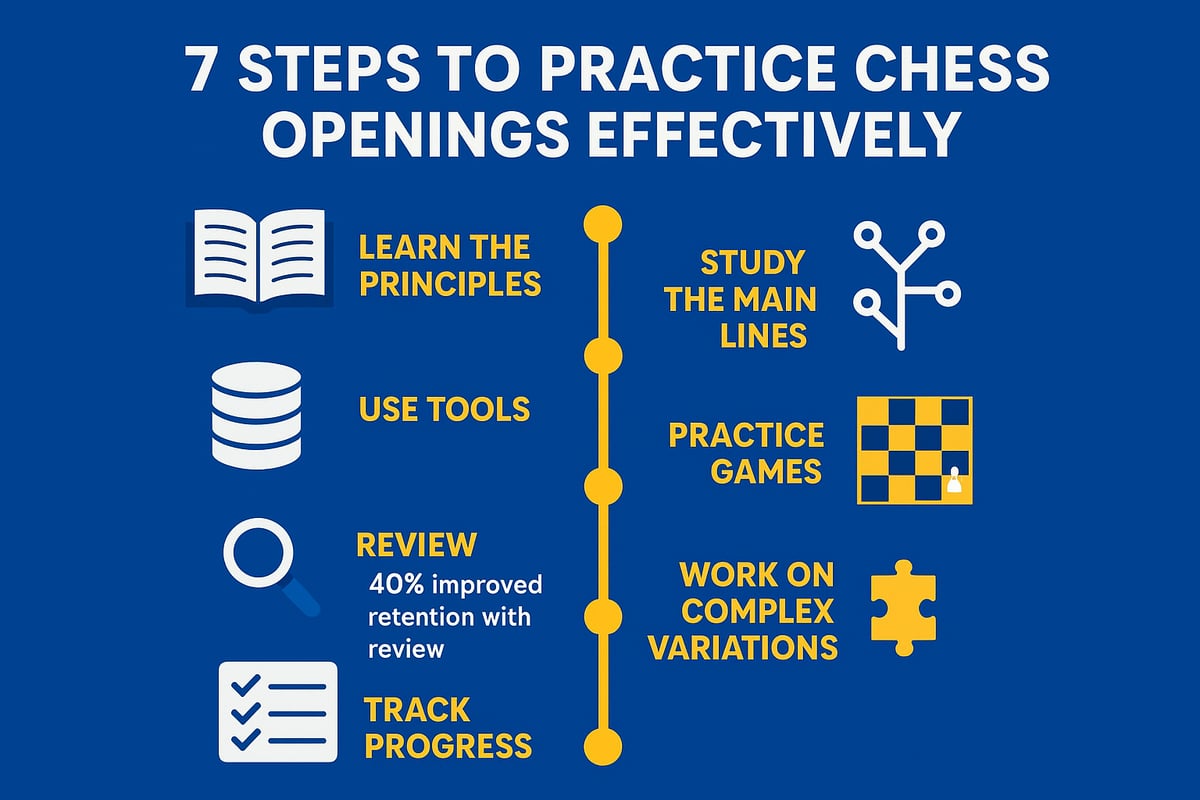
Step 1: Learn Opening Principles Before Memorizing Moves
Before you dive into memorizing move sequences, focus on understanding why certain moves are made in the first place. The heart of effective practice chess openings lies in grasping core ideas like development, center control, and king safety.
Ask yourself: What does this move achieve? Does it develop a piece, control a key square, or prepare for castling? Studying annotated games and reading commentary can help you see the reasoning behind each move. This foundational approach ensures you’re not just copying moves blindly, but building a chess “intuition” that will serve you in every game.
Step 2: Start with Main Lines and Core Variations
Once you know the principles, concentrate on the most common lines played at the beginner level. Main lines are popular for a reason—they’re solid, instructive, and appear in many games.
If you try to practice chess openings by learning every possible variation, you’ll likely get overwhelmed. Instead, select a few main lines (like the Italian Game or Queen’s Gambit) and study how the first 6–10 moves usually unfold. Use opening explorer tools to see which lines are most popular, and don’t worry about rare sidelines just yet.
Step 3: Practice Openings Using Online Tools and Databases
Online platforms make it easy to practice chess openings and track your progress. Tools like Chess.com and Lichess offer opening explorers where you can replay grandmaster games and see statistical outcomes for each move.
Analyze your own games to spot which openings you’re facing most often and where you tend to slip up. Many databases also let you set up custom positions, so you can drill specific sequences or test your memory on key lines. Consistent practice in a digital environment helps reinforce your knowledge and highlights areas for improvement.
Step 4: Play Practice Games Focusing on Openings
Theory only takes you so far—you need to put your opening knowledge into action. Try setting up practice games from specific opening positions, or play unrated games where your goal is to reach and play out your chosen lines.
When you practice chess openings in real games, use longer time controls like 15|10 or 30|0. This allows you to reflect on your moves and apply the principles you’ve learned. Don’t stress about the result; focus on playing the opening correctly and noticing what plans emerge in the middlegame.
Step 5: Review and Analyze Your Opening Play
After each game, take a few minutes to review the opening phase. Did you follow the main line? Where did you or your opponent deviate? Use computer analysis to spot mistakes and missed opportunities.
A great way to reinforce your understanding is by testing yourself with quizzes. The How to Practice Chess Openings Quiz is perfect for checking your recall and identifying weak spots. This habit of review and self-assessment is vital for steady improvement.
Step 6: Gradually Add More Complex Variations
Once you’re comfortable with the basics, expand your repertoire by learning new lines and variations. Don’t rush—introduce only one or two new ideas at a time, and make sure you truly understand them before moving on.
When you practice chess openings, it’s tempting to chase after every exciting gambit or trap. Resist the urge. Focus on mastering the essentials first, then gradually build complexity into your study routine. This keeps your learning process manageable and enjoyable.
Step 7: Track Progress and Adjust Practice Routine
Finally, keep a simple chess journal or use online tracking tools to monitor your progress. Jot down which openings you’ve studied, recurring mistakes, and your win rates with different lines.
Regularly review your notes and adjust your practice chess openings routine based on what’s working and where you’re struggling. Consistency and self-reflection are your best friends on the road to opening mastery.
Common Mistakes Beginners Make When Practicing Openings
Every chess beginner faces a learning curve, and mistakes are part of the journey. But if you know what to look out for, you can avoid falling into the same traps as countless others. Let’s break down the most common missteps you might encounter as you practice chess openings.
Focusing Solely on Memorization
It’s tempting to memorize move orders when you first practice chess openings. But what happens when your opponent plays something unexpected? Pure memorization can leave you lost and scrambling for a plan.
Real improvement comes from understanding why each move works. For a deeper dive into these pitfalls, check out the Chess Opening Mistakes Analysis to see how memorized sequences can fall apart.
Ignoring Opening Principles
If you ignore the basic principles while you practice chess openings, you’ll quickly find yourself in trouble. Skipping development, leaving your king exposed, or neglecting the center can turn a promising start into a disaster.
Many beginners lose games in under 10 moves because they forget to bring out their pieces or castle early. Always keep these principles in mind, and you’ll set yourself up for a solid middlegame.
Overcomplicating the Opening Repertoire
Trying to practice chess openings by learning too many at once is a recipe for confusion. When you juggle five or six different systems, it’s easy to forget key moves or ideas.
Surveys show 55% of beginners get overwhelmed and lose track of lines. Stick to one or two openings for each color, and master them before expanding your repertoire.
Failing to Practice Against Real Opponents
You can study theory all day, but if you never use it in real games, your practice chess openings study won’t stick. Playing unrated games is a safe way to experiment without risking your rating.
Facing actual opponents, you’ll encounter unfamiliar moves and learn to adapt on the fly. This hands-on experience is where true progress happens.
Not Reviewing Mistakes or Adapting
It’s easy to repeat the same errors if you don’t review your games. After each session where you practice chess openings, look back and spot where things went wrong.
Adjust your repertoire and focus on recurring mistakes. Players who analyze and adapt double their improvement rate over time.
Falling for Common Traps and Gambits
Every beginner should know about traps like Scholar’s Mate and Fool’s Mate. Falling into these can be discouraging, but learning to spot and defend against them boosts your confidence.
Practice responses to popular tricks, and check out the Top 50 Beginner Chess Mistakes for a comprehensive list of pitfalls to avoid. The more you learn, the less likely you’ll fall for the same trap twice.
Tools and Resources to Improve Opening Practice in 2025
Looking to level up how you practice chess openings? In 2025, the right tools and resources can make all the difference. Whether you prefer interactive training, classic books, or community support, you’ll find solutions to fit your style and help you practice chess openings more efficiently.
Online Opening Databases and Explorers
If you want to practice chess openings with real-game data, online databases are your best friend. Chess.com, Lichess, and OpeningTree all offer massive collections of games. You can search by opening, see which moves are most popular, and explore master-level games.
Here’s a quick comparison:
| Platform | Features | Free Access | Popularity |
|---|---|---|---|
| Chess.com | Opening explorer, stats, drills | Yes | High |
| Lichess | Explorer, cloud engine, studies | Yes | High |
| OpeningTree | Database merging, stats | Yes | Medium |
Using these tools helps you spot trends and practice chess openings by reviewing what works best at your level.
Interactive Training Platforms
Interactive platforms like Chessable have changed the way players practice chess openings. These sites use spaced repetition and move-by-move training to strengthen your memory and understanding.
Instead of simply reading, you’re actively quizzed on each move. This boosts retention and helps you build muscle memory for common opening lines. Studies show that interactive training can increase your recall of opening moves by up to 30 percent.
If you want a hands-on way to practice chess openings, interactive platforms are a must-try.
Chess Books and Video Series for Beginners
Sometimes, nothing beats a well-explained book or video. Many classic chess books break down openings step by step, while YouTube channels and streaming platforms offer visual guides.
If you want a shortcut, check out the London System for Beginners, which offers a simple, effective opening for new players. Many video series also include annotated games and tips, so you can practice chess openings while following along with real examples.
Pick resources that match your learning style, whether you prefer reading or watching.
Opening Trainers and Mobile Apps
On the go? Mobile apps make it easy to practice chess openings any time. Look for apps with these features:
- Flashcards for move memorization
- Puzzles based on real openings
- Progress tracking and reminders
Popular choices include Chess.com’s app, Lichess, and specialized opening trainers. With these, you can squeeze in practice during short breaks and keep your skills sharp. Use them as a supplement to your main study routine and get comfortable with different positions as you practice chess openings.
Community Resources and Forums
Joining online chess communities is a great way to get feedback and advice on how to practice chess openings. Forums like Reddit’s r/chess, Chess.com’s community, and Discord groups let you discuss strategies, share annotated games, and ask questions.
Many beginners find it helpful to post their games and ask for input. You can also join group studies or participate in opening-themed tournaments. Learning from others’ experiences can help you avoid common pitfalls and become more confident in your opening choices.
Personalized Coaching and Feedback
For the fastest progress, consider working with a chess coach. Personalized lessons let you target your specific weaknesses, get tailored advice, and receive in-depth analysis of your opening play.
A coach can help you practice chess openings by focusing on your most frequent mistakes and suggesting improvements. Many platforms offer coaching services or connect you with experienced players. With direct feedback, you’ll accelerate your understanding and reach your chess goals more quickly.
So, after diving into the ins and outs of practicing chess openings and seeing how much it can boost your confidence at the board, you might be wondering, “Okay, what’s the next step for me?” That’s exactly where having the right resources makes all the difference. You don’t have to spend hours sifting through endless theory or worrying about forgetting lines mid-game—you can make real progress with just a bit of smart practice. If you’re ready to turn these strategies into consistent wins and want an easy way to start, why not Start Improving Your Openings?


