

Have you noticed how chess is everywhere again? Whether you’re watching world championships, scrolling social media, or seeing friends play on their phones, chess is having a true renaissance in 2026. People from all walks of life are drawn in by the challenge, strategy, and thrill of the royal game.
If you’ve ever felt overwhelmed by learning the game of chess, this expert guide is for you. Here, you’ll find clear strategies and resources that break down every step—no matter your starting point.
You’ll discover:
- The essential rules and history
- Step-by-step improvement methods
- The best digital tools and apps
- Ways to connect with the chess community
- Advanced tactics for levelling up
Ready to make your next move? Let’s dive in.

Understanding the Fundamentals of Chess
Chess has a rich tapestry woven over centuries, and understanding where it comes from can make learning the game of chess even more rewarding. Let’s break down the essentials, step by step, so you can build a strong foundation and avoid the common pitfalls that trip up new players.
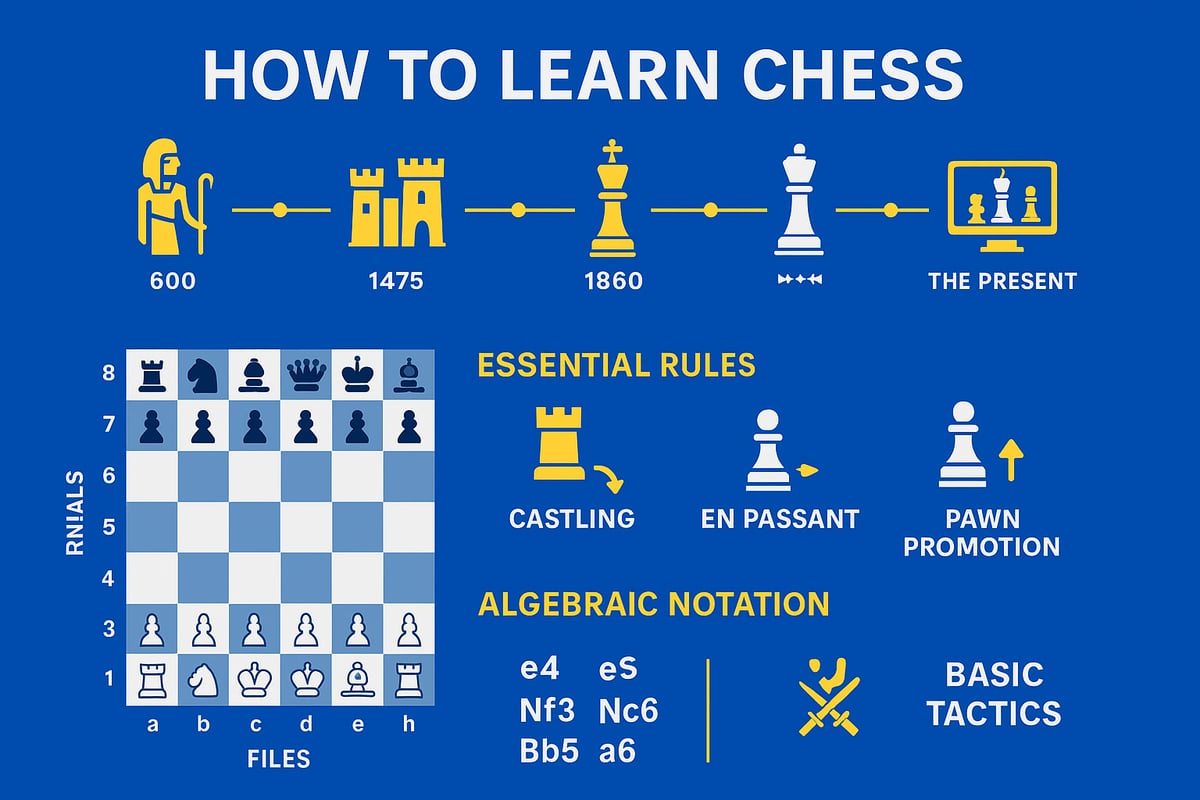
The History and Evolution of Chess
Did you know chess began in ancient India, evolving through Persia and Europe to become the game we know today? The rules solidified in the 15th century, and since then, chess has grown into a global phenomenon.
Technology has changed everything. The introduction of computer engines and online play has made learning the game of chess more accessible than ever. Online platforms exploded in popularity, and a 2023 FIDE report found a 35% jump in global chess players since 2020. With AI now helping players improve, you’re part of a worldwide movement every time you play.
Chessboard Setup and Piece Movements
Let’s start with the chessboard. It has 64 squares, arranged in 8 rows (ranks) and 8 columns (files). Each piece has unique moves: pawns go forward but capture diagonally, knights jump in L-shapes, bishops glide along diagonals, rooks travel straight, queens combine rook and bishop moves, and kings move one square in any direction.
Pieces have values: pawn (1), knight and bishop (3), rook (5), queen (9). Key rules include castling (king and rook swap places for safety), en passant (special pawn capture), and pawn promotion (pawns reaching the last rank become another piece).
Common mistakes? Mixing up square coordinates or forgetting piece values. If you need a quick refresher, try the How to Play Chess Cheat Sheet for a simple overview. Mastering the basics here is crucial for learning the game of chess and building your confidence.
Essential Rules and Objectives
The main aim in chess is to checkmate your opponent’s king, but there’s more to it. Stalemate means the game is drawn if a player isn’t in check but can’t move. Other draws include threefold repetition (same position three times) and the fifty-move rule (no pawn move or capture in 50 moves).
A famous example? Carlsen vs. Aronian, 2022, ended in a stalemate that stunned the audience. Knowing these rules sets you up for competitive play and helps you avoid losing points in tournaments. Understanding these scenarios is a major step in learning the game of chess.
Chess Notation and Recording Moves
Chess notation uses a simple code: each square has a letter (a-h) and a number (1-8). Moves are written like e4 or Nf3. This helps you study games, play online, and enter tournaments. For example, FIDE requires notation in official matches, so you’ll want to get comfortable with it.
Whether you play on a board or online, recording moves is an essential skill. It lets you review, learn, and share your games.

Building a Strong Foundation: Opening Principles
Openings are all about principles, not memorising endless moves. Focus on controlling the centre, developing your pieces quickly, and keeping your king safe. Avoid moving pieces twice or bringing the queen out too early.
Ever heard of Scholar’s Mate? It’s a common trap, but following these opening principles can help you dodge it. For anyone learning the game of chess, sticking to these basics will serve you better than trying to remember dozens of sharp lines.
Introduction to Tactics and Strategy
Tactics are short-term, sharp moves like forks, pins, and skewers. Strategy is about long-term planning—think pawn structure, piece activity, and space. Both are vital, but beginners tend to miss tactical shots.
Did you know that, according to 2024 Chess.com data, tactics cause 70% of beginner mistakes? By recognising patterns early, you’ll boost your results and enjoy the journey of learning the game of chess even more.
Step-by-Step Guide to Rapid Chess Improvement
Ready to see real progress in learning the game of chess? Whether you are a curious newcomer or someone returning for a fresh start, this step-by-step guide will help you build skills quickly, using expert-backed methods for 2026. Let us break down each essential stage in your chess journey.
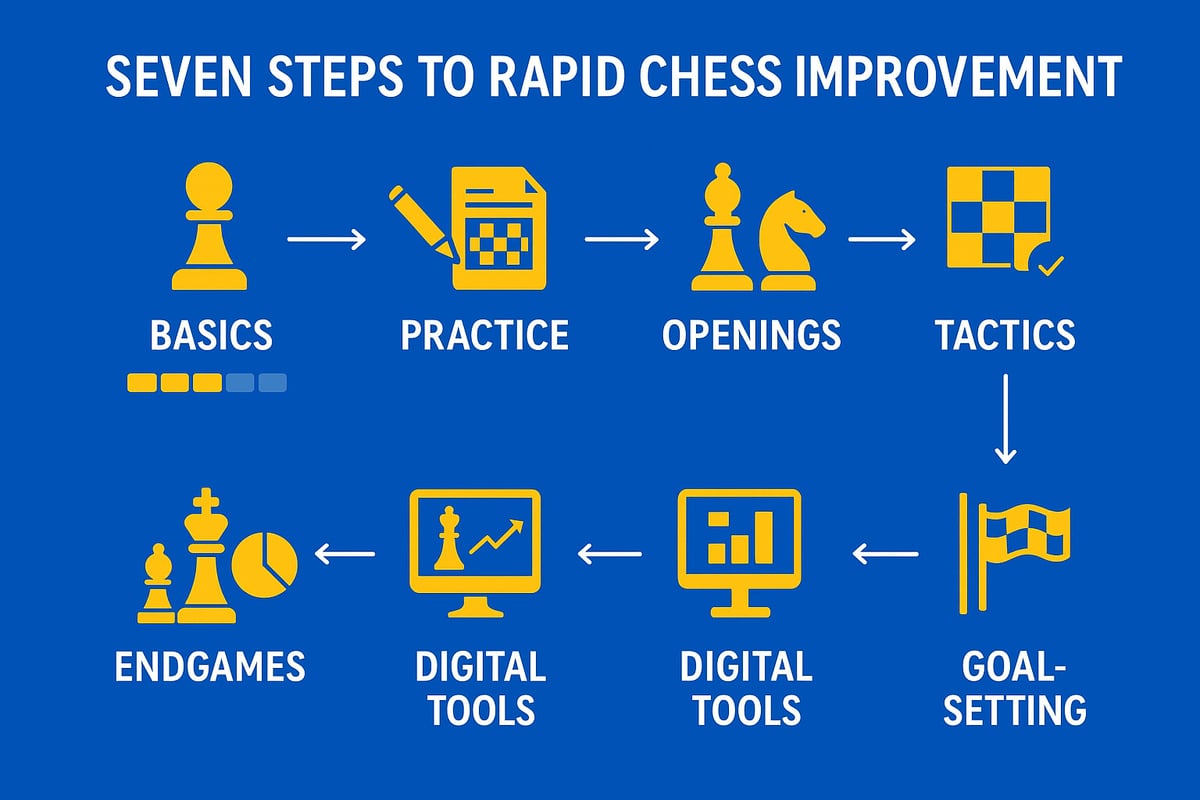
Step 1: Mastering the Basics
Every great chess journey starts with mastering the basics. If you are learning the game of chess for the first time, focus on understanding core rules, piece movements, and basic tactics.
Interactive resources make this stage engaging. For example, the “Learn” section on Lichess.org offers free lessons, quizzes, and videos. To expand your toolkit, check out Chess Resources for Beginners and Beyond for curated books, websites, and tools suitable for all levels.
Remember, consistency is key. Dedicate a few minutes daily to reinforce what you learn. Soon, the fundamentals will become second nature as you continue learning the game of chess.
Step 2: Practising Regularly and Analysing Games
Once you know the basics, regular practice is your secret weapon. Play short games online or with friends to get comfortable with different positions.
After each game, take a moment to review your moves. Platforms like Chess.com offer automatic analysis, highlighting mistakes and missed opportunities. Their Game Review feature pinpoints tactical errors and suggests improvements.
Track your games in a simple journal or spreadsheet. This habit not only accelerates learning the game of chess but also helps you spot recurring patterns in your play.
Step 3: Learning Openings Efficiently
Opening knowledge sets the tone for your games. Instead of memorising endless lines, focus on the principles behind strong openings—control the centre, develop pieces, and keep your king safe.
Choose one or two reliable openings to start. The Queen’s Gambit and Italian Game are both beginner-friendly and appear often in learning the game of chess. Understanding why moves are played is more valuable than rote memorisation.
A quick table for reference:
| Opening | Key Idea | Common Pitfall |
|---|---|---|
| Queen’s Gambit | Control centre, space | Ignoring development |
| Italian Game | Fast development | Early attacks |
Stick with these until you feel confident, then gradually explore more.
Step 4: Developing Tactical Vision
Tactical awareness is vital when learning the game of chess. Most games at beginner and intermediate levels are decided by tactical blunders.
Make daily puzzles a habit. ChessBase studies show that solving 10 puzzles each day can boost your rating by up to 150 Elo in six months. Use puzzle trainers on Lichess, Chess.com, or ChessTempo.
Common tactical motifs include forks, pins, and skewers. Spotting these patterns quickly will give you a major edge. Remember, repetition is your friend—practice makes perfect.
Step 5: Building Endgame Knowledge
Endgames are often neglected, but they are crucial for converting advantages into wins. Focus on learning essential endgames: king and pawn versus king, basic checkmates (like king and queen vs. king), and the concept of opposition.
Magnus Carlsen’s endgame skills are legendary. Watch his games to see how mastering endings can change outcomes. Endgame drills and simulators available online make learning the game of chess endgames enjoyable and interactive.
Create a checklist of core endgame positions and revisit them weekly. This habit will help you finish games with confidence.
Step 6: Leveraging Digital Tools and AI
Modern chess offers a wealth of digital tools that make learning the game of chess faster and more personalised. Top platforms now use AI to analyse your games, pinpoint weaknesses, and tailor lessons just for you.
Stockfish 16, for example, is integrated into many popular platforms, providing world-class analysis in seconds. Mobile apps allow you to practise anywhere, while video lessons break down complex topics into digestible chunks.
Experiment with different tools to find what works best for your style. Technology is your ally in building strong, adaptable skills.
Step 7: Setting Goals and Tracking Progress
Goal-setting keeps your chess journey on track. Start by defining what you want to achieve—reaching a specific rating, mastering a new opening, or winning a local tournament.
Use dashboards and tracking tools to monitor your progress. The FIDE online rating system and personal leaderboards let you visualise improvements over time.
Celebrate your milestones, no matter how small. This positive feedback loop is essential for motivation as you continue learning the game of chess and striving for new heights.
Essential Resources for Chess Learners in 2026
Exploring the right resources is a game-changer when it comes to learning the game of chess. In 2026, you have more tools at your fingertips than ever before, whether you are just starting out or pushing for mastery. Let’s break down the best options to fuel your progress.
Books, Courses, and Online Platforms
When learning the game of chess, classic books and well-structured courses remain a foundation. Titles like “Chess Fundamentals” by Capablanca and “The Woodpecker Method” are timeless for building understanding.
Online platforms such as Chess.com, Lichess, and Chessable offer interactive lessons, video tutorials, and challenges tailored to all levels. Many learners find that blending old-school reading with modern online study brings the best results.
Here’s a quick comparison to help you choose:
| Resource Type | Best For | Example |
|---|---|---|
| Book | Deep concepts | Chess Fundamentals |
| Online Course | Guided practice | The Woodpecker Method |
| Platform | Daily play & review | Chess.com, Lichess |
Mix and match these as you work on learning the game of chess, and you’ll cover all your bases.
How Visual Guides Like Chess Cheat Sheets Accelerate Learning
Visual learners thrive on quick-reference materials. Chess Cheat Sheets are designed to make learning the game of chess faster and more intuitive, especially for tricky openings and endgames.

Why do they work? They distil complex positions into bite-sized diagrams and reminders. Whether you are revising before a match or just want to remember a key tactic, a cheat sheet is your pocket coach.
According to real-world feedback, players using Chess Cheat Sheets report accelerated improvement, particularly with opening traps and endgame basics. Options include opening guides, puzzle packs, and endgame reference cards—perfect for learners who want to see results quickly.
Chess Puzzles and Tactical Trainers
Daily puzzle practice is a cornerstone for anyone serious about learning the game of chess. Platforms like Chess.com, Lichess, and ChessTempo offer thousands of puzzles catering to all abilities.
Why are puzzles so effective? They sharpen your tactical vision and help you spot game-winning moves under pressure. A 2025 Chess.com survey found that users who practised puzzles regularly improved at twice the rate of those who did not.
Set a daily target—just ten puzzles a day can make a noticeable difference in your progress. This habit strengthens your calculation skills and confidence during matches.
Endgame Simulators and Study Tools
Endgames can look simple, but mastering them is vital for learning the game of chess. Interactive endgame trainers, like the Endgame Trainer app, provide hands-on practice with scenarios you will see in real games.
Look for features such as scenario customisation and AI-powered feedback. These allow you to repeat tricky positions until you nail them. With over 100,000 scenarios available on some platforms, you can learn everything from basic king and pawn endings to more advanced techniques.
Regular endgame study ensures that you convert advantages into wins and save tough positions from defeat.
Community Resources and Chess Clubs
Joining a chess community is one of the best ways to stay motivated while learning the game of chess. Whether online or in-person, clubs and forums give you a space to share ideas, analyse games, and find friendly rivals.
Top forums like Reddit r/chess and Chess Stack Exchange are packed with advice and lively discussion. Local OTB (over-the-board) clubs are just as valuable, and studies show they improve retention for new learners by 40 percent.
Building connections with fellow enthusiasts not only improves your skills but also keeps the journey fun and engaging.
Harnessing Technology: The Modern Chess Learning Experience
Technology has completely transformed how you approach learning the game of chess. Whether you are a total beginner or already climbing the ranks, the latest digital tools, platforms, and communities offer you a faster, smarter, and more engaging path to mastery.
Let’s explore how the modern chess learning experience can take your skills to the next level.
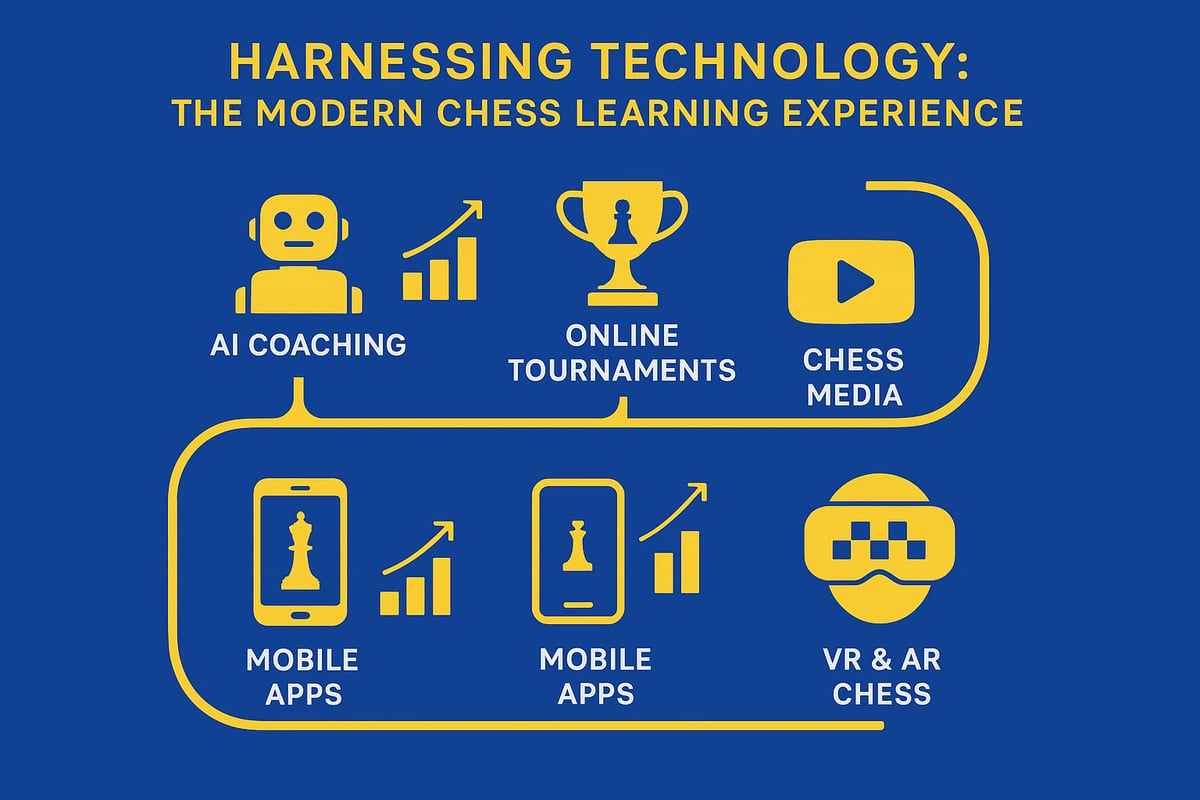
AI and Personalised Chess Coaching
AI is now your personal coach, tailoring lessons to your strengths and weaknesses. Platforms like Chess.com use advanced algorithms to analyse your games, identify patterns, and suggest targeted practice routines.
The “Coach” feature, for example, adapts to your current skill level, helping you focus on areas needing improvement. You can receive instant feedback after each game, pinpointing tactical blunders or missed opportunities.
This technology means learning the game of chess is no longer a solitary journey. AI ensures you’re always making progress, whether you have five minutes or an hour to spare.
Online Tournaments and Competitive Play
Online chess tournaments have exploded in popularity, making competitive play accessible to everyone. Sites such as Chess.com, Lichess, and Tornelo host daily events, from blitz arenas to international championships.
The 2025 Speed Chess Championship drew record viewership, proving that online competitions are now a global spectacle. Participating in these events not only tests your skills but also connects you with players worldwide.
If you want to see how structured competition drives improvement, check out the Chess.com 2025 Improvement Challenge Results, which showcase collective rating gains and strategies. Online tournaments are a vital part of learning the game of chess in today’s digital world.
Streaming, Content Creators, and Chess Media
Chess has found a new home on Twitch, YouTube, and TikTok. Top content creators like GothamChess and Anna Cramling break down grandmaster games, share opening tricks, and host live lessons.
In 2024, the Twitch chess category grew by 300 percent, drawing in learners of all ages. Interactive streams allow you to ask questions in real time, making learning the game of chess feel more like joining a club than sitting in a classroom.
Watching these creators can accelerate your improvement, offer fresh perspectives, and keep you motivated between your own games.
Mobile Apps and Learning on the Go
With mobile apps, you can study or play chess anytime, anywhere. The best-rated apps for Android and iOS in 2026 offer offline play, AI-powered analysis, and video lessons.
Chessable’s app, for instance, boasts a 4.8/5 rating from over 100,000 users. Features like spaced repetition and interactive quizzes help you retain knowledge for longer.
Whether you’re commuting or taking a study break, mobile tools make learning the game of chess simple and convenient, fitting seamlessly into your daily routine.
Virtual Reality and Augmented Chess Experiences
Virtual reality and augmented reality are redefining what it means to learn and play chess. VR platforms immerse you in lifelike tournaments, letting you face opponents in simulated environments.
Augmented reality tools can project a chessboard onto your table, making complex positions easier to visualise. Oculus Chess VR, for example, has boosted player engagement and retention by turning abstract concepts into hands-on experiences.
If you’re looking to make learning the game of chess truly interactive, exploring these technologies can be a game-changer.
Embracing these technological advances means you can personalise your journey, compete globally, and make every lesson count. The future of learning the game of chess is brighter, more accessible, and more exciting than ever.
Building a Winning Mindset and Chess Habits
Success in learning the game of chess is about more than memorising moves. It's about your mindset, the habits you form, and how you respond to setbacks. Let's explore the mental tools and routines that transform casual players into lifelong learners.
The Psychology of Chess Improvement
When it comes to learning the game of chess, your attitude shapes your results. Adopting a growth mindset means you see every challenge as a chance to grow, not a threat to your ego. If you worry about losing or freeze up when you make a mistake, remember that every grandmaster started as a beginner.
A 2022 Stanford study found that players who believe improvement is possible actually perform better in tough matches. So, treat every game as a lesson. Embrace the process, and you'll find yourself enjoying learning the game of chess even more.
Time Management and Focus During Games
Mastering time is essential for learning the game of chess. Many beginners lose not because they blunder pieces, but because they run out of time. To avoid this, practise with different time controls and focus on making decisions efficiently.
Try these tips:
- Use a countdown timer in practice games.
- Plan your moves during your opponent's turn.
- Break down complex positions into smaller decisions.
According to FIDE, 90% of beginner losses are due to poor time management, so sharpening this skill is key in learning the game of chess.
Handling Losses and Learning from Mistakes
Everyone loses, even world champions. The trick is turning every defeat into a stepping stone. After a loss, review your game and look for patterns. Did you miss a tactic or fall into a trap? Analysing your mistakes is an important part of learning the game of chess.
Using resources like Improve Your Positional Skills with Chess Puzzles can help you spot weaknesses and sharpen your tactical eye. Remember, every mistake is a lesson in disguise.
Creating a Sustainable Practice Routine
Consistency beats cramming every time. If you want to make steady progress in learning the game of chess, set up a routine that fits your lifestyle. Divide your week between play, study, and rest.
A sample routine:
- Play three rapid games on weekdays.
- Spend 15 minutes on tactics puzzles daily.
- Review one master game each weekend.
- Take a break to keep your mind fresh.
Explore Best Free Online Chess Courses to keep your study sessions structured and interesting.
Setting Milestones and Celebrating Progress
Tracking your journey keeps you motivated. Set small, achievable goals—like reaching a new rating, solving a set number of puzzles, or mastering a tricky endgame. Use charts, journals, or online leaderboards to visualise your growth.
Celebrating progress, no matter how small, builds momentum. Every milestone is proof that your effort in learning the game of chess is paying off.
So, after diving into all these strategies and resources, you might be wondering, “What’s the easiest way to put everything into practice without getting overwhelmed?” That’s where having a complete toolkit really makes a difference. Imagine having every essential guide, puzzle, and cheat sheet at your fingertips—no more second guessing your next move or spending hours searching for the right resource. If you’re serious about mastering chess in 2026 and want everything you need to level up in one package, why not take the next step? Get The FULL Chess Mastery Bundle and see just how much faster your improvement can be.


