

Have you noticed how chess is everywhere these days? With online tournaments, streaming, and new apps, more people are learning than ever before. Yet, for a new player in 2026, finding the right starting point can feel overwhelming.
This guide is here to make it simple. We’ll review the top good chess books for beginners, all handpicked by experts. You’ll discover which titles are best for building skills, what makes each book shine, how much they cost, and tips for choosing the perfect fit. Ready to kick off your chess journey with confidence? Let’s dive in.

Why Chess Books Remain Essential for Beginners in 2026
Even in a world full of apps and videos, good chess books for beginners still hold a special place in every new player's toolkit. If you have ever wondered why books remain so relevant, you are not alone. Let us break down what makes them irreplaceable for anyone starting out in chess.
The Enduring Value of Physical and Digital Chess Books
When you are just starting out, it is easy to get lost in the ocean of online content. Good chess books for beginners offer something different: a clear, structured path. Books walk you through rules, strategies, and notation in a way that scattered videos or articles cannot.
Many learners mix physical and digital formats, enjoying the tactile feel of a real book or the convenience of reading on a tablet. Classic titles, still cited by grandmasters, sit alongside new digital releases. According to recent surveys, around 70% of chess learners rely on books as a primary resource. Want more variety? Check out the Best chess resources for beginners to see how books complement online tools and videos for deeper mastery.
What Makes a Chess Book "Good" for Beginners?
So, what sets apart good chess books for beginners from the rest? First, look for clear explanations and a step-by-step approach. Quality books focus on the basics: rules, tactics, openings, and endgames, often using helpful diagrams and practical examples.
A great beginner book avoids jargon and keeps the language friendly. Many top picks include exercises, letting you test your understanding right away. Endorsements from coaches and chess educators are a strong sign you are looking at a winner. For example, "Bobby Fischer Teaches Chess" is often praised for its simplicity and effectiveness.
Choosing Between Classic vs. Modern Chess Books
You might wonder if good chess books for beginners should be classic or modern. Classic books bring time-tested methods and foundational concepts. They are great for understanding the roots of the game. Modern chess books, on the other hand, use updated teaching techniques and often include digital extras.
Each type has its pros and cons. Classics go deep but might use older notation. Modern books are interactive and easier to digest but sometimes skip deep strategy. Many new players mix both, reading a classic like "Logical Chess Move by Move" and a modern guide such as "How to Win At Chess" to get the best of both worlds.
The Role of Chess Cheat Sheets and Visual Guides
Today, visual learning is on the rise. Many beginners use cheat sheets and visual guides alongside good chess books for beginners. These tools offer quick reference points and help with memory retention.
Visual cheat sheets are especially popular for learning openings or reviewing endgame patterns. Pairing them with your main book can speed up your progress. For example, lots of players keep a cheat sheet handy while studying a new chapter. Combining resources like these means you will improve faster and enjoy a more rounded learning experience.
Top Good Chess Books for Beginners to Read in 2026
Are you searching for the most effective way to start your chess journey? With so many good chess books for beginners available in 2026, it can feel overwhelming to choose the right one. Whether you’re a complete novice or already know how the pieces move, this curated list brings you the very best resources, each tailored to different learning styles and goals.
Below, you’ll discover expert-recommended titles, their standout features, and practical advice for picking the book that fits your needs. Let’s explore the top choices that can turn any chess newcomer into a confident player.
How to Win At Chess by Levy Rozman (GothamChess)
If you want a modern, relatable introduction to chess, this is one of the most good chess books for beginners. Levy Rozman, known as GothamChess online, writes in a casual, encouraging style that helps absolute beginners build confidence quickly.
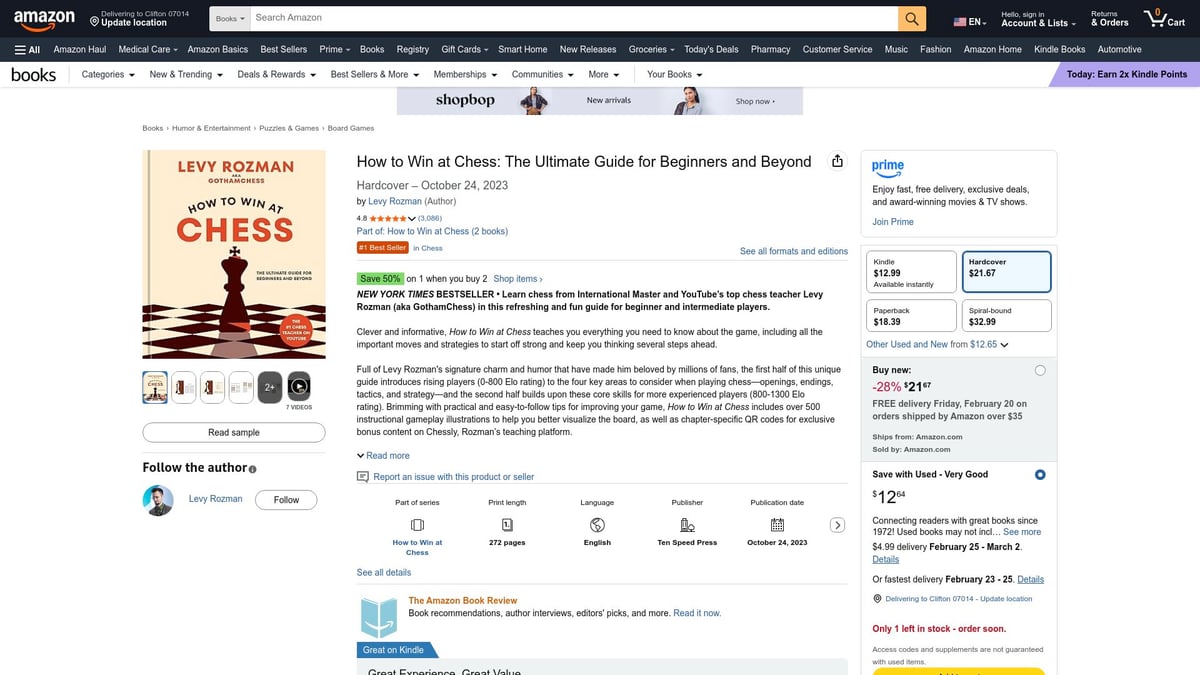
- Pricing: £12–£16 (paperback, hardcover, or digital)
- Features: Beginner-friendly, minimal notation, practical tips, illustrated positions
- Pros: Written by a top chess content creator, engaging tone, easy to follow, up-to-date
- Cons: Not as deep for advanced learners
- Best For: Absolute beginners, teens, and adults looking for a friendly entry point
Rozman’s book stands out because it explains everything in plain English, so you won’t feel lost with jargon. If you’re new to the game, this is a great place to start.
Chess Cheat Sheets: Visual Chess Guides & Toolkits
For visual learners, this collection is a game changer among good chess books for beginners. Rather than a traditional book, you get a set of digital cheat sheets, opening toolkits, and quick-reference guides that make learning feel effortless.
- Pricing: Free samples, paid bundles (£20–£75)
- Features: Visual guides, puzzles, endgame charts, digital access
- Pros: Highly visual, no memorisation required, accessible anywhere, community-trusted
- Cons: Not a full book, best used as a supplement
- Best For: Beginners who want quick results, visual learners, those with limited study time
Many new players use these guides side by side with classic books. For a handy reference, check out the How to play chess cheat sheet, which makes rules and tactics instantly clear.
Let's Play Chess: A Step by Step Guide for New Players by Bruce Pandolfini
Pandolfini’s classic is often at the top of the list of good chess books for beginners. It’s short, approachable, and ideal if you’re brand new to chess.
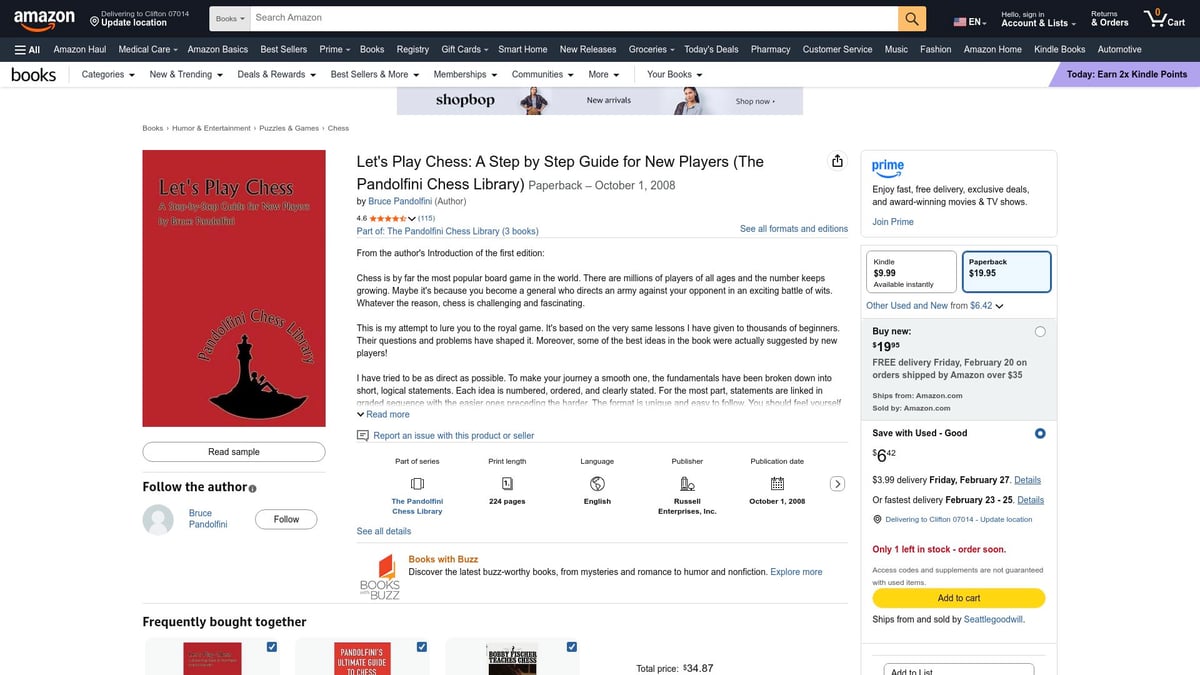
- Pricing: £10–£15 (paperback, digital)
- Features: Step-by-step rules, notation basics, simple tactics
- Pros: Clear, practical, easy for all ages, introduces algebraic notation
- Cons: Limited material for advanced study
- Best For: Complete beginners, children and adults alike
If you want a gentle introduction, this book will guide you from your first move to your first win.
Play Winning Chess by Yasser Seirawan
Seirawan’s book is a staple among good chess books for beginners who want to understand not just how, but why to play certain moves. It’s filled with practical examples and annotated games.
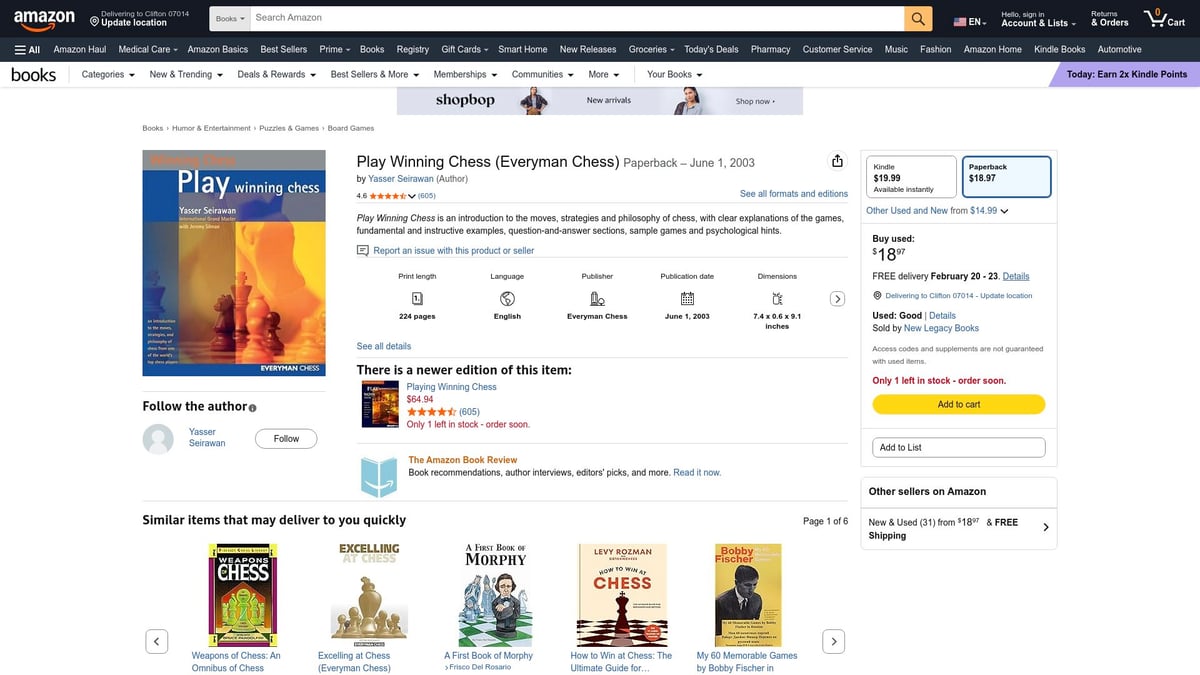
- Pricing: £12–£18 (paperback, digital)
- Features: Core chess concepts, annotated games, strategy tips
- Pros: Written by a grandmaster, clear explanations, useful for club play
- Cons: Some advanced ideas may need rereading
- Best For: Beginners aiming for club play, those wanting to grasp strategy
This book helps you build a solid foundation, making it easier to progress to more complex topics.
Bobby Fischer Teaches Chess by Bobby Fischer, Stuart Margulies, Don Mosenfelder
Looking for good chess books for beginners that focus on tactics? Fischer’s self-instruction book is a classic that has helped millions.
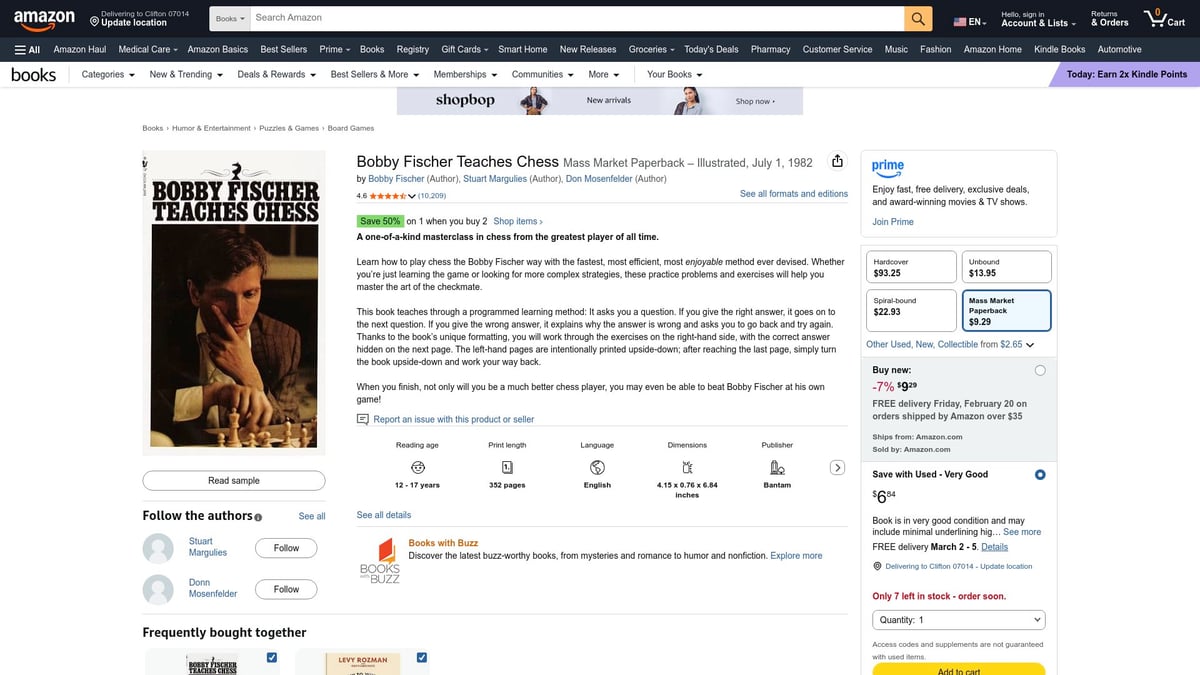
- Pricing: £8–£13 (paperback, digital)
- Features: Self-paced lessons, tactics, checkmates, step-by-step difficulty
- Pros: Proven effective, interactive format, bite-sized learning
- Cons: Less on openings and endgames
- Best For: Beginners wanting tactical skills, solo learners
Fischer’s approach is all about building confidence through practice, not just theory.
Pandolfini's Ultimate Guide to Chess by Bruce Pandolfini
This comprehensive volume is another strong option among good chess books for beginners. It’s an all-in-one resource, perfect for self-study.
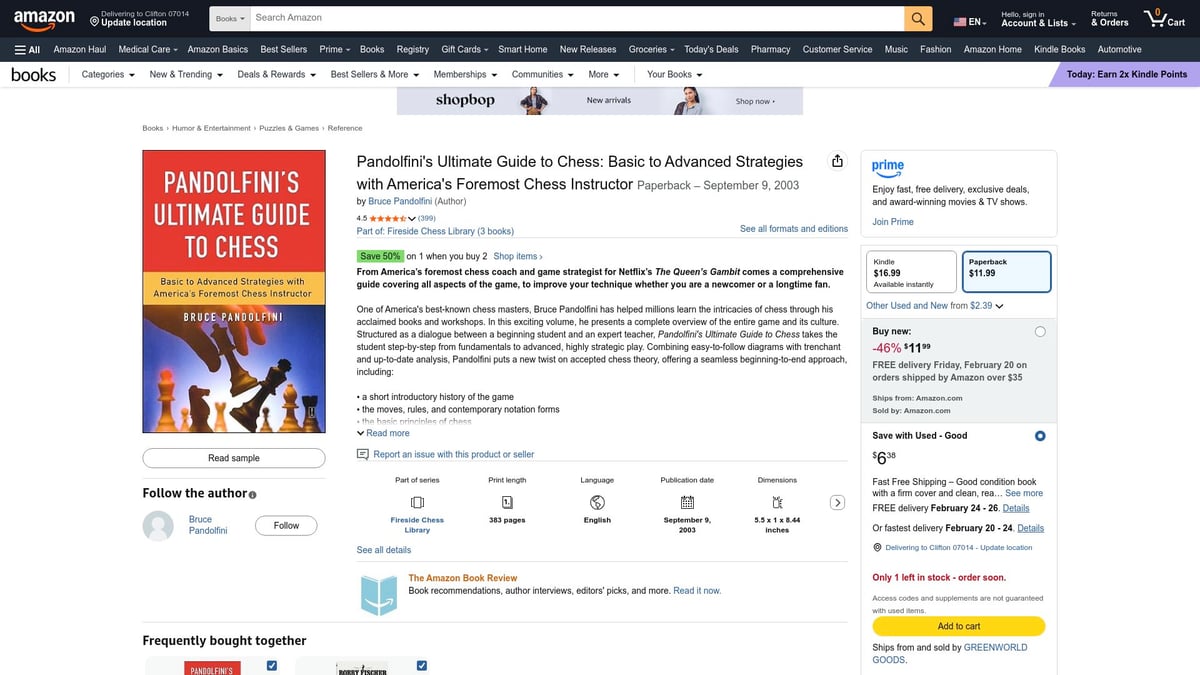
- Pricing: £11–£16 (paperback, digital)
- Features: Rules, tactics, openings, middlegame, endgame, annotated game
- Pros: Covers all chess phases, practical advice, conversational style
- Cons: Some repetition for those with prior knowledge
- Best For: Beginners and lower intermediates seeking a single reference
If you want a book that grows with you, this guide is a great companion.
How to Beat Your Dad at Chess by Murray Chandler
For families and kids, this is one of the most fun good chess books for beginners. Chandler teaches 50 powerful checkmating patterns in a playful, memorable way.
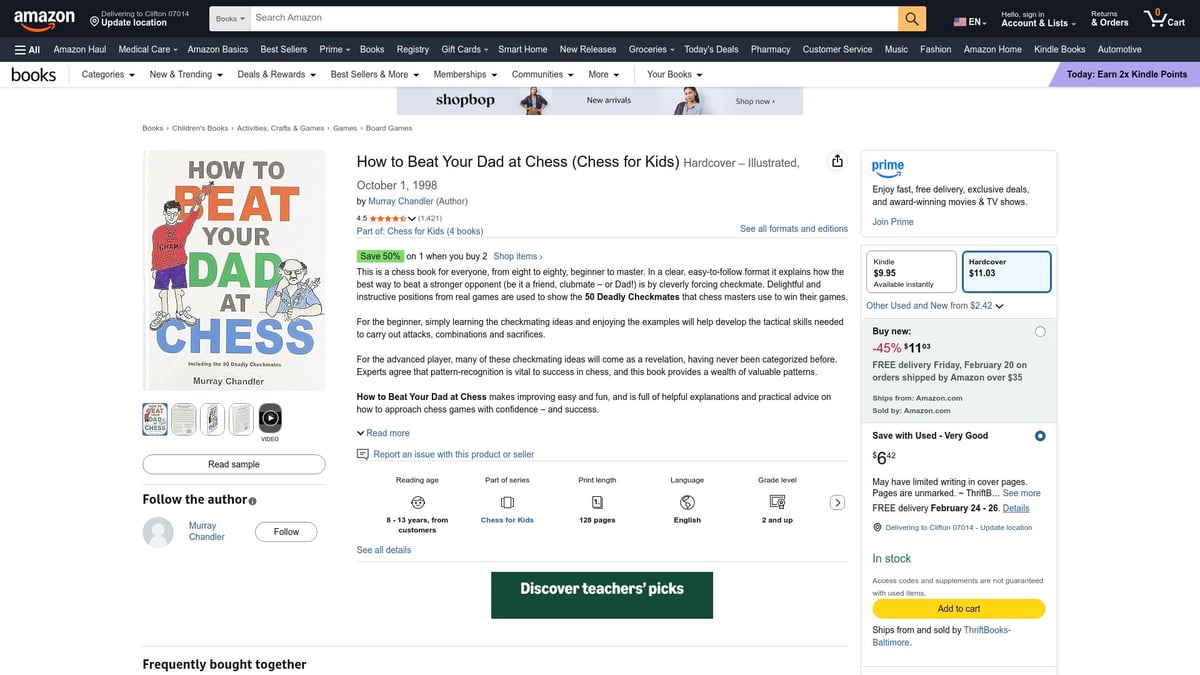
- Pricing: £9–£14 (paperback, digital)
- Features: 50 checkmates, illustrated patterns, exercises
- Pros: Fun, easy to remember, builds tactical vision
- Cons: Minimal strategy or endgame content
- Best For: Children, families, adults wanting to improve tactics
It’s a fantastic way to make learning chess a shared experience.
Logical Chess: Move by Move by Irving Chernev
Chernev’s classic is a favourite among good chess books for beginners who want to understand the reasoning behind every move.
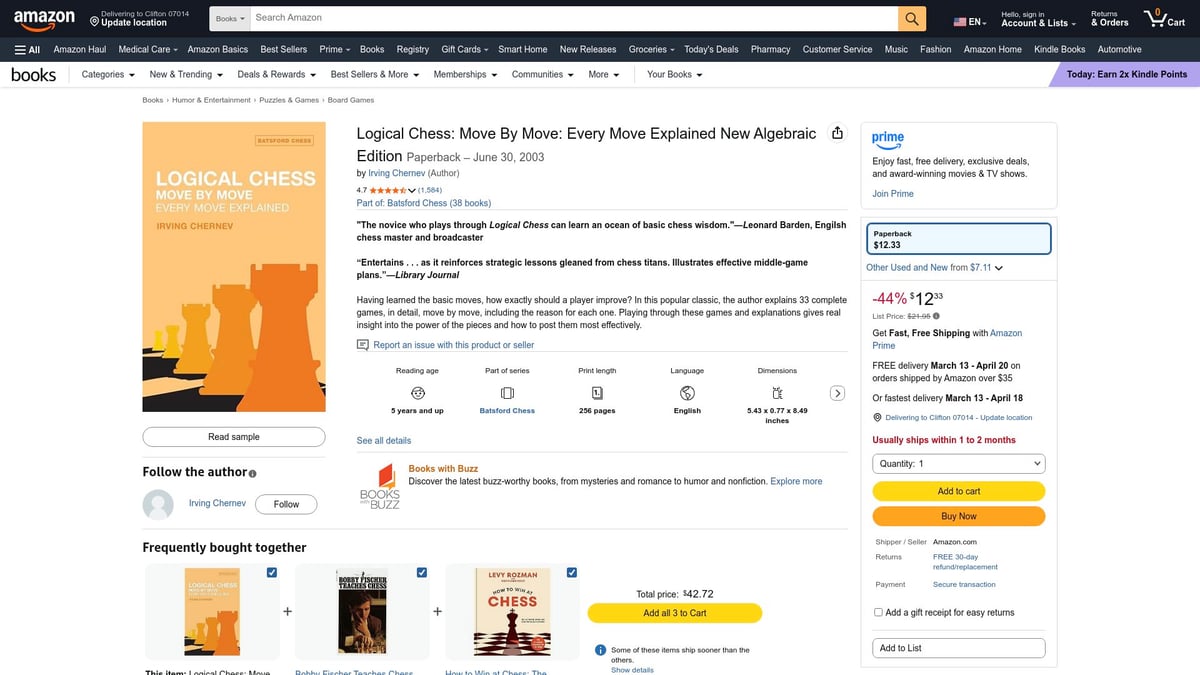
- Pricing: £13–£18 (paperback, digital)
- Features: Every move explained, annotated games, focus on logic
- Pros: Timeless, clear logic, perfect for self-study
- Cons: Older notation in some editions
- Best For: Beginners and early intermediates, those who learn by example
This book is all about building your chess intuition from game one.
Learn Chess by John Nunn
Nunn’s book is a modern classic, making it a strong contender among good chess books for beginners in 2026. It’s clear, well-structured, and suitable for all ages.
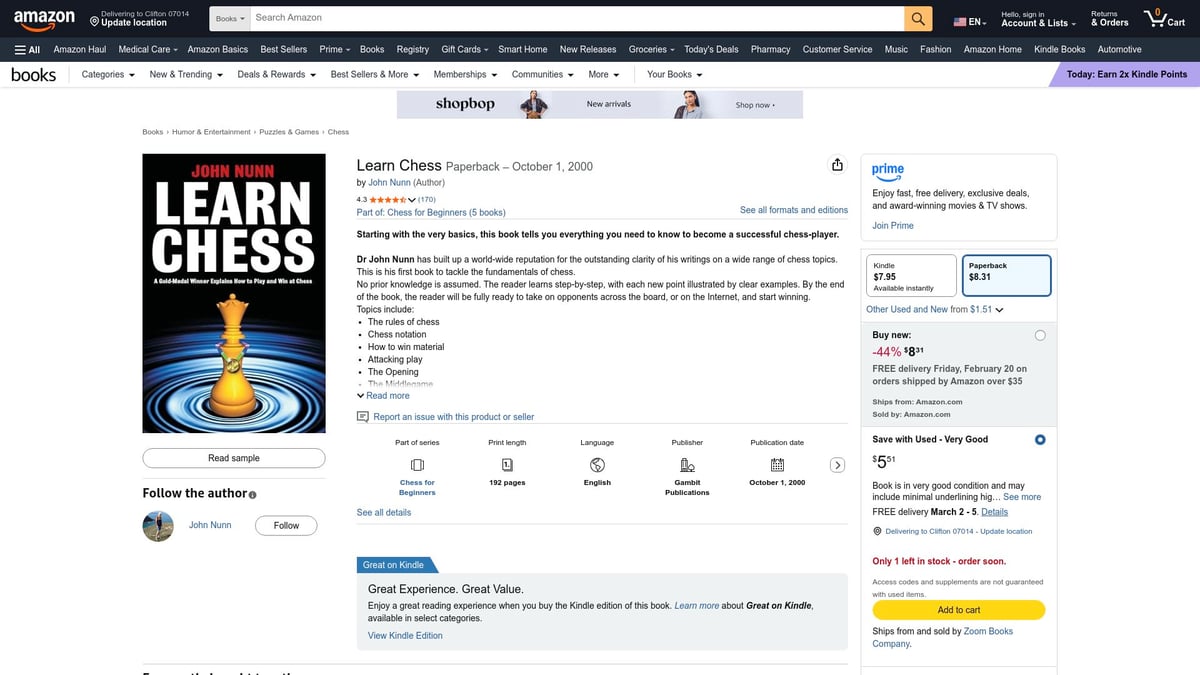
- Pricing: £11–£15 (paperback, digital)
- Features: Up-to-date lessons, diagrams, progressive difficulty
- Pros: Written by a grandmaster, strong teaching structure, accessible
- Cons: Less focus on advanced tactics
- Best For: Beginners wanting a step-by-step, modern approach
If you prefer a contemporary teaching style, this is a smart pick.
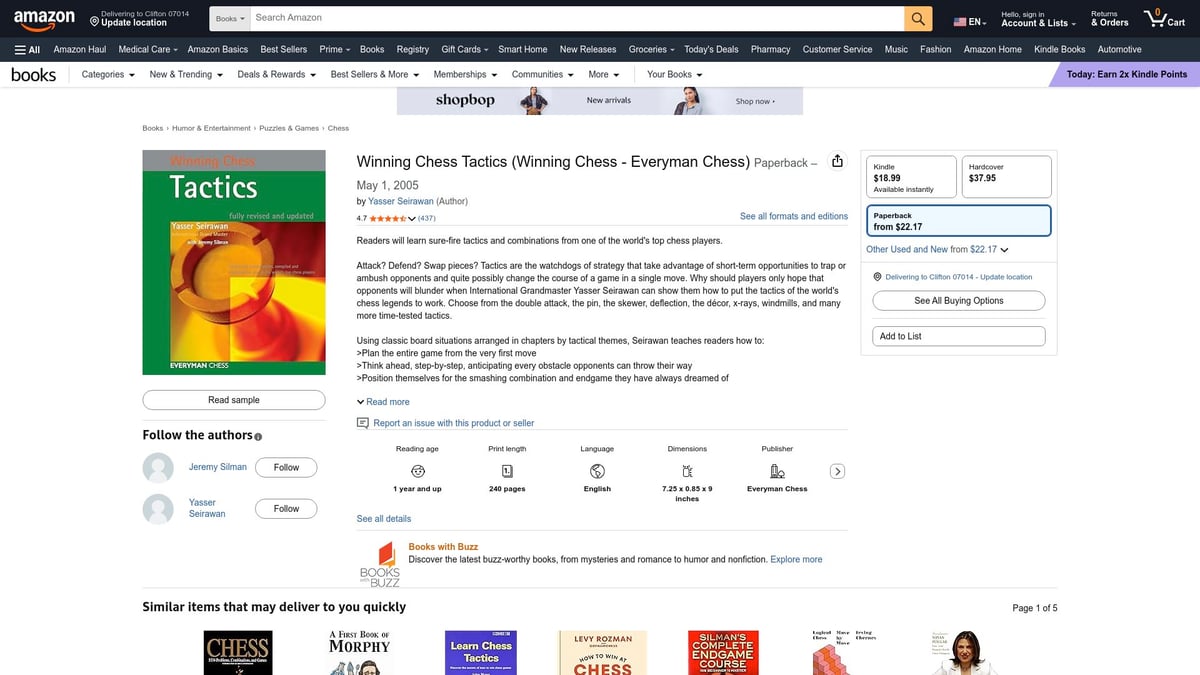
Winning Chess Tactics by Yasser Seirawan
For those wanting to sharpen their tactical skills, this is one of the best good chess books for beginners to add to your shelf.
- Pricing: £12–£17 (paperback, digital)
- Features: Thematic chapters, hundreds of examples, exercises
- Pros: Clear, practical, written by a grandmaster
- Cons: Focuses on tactics, not a full beginner course
- Best For: Beginners to intermediates, those wanting to master tactics
Pair it with a strategy-focused book for a rounded education.
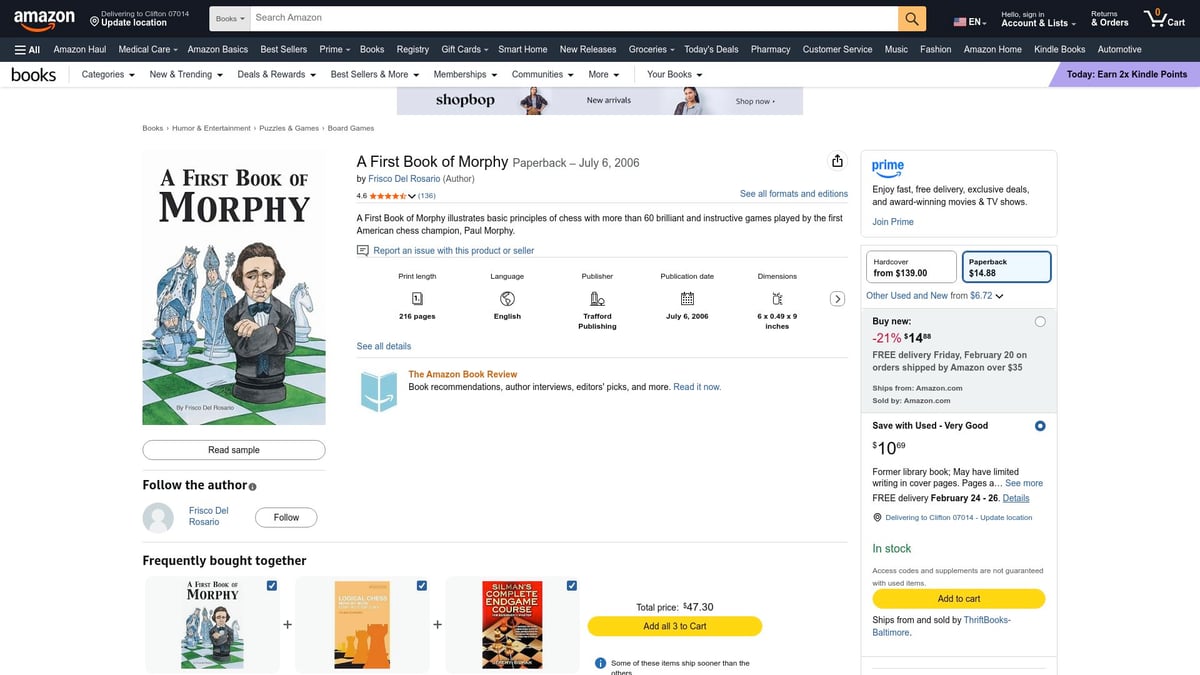
A First Book of Morphy by Frisco Del Rosario
If you love learning by example, this title stands out among good chess books for beginners. Del Rosario introduces you to the attacking games of Paul Morphy, a legend of the chess world.
- Pricing: £9–£14 (paperback, digital)
- Features: Annotated games, classic attacking play
- Pros: Inspiring, instructive, easy to digest
- Cons: Limited on openings and modern endgames
- Best For: Beginners who enjoy model games, those drawn to chess history
It’s both entertaining and educational, making learning feel effortless.
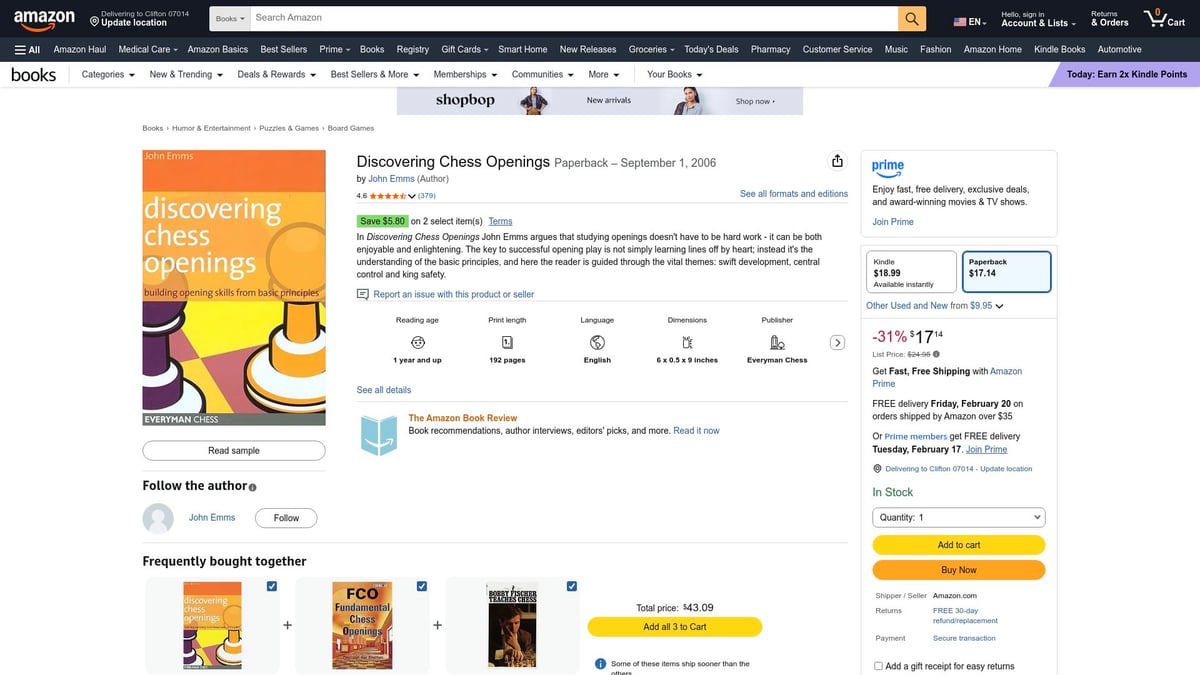
Discovering Chess Openings by John Emms
Openings can be tricky, but Emms’ book is one of the most approachable good chess books for beginners focusing on this phase.
- Pricing: £13–£17 (paperback, digital)
- Features: Opening principles, practical play, avoids rote memorisation
- Pros: Principle-based, clear, practical
- Cons: Limited tactics and endgames
- Best For: Beginners and club players, those wanting to improve opening play
You’ll learn how to start your games with confidence, not just memorise moves.
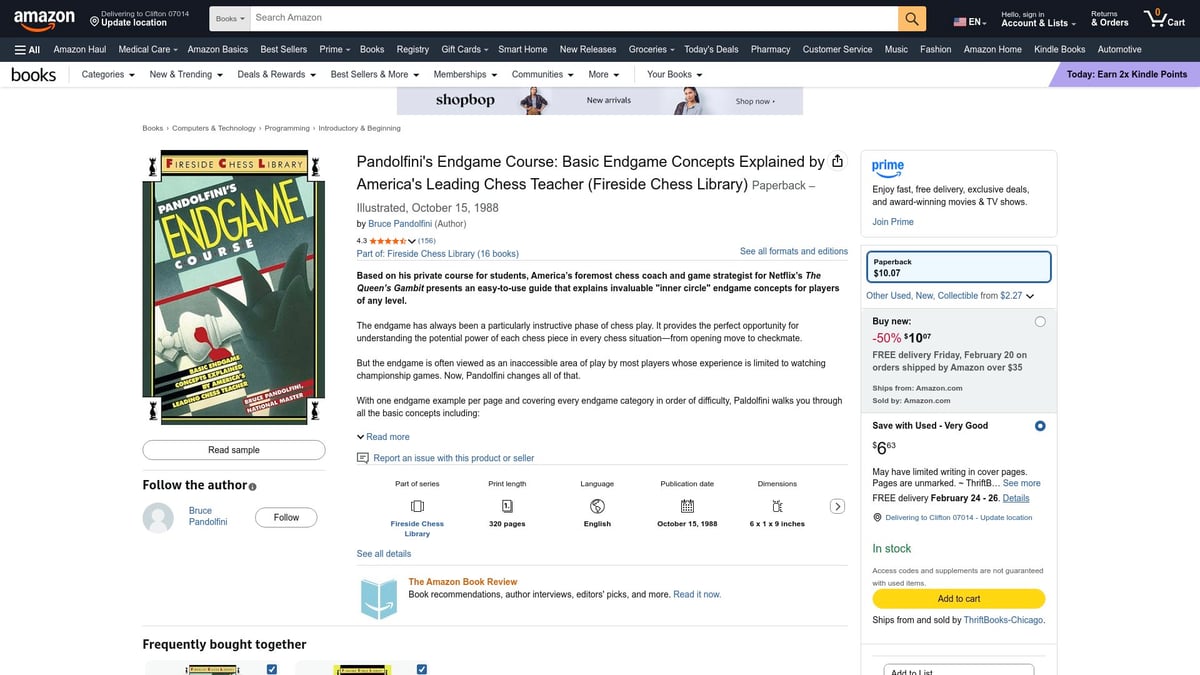
Pandolfini's Endgame Course by Bruce Pandolfini
Endgames are often neglected, but this is one of the top good chess books for beginners to master this vital phase.
- Pricing: £10–£16 (paperback, digital)
- Features: One-lesson-per-page, covers all key endgames
- Pros: Bite-sized, practical, covers must-know endings
- Cons: Some errata in early editions
- Best For: Beginners to lower intermediates, self-study fans
A solid endgame book will save you countless lost points over time.
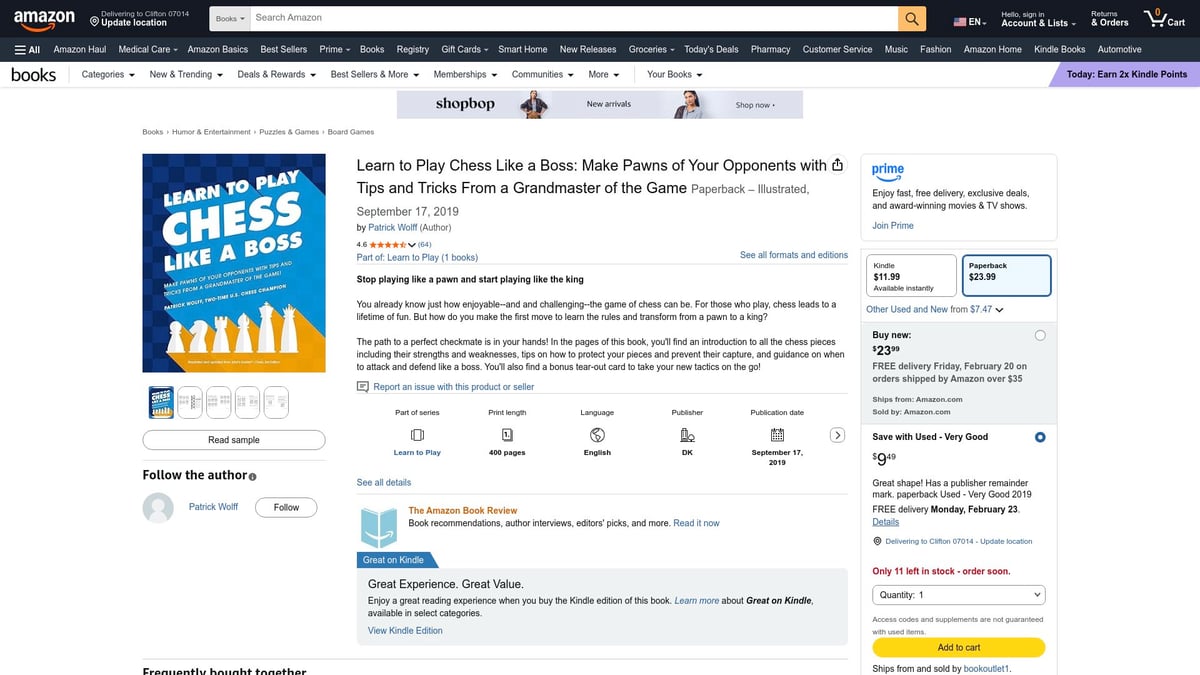
Learn To Play Chess Like A Boss by Patrick Wolff
If you want a single book to take you from zero to intermediate, Wolff’s guide is among the most comprehensive good chess books for beginners in 2026.
- Pricing: £11–£16 (paperback, digital)
- Features: Modern course, practical examples, clear diagrams
- Pros: Broad coverage, engaging, accessible
- Cons: May feel dense for total novices
- Best For: Beginners seeking a full course, those wanting to progress quickly
It’s like having a coach by your side as you learn.
Quick Comparison Table: Good Chess Books for Beginners
| Title | Format | Best For | Price Range | Main Focus |
|---|---|---|---|---|
| How to Win At Chess | Modern, Illustrated | Absolute Beginners | £12–£16 | All-Round |
| Chess Cheat Sheets | Digital Visual | Visual Learners | £20–£75 | Quick Reference |
| Let's Play Chess | Classic | Brand New Players | £10–£15 | Basics, Notation |
| Play Winning Chess | Classic | Club Aspirants | £12–£18 | Strategy |
| Bobby Fischer Teaches Chess | Classic | Tactics Focus | £8–£13 | Tactics |
| Pandolfini's Ultimate Guide | All-in-One | Self-Study | £11–£16 | Comprehensive |
| How to Beat Your Dad | Fun, Illustrated | Kids & Families | £9–£14 | Checkmates |
| Logical Chess | Classic | Reasoning | £13–£18 | Move Explanations |
| Learn Chess | Modern | Step-by-Step | £11–£15 | Modern Basics |
| Winning Chess Tactics | Classic | Tactics | £12–£17 | Tactics |
| First Book of Morphy | Classic | Example Learners | £9–£14 | Model Games |
| Discovering Chess Openings | Modern | Opening Play | £13–£17 | Openings |
| Endgame Course | Classic | Endgames | £10–£16 | Endgames |
| Learn To Play Like A Boss | Modern | All-in-One | £11–£16 | Full Course |
With so many good chess books for beginners available, you’re sure to find something that matches your style, goals, and schedule. Remember, the best progress often comes from pairing books with practical play and visual tools, so don’t hesitate to mix and match resources to accelerate your learning.
How to Choose the Right Chess Book for Your Learning Style
Struggling to pick from all the good chess books for beginners out there? You’re not alone. Finding the right fit is a bit like choosing your first chess set—personal, important, and totally unique to you. Let’s break down what matters most so you can start your chess journey with confidence.
Assessing Your Chess Goals and Experience Level
Before diving into the world of good chess books for beginners, take a moment to reflect on your current experience. Are you just learning how the pieces move, or have you played a few games and want to get better?
If you’re brand new, you’ll likely benefit from beginner-friendly books like "Let's Play Chess" or "How to Win At Chess." If you already know the basics, something a bit deeper, such as "Play Winning Chess," might suit you. Honest self-assessment helps you avoid books that are either too simple or too advanced, making your learning smoother and more enjoyable.
Considering Learning Preferences: Visual, Textual, or Interactive
Are you a visual learner, or do you prefer reading detailed explanations? Good chess books for beginners come in all shapes and sizes, and matching your book to your learning style can make a huge difference.
Visual learners might love highly illustrated guides or cheat sheets, while textual learners enjoy annotated games and step-by-step prose. If you learn best by doing, pick books packed with exercises and puzzles. For example, "Chess Cheat Sheets" are great for visual thinkers, while "Logical Chess" is ideal for those who love in-depth analysis. Interactive books like "How to Win At Chess" blend both worlds with practical advice and exercises.
Balancing Tactics, Strategy, and Practical Play
The best approach to good chess books for beginners is a balanced one. You don’t want to get stuck only learning tactics or just memorising openings. A mix of tactical puzzles, strategic advice, and annotated games will give you a well-rounded foundation.
Consider pairing a tactics-heavy book like "Bobby Fischer Teaches Chess" with a strategy-focused guide such as "Play Winning Chess." This way, you build your skills step by step, ensuring you’re prepared for real games. Remember, focusing too much on one aspect can slow your progress, so seek variety for faster improvement.
Leveraging Supplementary Resources for Faster Progress
While good chess books for beginners lay the groundwork, combining them with extra resources can really accelerate your improvement. Online puzzles, visual guides, and video lessons help reinforce what you’ve learned from books.
For example, you can complement your reading with Free online chess courses, which offer structured lessons and practice opportunities. Many players find that using multiple formats—books, cheat sheets, and interactive courses—makes concepts stick and boosts confidence at the board. Try mixing resources to find what works best for you.
Frequently Asked Questions About Chess Books for Beginners
Starting your chess journey can be both exciting and a bit overwhelming. With so many good chess books for beginners on the market, it is only natural to have questions about what works best, how to choose, and how much you really need to read.
What’s the Best Chess Book for Absolute Beginners?
If you are just starting out, you want good chess books for beginners that break things down simply. Top picks include "Let's Play Chess" by Bruce Pandolfini, "How to Win At Chess" by Levy Rozman, and "Learn Chess" by John Nunn.
These books use clear language, lots of diagrams, and avoid overwhelming you with notation. Many coaches recommend Pandolfini's works because they focus on easy-to-follow steps and practical examples. For those who learn best by doing, pairing a book with hands-on puzzle practice from resources like How to improve your positional skills with chess puzzles can help reinforce what you learn.
Choosing a book that matches your style is the best way to build confidence and enjoy your first games.
Are Digital Chess Books as Effective as Print?
Many beginners wonder if digital formats are as helpful as holding a book in your hands. Both digital and print versions of good chess books for beginners have unique strengths.
Digital books are portable, searchable, and often feature interactive diagrams. Print books, on the other hand, make it easier to take notes and reduce screen time. Recent surveys show that about 60% of new chess players use a mix of both, depending on their needs and daily routines.
Ultimately, the best format comes down to your personal learning style. Try both and see which helps you absorb chess concepts better.
How Many Chess Books Should a Beginner Read?
It is tempting to collect a shelf full of good chess books for beginners, but quality definitely beats quantity. Most experts agree that working through two or three well-chosen books gives you a solid foundation.
A smart strategy is to pick one book focused on tactics, one on strategy, and another with annotated games. For example, you might pair a tactics classic with a strategy guide and supplement your study with puzzles or online resources.
Remember, the key is to study deeply and practise regularly, rather than rush through dozens of titles.
So, now that you’ve got a solid list of the best chess books for beginners in 2026, what’s next? If you’re like me, you probably want to put that new knowledge into action and see your game improve right away. Honestly, mastering openings can feel overwhelming at first—but it doesn’t have to be. Why not take a shortcut and build confidence from your very first moves? If you’re ready to start strong, you can Start Improving Your Openings with practical, easy-to-follow resources that pair perfectly with your new books. Give yourself that extra edge and make every opening count!


