

Chess has fascinated people for centuries, offering a blend of creativity and fierce competition that never grows old. Whether you’re just starting out or aiming to climb higher, the quest to get good at chess is both thrilling and rewarding.
This guide is here to help you unlock your full chess potential by 2026. Inside, you’ll find actionable strategies for every skill level, from building a solid foundation and mastering tactics to studying openings, endgames, and using modern training tools.
Ready to dive in? Let’s set out on your path to chess mastery, one step at a time.
Step 1: Build Your Chess Foundation
Ready to get good at chess? Building a strong foundation is the first step on your journey. Whether you’re brand new or looking to fix bad habits, mastering the basics will set you up for long-term success. Let’s break down each building block you need for a rock-solid chess game.
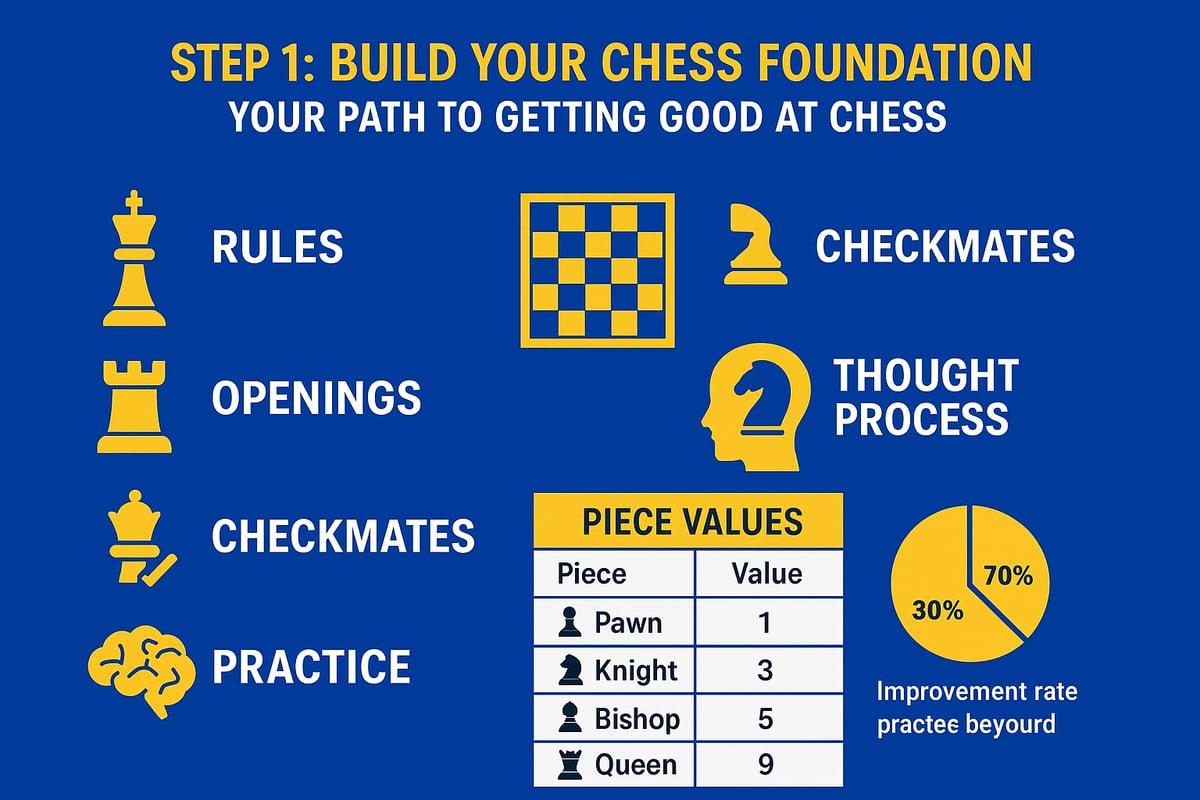
Understand Chess Rules and Piece Values
If you want to get good at chess, start by knowing the rules inside out. You need to understand every move, from the classic pawn step to special rules like en passant, castling, and pawn promotion. Missing a rule can cost you a winning game, even at higher levels.
Piece values matter, too. Here’s a quick table for reference:
| Piece | Value |
|---|---|
| Pawn | 1 |
| Knight | 3 |
| Bishop | 3 |
| Rook | 5 |
| Queen | 9 |
Why does this matter? Knowing these values helps you plan trades and spot when you’re ahead or behind. If you’re not sure what to do, check if you’re keeping your material balanced. Think of it like budgeting your chess “money” to make smart decisions.

Grasp Key Opening Principles
To get good at chess, you don’t need to memorize dozens of openings. Focus on the core principles that guide every strong start. Control the center of the board with your pawns (e4, d4, e5, d5) to open up space for your pieces.
Develop your knights before your bishops, and don’t move the same piece twice if you can avoid it. King safety is crucial, so castle early and don’t bring your queen out too soon. Avoid pushing too many pawns, as this can leave holes in your defense.
If you follow these simple rules, you’ll always start the game with a fighting chance.
Learn Basic Checkmates and Patterns
One of the fastest ways to get good at chess is to master basic checkmates. If you can finish a game when you’re winning, your confidence and results will soar. Start with the essentials: checkmating a lone king with a queen and king, or with a rook and king.
Get familiar with common checkmate patterns, like back-rank mates. When you recognize these patterns, you’ll spot chances to win and avoid falling into traps. Practicing these endings will make you fearless in the endgame, knowing you can convert your advantage.
Develop a Thought Process for Every Move
Every player looking to get good at chess needs a repeatable thought process. Before you move, always check for blunders. Ask yourself: what are my opponent’s threats? What are my options (candidate moves)?
Compare each option, weighing attack versus defense. Use the “checks, captures, and threats” (CCT) method to make sure you’re not missing anything. This habit trains your brain to think deeper and see the whole board, move after move.
Practice Consistently
Want to really get good at chess? Practice is your secret weapon. Play regularly, whether it’s online or in-person. Slow games (classical or rapid) help you think, while fast games (blitz and bullet) build instincts.
Research shows players who play more than ten games a week improve up to 30% faster. Even better, studies like chess training improves cognition in older adults show regular practice boosts your brain health, too.
Mix up your practice and try different time controls. The more you play, the faster you’ll see results and build lasting skills.

Step 2: Master Tactics and Calculation Skills
If you want to truly get good at chess, mastering tactics is non-negotiable. Tactics are like the secret weapons hidden in every position, ready to turn the tide of the game in a single move. Whether you’re a beginner or an intermediate player, most of your games are won or lost through tactical shots rather than slow, strategic maneuvering.
Study Tactical Motifs and Patterns
To get good at chess, you need to speak the language of tactics. The main motifs you’ll encounter are:
- Forks (one piece attacks two or more targets)
- Pins (a piece can’t move without a bigger loss)
- Skewers (similar to pins, but with the more valuable piece in front)
- Discovered attacks (move one piece to reveal an attack)
- Double attacks and removing the defender
Let’s say you spot a knight fork in a crowded position. Even if you’re down material, that one idea can flip the script. Recognizing these patterns quickly is a huge leap toward your goal to get good at chess.
Implement Daily Tactics Training
Consistency is key if you want to get good at chess. Make tactics training a daily habit. Use platforms like chess.com or Lichess, or grab a puzzle book like “1001 Deadly Checkmates.” Aim to solve 10–20 puzzles a day, gradually increasing the difficulty.
Here’s a sample routine:
- Warm up with 5 easy puzzles.
- Tackle 10 intermediate puzzles.
- Try 5 tough ones, reviewing mistakes.
According to chess.com studies, regular puzzle practice leads to a 200+ point ELO jump in a year. That’s a game-changer if you’re serious about your mission to get good at chess.
Enhance Calculation and Visualization
Calculation is your mental muscle for seeing the future on the board. To get good at chess, start by looking 2–3 moves ahead. As you improve, stretch that further.
Use the CCT method:
1. List all Checks.
2. Spot all Captures.
3. Identify all Threats.
Visualizing forced sequences helps you avoid blunders and spot hidden opportunities. Practicing this skill every game will help you get good at chess much faster.
Analyze Mistakes and Patterns
Every time you miss a tactic, there’s a lesson hiding in plain sight. To get good at chess, review your failed puzzles and games. Keep a simple mistake log:
- Missed motif (fork, pin, skewer, etc.)
- Move number and position
- What you overlooked
Patterns will emerge. Maybe you often miss discovered attacks or overvalue a pinned piece. Target these areas in your next training session to get good at chess by fixing your weakest links.
Chess Cheat Sheets: Streamlined Tactical Learning
Want a shortcut to get good at chess? Chess Cheat Sheets tactical guides offer visual motif summaries and a massive puzzle vault, making tactics training simple and effective. Instead of memorizing dense theory, you get hands-on practice with over 1.5 million puzzles, all organized by theme.

Thousands of players use these guides to sharpen their tactical vision and get good at chess in less time. If you’re looking for an edge, this resource streamlines your path to tactical mastery.
Learn from Tactical Classics
Finally, don’t forget to stand on the shoulders of giants. Study famous games by tactical wizards like Fischer, Tal, and Kasparov. Replay their combinations, pause at critical moments, and ask yourself, “Would I have found that move?”
Seeing how grandmasters get good at chess through creative tactics will inspire you and give you new ideas to try in your own games. Make it a habit to explore at least one classic game each week.
Step 3: Study Strategy, Master Games, and Self-Analysis
Ready to unlock what separates casual players from those who truly get good at chess? This step is where you learn to think like a master, not just play like one. By focusing on strategy, classic games, and honest self-analysis, you'll build the mental habits that drive lasting improvement.
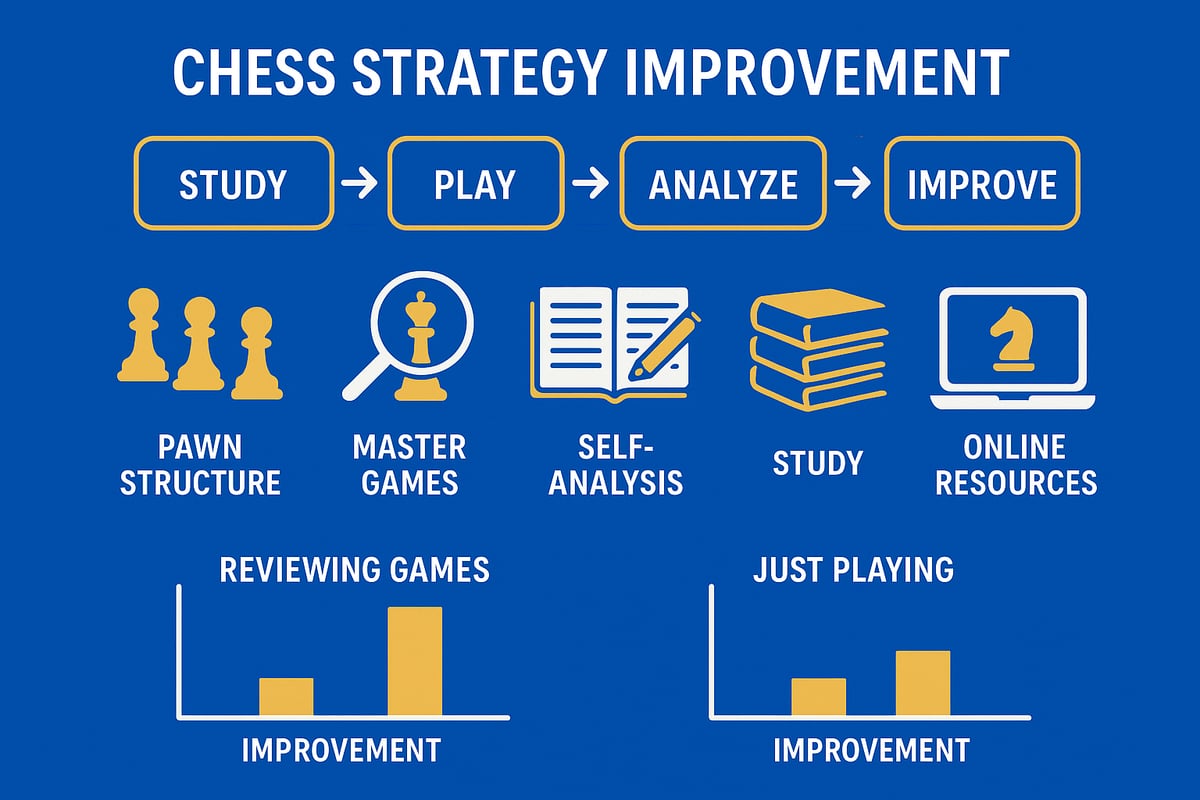
Absorb Essential Strategic Concepts
If you want to get good at chess, understanding strategy is your secret weapon. Forget memorizing endless moves for now. Instead, focus on timeless ideas like pawn structure, weak squares, open files, outposts, and space advantage.
For instance, knowing how to spot an isolated pawn helps you create a plan, not just react to threats. These concepts shape how you approach every position and make your play more purposeful.
Think of strategy as the “why” behind every move. When you see a strong outpost or control an open file, you’re not just moving pieces, you’re shaping the battle. This foundation gives you the confidence to handle any position, even when you’re out of your opening book.
Analyze Master Games
Want to know how the best players get good at chess? They study the classics. Replaying master games—especially with commentary—teaches you how great minds think.
Try starting with annotated games from books like “Logical Chess Move by Move.” Notice how the masters handle the opening, develop a middlegame plan, and smoothly transition to the endgame.
Take Capablanca, for example. His endgame technique is legendary for its clarity and simplicity. By following his games, you’ll see how small advantages are converted with patience and precision. The more you expose yourself to these patterns, the more naturally they’ll show up in your own games.
Review and Annotate Your Own Games
One of the fastest ways to get good at chess is to become your own coach. After each game, take a few minutes to review what happened. Record your games, then go back and look for critical moments—where did things turn?
Identify blunders, missed tactics, or strategic misjudgments. Use a chess engine like Stockfish for an objective second opinion, but don’t just accept its suggestions blindly. Try to understand why a move was strong or weak.
This process isn’t about perfection. It’s about building self-awareness. The more you analyze, the easier it becomes to spot and fix your weaknesses. Over time, you’ll see patterns in your mistakes, and that’s when real progress starts.
Learn from Losses and Setbacks
Every loss stings, but it’s also a goldmine for growth if you want to get good at chess. Instead of brushing off defeats, dig in and figure out what went wrong. Was it a tactical oversight, a strategic error, or just a lapse in focus?
Keep a “chess improvement journal.” Write down recurring mistakes, breakthroughs, and aha moments. This habit turns frustration into fuel for improvement.
Remember, even top grandmasters lose. What sets them apart is their willingness to learn from every setback. By embracing losses as learning opportunities, you’ll develop resilience and a sharper eye for future games.
Study One Core Strategy Book
There are countless books out there, but if your goal is to get good at chess, pick one solid strategy book and study it deeply. Recommended choices include “Winning Chess Strategies” by Seirawan or “My System” by Nimzowitsch.
Why focus on just one? Depth beats breadth. When you master the ideas in a single, well-chosen book, you build a framework that supports all your future learning. Skimming multiple sources can leave you confused, but thorough study gives you clarity and confidence.
Take notes, try the exercises, and revisit key chapters as your understanding grows. This single resource can become your chess bible, guiding you through every stage of your journey.
Emulate Great Players’ Styles
If you’re serious about how to get good at chess, find a player whose style you admire. Maybe you love Tal’s wild attacks or Karpov’s positional mastery. Watch their games, mimic their openings, and study their decision-making.
By adopting a role model, you accelerate your strategic development. You’ll start to see the board through their eyes, making choices that fit your personality and strengths.
Don’t be afraid to experiment. Over time, you’ll blend elements from different masters and develop a style that’s uniquely yours. This approach keeps learning fun and personal.
Use Online Resources for Deeper Learning
We live in a golden age for chess learners, and using online resources is a must if you want to get good at chess. Dive into databases like ChessBase or Lichess studies for annotated games. Watch video lessons and YouTube breakdowns for visual learning.
Modern tools also include AI-powered engines, which have become invaluable training partners. According to AI as training partners in chess improvement, practicing with chess computers can boost your strategic understanding, especially if human partners are scarce.
Join forums or study groups to discuss positions, share insights, and stay motivated. The chess community is full of passionate learners just like you, ready to support your journey.
Step 4: Strengthen Endgame Technique
Mastering endgames is where players who want to get good at chess really separate themselves from the pack. You might have heard that knowing how to checkmate with a king and queen is enough, but the reality is, endgames are packed with subtle tricks and patterns. If you want to convert small advantages into wins, or hold tough positions for a draw, getting comfortable in the endgame is a must.
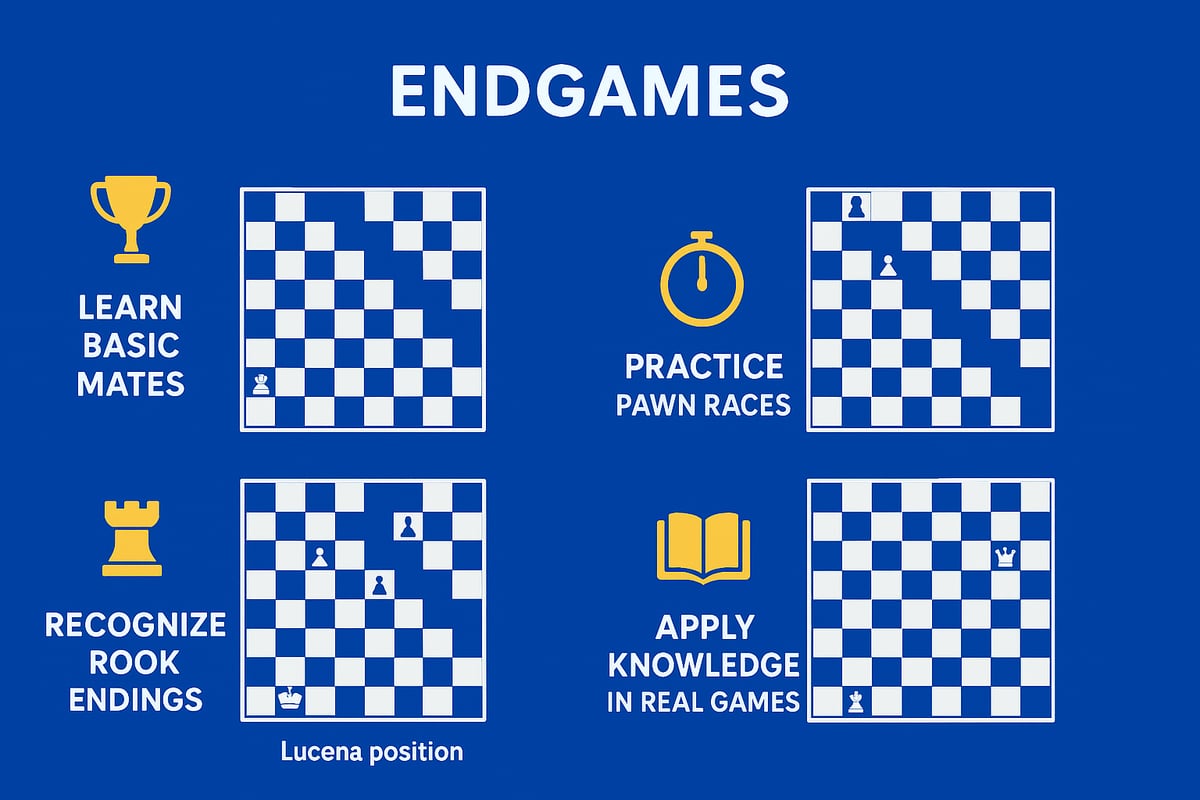
Focus on Essential Endgame Knowledge
Let’s start with the basics. To get good at chess, you need to be rock-solid with king and pawn endings. The simplest is king and pawn vs. king, where the concept of opposition decides who wins.
If you understand opposition, you’ll know exactly when to push your pawn and when to maneuver your king. Many games, even at the club level, come down to these races. Imagine losing a tournament because you missed a single tempo in a king and pawn ending. That’s why basics like this are non-negotiable.
Learn Rook and Minor Piece Endings
Rook endings pop up in almost half of all endgames, so you can’t ignore them if your goal is to get good at chess. Two positions you absolutely must know are Lucena and Philidor. Lucena teaches you how to build a bridge and promote your pawn, while Philidor helps you hold tough defensive draws.
Minor piece endings, like bishop versus knight, often look simple but can be tricky. Sometimes, opposite-colored bishops mean a draw even with extra pawns. Other times, a well-placed knight can turn the tables. The more you see these, the more likely you’ll spot winning chances.
Practice Endgame Puzzles and Drills
You won’t get good at chess by just reading about endgames—you have to practice. Online trainers like Lichess and Chess.com let you drill essential positions every day. Try solving five to ten endgame puzzles daily, focusing on king and pawn races, simple rook endings, and basic mates.
Practicing under time pressure is key too. It’s one thing to know the moves, but another to execute under stress. The more you drill, the more automatic your endgame technique becomes.
Study Endgame Manuals and Guides
To get good at chess, you’ll want to go beyond random puzzles and follow a structured plan. Classic books like “Silman’s Complete Endgame Course” and “Dvoretsky’s Endgame Manual” are fantastic, but if you want something visual and modern, check out the Complete endgame mastery collection. This resource breaks down must-know positions and guides you from simple mates up to complex rook endings, all in a step-by-step format.
A structured study routine helps you recognize positions instantly when they show up in your own games.
Apply Endgame Skills in Real Games
There’s no substitute for real-world practice. Whenever you play online or in-person and reach an endgame, slow down and apply what you’ve learned. Don’t rush to exchange pieces unless you’re sure the resulting ending favors you.
Try playing out advantageous positions against the computer or a friend. For example, practice converting a pawn-up rook ending until you can win it every time. This is a great way to build confidence and see your progress in action.
Understand When to Transition to Endgames
A big part of learning how to get good at chess is knowing when to simplify. If you’re ahead in material, look for ways to trade down into a favorable endgame. Recognize when your pawn structure or king activity gives you an edge.
On the flip side, if you’re behind, keep pieces on the board and complicate the game. Mastering these transitions will help you turn advantages into victories and save tough positions when you’re on the defensive.
Step 5: Build a Practical Opening Repertoire
Opening preparation is where many players stumble, often getting lost in memorizing endless move sequences. But if you want to get good at chess, the smart path is to build your opening repertoire with clear, practical steps.
Delay Deep Opening Study Until Ready
As a beginner, it’s tempting to dive into complex openings, but resist that urge. True progress comes when you master general principles before memorizing lines. Focusing on ideas like central control and piece development helps you get good at chess by creating strong habits early.
If you specialize too soon, you risk missing the basics. Instead, play simple openings and build confidence. This way, when you’re ready for deeper study, you’ll have the right foundation.
Choose Openings that Match Your Style
Every chess player has a unique personality at the board. Are you aggressive and enjoy tactical fireworks, or do you prefer slow, positional maneuvering? Matching your opening choices to your style helps you get good at chess while enjoying the learning process.
For example, the King’s Gambit suits attackers, while the London System is great for those who value structure and safety. Trying out different openings can help you discover what feels right.
Study Mainlines and Common Traps
Once you’ve chosen a few openings, focus on understanding the main ideas behind each—not just memorizing moves. Learn the top two or three responses for each of your choices. This approach makes it easier to spot traps and avoid early mistakes.
For a deeper dive into the most successful and popular openings, check out this Most popular chess openings guide. Exploring these lines will give you practical weapons for your games.
Play Practice Games to Test Openings
Theory is only half the battle. To get good at chess, you need to test your openings in real games. Use online blitz or rapid games as your training ground. After each game, reflect on what felt comfortable and what confused you.
Track your results and look for patterns. Over time, you’ll notice which variations suit you best and which need more attention.
Use Opening Cheat Sheets and Tools
Visual aids can be game-changers when you want to get good at chess. Opening cheat sheets summarize key moves and plans, making it easier to recall ideas during play. Many tools offer quick references and interactive drills for your chosen repertoire.
Keep these resources handy while you practice. They help you avoid getting lost or forgetting a critical move, especially under time pressure.
Stay Updated with Opening Trends
Chess is constantly evolving, and so are openings. Following recent games from top players can reveal new ideas in your favorite lines. Use online databases to see which openings are trending at your rating level.
Staying informed lets you refresh your repertoire and get good at chess by staying one step ahead. Even a small adjustment can give you a big edge in your next game.
Step 6: Leverage Modern Tools and Resources
Ready to truly get good at chess? Modern technology has made it easier than ever to accelerate your improvement. Whether you’re just starting or pushing for master-level play, today's tools can help you break through plateaus, analyze mistakes, and connect with a global community. Let's explore the most effective resources that will help you get good at chess in 2026.
Use Chess Engines Wisely
Chess engines are your digital coaches. They instantly spot tactical errors, reveal missed chances, and suggest better moves. If you want to get good at chess, use engines to review games after you play, not during, so you can learn from your own thinking.
Engines like Stockfish and Komodo are free and powerful. However, don’t just copy their moves blindly. Try to understand why a move was suggested. If you notice a blunder, pause and ask yourself what you missed. This way, engines help you sharpen your intuition and avoid repeating mistakes.
Take Advantage of Online Training Platforms
Online platforms like Chess.com, Lichess, and Chessable offer lessons, puzzles, and structured courses for every level. These platforms allow you to get good at chess from anywhere, on your own schedule.
Research shows that online chess training is just as effective as face-to-face lessons, so you can confidently use digital platforms to improve. Use rating graphs to track your progress and personalized feedback to target your weaknesses.
Join Online Chess Communities
It’s easier to get good at chess when you’re part of a supportive group. Online chess communities, like forums and Discord servers, let you ask questions, share analysis, and get encouragement.
Lichess study groups are especially popular for collaborative learning. By discussing games and strategies with others, you’ll see new ideas and avoid feeling isolated on your journey.
Watch Video Lessons and Streams
Watching chess videos is like getting free lessons from top coaches. YouTube channels such as GothamChess and Hanging Pawns break down openings, tactics, and famous games in a fun, easy-to-follow style.
Many streamers play live, sharing their thought process in real time. If you want to get good at chess, follow a few favorites and learn by observing how they handle different positions and challenges.
Participate in Online and Over-the-Board Tournaments
Tournaments are where you test your skills under real pressure. Playing in both online and in-person events helps you handle nerves, spot weaknesses, and adapt to different opponents.
After each tournament, review your games to see what worked and what didn’t. Competitive play is a key ingredient if you’re determined to get good at chess.
Set Up a Personalized Training Plan
Consistency beats intensity when it comes to chess improvement. Build a weekly schedule that balances tactics, strategy, endgames, and openings.
Try incorporating visualization drills, like blindfold tactics. Studies on the impact of blindfolded tactics on chess performance show that these exercises boost problem-solving skills and rating gains. Personalize your routine to focus on areas where you want to get good at chess.
Track Your Progress and Adjust Goals
Keep a chess journal or use online trackers to record your games, note patterns, and set targets. Every few weeks, review your progress and adjust your training plan.
Celebrate small milestones. If your rating stalls, don’t worry. Reflect on your approach, tweak your study mix, and remember that every game is a step closer to your goal to get good at chess.
Step 7: Create and Follow Your 2026 Chess Improvement Roadmap
Are you ready to get good at chess and make 2026 your breakthrough year? The secret is not just in playing more, but in having a clear plan that keeps you focused, motivated, and always moving forward.
Set Clear, Achievable Chess Goals
First, decide what you want from your chess journey. Do you want to reach a specific rating, win a local tournament, or simply get good at chess so you can beat your friends? Write down your goals and set a realistic deadline, like aiming for 1500 ELO by the end of 2026. Break this big goal into monthly checkpoints to keep yourself on track and celebrate small wins along the way.
Build a Balanced Study Routine
To truly get good at chess, balance is key. Divide your weekly study time among tactics, strategy, endgames, and openings. For example, spend 40% on tactics, 30% on strategy, 20% on endgames, and 10% on openings. Here’s a sample table to help you organize:
| Area | % of Study Time |
|---|---|
| Tactics | 40% |
| Strategy | 30% |
| Endgames | 20% |
| Openings | 10% |
Stick to your schedule, and adjust as you notice what areas need more attention.
Periodically Review and Reflect
Every month, take a step back and look at your progress. Are you moving closer to your goal to get good at chess? Review your win/loss ratios, study logs, and recent games. Ask yourself what’s working and what needs to change. Use this reflection to tweak your routine, set new mini-goals, and keep your improvement steady.
Seek Feedback from Stronger Players or Coaches
No one gets good at chess in isolation. Find opportunities to connect with stronger players or coaches for feedback. They can spot blind spots and help you break through plateaus. If private coaching feels too expensive, try online group lessons or mentorship in chess forums. Even a single tip from a seasoned player can accelerate your progress.
Stay Motivated and Avoid Burnout
Chess improvement is a marathon, not a sprint. To get good at chess and stay motivated, set mini-goals and reward yourself for reaching them. Did you complete a tactics streak or finally win a tough endgame? Treat yourself. Remember to take breaks and mix in fun games with friends or new openings to keep things fresh.
Embrace Lifelong Learning
The journey to get good at chess never truly ends. Stay curious and open to new ideas. Read books, watch videos, and experiment with different styles of play. Even grandmasters keep learning, so don’t be afraid to try new things and make mistakes. Every game, win or lose, is a chance to improve.
Participate in the Chess Community
Finally, remember that chess is more fun and rewarding when shared. Join clubs, play in tournaments, or contribute to chess forums. Teaching others or sharing your journey can reinforce your own understanding. The more you connect, the more you’ll realize that to get good at chess, you don’t have to do it alone.
So, after diving into all these practical steps for building your chess skills, you might be wondering, “Okay, what’s my next move?” Honestly, if you want to fast-track your progress and have everything in one place—openings, tactics, endgames, and more—it really helps to have a complete set of resources you can trust. Why not set yourself up for success and focus your energy on actual improvement, not endless searching? If you’re serious about mastering your game by 2026, you should definitely Get The FULL Chess Mastery Bundle. It’s like having a coach in your pocket!


