

What is it about chess that keeps us coming back, generation after generation? This classic game has transformed from a battle of minds into a global phenomenon, with fun chess formats now capturing the hearts of players young and old.
In recent years, making chess more exciting has become a real movement. Whether you play for leisure, compete at your local club, or teach others, there are new ways to enjoy the game like never before. In this article, you’ll discover nine creative ideas—game variants, playful challenges, and social twists—to inspire your next chess adventure in 2026. Ready to shake up your chess routine? Let’s dive in!

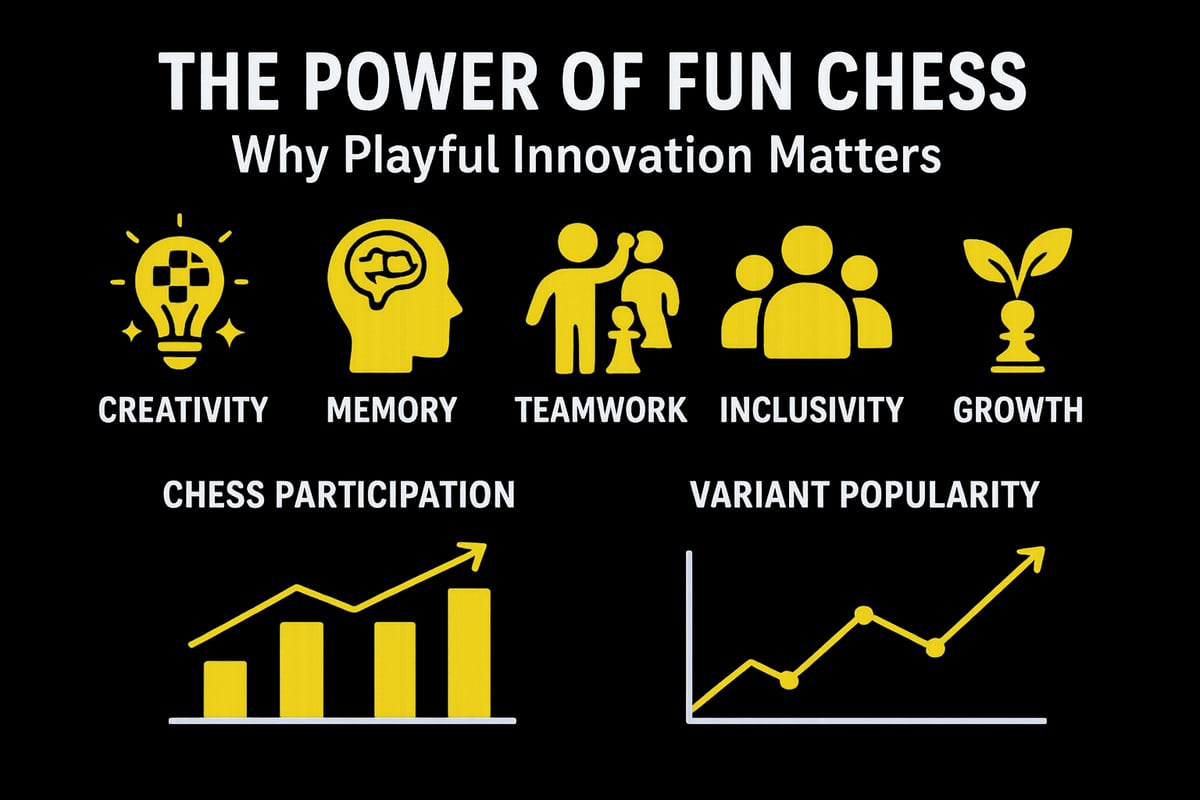
Why Fun Matters in Chess: The Benefits of Playful Innovation
Why does fun chess matter in a world that often celebrates serious competition? If you've ever felt your enthusiasm for chess wane, you're not alone. Injecting creativity and playfulness into chess is like giving the game a fresh coat of paint, helping both new and experienced players rediscover their excitement.
Playful innovation in chess offers more than just laughs. When you experiment with fun chess formats, you're not only boosting motivation, but also improving how well you learn. Psychologists have shown that enjoyment leads to better retention, sharper focus, and greater resilience when working through challenges.
Consider the rise of gamification in chess learning. Research, such as the Impact of Gamification on Skill Development, highlights that game-like elements can make learning more effective and enjoyable. Fun chess activities, from friendly variants to quirky tournaments, help players develop creativity, adaptability, and teamwork skills.
Many clubs and schools have already embraced fun chess ideas to great success. For example, some school chess clubs report a surge in participation after introducing team-based events or themed nights. Students who once hesitated now look forward to chess club each week, eager to try something new.
There's a common myth that fun chess somehow undermines the seriousness or competitive value of the game. In reality, playful formats often enhance core skills. Puzzle races, speed variants, and social challenges can sharpen quick thinking and strategic planning. Plus, they make the learning curve feel less steep.
The numbers speak for themselves. Online platforms like Chess.com have seen explosive growth in users engaging with creative chess variants. School chess club membership is up, and community events are attracting families and newcomers who might have felt intimidated by traditional formats.
Fun chess is especially powerful for drawing in younger players. Colourful boards, costumes, and collaborative games break down barriers, making everyone feel welcome. As a result, chess communities are becoming more inclusive and diverse.
Ultimately, embracing fun chess is about more than entertainment. It’s a way to future-proof the game, ensuring it remains vibrant, accessible, and inspiring for generations to come.
9 Amazing Fun Chess Ideas to Try in 2026
Looking for new ways to spice up your chess routine? The world of fun chess is exploding with creative formats and playful twists that can transform how you play and enjoy the game. Whether you’re after some friendly competition, a unique club night, or a fresh way to learn, these nine fun chess ideas for 2026 will inspire you to try something different.
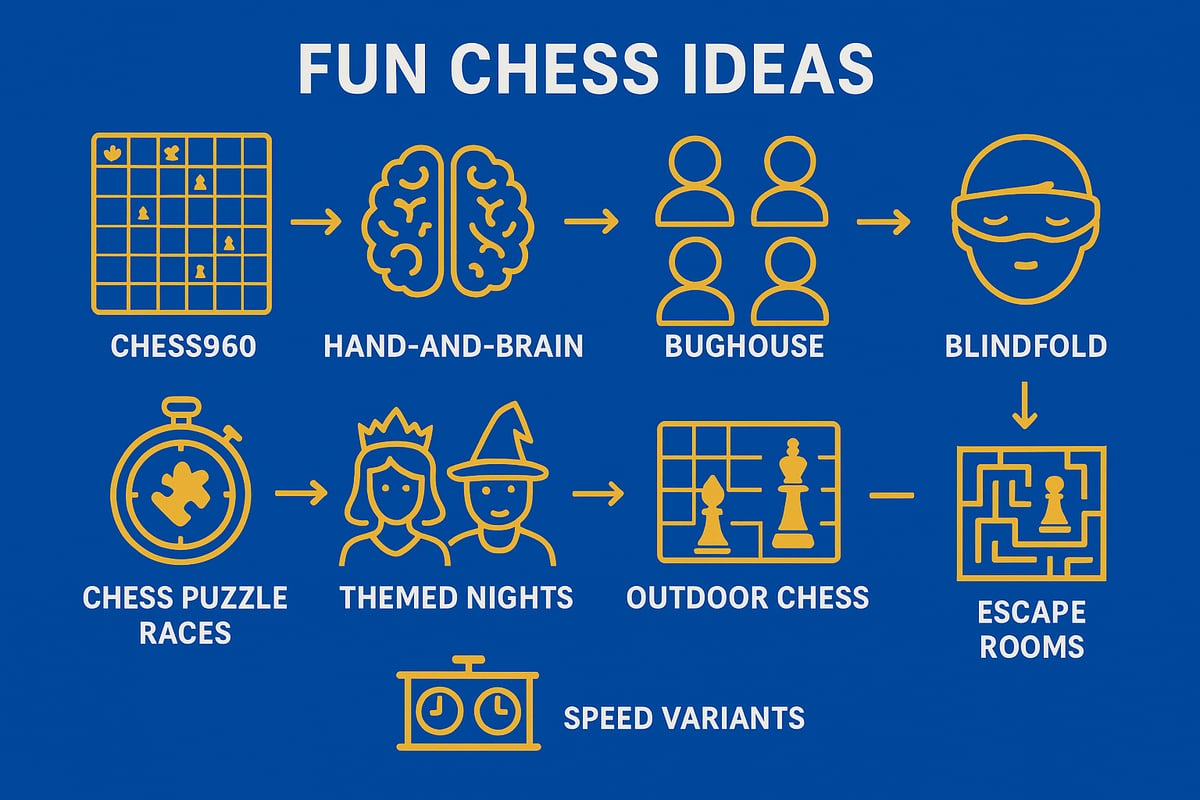
1. Chess960 (Fischer Random Chess)
Ready to break free from the same old chess openings? Chess960, also known as Fischer Random Chess, shakes things up by randomising the back-rank piece setup. Each game starts with one of 960 possible positions, so memorising openings takes a back seat to pure creativity.
In fun chess circles, Chess960 is a favourite for levelling the playing field. Beginners and grandmasters alike get to flex their problem-solving skills from move one. Did you know that grandmaster tournaments and online events dedicated to Chess960 have surged in recent years? The Magnus vs. The World event in 2025 drew record crowds, highlighting just how popular this variant has become.
Hosting a fun chess night with Chess960 is easy. Set up a random position using online generators, or draw lots for piece placement. You’ll find it encourages flexible thinking and rewards those who adapt quickly. For clubs and classrooms, it’s a fantastic way to foster creativity and make fun chess irresistible for all skill levels.
2. Hand-and-Brain Chess
If you’re after a fun chess experience that brings people together, Hand-and-Brain Chess is a brilliant choice. In this format, two players form a team. One, the “brain,” names the type of piece to move. The other, the “hand,” picks which move to make with that piece. It’s a hilarious challenge that demands both teamwork and trust.
Fun chess doesn’t get more social than this. You’ll find yourself laughing at unexpected moves and strategising out loud. Hand-and-Brain is perfect for mixed-ability groups, as it balances skill and unpredictability. Many clubs run Hand-and-Brain nights, and some even allow larger teams for added chaos.
For coaches, it’s a goldmine. You can use Hand-and-Brain to teach piece functionality, encourage communication, and keep everyone engaged. Families will love it too, as it’s a fun chess activity that bridges generations and sparks friendly debate.
3. Bughouse Chess
Bughouse Chess takes fun chess to a whole new level. Played in teams of two on two boards, captured pieces are handed to your partner, who can then drop them onto their board as a move. The pace is frantic, the tactics wild, and the laughter guaranteed.
Bughouse is the life of any chess party. If you thrive on fast decisions and unexpected twists, this variant is for you. Youth tournaments and chess camps often feature Bughouse as a highlight, with players learning to think on their feet while supporting their teammate.
Setting up Bughouse is simple. All you need are four players, two boards, and a timer. Online platforms now offer Bughouse options, making it easy to join games from anywhere. Fun chess formats like Bughouse develop quick thinking and adaptability, skills that transfer to all forms of chess.
4. Blindfold Chess Challenges
Ever wondered how it feels to play chess without seeing the board? Blindfold Chess challenges you to visualise every piece in your mind, making it one of the most intense forms of fun chess. The benefits are huge: improved memory, sharper concentration, and enhanced visualisation skills.
Famous grandmasters have wowed crowds with blindfold exhibitions, sometimes playing dozens of boards at once. But you don’t need to be a pro to get started. Try simple exercises, like closing your eyes and calling out moves, or use apps designed for blindfold practice.
Clubs can run beginner-friendly blindfold nights, encouraging players to build up their skills gradually. Fun chess activities like this boost your cognitive abilities and add a sense of mystery and excitement to every match.

5. Chess Puzzle Races
Turn your next gathering into a fun chess showdown with Chess Puzzle Races. In this format, players compete to solve chess puzzles as quickly as possible. It’s a fantastic blend of entertainment and skill-building, perfect for all ages and abilities.
Online platforms such as Chess.com and Lichess have made puzzle races a global sensation. Leaderboards, time challenges, and friendly rivalry keep everyone motivated. You can easily organise puzzle races at home, in clubs, or at school—just set a timer and see who solves the most in a set period.
If you’re searching for ideas, check out Chess Puzzles for Practice for a wide variety of challenges. Fun chess puzzle races encourage quick calculation and pattern recognition, making learning feel like play.
6. Themed Chess Nights (Costumes, Music, and More)
Imagine a chess club transformed by costumes, music, and decorations. Themed Chess Nights are a growing trend in fun chess circles, turning every game into a memorable event. Whether you go for a historical theme, fantasy setting, or movie-inspired evening, the sky’s the limit.
Successful clubs have hosted everything from medieval tournaments to superhero showdowns. Players dress up, the room is decorated, and playlists set the mood. These fun chess nights are not only enjoyable but also help build a sense of community.
Planning your own themed chess night? Keep it simple with costume contests, themed snacks, and a fun prize for the best-dressed player. You’ll find that even newcomers are drawn in by the festive atmosphere and inclusive spirit.
7. Giant Outdoor Chess
Take your game outside and super-size it with Giant Outdoor Chess. Oversized boards and pieces bring fun chess to parks, festivals, and playgrounds, inviting passersby to join in or spectate. It’s a fantastic way to make chess visible and accessible to all.
Many cities now feature public giant chess sets, and schools are following suit. These installations create opportunities for social interaction and outreach, breaking down barriers for new players. If you want to set up your own, you can build a DIY board with simple materials or find affordable equipment online.
Giant chess draws in crowds and sparks curiosity, making it an ideal tool for promoting fun chess in your community. The novelty of moving huge pieces brings smiles to faces of all ages.
8. Speed Chess Variants (Bullet, Blitz, Hyperbullet)
For an adrenaline rush, try Speed Chess Variants like Bullet, Blitz, or Hyperbullet. Each format has its own time control, from a few minutes per player down to just seconds. The result? A fast-paced, thrilling fun chess experience that keeps you on your toes.
Online platforms have seen a boom in speed chess, with tournaments and Twitch streams attracting millions. If you love the excitement of racing the clock, these formats are for you. Just remember, it takes practice to balance speed with accuracy.
Want to improve? Focus on managing your time, simplifying positions, and practising tactics under pressure. Fun chess variants like these test your nerves and reward quick thinking, making every game a nail-biter.
9. Chess Escape Rooms & Puzzle Hunts
Why not combine your love of puzzles with fun chess in a whole new way? Chess Escape Rooms and Puzzle Hunts blend strategic thinking with teamwork and adventure. Participants solve chess-themed challenges to unlock clues and progress through a storyline.
Some commercial venues now offer immersive chess escape experiences, while clubs have started designing their own puzzle hunts for events and parties. It’s a unique spin on fun chess that appeals to problem-solvers and social players alike.
Want to create your own? Start with a simple storyline, add a series of chess-related puzzles, and watch as players collaborate to crack codes and escape. This approach makes learning and playing chess a multi-layered, unforgettable experience.
How to Organise Your Own Fun Chess Event in 2026
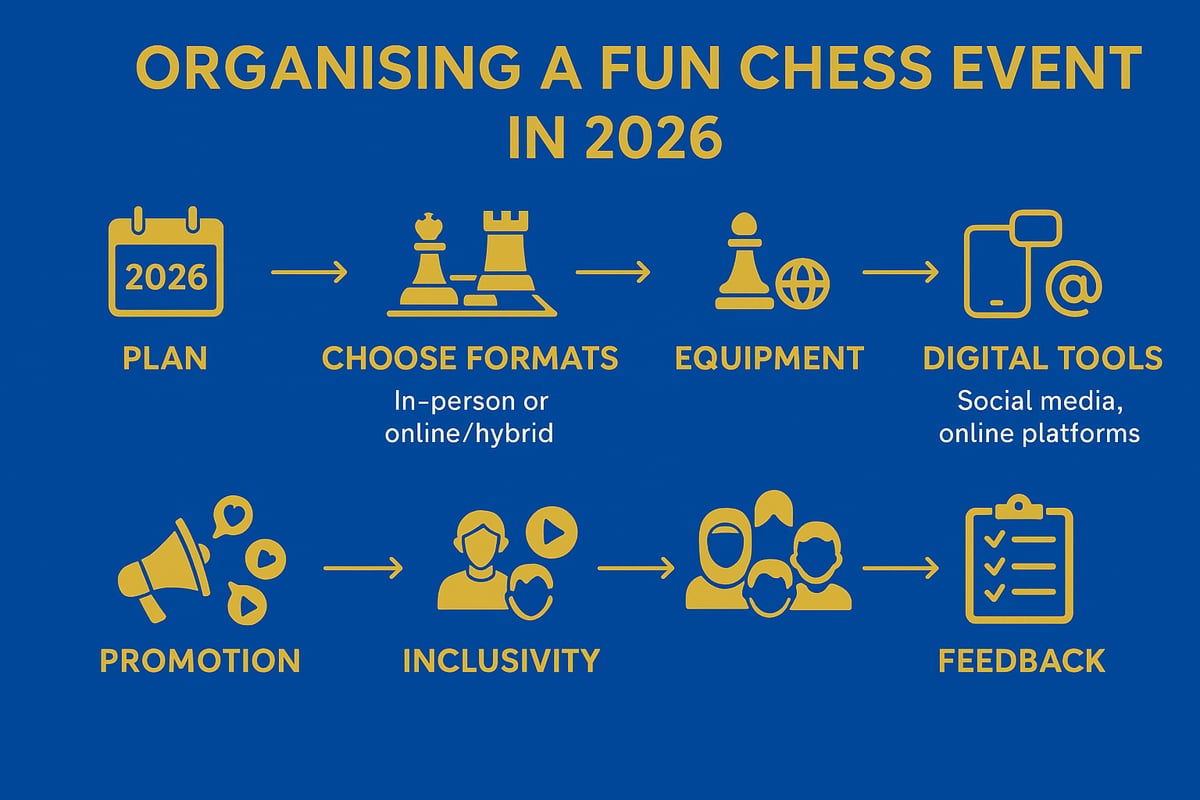
Ready to bring your community together with a memorable fun chess event? Whether you want to energise your local club, attract new players, or just create an unforgettable evening, hosting a fun chess gathering is easier than you might think. Let’s break down the steps to help you plan, promote, and run a truly engaging experience.
Step-by-Step Guide to Hosting a Fun Chess Event
Start by defining your event’s purpose. Are you introducing fun chess variants, building club spirit, or running a family-friendly tournament? Next, choose a date and venue. Community centres, school halls, or even outdoor parks can work wonders. Don’t forget to consider the format—will you host a blitz night, a themed costume party, or a puzzle race?
Create a checklist to keep things on track:
- Set your budget and source equipment (chess sets, clocks, boards).
- Decide if you’ll need digital tools for online or hybrid fun chess events.
- Recruit helpers for setup, supervision, and scorekeeping.
Selecting the Right Format for Your Group
Think about your audience. Are they children, adults, or a mix? Beginners or seasoned players? Tailor your fun chess format to match their skills and interests. For example, bughouse and hand-and-brain are fantastic for mixed-ability groups, while Chess960 suits those eager for creative play.
Use this quick comparison table to help you decide:
| Format | Best For | Group Size |
|---|---|---|
| Bughouse | Fast-paced teams | 4+ |
| Chess960 | Creative thinkers | 2+ |
| Puzzle Races | Skill-building | Any |
| Themed Nights | Social gatherings | Any |
Promoting, Including, and Evolving Your Event
Promotion is key to a successful fun chess event. Create eye-catching posters, share on social media, and invite local groups. Consider hybrid options with online participation to widen your reach.
Inclusivity matters. Offer accessible venues, welcome all skill levels, and encourage costumes or team play to break the ice. After your event, gather feedback with a quick survey—this helps you refine future fun chess activities and ensures everyone feels heard.
Inspiration and Resources for Organisers
Need more inspiration? Many organisers find success by exploring online resources for fresh ideas, templates, and checklists. You’ll find plenty of practical support with these Resources for Chess Clubs, including advice on equipment, formats, and event management.
If you want to add an online twist, check out Free Online Chess Courses for creative ideas and digital tools to enhance your fun chess event. Remember to celebrate your successes, share photos, and invite feedback—your event might just inspire the next big chess trend in your community.
The Future of Fun Chess: Trends and Predictions for 2026
What will fun chess look like in 2026? If you think chess is just sticking to tradition, think again. The game is evolving faster than ever, with innovation and creativity at the heart of this transformation.
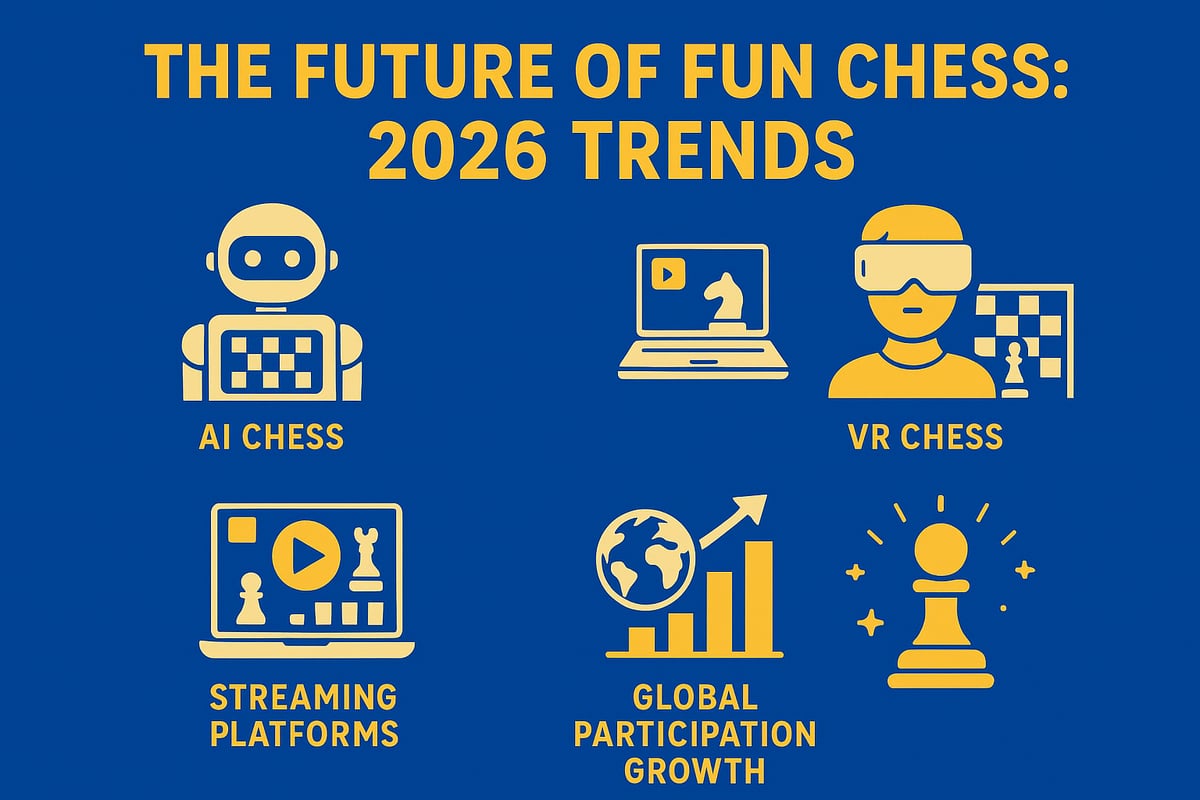
One of the biggest drivers of change is technology. Imagine playing fun chess in a virtual reality park, or challenging an AI that adapts to your style in real time. Interactive platforms are making these ideas more accessible, letting players experiment with fresh formats and playful twists.
The chess world is also seeing a huge surge in popularity. According to Global Chess Market Growth Projections, the global chess market is set to expand as more people embrace new, engaging ways to play. This growth is powered by fun chess variants, which appeal to players of all backgrounds and ages.
Social media and streaming are helping fun chess ideas spread at lightning speed. Platforms such as Twitch and YouTube have turned chess into a global spectacle, where creative formats go viral overnight. You might have seen a streamer try a wild challenge or a club host a themed tournament that quickly gains thousands of viewers.
Gamification is another important trend. Chess software now often includes rewards, achievements, and puzzle races, keeping players motivated and entertained. If you’re curious about the benefits and possible downsides, check out this in-depth look at Gamification in Chess Software: Pros and Cons.
Chess educators and community leaders agree that experimentation is vital. They’re championing inclusive, innovative events where everyone can join in, regardless of experience level. In 2026, expect to see more hybrid tournaments, creative puzzle hunts, and digital club nights.
As new events and products launch, you’ll have countless opportunities to get involved. Why not try out a new fun chess format, or even invent your own? Your ideas could help shape the future of chess fun for everyone.
So, after exploring all these creative chess ideas, you might be thinking, “How do I actually bring more fun into my game—and still get better too?” That’s where having the right resources makes all the difference. If you want to keep your chess both exciting and effective, why not take the next step and Start Improving Your Openings? You’ll find practical guides that make learning new openings quick and enjoyable, so you can try out fresh strategies at your next club night or friendly match. Ready to make your next chess session your most interesting yet?


