

Are you ready to unlock the secrets of every chess opening and outsmart your rivals in 2025? Whether you are a beginner or a seasoned player, understanding every chess opening is the key to consistent success on the board.
This guide gives you a complete, up-to-date overview of all major chess openings and their master strategies. You will learn how to choose, play, and adapt openings that suit your style.
Inside, you will find essential opening fundamentals, deep dives into classical and modern openings, new trends for 2025, and practical tips to master your repertoire. Ready to elevate your play? Dive in for the ultimate chess opening guide for the coming year.

Chess Opening Fundamentals: Understanding the Basics
Getting the basics right with every chess opening is like laying a solid foundation for your house. If you skip these fundamentals, your whole game can wobble. Let’s break down what makes a chess opening effective and how you can use these core ideas to gain the upper hand.
The Purpose of Chess Openings
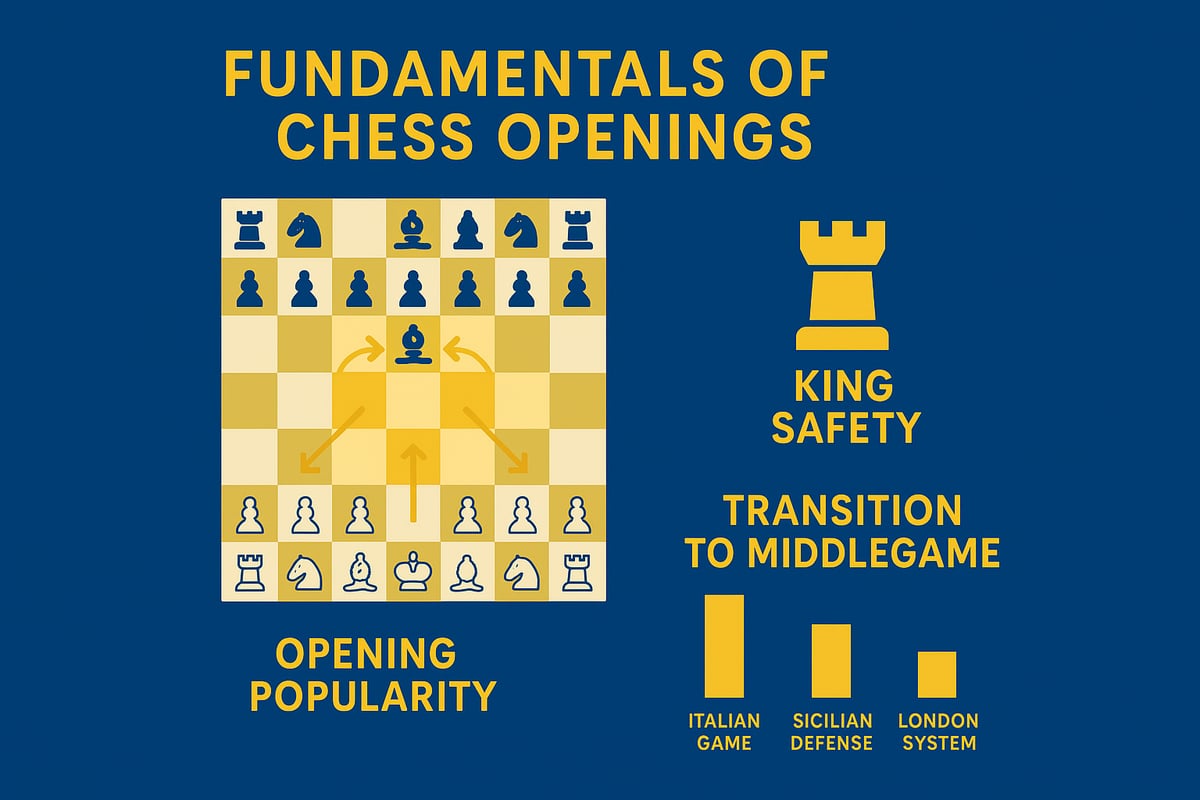
Why do we even care about the opening phase? The main goal behind every chess opening is to control the center, develop your pieces efficiently, and keep your king safe. By occupying central squares with pawns and pieces, you make it tough for your opponent to maneuver.
Castling early helps protect your king and connects your rooks, setting you up for a smoother middlegame. Many beginners forget these basics and fall into traps like moving the same piece twice or neglecting development. For example, the Italian Game is a textbook case: White plays e4, Nf3, and Bc4, quickly fighting for the center and getting ready to castle. Mastering these essentials with every chess opening gives you a head start.
Opening Principles vs. Memorization
You might wonder, should you memorize lines or understand ideas? With every chess opening, grasping the reasoning behind moves is way more powerful than just knowing sequences. Openings are full of patterns, but games rarely follow a script. If your opponent plays something unexpected, understanding principles lets you adapt on the fly.
Balancing theory with flexibility is key. Pattern recognition helps you spot familiar setups, even in unfamiliar territory. For example, if you play the Scotch Game and your rival chooses an offbeat reply, knowing basic development and center control helps you navigate confidently. Focus on concepts, not just memorization; that’s how top players handle every chess opening.
Types of Chess Openings
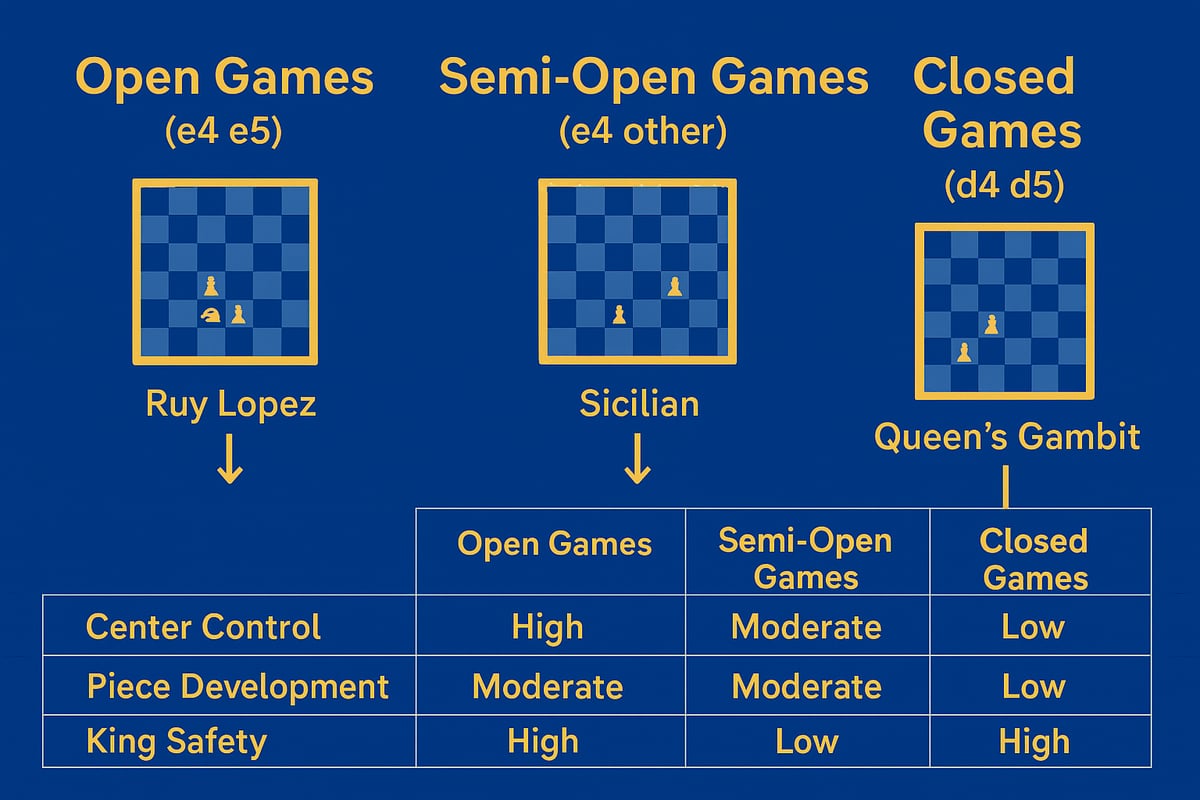
There’s a whole universe inside every chess opening. Open games start with 1.e4 e5, leading to tactical battles. Semi-open games begin with 1.e4 and a different Black response, like the Sicilian or French. Closed games kick off with 1.d4 d5 and feature more strategic maneuvering.
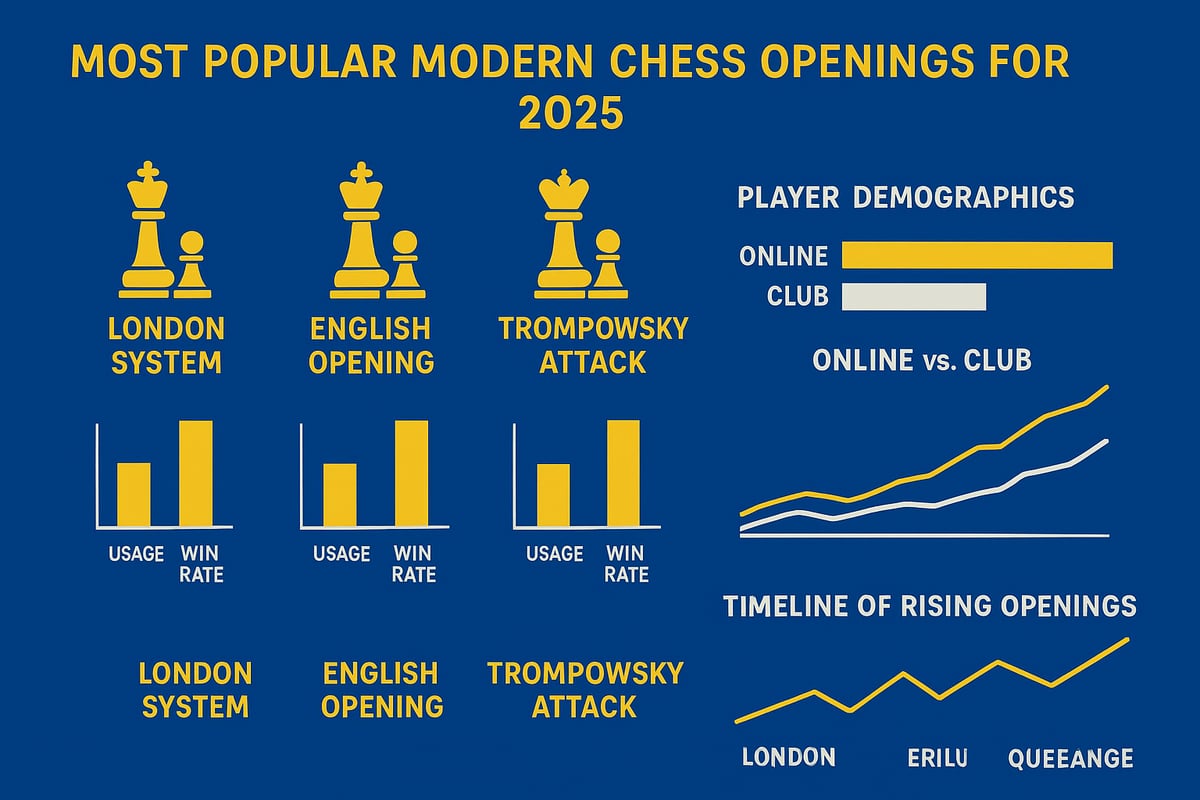
You’ll also hear about classical openings, which stick to traditional development, and hypermodern ones, where you control the center from afar. There are gambits (where you sacrifice material for activity), solid defenses, and universal systems. Recent stats show the London System is exploding in popularity, especially among club players.
Want a deeper look at how these openings fit together? The Comprehensive chess openings guide breaks down major systems, styles, and trends, helping you choose the right path for your journey. Understanding the landscape of every chess opening gives you a huge edge when building your repertoire.
Classic Chess Openings: Timeless Choices and Key Strategies
When you dive into every chess opening, you step into a world shaped by centuries of grandmasters' battles. Classic openings are the foundation for players at all levels—whether you’re seeking sharp tactics or solid positional play, these time-tested choices keep you ahead of the curve.
Open Games: e4 e5 Openings
Open games begin with 1.e4 e5, setting the stage for direct center control and rapid development. Every chess opening in this category offers unique strategies and traps. The Ruy Lopez stands out, with its main lines such as the Berlin Defense, known for deep positional battles, and the Marshall Attack, famous for its tactical fireworks.
The Italian Game is another classic, leading to the Giuoco Piano or the sharp Evans Gambit. These lines teach you essential principles like piece activity and king safety. The Scotch Game and Two Knights Defense introduce rich tactical themes early on. The Petrov Defense (or Petroff) is prized for its solidity, often leading to symmetrical positions and a reputation for drawish outcomes.
Magnus Carlsen, for example, leverages the Ruy Lopez to create subtle imbalances, often outplaying opponents in seemingly equal positions. If you want to explore every chess opening that values classical principles, open games are a must-know.
Table: Popular Open Games and Typical Features
| Opening | Style | Key Feature |
|---|---|---|
| Ruy Lopez | Positional | Long-term plans |
| Italian Game | Tactical | Quick development |
| Petrov Defense | Solid | Symmetry, defense |
Semi-Open Games: e4 with Asymmetrical Replies
Semi-open games start with 1.e4 but feature a non-e5 reply, leading to asymmetrical and dynamic battles. The Sicilian Defense is the king here, with variations like the Najdorf, Dragon, Sveshnikov, and Alapin offering sharp play and deep theory. Every chess opening under the Sicilian umbrella can lead to dramatically different middlegames.
The Caro-Kann Defense is favored for its solid structure, especially in the Advance and Classical lines. The French Defense, with options like the Tarrasch and Advance, creates unique pawn structures demanding strategic understanding. Pirc and Modern Defenses provide flexibility, letting you counterattack when the time is right, while the Scandinavian Defense cuts to the chase with early queen activity.
Hikaru Nakamura’s success with the Sicilian Najdorf shows how every chess opening in this group can be a weapon at the highest level. For a deeper dive into the strengths and weaknesses of these openings, check out this Chess openings pros and cons resource.
Closed and Semi-Closed Games: d4 Openings
Closed and semi-closed games emerge after 1.d4, often leading to rich, strategic battles. The Queen’s Gambit Declined and Accepted are pillars of every chess opening repertoire, offering both tactical and positional chances. The Slav and Semi-Slav Defenses add resilience, while the King’s Indian and Grunfeld provide dynamic counterplay.
Nimzo-Indian and Queen’s Indian Defenses focus on piece activity and pawn structure control. The Catalan Opening and English Opening present flexible plans, often favored in elite tournaments. World Championship matches frequently feature the Queen’s Gambit, highlighting its timeless appeal.
When you explore every chess opening in the closed category, you’ll uncover themes like minority attacks, pawn breaks, and long-term maneuvering. If you crave deep strategy and a canvas for creative play, these openings are essential.
Modern and Trendy Openings for 2025
Are you curious about which chess openings are making waves going into 2025? The chess landscape is evolving fast, and if you want to stay ahead, you need to know the modern trends. In this section, you’ll get a tour of every chess opening that’s currently shaping online and over-the-board play. Let’s dive into the systems, innovations, and statistics that matter most for your next game.
The London System, Colle, and Torre Attack
If you’ve played online chess recently, you’ve probably noticed the London System popping up everywhere. It’s no surprise. The London, along with the Colle and Torre Attack, has become a go-to choice for club players and streamers alike. Why? These systems let you develop quickly, avoid heavy theory, and get a playable position in every chess opening.
The London System, for instance, starts with 1.d4 and 2.Nf3 followed by 3.Bf4 or 3.Bg5. This setup controls the center and keeps your king safe, which is crucial in every chess opening. The Colle and Torre Attack offer similar plans: solid central control and easy development.
Players love these systems because they’re practical. You don’t need to memorize dozens of sharp lines. Instead, you focus on clear plans, like pushing e4 or targeting weak pawns. In recent online tournaments, the London System’s surge has been undeniable. Even grandmasters use it to surprise opponents and steer the game into familiar territory.
The Rise of Hypermodern and Flank Openings
Chess is not just about grabbing the center immediately anymore. The hypermodern revolution is alive and well in 2025. Openings like the English (1.c4), Reti (1.Nf3), and King’s Indian Attack let you control the board from the flanks, inviting your opponent to overextend.
Why are these choices so popular in every chess opening repertoire now? They offer flexibility. The English Opening, especially in the Botvinnik and Four Knights variations, is a favorite at the top level. It allows players to adapt based on the opponent’s setup. The Reti lets you steer the game into unique positions, while the King’s Indian Attack is a deadly weapon against many defenses.
Don’t overlook the Benko Gambit, Benoni Defense, and Dutch Defense either. These bring sharp imbalances and can catch your opponent off guard. Flank openings, with their unusual first moves, are perfect if you want to keep your rivals guessing in every chess opening battle.
Offbeat and Surprise Weapons
Sometimes the best way to win is to take your opponent out of their comfort zone. That’s where offbeat openings shine. The Trompowsky Attack (1.d4 Nf6 2.Bg5) and Budapest Defense (1.d4 Nf6 2.c4 e5) are prime examples. They’re not just quirky—they have real bite and can lead to early tactical skirmishes.
The Scandinavian and Alekhine’s Defense are also practical choices when you want to sidestep mainstream theory. In fact, every chess opening that’s a bit unusual can serve as a powerful surprise weapon, especially in rapid and blitz games. In 2024 online championships, several upsets were caused by these offbeat lines, proving their practical value at all levels.
If you’re seeking practical chances or just want to have some fun, adding a surprise weapon or two to your opening toolkit can be a game changer.
Statistically Trending Openings (2024–2025)
What do the numbers say about every chess opening trending right now? Data from major platforms shows a clear rise in win rates for certain lines. The Queen’s Gambit Exchange Variation, for example, has made a comeback, earning new fans among titled players.
Let’s break down some of the openings with the biggest jumps in popularity and success rates:
| Opening | 2024–2025 Win Rate | Trend |
|---|---|---|
| Queen’s Gambit Exchange | 54% | Rising |
| London System | 52% | Steady Growth |
| English Opening | 53% | Top Level Use |
| Trompowsky Attack | 51% | More Common |
These stats reflect both online and over-the-board play. Many of these trends are highlighted in the 2024 Year In Review - Chess.com, which dives deep into opening preferences and player performances.
If you want to stay competitive, it pays to keep an eye on these shifts. Every chess opening that’s gaining traction now could become tomorrow’s main weapon, so don’t be afraid to experiment and update your repertoire.
Step-by-Step: How to Build and Master Your Opening Repertoire
Building your repertoire is like crafting a personalized toolkit for every chess opening. Whether you dream of outmaneuvering your rivals or just want to play with more confidence, following a clear process makes all the difference. Let’s break down each step so you can finally take command of your games.
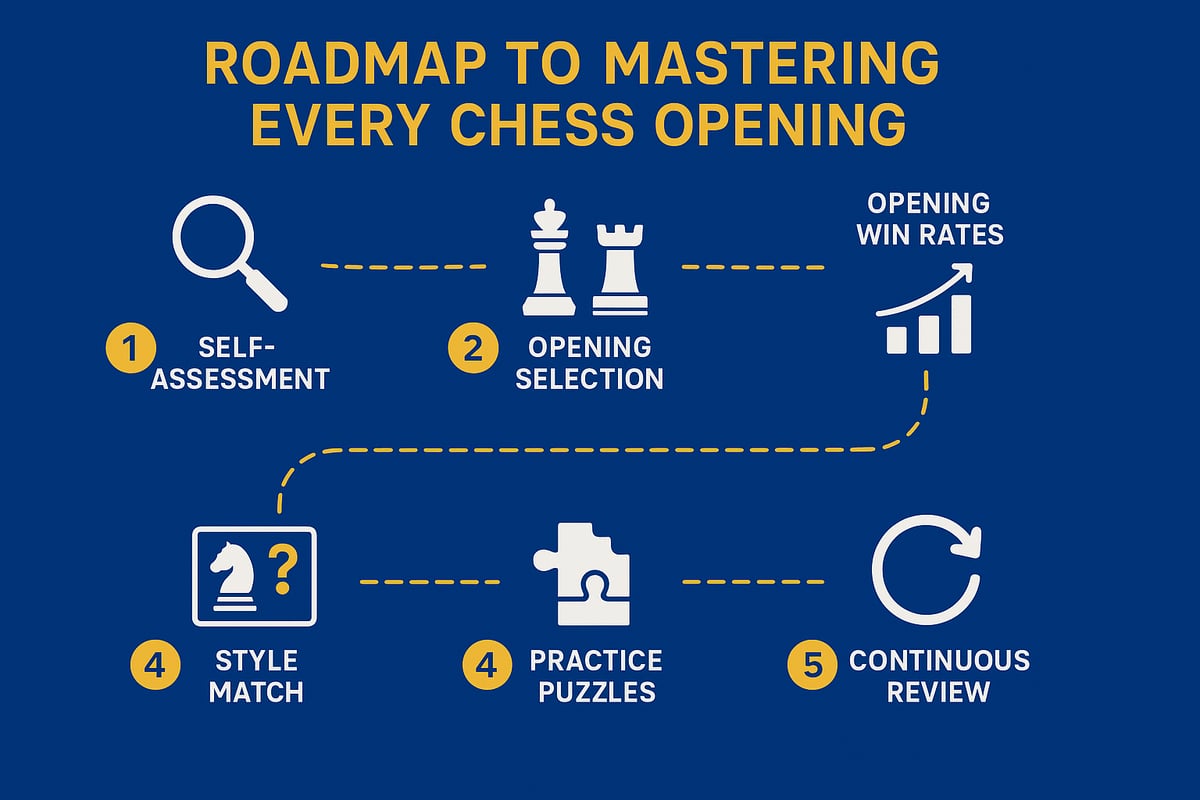
Step 1: Assess Your Playing Style and Goals
Before you dive into every chess opening, take a step back and ask yourself: What kind of player are you? Do you thrive in sharp, tactical battles, or do you prefer slow, strategic maneuvering?
Knowing your style helps you choose openings that match your strengths. For example, aggressive players might lean toward gambits, while positional thinkers could favor systems like the London. Set clear goals—are you preparing for rapid, blitz, or classical games? Your time controls matter.
If you’re unsure where to start, try the Take the chess openings quiz to discover which openings fit your personality. This way, every chess opening you add to your toolkit feels tailor-made for you.
Step 2: Select Core Openings for White and Black
Now that you understand your style, it’s time to pick your main lines. Don’t try to learn every chess opening at once. Instead, choose two or three core openings for both White and Black that align with your strengths.
Here’s a quick checklist for selection:
- Is the opening popular at your level?
- Does it lead to positions you enjoy?
- Are there reliable backup lines if your opponent surprises you?
For example, if you like open games, you might choose the Italian Game for White and the Caro-Kann for Black. Building a focused repertoire lets you prepare deeply, instead of spreading yourself thin across every chess opening out there.
Step 3: Study Model Games and Key Variations
Once you’ve picked your openings, dive into classic games played by masters. Studying annotated games reveals how every chess opening unfolds in real battles. Pay close attention to move order, plans, and common traps.
Make it a habit to note critical variations and must-know tactics in a notebook or digital file. Model games offer a blueprint, showing how top players handle typical middlegame transitions. This helps you spot patterns and avoid common mistakes, making every chess opening in your repertoire more practical and powerful.
Step 4: Practice with Puzzles and Online Tools
The next step is all about practice. Reinforce your knowledge of every chess opening by solving opening-specific puzzles and using online tools. Many platforms offer drills that focus on move sequences, traps, and tactical motifs unique to your chosen lines.
Try setting up positions from your openings and solving related puzzles. This hands-on approach cements patterns in your memory. Online databases and engines can help you analyze your games, spot weaknesses, and track your progress with every chess opening you play.
Step 5: Review, Refine, and Expand Your Openings
No chess repertoire is ever truly finished. Regularly review your results, update your lines, and expand your knowledge as trends evolve. If you notice a particular opening gaining popularity, consider adding it to your arsenal.
Stay flexible—sometimes opponents will surprise you with rare lines or novelties. Be ready to adapt by watching recent games and learning from your own experiences. Over time, you’ll find that every chess opening in your toolkit becomes sharper and more reliable, setting you up for consistent improvement.
Advanced Strategies: Deepening Your Opening Knowledge
Ready to take your game beyond the basics? Let’s dive into advanced strategies that help you deepen your expertise in every chess opening. This is where your preparation starts to feel like a secret weapon, giving you a real edge over your opponents.
Understanding Opening Theory Updates and Novelties
Have you noticed how opening trends seem to change overnight? That’s the power of new ideas and computer analysis shaking up every chess opening you know. Staying current is crucial if you want to stay ahead.
Modern engines like Stockfish and AlphaZero constantly discover novelties, making it essential to review the latest databases. For example, the Opening Master April 2025 Update added millions of new human games, revealing fresh approaches in popular lines.
Grandmasters keep an eye out for these novelties, often surprising their rivals with new moves in familiar positions. Want to feel confident facing anything? Make it a habit to check for updates in every chess opening you play. This keeps your repertoire sharp and helps you avoid falling into traps set by better-prepared opponents.
Transitioning from Opening to Middlegame
Mastering every chess opening is not just about the first few moves. The real challenge is smoothly transitioning into the middlegame with a plan. You need to recognize key themes—pawn structures, piece placement, and king safety.
Let’s say you play the Queen’s Gambit. After the opening, typical plans might involve targeting the c-file or preparing a minority attack. In the Sicilian Defense, you often aim for queenside counterplay or central breakthroughs.
If you understand the typical middlegame positions from your favorite openings, you’ll find yourself making strong, purposeful moves instead of just reacting. That’s how every chess opening becomes a launchpad for your middlegame strategy.
Defensive and Counterattacking Openings
Some players love to play solidly and wait for their opponent to overreach. Others enjoy striking back at the first sign of weakness. Luckily, every chess opening offers both defensive and counterattacking possibilities.
Consider the Petroff and Berlin Defenses—both are rock solid, making it tough for your opponent to create threats. On the counterattacking side, the Benko Gambit and Grunfeld Defense invite dynamic play, giving you chances to seize the initiative.
Here’s a quick table to compare a few popular choices:
| Opening | Style | Typical Plans |
|---|---|---|
| Petroff | Defensive | Solid pawn structure, piece trades |
| Benko Gambit | Counterattack | Queenside pressure, open files |
| Grunfeld Defense | Counterattack | Central tension, active pieces |
Choosing the right approach for every chess opening means understanding your own style and knowing when to switch gears.
Preparing for Opponent’s Preparation
Are you worried about running into a heavily-prepared opponent? It happens to everyone, especially when you play every chess opening that’s popular at club and tournament level. The trick is to stay flexible and know a few move order tricks.
Let’s say you want to avoid the Marshall Attack in the Ruy Lopez. You can tweak your move order, steering the game into lines you know better. This makes it harder for your opponent to rely on their prep and forces them to think for themselves.
Another tip: study rare lines and offbeat variations. Not only does this help you face surprises, but it also gives you weapons to use against unsuspecting rivals. In every chess opening, adaptability is your secret strength.
Using Chess Databases and Engines Effectively
To master every chess opening, you need the right tools. Chess databases and engines are your best friends for analyzing lines, spotting trends, and tracking your progress.
Using resources like the Chess Opening Explorer, you can see which openings are trending, how they perform at different levels, and discover new ideas to add to your repertoire. Engines help you evaluate moves and uncover tactical opportunities that humans might miss.
Don’t just memorize moves—use these tools to understand the ideas behind them. That way, every chess opening you prepare becomes a living, evolving part of your skillset. With regular practice and analysis, you’ll always be ready for whatever comes your way.
Practical Tips for Success in Chess Openings
Unlocking the secrets of every chess opening takes more than just theory. You need practical habits, sharp awareness, and a little creativity to truly succeed. Here’s how you can turn opening knowledge into real results at the board.
Avoiding Common Pitfalls and Blunders
Have you ever lost a game in the first ten moves? You’re not alone. Even experienced players can stumble in every chess opening if they overlook basic traps or rush their development.
Here are a few classic blunders to watch for:
- Grabbing “free” pawns that trigger tactical traps.
- Ignoring king safety by delaying castling.
- Overextending pawns and neglecting piece activity.
If you want to avoid these mistakes, always pause to check for threats before each move. A quick scan for checks, captures, and attacks can save you from disaster. Pattern recognition is your best friend here, helping you spot setups that lead to trouble in every chess opening.
| Common Blunder | How to Avoid |
|---|---|
| Early queen sortie | Develop minor pieces first |
| Skipping castling | Castle early for king safety |
| Pawn grabbing | Evaluate opponent’s threats carefully |
Stay alert in the opening and you’ll avoid falling into the same traps as everyone else.
Training Methods for Opening Mastery
Ever wonder how top players seem to glide through every chess opening with confidence? It’s all about structured training. The best approach combines study and practice, never just one or the other.
Try these methods:
- Review annotated master games to see ideas in action.
- Use flashcards or spaced repetition apps to reinforce move orders.
- Solve opening-specific puzzles that mirror real positions.
Online resources make it easier than ever to practice. For step-by-step routines and visual tools, check out How to master chess openings. With the right mix of theory and hands-on drills, you’ll build lasting confidence in every chess opening.
Adapting to Opponent Strength and Style
Not every chess opening works against every player. Sometimes you face a sharp tactician, other times a cautious defender. How do you adapt?
First, learn to recognize your opponent’s tendencies. Against stronger players, consider sticking to sound, well-studied lines. Against less experienced opponents, you might try surprise weapons or offbeat openings to throw them off.
Stay flexible. If your main line isn’t working, don’t be afraid to pivot to a backup system. The key is to keep your opponents guessing and never become too predictable in every chess opening you play.
Measuring Progress and Setting Goals
Tracking your growth is essential for mastering every chess opening. Set clear, achievable milestones, like learning a new line each week or reviewing five master games per month.
Here’s a simple table to help you structure your goals:
| Milestone | Target Date | Progress Notes |
|---|---|---|
| Learn new opening | This week | |
| Analyze 5 games | This month | |
| Solve 20 puzzles | This week |
Want to see how your openings stack up statistically? Explore Chess Stats - 35+ Curious Facts & Statistics to compare your preferences and win rates with global trends. This data-driven approach helps you spot patterns and refine your choices for every chess opening.
Staying Motivated and Enjoying the Learning Process
Let’s be honest, studying every chess opening can feel overwhelming. The key is to make it fun and rewarding. Join online forums, share your progress, and play in opening-themed tournaments for extra motivation.
Hit a plateau? Mix up your routine with puzzle packs or by watching grandmaster games. Celebrate small wins, like successfully remembering a tricky line or spotting a new tactic in every chess opening. Enjoy the journey and you’ll stay inspired to keep learning, one move at a time.
So, after diving into all these strategies and opening ideas, you might be wondering, “Where do I even start with my own repertoire?” I totally get it—chess openings can feel overwhelming, but you don’t have to go it alone. If you’re ready to actually see progress and play with more confidence, why not take the next step? You can get instant access to practical guides, puzzle packs, and step-by-step resources that make learning openings so much easier. Ready to start building your best opening game yet? Start Improving Your Openings


