

Are you ready to take your chess skills to new heights? The thrill of cracking endgame puzzles in 2025 is more exciting than ever, with fresh challenges and classic tests that push your strategic thinking.
This article brings you the 10 best endgame puzzles, carefully picked to sharpen your mind and keep you ahead in the modern chess scene. From timeless studies to creative new positions, each puzzle offers unique lessons and tests your advanced skills.
If you’re eager to master tricky endings, spot tactical gems, and feel the satisfaction of solving what even grandmasters train on, you’re in the right place. Dive in, challenge yourself, and see how far your endgame can go.

Why Endgame Puzzles Are Essential for Modern Chess Strategy
If you want to level up your chess game in 2025, mastering endgame puzzles is no longer optional, it is essential. These puzzles are the secret weapon of top players, giving you the edge when games reach those tense, make-or-break moments. Think about it: how often have you seen a well-played opening fall apart because of a missed endgame tactic? The best players know that endgame puzzles are the bridge between theory and victory, especially in today's competitive landscape.
The Role of Endgames in Chess Success
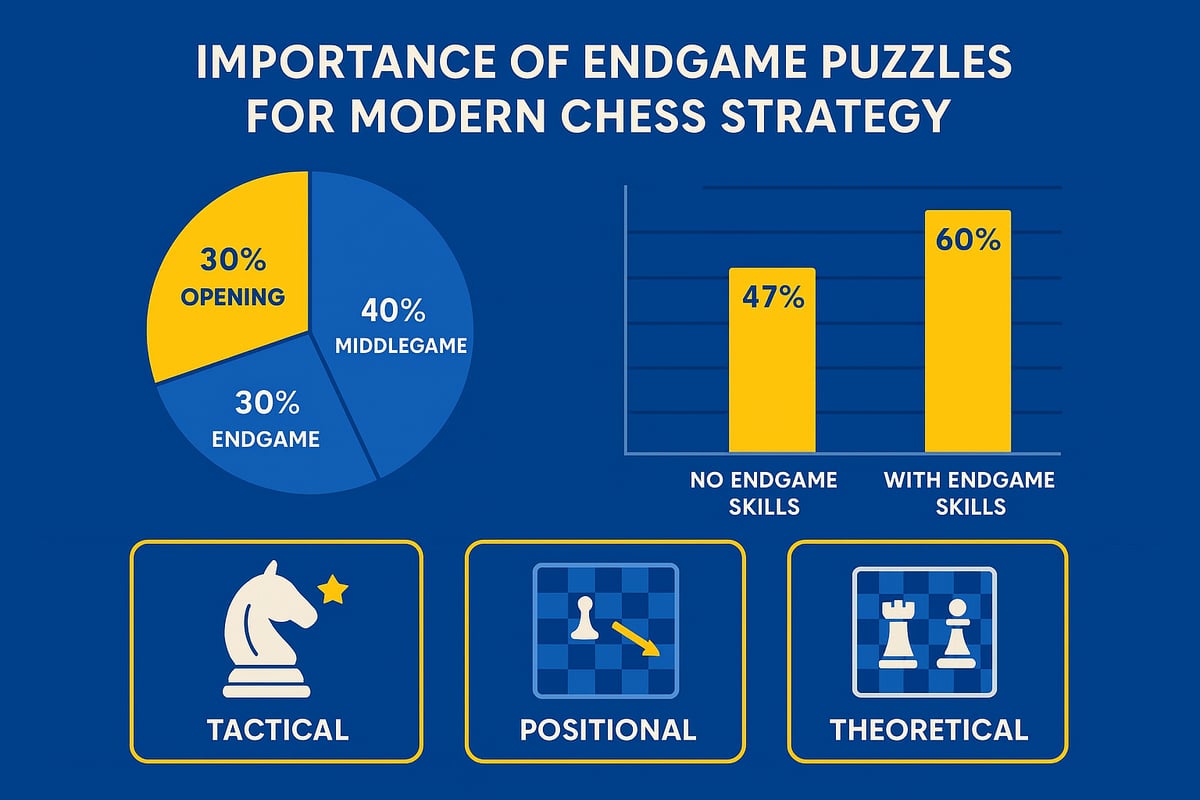
Endgame puzzles are the backbone of competitive chess success. Even world champions dedicate hours to these studies, knowing that a single slip in the endgame can overturn an entire match. Legendary games often turn on a precise endgame move, with history-making moments coming from players who could out-calculate their opponents when the board was nearly empty.
Chess education has shifted focus in 2025, putting more weight on practical endgame puzzles than ever before. According to recent studies, club players who consistently practice endgame puzzles win 20 percent more games compared to those who do not. If you want to convert more draws into wins or save tough positions, endgame puzzles are your ticket.
Types of Endgame Puzzles and Their Strategic Value
Not all endgame puzzles are created equal. There are tactical puzzles, which sharpen your calculation skills under pressure. Positional puzzles push you to plan ahead and control key squares. Theoretical puzzles, like classic pawn races or fortress positions, teach you essential endgame knowledge you can apply in real games.
Each type of endgame puzzle targets a specific skill set. For example, pawn race puzzles help you master tempo and calculation, while fortress puzzles develop your defensive instincts. Top coaches recommend mixing different types for rapid improvement. For a wide selection of challenges, you can explore the Chess Puzzle Collection, which curates a variety of endgame puzzles for all levels.
How Endgame Puzzles Enhance Calculation and Pattern Recognition
Solving endgame puzzles regularly is like lifting weights for your chess brain. You train your calculation muscles, improve your focus, and start to recognize winning patterns almost automatically. There is a direct link between endgame puzzle practice and rating improvement, backed by data from online chess platforms and club tournaments.
Over time, you will spot motifs like opposition, zugzwang, and underpromotion without hesitation. This pattern recognition means you can make faster and more accurate decisions when the clock is ticking. Endgame puzzles are not just about memorizing moves, they are about building the mental shortcuts that separate good players from great ones.
The Rise of Digital Endgame Training Tools in 2025
In 2025, digital tools have revolutionized the way players tackle endgame puzzles. Apps and online platforms offer interactive puzzles that adapt to your skill level, making practice more engaging than ever. AI-powered generators can now create personalized endgame puzzles, giving you fresh challenges every day.
User data shows a huge spike in engagement with endgame puzzles, thanks to seamless integration into chess training platforms. Whether you are practicing on your phone or analyzing with a coach, digital resources make it easier to fit endgame puzzles into your routine. The future of endgame mastery is right at your fingertips.
10 Best Endgame Puzzles to Challenge Your Strategy in 2025
Ready to put your endgame puzzles skills to the ultimate test? This section is your hands-on guide to the 10 best endgame puzzles every ambitious player should master in 2025. Whether you love classic studies or crave fresh AI-generated challenges, you’ll find each puzzle here is handpicked to stretch your mind and sharpen your chess instincts.
Take a breath, clear your board, and let’s jump into the positions that will define your next phase of improvement.
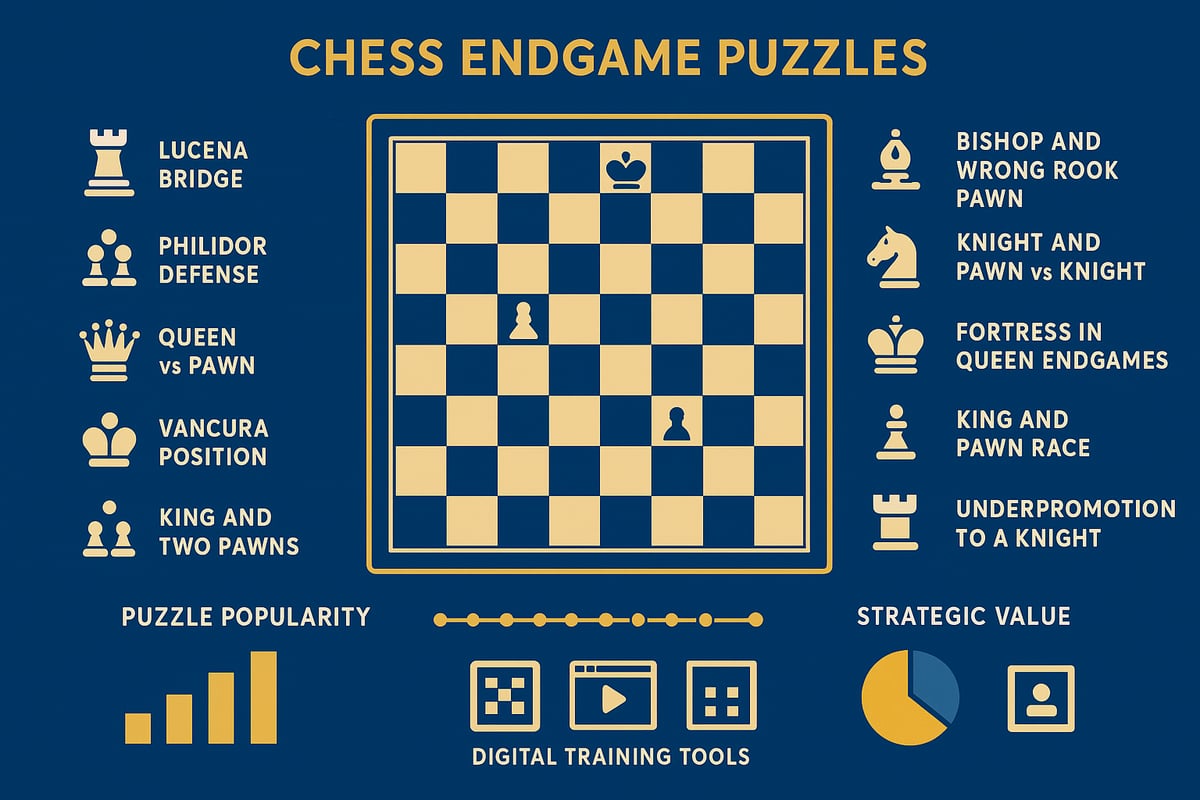
1. The Lucena Bridge: Rook and Pawn Mastery
The Lucena position is the holy grail for rook endgame puzzles. It’s the test every strong player faces, and it’s just as relevant in 2025 as it was a century ago. The setup is simple: your rook and pawn versus your opponent’s lone rook. The challenge? Build a “bridge” with your rook so your king can safely promote the pawn.
Let’s break it down:
- Place your rook on the fourth rank to shield your king.
- Use your king to escort the pawn forward.
- Watch for common traps, like premature checks that allow perpetuals.
A classic Lucena appeared in Capablanca’s games, where precision meant the difference between victory and a frustrating draw. Many players stumble by leaving their king exposed or misplacing the rook. Practicing this endgame puzzle builds confidence in handling rook endings, which make up nearly half of all endgames at club level.
Digital tools in 2025, such as interactive trainers and puzzle generators, let you drill the Lucena position repeatedly. Mastering this puzzle makes your rook endgames nearly bulletproof.
2. The Philidor Defense: Drawing with Precision
Can you hold a draw with just a rook against rook and pawn? The Philidor Defense is your answer, and it’s a cornerstone of practical endgame puzzles. The idea is to cut off the enemy king and prevent progress until the pawn is forced forward.
Practical tips:
- Place your rook on the third rank to block the king.
- Wait patiently, only giving ground when the pawn advances.
- Be alert for checks from behind once the pawn moves.
A legendary save by Karpov showcased the Philidor Defense in action, turning a sure loss into a half-point. It’s vital because, in countless games, knowing this setup means you never lose what should be a draw.
Modern chess platforms now offer step-by-step Philidor drills with instant feedback. If you want more endgame puzzles and ongoing insights, the Chess Puzzles Blog is a fantastic resource for discovering new scenarios and sharpening your skills. Never underestimate the value of repetition with these defensive gems.
3. Queen vs. Pawn on the Seventh: The Ultimate Test
Imagine the pressure: you have a queen, but your opponent has a pawn ready to promote. This is one of the most nerve-wracking endgame puzzles, demanding absolute calculation.
Key concepts:
- Know when the queen alone can stop the pawn.
- Look for stalemate tricks and perpetual checks.
- Calculate forcing sequences precisely—one slip and it’s a draw.
Real games from recent super tournaments have seen both sides falter in this tense scenario. The puzzle tests not only your calculation, but your nerves. To solve it, you must visualize multiple moves ahead and anticipate every possible defense.
Training with this endgame puzzle enhances your ability to stay calm under pressure and make accurate decisions when every tempo counts.
4. The Vancura Position: Rook Endgame Fortress
If you’re searching for defensive endgame puzzles, the Vancura position is a must-know. The defender’s rook harasses the attacking pawn from the side, building a fortress that’s almost impossible to break.
To master this position:
- Keep your rook on the sixth rank, checking from the side.
- Use your king to block pawn advances.
- Time your checks to avoid zugzwang.
A modern example saw a grandmaster save a crucial half-point using this fortress. The Vancura teaches you to stay resourceful, even when down material.
Digital platforms in 2025 often feature Vancura drills, letting you practice the precise move order. Adding this to your endgame puzzles toolkit means you’ll know when to fight for a draw and how to execute flawlessly.
5. King and Two Pawns vs. King: The Opposition Puzzle
This classic is all about opposition and triangulation. You’re up two pawns, but can you convert against a lone king? These endgame puzzles reveal secrets of pawn play and king maneuvering.
Key ideas:
- Use opposition to force the enemy king back.
- Triangulate to gain the vital tempo.
- Avoid allowing the defender to set up a blockade.
Visual diagrams make this puzzle come alive, showing both winning and drawing paths. According to recent studies, pawn endgames like this appear in up to 30% of practical games.
To master these scenarios, set up exercises where you play both sides. This is the training ground for every ambitious player aiming to dominate endgame puzzles.
6. Bishop and Wrong Rook Pawn: The Draw Trap
Ever heard of the “wrong rook pawn”? It’s one of the sneakiest endgame puzzles, teaching you when a material advantage just isn’t enough. The lesson: with a bishop and the wrong rook pawn (a- or h-file), the defender can often force a draw.
Essential tips:
- Keep your king in the corner opposite your bishop’s color.
- Watch for stalemate tricks—sometimes the defender sacrifices the pawn for a fortress.
- Learn the drawing technique so you never overpress.
A world championship match famously hinged on this puzzle, with both sides maneuvering for the right setup. Modern chess engines now confirm what old masters knew: proper defense here is nearly unbeatable.
Adding this puzzle to your endgame puzzles practice sharpens your sense of when to push and when to hold back.
7. Knight and Pawn vs. Knight: The Zugzwang Challenge
Knight endings are notoriously tricky, and when you throw in zugzwang, you get one of the most challenging endgame puzzles. Here, a single tempo can decide the game.
To solve this puzzle:
- Understand key squares for both knights.
- Force your opponent into zugzwang, where any move worsens their position.
- Avoid common pitfalls, like allowing forks or trapped knights.
Recent games at the elite level have showcased the drama of this ending. It’s rare, but when it appears, knowing the motifs can swing the result.
Online resources let you practice similar endgame puzzles, ensuring you’re ready for the day a tricky knight ending appears on your board.
8. Fortress in Queen Endgames: Holding the Draw
Not all queen endgames are a win for the stronger side. Fortress construction is a vital skill, and these endgame puzzles test your defensive creativity.
Here’s how to build a fortress:
- Place your king and pawn(s) to prevent the queen from penetrating.
- Recognize when perpetual checks are possible.
- Stay alert for zugzwang or stalemating ideas.
A famous fortress was seen in a top-level match, where the underdog held the draw against all odds. Studies show fortress scenarios are more common than most players realize.
Learning this puzzle boosts your confidence when defending difficult endgames and adds a layer of resourcefulness to your endgame puzzles arsenal.
9. King and Pawn Race: The Critical Square
It’s a footrace! King and pawn races are among the most exciting endgame puzzles, where calculation is everything. Can you reach the queening square first, or will your opponent’s king win the day?
Key concepts:
- Identify the “critical square” for each pawn.
- Calculate move orders—one tempo can change everything.
- Use recent tournament examples to spot common patterns.
Tempo and move order are vital here. Practicing these puzzles sharpens your calculation skills and heightens your endgame awareness. Try setting up different pawn races to see how subtle changes affect the outcome.
Building speed and accuracy in these endgame puzzles gives you a powerful edge in practical play.
10. Underpromotion to a Knight: The Tactical Surprise
Sometimes, the only way to win (or draw) is with a move that surprises everyone: underpromotion to a knight. These endgame puzzles highlight the tactical magic that chess can deliver.
Why underpromote?
- A knight can deliver check or block a pawn in ways a queen or rook cannot.
- Famous games have swung on this one move, catching even grandmasters off guard.
- The psychological impact is huge—your opponent may not see it coming.
Modern puzzle databases now let you practice underpromotion scenarios, training your tactical vision. Set up exercises where only a knight saves the day and watch your creativity soar.
Add these underpromotion puzzles to your endgame puzzles rotation to ensure you never miss a brilliant resource when it counts.
Advanced Strategies for Solving Endgame Puzzles
Unlocking the secrets of endgame puzzles goes beyond solving random positions. It takes a clear system, sharp focus, and the right tools. Let’s dive into practical strategies you can use to level up your endgame puzzle skills in 2025.
Building a Systematic Approach to Endgame Study
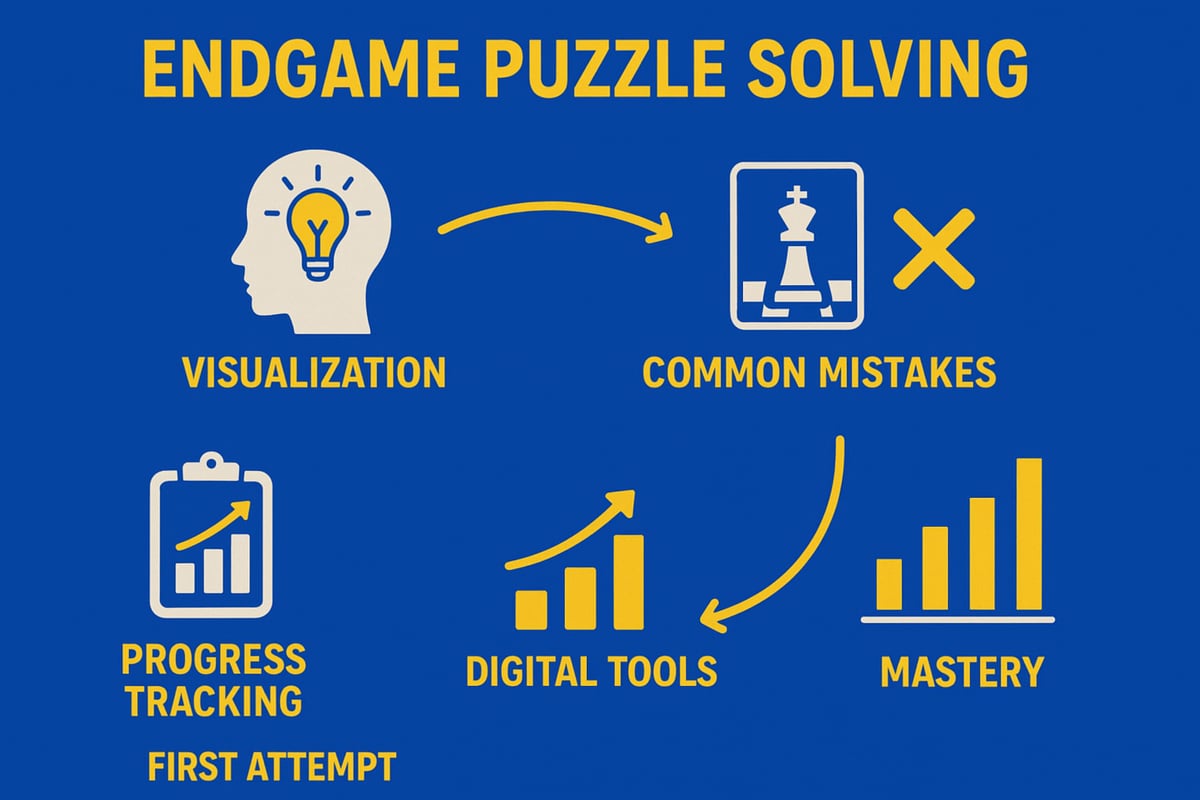
Are you wondering where to start with endgame puzzles? The best approach is to break each puzzle into steps. First, visualize the position—try to picture the winning or drawing plan before moving a piece. Then, calculate candidate moves and compare outcomes. After each attempt, review both your mistakes and correct moves. This deep review process helps you spot patterns and avoid repeating errors.
Experts recommend structuring your study sessions with a mix of easy and challenging endgame puzzles. Want more step-by-step advice? Check out Improving with Chess Puzzles for proven strategies that boost your chess skills through puzzle practice.
Common Mistakes and How to Avoid Them
Even advanced players slip up with endgame puzzles due to common pitfalls. One big mistake is rushing calculations instead of visualizing the full sequence. Another is overlooking stalemate tricks or pawn breaks. Sometimes, frustration sets in after a failed attempt, making it harder to focus.
Here’s how to avoid these traps:
- Take a brief pause before each move.
- Double-check for tactical resources like checks or stalemates.
- Review failed puzzles to see what went wrong.
Remember, patience and consistent review are your best friends when working on endgame puzzles. Developing this habit will sharpen your calculation and boost your confidence.
Leveraging Technology for Endgame Mastery in 2025
Chess technology in 2025 has made practicing endgame puzzles more efficient than ever. With AI-powered platforms, you now get personalized puzzle sets that adapt to your strengths and weaknesses. Modern apps track your progress and highlight recurring mistakes, so you always know where to focus.
If you want to explore digital resources, Digital Endgame Study Tools offers cheat sheets and app recommendations to help you make the most of your training. Embrace these innovations to maximize your improvement and make endgame puzzles a seamless part of your daily routine.
Measuring Progress and Setting Endgame Goals
Tracking your progress with endgame puzzles is key to staying motivated. Set clear, incremental goals—like solving five puzzles a day or mastering a specific motif each week. Use built-in metrics from chess platforms to monitor accuracy rates and streaks.
Consider keeping a simple table to log your results:
| Date | Puzzles Attempted | Correct | Motif Practiced |
|---|---|---|---|
| 2025-06-01 | 10 | 7 | Opposition |
| 2025-06-02 | 8 | 6 | Lucena Position |
Regularly reviewing this log helps you spot trends and adjust your study plan. By setting and tracking your endgame puzzles goals, you’ll see steady improvement and keep your motivation high.
Endgame Puzzle Resources and Further Study
Looking to level up your endgame puzzles practice? Having the right resources and a supportive learning environment can make a huge difference. Whether you are just starting or aiming for mastery, let's explore the best ways to expand your skills, stay motivated, and fit endgame puzzles into your chess routine.
Recommended Books and Online Databases
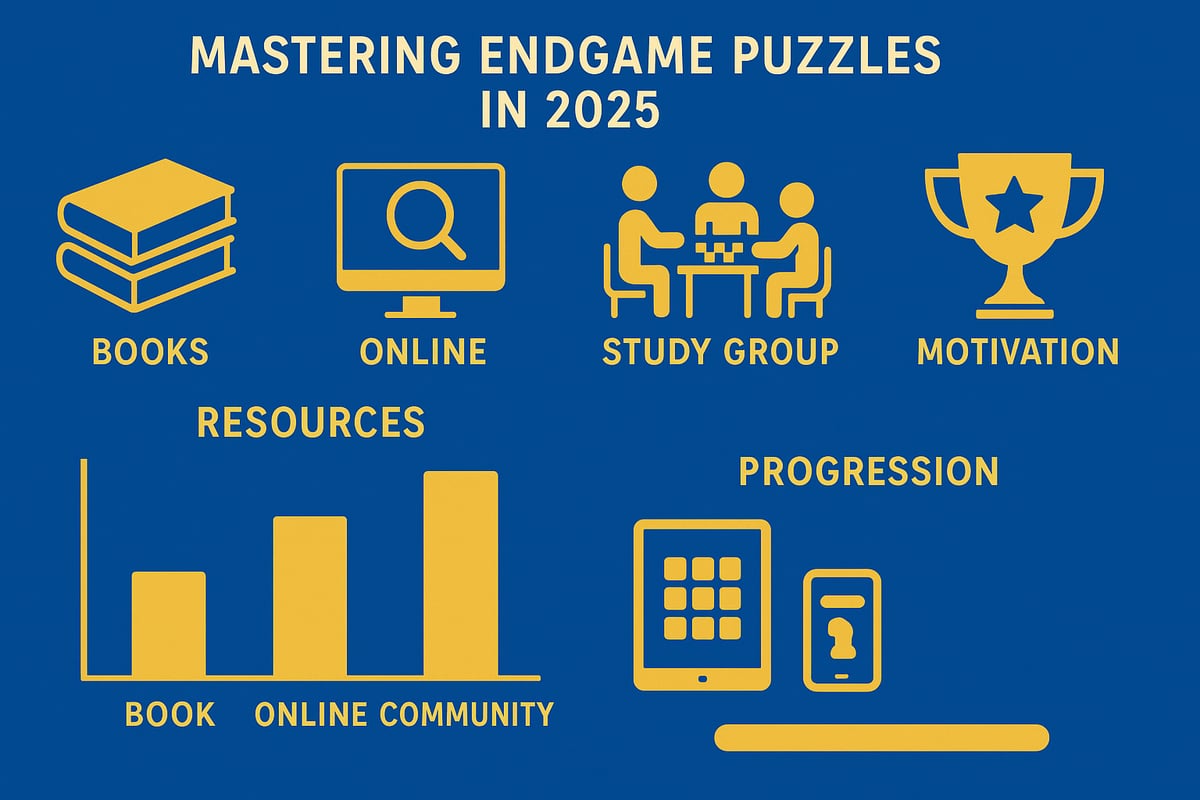
Choosing the right materials is key when working on endgame puzzles. Classic books like "Dvoretsky's Endgame Manual" and "100 Endgames You Must Know" are favorites among top players. These texts break down complex endings into digestible lessons.
For those who prefer digital study, online databases offer thousands of curated endgame puzzles. The FIDE's 101 Endgame Studies Collection is a fantastic example, featuring puzzles that span the full range of endgame themes. Community ratings and reviews help you pick the best resources for your level. Whether beginner or advanced, there is a perfect study tool for you.
| Resource Type | Example Title/Link | Best For |
|---|---|---|
| Book | Dvoretsky's Endgame Manual | Advanced study |
| Book | 100 Endgames You Must Know | All levels |
| Online Database | FIDE's 101 Endgame Studies Collection | Thematic practice |
Community and Social Learning Opportunities
Why study endgame puzzles alone when you can join a community? Online study groups and forums bring together chess lovers to tackle tricky positions and share solutions. In these groups, you get instant feedback, spot mistakes, and learn new approaches from others.
Popular platforms like Chess.com and Lichess host active forums where endgame puzzles are discussed daily. Peer reviews and collaborative solving often reveal creative ideas you might miss on your own. Plus, participating in community challenges can boost your motivation and accountability. Many players credit their progress to group study and friendly competition.
Integrating Endgame Puzzles into Your Training Plan
Balancing endgame puzzles with other chess study is all about planning. Aim for short, focused sessions—just 15 to 30 minutes a day can spark real improvement. Mix puzzle practice with reviewing your own games to see endgame themes in action.
Try spacing out your sessions throughout the week for better retention. Here is a sample weekly plan:
| Day | Focus |
|---|---|
| Monday | Tactical endgame puzzles |
| Wednesday | Positional endgame puzzles |
| Friday | Review and analyze |
Adjust your plan based on your skill level and goals. Research shows that regular, spaced practice with endgame puzzles leads to lasting progress.
Staying Motivated and Overcoming Plateaus
It is normal to hit a wall with endgame puzzles sometimes. When that happens, try gamifying your practice with achievement badges or streak trackers. Many apps and online tools, including SenseRobot's AI-powered chess training, offer structured exercises and instant feedback to keep things fresh.
Set small, achievable goals and celebrate your progress. If you ever feel stuck, remember that even top players face plateaus. Sharing your journey with a supportive group can help you push through tough spots. Your persistence will pay off, as countless success stories in the chess world show.
So, after working through these endgame puzzles, you’re probably feeling both challenged and inspired—and maybe a bit curious about what’s next for your chess journey, right? If you’re looking to keep that momentum going and really take your endgame (and the rest of your game) to the next level, why not explore a bundle that brings together cheat sheets, more puzzles, and detailed endgame guides? I’ve found that having everything in one place makes practice way easier, and you can dip into resources whenever you want. Ready to see what else you can master? Check out Get The FULL Chess Mastery Bundle.


