

You've probably experienced that frustrating moment when you're playing a brilliant game, only to forget exactly how you executed that clever tactic. Or perhaps you've wondered how professional players manage to broadcast their moves instantly during tournaments. The answer lies in a piece of technology that's revolutionising chess: the electronic chess board. These smart devices merge the tactile pleasure of moving physical pieces with the analytical power of digital technology, creating an experience that traditional boards simply can't match. Whether you're looking to track your progress, play against opponents worldwide, or analyse your games like a grandmaster, electronic boards offer capabilities that were unimaginable just a few decades ago.
What Exactly Is an Electronic Chess Board?
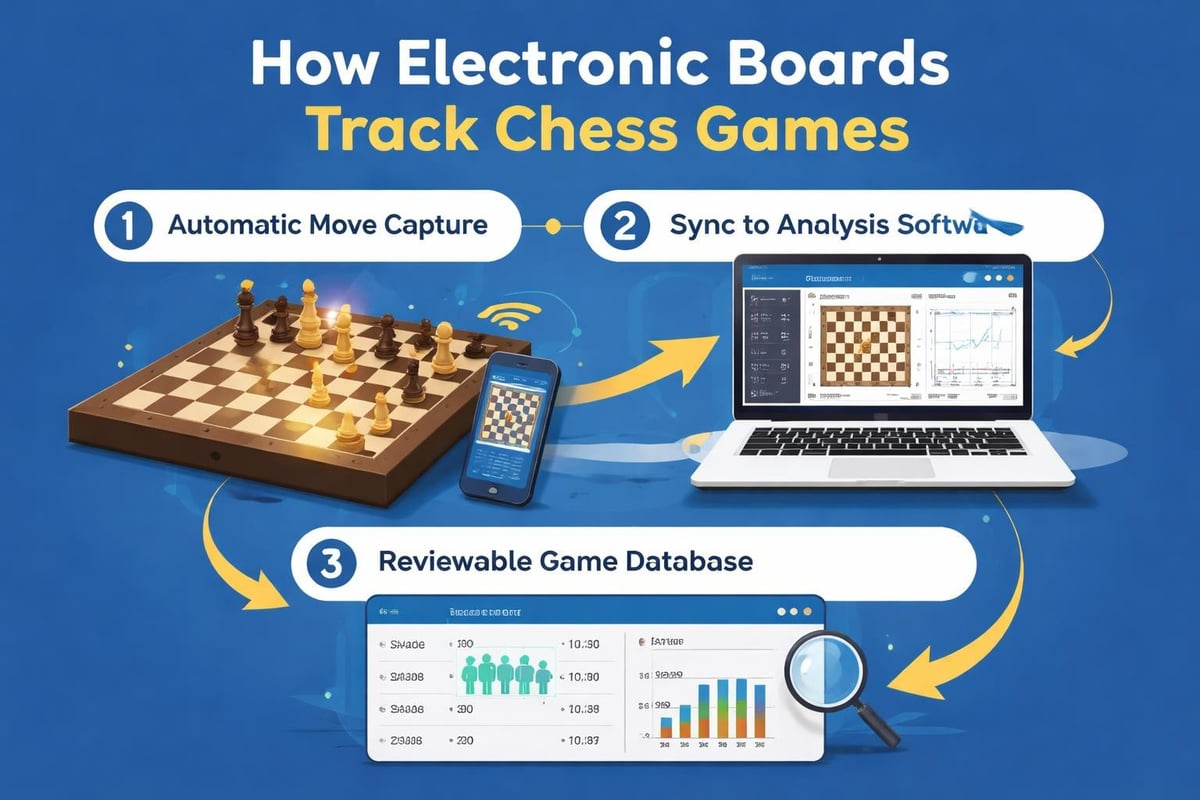
An electronic chess board looks like a traditional chess set, but there's sophisticated technology hidden beneath its surface. Each square contains sensors that detect when pieces are lifted or placed, automatically recording every move you make.
Think of it as your personal game secretary. Whilst you focus on finding the best move, the board silently tracks everything, creating a permanent record you can review later. No more scribbling notation or trying to remember critical positions.
The core components include:
- Pressure sensors or RFID technology beneath each square
- Weighted pieces containing identification chips
- A connection interface (USB, Bluetooth, or Wi-Fi)
- Compatible software for displaying and analysing games
- Built-in clock systems for tournament play
The technology behind electronic chess boards has evolved significantly, with modern devices offering incredible accuracy and reliability. Some boards connect wirelessly to your computer or tablet, whilst others plug directly via USB.
What makes these boards particularly clever is their ability to distinguish between different pieces. The board knows whether you're moving a pawn or a queen, ensuring accurate game recording without any manual input.
How Electronic Boards Transform Your Training Sessions
Training with an electronic chess board changes how you approach improvement. Instead of playing in isolation, you're creating a database of your actual games, complete with every move and every mistake.
Automatic Game Recording and Analysis
Remember that complicated middle-game position where you weren't sure about your 23rd move? With an electronic board, you can replay it instantly. The board saves every game automatically, allowing you to review your decisions when you're fresh and objective.
This is particularly valuable when you're working on specific openings. If you're studying the Italian Game or experimenting with the Scandinavian Defense, you can see exactly where your understanding broke down in real games, not just theory.
Playing Against Engines at Physical Boards
One of the most appealing features is the ability to play against chess engines whilst moving real pieces. You make your move on the physical board, and the software displays the engine's response, which you then execute.
It's significantly more engaging than clicking moves on a screen. You maintain the tactile experience of traditional chess whilst benefiting from high-level opposition.
| Training Feature | Traditional Board | Electronic Board |
|---|---|---|
| Game recording | Manual notation required | Fully automatic |
| Position analysis | Memory or photos | Instant database access |
| Engine practice | Separate computer needed | Integrated experience |
| Progress tracking | Personal notes only | Complete game history |
| Opening preparation | Book study | Real game statistics |
Choosing the Right Electronic Chess Board for Your Needs
Not all electronic boards are created equal, and selecting the right one depends on your specific requirements and budget. Reviews of top electronic chessboards can help you understand the landscape, but let's break down what matters most.
Entry-Level vs Professional Models
Budget-friendly boards typically connect via USB and work with standard chess software. They're perfect for home training and casual online play, offering reliable move detection without premium features.
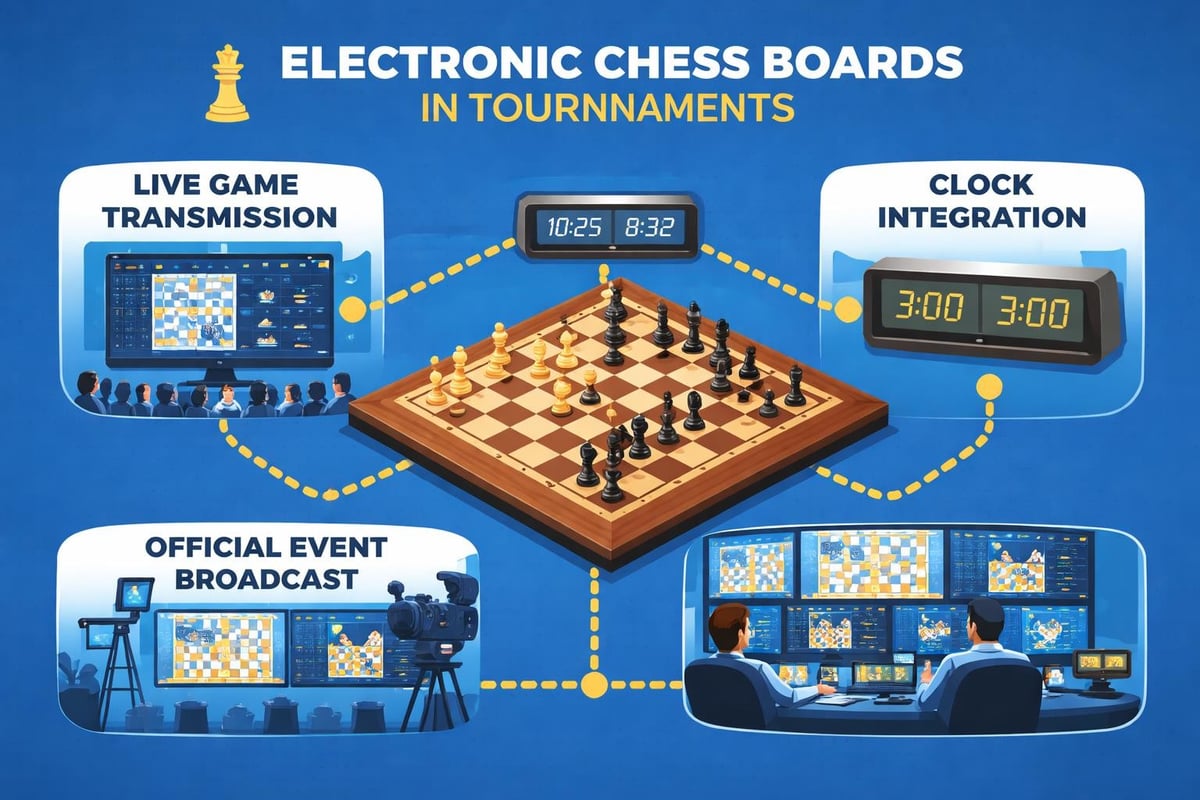
Professional tournament boards, conversely, include advanced features like wireless connectivity, built-in clocks, and compatibility with multiple platforms simultaneously. These boards are what you'll see at major chess events, broadcasting games to audiences worldwide.
Key considerations when choosing:
- Connectivity options - Do you need wireless, or is USB sufficient?
- Software compatibility - Will it work with your preferred chess platform?
- Portability - Are you travelling to tournaments, or staying at home?
- Piece quality - Weighted wood pieces or plastic?
- Clock integration - Essential for tournament practice
Compatibility With Online Platforms
Modern electronic boards connect seamlessly with popular chess websites, allowing you to play online opponents whilst moving physical pieces. You're no longer staring at a screen for hours; instead, you're playing proper chess whilst the board transmits your moves digitally.
This functionality is brilliant for players who find screen chess fatiguing but still want access to millions of potential opponents. The evolution of electronic chess boards has made this integration remarkably smooth, with most platforms now supporting direct board connections.

Practical Applications Beyond Casual Play
Electronic boards aren't just fancy gadgets; they serve genuine practical purposes that can accelerate your chess development.
Tournament Broadcasting and Commentary
Ever wondered how chess tournaments are broadcast live with perfect accuracy? Electronic boards make it possible. Each move is transmitted instantly to viewers worldwide, allowing commentators to analyse positions in real-time.
For club organisers, these boards eliminate the need for dedicated game recorders at each table. The technology handles everything automatically, freeing up resources and reducing errors.
Creating a Personal Opening Repertoire
Here's where electronic boards become genuinely powerful for improving players. As you play games, you're automatically building a database of your opening choices and their results.
After a month of games, you might discover you're losing consistently in a particular variation of the Sicilian Defense. Without the board, you might not even realise this pattern exists. With it, the data is undeniable.

You can filter your games by opening, colour, opponent strength, or time control. This statistical approach to improvement complements traditional study methods, giving you objective feedback on what's actually working in your games.
Advanced Features Worth Considering
As electronic board technology advances, manufacturers are adding features that seemed like science fiction not long ago. Innovative developments like automated piece movement are pushing boundaries, though these remain expensive and niche.
Integration With Training Software
The best electronic boards work harmoniously with dedicated training platforms. You can solve puzzles on a physical board, play through master games, or practice specific endgame positions, all whilst moving real pieces.
This is particularly effective for players who struggle with screen-based training. There's something about moving physical pieces that aids memory and understanding in ways that clicking a mouse simply doesn't replicate.
Popular training integrations include:
- Tactics trainers that display puzzles on your board
- Opening repertoire builders using your actual games
- Endgame tablebases for perfect play practice
- Master game databases for studying classics
- Video lesson platforms that sync with your board
Remote Teaching Capabilities
If you're working with a coach, electronic boards create fantastic opportunities for remote lessons. Your coach can see your physical board in real-time, following along as you explain your thought process.
Similarly, if you're considering becoming a chess coach yourself, electronic boards make remote teaching significantly more effective than screen-sharing alone. Students can work through positions on their physical board whilst you guide them digitally.
Common Questions About Electronic Chess Boards
Do They Work With All Chess Pieces?
Most electronic boards come with specially designed pieces containing identification technology. You can't simply use any chess set you own. The pieces need to be recognised by the board's sensors, whether through RFID chips or specific weight distributions.
Some boards use piece recognition based on starting positions, which is less reliable if you're setting up custom positions or playing chess variants.
How Accurate Is Move Detection?
Modern boards from reputable manufacturers are extraordinarily accurate, registering moves correctly 99%+ of the time. Errors typically occur when pieces aren't placed precisely in square centres or when moves are made too quickly.
The features of electronic chess boards have improved dramatically, with current models incorporating sophisticated error detection and correction algorithms.
| Common Issue | Solution |
|---|---|
| Missed move detection | Place pieces firmly in square centres |
| Wrong piece identification | Use only the provided pieces |
| Connection drops | Ensure fresh batteries or stable USB connection |
| Software sync errors | Update to latest firmware version |
| Double-registered moves | Slow down and complete each move fully |
Are They Tournament Legal?
Yes, most serious electronic boards meet FIDE standards for tournament play. In fact, many major tournaments require electronic boards for top boards to facilitate broadcasting.
However, you should verify specific tournament regulations, as some events have particular requirements regarding board models or connection methods.
Maintaining Your Electronic Chess Board
Like any technology, electronic boards require some basic maintenance to ensure longevity and reliability. Fortunately, they're generally quite robust.
Physical Care and Cleaning
The board surface needs occasional cleaning, particularly if used frequently. Use a slightly damp cloth; never spray liquids directly onto the board. The sensors are sensitive to moisture, and liquid damage typically isn't covered by warranty.
Pieces should be stored properly when not in use, preferably in their original case if provided. This protects both the pieces and prevents the identification chips or weights from becoming damaged.
Maintenance checklist:
- Clean the board surface monthly with a barely damp cloth
- Check battery levels regularly if wireless
- Update software and firmware when available
- Store in a dry environment away from extreme temperatures
- Handle pieces carefully to avoid damaging identification systems
- Keep USB connections clean and free from debris
Software Updates and Compatibility
Manufacturers regularly release firmware updates that improve functionality or fix bugs. Staying current ensures your board works optimally with the latest chess platforms.
Check the manufacturer's website quarterly for updates. Most modern boards make this process straightforward, often updating through the same software you use for game play.
Getting the Most From Your Investment
An electronic chess board represents a significant investment, so maximising its utility makes financial sense. The key is integrating it into your regular training routine rather than treating it as an occasional novelty.
Building Consistent Practice Habits
Set aside specific times for board practice. Perhaps you play against an engine for 30 minutes each evening, automatically building a database of games. Over months, you'll accumulate valuable data about your playing patterns.
When studying openings like the London System or the Caro-Kann Defense, use your electronic board to play through example games. The physical interaction helps cement the patterns in your memory far better than passive reading.
Combining With Other Training Methods
Electronic boards shouldn't replace other training entirely. They're most effective as part of a broader improvement programme that includes tactics training, endgame study, and theoretical learning.
The impact of electronic chess technology on chess education has been profound, but it's a tool, not a magic solution. You still need to put in the work, analyse your games critically, and identify weaknesses.
The Future of Electronic Chess Boards
Technology continues advancing rapidly. We're seeing boards with better connectivity, longer battery life, and more sophisticated analysis features built directly into the hardware.
Some manufacturers are experimenting with displays integrated into the board itself, showing move suggestions or evaluation scores on LEDs next to each square. Others are developing boards that can automatically reset pieces for a new game.
The digitalisation of the classic chess experience will continue evolving, likely becoming more affordable and accessible to club players and serious hobbyists.
Virtual Reality and Augmented Reality Integration
Looking ahead, we might see electronic boards that work seamlessly with AR glasses, overlaying analysis and suggestions directly onto your vision of the physical board. Imagine seeing the engine's top three moves highlighted in your field of view as you contemplate your options.
These innovations will further blur the line between physical and digital chess, creating experiences that leverage the best aspects of both worlds.
Practical Tips for First-Time Users
If you've just acquired an electronic chess board, here's how to get started effectively without feeling overwhelmed by the technology.
Initial Setup and Configuration
Take time to properly configure your board with your preferred software. Read the manual thoroughly; I know it's tempting to dive straight in, but understanding the setup process prevents frustration later.
Start with simple tasks: play a few games against yourself to ensure move detection works correctly. Then graduate to engine games or online play once you're confident the system is functioning properly.
First week checklist:
- Complete initial software installation and board calibration
- Play test games to verify accurate move detection
- Connect to your preferred online chess platform
- Configure clock settings if applicable
- Explore analysis features with a few sample games
- Join the manufacturer's user community or forum
Troubleshooting Common Setup Issues
Most setup problems relate to driver installation or software configuration rather than hardware faults. Ensure you're using the correct drivers for your operating system, and check that firewall settings aren't blocking the necessary connections.
If the board isn't detecting moves correctly, verify you're using the correct pieces and that they're placed properly in each square. Many "faults" are actually user error during the learning phase.
Electronic chess boards represent a significant evolution in how we engage with the royal game, combining tradition with technology in ways that genuinely enhance learning and enjoyment. By automatically tracking your games, facilitating analysis, and connecting you with opponents worldwide whilst maintaining that crucial tactile experience, these boards offer unique advantages for improving players. Whether you're building your opening repertoire, tracking progress over time, or simply enjoying the convenience of automatic game recording, the investment can accelerate your chess development significantly. As you refine your skills with the help of modern technology, don't forget that understanding core strategic principles remains essential-that's where Chess Cheat Sheets comes in, offering comprehensive guides and resources that complement your electronic board training perfectly, helping you master openings and tactics with streamlined, practical materials designed for efficient improvement.


