

In 2026, mastering your chess repertoire is more important than ever for players aiming to succeed in today’s competitive chess landscape. If you want to climb the rating ladder or shine in tournaments, building a chess repertoire tailored to your unique playing style can make all the difference. This guide will show you how to understand repertoire fundamentals, build your openings step by step, use the best tools and resources, learn efficiently, and apply advanced strategies for practical results. Ready to transform your approach and gain real confidence at the board? Let’s start your journey toward chess mastery.

Understanding Chess Repertoire Fundamentals
In today’s chess world, having a strong chess repertoire is more important than ever. Whether you’re playing in classical tournaments or rapid online blitz, the right chess repertoire can be your secret weapon. Let’s break down what a chess repertoire is, why it matters, and how to build a system that truly works for you.
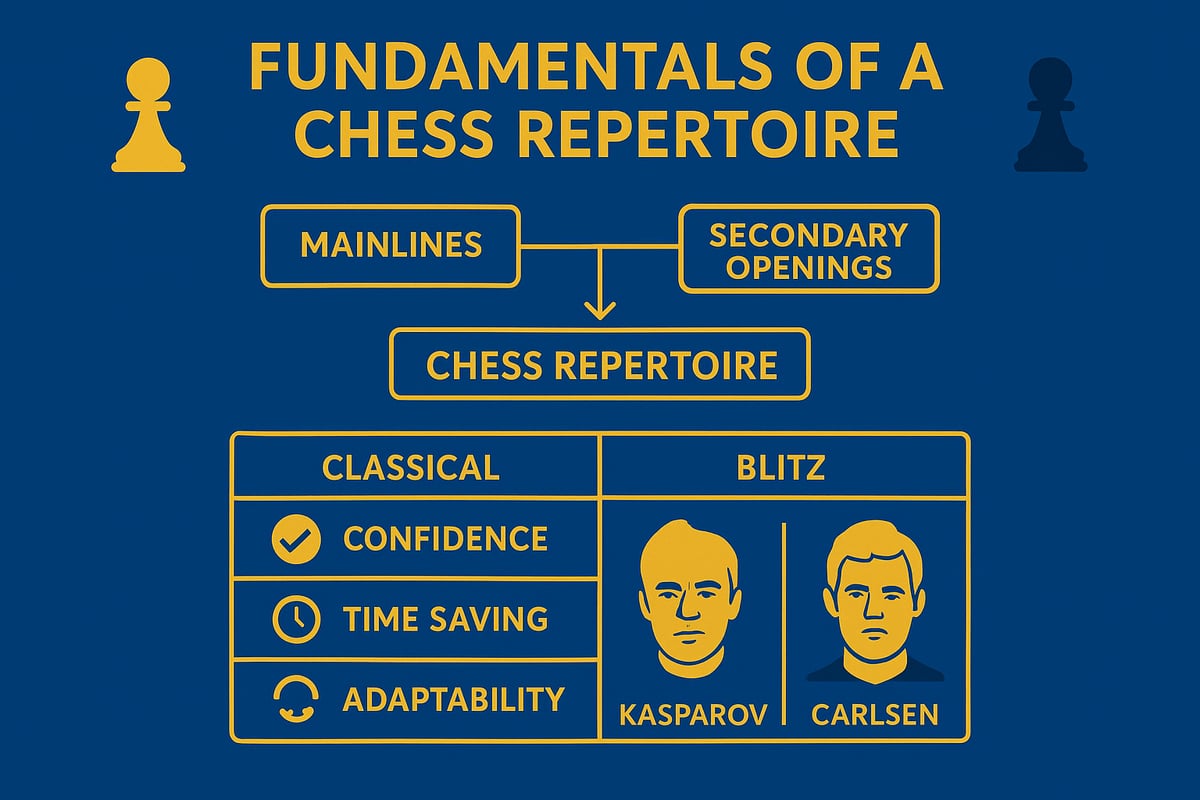
What Is a Chess Repertoire and Why Does It Matter?
A chess repertoire is your personal collection of opening moves and responses that you use consistently. Think of it as your playbook, designed to help you feel prepared and confident, no matter who you face.
When you have a solid chess repertoire, you save time before games and feel more at ease during play. For example, Garry Kasparov was famous for his deep Sicilian Defense preparation, while Magnus Carlsen often adapts with a flexible chess repertoire to surprise opponents. Their success shows that mastering your openings can boost results in both classical and rapid formats.
Many players believe only advanced competitors need a chess repertoire, but that’s a myth. Even at the club level, a well-chosen repertoire helps you avoid early blunders, focus on your strengths, and improve faster. As one popular saying goes, practice proves that the most reliable openings score best in the long run.
There are two main approaches: sticking to mainline theory, which follows the most analyzed paths, or building a practical, surprise-based chess repertoire that catches rivals off guard. Both can work, but the key is using a repertoire that matches your goals and helps you climb the rating ladder.
| Repertoire Type | Main Features | Best For |
|---|---|---|
| Mainline Theory | Deep analysis, well-known positions | Tournament, classical play |
| Surprise-based | Offbeat moves, less theory to memorize | Blitz, rapid, club events |
Key Components of a Balanced Repertoire
A balanced chess repertoire covers both White and Black games, giving you confidence no matter which side you’re on. It should include mainline openings for reliability and secondary options for flexibility when you want to mix things up.
Matching your chess repertoire to your style is essential. Are you tactical, positional, aggressive, or solid? If you enjoy sharp play, the Sicilian or King’s Indian might fit. Prefer calm maneuvering? The Caro-Kann or London System could be ideal.
You also need to prepare for the most popular defenses, like the Sicilian, French, and King’s Indian. Transpositional awareness is important, too. Some systems, like the Reti or English, can morph into other openings, so understanding these transitions helps you avoid being caught off guard.
If you want practical resources to help assemble and refine your chess repertoire, check out the Chess Opening Toolkits Collection, which offers visual and actionable guides for a variety of opening systems.
By focusing on these components, you’ll create a chess repertoire that supports your improvement, helps you adapt to new challenges, and keeps your game fresh and effective.
Step-by-Step Guide to Building Your Chess Repertoire
Building your chess repertoire should feel like crafting your own toolkit for success. Whether you are new to tournaments or pushing for your next rating milestone, having a clear process makes all the difference. Let us walk through each step together so you can confidently create a chess repertoire that fits your style and goals.
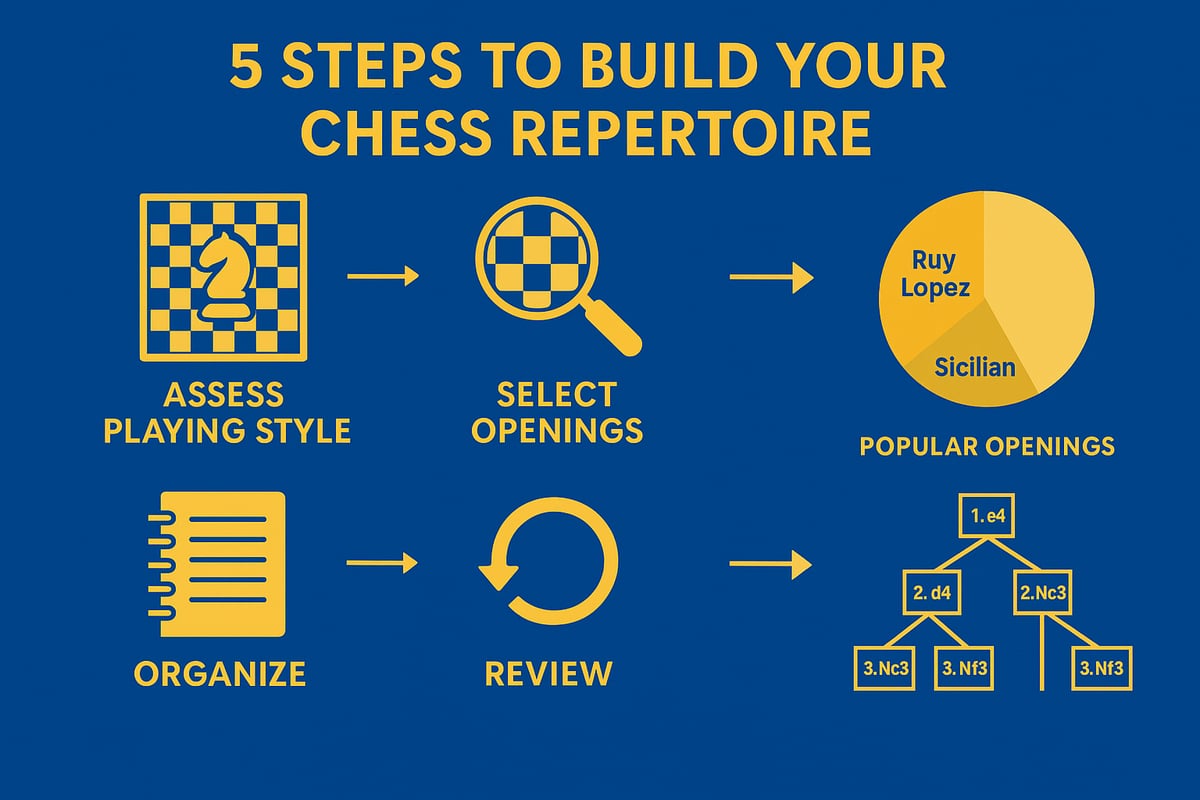
Step 1: Assessing Your Playing Style and Goals
Before diving into openings, start by understanding yourself as a player. What types of positions do you enjoy? Do you prefer sharp tactical battles or slow strategic maneuvering? Take a few moments to reflect on your recent games and note where you felt most comfortable or struggled.
Next, set realistic goals for your chess repertoire. Are you aiming for a specific rating, prepping for a club championship, or just looking to avoid early blunders? Your goals will shape your choices throughout the process.
For example, if you like simple, solid structures, the London System might suit you. If you thrive in complex, dynamic positions, the Catalan could be a better fit. Remember, a chess repertoire is not one size fits all. It should highlight your strengths, address your weaknesses, and align with your ambitions.
Create a checklist:
- Identify favorite and least favorite positions
- Set clear, achievable goals
- Consider time controls you play most often
By clarifying your preferences and targets, you lay a strong foundation for building a chess repertoire that truly supports your growth.
Step 2: Selecting Core Openings for White and Black
Now, it is time to choose the core openings that will anchor your chess repertoire. Start by looking at the first moves for White: 1.e4 and 1.d4 are the most popular, but flank openings like the English or Reti are solid alternatives.
For Black, focus on defenses to both 1.e4 and 1.d4. The Sicilian, Caro-Kann, and French are leading choices against 1.e4, while the Slav, King's Indian, and Nimzo-Indian are reliable against 1.d4.
Here is a quick comparison table:
| Opening/Defense | Style | Complexity | Example Player |
|---|---|---|---|
| Ruy Lopez | Balanced | High | Magnus Carlsen |
| Sicilian | Tactical | Very High | Garry Kasparov |
| London System | Solid | Low | Gata Kamsky |
| Caro-Kann | Solid | Medium | Anatoly Karpov |
Choosing between mainlines and sidelines is a matter of taste and practicality. Mainlines offer depth and theory, while sidelines can be easier to learn and catch opponents off guard.
If you want guidance on which openings are popular and effective, check out the Complete Guide to Popular Chess Openings. This resource can help you make informed decisions when shaping your chess repertoire.
Step 3: Building Depth and Breadth
With your core openings selected, the next step is to add depth and flexibility to your chess repertoire. Start by mapping out the main lines you want to play, but do not stop there. Always include backup options and anti-sideline responses to stay prepared.
For example, if you play the Sicilian as White, make sure you know both the Open Sicilian and a secondary line like the Rossolimo. This approach keeps your chess repertoire versatile and ready for any surprise.
Be mindful of move order tricks and transpositional traps. Some openings, like the Reti and English, can easily transpose into other setups. Keeping track of these possibilities helps you avoid getting caught off guard.
Checklist for this step:
- Map mainline and secondary options
- Prepare for rare gambits and anti-sidelines
- Study common transpositions in your chosen systems
The more you anticipate, the more resilient your chess repertoire becomes.
Step 4: Organizing and Documenting Your Repertoire
Staying organized is key to mastering your chess repertoire. There are several methods to document your lines, from classic paper notebooks and spreadsheets to digital tools like PGN databases.
A sample digital record might look like this:
Opening: Queen's Gambit Declined
Line: 1.d4 d5 2.c4 e6 3.Nc3 Nf6 4.Bg5 Be7
Plans: Control center, develop pieces, watch for c5 break
Key traps: Avoid early cxd5 exchanges without preparation
Consider creating visual opening trees or flowcharts to see the big picture. Tools such as Lichess Study, ChessBase, and Chess.com Opening Explorer make it easy to review and practice your chess repertoire interactively.
Organize your files by color (White/Black), opening family, and depth. Regularly update your notes as you learn new ideas or spot recurring problems in your games.
Step 5: Regular Review and Updating
A chess repertoire is not a static project. As opening theory changes and your own understanding grows, make it a habit to review and refresh your lines. Watch top-level games, keep an eye on online resources, and be ready to adjust when a favorite line falls out of favor.
Track your results in each opening. If you notice a repeated weakness, such as struggling against the King's Indian Attack or losing to a trendy sideline, take action. Update your chess repertoire by adding new moves or switching to a more reliable variation.
Set a reminder to revisit your repertoire every few months. This regular check-in ensures your preparation stays sharp and your confidence at the board remains high.
Essential Tools and Resources for Repertoire Mastery
Ready to take your chess repertoire to the next level? The right tools and resources can make a huge difference in how quickly and effectively you master your openings. Let’s explore the essential platforms, learning materials, and support networks that will help you build a winning chess repertoire.
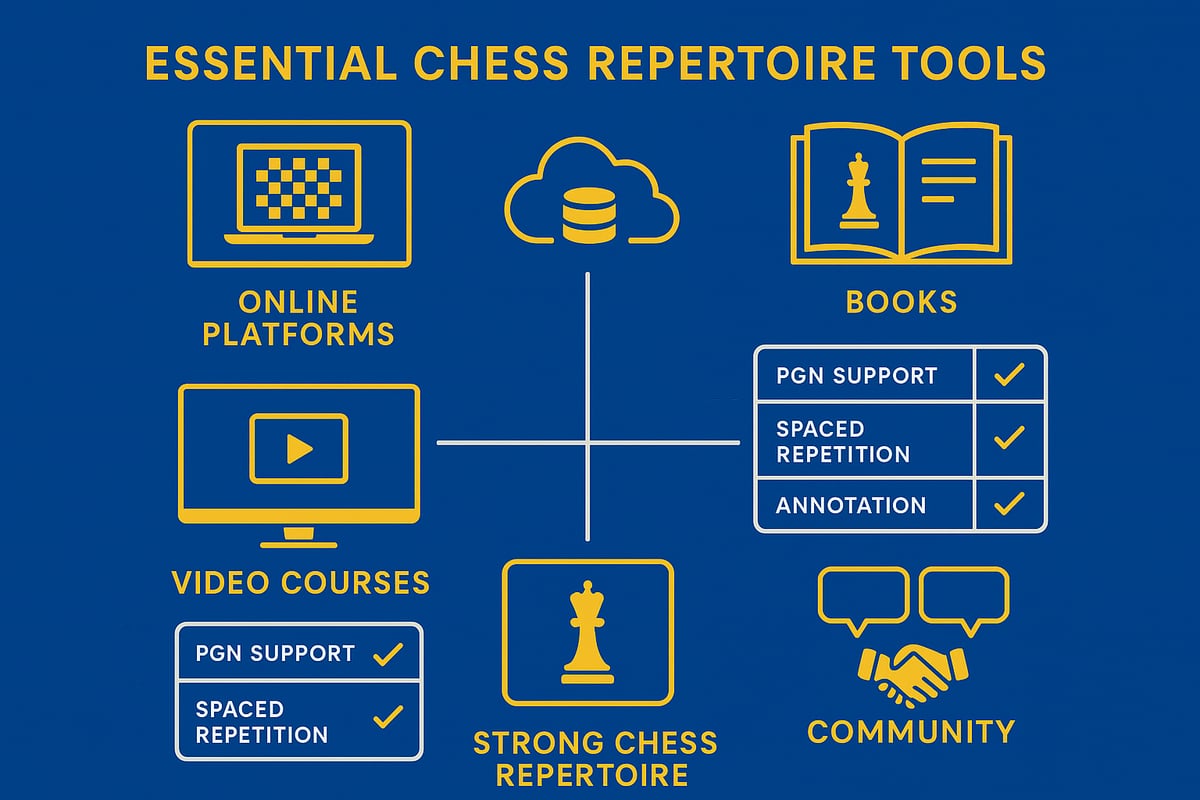
Online Platforms and Software
When it comes to building a robust chess repertoire, digital tools are a game-changer. Online platforms offer everything from opening explorers to interactive drills. Here’s a quick comparison of some top options:
| Platform | PGN Support | Spaced Repetition | Statistics | Annotation | Mobile App |
|---|---|---|---|---|---|
| Lichess Study | Yes | No | Yes | Yes | Yes |
| Chess.com Explorer | Yes | Partial | Yes | Yes | Yes |
| ChessBase | Yes | No | Yes | Yes | No |
| ChessTempo Trainer | Yes | Yes | Yes | No | Yes |
| Listudy.org | Yes | Yes | Yes | No | No |
If you want to go deeper, the Opening Master database with over 10 million human chess games is an incredible resource for researching opening trends and analyzing grandmaster games. These tools help you track your progress, study move orders, and keep your chess repertoire up to date, whether you’re at your desk or on the go.
Books, Courses, and Video Series
Not everyone learns the same way, so it’s smart to mix different resources when studying your chess repertoire. Traditional books offer deep insights, often breaking down the reasoning behind each move. Digital courses, on the other hand, provide interactive exercises and instant feedback.
Popular platforms like Chessable and Chess.com offer video series and spaced repetition courses. Many players combine a classic opening manual with a modern online course to reinforce both understanding and memory. For example, you might use a video series to grasp the big ideas of the London System, then refer to a printed book for detailed lines.
The key is finding materials that fit your learning style and chess repertoire needs. Try using a mix of formats so you stay engaged and cover all your bases as you improve.

Community and Coaching
Even with the best self-study tools, nothing beats the value of community feedback and personal coaching. Chess forums, Discord groups, and local clubs are fantastic places to ask questions and share ideas about your chess repertoire.
A coach can spot gaps in your preparation and suggest targeted improvements you might miss on your own. Sometimes, a single tip from an experienced player can help you break through a plateau. Joining a study group or working with a mentor makes the journey to chess repertoire mastery more fun, social, and efficient.
Efficient Learning and Practice Methods
Mastering your chess repertoire goes far beyond memorizing moves. It’s about building skills, reinforcing habits, and turning knowledge into practical results. Let’s break down how you can learn and practice your repertoire efficiently, using proven techniques and resources that actually work.
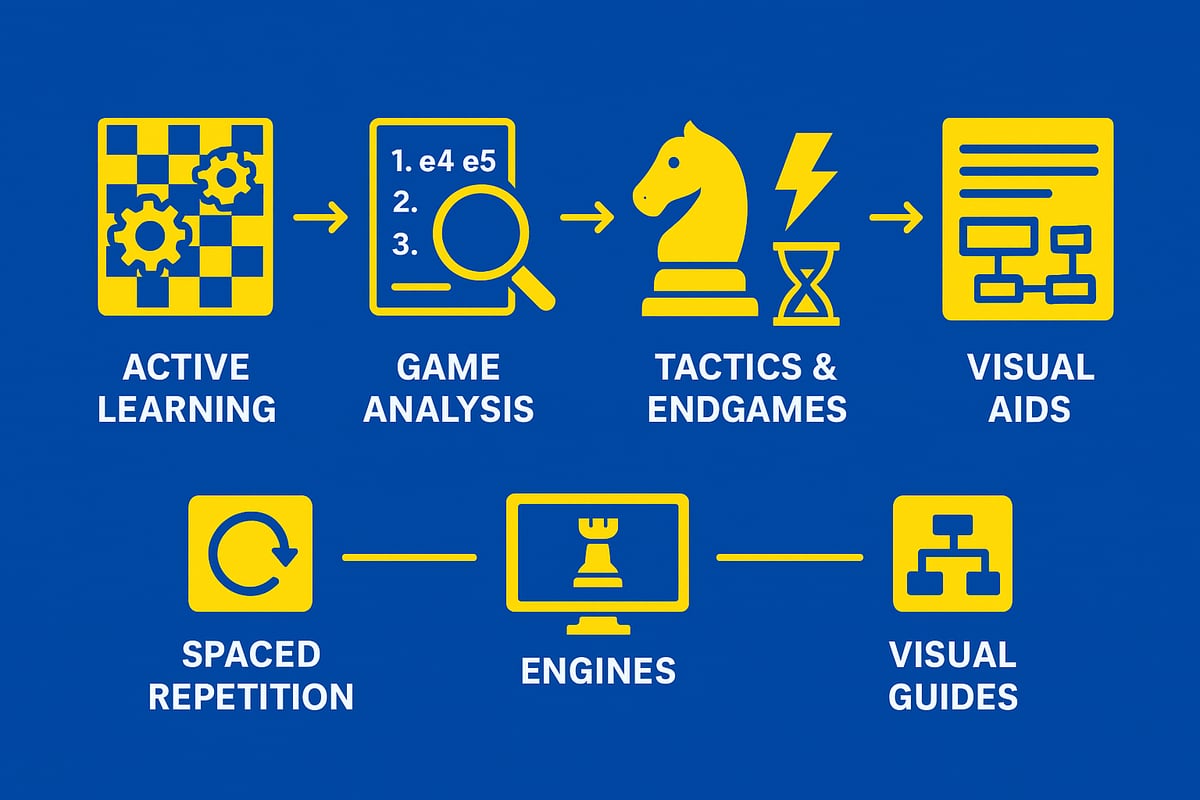
Active Learning Techniques
The best way to make your chess repertoire stick is to play through your lines, not just read about them. Set up your openings on a board and try them against an engine or a real opponent. This hands-on approach helps you spot tactical ideas and common pitfalls.
Spaced repetition is a game-changer for remembering complex variations. Tools like ChessTempo’s Opening Trainer let you drill specific lines until they become second nature. Want to go deeper? You might explore resources like the ChessBase Opening Encyclopedia 2025 for a wide range of lines and up-to-date theory.
Mix up your practice: play rapid games to test your memory, then switch to slower games to apply your chess repertoire under pressure. This variety keeps learning fresh and fun.
Analyzing Your Games for Repertoire Improvement
Every game you play is a goldmine for refining your chess repertoire. After each session, look for positions where you felt lost or where your opening choices didn’t lead to comfortable middlegames.
Self-annotation is powerful. Write down your thoughts, highlight mistakes, and compare your moves to engine suggestions. Did you miss a critical move in the French Defense? Make a note and revisit that line.
Use game databases to spot patterns. If you notice repeated trouble with a certain variation, it’s time to adjust your chess repertoire and plug those gaps. Over time, these reviews turn weaknesses into strengths.
Integrating Tactics and Endgames
A strong chess repertoire isn’t just about the opening. You need to understand the tactical motifs and endgame transitions that arise from your favorite lines. For example, if you play the Sicilian, be ready for sharp tactical traps in the early middlegame.
Drill key tactics related to your main openings. Use puzzle trainers to reinforce common patterns. Don’t overlook endgames—knowing how your chosen setups lead to specific endgame structures gives you a real edge.
Choose endgame lines that fit your style. If your chess repertoire favors closed positions, practice endgames where maneuvering and patience pay off.
Leveraging Visual Aids and Cheat Sheets
Visual aids can make your chess repertoire easier to learn and recall. Flowcharts, quick-reference tables, and cheat sheets break down complex move orders into manageable chunks.
Try making your own opening trees or use ready-made resources. Plug-and-play cheat sheets help you review before a game, so you don’t have to rely on memory alone.
Here’s a tip: sketch out the main branches of the Queen’s Gambit on a single page. This visual summary can be a lifesaver during study or tournament prep. With the right visual tools, your chess repertoire becomes a living, breathing system you can trust.
Advanced Strategies for Repertoire Success in 2026
Staying ahead in chess means evolving your chess repertoire along with the game itself. In 2026, top players are constantly adapting, and so should you. Ready to see how to keep your openings fresh, your prep sharp, and your results on the rise?
Adapting to the Modern Chess Meta
Chess is moving fast. Engine discoveries and grandmaster innovations are reshaping which openings dominate. Maybe you’ve noticed the rise of anti-computer lines, or how offbeat systems suddenly appear in elite tournaments. Your chess repertoire needs to keep pace.
Following live broadcasts and top-level games can reveal shifts before they hit your local club. FIDE’s recent Project STEM CHESS 2025 announcement is a great example of how data analytics are now driving opening preparation. By staying plugged in, you can spot new trends and adjust your chess repertoire proactively.
Handling Transpositions and Move Order Tricks
Transpositions can be both a weapon and a trap. Recognizing when an opening shifts into another is a skill every chess repertoire should cover. For example, starting with a Reti and steering into the Catalan can catch opponents unprepared.
Here’s a simple move order trick:
1. Nf3 d5
2. c4 e6
3. g3 Nf6
4. Bg2 Be7
5. O-O O-O
6. d4 (Now you’re in a Catalan!)
Defend against surprises by mapping out common transpositions in your chess repertoire notes. This way, you won’t be thrown off by clever move orders in key games.
Preparing for Specific Opponents and Tournaments
Personalizing your chess repertoire for an upcoming opponent can offer a real edge. Do they always play the French? Are they a King’s Indian devotee? Tailor your prep and you’ll feel more confident at the board.
Sometimes, predicting your opponent’s moves makes all the difference. A recent study on predicting chess players' moves shows how understanding player tendencies can shape your strategy. For online blitz, you might choose sharper lines, while in a club tournament, a solid approach could serve you better.
Balancing Preparation and Practical Play
It’s tempting to keep studying and never feel ready, but experience matters more than perfect theory. Don’t let your chess repertoire become a rabbit hole. At some point, you have to jump in and play.
Consider this: one player simplified their chess repertoire before a big tournament and saw their results improve. The takeaway? Sometimes less is more. Prioritize lines you know well over trying to memorize everything. Play, review, and keep it practical.
Monitoring Your Progress and Setting New Goals
Tracking your results is essential for seeing if your chess repertoire is working. Are you winning more with the London System or struggling with the Sicilian? Use performance stats and rating trends to guide your next steps.
Set small, achievable goals—like improving your win rate in a specific opening or learning a new sideline. Over time, these incremental improvements will add up, and your chess repertoire will become a real asset in your chess journey.
Troubleshooting Common Repertoire Challenges
Every chess player hits roadblocks when building and updating their chess repertoire. Whether you are overwhelmed by theory, forget lines in the heat of play, or struggle to stay motivated, these challenges are common. Let’s break down practical ways to overcome them so your chess repertoire becomes a tool for growth, not frustration.
Overcoming Information Overload
It’s easy to drown in endless variations when studying your chess repertoire. The trick is to focus on lines that actually show up in your games. Start by identifying the main openings that occur most at your rating level.
For example, if you play the London System, you can use a London System Opening Guide to filter the most practical lines, instead of memorizing every possible sideline. Make a shortlist of three to five main openings and ignore rare lines until you master the essentials.
Dealing with Forgotten Lines and Gaps
Even grandmasters forget lines under pressure. To quickly refresh your chess repertoire before games, rely on flashcards, cheat sheets, or quick-reference diagrams. These tools help you recall critical moves without hours of study.
Try reviewing your opening summary or a visual opening tree right before you play. If you spot a gap, add a simple note to your repertoire file and revisit it after the game. Over time, these small habits patch up weaknesses efficiently.
Staying Motivated and Avoiding Burnout
Burnout can sneak up when you grind your chess repertoire without seeing quick results. To keep your energy up, set small, achievable goals, like learning one new line per week or playing five blitz games using your latest preparation.
Celebrate victories, even minor ones. For instance, reward yourself for sticking to your opening plan or for remembering a tricky sideline. Regular, bite-sized wins will keep your enthusiasm alive and help you steadily improve your chess repertoire.
Adapting to Losses and Unexpected Opponent Choices
Everyone gets surprised by a rare move or loses with a favorite line. The key is to treat these moments as learning opportunities, not setbacks. After each game, ask yourself: Did my chess repertoire cover this position? If not, make a note and research the best response later.
Embrace flexibility. Sometimes, your opponent will take you off-script. Stay calm, use basic principles, and trust your understanding. Over time, your chess repertoire will adapt and grow stronger with every surprise you face.
When and How to Make Major Repertoire Changes
Sometimes, you’ll notice a part of your chess repertoire just isn’t working. Maybe a line feels uncomfortable, or you keep losing similar positions. These are signs it’s time for a change. Don’t overhaul everything at once; instead, swap out one opening at a time.
Test new ideas in casual games before adding them to your main repertoire. Track your results, and only commit to changes that genuinely feel right for your playing style. This step-by-step approach keeps your chess repertoire fresh and confidence high.
So, after digging into all these practical steps and tools for building your chess repertoire, you might be wondering, “Okay, where do I actually start improving my openings without getting lost?” I get it—there’s a lot out there, but you don’t have to figure it all out on your own. If you want a simpler, smarter way to boost your opening game and feel more confident at the board, why not check out some cheat sheets designed specifically for players like you? Ready to take that first real step toward smoother, stronger openings? Start Improving Your Openings


