

Have you ever wondered if you truly understand the chess concepts you've been studying? You might read through opening theory or watch tactical videos, but do you actually retain that information when you sit down at the board? That's where a chess quiz becomes an invaluable tool. Testing yourself isn't just about proving what you know – it's about identifying gaps, reinforcing patterns, and building genuine confidence. Unlike passive study methods, a chess quiz forces you to engage actively with the material, making it one of the most effective ways to improve your game in 2026.

Why a Chess Quiz Transforms Your Learning Process
Let's be honest: reading about chess and actually understanding chess are two entirely different things. You can memorise the first ten moves of the Ruy Lopez, but can you explain why each move is important? A chess quiz bridges this gap brilliantly.
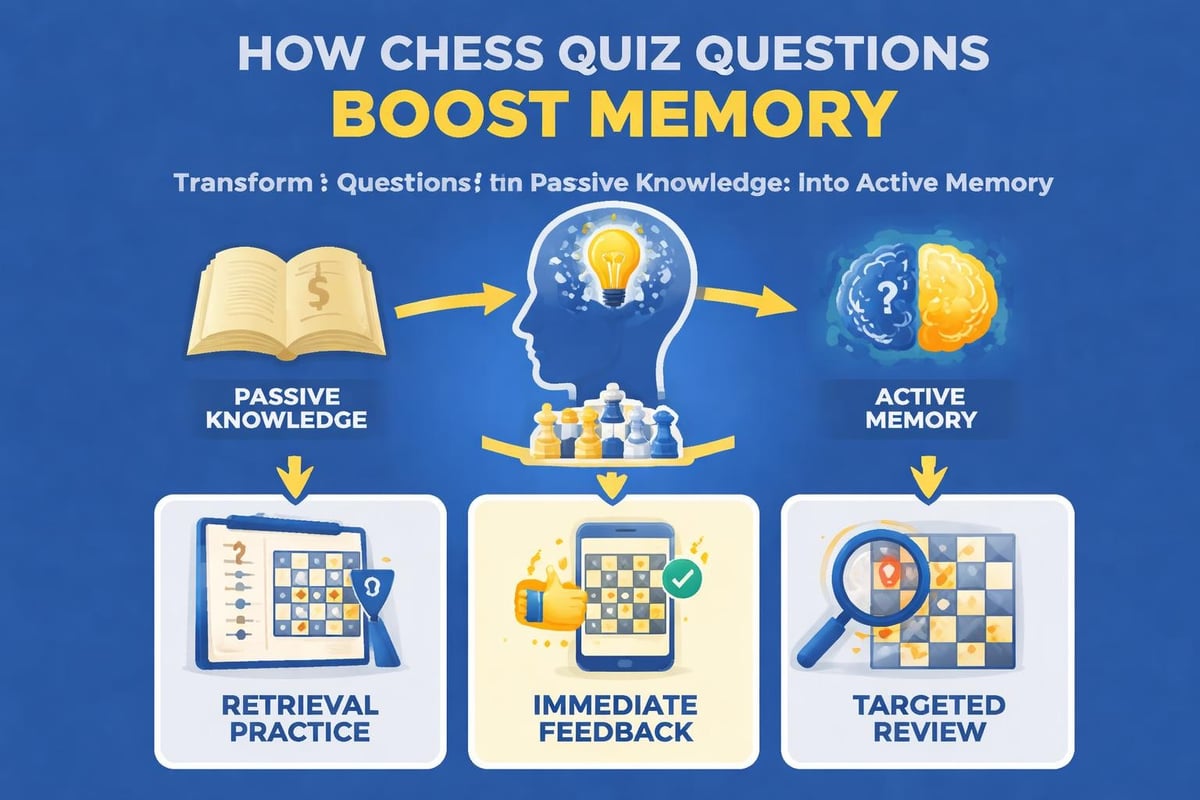
When you take a chess quiz, your brain operates differently than when you're passively consuming information. You're retrieving knowledge from memory, which strengthens neural pathways far more effectively than simple recognition. This process, known as active recall, is backed by decades of educational research and makes a massive difference in long-term retention.
The Science Behind Quiz-Based Learning
Research shows that testing yourself creates stronger memories than re-reading material. When you attempt quiz questions about chess openings, you're not just checking what you know – you're actually learning in that moment.
Here's what happens in your brain:
- Memory consolidation strengthens through retrieval practice
- Weak areas become immediately apparent so you know where to focus
- Pattern recognition improves as you encounter similar positions repeatedly
- Confidence builds with each correct answer, reducing game-day anxiety
Think about the last time you studied a new opening. Did you just read through the moves, or did you test yourself afterwards? Most players skip the testing phase, then wonder why they can't remember the theory when it matters most.
Types of Chess Quizzes That Accelerate Your Progress
Not all chess quizzes are created equal. Different formats serve different purposes, and understanding which type benefits you most can save you hours of unfocused study time.
Opening Theory Quizzes
These quizzes focus on specific opening lines and their underlying principles. Rather than just memorising move orders, you'll answer questions about why certain moves are played. For instance, understanding the best openings for Black becomes much easier when you test yourself on the strategic ideas behind each system.
| Quiz Type | Best For | Frequency |
|---|---|---|
| Opening identification | Recognising positions from first moves | Weekly |
| Move order sequences | Memorising critical variations | Daily |
| Strategic concept questions | Understanding plans and ideas | Bi-weekly |
| Transposition recognition | Connecting different openings | Monthly |
Tactical Pattern Quizzes
Tactics are the building blocks of chess success. A tactical chess quiz helps you recognise pins, forks, skewers, and discovered attacks instantly. The more patterns you've drilled through quizzes, the faster you'll spot them in real games.
You've probably experienced this: you miss a simple tactic in your game, then afterwards you see it immediately during analysis. Why does this happen? Your brain needs repetition to recognise patterns under pressure. Regular tactical quizzes create that repetition efficiently.
Historical and General Knowledge Quizzes
Want to explore chess culture whilst learning? The FIDE Open Chess Museum provides engaging quizzes that cover chess history and personalities. These might seem less practical than tactical training, but understanding chess history gives you valuable context for why certain openings and strategies developed.
Additionally, Encyclopaedia Britannica offers a 'Fact or Fiction' quiz that challenges common misconceptions about the game. You'd be surprised how many chess "facts" turn out to be myths!
Creating Your Own Effective Chess Quiz Routine
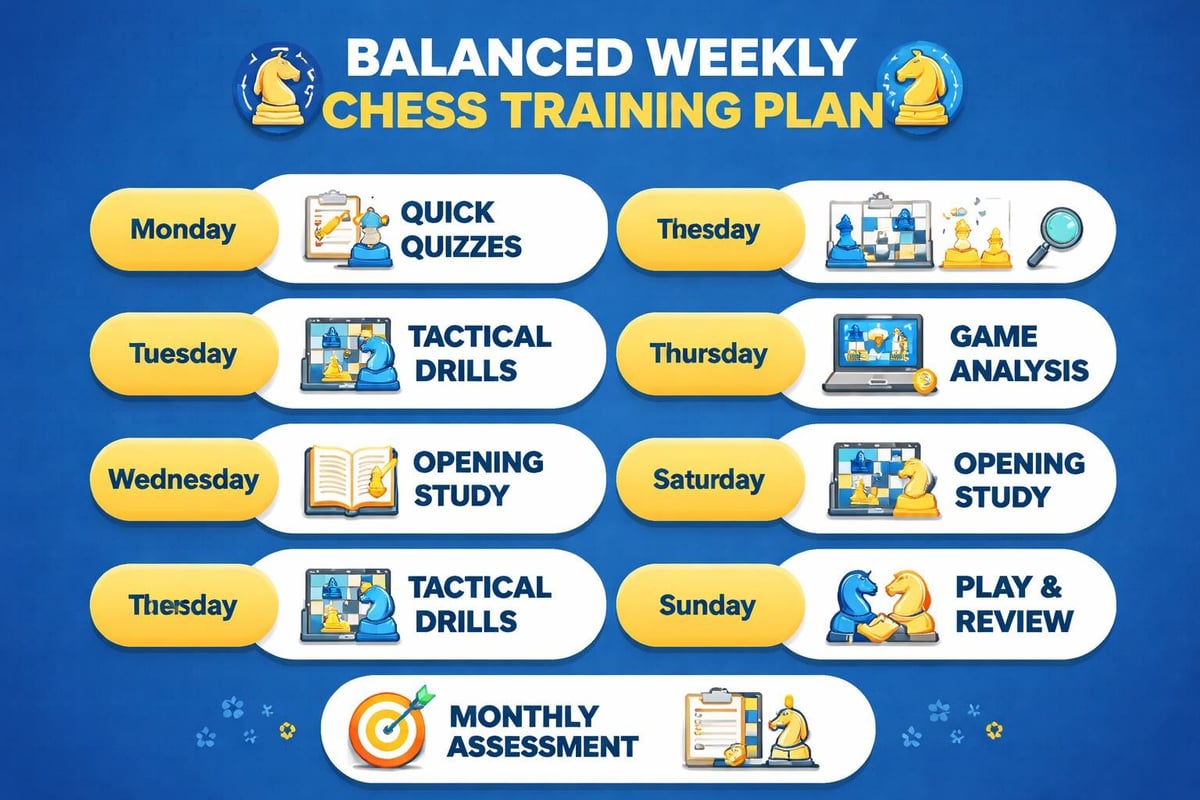
Now that you understand the value of chess quizzes, how do you incorporate them into your training schedule? The key is consistency rather than marathon sessions.
Daily Quick Tests (5-10 Minutes)
Start each chess session with a brief chess quiz covering yesterday's study material. If you worked on the Sicilian Defence, quiz yourself on the key variations. If you studied endgames, test your knowledge of critical positions.
This approach serves two purposes:
- Warms up your tactical vision before playing or studying
- Identifies forgotten material that needs review
Consider keeping a chess notebook where you record quiz questions that stump you. These become your personalised weak points to address.
Weekly Comprehensive Reviews
Once weekly, take a longer chess quiz covering everything you've studied that week. This could include opening theory, tactics, endgames, and strategic concepts. The ChessBase quiz platform offers dynamic questions that adapt to your skill level, making it perfect for these comprehensive sessions.
Monthly Progress Assessments
How do you know if you're actually improving? Monthly benchmark quizzes provide objective evidence. Take the same standardised chess quiz each month – perhaps Chess.com's expert quiz – and track your scores over time.
Common Chess Quiz Mistakes (And How to Avoid Them)
You might think taking any chess quiz is beneficial, but certain approaches can actually waste your time or create false confidence. Let's address the most common pitfalls.
Rushing Through Questions
Speed matters in chess, but not during study quizzes. If you're racing through questions just to get a high score, you're missing the learning opportunity. When you encounter a difficult question, pause and think it through properly. Even if you get it wrong, you'll remember the correct answer far better after genuinely attempting the problem.
Ignoring Wrong Answers
Here's a truth that many players ignore: wrong answers are more valuable than correct ones. When you answer a chess quiz question incorrectly, that's precisely where your learning gaps exist. Instead of moving on quickly, spend extra time understanding why you were wrong and what the correct reasoning should be.
Create a system for this:
- Screenshot or note down every question you miss
- Research the concept thoroughly after the quiz
- Re-test yourself on similar questions within 24 hours
- Review these areas before your next game
Only Testing Comfortable Areas
It's tempting to take quizzes on topics you already know well. Confirming your knowledge of familiar openings feels good, doesn't it? But genuine improvement comes from testing weak areas. If you struggle with endgames, that's exactly where you need more quiz practice.
Connecting Quiz Practice to Over-the-Board Success
Taking a chess quiz is useful, but how does it translate to better game results? The connection isn't always obvious, especially when you're answering multiple-choice questions but playing unrestricted games.
Pattern Recognition Under Pressure
During a real game, you're not given options – you must generate moves from scratch. However, quiz practice primes your brain to recognise familiar patterns faster. When a tactical motif appears on the board, your subconscious alerts you because you've seen it dozens of times in quizzes.
This is particularly valuable for opening preparation. If you've regularly tested yourself on the Sicilian Defense for beginners, you'll navigate those positions with greater confidence and speed during actual play.
Building Decision-Making Confidence
Every chess quiz question is a decision-making exercise. You evaluate options, eliminate poor choices, and commit to an answer. This mental process mirrors what happens during games. The more quiz decisions you make in low-pressure practice, the more comfortable you become making critical decisions when the clock is running.
| Skill Developed | Quiz Practice | Game Application |
|---|---|---|
| Pattern recognition | Identifying tactics in puzzles | Spotting combinations quickly |
| Opening knowledge | Answering theory questions | Confident first 10-15 moves |
| Endgame technique | Testing key positions | Converting advantages |
| Strategic understanding | Concept-based questions | Formulating effective plans |
Designing Challenge Quizzes for Specific Weaknesses
Generic chess quizzes help, but targeted quizzes addressing your specific weaknesses accelerate improvement dramatically. How do you identify these areas and create appropriate tests?
Analysing Your Games for Quiz Topics
Your recent games contain a treasure trove of learning opportunities. After each game, identify the critical moments where you struggled or made mistakes. These become quiz topics.
For example, if you frequently misplay the middlegame arising from the King's Indian Defence, create a series of questions about typical plans in those positions. What's Black's standard pawn break? Where does White's attack usually develop? How should each side position their pieces?
Using Opening Guides Strategically
Rather than passively reading through opening materials, transform them into quiz questions. When studying comprehensive chess resources, pause after each section and create three questions testing the key concepts.
This active transformation serves dual purposes:
- Deeper engagement with the material as you read
- Ready-made quizzes for future review sessions
Personality and Playing Style Quizzes
Understanding your chess personality helps you choose suitable openings and positions. Chess.com's personality quiz reveals which legendary player's style matches yours. Are you a tactical assassin like Tal, or a positional grinder like Karpov?
This self-awareness guides your study priorities. If you're naturally tactical, you might need extra quiz practice on positional concepts to round out your game. Conversely, positional players benefit from intensive tactical chess quiz work.
Advanced Quiz Techniques for Serious Improvers
Once you've mastered basic chess quiz practice, these advanced techniques can push your improvement even further.
Spaced Repetition Scheduling
You've probably heard of spaced repetition in language learning, but it works brilliantly for chess too. Rather than testing yourself once and moving on, schedule repeated quizzes on the same material at increasing intervals.
Here's an effective schedule:
- Initial quiz: Take it after first learning the material
- First review: 24 hours later
- Second review: One week later
- Third review: One month later
- Final review: Three months later
This approach ensures knowledge moves from short-term to long-term memory. Questions you answer correctly move to longer intervals; questions you miss come back sooner.
Blind Quiz Practice
For opening theory, try taking quizzes without a board in front of you. Visualising positions mentally before checking them on a board strengthens your calculation abilities and board vision simultaneously. This technique is challenging initially but pays enormous dividends in over-the-board play.
Collaborative Quiz Sessions
Learning doesn't happen in isolation. Create quiz sessions with chess friends where you test each other. This social element adds accountability and often reveals different perspectives on the same positions. You might confidently answer a question one way, then discover your study partner has a completely valid alternative approach.

Integrating Quiz Results into Your Study Plan
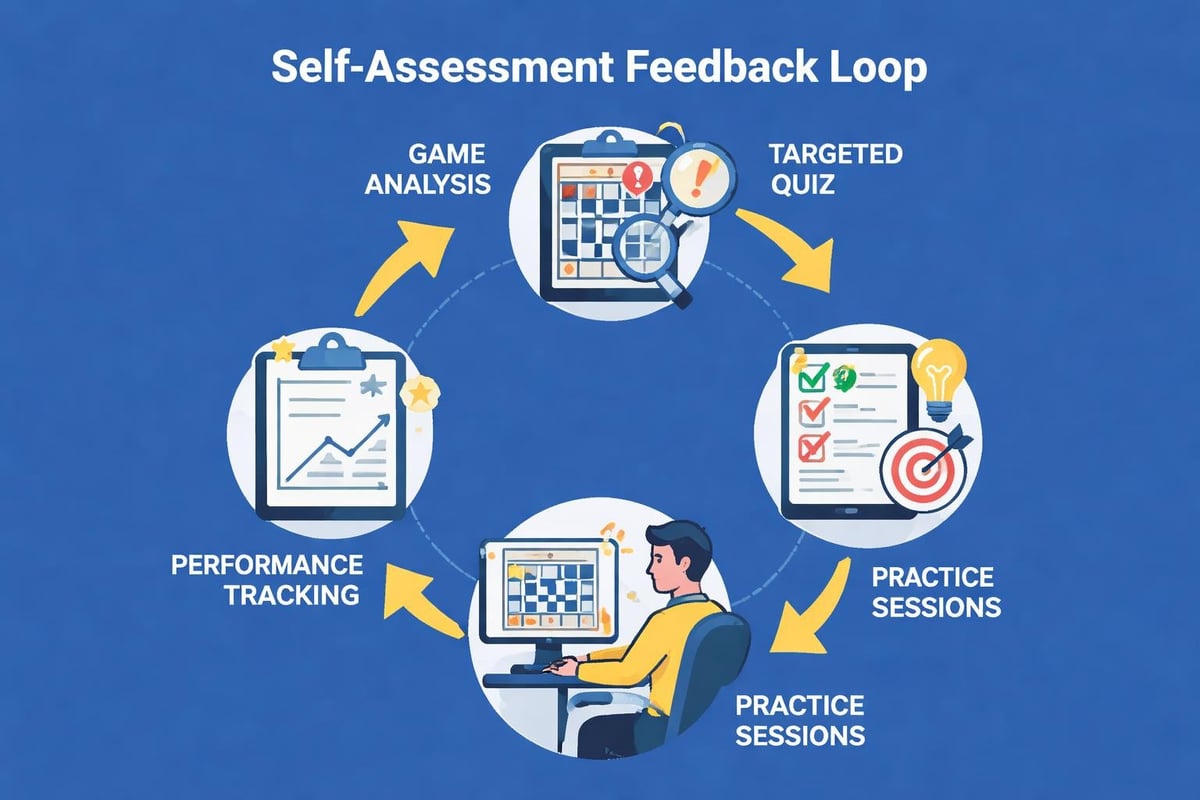
Taking a chess quiz generates valuable data about your knowledge and skills. Are you using this information effectively to guide your future study?
Tracking Performance Metrics
Maintain a simple spreadsheet tracking your quiz scores across different topics. After several weeks, patterns emerge clearly. Perhaps you consistently score 85% on tactical quizzes but only 60% on endgame questions. That's a clear signal to rebalance your study time.
Don't just track overall scores either. Note which specific sub-topics within each area challenge you most. In opening quizzes, are you struggling with move orders, strategic ideas, or both? This granular data makes your study time much more efficient.
Adjusting Study Priorities Based on Results
Your chess quiz results should directly influence what you study next. If you've scored well on a topic for three consecutive weeks, you've likely mastered it for now. Redirect that study time to weaker areas instead.
This dynamic approach prevents the common mistake of over-studying comfortable topics whilst neglecting challenging ones. Yes, it feels good to ace quizzes on your favourite opening, but that's precisely where you need less practice, not more.
Setting Realistic Improvement Goals
Use quiz baselines to establish concrete improvement goals. Instead of vague aims like "get better at chess," you might target "score 80% or higher on French Defence quizzes within six weeks" or "answer 15 consecutive tactical puzzles correctly."
These specific, measurable goals keep you motivated and provide clear evidence of progress. When you hit a target, celebrate it! Then set the next challenge slightly higher.
Beyond Multiple Choice: Alternative Quiz Formats
Whilst multiple-choice questions are convenient, other quiz formats can enhance your learning in different ways.
Position Reconstruction Quizzes
Can you reconstruct a position from memory after briefly seeing it? This exercise, used by chess masters for decades, develops both memory and pattern recognition. Study a position for 30 seconds, then try to recreate it from scratch. Check your accuracy and note which pieces you forgot or misplaced.
Explain Your Answer Quizzes
Rather than simply selecting the correct move, force yourself to explain why it's correct in writing or aloud. This verbal processing deepens understanding significantly. You might know that a move is right without truly understanding why – explaining it reveals that gap.
Time-Pressure Quizzes
Most casual quizzes allow unlimited thinking time, but real games don't. Periodically take timed chess quizzes where you must answer within 30-60 seconds per question. This simulates game pressure and helps you develop the crucial skill of making good decisions quickly when necessary.
Leveraging Technology and Online Platforms
We're fortunate in 2026 to have abundant online resources for chess quizzes. How can you make the most of these platforms?
Platform Comparison and Selection
Different platforms offer unique advantages. Some provide adaptive difficulty that adjusts to your level, whilst others focus on specific rating ranges or topics. The comprehensive 62-question chess trivia quiz covers general knowledge and rules, making it perfect for well-rounded development.
Meanwhile, specialised platforms might offer deeper coverage of specific areas. Explore several options and identify which aligns best with your learning style and current needs.
Combining Digital and Physical Practice
Technology is powerful, but don't neglect physical practice. Writing quiz questions and answers by hand engages your brain differently than clicking buttons. Consider printing occasional quizzes or creating physical flashcards for critical concepts.
The act of moving pieces on a real board whilst testing yourself provides kinaesthetic learning that complements digital study. This multi-sensory approach creates stronger, more durable memories.
Cutting-Edge AI-Based Chess Quizzes
Recent developments in artificial intelligence have produced sophisticated chess quiz systems. Research into ChessQA, a benchmark for evaluating language models' chess understanding, demonstrates how AI can generate contextual, challenging questions adapted to individual players.
These systems can identify subtle gaps in your understanding and generate questions specifically targeting those areas. As this technology matures throughout 2026, expect increasingly personalised quiz experiences that accelerate your improvement.
Building a Chess Quiz Library for Long-Term Growth
Serious improvement requires sustained effort over months and years. Creating a personal chess quiz library supports this long-term development.
Organising Questions by Theme and Difficulty
As you encounter excellent quiz questions from various sources or create your own, organise them systematically. Categories might include:
- Opening theory (subdivided by specific openings)
- Middlegame tactics (pins, forks, discovered attacks, etc.)
- Endgame technique (pawn endings, rook endings, theoretical positions)
- Strategic concepts (pawn structures, piece activity, space advantage)
- Chess history and culture (players, tournaments, milestones)
Within each category, mark questions as beginner, intermediate, or advanced. This organisation lets you quickly access appropriate material for your current session's focus.
Creating Seasonal Review Cycles
Every three months, take comprehensive review quizzes covering all major topics you've studied. This seasonal rhythm prevents knowledge decay and shows your long-term trajectory. You'll be amazed comparing your performance on the same quiz taken in January versus October.
These reviews also help you identify concepts that need refreshing. Even material you mastered months ago can become fuzzy without periodic reinforcement. Regular review quizzes maintain your hard-earned knowledge.
A chess quiz isn't just a testing tool – it's a powerful learning engine that transforms passive study into active mastery. By regularly challenging yourself with targeted questions, tracking your results, and adjusting your study based on the data, you'll improve faster and more sustainably than through passive reading alone. Whether you're working on opening theory, tactics, or endgames, Chess Cheat Sheets provides the streamlined guides and resources you need to build quiz-worthy knowledge efficiently. Start incorporating regular quiz practice into your routine today, and watch your board vision, pattern recognition, and overall confidence soar.


