

Playing Black in chess means you're always responding to White's initiative, but that doesn't mean you're at a disadvantage. In fact, mastering the right chess openings for black gives you the power to dictate the type of position you'll play, neutralize White's first-move advantage, and even launch devastating counterattacks. Whether you're facing 1.e4, 1.d4, or one of the flank openings, having a solid repertoire as Black is essential for consistent improvement. The key is finding openings that match your style while providing sound positional foundations.
Understanding Black's Unique Challenge
When you sit down with the black pieces, you're starting from a slightly reactive position. White moves first, which grants a tempo advantage and the ability to set the initial direction of the game. But here's the thing: this small disadvantage is actually an opportunity in disguise.
Your job as Black is threefold:
- Equalize the position through accurate opening play
- Create imbalances that suit your playing style
- Seize the initiative when White overextends
The best chess openings for Black share common characteristics. They're sound, flexible, and lead to positions where you understand the resulting middlegame plans. You don't need to memorize twenty moves deep in every variation. Instead, focus on understanding the key ideas behind each opening.
Top Defensive Systems Against 1.e4
White's most popular first move deserves your closest attention. When facing 1.e4, you have several reliable options that have stood the test of time.
The Sicilian Defense: Fighting for the Initiative
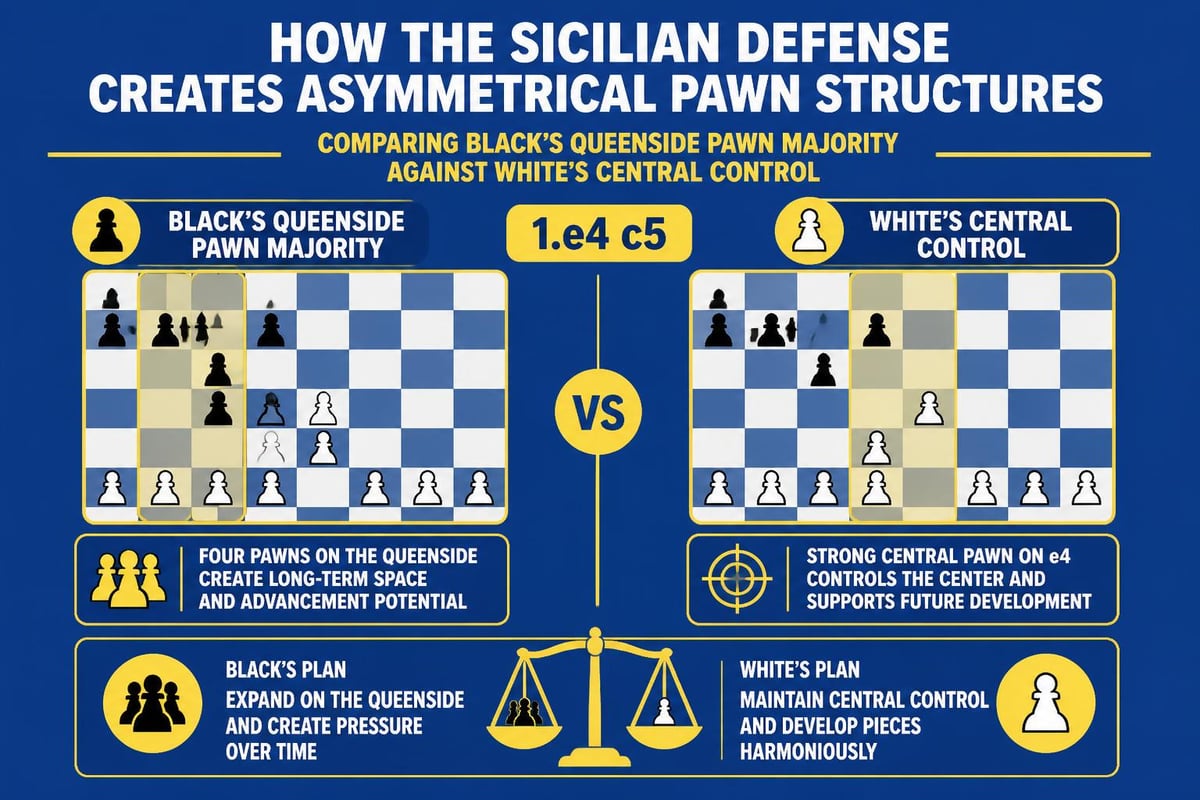
The Sicilian Defense (1.e4 c5) is Black's most ambitious response to 1.e4. Rather than aiming for quick equality, you're immediately creating an asymmetrical position where both sides have winning chances.
Why the Sicilian works:
- Prevents White from establishing a strong pawn center
- Creates counterplay on the queenside
- Leads to sharp, tactical positions
- Offers multiple sub-variations to suit different styles
The main lines include the Najdorf, Dragon, Classical, and Sveshnikov variations. Each has distinct characteristics, and you'll want to explore which suits your tactical comfort level. If you're looking to build a comprehensive understanding, our Sicilian Defense book breaks down the essential patterns you need to know.
The French Defense: Solid and Strategic
If you prefer strategic complexity over tactical fireworks, the French Defense (1.e4 e6) might be your calling. This opening prioritizes solid pawn structures and long-term planning over immediate complications.
| Aspect | French Defense | Sicilian Defense |
|---|---|---|
| Complexity | Strategic | Tactical |
| Pawn Structure | Closed/Semi-closed | Open/Semi-open |
| Learning Curve | Moderate | Steep |
| Winning Chances | Balanced | High for both sides |
The French often leads to positions where you have a space disadvantage but concrete counterplay. You'll typically aim for the ...c5 break or create pressure against White's center. This opening teaches you patience and proper piece maneuvering.
The Caro-Kann Defense: Reliability First
Looking for something rock-solid? The Caro-Kann Defense (1.e4 c6) is one of the most dependable chess openings for black. You're preparing ...d5 while keeping your light-squared bishop free, unlike in the French.
Main benefits:
- Fewer weaknesses than the French
- Easier development of the light-squared bishop
- Solid pawn structure
- Less theoretical than the Sicilian
The trade-off is that positions can become somewhat passive if you're not careful. But for players who value security and gradual improvement, the Caro-Kann delivers consistent results. If you're torn between options, check out our comparison of Caro-Kann vs French Defense to see which aligns with your preferences.

Facing 1.d4: Queen's Pawn Defenses
Queen's pawn openings create a different landscape entirely. When White plays 1.d4, you're entering territory where strategic understanding often trumps tactical calculation.
The King's Indian Defense: Counterattacking Chess
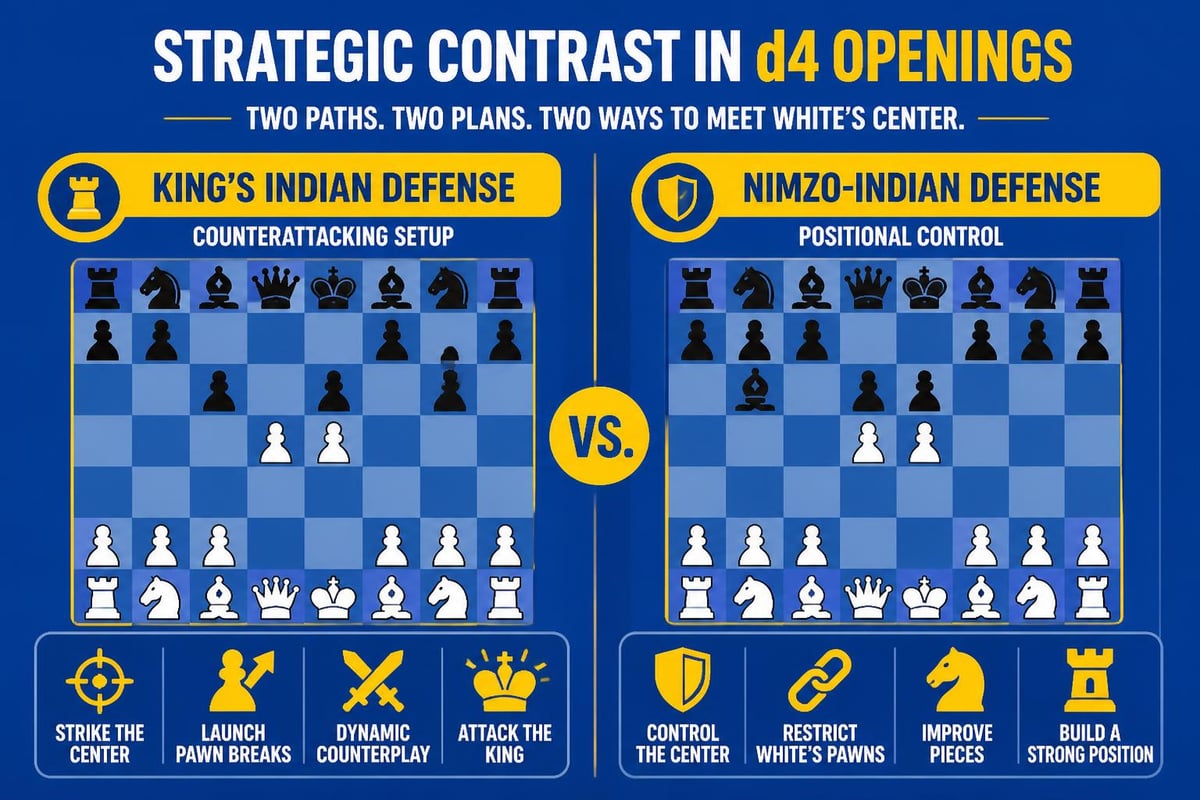
The King's Indian Defense is for fighters. You allow White to build a strong center, then launch a fierce kingside attack. This is one of the most aggressive chess openings for Black against 1.d4.
The typical plan involves:
- Developing with ...Nf6, ...g6, and ...Bg7
- Allowing White's central pawn duo
- Preparing ...f5 or ...e5 breaks
- Launching a kingside pawn storm
The King's Indian requires courage and accurate calculation. You're often playing for a direct attack against White's king, which means mistakes can be punished severely. But when you understand the patterns, it's incredibly rewarding.
The Nimzo-Indian Defense: Positional Excellence
After 1.d4 Nf6 2.c4 e6 3.Nc3, the Nimzo-Indian Defense (3...Bb4) gives Black an excellent positional foundation. You're immediately putting pressure on White's center and preparing to damage their pawn structure.
This opening is popular at all levels, from club players to world champions. The key concept is trading your bishop for White's knight on c3, creating doubled pawns and long-term strategic targets. You'll find yourself playing rich middlegames where understanding pawn structures matters more than memorizing concrete variations.
Building Your Black Repertoire
Here's where many players go wrong: they try to learn too many openings at once. Your repertoire doesn't need to be encyclopedic. It needs to be functional.
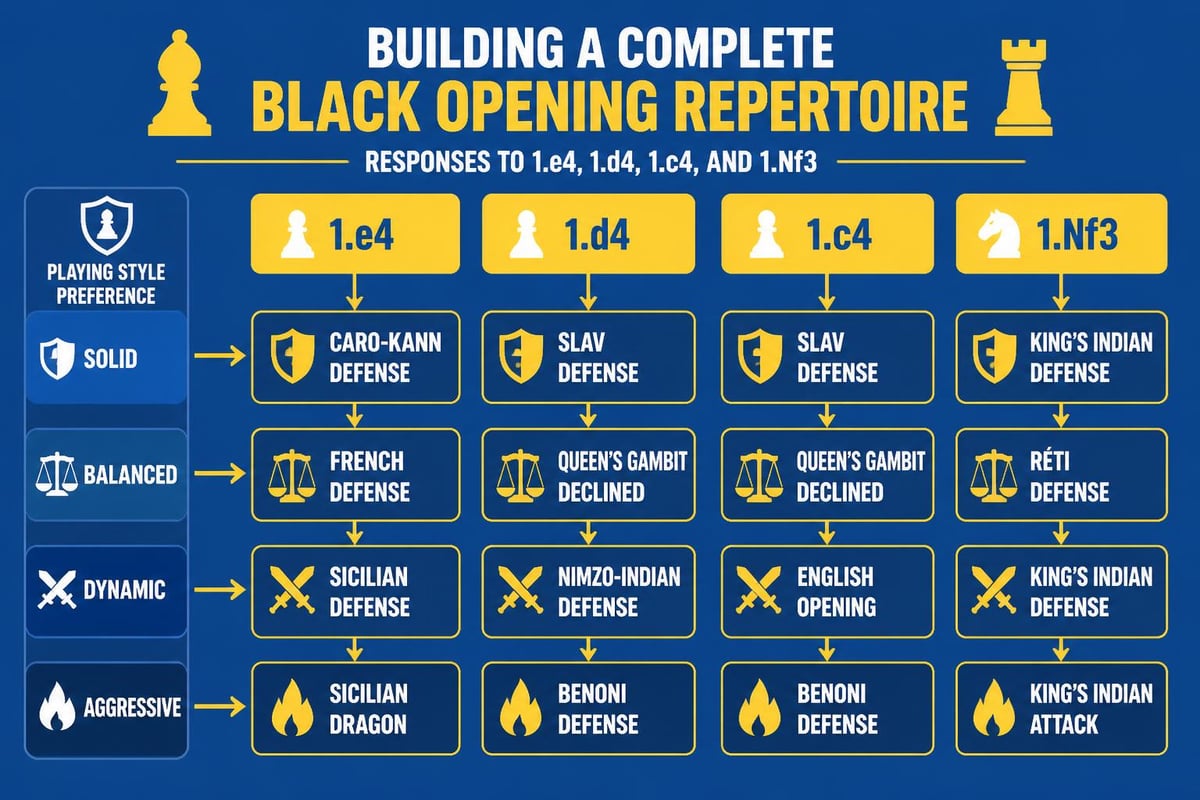
A practical approach to repertoire building:
- Choose one main defense against 1.e4
- Select two complementary systems against 1.d4
- Have a response ready for 1.c4 and 1.Nf3
- Learn the ideas, not just the moves
Against 1.e4, you might play the Sicilian as your main weapon. Against 1.d4, perhaps the Nimzo-Indian when White plays 3.Nc3, and the Queen's Gambit Declined otherwise. This gives you coverage without overwhelming yourself with theory.
The top chess openings for Black vary based on playing style and time controls. What works in classical games might not translate perfectly to blitz, so consider adjusting your repertoire based on your typical formats.
Lesser-Known but Effective Options
Not everyone wants to walk the main theoretical highways. Sometimes the side roads offer just as much promise with fewer traffic jams.
The Scandinavian Defense: Immediate Confrontation
The Scandinavian Defense (1.e4 d5) immediately challenges White's center. It's straightforward, requires less memorization than the Sicilian, and leads to playable positions quickly. Our Scandinavian Defense chess opening guide covers everything from basic principles to advanced nuances.
The Dutch Defense: Fighting Against 1.d4
When facing 1.d4, the Dutch Defense (1...f5) creates immediate imbalance. You're staking a claim on the kingside and preparing active piece play. It's riskier than the King's Indian but offers excellent practical chances.
Dutch Defense variations:
- Classical Dutch (with ...e6 and ...Be7)
- Leningrad Dutch (with ...g6 and ...Bg7)
- Stonewall Dutch (with ...d5, ...e6, and ...c6)
Each variation offers different pawn structures and strategic themes. The Leningrad tends to be the most flexible and aggressive of the three.
Modern Approaches to Classical Openings
Chess theory evolves constantly. What worked in the 1990s might have been refined or even refuted by modern analysis. The best chess openings for Black in 2026 reflect contemporary understanding and computer-aided preparation.
| Opening | Theoretical Status | Practical Results | Preparation Time |
|---|---|---|---|
| Sicilian Najdorf | Heavy theory | Excellent | High |
| Berlin Defense | Drawish reputation | Solid | Moderate |
| Grünfeld Defense | Sharp theory | Double-edged | High |
| Queen's Gambit Declined | Classical | Reliable | Moderate |
You don't need to follow grandmaster preparation to benefit from modern ideas. Even simple improvements in move orders or understanding key pawn breaks can elevate your results significantly.
The key is staying current without getting overwhelmed. Focus on understanding the recent ideas in your chosen openings rather than memorizing every new game from the top level.
Common Mistakes When Learning Black Openings
Even with the right openings in your arsenal, execution matters. Here are the pitfalls that trip up most players when developing their black repertoire.
Memorization without understanding is the biggest trap. You might know fifteen moves of theory, but if you don't understand why those moves are played, you'll collapse the moment your opponent deviates. Instead, focus on the strategic themes and typical middlegame plans.
Playing too passively is another frequent error. Just because you're Black doesn't mean you should accept inferior positions. The best chess openings for black create active piece play and concrete counterchances, not passive suffering.
Switching openings too frequently prevents deep learning. If you abandon the Sicilian after three losses and switch to the French, then jump to the Caro-Kann a month later, you'll never develop the pattern recognition that comes from repeated exposure.
Practical Training Methods
Knowing the theory is one thing. Converting it into practical strength requires deliberate practice. Here's how to actually improve your understanding of chess openings for black.
Study complete games in your chosen openings. Don't just replay the moves-try to understand the plans both sides are pursuing. When did Black equalize? Where did White overextend? What pawn breaks were critical?
Practice against engines set to slightly lower levels. This helps you experience typical positions without facing inhuman accuracy. Gradually increase the difficulty as your comfort grows.
Review your own games to identify recurring mistakes. Are you consistently weak on move 12 of your main line? That's a signal to deepen your preparation in that specific area.
Creating a systematic approach to learning helps tremendously. Rather than random studying, focus on one opening at a time, master its key positions, then move to the next. The resources at Chess Cheat Sheets can help you structure this learning process efficiently.
Adjusting to Your Opponent's Level
Your opening choice should sometimes depend on who you're playing. Against stronger opponents, solid openings like the Caro-Kann or Nimzo-Indian might serve you better than the ultra-sharp Sicilian Dragon.
Against weaker players, you can afford to take more risks and play for complications. The King's Indian or aggressive Sicilian variations can create the tactical complexity where the stronger player (you) is more likely to navigate successfully.
In online blitz and bullet, simpler systems often work better than theoretical mazes. You want positions where you understand the plans instinctively, not ones requiring precise calculation under time pressure.
The Psychology of Playing Black
There's a mental component to choosing chess openings for black that often gets overlooked. You need to embrace the reactive nature of the position while maintaining fighting spirit.
Confidence matters enormously. If you don't believe your opening gives you good chances, you'll play tentatively and create problems that didn't exist in the position. Trust your preparation and commit to your plans.
Patience is equally important. Not every game needs to be a tactical slugfest. Sometimes the best approach is gradual maneuvering, slowly improving your position until concrete opportunities emerge.
Finding openings that match your chess personality makes this easier. Aggressive players naturally gravitate toward the Sicilian and King's Indian. Positional players find comfort in the Nimzo-Indian and French. Know yourself, and choose accordingly.
Keeping Your Repertoire Fresh
Opening theory never stands still. New ideas emerge, old variations get rehabilitated, and occasionally, a move gets refuted. Staying current requires regular maintenance of your repertoire.
Set aside monthly review time to check what's new in your openings. You don't need to follow every game, but staying aware of major theoretical developments helps prevent nasty surprises.
Supplement main lines with surprise weapons. Having one less-common variation in your back pocket can be useful when you need to throw opponents off their preparation.
The top 10 chess openings for Black change in popularity over time, but the fundamental principles remain constant. Focus on developing pieces, controlling the center, and creating active play.
Remember that while staying current helps, fundamentals matter more than novelties. A deep understanding of typical positions will serve you better than knowing the latest computer line that might be refuted next week.
Your success with the black pieces comes down to preparation, understanding, and confidence. Choose openings that suit your style, learn them thoroughly, and trust your ability to create winning chances even without the advantage of the first move.
Mastering chess openings for black transforms you from a reactive defender into a confident strategist who can dictate the game's direction from move one. Whether you prefer the sharp complications of the Sicilian or the solid foundation of the Caro-Kann, developing a coherent repertoire is essential for consistent improvement. At Chess Cheat Sheets, we've created comprehensive guides and streamlined resources that help you master these openings without drowning in endless theory, giving you the confidence and knowledge to face any opponent with the black pieces.


