

Are you ready to level up your chess game in 2025? Whether you are a beginner or a seasoned player, knowing the right chess moves to win is more crucial than ever.
This article will break down the 9 essential chess moves to win that every player needs in their arsenal to stay ahead in today’s competitive chess world. You will discover how these moves can shift the momentum in any match, from the opening to the endgame.
Imagine outsmarting your opponents, winning more games, and feeling confident with every move you make. Let’s dive in and unlock the secrets that will transform your play—starting now.

The Evolving Chess Landscape in 2025
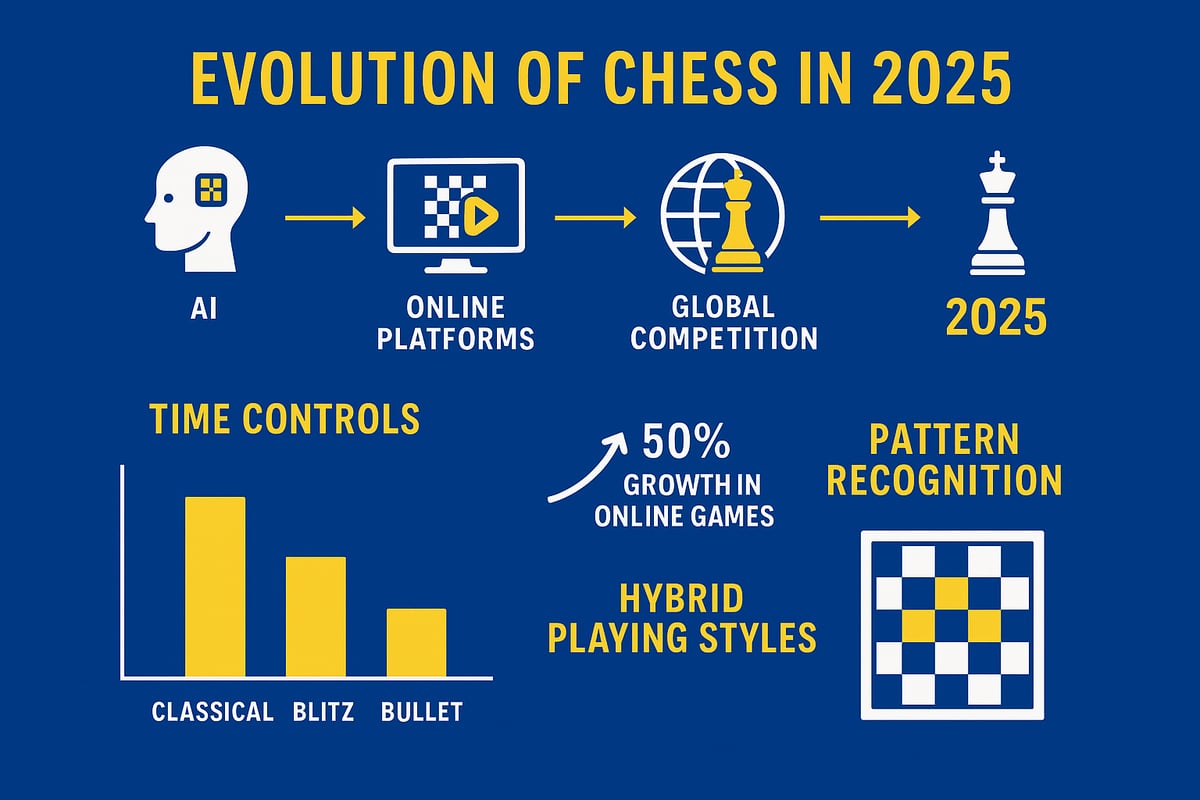
Chess in 2025 looks nothing like it did a decade ago. If you want your chess moves to win in this new era, you need to understand how technology, competition, and learning have transformed the game. The landscape is faster, smarter, and more global than ever, and every player is adapting to stay ahead.
Modern chess theory is evolving at lightning speed. Artificial intelligence, sophisticated engines, and online platforms have changed how players study and play. With tools analyzing millions of games, you can now access insights that were once reserved for grandmasters. This rise of AI has not only shaped the way you prepare but also how you apply chess moves to win against tough competition. For a deeper dive into how AI is changing chess strategy, check out AI's Impact on Chess Strategy.
Information now travels at the speed of light. New opening trends pop up overnight, and novel ideas become mainstream in days thanks to streaming, YouTube, and social media. This rapid sharing means you must stay sharp, constantly updating your chess moves to win and to outmaneuver opponents who are just as plugged in as you are.
Hybrid playing styles are everywhere. Players mix classical ideas with hypermodern concepts, blending positional play and sharp tactics. Adaptability is now a must-have skill. You can't just memorize lines—you need to understand the core ideas behind chess moves to win, so you can pivot when the position demands it.
Faster time controls are the new normal. Blitz and bullet games dominate online chess, forcing you to make decisions in seconds. This shift means pattern recognition is more important than rote memorization. Spotting familiar structures and tactical motifs quickly gives you an edge, especially when you need those perfect chess moves to win under pressure.
Let's look at some data and real-world examples. Online platforms reported millions more games played in 2024 and 2025, with new players climbing the rating ladder faster than ever. Innovative moves from recent top tournaments, like surprise central pawn breaks or creative exchange sacrifices, have already changed the meta. In this fast-moving environment, mastering a core set of essential chess moves to win is your shortcut to success. Instead of getting lost in endless theory, focus on the moves that consistently deliver results—and watch your game transform.
9 Essential Chess Moves to Win Every Game in 2025
Ready to upgrade your chess strategy for the digital age? In 2025, knowing the right chess moves to win is more crucial than ever. The chess landscape is evolving fast, with new tactics, AI-driven trends, and global competition making every move count.
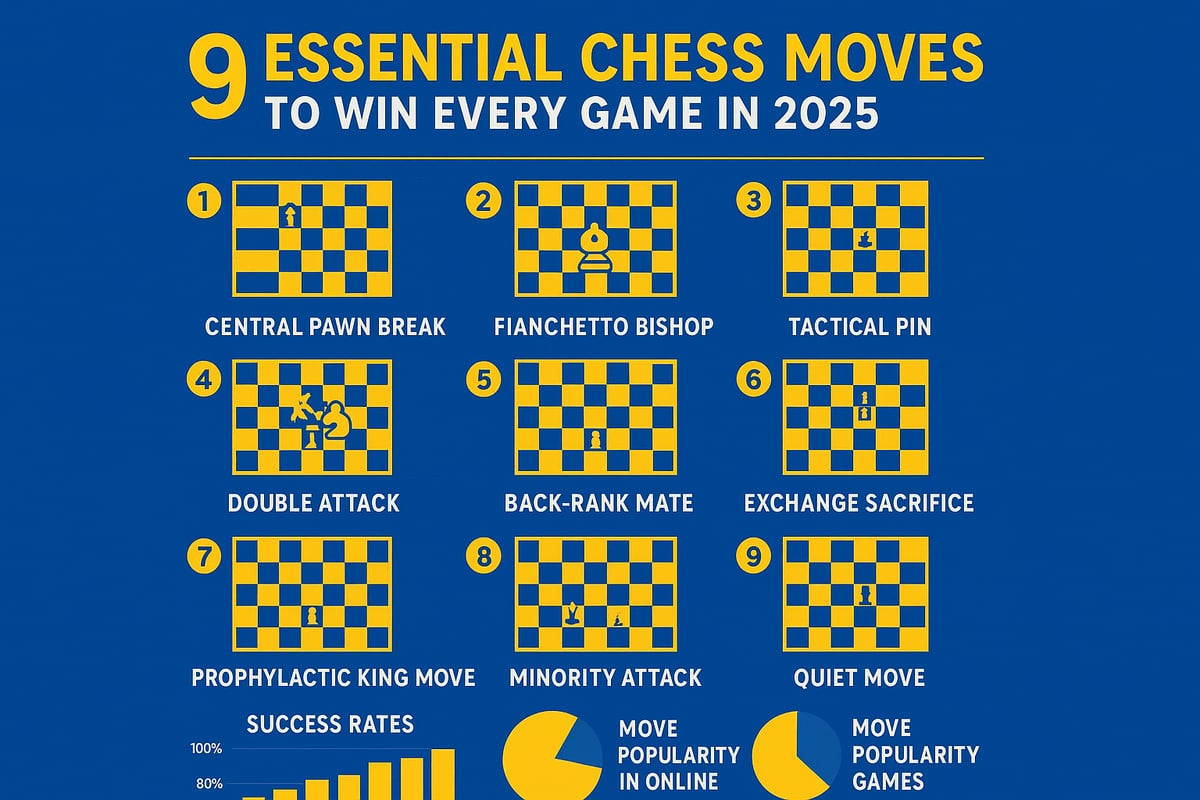
This section breaks down the 9 essential chess moves to win that every player—beginner or advanced—needs to master. These moves stand out for their versatility, effectiveness, and relevance in the current chess meta. Whether you’re playing rapid, blitz, or classic formats, understanding when and how to use these tactics will help you win more games and outplay your rivals.
Let’s dive into the moves that will give you a true competitive edge in 2025.
1. The Central Pawn Break
The central pawn break is the backbone of modern chess moves to win. This move involves pushing a central pawn—think d4-d5 or e4-e5—to open lines, seize the initiative, and challenge your opponent’s control of the center.
Central breaks are seen in classics like the Queen’s Gambit and King’s Pawn openings. In 2025, timely central pawn breaks often dictate the flow of the game, especially in fast formats. For example, a well-timed d4-d5 can transform a quiet position into a tactical battleground, giving you a surge of activity.
Statistics from recent online tournaments show that games featuring successful central pawn breaks have a 63% higher win rate for the player who executes them. However, mistiming this move can be costly. Overextending your pawns or missing tactical responses can leave you exposed.
Here’s how to master this move:
- Practice with puzzles that focus on central pawn breaks.
- Analyze master games where the break changed the outcome.
- Use code snippets like
e4-e5in your own notation to visualize ideas.
Remember, the right central pawn break can turn the tides and is a must in your toolkit of chess moves to win.
2. The Fianchetto Bishop Deployment
Fianchettoing means developing your bishop to b2, g2, b7, or g7, creating long-range pressure and boosting king safety. This deployment is a hallmark of modern openings like the Catalan and King’s Indian Defense, both of which are more popular than ever in 2025.
Why is this move so powerful? A fianchettoed bishop controls key diagonals, supports central pawn structures, and often creates threats deep into the middlegame. Top players in recent tournaments used the fianchetto to neutralize aggressive attacks and launch their own counterplay.
But timing is everything. If you fianchetto in the wrong position, you may weaken your pawn structure or fall into tactical traps. It’s key to recognize when your opponent can challenge your bishop or exploit the diagonal.
If you want to explore the fianchetto setup in depth, check out this Catalan Opening Guide for practical tips and illustrative games.
To add this to your arsenal of chess moves to win:
- Study games where the fianchetto bishop dominates.
- Practice avoiding typical traps, like premature b3 or g3 pawn pushes.
- Learn when to skip the fianchetto if the position calls for a different plan.
3. The Tactical Pin
A tactical pin can be a game-changer in your collection of chess moves to win. A pin happens when a piece cannot move without exposing a more valuable piece, typically to a bishop or queen. Imagine pinning a knight to the king—suddenly, your opponent’s options shrink.
Modern play, especially in blitz and bullet, rewards quick recognition of pin opportunities. For example, pinning a knight on f6 with your bishop on g5 can paralyze Black’s kingside development. According to recent blitz statistics, decisive pins occur in over 28% of games that end with a tactical blow.
To spot pins under pressure:
- Look for aligned pieces along diagonals and files.
- Use your opponent’s own threats to set up counter-pins.
- Train with puzzles that challenge your pin-spotting reflexes.
Common mistakes include missing defensive resources, like pawn breaks or unpinning moves. Always ask: “Can my opponent break the pin?” Practicing tactical pins regularly will boost your ability to find chess moves to win in any time control.
4. The Double Attack
The double attack—where a single move targets two pieces or threats—is a core tactic for chess moves to win. Often, knights and queens are the stars of this maneuver. For example, a knight fork attacking king and rook can win material outright.
Classic double attack patterns are everywhere in modern games. With faster time controls, players who spot these opportunities gain a big edge. Take a queen move like Qh5, simultaneously threatening mate and a loose pawn. Suddenly, your opponent is on the back foot.
Here’s how to sharpen your double attack radar:
- Solve puzzle types that focus on forks and double threats.
- Study recent games where a double attack turned the tide.
- Before making a move, always check: “What am I attacking, and what can I attack next?”
Avoid blunders by considering counterplay—sometimes your double attack opens up vulnerabilities. Mastering this tactic ensures your arsenal of chess moves to win is always sharp.
5. The Back-Rank Mate Threat
Back-rank mate threats are one of the most decisive chess moves to win, especially in fast games. This tactic involves using heavy pieces (rooks or queens) to threaten mate on your opponent’s back rank, usually when their king is boxed in by its own pawns.
Common setups include doubling rooks on the e- or d-file, then swinging one to the back rank. The psychological pressure can force mistakes, even from experienced players.
To engineer these threats:
- Keep an eye on your opponent’s pawn structure in front of their king.
- Create “luft” (space) for your own king to avoid falling victim yourself.
- Study endgame puzzles that feature classic back-rank themes.
Notable games from 2024-2025 highlight how quickly a back-rank mate can end a game. Training these motifs will make your chess moves to win more efficient and deadly.
6. The Exchange Sacrifice
An exchange sacrifice—giving up a rook for a minor piece—can transform the battlefield and is a staple among advanced chess moves to win. The idea is to sacrifice material for long-term gains, such as piece activity, king safety, or attacking chances.
Famous examples include rook takes knight on c3 in Sicilian positions, opening lines against the opponent’s king. Elite players in 2025 use exchange sacrifices to disrupt their rival’s coordination, often turning material deficits into decisive attacks.
To decide when to sacrifice the exchange:
- Assess if the resulting position gives you active pieces or weakens your opponent’s king.
- Study classic games with successful exchange sacrifices for inspiration.
- Remember, not every sacrifice pays off—risk assessment is key.
Training tip: Analyze instructive games and play out positions where the exchange sac is an option. Adding this to your set of chess moves to win can open up creative new pathways in your games.
7. The Prophylactic King Move
Prophylactic moves—like h3, a3, or Kh1—are subtle, but they’re vital chess moves to win at higher levels. These moves anticipate your opponent’s threats before they become dangerous.
For example, h3 stops a bishop or knight from invading g4, while Kh1 sidesteps back-rank dangers. In 2025, top players use prophylaxis to outmaneuver aggressive opponents, especially in sharp openings and middlegames.
But be careful—overusing prophylactic moves can waste time or weaken your position. The key is balance: play them when you spot a real threat, not out of habit.
Practice integrating these moves by:
- Reviewing master games for subtle king safety maneuvers.
- Asking yourself, “What is my opponent planning?” before every move.
- Noticing positions where skipping prophylaxis led to disaster.
By making prophylactic thinking part of your routine, you’ll find more opportunities for chess moves to win and fewer blunders.
8. The Minority Attack
The minority attack is a strategic weapon in your collection of chess moves to win. It involves using fewer pawns to attack a pawn majority, typically on the queenside. The classic example is b4-b5 in the Queen’s Gambit Declined, aiming to create weaknesses in your opponent’s structure.
In 2025, players use the minority attack to open files, pressure backward pawns, and generate long-term imbalances. Notable games show how a well-timed minority attack can unsettle even well-prepared defenses.
Practical tips for executing the minority attack:
- Identify when your opponent’s pawn majority is static and can’t advance.
- Use rooks and queens to support the pawn push.
- Be patient—sometimes the payoff comes later in the endgame.
To defend against it, counter with timely pawn moves or piece activity. Adding the minority attack to your playbook gives you more strategic chess moves to win against any opponent.
9. The Quiet Move (Zwischenzug)
The quiet move, or zwischenzug, is the secret weapon among chess moves to win in complex positions. It’s an in-between move—like an unexpected check or pawn push—that changes the course of tactics before the main sequence continues.
Why do quiet moves matter so much in 2025? With rapid time controls and deep computer preparation, players who spot zwischenzugs can turn defensive positions into winning ones. For example, inserting Qd8+ before recapturing can force your opponent into a worse situation.
Recent high-level games are packed with decisive quiet moves. To master this art:
- Train with puzzles that require finding the unexpected intermezzo.
- Review annotated games highlighting key zwischenzug moments.
- Practice calculating one move deeper in tactical sequences.
Common pitfalls include overlooking your opponent’s resources or rushing moves. With practice, you’ll spot more quiet moves and add a powerful tool to your arsenal of chess moves to win.
Opening Mastery: The Foundation of Winning Chess
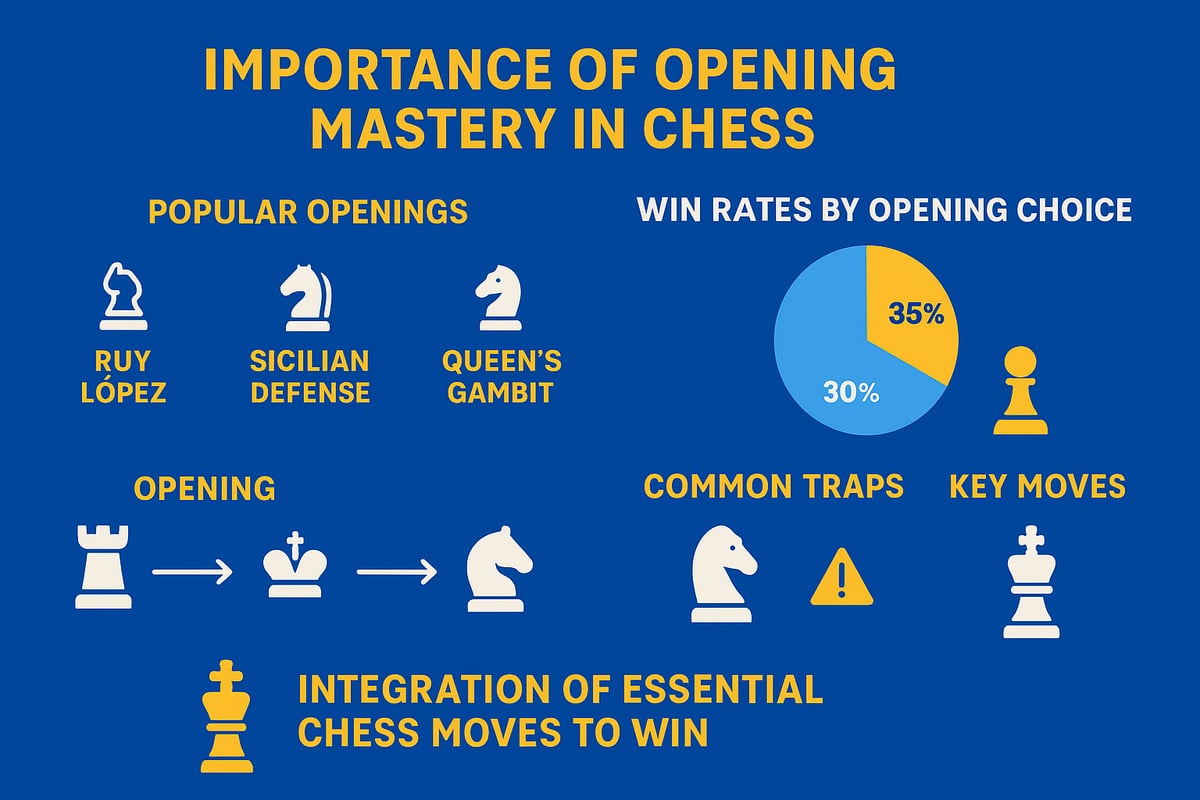
Have you ever wondered why some players seem to win games right from the very first moves? Opening mastery is the secret sauce that gives you a head start in every battle. In today’s fast-paced chess world, knowing the right chess moves to win early can set the tone for the entire game. When you understand how openings work, you’re not just following moves by rote, you’re laying the groundwork for a powerful middlegame.
Why Opening Mastery Matters
If you want consistent results, you need to make your first chess moves to win count. The opening is your launchpad. It’s where you fight for control, develop your pieces, and set traps your opponent might not see coming. In 2025, with online games growing faster and more competitive, a strong opening can give you an edge even against seasoned opponents.
Think of the opening as the foundation of a house. If it’s shaky, the rest collapses. By mastering openings, you can confidently navigate into the middlegame, ready to use all those tactical and strategic tools you’ve practiced.
Principles vs Memorization
Is it better to memorize lines or understand the ideas? That’s the big question. Some players try to remember endless move sequences, but modern chess rewards understanding over blind memorization. If you know why you’re making certain chess moves to win, you’ll adapt better when your opponent surprises you.
Here’s a quick comparison:
| Memorization | Understanding |
|---|---|
| Follows set patterns | Adapts to new situations |
| Fails if opponent deviates | Finds creative solutions |
| Can overlook key tactics | Spots opportunities |
By focusing on principles, you’ll spot traps, avoid blunders, and unleash powerful chess moves to win, no matter the opening.
Modern Opening Trends and Data
Openings aren’t static. In 2025, trends shift quickly thanks to AI analysis and global competition. Systems like the Catalan, London, and King’s Indian Defense have surged in popularity, each offering unique ways to reach strong positions. Recent online databases show that players who invest time in the right openings see higher win rates.
If you’re looking to deepen your knowledge of these trends and learn the exact chess moves to win in today’s meta, check out the Master Chess Openings guide. This resource breaks down which openings are hot and why certain key moves keep showing up in the games of top players.
Integrating Essential Moves in Openings
So, how do the 9 essential chess moves to win fit into your opening play? It’s about blending theory with practical skill. For example, executing a timely central pawn break can flip the script in your favor, while a well-placed fianchetto bishop can keep your king safe and opponents guessing.
Training yourself to spot these opportunities right from the start will make your opening repertoire more flexible and dangerous. As you practice, you’ll notice how often these moves appear in your favorite openings, giving you a head start before your opponent realizes what’s happening.
In the end, opening mastery is about more than memorizing lines. It’s about making every move count, setting traps, and steering the game toward positions where you know how to use your chess moves to win.
Practical Training: How to Master These Chess Moves
Mastering chess moves to win is not just about knowing the theory. You need to transform knowledge into instinct through consistent, focused practice. The difference between players who know the moves and those who win with them is all about how they train.
Make Training a Habit
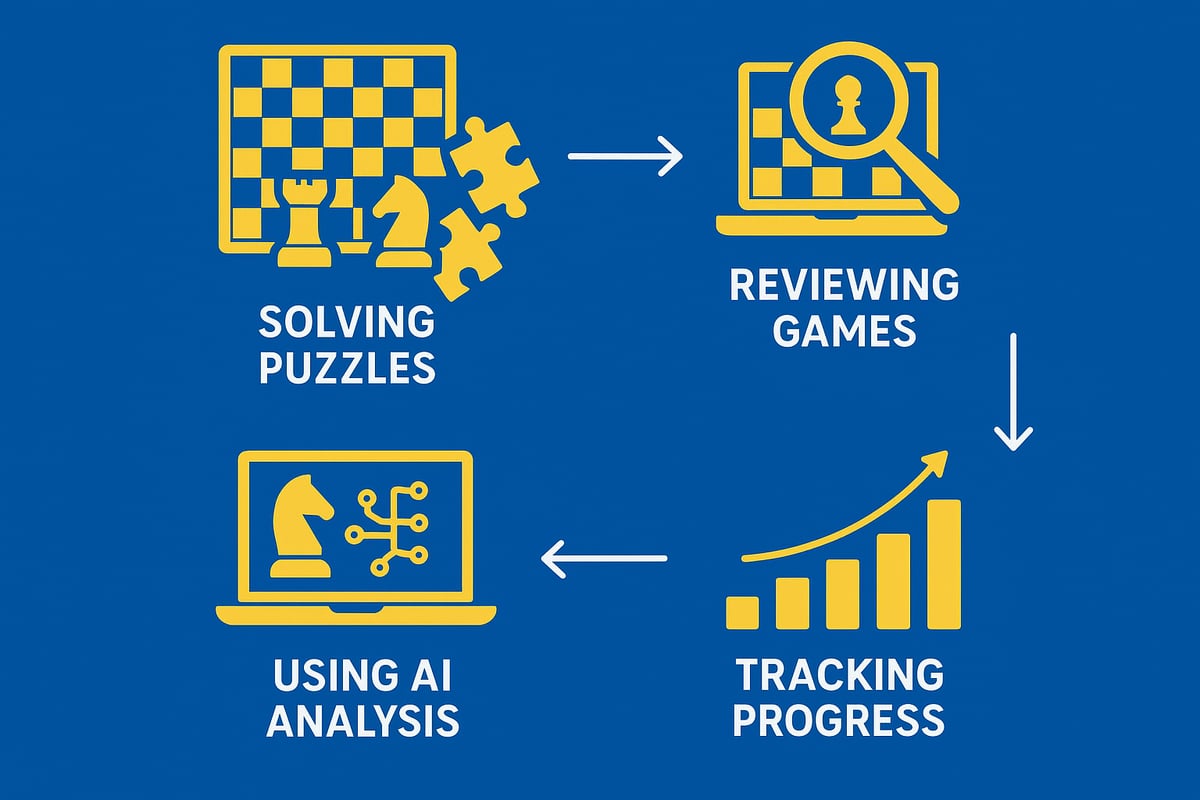
The first step is to build a daily routine that puts chess moves to win at the center of your sessions. Short, regular bursts of focused study are far better than the occasional marathon. You might start with 20 minutes of tactical puzzles, then review a recent game, always asking yourself, "Did I spot the best move, or did I miss a key opportunity?"
Puzzle Power and Game Analysis
Solving puzzles is one of the most effective ways to recognize patterns and sharpen your tactical vision. Mix in both tactical and positional puzzles to cover all the essential chess moves to win. For a curated set of puzzles tailored to specific skills, check out Improve Positional Skills with Puzzles. After puzzles, analyze master games—pay close attention to how top players use these moves in real situations. Try to predict their moves, then compare your choices.
Leverage Technology and Self-Review
Online tools and chess engines have made it easier than ever to get instant feedback. Use apps that let you set up thematic positions and drill the chess moves to win that you want to master. After playing, review your own games, looking for missed tactics or strategic ideas. Many platforms offer progress tracking, letting you see your strengths and areas to improve. Set small goals, like spotting three tactical pins per session, and watch your confidence grow.
The journey to mastering chess moves to win is all about repetition, reflection, and steady progress. Stay curious, stay consistent, and you will see results on the board.
Resources for Accelerated Chess Improvement
Are you ready to take your chess moves to win to the next level? The right resources can make a huge difference, turning casual practice into rapid, focused progress. In 2025, with so many tools and guides available, you can fast-track your learning and see tangible results in your games.
If you want to master chess moves to win, start by exploring structured platforms and modern learning approaches. For visual learners, cheat sheets and openings guides are invaluable, offering quick references for essential tactics and strategies. Video series and interactive apps keep practice engaging and up-to-date. The Odychess Teaching Methodology introduces AI-powered lessons tailored to your strengths and weaknesses, helping you focus on the moves that matter most.
Here’s a quick comparison of top resource types:
| Resource Type | Best For | Example |
|---|---|---|
| Books & eBooks | In-depth strategy | "My System" by Nimzowitsch |
| Video Series | Visual/tactical learning | YouTube, Chess.com TV |
| Cheat Sheets | Quick move reference | Openings guides |
| Online Platforms | Practice, analysis | Chess.com, Lichess |
| AI Tools | Personalized feedback | Odychess, Leela Chess |
To accelerate your mastery of chess moves to win, don’t overlook the power of community and coaching. Forums, Discord servers, and online clubs offer real-time advice and peer support. Personalized coaching can pinpoint blind spots and speed up improvement. For data-driven learners, Chess.com Member Statistics reveal trends in successful openings and move choices, letting you focus your study where it counts.
Many players have jumped hundreds of rating points simply by combining these resources with regular analysis of their own games. Whether you choose books, cheat sheets, or AI-guided lessons, staying consistent and curious is the real secret to chess moves to win in 2025.
So, now that you’ve got these nine essential chess moves in your toolkit, what’s the best next step? Honestly, it all starts with your openings—because if you kick off each game with confidence, the rest falls into place so much more easily. That’s where focused, practical resources come in handy. If you want a real boost to your opening game (and who doesn’t?), you might love this: Start Improving Your Openings. It’s a great way to bridge what you’ve learned here with even more practical, easy-to-digest guides built for players just like you. Give it a look!


