

Ever wondered how grandmasters seem to glide through the opening with such confidence? They're not just making it up as they go. They're relying on a chess moves book – that vast collection of established opening theory that separates prepared players from those hoping for the best. Whether you're just starting your chess journey or looking to add structure to your study routine, understanding how to use a chess moves book effectively can revolutionize your game. Let's explore what these resources are, why they matter, and how you can make them work for your improvement.

What Exactly Is a Chess Moves Book?
A chess moves book isn't necessarily a physical book you'll find on your shelf, though it certainly can be. The term refers to the collection of established, theoretically sound moves that have been analysed, tested, and proven over countless games. These book moves in chess represent the accumulated wisdom of generations of players.
Think of it this way: when you're following a chess moves book, you're walking a well-trodden path. You're playing moves that have been scrutinised by strong players and computers alike. This doesn't mean every book move is "best" in an absolute sense, but it does mean you're avoiding obvious pitfalls and setting yourself up for a playable middlegame.
The Evolution of Opening Theory
Opening theory has come a long way since the days of hand-written manuscripts. Classical references like The Oxford Companion to Chess documented centuries of accumulated knowledge, whilst modern databases contain millions of games at your fingertips.
In 2026, you've got more access to opening theory than any player in history. Yet paradoxically, this abundance makes knowing how to filter and apply this information more crucial than ever. A chess moves book helps you cut through the noise.

Why Should You Study Book Moves?
You might be thinking: "Shouldn't I just play naturally and develop my own style?" It's a fair question, but here's the reality – studying a chess moves book isn't about killing creativity. It's about building a foundation.
Save Time and Avoid Mistakes
Without guidance, you'll spend years rediscovering principles that were understood decades ago. Why lose twenty games to the Scholar's Mate when you can learn the refutation in five minutes? A proper chess moves book gets you past the beginner traps quickly.
Key benefits of studying book moves:
- Avoid falling into well-known tactical traps
- Reach playable middlegame positions with confidence
- Understand the ideas behind moves, not just memorise sequences
- Learn from the mistakes of thousands of players before you
Build Pattern Recognition
When you study a chess moves book systematically, you're training your brain to recognise positions. You'll start seeing familiar pawn structures, piece placements, and tactical motifs. This pattern recognition becomes invaluable once you're out of theory and on your own.
The Italian Game, for example, features specific piece arrangements that create particular types of positions. Study it properly, and you'll recognise these patterns even in games where the move order differs slightly.
Types of Chess Moves Books You'll Encounter
Not all chess opening resources are created equal. Let's break down what you'll find when searching for a chess moves book.
Traditional Printed Books
Physical books have been the backbone of chess study for centuries. Works like Bobby Fischer's 60 Memorable Games showed players not just moves, but the thinking behind them. Modern opening encyclopedias provide comprehensive coverage of specific lines.
| Format | Advantages | Disadvantages |
|---|---|---|
| Printed books | Deep explanations, portable, no distractions | Can become outdated, less searchable |
| E-books | Searchable, often updated, space-efficient | Screen fatigue, requires device |
| Video courses | Visual learning, expert commentary | Less detail than books, harder to reference |
Digital Databases and Software
Modern chess engines and databases have transformed how we approach opening study. Programs like ChessBase allow you to search millions of games for specific positions, showing you how grandmasters handled that exact chess moves book position you're studying.
These tools are powerful, but they can overwhelm beginners. There's something to be said for the curated approach of a well-written chess moves book that selects the most important lines for your level.
Streamlined Cheat Sheets
Here's where things get practical for busy players. Instead of wading through 500-page tomes, you might want condensed resources that give you the essential moves and ideas. The Scandinavian Defense guide exemplifies this approach – giving you what you need without drowning you in variations.
These resources function as your personal chess moves book, optimised for learning efficiency rather than encyclopaedic completeness.
How to Actually Study a Chess Moves Book
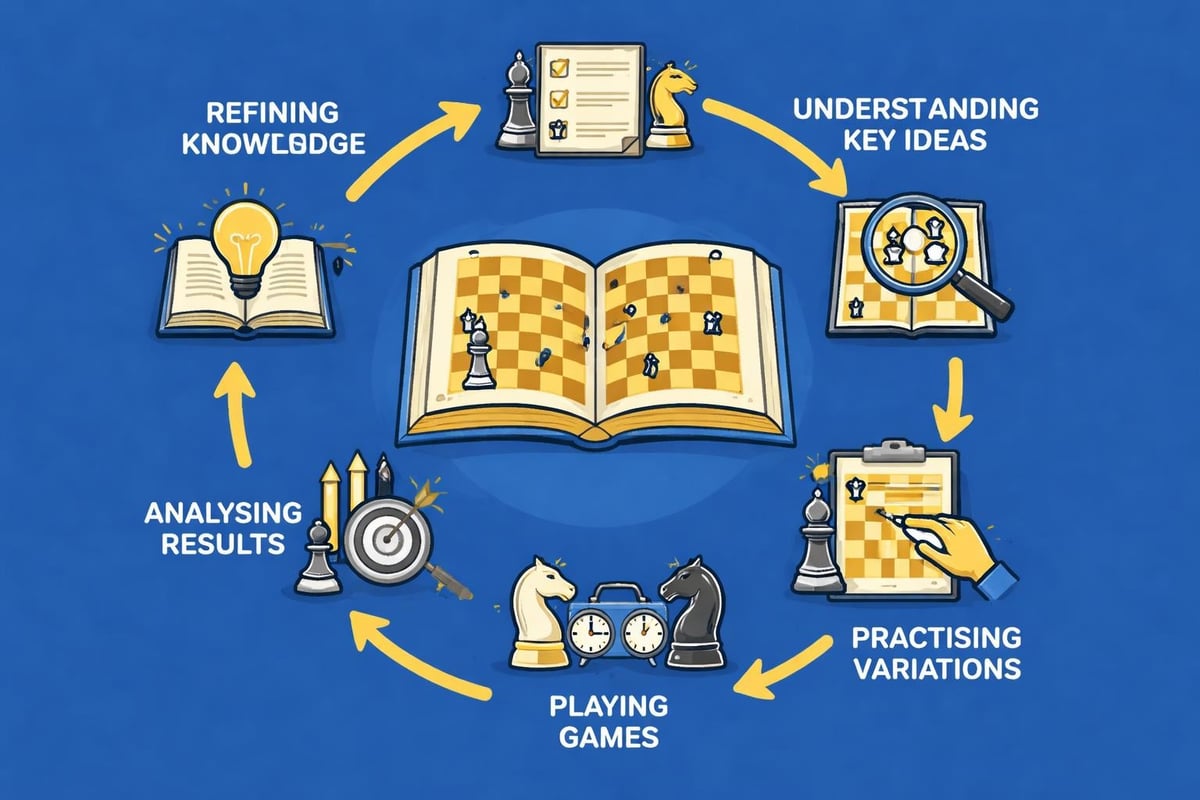
You've got your resources. Now what? Simply reading through variations won't do much good. Here's how to make your study stick.
Start With Understanding, Not Memorisation
- Pick one opening for White and one or two for Black
- Learn the main ideas and themes first
- Study the critical variations next
- Add sidelines gradually as you gain experience
- Review and update your repertoire regularly
When you approach a chess moves book position, ask yourself: why is this move played? What's the plan? What would happen if I deviated here? This active questioning transforms passive reading into genuine understanding.
Use the Right Balance of Breadth and Depth
Don't try to learn every line in your chess moves book simultaneously. Focus on one or two openings thoroughly. The Queen's Gambit alone could occupy months of study if you wanted to explore every variation.
A balanced study approach:
- Spend 70% of time on your main repertoire
- Dedicate 20% to understanding common transpositions
- Use 10% exploring alternatives and updates
Practice With Purpose
Theory means nothing without practice. After studying your chess moves book, you need to test that knowledge in real games. Play online with faster time controls to get comfortable with the positions, then transition to longer games where you can think more deeply.
Notice where you deviate from your preparation. Was it intentional? Did you forget? Did your opponent play something unexpected? These questions guide your next study session.
Common Pitfalls When Using a Chess Moves Book
Even with the best resources, players make predictable mistakes. Let's address them so you can avoid wasting time.
Memorising Without Understanding
This is the cardinal sin of opening study. You might remember that Nf6, d5, Bg4 are moves in a particular line, but if you don't understand why, you'll be lost the moment your opponent deviates. Your chess moves book should explain the purpose behind each move.
Studying Too Many Openings
It's tempting to learn everything, especially when browsing through various chess opening guides. Resist this urge. Master one repertoire before expanding. Quality beats quantity every time.
Ignoring Updates and Modern Theory
Opening theory evolves constantly. A chess moves book from 1995 might contain outdated evaluations. In 2026, computer analysis has refined many lines. Stay current through reputable sources and modern resources.
Not Connecting Openings to Middlegame Plans
Your chess moves book study shouldn't end when theory ends. Understand what pawn structures and piece placements you're aiming for. The Caro-Kann Defense, for instance, leads to specific middlegame positions that require understanding beyond move 10.

Building Your Personal Opening Repertoire
Here's where your chess moves book transforms from abstract knowledge into practical power. You need a repertoire – a set of openings you play consistently as White and Black.
Selection Criteria for Your Openings
| Factor | What to Consider |
|---|---|
| Your playing style | Aggressive, solid, positional, tactical |
| Time available for study | Complex openings need more preparation |
| Opponent's likely responses | What do players at your level play? |
| Practical results | Choose openings that score well for you |
| Long-term potential | Can you grow with this opening? |
Some players thrive with aggressive gambits like the King's Gambit, whilst others prefer solid systems such as the London System. Your chess moves book choices should reflect your preferences.
Maintaining Your Repertoire
Your opening repertoire isn't static. You'll refine it over time, dropping lines that don't work and adding new ideas. Keep a notebook (physical or digital) where you record:
- Key positions from your chess moves book
- Variations you've tested in games
- Problem areas needing more study
- New ideas you've discovered
This personalised chess moves book becomes more valuable than any published resource because it's tailored specifically to your needs and experiences.
Resources Beyond Traditional Chess Moves Books
Whilst formal opening books serve an important role, don't limit yourself to one type of resource. The modern chess student has unprecedented access to learning materials.
Online Courses and Video Content
Video instruction brings your chess moves book to life. Seeing an experienced player explain ideas whilst moving pieces adds a dimension that text alone can't match. Many platforms offer structured courses that walk you through openings systematically.
You might explore free online chess courses as a starting point, then invest in more comprehensive resources as your commitment grows.
Problem Collections and Tactical Training
Opening knowledge means little without tactical sharpness. Resources like László Polgár's problem collections help you develop the pattern recognition needed to exploit the positions your chess moves book delivers.
Combine opening study with regular tactical puzzles. This ensures you can capitalise when opponents slip out of theory into inferior positions.
Community and Discussion
Join chess forums, clubs, or online communities where players discuss opening theory. Often, the best insights come from seeing how others interpret the same chess moves book you're studying. Different perspectives illuminate ideas you might have missed.
Practical Tips for Accelerated Learning
Want to extract maximum value from your chess moves book study? These strategies will help you learn faster and retain more.
Efficient study techniques:
- Study for shorter, focused sessions (30-45 minutes) rather than marathon cramming
- Review your repertoire weekly to maintain freshness
- Play training games focusing on specific openings
- Analyse your games immediately whilst ideas are fresh
- Use spaced repetition for critical variations
Creating Your Study Schedule
Consistency trumps intensity. Studying your chess moves book for 30 minutes daily beats a five-hour session once a month. Create a realistic schedule that fits your life.
A sample weekly plan might include:
- Monday/Wednesday/Friday: Opening study from your main chess moves book (30 minutes)
- Tuesday/Thursday: Tactical puzzles and middlegame training (30 minutes)
- Weekend: Play longer games and analyse thoroughly (1-2 hours)
Adjust based on your goals and available time, but maintain the consistency.
Advanced Concepts: Beyond Basic Book Moves
Once you've mastered the fundamentals of your chess moves book, you'll want to deepen your understanding. This is where you transition from student to expert.
Understanding Move Order Subtleties
In many openings, move order flexibility offers advantages. Your chess moves book might show the standard sequence, but understanding transpositions and move order tricks adds another dimension to your play.
For instance, in the English Opening, various move orders can reach similar positions whilst avoiding certain opponent responses. This knowledge comes from deeper study beyond basic sequences.
Preparing for Specific Opponents
At advanced levels, players tailor their chess moves book preparation to specific opponents. You might research what your next tournament opponent plays and prepare specific lines to exploit their preferences. This targeted approach requires a flexible repertoire and deep understanding.
Staying Current With Theory
Subscribe to chess news sites, follow strong players' games, and pay attention to what's being played in elite tournaments. When a new idea appears in top-level play, it often filters down through all levels. Your chess moves book knowledge should evolve with the game itself.
Making It All Work Together
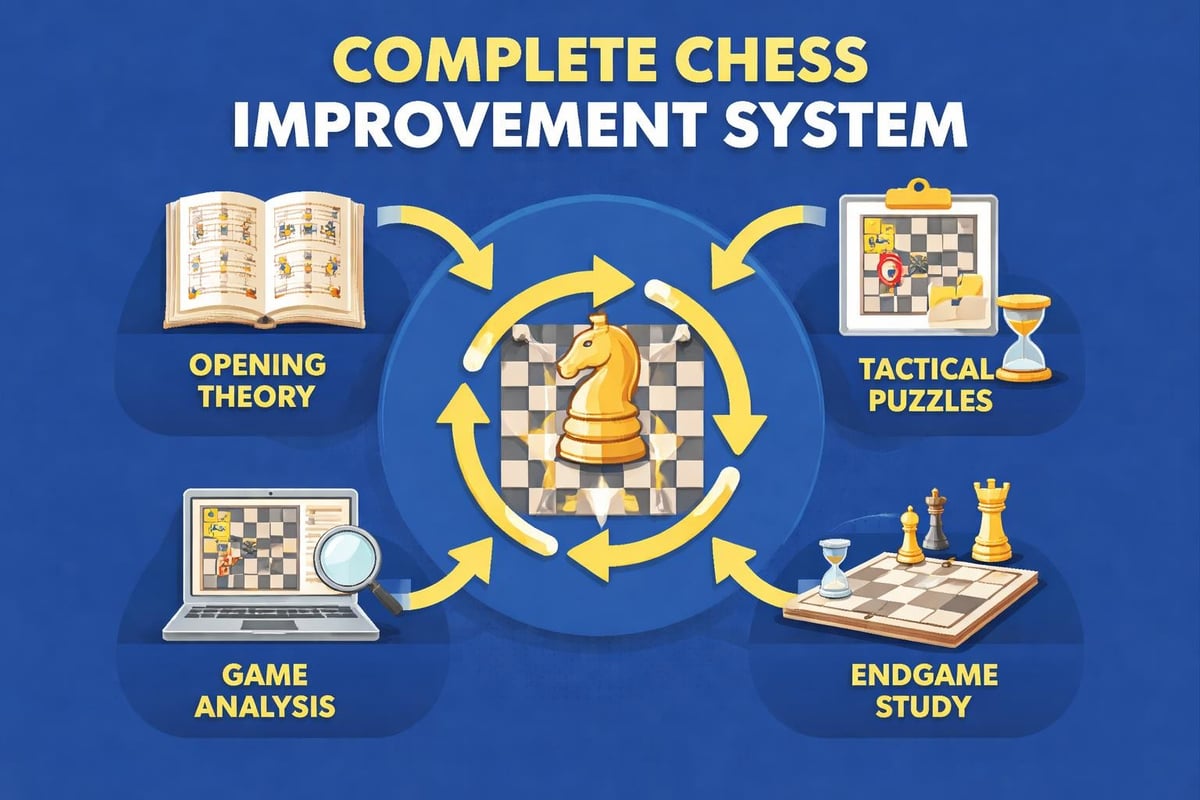
The most successful chess students don't just consume information from their chess moves book – they integrate it into a holistic improvement plan. Opening study connects to tactics, strategy, endgames, and practical play.
Think of your chess education as building a house. Your opening repertoire is the foundation. It needs to be solid and reliable, but it's not the entire structure. You'll build middlegame understanding, tactical sharpness, and endgame technique on top of that foundation.
When you approach your chess moves book with this perspective, you see it not as a list of moves to memorise, but as a gateway to the positions and ideas that define chess at every level. The opening gets you to the battlefield in good shape. What happens next depends on the broader skills you've developed.
Whether you're exploring the Sicilian Defense for beginners or diving into more complex systems, remember that your chess moves book serves as a guide, not a script. The goal is understanding, not rote memorisation.
A well-chosen chess moves book gives you the foundation for confident, principled play right from move one. By studying systematically, focusing on understanding rather than memorisation, and connecting your opening knowledge to broader chess skills, you'll see steady improvement in your results. Ready to streamline your opening study and build a repertoire that actually sticks? Chess Cheat Sheets provides the focused, practical resources you need to master your openings without drowning in endless variations – helping you play with confidence and spend more time enjoying the game.


