

Imagine if every chess middlegame you played in 2026 could tip the scales in your favor. What if you had the strategies to turn tricky positions into winning opportunities, no matter who sat across from you?
This article is your gateway to mastering the chess middlegame. You’ll uncover nine must-know strategies that today’s champions use to outplay their opponents. Each tactic comes with real examples and actionable advice, covering everything from piece activity to king safety.
Ready to boost your confidence and results at the board? Dive in, discover what really wins games in the middlegame, and start building your path to chess success in 2026.

Understanding the Chess Middlegame in 2026
The chess middlegame in 2026 is more dynamic than ever. Technology and top-level competition have shaped how players approach this vital phase. If you want to boost your results, understanding what sets the modern chess middlegame apart is essential.
The Evolving Nature of the Middlegame
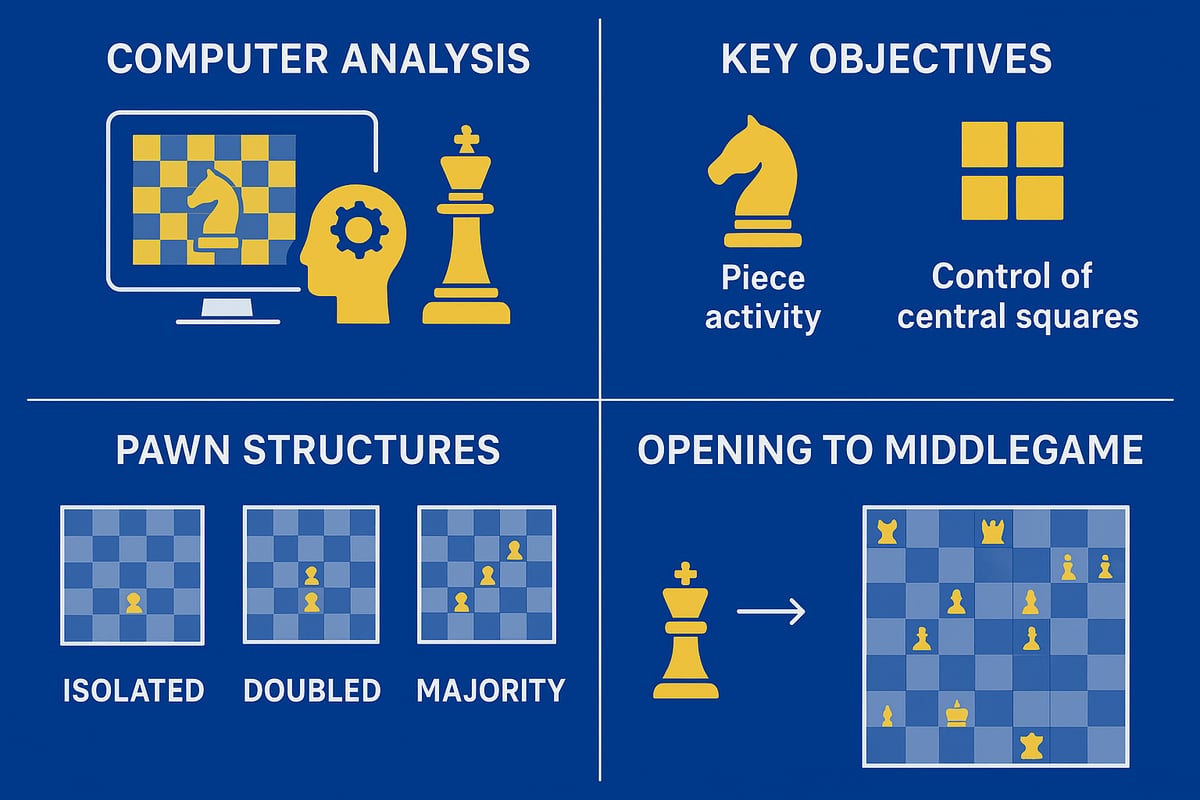
Over the past decade, computer engines have revolutionized the chess middlegame. Now, even club players rely on advanced analysis to uncover new ideas and plans. Rather than memorizing long sequences, success depends on understanding key concepts and adapting to unique positions.
Elite tournaments and online blitz events showcase creative approaches to the chess middlegame. Players frequently break traditional rules, using fresh strategies inspired by engine discoveries. Staying flexible and open to novel plans is crucial as the landscape continues to evolve.
Key Objectives of the Middlegame
Every chess middlegame brings a new set of challenges. Your main goals are to boost your piece activity, control important squares, and prepare for a favorable endgame. The best players look for imbalances and seize dynamic opportunities rather than following rigid formulas.
For example, in recent super-grandmaster events, you’ll often see quick transitions from defense to counterattack. Adaptability is the name of the game in the chess middlegame. Always ask yourself: which pieces need to improve, and where does the fight for the initiative begin?
Common Middlegame Structures and Themes
Pawn structures are the backbone of the chess middlegame. You’ll encounter isolated pawns, doubled pawns, and pawn majorities in countless games. Each structure shapes your possible plans and determines which pieces become strong or weak.
For instance, understanding the pros and cons of the Queen's Gambit helps you grasp how pawn formations influence your chess middlegame play. These patterns can either open lines for your pieces or create long-term weaknesses. Spotting these themes early gives you a strategic edge.
Transitioning from Opening to Middlegame
How do you know when the chess middlegame has begun? Look for clear signals: both sides have usually castled, the center is tense, and minor pieces are developed. This is when you must pause, evaluate, and spot the imbalances that define your next steps.
Shifting your mindset from opening principles to middlegame strategy is key. Focus on tailoring your plans to the specific features of your position. By staying alert to these transitions, you’ll make the most of every chess middlegame opportunity.
9 Essential Chess Middlegame Strategies for 2026 Success
Ready to revolutionize your chess middlegame? Let’s break down the nine essential strategies that will make your 2026 chess journey smoother, smarter, and more successful. Whether you’re a club player or an aspiring master, these actionable tactics will help you turn those tricky middlegame moments into real opportunities.
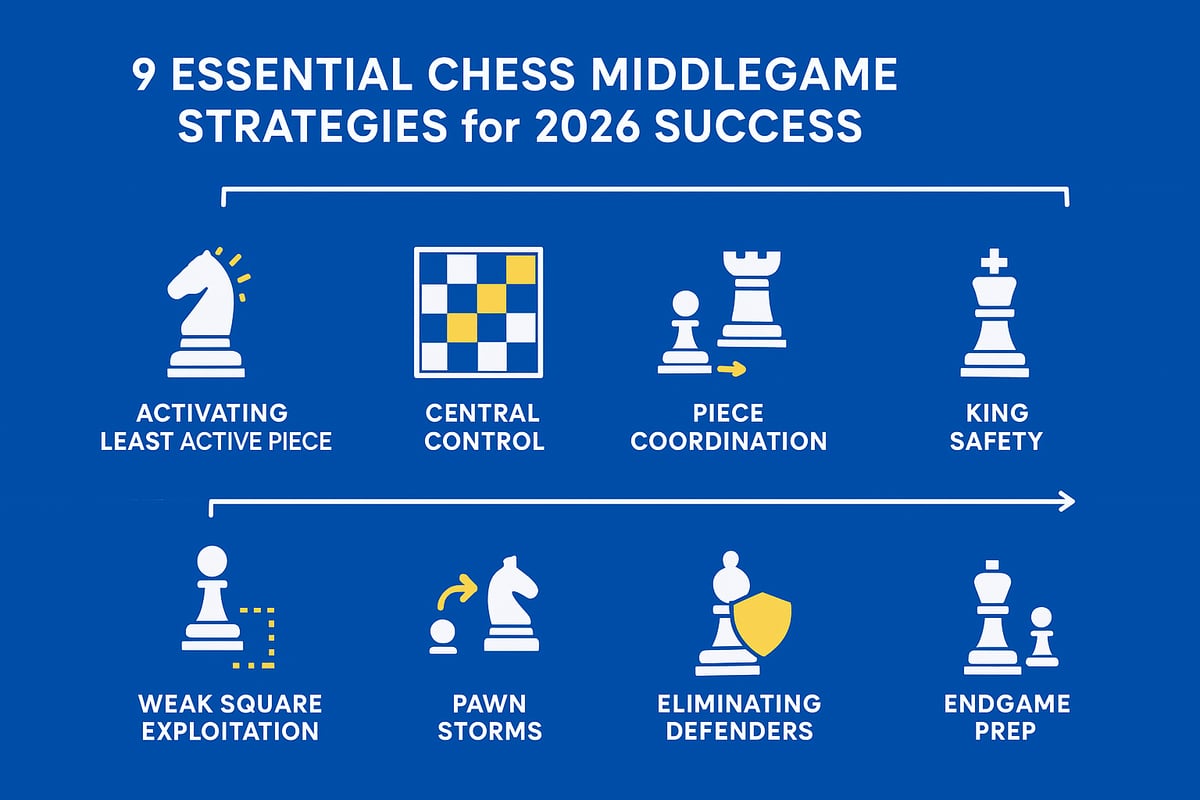
1. Activate Your Least Active Piece
Have you ever felt like one piece just isn’t pulling its weight during your chess middlegame? That’s your Least Active Piece (LAP), and it’s often the missing puzzle piece in your plan. The LAP could be a rook stuck on its original square or a bishop blocked by its own pawns.
Start by scanning your board and asking, “Which piece is helping the least right now?” Once you spot it, brainstorm how to improve its activity. Sometimes, a single move—like bringing your queenside rook to an open file—can change the entire dynamic of your chess middlegame.
Let’s look at some practical steps:
- List all your pieces in your mind and rank their activity.
- Find a route or sequence to activate your LAP.
- Ask, “Will this piece be more effective after I reposition it?”
For example, in some grandmaster games, a dormant rook springs to life on an open file and suddenly doubles the pressure. The psychological advantage is significant—your opponent feels the heat when every piece is in the fight.
Common LAPs include the bishop hemmed in by its own pawns or a rook trapped behind a wall. Make it a habit in your chess middlegame to identify and activate these pieces. This small shift in your thought process can help you seize the initiative and keep your plans rolling.
2. Master Central Control and Pawn Breaks
The center is the heart of the chess middlegame. If you control it, you call the shots. Central dominance lets your pieces roam freely and supports both attack and defense. But don’t just park your pawns—sometimes, you need a well-timed pawn break to open lines and shift the balance.
Pawn breaks are like opening a door for your army. When the moment’s right, pushing a pawn can create open files for rooks or diagonals for bishops in your chess middlegame. But timing is everything—push too soon, and you might leave weaknesses behind.
Here’s how you can master this:
- Watch for moments when your pawn break will disrupt your opponent’s setup.
- Calculate the consequences—will you create a weakness or an opportunity?
- Use central control to support your tactical plans, not just to occupy space.
In recent games, you’ll see how a successful pawn break can flip a defensive position into an attacking one. Conversely, failed pawn breaks can lead to disaster. The best players use modern opening theory to set up these breaks, but they’re careful not to weaken their own camp.
Remember, the chess middlegame is a battlefield of timing and calculation. Use central control as your launchpad, but always weigh the risks before you break through.
3. Improve Piece Coordination and Synergy
Think of your pieces as a team in your chess middlegame. When they work together, magic happens. Piece coordination means your rooks, bishops, and queen are aiming at the same targets, backing each other up, and creating threats that are tough to parry.
Why does this matter? Lone piece attacks rarely succeed, but when your forces combine, you can build batteries (like queen and bishop on the same diagonal), set up pins, or unleash discovered attacks. This synergy is what turns a promising position into a winning one.
Try these practical exercises:
- Set up puzzles where pieces must cooperate to deliver checkmate.
- Practice aligning your rooks on open files or your queen and bishop on a battery.
Repositioning for synergy can mean moving a rook behind a pawn that’s about to advance or shifting your knight to support an attack. Coordination is key for both offense and defense in the chess middlegame.
If you want to go deeper, check out Mastering the Middlegame: Strategies to Elevate Your Chess Play for more insights on piece coordination and tactical awareness.
The more you practice working with your pieces as a unit, the more effective your chess middlegame will become.
4. Identify and Exploit Weak Squares and Outposts
Spotting weak squares is like finding hidden treasure in your chess middlegame. A weak square is one your opponent can’t defend with a pawn, making it the perfect landing spot for your knight or bishop. An outpost is a square deep in enemy territory where your piece can’t easily be chased away.
To hunt for these opportunities:
- Scan for squares your opponent’s pawns can’t reach.
- Look for ways to create weaknesses—maybe by encouraging your opponent to push a pawn in haste.
- Plant your knight or bishop on a strong outpost and support it with other pieces.
Classic grandmaster games show how a well-placed knight on an outpost can dominate the board, tying down enemy pieces and controlling key lines. But don’t get greedy—overextending in pursuit of an outpost can backfire if you can’t support your piece.
In your chess middlegame, always ask: “Where are the weak spots?” and “How can I make my pieces thrive there?” This mindset will help you create lasting advantages and keep your opponent on the defensive.
5. Launch Effective Pawn Storms and Flank Attacks
Have you ever seen a wave of pawns rolling toward your opponent’s king? That’s a pawn storm, a powerful weapon in the chess middlegame, especially when kings are castled on opposite sides.
Launching a pawn storm isn’t just about pushing pawns—it’s about timing, support, and calculation. Before you start, check that your own king is safe and your pieces are ready to back up the attack. A successful pawn storm can rip open files for your heavy pieces, giving you a direct path to the enemy king.
Here’s how to do it right:
- Wait for the right moment, often when your opponent’s king is on the other side of the board.
- Use your pieces to support the advancing pawns.
- Watch for counterplay—don’t leave your own king exposed.
Recent tournaments show that well-executed pawn storms can decide games quickly. But they’re risky—if you overextend, you might create weaknesses that your opponent can exploit in the chess middlegame.
Practice evaluating pawn storm potential by setting up training positions. Ask yourself: “Is this the right time to unleash my pawns, or should I wait?” With experience, you’ll know when to strike.
6. Maintain King Safety While Attacking
It’s easy to get caught up in a thrilling attack and forget about your own king. In the chess middlegame, balancing aggression with defense is crucial. If you neglect king safety, a sudden counterattack can turn the tables in an instant.
Modern defensive resources, like prophylactic moves, help you anticipate threats before they materialize. Keep your pawn shield intact and use your minor pieces to cover key squares around your king.
Let’s break it down:
- Before attacking, double-check your king’s safety.
- Make moves that defend against potential threats (prophylaxis).
- Watch famous games where players combined bold attacks with solid king safety.
A well-guarded king gives you the freedom to launch attacks without fear. In your chess middlegame, always ask: “Is my king safe if my opponent counters?” This habit will save you from many disasters and help you attack with confidence.
The best players know how to walk the tightrope—pressuring their opponent while never letting their own king become a target.
7. Open Files for Rook and Queen Activity
Rooks and queens are at their most dangerous when they have open highways to travel. In the chess middlegame, controlling open or semi-open files lets your heavy pieces penetrate deep into enemy territory, often deciding the game.
Here’s how to make the most of files:
- Create open files by exchanging pawns or making pawn breaks.
- Double your rooks on a file for maximum pressure.
- Use rook lifts (moving a rook up and over) to surprise your opponent.
When your rook reaches the seventh or eighth rank along an open file, it can attack pawns, harass the king, or support other pieces. The synergy between rooks and queen on open files is a classic recipe for success in the chess middlegame.
Practice contesting files—don’t let your opponent dominate them. Use recent games as models for how to seize and exploit open lines. With a little planning, your heavy pieces will rule the board.
8. Eliminate Opponent’s Key Defenders
Sometimes, the best way to break through a solid position is to remove the piece holding it all together. Targeting and exchanging your opponent’s key defenders can expose critical weaknesses in their camp during the chess middlegame.
Start by identifying which piece is protecting vital squares or guarding the king. Plan exchanges that remove these defenders, but be careful—sometimes, trading pieces can also relieve pressure on your opponent.
Helpful steps:
- Analyze which defender is crucial to your opponent’s setup.
- Calculate the consequences of the exchange—will it open up new targets?
- Practice spotting these opportunities in your own games.
Famous games often feature bishop-for-knight trades that shatter a defensive structure. Knowing when to exchange and when to keep attacking pieces requires calculation and a feel for the chess middlegame. With practice, you’ll spot these moments and use them to your advantage.
9. Prepare for the Endgame Early
It’s never too soon to think about the endgame. In fact, the best players start planning for it during the chess middlegame. Endgame readiness can mean the difference between a win and a draw—sometimes even a loss if you’re caught off guard.
Simplifying the position by trading pieces is one route, but sometimes you want to keep complexity to exploit your opponent’s weaknesses. Creating passed pawns or activating your king early can give you a head start as the endgame approaches.
Key tips:
- Evaluate when to exchange pieces and when to keep the tension.
- Look for opportunities to create passed pawns.
- Transition smoothly from chess middlegame to endgame by recognizing the right moment.
Classic grandmaster games show how accurate evaluation of endgame prospects leads to confident play. If you want to supercharge your endgame skills, check out resources that help you Master the chess endgame.
By weaving endgame preparation into your chess middlegame strategy, you’ll always be one step ahead.
Advanced Middlegame Insights for 2026
The chess middlegame is evolving fast, and staying ahead means understanding the trends shaping how you play. Let’s dive into the latest insights so you can approach every encounter with confidence and fresh perspective.
Modern Trends in Middlegame Play
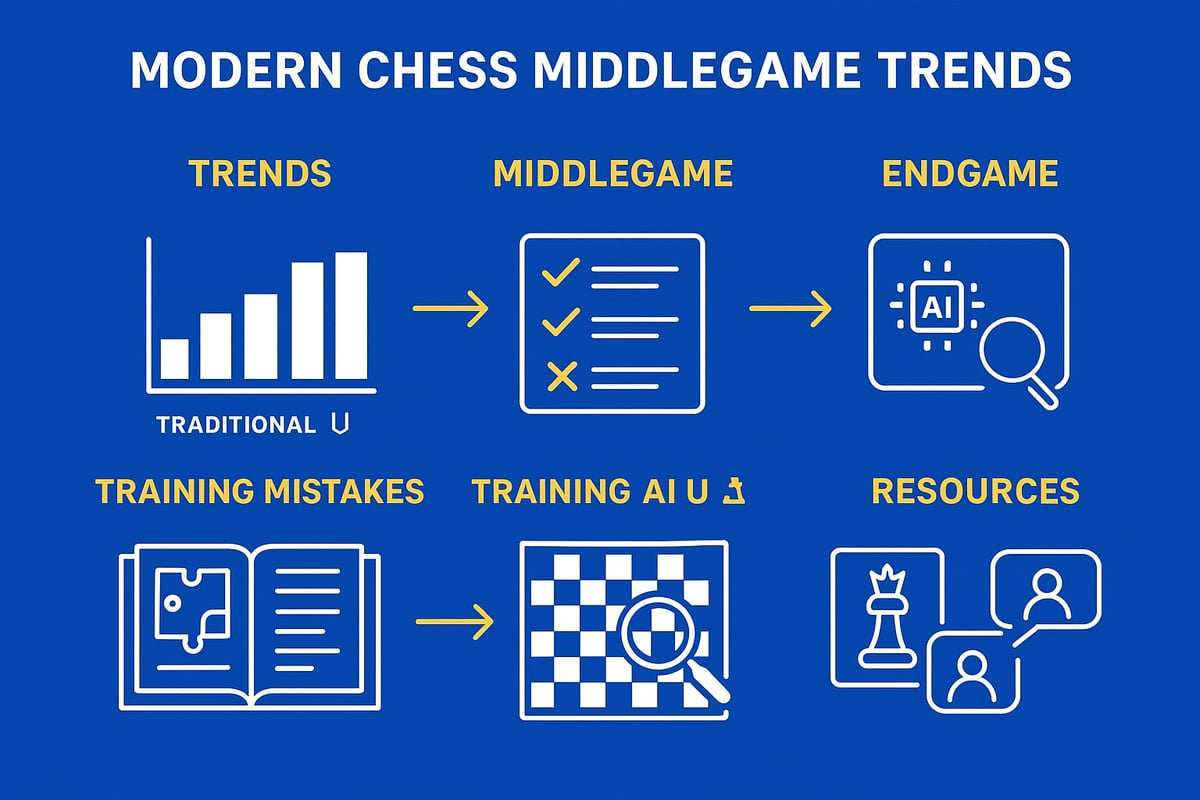
Have you noticed how chess middlegame positions look sharper and more creative than ever? That’s thanks to the influence of powerful computer engines and enormous online databases. Top players are no longer just memorizing lines but experimenting with plans that engines suggest, often leading to unexpected positions.
Elite tournaments show a rise in offbeat strategies and rapid shifts in initiative. Players are more willing to sacrifice material for dynamic play, trusting their prep and calculation. If you’re curious how AI is changing the chess middlegame, check out Checkmating One, by Using Many: Combining Mixture of Experts with MCTS to Improve in Chess for a deep dive into how machine learning shapes modern thinking.
Statistically, the number of decisive middlegame results has risen in recent years, as players push for more from every position. The message? Flexibility and creativity are now essential weapons in your toolkit.
Common Middlegame Mistakes to Avoid
Even strong players stumble in the chess middlegame by repeating classic errors. One common pitfall is neglecting king safety, which can turn a promising attack into a sudden disaster. Another is ignoring pawn weaknesses, especially doubled or isolated pawns that become targets later.
Overextending your pawns or pieces without enough support is another trap. It’s tempting to push for space or an aggressive plan, but if you overreach, your opponent will pounce. Time trouble is a silent enemy too—rushing complex positions leads to blunders.
Here’s a quick checklist to avoid these mistakes:
- Always check your king’s safety before launching an attack.
- Regularly scan for weak pawns or squares in your camp.
- Balance aggression with solid calculation.
- Manage your time, especially in sharp positions.
Reviewing instructive articles like The Middlegame: Priorities for Chess Success can help you spot these traps and refine your approach.
Practical Training Techniques for Middlegame Mastery
So, how can you actually get better at the chess middlegame? The answer is focused, practical training. Start by solving thematic tactical puzzles that mirror real middlegame motifs—forks, pins, outpost creation, and more.
Analyzing annotated games, especially those of grandmasters, helps you see how plans unfold. Use chess software to review your own games and flag recurring issues like misplaced pieces or overlooked tactics.
Here’s a simple table to organize your middlegame training:
| Training Method | Benefit |
|---|---|
| Tactical puzzles | Sharpens calculation |
| Annotated games | Teaches strategic planning |
| Software analysis | Identifies personal mistakes |
| Personal database | Tracks improvement |
If you want a massive resource for puzzle practice, the 1.5 million chess openings puzzles pack offers endless scenarios to build your skills.
Resources for Continued Improvement
Building expertise in the chess middlegame is a lifelong journey, but there are more resources than ever to guide you. Classic books like “My System” or “Reassess Your Chess” remain gold standards. Online courses offer interactive lessons on key strategies, while training tools like ChessBase or Lichess Studies help you organize and review material.
Free resources such as YouTube tutorials and chess forums provide community support and feedback. Paid memberships often unlock advanced features, deeper analysis, and personal coaching.
Consider joining a chess community where you can share your games and get advice. The best way to grow is by learning with others and staying curious about new trends in the chess middlegame.
Frequently Asked Questions About Chess Middlegame Strategies
Curious about the chess middlegame or feeling stuck on what to do next? Here are answers to some of the most common questions players have as they work to improve their middlegame skills.
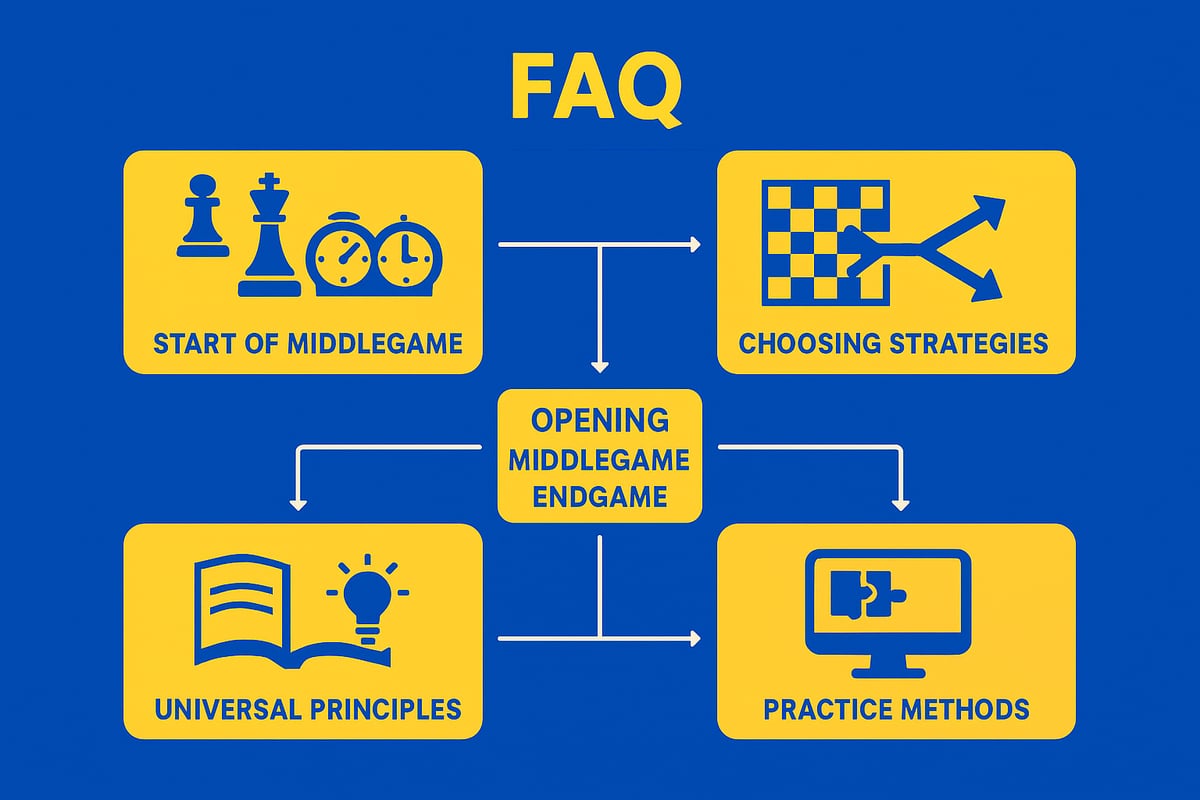
What defines the start of the middlegame in chess?
The chess middlegame typically begins once all minor pieces are developed, castling is complete, and the first exchanges have taken place. You will notice the shift as central tension increases and new plans are needed. Remember, there is no strict line, since the transition from opening to chess middlegame and then to endgame is fluid.
How do I know which middlegame strategy to apply?
To select the right chess middlegame approach, evaluate the unique features of your position: pawn structure, piece activity, and king safety. A checklist can be helpful here. For more practical planning tips, check out Chess Strategy: How to Plan in the Middlegame, which breaks down central breaks, prophylaxis, and more.
Are there universal middlegame principles for all levels?
Yes, some chess truths never change. Focus on activity, central control, and keeping your king safe. As you gain experience, you will learn to apply these principles in more complex ways, but they always form the backbone of strong play.
How can I practice middlegame strategies effectively?
Mix up your training! Try themed puzzles, analyze instructive positions, and play training games focused on specific middlegame themes. Track your progress and learn from mistakes. This way, your improvement will be steady and measurable.
So, after diving into these middlegame strategies, you might be wondering—what’s the fastest way to actually level up your skills and put all this into action? I totally get it; there’s a lot to absorb, and sometimes it’s hard to know where to start. If you want to really boost your chess performance (without getting bogged down in endless theory), I highly recommend checking out Get The FULL Chess Mastery Bundle. It’s packed with cheat sheets, puzzles, and endgame guides—basically everything you need to make these strategies second nature. Why not give yourself the edge for 2026?


