

Imagine unlocking the secrets of chess mastery in a world where artificial intelligence, global tournaments, and rapid learning tools have changed the game forever. Whether you are new to the board or aiming to break into the elite, this guide is your step-by-step roadmap for chess mastery in 2026.
You will discover the latest strategies, must-have skills, and cutting-edge resources that set today’s top players apart. We will explore how technology, mindset, and modern training methods have redefined what it means to excel at chess mastery.
Ready to transform your game? Let’s dive into the evolution of chess mastery, build your skills, and set you on a clear path to success.

The Evolution of Chess Mastery: What’s New in 2026
Can you remember when learning chess meant poring over thick books or hoping for a slot at your local club? Fast-forward to 2026, and the entire ecosystem of chess mastery has transformed, powered by artificial intelligence, global connectivity, and a thriving digital community. The way you approach improvement now is almost unrecognizable compared to just ten years ago.
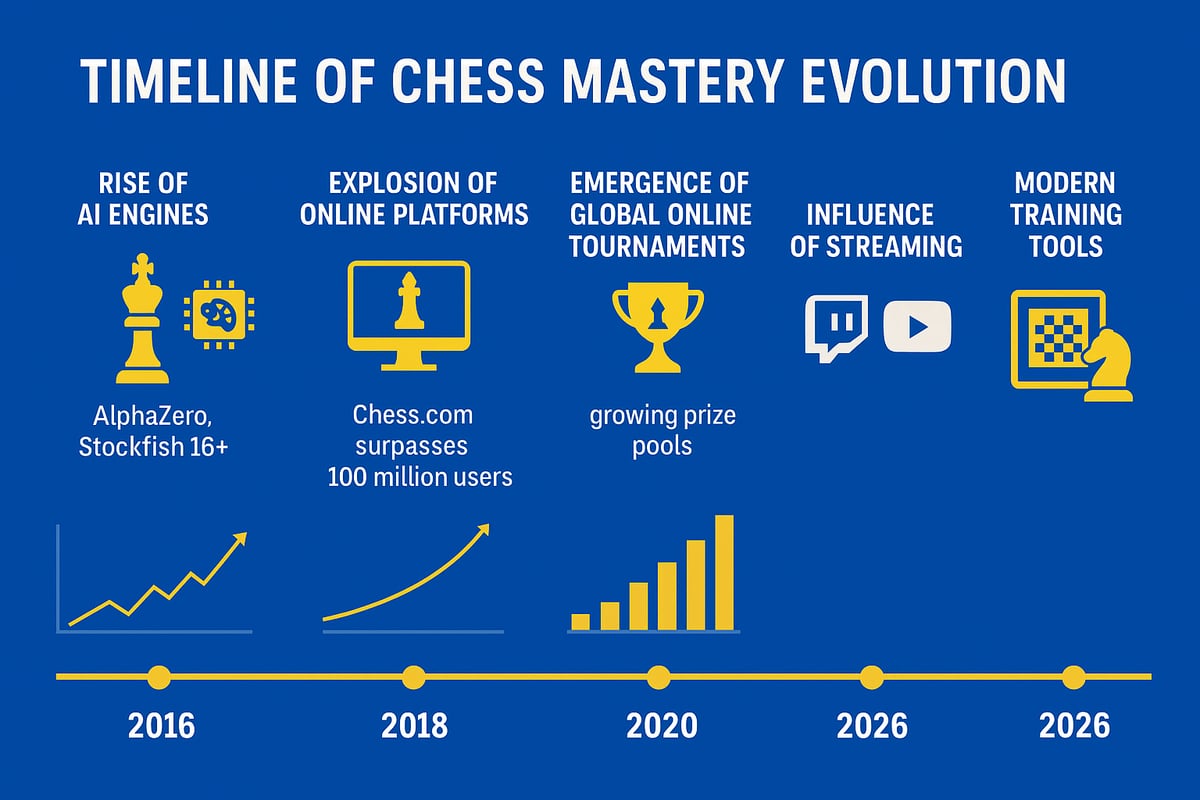
Let’s start with the biggest game-changer: artificial intelligence. The introduction of neural network engines like AlphaZero and the continual evolution of Stockfish have redefined what it means to pursue chess mastery. Now, you can analyze your games with superhuman accuracy, uncover opening ideas that were unthinkable a decade ago, and even witness engines play out positions you never imagined. As a result, opening theory has exploded, and preparation for serious players is more in-depth and nuanced than ever. If you’re curious about the dual impact of AI, from its training advantages to its challenges, check out The Impact of AI on Chess: A Double-Edged Sword.
But AI is just one piece of the puzzle. The rise of online chess platforms has completely democratized access to high-level competition and training. Hybrid events—where you can play from your living room or in-person at a major venue—have opened the doors for global participation. No matter where you live, you can join a tournament with players from every continent, breaking down barriers that once limited the pursuit of chess mastery.
Social media, YouTube, and Twitch have also played a huge role. Learning isn’t limited to dry lectures or static diagrams. Instead, you can tune in to live commentary from grandmasters, follow your favorite streamers as they share their thought process, or join vibrant online communities for instant feedback. The chess mastery journey now feels interactive and social, not solitary.
The numbers tell the story. Chess.com’s user base has soared past 100 million, and digital tournament prize pools are bigger than ever, attracting top talent and passionate amateurs alike. This surge in online participation means finding strong opponents, study groups, and real-time learning opportunities has never been easier.
Modern training tools are another pillar of this new era. Interactive courses, real-time analytics, and personalized feedback let you target your weaknesses with precision. Imagine getting instant insights into your mistakes, tracking your progress with dashboards, and having a tailored study plan at your fingertips. For many, this data-driven approach to chess mastery feels like having a personal coach available 24/7.
Let’s not forget the human side. Magnus Carlsen, for example, has publicly shared how digital tools and targeted online training fuel his preparation. Hikaru Nakamura’s streaming community has brought together thousands of players, making high-level chess both accessible and entertaining. Chess coaching, once exclusive and expensive, is now available to anyone with an internet connection.
All these shifts mean that chess mastery in 2026 is more achievable, measurable, and engaging than ever before. Whether you’re chasing grandmaster norms or climbing the online rating ladder, the path is clearer and more exciting. The blend of technology, community, and accessible resources puts you at the heart of a true chess revolution.
Core Skills and Mindset for Chess Mastery
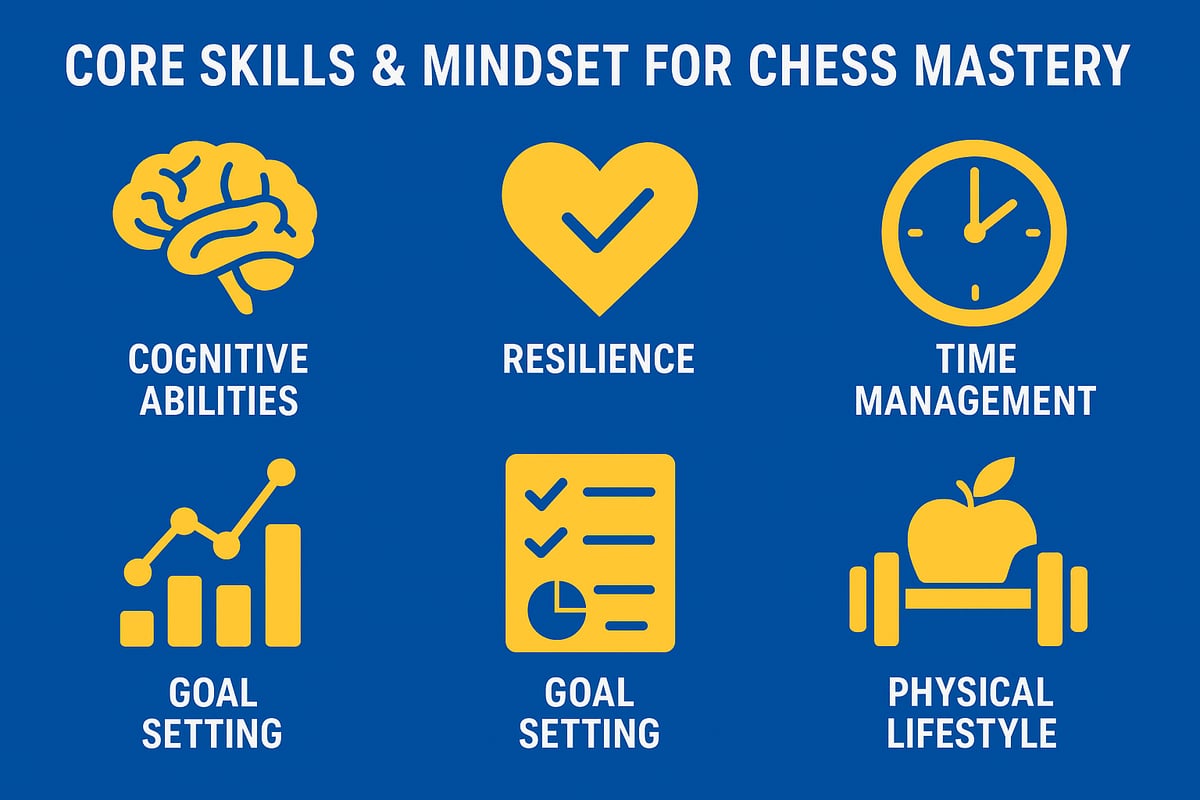
To unlock chess mastery in 2026, you need more than just knowledge of openings and tactics. It’s about building a strong foundation of cognitive skills, developing the right mindset, and embracing habits that top players use daily. Let’s break down what really matters for your chess journey.
Cognitive Abilities and Pattern Recognition
Every path to chess mastery begins with sharpening your mind’s eye. Visualization lets you see moves ahead, while calculation helps you weigh each option. Memory plays a crucial role, especially when recalling thousands of positions and tactical motifs.
Pattern recognition is what separates beginners from masters. Grandmasters can spot familiar setups in seconds, giving them an edge in both attack and defense. Want to train these skills? Try daily puzzle drills, spaced repetition apps, and even “blindfold” chess, where you play without seeing the board. These methods help you react faster and more accurately in every game.
Psychological Resilience and Growth Mindset
Chess mastery isn’t just about calculation, it’s about bouncing back, too. Even the best players lose. The real secret is how you handle those setbacks. A growth mindset helps you see mistakes as opportunities, not failures.
Top players like Ding Liren and Alireza Firouzja are known for their ability to recover from tough losses. They use techniques like journaling, mindfulness, and post-game analysis to stay motivated. When you face a tough defeat, take a step back, breathe, and focus on what you can learn. This resilience keeps your improvement on track.
Time Management and Decision-Making
Mastering time controls is a crucial part of chess mastery. Whether you’re playing classical, rapid, or blitz, knowing when to think deeply and when to trust your intuition can make all the difference.
Learning to balance instinct with careful calculation is an art. Research into chess expertise, such as the Planning, Cognitive Reflection, Inter-Temporal Choice, and Risky Choice in Chess Players: An Expertise Approach, reveals that elite players excel at planning and making decisions under pressure. You can practice this by timing your moves during training and reviewing your choices after each game.
Self-Assessment and Goal Setting
To achieve chess mastery, you need to become your own coach. After each game, analyze your moves objectively. Look for recurring mistakes and ask yourself, “What could I have done differently?” This honest review is the fastest way to grow.
Set SMART goals: Specific, Measurable, Achievable, Relevant, and Time-bound. Maybe you aim to increase your rating by 100 points in three months or solve 20 tactical puzzles a day. Tracking progress keeps you motivated and focused.
Physical and Lifestyle Factors
Surprisingly, physical health is a big part of chess mastery. Magnus Carlsen famously prioritizes fitness, knowing that good sleep, nutrition, and exercise boost cognitive performance.
Research shows that players who exercise regularly have better focus and memory during games. Try adding a short workout or brisk walk to your routine. Prioritize sleep and eat brain-healthy foods. These habits keep your mind sharp for every tournament.
The Ultimate Step-by-Step Training Plan for Chess Mastery
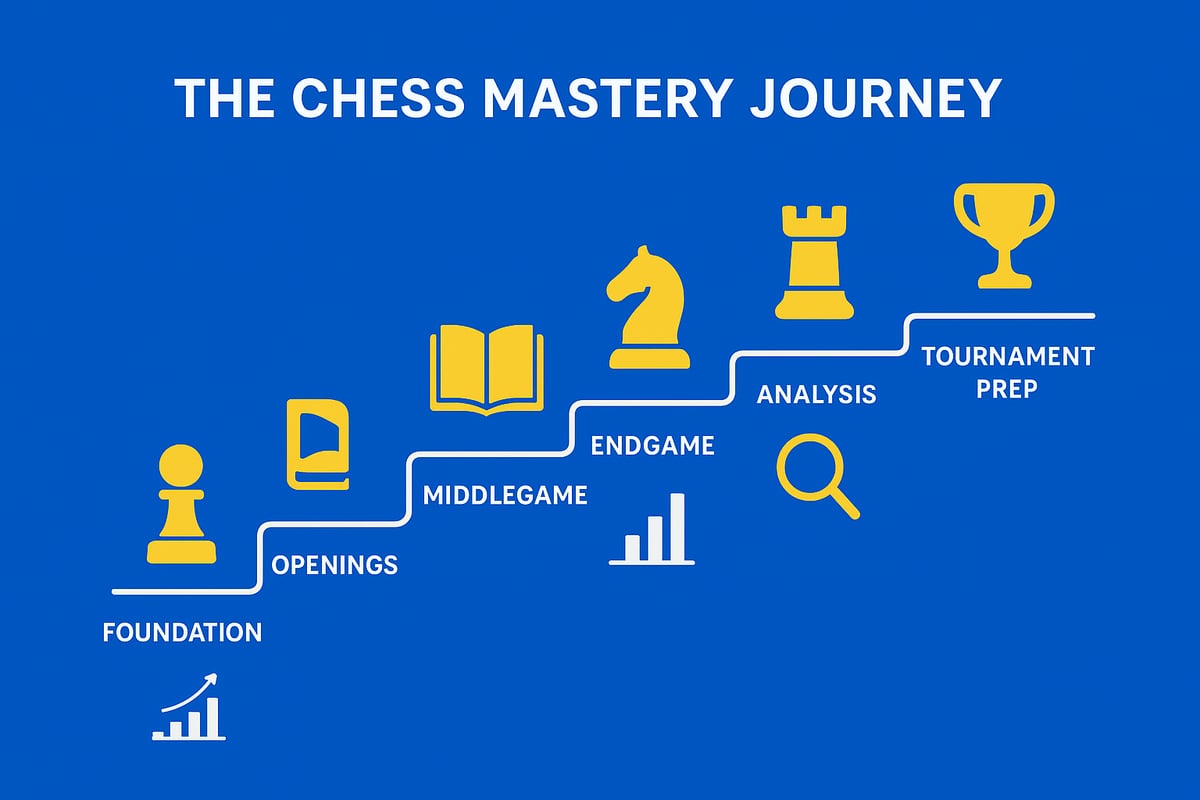
Ready to transform your chess journey? Here’s a clear, actionable roadmap designed for anyone aiming for chess mastery in 2026. This plan breaks down the process into six manageable steps. Each phase is grounded in modern science, top-level player habits, and the most effective tools available today. Let’s dive in and see how you can level up your game, one step at a time.
Step 1: Building a Strong Foundation
Every great chess player starts with the basics. For chess mastery, you need to know how each piece moves, the rules of castling, en passant, and the most common checkmate patterns. This is your launchpad.
Focus on essential tactics like forks, pins, skewers, discoveries, and double attacks. Try interactive tutorials and beginner puzzle sets to reinforce these ideas. The more comfortable you are with these building blocks, the easier it becomes to recognize opportunities in real games.
Practice regularly, and don’t rush. Mastery is about depth as much as speed.
Step 2: Opening Preparation and Repertoire Development
Openings set the tone for the entire game. To reach chess mastery, move beyond rote memorization. Instead, understand core principles—control the center, develop your pieces, and keep your king safe.
Choose a repertoire that suits your style. Are you aggressive, or do you prefer positional play? In 2026, the London System and Sicilian Defense remain popular, but AI-influenced novelties are shaking up the landscape. Use opening databases and analysis tools to stay current.
If you want to deepen your opening knowledge, check out this Chess openings mastery guide for practical, up-to-date recommendations.
Step 3: Middlegame Mastery
The middlegame is where creativity and calculation collide. For chess mastery, understanding pawn structures, piece activity, and dynamic plans is crucial.
Start by studying famous middlegame battles from recent tournaments. Ask yourself: What imbalances exist? Where are my weaknesses and strengths? Use tactical puzzles to sharpen your vision and practice spotting combinations.
Remember, the ability to adapt to your opponent’s threats is what separates good players from great ones. Make analysis a daily habit.
Step 4: Endgame Excellence
Many games are decided in the endgame. Chess mastery demands a solid grasp of essential endgames like king and pawn versus king, Lucena and Philidor positions, and especially rook endgames, which make up over half of practical endings at the master level.
Learn practical conversion techniques, not just theoretical studies. Digital endgame trainers and interactive lessons will give you confidence in critical moments.
Don’t underestimate the impact of endgame skill. Sometimes, knowing just one position can turn a draw into a win.
Step 5: Analytical Review and Continuous Improvement
Growth comes from reflection. To achieve chess mastery, review every game, win or lose. Use computer analysis to pinpoint mistakes, but also trust your own insights—what did you miss, and why?
Keep a log of recurring weaknesses. Set up a feedback loop: revisit those positions, solve related puzzles, and track your progress over time.
This process is the engine behind lasting improvement. The more honestly you assess yourself, the faster you’ll climb.
Step 6: Tournament Preparation and Performance Optimization
Competing is the ultimate test of chess mastery. Build a pre-tournament routine: review openings, solve a few tactics, and get plenty of rest. Learn how to manage nerves and maximize focus.
Study how current top-10 players prepare for events. Visualization, deep breathing, and even physical exercise are part of their routines. Have a plan for each round, but stay flexible for surprises.
Remember, every tournament is a learning opportunity. Celebrate your progress, and use each event as fuel for your next step.
Leveraging Technology and AI for Rapid Chess Improvement
If you want to supercharge your chess mastery in 2026, you need to embrace the latest tech tools. Today, even beginners have access to resources that grandmasters could only dream of a decade ago. Let’s explore how you can use AI, online platforms, and data to take your game to the next level.
The Role of Chess Engines and Databases
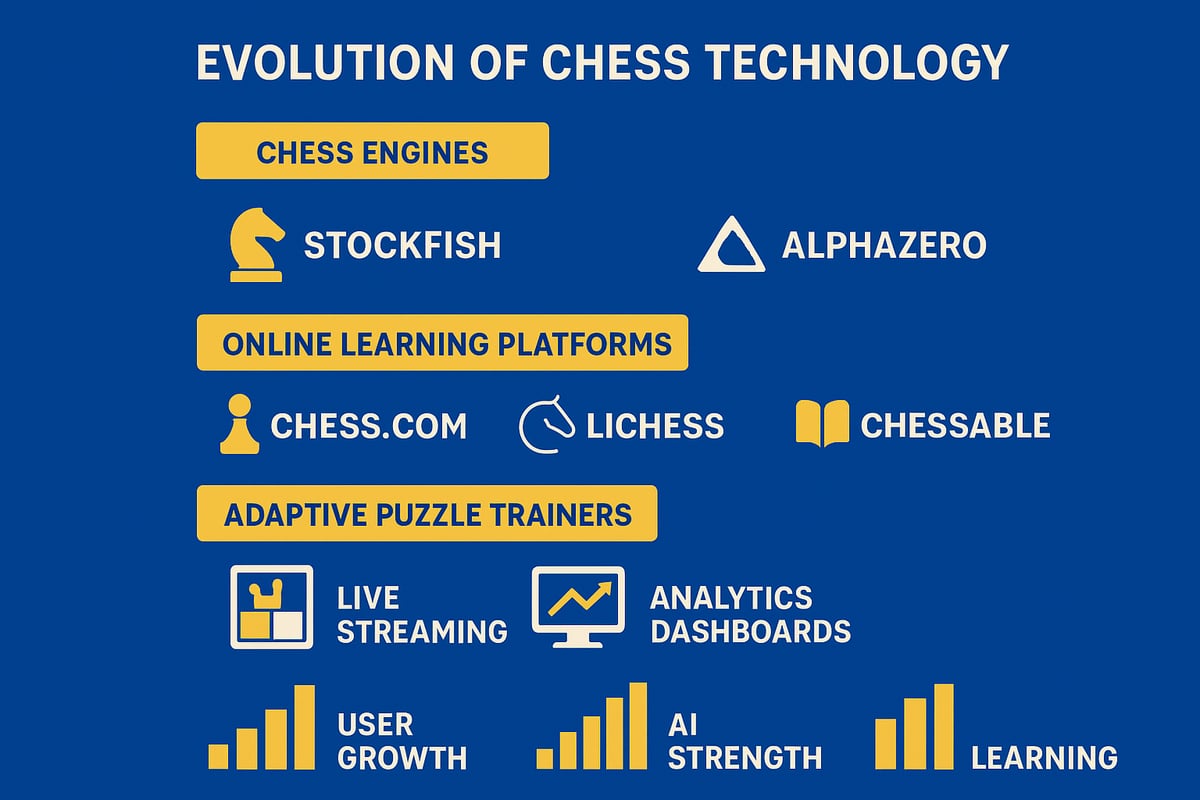
Modern chess mastery depends heavily on powerful engines like Stockfish and Lc0. These tools analyze positions with incredible depth, helping you spot tactics, evaluate plans, and avoid blunders. AI innovations, especially since AlphaZero, have transformed how players study openings and middlegames.
But don’t just copy moves blindly. The most successful players use engines to understand ideas, not memorize lines. Striking a balance between engine insights and your own creativity is key. Recent research even shows that AI sustains higher strategic tension than humans in chess, pushing you to think more dynamically.
Online Learning Platforms and Personalized Training
Online platforms have revolutionized chess mastery by offering structured courses, personalized study plans, and real-time feedback. In 2026, platforms like Chess.com, Lichess, Chessable, and Aimchess provide adaptive lessons that target your weaknesses and help you progress faster.
Here’s a quick comparison of top platforms:
| Platform | Key Feature | Best For |
|---|---|---|
| Chess.com | Puzzle Rush, Lessons | All-round learning |
| Lichess | Free, Open Source | Tactics, Analysis |
| Chessable | Spaced Repetition | Openings, Theory |
| Aimchess | AI Study Plans | Personalized drills |
With these tools, you can create a training routine tailored to your chess mastery journey.
Interactive Puzzles and Tactics Trainers
If you want to sharpen your tactical vision, daily puzzle routines are essential for chess mastery. Sites like Chess.com and Lichess offer massive puzzle libraries and interactive trainers that adapt to your level.
Why does this work so well? Regular puzzle practice helps you recognize patterns quickly and boosts calculation speed. You’ll find features like:
- Puzzle streaks and leaderboards
- Themed tactics (pins, forks, discoveries)
- Instant feedback and progress tracking
By making puzzles a habit, you’ll see tangible improvement in your practical chess mastery.
Video Content and Live Streaming
Learning from grandmasters is easier than ever thanks to live streaming and video content. Platforms like Twitch and YouTube host creators such as GothamChess, Anna Cramling, and Agadmator, who break down games and strategies in an engaging way.
Watching these experts can deepen your understanding of chess mastery. You get to see real-time thought processes, hear practical advice, and interact with a global community of learners.
If you’re a visual learner, video lessons can make complex ideas click much faster than reading alone.
Data-Driven Progress Tracking
Tracking your improvement is a game-changer for chess mastery. Most platforms now offer detailed analytics dashboards that highlight your strengths, weaknesses, and trends over time.
You can monitor metrics like:
- Rating progress
- Accuracy percentage
- Blunder rates
- Opening success
Set clear goals and review your data regularly. This approach keeps you motivated and ensures your training is always focused on the areas that matter most for chess mastery.
Mastering the Three Phases: Openings, Middlegames, and Endgames
Have you ever wondered why some players seem to breeze through the opening, dominate the middlegame, and convert tricky endgames with ease? The secret lies in understanding how each phase of chess mastery connects—and how to train for them in today’s AI-driven era. Let’s break down the essentials for 2026.
Opening Mastery in 2026
Openings have undergone a transformation thanks to AI. Gone are the days of memorizing endless variations without understanding. Now, chess mastery starts with building a resilient repertoire that fits your style and stands up to computer analysis.
AI engines like Stockfish 16+ have introduced novel lines, while classical openings such as the Italian and Queen’s Gambit are experiencing a resurgence. Many players embrace hybrid repertoires, blending classical structures with modern twists. For example, the London System is often combined with early h3 ideas, or the Sicilian Defense is played with AI-inspired move orders.
Here’s a quick snapshot of popular openings in 2026:
| Opening | Popularity | Key Feature |
|---|---|---|
| London System | High | Solid, flexible, anti-theory |
| Sicilian Defense | High | Dynamic, sharp, AI novelties |
| Italian Game | Medium | Classical, rich middlegame |
| Queen’s Gambit | Medium | Strategic, enduring appeal |
The key to chess mastery in openings is understanding principles—development, control of the center, and king safety—rather than rote memorization. Use opening databases and interactive tools to test ideas, and consider taking a chess openings quiz for skill assessment to identify strengths and gaps in your repertoire.
Middlegame Strategies for Modern Play
The middlegame is where creativity and calculation collide. In 2026, players use a combination of deep strategic planning and tactical sharpness to outplay opponents. Chess mastery in this phase means identifying imbalances, creating long-term plans, and knowing when to shift gears.
A strong middlegame approach starts with understanding pawn structures and piece activity. For example, recognizing when to launch a kingside attack or when to transition to a favorable endgame can make all the difference. Top-level games from recent FIDE events show how grandmasters exploit weak squares and coordinate their forces for maximum impact.
Want to sharpen your positional understanding? Incorporate daily puzzles and pattern recognition drills. Many players use resources like improving positional skills with puzzles to develop their intuition and tactical vision. Consistent practice with puzzles not only boosts your rating but also cements key motifs crucial for chess mastery.

Endgame Techniques for Practical Success
Endgames may seem daunting, but they are the foundation of chess mastery. Focus on essential theoretical endgames, like king and pawn versus king, Lucena, and Philidor positions. Knowing these basics is far more practical than memorizing rare studies.
Statistics show that rook endgames occur in over 60% of online games at the master level. This means learning key rook and pawn techniques pays huge dividends. Use digital endgame tablebases and interactive lessons to practice converting small advantages.
Here’s a summary of endgame types and their frequency:
| Endgame Type | Frequency (%) |
|---|---|
| Rook and Pawn | 60 |
| Minor Piece Endgames | 20 |
| Queen Endgames | 10 |
| Others | 10 |
Chess mastery in the endgame also means knowing when to simplify. If you’re ahead, trade pieces and steer the game toward endings you’ve prepared. Use visual guides and cheat sheets to reinforce your endgame knowledge for rapid recall in time pressure situations.
Integrating the Phases Seamlessly
Transitioning between phases is what separates club players from true practitioners of chess mastery. The best players always have a plan: they use the opening to set up middlegame goals, then steer the game toward endgames that suit their style.
A real-world example is Magnus Carlsen’s legendary 2024 World Championship endgame grind. He simplified from a sharp middlegame into a rook ending he knew cold, demonstrating how preparation pays off at every stage.
Want to connect your learning across all phases? Leverage visual learning with chess cheat sheets for instant access to opening ideas, tactical patterns, and endgame techniques. These resources help you recall concepts quickly and apply them directly in your games, accelerating your journey to chess mastery.
By focusing on each phase and using modern tools, you’ll move confidently from the first move to checkmate, ready for the demands of 2026 and beyond.
Building a Sustainable Chess Improvement Routine
Building a sustainable routine is the secret sauce for lasting chess mastery. You can pour hours into study, but without a system you’ll end up spinning your wheels. So, how do you make real progress and actually enjoy the journey toward chess mastery?
Start by creating a weekly study plan that covers all aspects of chess mastery, not just your favorite phase of the game. Divide your time between tactics practice, opening study, middlegame understanding, and endgame drills. Sprinkle in regular games, both online and over the board, to apply what you’re learning.
Here’s a sample breakdown for a 2026 chess improver:
| Day | Focus Area | Activity Example |
|---|---|---|
| Monday | Tactics | Puzzle rush, visualization |
| Tuesday | Openings | Review repertoire, play test games |
| Wednesday | Middlegame | Study master games, planning |
| Thursday | Endgames | Practice key positions |
| Friday | Play | Rapid/blitz games |
| Saturday | Review | Analyze own games, feedback |
| Sunday | Rest & Reflection | Light study or rest |
Consistency beats intensity for chess mastery. Short, focused sessions each day will help you build skills without burning out. Remember, rest is just as important as study, so make sure to schedule downtime.
Community is a powerful motivator. Join online chess clubs, find a study partner, or participate in group lessons. These connections keep you accountable and make the journey less lonely. Top coaches also recommend reviewing your games with others for fresh insights and encouragement.
Tracking progress is key. Set clear rating goals, tournament milestones, or skill benchmarks to measure your improvement. Digital platforms now offer dashboards to monitor accuracy, streaks, and time spent on each area. You can even visualize your growth over time, making it easier to spot trends.
Sustainable routines also tap into the cognitive benefits of chess mastery. Recent research on professional chess expertise modulates whole brain functional connectivity pattern homogeneity and couplings suggests that consistent, structured training can actually enhance brain connectivity and cognitive function.
To avoid burnout, mix up your activities and celebrate small wins. If you ever feel stuck, try a new opening, solve different types of puzzles, or take a short break. Motivation ebbs and flows, but having a routine means you can always get back on track.
Finally, make use of technology and visual resources to keep your learning efficient and engaging. Chess mastery is a long-term game, but with a balanced routine, a supportive community, and the right tools, you’ll enjoy steady progress and stay passionate about improvement.
So, after diving into all these new training methods, tech tools, and practical routines, you might be wondering—how do you actually put it all together and get results without getting overwhelmed? That’s where having everything in one place really pays off. Imagine having step by step cheat sheets, tactical puzzles, and endgame guides ready whenever you want to level up, no matter what part of your game you’re working on. If you’re serious about mastering chess in 2026 and want to save time (and a few headaches), why not check out Get The FULL Chess Mastery Bundle? It’s a practical shortcut to making real progress—no endless memorizing, just actionable resources you can use right away.


