

Ever felt like no matter how much you study, your chess just refuses to budge? You are not alone. Even in 2026, with endless videos, apps, and books at your fingertips, breaking through that stubborn plateau can feel impossible.
Maybe you spend hours practising, only to end up frustrated or overwhelmed by all the choices. The good news? New technology, vibrant online communities, and smarter resources mean chess help is now more effective and accessible than ever.
This guide gives you seven actionable, up-to-date strategies for every level. Ready to discover what really works in 2026? Let’s dive in and unlock your chess potential.

The Modern Chess Improvement Landscape in 2026
Wondering what chess help looks like in 2026? You are not alone. The landscape has shifted dramatically in the last decade, making it easier and more exciting than ever to improve your game. Let us explore how technology, community, and smarter strategies are changing the way you learn and grow as a chess player.

The Evolution of Chess Learning
Think back to a time when improving at chess meant poring over thick books or meeting in person with a local master. Fast forward to now, and the world of chess help has completely transformed. AI-powered platforms, digital resources, and interactive tools have replaced static materials, making learning dynamic and personal.
Instead of memorising endless lines, players now focus on understanding key concepts and recognising patterns. The rise of global online communities has opened up tournaments and learning opportunities for everyone, no matter where you live. For a taste of what is out there, check out these chess resources for improvement, which highlight the variety and accessibility of modern chess help.
The digital revolution has made it simple to get instant feedback, join worldwide events, and find support at every level. It is a whole new world compared to just a few years ago.
Key Challenges Facing Chess Learners Today
With so much chess help available online, it is easy to feel overwhelmed. How do you choose the right resources? Many learners struggle with information overload, making it hard to focus and track real progress.
Common pitfalls include relying too much on memorisation, neglecting endgames, or skipping structured practice. Identifying your weaknesses can be tricky without clear feedback or personalised paths. Even though millions more are playing chess online, average ratings have not skyrocketed, showing that more resources do not always mean faster improvement.
To get the most out of modern chess help, you need to cut through the noise and find what truly works for you. It is about quality, not just quantity.
What Makes a "Smart" Approach to Chess Help?
So, what is the secret behind truly effective chess help? Smart approaches are efficient, tailored, and based on evidence, rather than just copying what everyone else does. They blend the best of technology, expert advice, and community support.
Instead of passively consuming content, smart learners use self-assessment and feedback loops to pinpoint strengths and weaknesses. For example, simply watching endless videos is less effective than reviewing your own games or joining interactive study groups.
Building habits and practising consistently are key. The smartest chess help combines digital tools with human insight, making your learning journey both structured and adaptable.
Preview: The 7 Smart Ways to Get Chess Help
Ready to break through your plateau? The next section will introduce you to seven smart ways to access chess help that actually make a difference in 2026. Each method is actionable and designed for the modern chess landscape, blending both tried-and-true techniques and the latest digital innovations.
You will find options that suit every learning style, whether you prefer high-tech training, expert coaching, or community-driven study. As you read, consider which chess help strategies align with your goals and personality. There is no one-size-fits-all approach, but with the right mix, improvement is closer than you think.
7 Smart Ways To Get Chess Help And Improve Your Game In 2026
Feeling ready to break through your chess plateau? Let’s explore seven modern ways to get chess help that actually work in 2026. No matter your level, you’ll find practical ideas and fresh approaches for real progress. Which one will become your secret weapon?

1. Join AI-Powered Chess Training Platforms
Imagine a chess help system that learns alongside you. In 2026, AI-driven chess training platforms are smarter and more personalised than ever. They adapt to your play style, spot your weaknesses, and create tailored training plans. If you want chess help that is both efficient and fun, these platforms are a must-try.
Features like instant game analysis, blunder detection, and move suggestions set these tools apart. For example, Chess.com’s AI coach gives you feedback in plain English, while Lichess offers adaptive puzzles that match your current skill level. This kind of chess help means you’re never left guessing what went wrong.
Data from 2026 shows players engaging with AI platforms see rating boosts up to 40% faster than those using traditional study methods. Why? Because chess help is delivered instantly, with actionable tips. You get recommended puzzles, real-time error alerts, and even reminders to review your weakest areas.
To get the most from this type of chess help, set clear goals before you start. Use built-in progress trackers, and don’t skip the daily drills and tactical puzzles. Here’s a quick table comparing top features:
| Feature | Chess.com AI Coach | Lichess Training | Other AI Tools |
|---|---|---|---|
| Personalised Plans | ✔️ | ✔️ | ✔️ |
| Blunder Detection | ✔️ | ✔️ | ✔️ |
| Natural Feedback | ✔️ | ❌ | Varies |
| Mobile Access | ✔️ | ✔️ | ✔️ |
While these tools offer powerful chess help, be careful not to rely solely on engine suggestions. Sometimes, human intuition and context are just as important. For structured, data-driven improvement, though, AI platforms are hard to beat.
2. Study with Chess Cheat Sheets and Visual Guides
Ever feel overwhelmed by endless chess theory? Cheat sheets and visual guides make chess help simple and accessible. Instead of memorising pages of openings or endgame rules, you get condensed, easy-to-read resources that boost your confidence and speed up learning.
Cheat sheets break down complex topics like openings, tactics, and endgames into bite-sized diagrams and key points. For example, a Queen’s Gambit cheat sheet can help you avoid early mistakes and spot traps. Visual learning is proven to improve retention and pattern recognition by up to 40 percent, making this type of chess help ideal for busy learners.
Here’s how to use visual chess help effectively:
- Keep cheat sheets by your board during online games or study sessions.
- Review a new guide each week to reinforce key patterns.
- Pair cheat sheets with practical play to see immediate results.
This chess help method is especially useful for beginners and intermediates. It saves time, reduces overwhelm, and makes you feel more prepared for real games. Just remember, cheat sheets are best used as a supplement. For deeper understanding, combine them with other chess help strategies like puzzles or engine reviews.
Want to integrate cheat sheets into your daily routine? Try focusing on one opening or endgame concept per week. Over time, you’ll build a library of instant chess help you can rely on in critical moments.
3. Participate in Online Chess Communities and Forums
You don’t have to tackle chess improvement alone. Online communities and forums offer some of the most practical chess help available today. By joining active groups, you tap into a well of collective wisdom, support, and motivation.
Popular platforms like Reddit’s r/chess, Discord chess servers, and Chess Stack Exchange are buzzing with advice threads, annotated games, and lively debates. Many players credit these communities for helping them climb hundreds of rating points. In fact, data from a recent Reddit survey shows players active in forums improve 25 percent faster on average.
What kind of chess help can you expect?
- Game reviews and tactical feedback from experienced players.
- Q&A sessions where you can ask about openings, endgames, or study routines.
- Study partners to keep you accountable and motivated.
To make the most of this chess help, ask clear questions and look for advice from trusted contributors. Here are some tips for filtering quality information:
- Look for highly upvoted or “Expert” labelled answers.
- Compare different responses before changing your approach.
- Avoid getting lost in endless opinions, and focus on actionable advice.
This kind of chess help is ideal if you learn best through discussion and peer support. Just remember to balance online activity with actual practice to avoid information overload.
4. Work with Personal Chess Coaches or Mentors
Sometimes, the quickest way to get chess help is to work with someone who’s already walked the path. Personal coaches and mentors can pinpoint your weaknesses, design custom training plans, and give you feedback that’s impossible to find elsewhere.
You can choose from one-on-one lessons, group classes, or even digital mentorship. Each option offers a different style of chess help, but all provide accountability and motivation. For example, a player working weekly with a coach boosted their rating by 400 points in just six months.
Choosing the right coach is key. Look for credentials, teaching style, and personality fit. Think about your budget and schedule, too. According to recent studies, players who use coaching as their main chess help see improvement rates up to 30 percent faster.
Here’s a quick checklist for finding your ideal chess help:
- Check reviews and testimonials.
- Ask about the coach’s approach and specialities.
- Set clear improvement goals from the start.
If you’re not sure where to begin, explore the Best online chess coach options to see what’s available in 2026. This chess help method is best for ambitious players who want rapid, targeted growth. Just make sure the relationship feels right, and don’t be afraid to try a few different coaches before settling in.
5. Analyse Your Own Games with Modern Chess Engines
Ever wondered how to turn your losses into learning moments? Analysing your own games with advanced chess engines gives you objective, instant chess help. In 2026, modern engines go far beyond move-by-move evaluations. They now provide natural language explanations, highlight blunders, and break down your games into easy-to-understand lessons.
The process is simple. Upload your game to a platform, review the engine’s feedback, and spot recurring mistakes. You’ll get suggestions for tactical improvements, positional understanding, and even endgame strategies. This chess help is invaluable for identifying blind spots and setting clear improvement goals.
Here’s a step-by-step guide for using chess engines:
- Upload your game file or paste the moves.
- Let the engine analyse your play and flag critical moments.
- Read the natural language summaries and review move suggestions.
- Make a list of recurring errors to focus on in practice.
Real-life examples show players turning lost endgames into wins after engine review. Just be careful not to become dependent on engines for every move. The best chess help comes from a balance of self-reflection and objective feedback.
Players at all levels benefit from this approach. For those seeking more technical details, check out the evolution of engines like Stockfish chess engine, which have transformed how we learn and review chess in the digital age.
6. Master Endgames and Tactics with Interactive Tools
If you want chess help that translates to real wins, focus on endgames and tactics. Interactive tools in 2026 offer daily puzzles, endgame simulators, and spaced repetition apps that make practice engaging and effective.
Endgame mastery is often the difference between a draw and a win. By practising classic endings like queen vs king or rook and pawn, you’ll build confidence for those tense final moves. Tactics trainers sharpen your ability to spot forks, pins, and checkmates, giving you a practical edge.
Data shows that players who dedicate time to endgames and tactics win 15 percent more games at the club level. Here’s how to build an effective routine:
- Set aside 15 minutes daily for tactical puzzles.
- Use endgame simulators to practise common scenarios.
- Track your progress with built-in analytics.
To keep things interesting, rotate between different types of puzzles and set weekly challenges. This chess help method is ideal for anyone who wants practical skills that show up on the board.
Want to dive deeper into tactics? Learn proven strategies with How to improve with chess puzzles for more ways to sharpen your game using interactive chess help.
7. Build Smart Chess Habits and Track Your Progress
Consistent practice beats cramming every time. The smartest chess help in 2026 is about building habits and tracking your improvement. Why? Because regular, mindful study leads to deeper understanding and lasting results.
Start by setting clear goals. Use habit stacking, like pairing your morning coffee with a tactics puzzle. Keep a chess journal or use tracking apps to record your progress, wins, and lessons learned. Research shows players with structured routines improve up to twice as fast as those who study sporadically.
Here’s how to set up your own chess help system:
- Create a weekly study plan with specific targets.
- Review your games and learning notes every Sunday.
- Adjust your plan monthly based on results and challenges.
Balancing study with casual play and rest is crucial. It prevents burnout and keeps your passion for chess alive. The best chess help is the kind you’ll actually stick to long-term.
Whether you’re a beginner or aiming for club level, building smart habits ensures every bit of chess help you find leads to real, measurable progress.
How to Choose the Best Chess Help for Your Needs in 2026
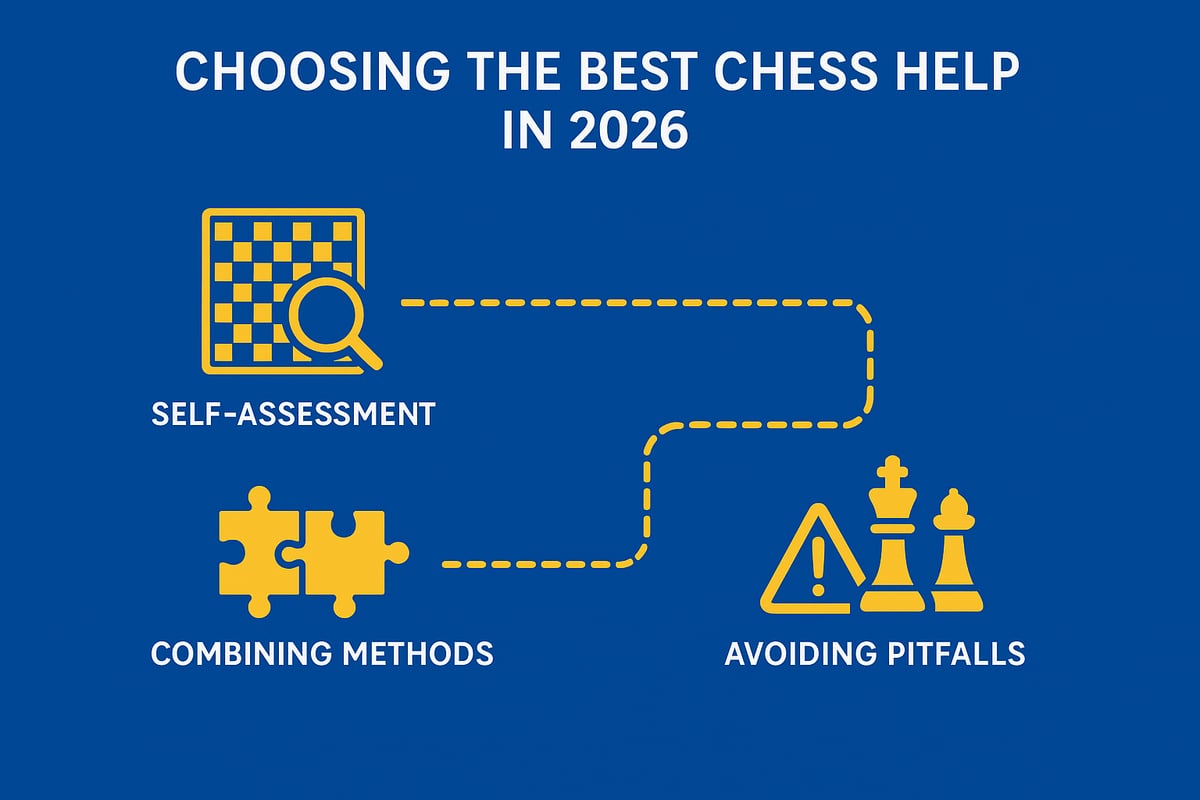
Choosing the right chess help in 2026 can feel like navigating a maze, but breaking it down step by step makes it much easier. Let’s walk through how you can assess your needs, combine approaches, steer clear of common mistakes, and craft a plan that sets you up for real improvement.
Assessing Your Chess Goals and Weaknesses
Start with honest self-assessment. Where do you stand currently? Look at your rating, review your recent games, and jot down patterns in your mistakes. Are you blundering pieces, struggling with openings, or losing in endgames?
Setting clear goals is crucial. Maybe you want to reach a new rating milestone, win your local club tournament, or simply cut down on careless errors. Different players need different chess help, so think about what you want most from your training.
Try using online quizzes, coach evaluations, or tracking apps to clarify your strengths and weaknesses. Regular reflection keeps your progress on track and ensures your chess help is genuinely targeted to your needs.
Combining Multiple Methods for Maximum Impact
No single approach works for everyone. The smartest players blend digital tools, personal coaching, and community support to get the most out of chess help. For example, you might pair engine analysis with advice from a mentor, or use cheat sheets alongside daily puzzles.
A recent article on Chess in the Digital Age highlights how technology and traditional methods combine for deeper learning. Multi-modal learners retain up to 60 percent more information, so try mixing things up.
It’s easy to get distracted by new tools. Stick to a core routine, but experiment to find a blend that suits your style and keeps your chess help both fresh and effective.
Avoiding Common Pitfalls in Chess Improvement
Many players fall into traps like relying too much on one resource or chasing quick fixes. Real chess help leads to steady, lasting progress, not overnight miracles.
Watch out for warning signs—feeling stuck at the same rating, getting frustrated, or skipping the basics. Improvement takes patience and adaptability, so don’t be discouraged by setbacks.
Top coaches remind us that resilience matters as much as skill. If your chess help isn’t moving you forward, pause and reassess. Sometimes a small change in routine does wonders.

Planning Your Next Steps
Ready to put it all together? Start with a 30-day action plan. Outline what you’ll study, how you’ll measure progress, and when you’ll review your results. A mix of study and play, plus rest days, keeps you balanced.
If you’re looking for ongoing learning, check out Free online chess courses to find structured lessons and new ideas. Regularly tweak your plan based on what works.
Every bit of smart chess help you use brings you closer to mastery. Stay curious, experiment, and remember—your best moves are still ahead.
So, after exploring these seven smart ways to get chess help and boost your game, you’re probably wondering what your next step should be. Honestly, one of the quickest ways to see real improvement—especially with all the resources now at your fingertips—is to focus on your openings. It’s such a simple shift, but it can make a huge difference in how confident and prepared you feel from the very first move. If you’re ready to start building that edge, why not Start Improving Your Openings? It’s a friendly, practical step you can take today—and your future self will thank you!


