

Are you ready to transform your game and become unbeatable? The secret lies in mastering chess defense, a skill that separates champions from the rest.
In this guide, you’ll discover practical strategies and modern techniques designed for every level of player. Learn how to turn challenging positions into winning opportunities using the latest insights in chess defense.
We’ll cover the fundamentals, advanced tactics, step-by-step thinking, psychological resilience, and emerging trends shaping defensive play in 2026.
Get ready to build true resilience, fuel your desire to improve, and take clear steps toward chess defense mastery.

The Fundamentals of Chess Defense
Unlocking the secrets of chess defense is like discovering a hidden superpower at the board. Have you ever wondered why some players never seem to crack under pressure? It often comes down to their mastery of defense. Let’s break down the core elements that will help you transform tough positions into opportunities.
Understanding the Role of Defense in Chess
Why is chess defense just as essential as offense in today’s game? In modern chess, defensive skills can turn the tide when the position looks bleak. Over the years, defense has evolved from passive resistance to an active, dynamic art, often sparking brilliant counterattacks.
Grandmasters like Karpov and Petrosian became legends by rescuing bad positions with cool-headed defense. Their games show how a solid defense can frustrate even the most aggressive opponents. Many believe defense is simply waiting, but in reality, it involves constant calculation and anticipation.
One common misconception is that defense means playing passively. In truth, the best defenders stay alert, seeking chances to regain the initiative. A strong chess defense can shake your opponent’s confidence and turn psychological pressure in your favor.
If you want to dive deeper into practical techniques, check out The Art of Defense in Chess for more examples and expert advice.
Key Defensive Principles Every Player Must Know
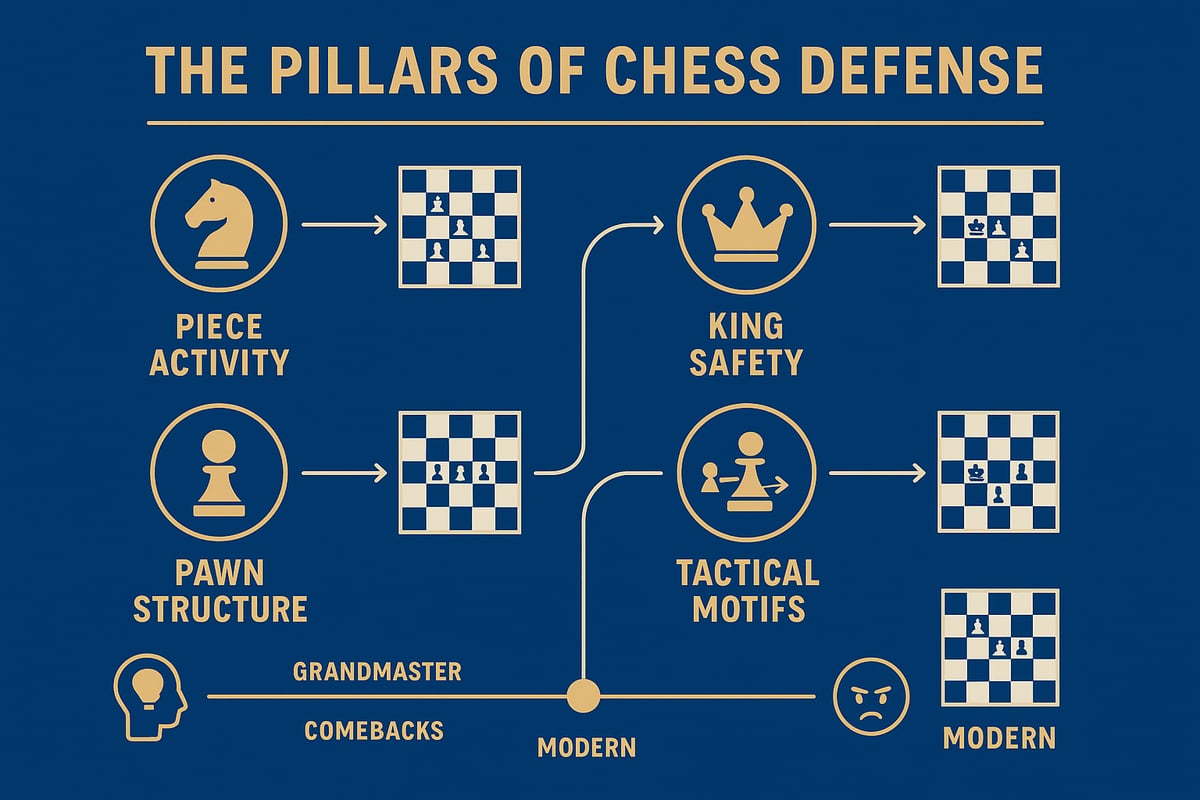
Every strong chess defense is built on a few essential principles. First, keep your pieces active and coordinated. Even when defending, your pieces should have purpose and mobility.
King safety matters at every stage of the game. Don’t ignore your pawn structure either—weak pawns can become targets, so shore them up or use them as shields. Prophylaxis is another key idea: always think about what your opponent wants to do next and block it before it starts.
Aron Nimzowitsch’s concept of overprotection is still relevant in 2026. By reinforcing important points, you make your position more flexible and harder to break. Exchanges can also relieve pressure, but only swap pieces if it helps your defense.
It’s tempting to sit back, but passive defense rarely works. Always look for counterplay—sometimes a timely pawn break or piece sacrifice can turn the tables. Let’s summarize these ideas:
| Principle | Why It Matters | Example |
|---|---|---|
| Piece activity | Prevents domination | Rooks on open files |
| King safety | Avoids sudden attacks | Castling, pawn shield |
| Prophylaxis | Blocks opponent’s plans | Preventing knight jumps |
| Overprotection | Adds flexibility | Doubled rooks on defense |
| Counterplay | Creates new threats | Pawn breaks, piece sacs |
Essential Defensive Motifs and Tactics
Tactics are the secret weapons of chess defense. Motifs like pins, forks, skewers, and discovered attacks can save you from disaster or even snatch a draw from the jaws of defeat.
You’ll often use blocking, deflection, and interference to disrupt your opponent’s plans. Sometimes, perpetual check or even a stalemate is your ticket to survival, especially in desperate situations.
Let’s look at some examples:
- Pin: Use a bishop to freeze an attacking knight.
- Fork: Counterattack with a knight to threaten two pieces.
- Skewer: Force your opponent’s stronger piece to move, exposing a weaker one.
- Blocking: Place a piece in the line of attack to buy time.
- Deflection: Lure a defender away from a key square.
- Interference: Place a piece where it disrupts opponent’s coordination.
In recent tournaments, these defensive motifs have led to dramatic turnarounds, proving that a well-timed chess defense can make all the difference, even at the highest level.
Step-by-Step: Building a Solid Defensive Mindset
Building a solid mindset for chess defense is a skill you can train, just like tactics or openings. You might wonder, how do top players stay calm and resourceful when their position is under fire? It starts with a clear, practical approach to every defensive challenge. If you follow these four steps, you'll turn tough games into learning experiences, and sometimes, even into unexpected victories.
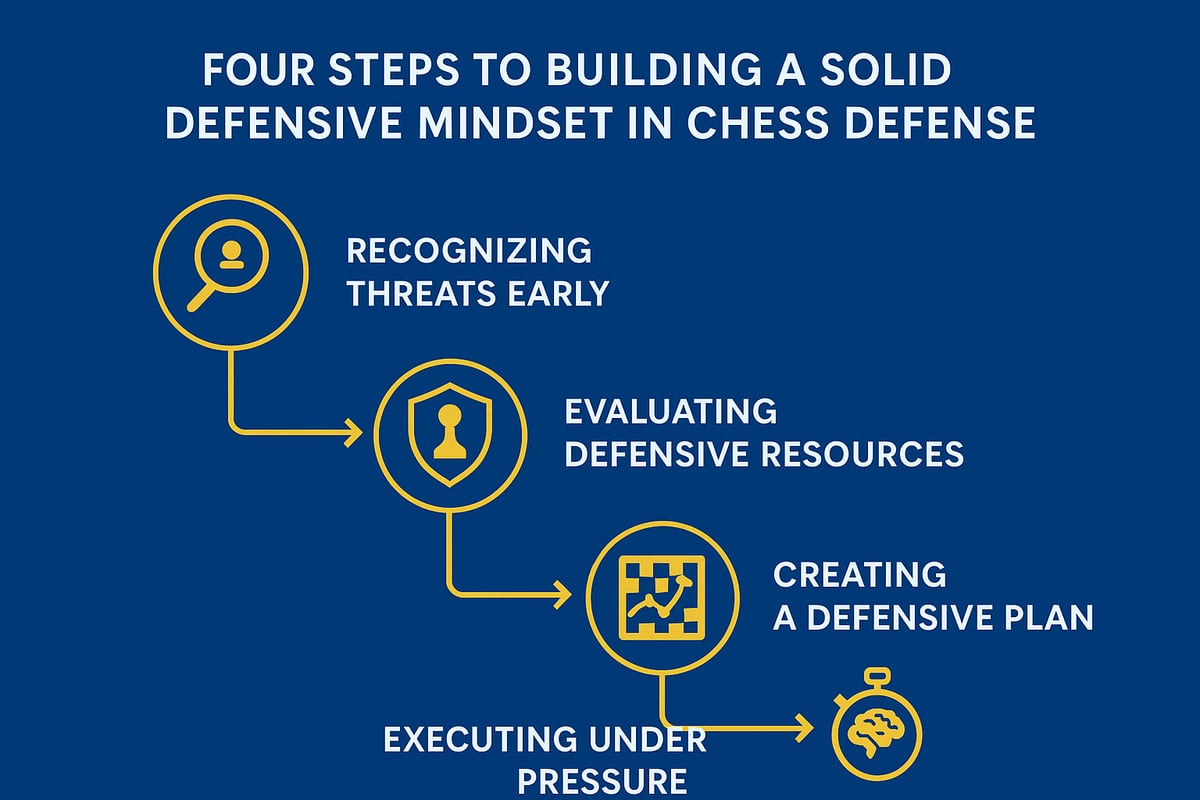
Step 1: Recognizing Threats Early
The first pillar of effective chess defense is learning to spot threats before they turn into disasters. Have you ever missed a sneaky move and wondered how it slipped past you? It happens to everyone, but you can train your eyes and mind to catch these threats earlier.
Start with a move-by-move threat assessment. After every move your opponent makes, pause and ask, "What is the threat?" Sometimes the danger is direct, like a piece attacking your queen. Other times, it's indirect, such as a quiet move preparing a devastating tactic two moves later.
Using candidate moves is a great way to anticipate your opponent's plans. For every position, list a few likely moves your rival might consider. This habit helps you see not just one threat, but a web of possibilities.
Want to get better at this? Try practical exercises: set up positions from classic games and practice identifying threats, both obvious and hidden. This steady practice will sharpen your intuition and make your chess defense much more reliable.
Step 2: Evaluating Defensive Resources
Once you spot a threat, the next step is to calmly evaluate your defensive resources. Think of your pieces as a team—who can help? Identify all available defenders and escape squares for your king or threatened pieces.
Sometimes, you'll face a choice between giving up material or accepting a weaker position. Weigh these options carefully. In chess defense, it's crucial to balance material sacrifices against keeping your position alive.
Deciding whether to defend, counterattack, or simplify is often the turning point in a tense game. Watch how masters handle similar situations: they might exchange pieces to relieve pressure or activate a dormant defender at just the right moment.
Here's a quick checklist:
- Are all your defenders coordinated?
- Is your king safe?
- Can you create counterplay instead of sitting passively?
Analyzing master games where resource evaluation made the difference is a powerful way to internalize these lessons. With time, you'll find your chess defense feels less like a scramble and more like calculated problem-solving.
Step 3: Creating a Defensive Plan
Now that you've recognized threats and sized up your resources, it's time to make a plan. Good chess defense is proactive, not just reactive. What are your priorities here? Usually, king safety comes first, followed by piece activity and pawn structure.
You might need to choose between active and passive defense. Active defense means looking for ways to challenge your opponent's threats directly, while passive defense is about holding ground and waiting for your chance.
Prophylactic moves—those that anticipate and prevent your opponent's ideas—are a secret weapon in planning. A well-timed pawn move or a subtle retreat can stop an attack before it starts.
Don't forget about time management. Rushed decisions often lead to blunders. Take a breath, review your plan, and make sure you're not missing anything. Building this habit will make your chess defense much more robust.
Step 4: Executing Under Pressure
All the planning in the world won't help if you freeze under pressure. The final step is about execution. Stay composed, even when the clock is ticking or your position looks grim.
Accurate calculation is vital in tense moments. Train yourself to methodically check all checks, captures, and threats, even when the pressure is high.
Learning from famous defensive saves can be inspiring. Many great players have faced impossible odds and found ways to hold or even win. Their stories remind us that resilience is at the heart of every strong chess defense.
Want to practice these skills? Consider using resources like Defensive chess endgame expertise, which offers targeted exercises to build your defensive instincts in critical endgames. Consistent training routines, puzzles, and reviewing your own games will help you develop nerves of steel and improve your chess defense every time you play.
Advanced Defensive Techniques for 2026
Are you ready to level up your chess defense? In 2026, mastering advanced defensive techniques is more than just surviving tough positions—it’s about flipping the script and creating your own chances. Let’s break down how you can turn defense into a winning weapon using the most up-to-date strategies.
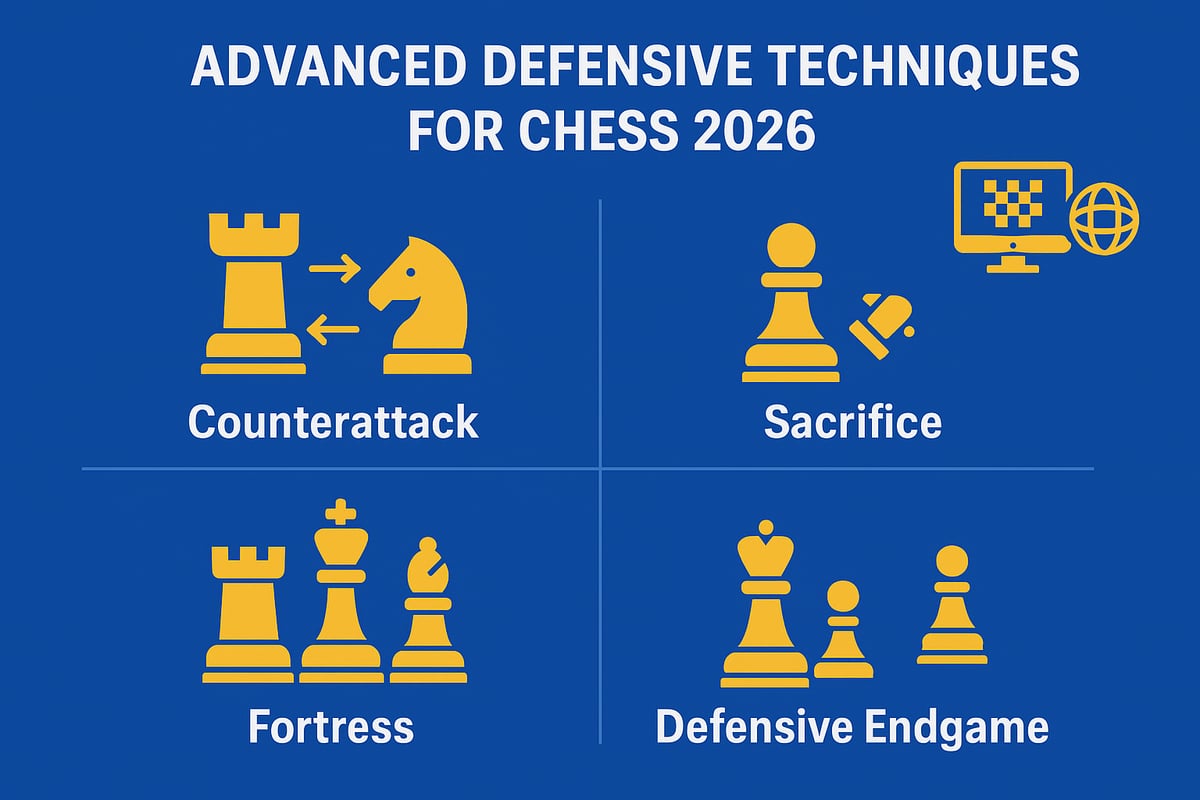
Counterattack: Turning Defense into Offense
When you find yourself on the back foot, do you freeze up or search for ways to bite back? Counterattacking is a core part of chess defense, especially in today’s fast-paced games. The key is to recognize those moments when your opponent has overextended or left weaknesses behind.
Start by scanning for tactical opportunities—maybe a loose piece, an exposed king, or a vulnerable pawn structure. Even in the most uncomfortable positions, you can often find a move that shifts the momentum. Sometimes, the best defense is a good offense.
Let’s look at a quick checklist for effective counterplay:
- Spot weak squares in your opponent’s camp.
- Identify pieces that are overloaded or too far from the action.
- Calculate forcing moves that create immediate threats.
In the Sicilian Defense, for example, Black often absorbs pressure and then strikes back on the queenside or center. For more ideas, you might want to study Sicilian Defense strategies, where defensive and counterattacking plans go hand in hand.
Remember, chess defense is not about sitting back—it’s about seizing the initiative when your opponent least expects it.
The Art of Sacrifice in Defense
Have you ever considered giving up material to save your position? The art of sacrifice is one of the most dramatic aspects of chess defense. Sometimes, a timely sacrifice can neutralize an opponent’s attack or completely change the course of the game.
There are several types of defensive sacrifices:
- Material sacrifices for perpetual check or stalemate chances.
- Exchange sacrifices (giving up a rook for a minor piece) to eliminate a dangerous attacker.
- Pawn sacrifices to open lines for your own pieces or block your opponent’s threats.
Here’s a table summarizing common defensive sacrifices:
| Sacrifice Type | Typical Goal | Example Scenario |
|---|---|---|
| Exchange | Blockade or eliminate attacker | Rook takes knight to block file |
| Pawn | Open lines, distract opponent, create space | Pawn advance to deflect attacker |
| Piece | Perpetual check, draw, or counterattack | Bishop sac for perpetual threats |
The trick is knowing when the compensation is worth it. In 2026, with engines and databases at your fingertips, you can study famous games where bold sacrifices turned defeat into victory. Keep in mind, chess defense is not just about holding on—it’s about being creative and resourceful.
Fortress Construction: Drawing from Inferior Positions
Ever found yourself in a hopeless position but managed to escape with a draw? That’s the magic of fortress construction. A fortress is a setup where, even with less material, your opponent can’t break through.
Here’s how to identify and build a fortress:
- Look for ways to block all entry points to your king or critical squares.
- Use pawns and minor pieces to create impenetrable walls.
- Be alert to drawing mechanisms, like stalemate or insufficient material.
Some classic fortress types include:
- Rook and pawn vs. rook endgames, where the defender builds a safe zone.
- Bishop and pawn fortresses, especially with opposite-colored bishops.
- King and pawn positions where the defender forces a stalemate.
Practicing fortress construction is a powerful addition to your chess defense toolkit. You’ll be surprised how often these setups can save you half a point, especially in longer games or time trouble.
Defensive Endgame Techniques
When the dust settles and you’re down to just a few pieces, endgame mastery becomes the heart of chess defense. Saving difficult endings is all about knowing the right techniques and staying calm under pressure.
Some must-know defensive endgames:
- Philidor position: Drawing with rook vs. rook and pawn.
- Lucena position: Building bridges to save or win.
- Vancura defense: Holding tough rook endgames.
Key defensive motifs in pawn endgames include:
- Using opposition to block the enemy king.
- Triangulation to gain or lose a tempo.
- Forcing zugzwang to make your opponent run out of good moves.
Studying modern endgame studies, especially those generated by engines, will keep your chess defense sharp. Challenge yourself with puzzles and timed drills to cement these ideas.
Even if you’re behind, don’t give up. Defensive endgame skills can snatch draws from the jaws of defeat and sometimes even turn the tables for a win.
Defensive Preparation in the Opening and Middlegame
Ready to sharpen your chess defense before the battle even begins? Your opening and middlegame choices lay the foundation for how well you’ll handle pressure, neutralize threats, and turn the tables on your opponent. Let’s break down how smart preparation in these phases can give your chess defense a real edge.
Opening Choices and Defensive Setups
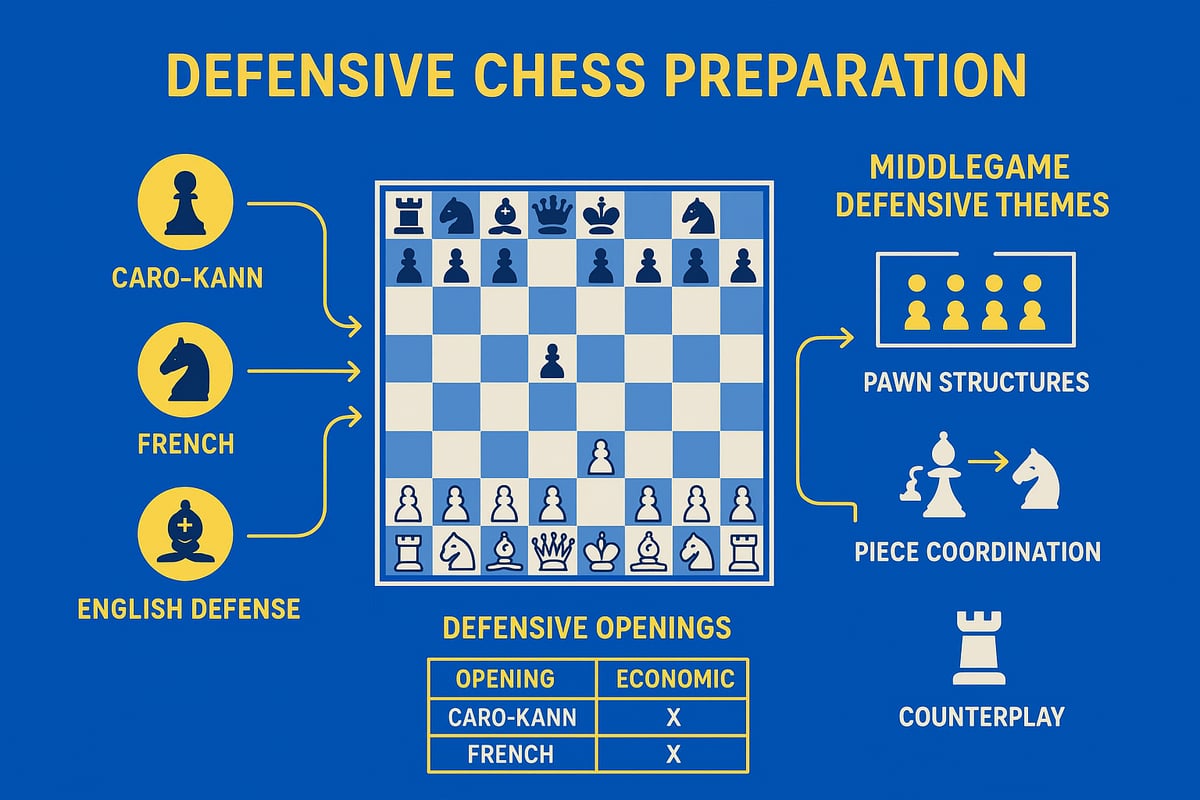
Your opening repertoire is the first line of your chess defense. Selecting openings that prioritize solidity and flexibility can help you weather early storms and set up your middlegame plans.
Some of the most respected defensive openings include the Caro-Kann, French Defense, and English Defense. Each offers unique structures that support strong chess defense by minimizing weaknesses and giving you reliable pawn shields.
Here’s a quick comparison of popular defensive openings:
| Opening | Key Strengths | Typical Plans |
|---|---|---|
| Caro-Kann | Solid pawn structure, safe king | Counterattack in center |
| French Defense | Resilient against e4, closed center | Break with c5 or f6 |
| English Defense | Flexible, invites imbalances | Early queenside development |
For a deep dive into one of these, check out the Caro-Kann Defense opening guide, which breaks down the essentials for this time-tested chess defense.
When building your opening repertoire, think about your personal style. Do you prefer calm positions or are you comfortable in sharp situations? Defensive setups aren’t just about surviving—they’re about laying the groundwork for counterplay.
Common defensive plans in the opening phase:
- Develop pieces harmoniously, keeping king safety as a top priority.
- Maintain a sturdy pawn structure.
- Avoid unnecessary pawn moves that create weaknesses.
- Watch for early tactical threats from your opponent.
Adapt your repertoire as you grow. If you struggle with certain attacks, consider adding lines that reinforce your chess defense. Studying competitor approaches, like the Sicilian Defense or English Defense, can reveal new ways to strengthen your opening choices.
Navigating the Middlegame: Defensive Themes
Once the opening dust settles, the middlegame is where your chess defense is truly tested. Here, you’ll face imbalanced positions, unexpected threats, and aggressive plans from your opponent.
One key to effective chess defense in the middlegame is flexibility. Stay alert for tactical shots and be ready to adjust your plan if the position changes. Look for opportunities to exchange pieces and relieve pressure, but only if it improves your defensive stance.
Critical defensive themes in the middlegame include:
- Managing imbalanced positions: Don’t panic if you’re down material or under attack. Focus on piece activity and find hidden defensive resources.
- Using pawn breaks: Sometimes, advancing a pawn at the right moment can open lines for your pieces or blunt your opponent’s attack.
- Neutralizing attacks: Identify your opponent’s main threats. Place your pieces on optimal squares to block, defend, or even counterattack.
- Staying proactive: Don’t just sit back. Seek chances to create problems for your opponent, forcing them to respond to your moves.
Reviewing recent games where players have successfully defended against the Sicilian or English Defense can offer practical insights. Notice how top players use precise calculation, resourceful piece placement, and well-timed exchanges to hold tough positions.
Remember, the best chess defense is active and resourceful. By preparing in the opening and staying vigilant in the middlegame, you can turn defensive stands into winning chances.
Psychological Aspects of Chess Defense
Mastering chess defense is not just about memorizing patterns or calculating tactics. It's just as much about how you handle the mental side of the game. When the pressure mounts, your mindset can make or break your defense. Let's explore how you can build resilience, stay calm under the clock, and turn mistakes into growth.
Building Mental Resilience During Defense
When you find yourself under attack, it's easy to freeze or panic. The key to successful chess defense lies in your ability to stay composed. Ask yourself: what is the real threat, and what resources do I have? Focusing on the process, rather than the outcome, can help you keep a clear head.
Here are practical ways to build mental resilience:
- Breathe and slow down: Take a moment before each move, especially when the position is tense.
- Stay objective: Treat each threat as a puzzle, not a crisis.
- Accept tough positions: Sometimes, survival is a win. Aim to make your opponent's task as difficult as possible.
- Practice patience: Defensive positions often require waiting for your opponent to overreach.
Blunders happen to everyone. The best defenders in chess defense quickly regain their confidence after mistakes. They remind themselves that even small defensive victories can shift momentum. Over time, you’ll find that your resilience becomes a powerful weapon.
Handling Time Trouble and Stress
Time pressure can turn a manageable position into chaos. In chess defense, you need to make sound decisions even when the clock is ticking. How do top players keep their cool?
Try these strategies:
- Prioritize safety: When short on time, focus on king safety and avoid risky complications.
- Trust your intuition: Your first instinct is often correct, especially in familiar defensive setups.
- Break the cycle: If you notice stress building, briefly close your eyes or stretch your hands between moves.
- Learn from the pros: Watch recent tournament games where players defended resourcefully in time trouble.
Stress is inevitable, but your response is what counts. By practicing defensive scenarios under time constraints, you’ll train your mind to remain steady. The more you build these habits, the more natural solid chess defense will feel, even in the most stressful moments.
Learning from Defensive Mistakes
Every defender faces setbacks, but the true champions of chess defense are those who learn from their mistakes. After a tough loss, resist the urge to forget it. Instead, analyze the game and pinpoint where your defensive plan faltered.
Here’s a simple process:
- Identify key moments: Look for positions where you felt pressure or uncertainty.
- Ask why: Was it a missed resource, a premature exchange, or a misjudged threat?
- Use tools: Computer analysis can reveal overlooked defensive ideas. Studies like Quantifying Human Performance in Chess show that reviewing large-scale data helps players spot patterns in their defensive play.
- Set actionable goals: Focus on one specific area to improve in your next games.
Turning setbacks into growth is what separates average players from great ones. Each mistake in chess defense is a stepping stone to stronger, more confident play.
Trends and Innovations in Chess Defense for 2026
What does the future hold for chess defense? In 2026, the landscape is evolving faster than ever. With artificial intelligence, advanced engines, and the explosion of online chess, your defensive skills are set to reach new heights. Let’s take a closer look at how these innovations are transforming chess defense for players at all levels.
The Influence of Artificial Intelligence and Chess Engines
Artificial intelligence is now a cornerstone of chess defense. Top players rely on advanced engines like Stockfish and Leela to analyze positions and uncover defensive resources that were once unimaginable. These engines identify subtle defensive maneuvers, from counterintuitive piece sacrifices to fortress constructions, that even grandmasters might overlook.
The synergy between human intuition and computer precision has led to hybrid preparation methods. Players use engines to simulate defensive scenarios, testing their reactions against relentless digital attackers. This approach sharpens your instincts and makes your chess defense more resilient.
New defensive patterns are emerging thanks to deep learning and reinforcement learning algorithms. For example, research in related fields like Deep Reinforcement Learning in Xiangqi has revealed how AI can discover unconventional defensive techniques, which often inspire similar innovations in chess defense.
Defensive Insights from Online Chess and Rapid Formats
Have you noticed how online chess is changing the way you defend? Rapid, blitz, and bullet games force you to make split-second decisions. In these formats, chess defense becomes a test of nerves and adaptability. You must quickly spot threats, find resources, and sometimes rely on instinct rather than deep calculation.
Online platforms provide access to thousands of defensive puzzles and real-time feedback. Training tools now use AI to adjust the difficulty of defensive puzzles on the fly. Studies like Predicting Chess Puzzle Difficulty with Transformers show how AI models can tailor your practice for more effective chess defense training.
Notable games from online tournaments have highlighted resourcefulness under pressure. Players are experimenting with creative ways to hold difficult positions, learning from both their own games and instant analysis.
The Future of Chess Defense: What to Expect
So, what’s next for chess defense? Expect theory to keep evolving as engines and AI continue to break new ground. Defensive play is becoming more dynamic, with flexibility and creativity valued as highly as calculation. You’ll see defenders who are comfortable switching between passive resistance and explosive counterattacks, depending on the needs of the position.
Coaching and self-study will increasingly focus on adaptability. Defensive training will go beyond memorizing motifs, emphasizing problem-solving and psychological resilience. The next generation of chess defenders will be those who embrace these innovations, blending technology with timeless principles.
Are you ready to join them? By staying curious and open to new trends, your chess defense can stay a step ahead in 2026 and beyond.
So, now that you’ve seen how mastering defense can totally transform your chess game, are you ready to take that next step? If you’re like me, you want resources that actually make things easier—not harder. That’s where having a full set of cheat sheets, puzzles, and endgame guides really pays off. Imagine having everything you need for openings, defense, and tricky endgames all in one place, ready whenever you hit a tough spot or need a quick refresher. Why not set yourself up for real progress? Check out Get The FULL Chess Mastery Bundle and see how much smoother your chess journey can be.


