

Have you noticed how online chess coaching seems to be everywhere these days? Players of all levels are seeing their skills skyrocket thanks to the right chess coach online.
If you’re eager to accelerate your improvement and outplay your rivals, you’re in the right place. In this guide, you’ll discover the 7 most essential tips from expert coaches that make learning chess online fast and effective.
From setting clear goals to mastering digital tools, these actionable insights will help you get better results in less time. Ready to unlock your full chess potential? Keep reading for practical strategies and expert secrets!

Why Online Chess Coaching Accelerates Improvement
The world of chess is rapidly changing, with an increasing number of players turning to digital platforms for accelerated growth. If you have ever wondered why working with a chess coach online is becoming the go-to solution for so many, you're not alone. Let's explore the reasons behind this shift and see how it can supercharge your progress.
The Global Shift to Digital Learning for Chess Players
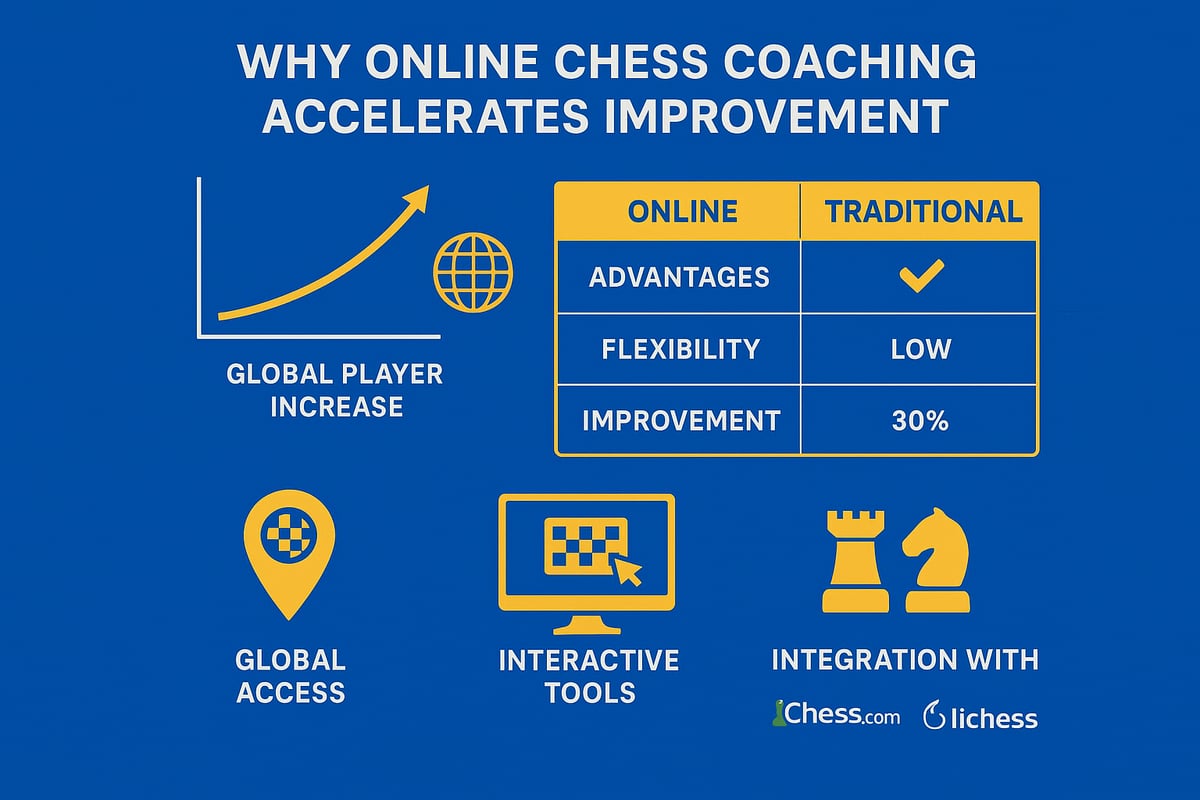
Not long ago, chess improvement often meant finding a local club or coach and sticking to scheduled in-person lessons. Today, the landscape is different. Thousands of players now learn from a chess coach online, connecting across continents and time zones. This global shift makes advanced chess instruction accessible to everyone, regardless of location.
Advantages of Online Coaching vs. Traditional In-Person Lessons
Why are so many choosing a chess coach online over traditional methods? Online coaching often provides more flexibility, lower costs, and access to a wider range of expertise. You can record lessons, revisit materials, and learn at your own pace. Unlike in-person sessions, online learning often includes multimedia resources and interactive features that make sessions more engaging.
Flexibility and Accessibility: Learning from Anywhere, Anytime
Imagine improving your chess from your living room or even while traveling. With a chess coach online, you are no longer tied to a fixed location or schedule. Sessions can be arranged around your life, whether you’re a busy professional, a student, or a parent. This level of flexibility removes barriers and allows for consistent, stress-free learning.
Personalized Feedback and Interactive Analysis Tools
One of the greatest benefits of a chess coach online is the use of real-time digital tools. Coaches can instantly share annotated boards, analyze your games with state-of-the-art engines, and provide direct feedback as you play. Interactive tools like screen sharing and puzzle trainers make each lesson more dynamic and tailored to your needs.
Access to a Wider Pool of Expert Coaches Worldwide
The internet connects you to top-tier chess coaches from all over the globe. No longer limited to local instructors, you can now select a chess coach online who specializes in your preferred areas of improvement—be it openings, tactics, or endgames. If you're interested in discovering options, check out how to find chess coaches and clubs that fit your personal learning style.
Integration with Digital Chess Platforms (e.g., Lichess, Chess.com)
Modern chess learning is deeply connected with online platforms. Your chess coach online can guide you through lessons using tools on Chess.com or Lichess, making it easy to analyze games, set up training positions, and track progress. These platforms also provide features like puzzles, tournaments, and extensive game databases, all enhancing your learning experience.
Real-World Examples of Rapid Improvement Through Online Coaching
Many players who switched to a chess coach online have seen dramatic rating jumps in just a few months. For instance, some beginners report climbing hundreds of points after just a dozen focused sessions. These stories are becoming more common as digital coaching methods evolve.
Key Statistics: Growth in Online Chess Coaching and Player Performance Data
Data shows that the number of players seeking a chess coach online has soared in recent years. According to surveys, online learners improve their ratings up to 30 percent faster than those relying solely on self-study or local clubs. The integration of tech tools and global expertise continues to fuel this impressive trend.
Online chess coaching is not just a trend, but a proven path to rapid and sustained improvement. As you consider your next steps in chess, remember the unique advantages of connecting with a chess coach online to unlock your full potential.
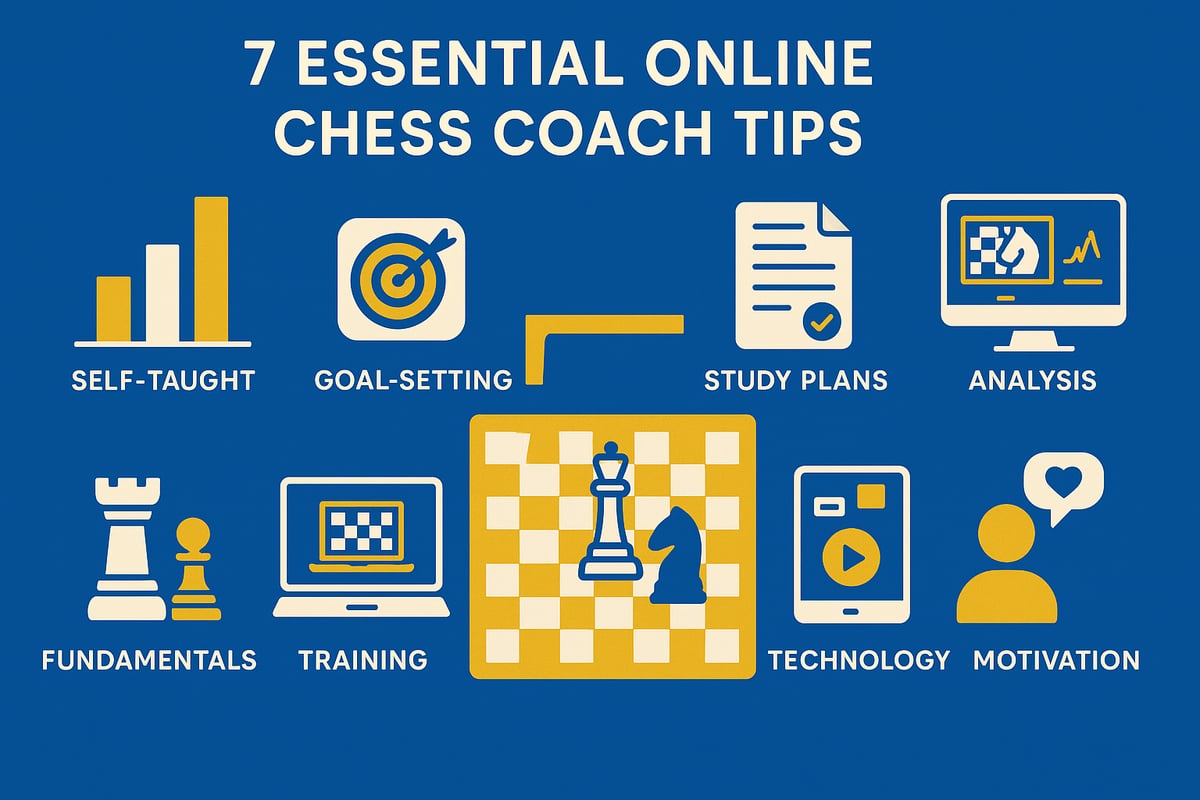
7 Essential Chess Coach Online Tips for Fast Improvement
Ready to take your chess game to the next level? With the right chess coach online, you can fast-track your improvement and see results that would take years on your own. Let's dive into the seven most essential tips that every online chess student should know.
1. Set Clear, Achievable Chess Goals
One of the first things a chess coach online will focus on is goal-setting. Why? Because clear goals keep your training focused and measurable. Without them, it's easy to drift or get overwhelmed.
Short-term chess goals can include things like "reach a 1200 rating on Lichess" or "solve 10 tactics puzzles daily for a month." Long-term goals might aim higher, such as "qualify for a local tournament" or "master the Caro-Kann Defense."
A great chess coach online will help you define these targets and break them into actionable steps. They'll check in regularly, track your progress, and adjust your goals as you improve. This keeps you motivated and ensures steady growth.
Avoid vague goals like "get better at chess." Instead, use SMART goals—Specific, Measurable, Achievable, Relevant, and Time-bound. Your chess coach online can provide templates or digital tools to make this process easier.
For example, after a player started working with a chess coach online, setting weekly performance targets, their rating jumped 200 points in three months. All because their practice became focused and purposeful.
2. Leverage Structured Study Plans
You might wonder: how do top players organize their learning? The answer is a structured study plan, often crafted by a chess coach online. These plans balance openings, tactics, endgames, and practical play—ensuring you cover every base.
A solid study plan from your chess coach online might allocate Mondays for openings, Wednesdays for tactics, Fridays for endgames, and weekends for playing games. The best plans are flexible, adapting as you discover strengths and weaknesses.
Digital tools and apps help keep your study schedule on track. Many coaches recommend using resources like Chess openings study resources to deepen your understanding of key positions and strategies.
Your chess coach online will periodically review your progress, updating your plan to focus on areas needing improvement. Evidence from top coaches shows that students with consistent, structured routines see faster rating gains.
Sample table for a beginner's weekly study plan:
| Day | Focus Area | Time (minutes) |
|---|---|---|
| Monday | Openings | 30 |
| Tuesday | Tactics | 30 |
| Wednesday | Endgames | 30 |
| Thursday | Play & Review | 45 |
| Friday | Strategy Videos | 30 |
| Saturday | Practice Games | 60 |
| Sunday | Coach Review | 30 |
With a chess coach online, you never have to guess what to study next.
3. Analyze Your Games with a Coach
Have you ever finished a game and wondered, "What went wrong?" This is where working with a chess coach online becomes invaluable. Post-game analysis reveals your blind spots and helps you learn from both wins and losses.
Typically, your chess coach online will review your games with you, move by move. Together, you'll spot recurring mistakes, missed tactics, and opportunities for improvement. The coach's insights often go beyond what a chess engine provides, offering human context and practical advice.
Here's a step-by-step look at how an online session might work:
- Upload your game to a shared platform.
- Review critical moments together.
- Discuss alternate moves and strategies.
- Identify patterns in your play.
Did you know players who analyze their games regularly with a chess coach online improve up to 30% faster? Real breakthroughs often happen during these sessions. For example, one student realized they were consistently misplaying endgames, so their coach added targeted endgame drills to their plan.
Whether you've won or lost, always review your games. Your chess coach online will help you turn every mistake into a stepping stone.
4. Master Chess Fundamentals Before Advanced Concepts
It's tempting to jump into flashy tactics or memorize rare openings. However, every chess coach online will tell you: fundamentals come first. Knowing the basics—opening principles, tactical motifs, and essential endgames—lays the groundwork for everything else.
Your chess coach online will reinforce these fundamentals during sessions. Expect to revisit things like piece development, king safety, and pawn structure. Skipping ahead to advanced material too soon can actually slow your progress.
Practical exercises, like solving basic checkmates or practicing common opening setups, help cement these skills. Studies show a strong grasp of fundamentals correlates directly with steady rating gains.
Consider this: two students start at the same level. The one who spends a month drilling basic tactics and endgames with their chess coach online will almost always outperform the one who jumps straight to complex openings.
If you want a quick refresher, many coaches recommend using resources like cheat sheets for essential concepts. Mastering the basics is your ticket to long-term success.
5. Practice Regularly with Purposeful Training
Not all practice is created equal. Casual games are fun, but purposeful training—designed by a chess coach online—yields real improvement.
Your coach will create personalized drills and exercises targeting your weaknesses. For instance, if you struggle with tactics, they'll assign daily puzzle sets or timed exercises. This type of focused repetition, known as spaced learning, helps you retain new skills longer.
Keep a training log to track your progress. Many students use digital tools provided by their chess coach online to record results and identify trends. This way, you see exactly where you're improving and where you need more work.
Research suggests that practicing three to five times a week, for 30–60 minutes per session, is optimal for most players. Here's a sample list of training activities:
- Solve tactical puzzles
- Play rapid games and review with your coach
- Study endgame positions
- Practice opening lines against the computer
With guidance from your chess coach online, every minute you spend practicing is a step closer to your goals.
6. Utilize Technology and Online Resources
The digital age has revolutionized chess training. A chess coach online will introduce you to a suite of tools—databases, engines, mobile apps—that make learning efficient and interactive.
Platforms like Chess.com and Lichess provide endless opportunities for practice, analysis, and competition. Your chess coach online might assign you video lessons, interactive puzzles, or even live-streamed classes to reinforce learning.
But with so many resources, it's easy to get overwhelmed. Your coach helps you curate the best materials, focusing on quality over quantity. Many recommend sticking to a few trusted platforms and supplementing lessons with targeted self-study.
For example, after a student started using a tactics app recommended by their chess coach online, their pattern recognition improved noticeably within weeks. Technology, when guided by an expert, becomes a powerful ally.
Between sessions, your chess coach online can assign homework or review your progress using shared digital notes. This constant feedback loop accelerates your growth and keeps you accountable.
7. Stay Motivated and Embrace a Growth Mindset
Chess improvement is a journey, not a sprint. Even with a chess coach online, you'll face tough losses and frustrating plateaus. That's why motivation and mindset matter.
Your coach's role extends beyond teaching moves. They help you build resilience, celebrate small victories, and learn from setbacks. A chess coach online often connects you with online clubs or forums, so you can find support from fellow learners.
Set realistic expectations. Improvement takes time, and every master was once a beginner. When you feel stuck, your coach will help you adjust your routine or set new, inspiring goals.
Studies show that players with a growth mindset—believing skills can be developed with effort—outperform those who see talent as fixed. So, embrace challenges and keep learning. With a chess coach online by your side, you'll enjoy the journey as much as the results.
How to Choose the Right Online Chess Coach
Choosing the right chess coach online can make a world of difference in your chess journey. With so many options, how do you know who will help you reach your full potential? Let’s break down what you need to look for and how to make the best decision for your growth.
What Makes a Great Chess Coach Online?
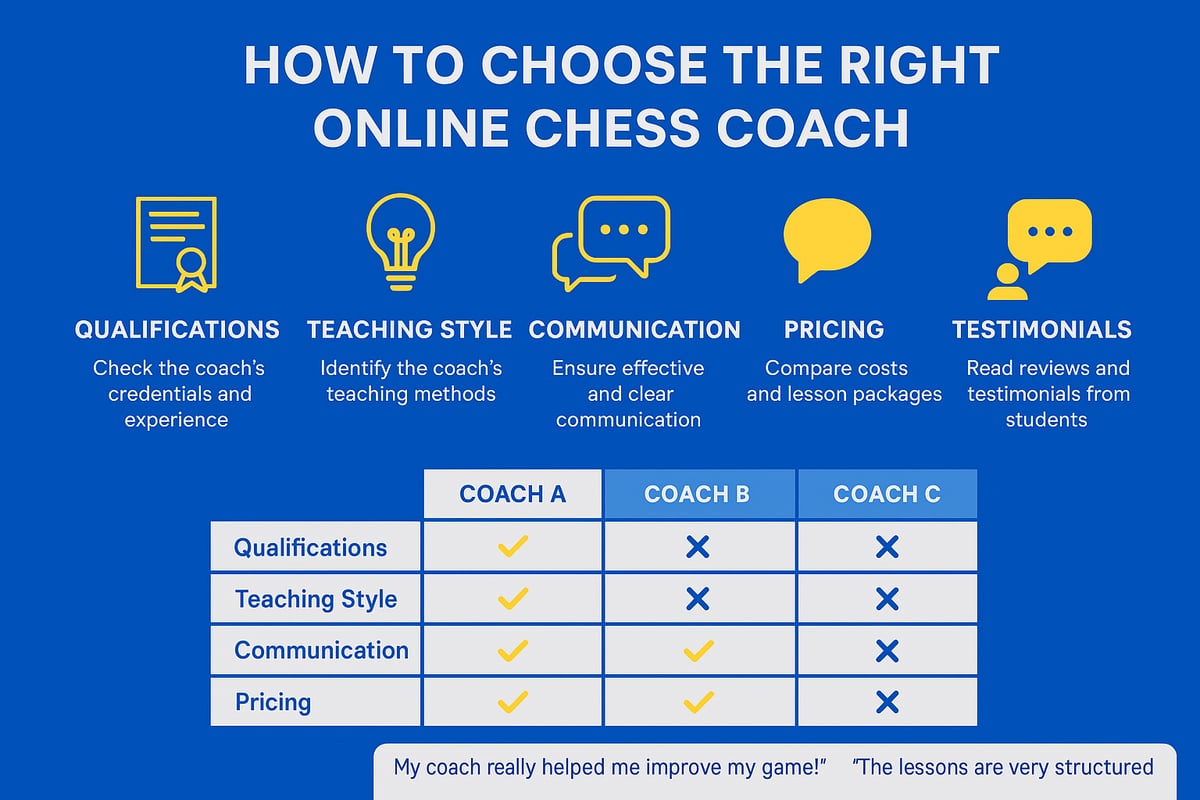
Start by considering the fundamentals. A top chess coach online should have strong credentials, a proven track record, and excellent communication skills. You want someone who not only knows the game but can explain complex ideas in simple terms.
Here’s a quick comparison table to help you evaluate candidates:
| Criteria | What to Look For | Why It Matters |
|---|---|---|
| Qualifications | Titles, ratings, teaching experience | Ensures expertise |
| Teaching Style | Interactive, patient, adaptive | Matches your learning pace |
| Communication | Clear, encouraging, responsive | Builds trust and motivation |
A coach who checks these boxes can help you build confidence and accelerate your learning curve.
Matching Specialization and Personality
Not every chess coach online is right for every player. Some specialize in openings, others in tactics or endgames. Think about your goals—do you need help with strategy, calculation, or a specific phase of the game?
It’s also important to find someone whose personality resonates with you. If you enjoy a relaxed session or prefer a more intense, goal-driven approach, communicate this early. Coaches often offer trial lessons, so take advantage to see if it feels like a good fit.
Comparing Costs and Lesson Formats
Online coaching comes in a variety of price ranges. Some coaches charge per hour, others offer package deals or monthly subscriptions. Compare pricing, but remember that the cheapest option may not always deliver the best value.
Lesson formats vary too. Some coaches provide one-on-one sessions, while others host group classes. Decide which format suits your schedule and preferred learning environment.
Spotting Red Flags
Be cautious of coaches who guarantee instant results or lack verifiable experience. A reliable chess coach online should be transparent about their background and open to answering your questions. Watch out for poor communication or unclear lesson plans.
Where to Find Coaches
You can find reputable coaches through chess platforms, forums, or word of mouth. Look for verified profiles, ratings, and student feedback. Resources like The Right Chess Coach Can Change Everything highlight how personalized coaching can accelerate your improvement.
Student Stories and Testimonials
Before committing, read testimonials or ask for references. Real-world success stories offer valuable insight into how a coach works and the kind of progress you can expect. Many students credit their growth to finding a chess coach online who truly understood their needs and motivated them to push further.
Finding the ideal chess coach online is about more than just credentials. It’s about connection, support, and a shared commitment to your chess goals. Take your time, do your research, and you’ll set yourself up for rapid improvement.
Maximizing Results: Building an Effective Online Chess Routine
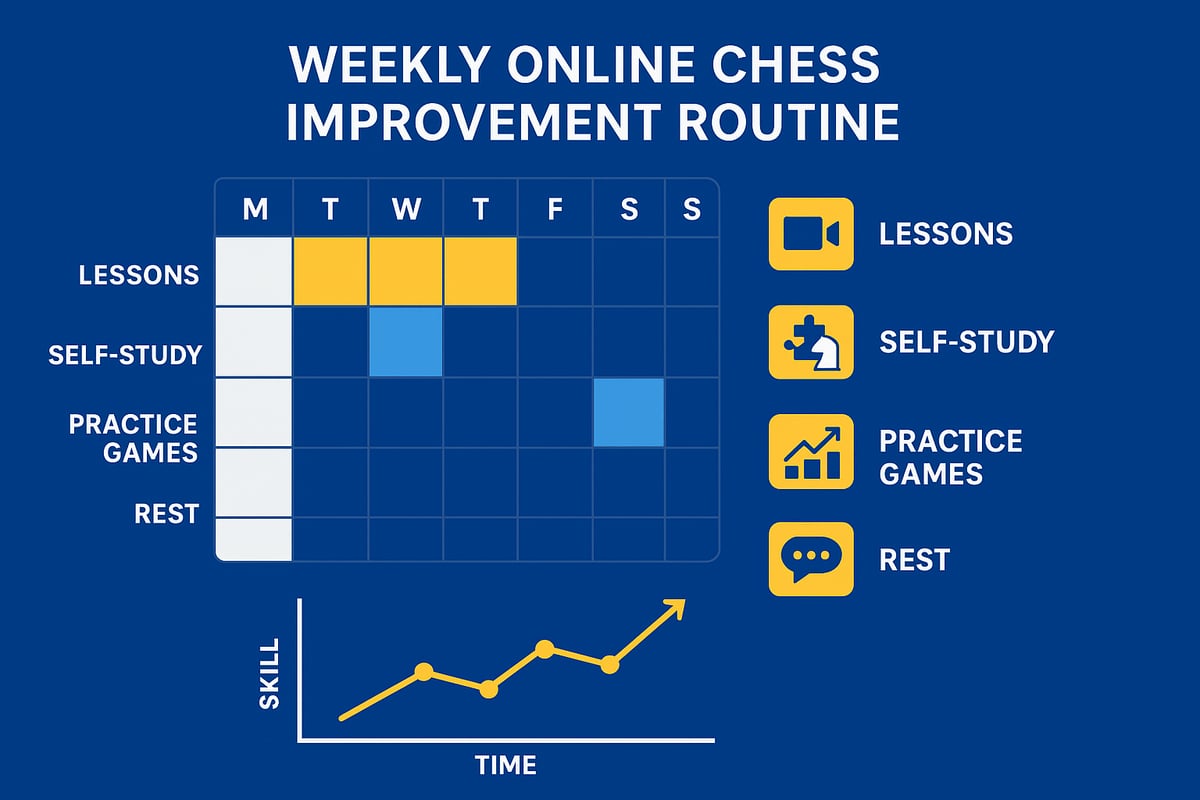
Building a strong routine is the secret sauce for anyone looking to make the most of their chess coach online experience. If you want rapid progress, consistency matters more than cramming all your study into one weekend. The right structure keeps you focused, motivated, and always moving forward.
Creating a Balanced Chess Routine
A balanced routine mixes lessons with your chess coach online, self-study, and regular practice games. Try mapping out your week so you have time for each area. For example, schedule lessons twice a week, dedicate two days to reviewing openings, and set aside time for online games. This approach, highlighted in Chess Training Methods: Building Your Path to Mastery, helps prevent burnout and keeps learning fresh.
Optimizing Your Learning Environment
Your environment can make or break your focus. Find a quiet spot for your chess coach online sessions, silence notifications, and keep your phone out of reach. Even small tweaks, like using headphones or a bigger screen, can help you absorb more during lessons.
Leveraging Technology for Progress
Digital tools are a game-changer in modern chess training. Use performance analytics from platforms like Chess.com or Lichess to spot trends in your games. Many players also benefit from using puzzle apps to sharpen tactical skills. If you want to target your weaknesses, try incorporating resources like Improve with chess puzzles into your routine for focused practice and measurable results.
Blending Coaching with Community Support
Don’t just rely on your chess coach online for all your learning. Join online chess clubs or group study sessions to get fresh perspectives. Discussing positions with peers or playing training games with study partners keeps you engaged and helps reinforce what you learn in lessons.
Staying Motivated and Adapting Over Time
Motivation can dip, especially when progress slows. Celebrate small wins, like reaching a new rating or mastering a tricky tactic. Track your goals and be open to tweaking your routine as your skills grow. Your chess coach online can help you adjust your plan, set new challenges, and make sure you never feel stuck.
Now that you’ve got these 7 essential online chess coach tips under your belt, you might be wondering, “What’s my next step?” Honestly, making real progress comes down to having the right tools at your fingertips—especially when it comes to openings, which can set the tone for your entire game. If you want to keep up the momentum and really sharpen your opening play (without drowning in endless theory), why not Start Improving Your Openings? It’s a simple way to put these tips into action and take your chess game further, faster—let’s do this together!


