

You've probably been there: sitting across from an opponent, trying to remember whether your knight moves in an L-shape or your bishop goes diagonally, wondering if you're about to make a catastrophic blunder. Chess is brilliant, but let's be honest, it can feel overwhelming when you're trying to remember every rule, tactic, and opening variation. That's exactly where a well-designed chess cheat sheet becomes your secret weapon. Rather than spending months memorising everything, you can have a quick reference guide that helps you play confidently whilst you build your skills naturally through practice.
What Makes a Chess Cheat Sheet Essential
Think of a chess cheat sheet as your pocket-sized coach. It's not about cheating at all (despite what the name might suggest when discussing the serious topic of cheating in chess). Instead, it's about having instant access to the fundamental information you need to play better chess.
The beauty of a quality chess cheat sheet lies in its ability to condense complex information into digestible chunks. You don't need to wade through hundreds of pages when you just want to know how a particular piece moves or what your next opening move should be.
Core Elements Every Chess Cheat Sheet Should Include
A comprehensive chess cheat sheet typically covers several crucial areas:
- Piece movements and values: How each piece moves, captures, and its relative point value
- Special moves: Castling, en passant, and pawn promotion rules
- Basic tactical patterns: Forks, pins, skewers, and discovered attacks
- Opening principles: Control the centre, develop pieces, castle early
- Endgame fundamentals: Key checkmate patterns and basic endgame theory
Most beginners struggle with remembering which pieces can move where. Having a visual reference that shows exactly how each piece operates transforms your learning curve from steep to manageable.
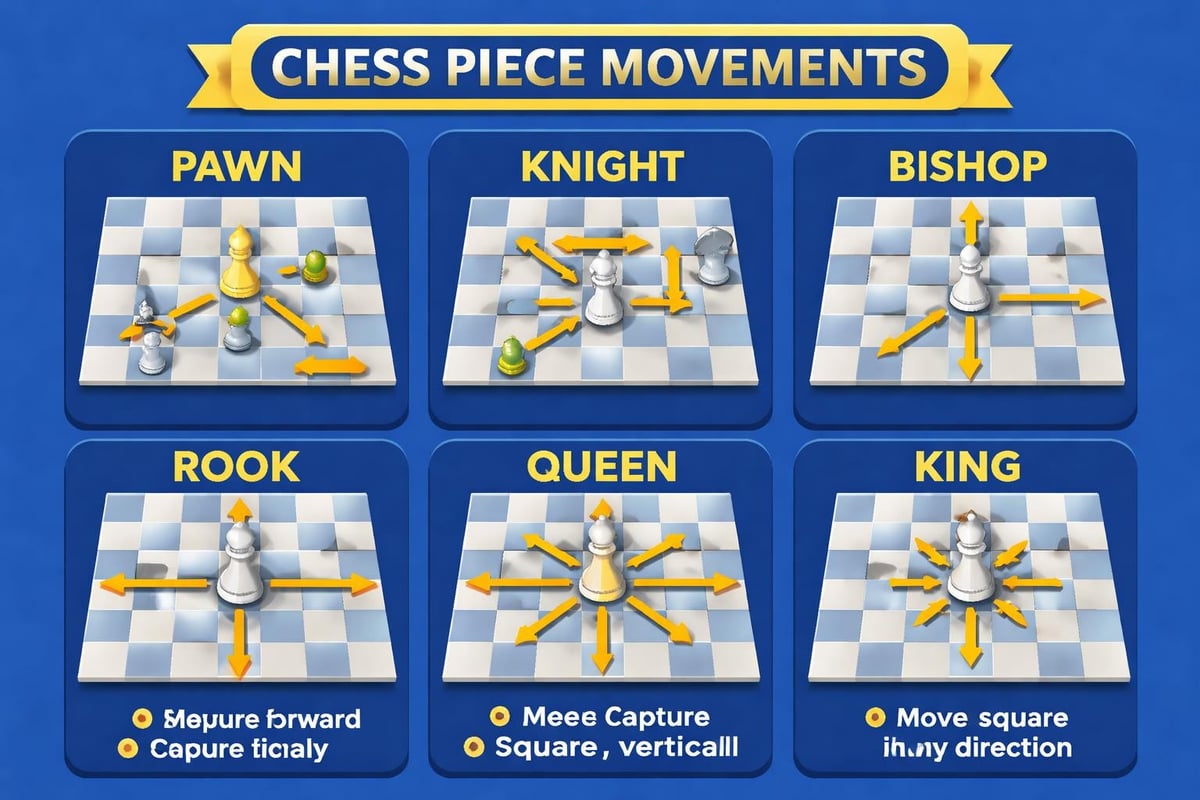
Building Your Foundation with Basic Rules
When you're starting out, the sheer number of rules can feel daunting. A visual chess cheat sheet breaks down these fundamentals into easy-to-scan sections that you can reference during games.
The board setup alone confuses many newcomers. Should the white square be on your right? Where does the queen go again? A solid chess cheat sheet answers these questions at a glance, showing you the proper 8x8 grid arrangement with pieces in their starting positions.
Understanding Piece Values and Trade-offs
Here's where strategy meets simplicity. Knowing when to trade pieces requires understanding their relative values:
| Piece | Point Value | Strategic Role |
|---|---|---|
| Pawn | 1 | Structure, promotion potential |
| Knight | 3 | Tactical jumps, outpost control |
| Bishop | 3 | Long-range diagonal control |
| Rook | 5 | File control, back rank threats |
| Queen | 9 | Maximum flexibility and power |
| King | Infinite | Must be protected at all costs |
These values aren't arbitrary. They reflect each piece's mobility and tactical potential. Your chess cheat sheet should include this table so you can quickly assess whether a trade benefits you or your opponent.
Mastering Openings Without Memorisation Overload
Let's talk about opening theory, which intimidates more players than any other aspect of chess. The good news? You don't need to memorise every variation of every opening to play competently.
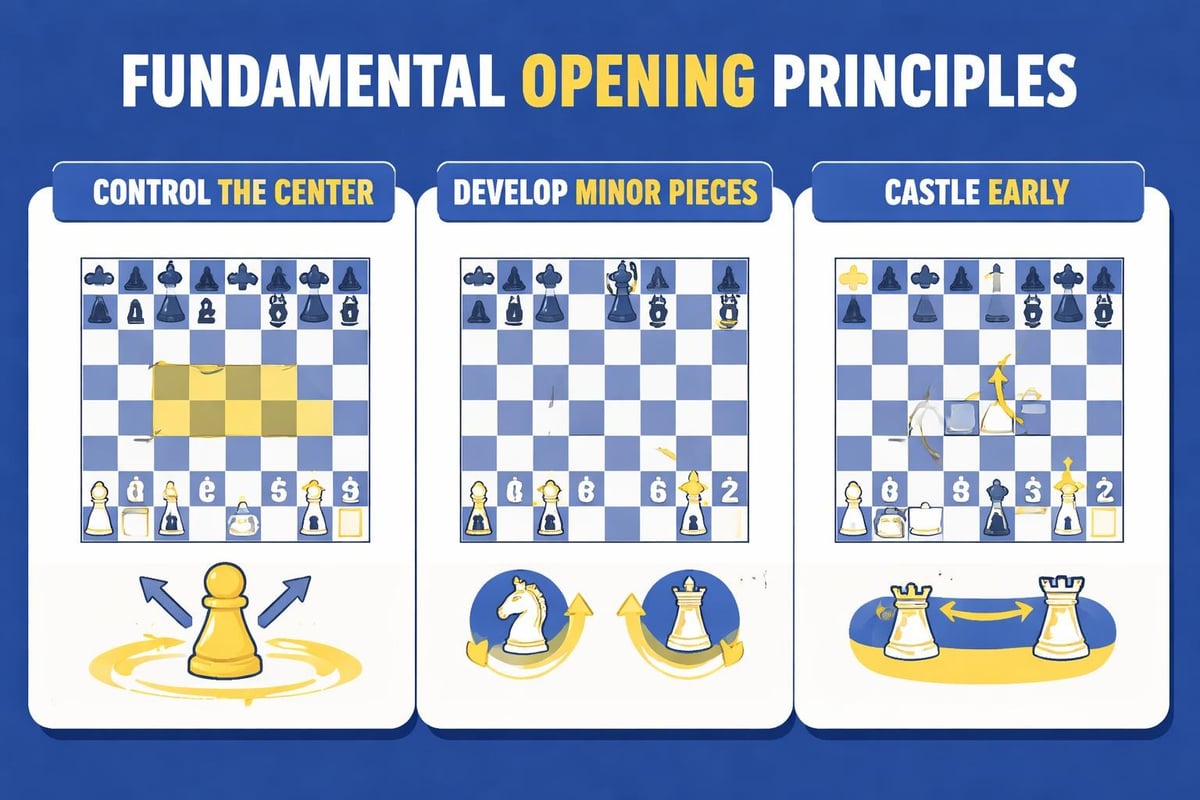
A practical chess cheat sheet focuses on opening principles rather than endless move sequences. The three golden rules appear on virtually every quality reference guide:
- Control the centre with pawns and pieces
- Develop your pieces towards active squares
- Castle early to safeguard your king
If you're looking to expand beyond these basics, exploring resources like the Italian Game opening guide can give you solid, classical foundations. But initially, sticking to principles rather than memorising twenty moves deep will serve you far better.
Popular Opening Approaches for Quick Learning
Rather than diving into complex theoretical lines, your chess cheat sheet should highlight a few reliable opening systems you can play repeatedly:
- As White: Italian Game, London System, or English Opening
- As Black: Sicilian Defence, Caro-Kann Defence, or King's Indian Defence
Each of these has core ideas you can grasp quickly. The London System, for instance, involves developing your bishop to f4 early and building a solid pawn structure. Simple, effective, and perfect for a cheat sheet format.
When you're ready to deepen your understanding of black's options, checking out the best openings for Black gives you additional strategic frameworks without overwhelming detail.
Tactical Patterns That Win Games
Here's something most players discover too late: tactics win games far more often than deep strategic understanding, especially at beginner and intermediate levels. Your chess cheat sheet should dedicate significant space to common tactical motifs.
The Most Important Tactical Patterns
Forks occur when one piece attacks two or more enemy pieces simultaneously. Knights excel at this, but every piece can execute forks in the right circumstances.
Pins restrict a piece's movement because moving it would expose a more valuable piece behind it. Bishops and rooks create the most devastating pins, particularly along files and diagonals toward the enemy king.
Skewers reverse the pin concept: a valuable piece must move, exposing a less valuable piece behind it to capture.
Discovered attacks happen when moving one piece unveils an attack from another piece behind it. These create dual threats that opponents often can't adequately defend.
A well-structured chess cheat sheet presents these patterns with clear diagrams. You'll recognise them faster during actual games when you've seen the visual representation multiple times.

Special Moves That Confuse Everyone
Let's address the moves that trip up even experienced casual players. These special rules deserve prominent placement on any chess cheat sheet because they're simultaneously important and easy to forget.
Castling: Your King's Safety Net
Castling involves moving your king two squares toward a rook, then placing that rook on the square the king crossed. It's the only move where you move two pieces simultaneously.
Requirements for legal castling:
- Neither the king nor the chosen rook has moved previously
- No pieces occupy the squares between king and rook
- The king isn't in check
- The king doesn't pass through or land on a square under attack
This defensive manoeuvre appears simple but has enough conditions that players regularly attempt illegal castles. Having these rules on your chess cheat sheet prevents embarrassing mistakes.
En Passant: Chess's Quirkiest Rule
En passant lets a pawn capture an enemy pawn that has just advanced two squares, as if it had only moved one square. This capture must occur immediately on the next move or the opportunity vanishes forever.
Why does this rule exist? It prevents pawns from using their two-square initial move to slip past enemy pawns. Your comprehensive guide to playing chess should explain this clearly, as it's frequently misunderstood.
Endgame Essentials for Finishing Games
You've navigated the opening, survived the middlegame tactics, and now face an endgame with limited material. This is where many promising positions fall apart due to lack of technique.
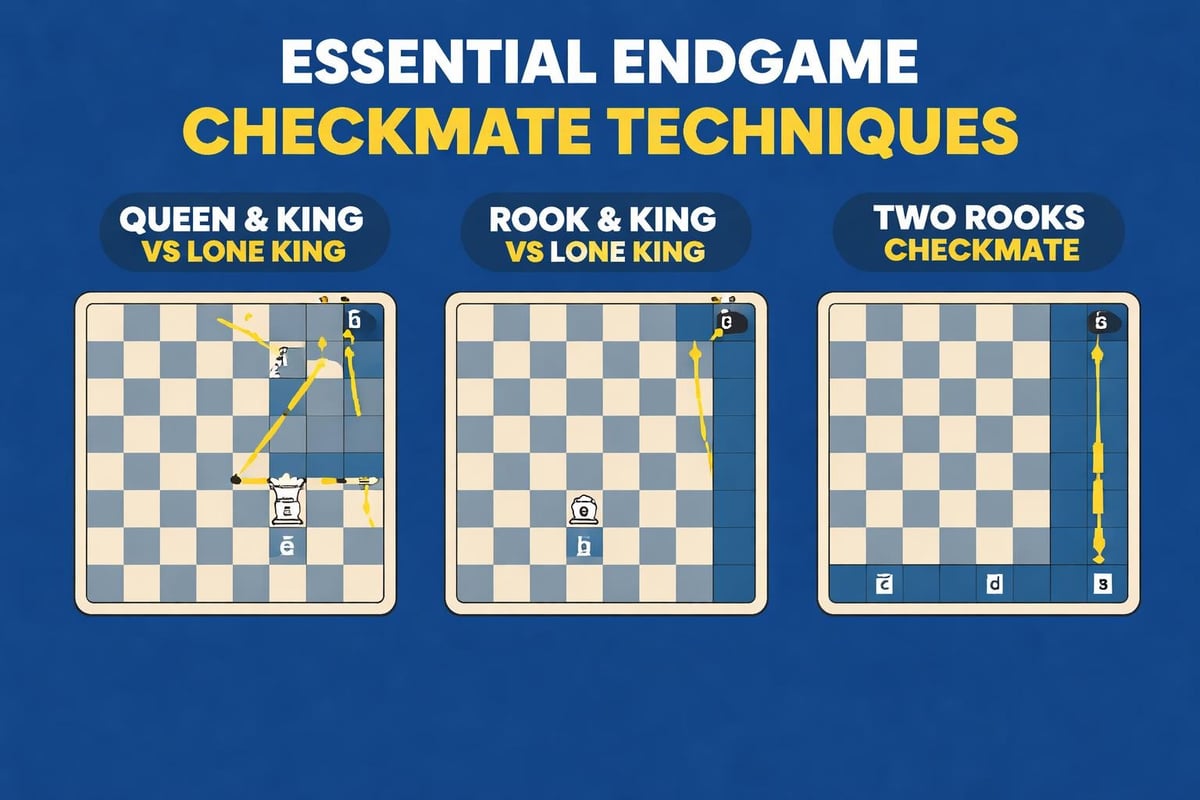
A practical chess cheat sheet includes the most critical checkmate patterns:
| Checkmate Pattern | Pieces Required | Difficulty Level |
|---|---|---|
| Queen + King vs King | Queen + King | Very Easy |
| Rook + King vs King | Rook + King | Easy |
| Two Rooks vs King | Two Rooks + King | Easy |
| Two Bishops vs King | Two Bishops + King | Moderate |
| Bishop + Knight vs King | Bishop + Knight + King | Difficult |
The first three patterns appear frequently and are completely learnable through your chess cheat sheet. The two bishops checkmate requires more technique but follows recognisable patterns. The bishop and knight mate is notoriously complex and rarely occurs in practical play.
Key Endgame Principles
Beyond checkmates, your chess cheat sheet should emphasise these endgame fundamentals:
- Activate your king: In the endgame, the king transforms from a liability into a powerful piece
- Create passed pawns: Pawns with no enemy pawns blocking their path to promotion are incredibly valuable
- Opposition matters: In king and pawn endgames, having the opposition (facing the enemy king with one square between) often determines the result
- Rook activity trumps pawn count: An active rook on the seventh rank can dominate a passive rook defending pawns
These principles work across various endgame types, making them perfect for a quick-reference guide.
Creating Your Study Routine Around Quick References
Having a chess cheat sheet is brilliant, but how do you actually use it effectively? The key is integrating it into deliberate practice rather than passive reading.
The Three-Phase Approach
Phase One: Familiarisation (Weeks 1-2) Review your chess cheat sheet daily, spending 10-15 minutes going through each section. Don't try to memorise everything immediately. Just become familiar with where information lives on the sheet.
Phase Two: Application (Weeks 3-6) Play games with your chess cheat sheet nearby. When you're unsure about a move or rule, consult it quickly. This reinforces learning through practical application.
Phase Three: Internalisation (Weeks 7+) Gradually reduce reliance on the cheat sheet. You'll notice you need it less frequently as patterns become second nature.
This structured approach transforms your chess cheat sheet from a crutch into a learning accelerator. Resources like those available through Chess Cheat Sheets work brilliantly with this methodology because they're designed specifically for quick reference during study sessions.
Digital Versus Physical Cheat Sheets
You've got options when choosing your chess cheat sheet format. Both digital and physical versions offer distinct advantages depending on your learning style and playing environment.
Physical cheat sheets work wonderfully for over-the-board play. You can keep them beside your board during casual games, annotate them with personal notes, and they never require battery power. Many players find that writing on physical sheets enhances memory retention.
Digital versions offer searchability, portability on your phone or tablet, and easy updates. When you're playing online, having a digital chess cheat sheet on a second screen or device provides instant reference without cluttering your physical space.
Honestly? Use both. A printable version from resources like this chess fundamentals guide works brilliantly for home study, whilst a digital version on your phone helps during travel or online play.
Common Mistakes Even With a Cheat Sheet
Let's address something important: having a chess cheat sheet doesn't automatically make you a better player. I've seen players with comprehensive guides make the same mistakes repeatedly because they're not using their resources effectively.
Pitfalls to Avoid
Over-reliance without understanding: Blindly following moves without grasping the underlying principles means you'll struggle when the position deviates from your cheat sheet.
Information overload: Trying to absorb everything at once leads to confusion rather than clarity. Focus on one section at a time.
Neglecting tactics training: Your chess cheat sheet complements puzzle practice; it doesn't replace it. Tactical pattern recognition develops through repetition, not reading.
Ignoring your own analysis: Your cheat sheet provides guidelines, not absolute laws. Sometimes the position demands moves that contradict general principles.
The solution? Use your chess cheat sheet as a framework, not a script. Understand why the recommendations exist, then apply them thoughtfully to your specific positions.
Expanding Beyond the Basics
Once you've mastered fundamental concepts through your chess cheat sheet, you'll naturally want to deepen your knowledge. This is where targeted resources become valuable.
For opening study, consider exploring specific systems in detail. The Caro-Kann Defence guide offers solid defensive play for Black, whilst the Queen's Gambit guide provides classical control-oriented chess for White.
Rather than abandoning your chess cheat sheet when you advance, you'll find yourself needing more specialised versions. Opening-specific cheat sheets, tactical motif collections, and endgame tablebase summaries become your next learning tools.
Building a Complete Reference Library
A comprehensive chess improvement plan combines multiple resources:
- General fundamentals cheat sheet: Your foundation for rules and basic principles
- Opening repertoire guides: Detailed coverage of your chosen openings
- Tactical pattern collection: Organised by theme (pins, forks, etc.)
- Endgame technique sheets: Covering common material imbalances
- Game analysis templates: Structures for reviewing your own games
This might sound overwhelming, but you build this library gradually. Start with your core chess cheat sheet, add opening materials as you establish a repertoire, then incorporate tactical and endgame resources as those areas need strengthening.
The beauty of exploring additional chess resources is discovering which learning formats work best for your particular brain. Some players love detailed written explanations, others prefer visual diagrams, and many benefit from video content alongside their written materials.
Making Your Chess Cheat Sheet Work Harder
Here's a perspective shift that transformed my own chess improvement: your chess cheat sheet should evolve with you. The static reference you start with becomes personalised over time.
Add annotations based on your games. When you lose to a particular tactical pattern, highlight it on your sheet. If you consistently forget a castling restriction, circle it in red. Your chess cheat sheet becomes a living document that addresses your specific weaknesses.
Create custom sections for openings you play frequently. Whilst general principles matter, having the first eight moves of your favourite opening readily available saves mental energy during games.
Track patterns you're working on. If this month you're focused on recognising back-rank tactics, create a dedicated section with examples from your games. Next month, when you're working on pawn endgames, add new material whilst keeping previous sections for review.
This personalisation process transforms a generic chess cheat sheet into a tailored improvement tool that addresses exactly what you need, when you need it.
A quality chess cheat sheet transforms confusing rules and overwhelming theory into accessible, actionable information you can use immediately. Rather than spending months trying to memorise everything before playing confidently, you'll have the essentials at your fingertips whilst building genuine understanding through practice. Whether you're just learning how pieces move or refining your opening repertoire, the right quick-reference materials accelerate your improvement dramatically. Explore the comprehensive guides and visual resources available at Chess Cheat Sheets to find streamlined learning tools designed specifically for efficient skill development without endless study.


