

Have you noticed how the world can’t seem to get enough of chess these days? The classic game is back in the spotlight, inspiring new fans and stirring up global excitement in 2025.
In this essential guide to chess and more, you’ll discover how the game is evolving with cutting-edge technology, modern educational trends, and vibrant community initiatives.
We’ll dive into its rich history, explore new strategies, look at tech innovations, highlight learning resources, cover competitive play, and reveal the broader cultural impact. Ready to unlock your chess potential? Let’s get started!

The Evolution of Chess: From Ancient Game to Modern Phenomenon
Have you ever wondered how chess and more became such a global phenomenon? The journey from ancient battlefields to your favorite streaming platform is nothing short of fascinating. Today, chess is everywhere—from classrooms to TikTok, inspiring millions to pick up the game and explore its endless possibilities.
The Origins and Global Spread of Chess
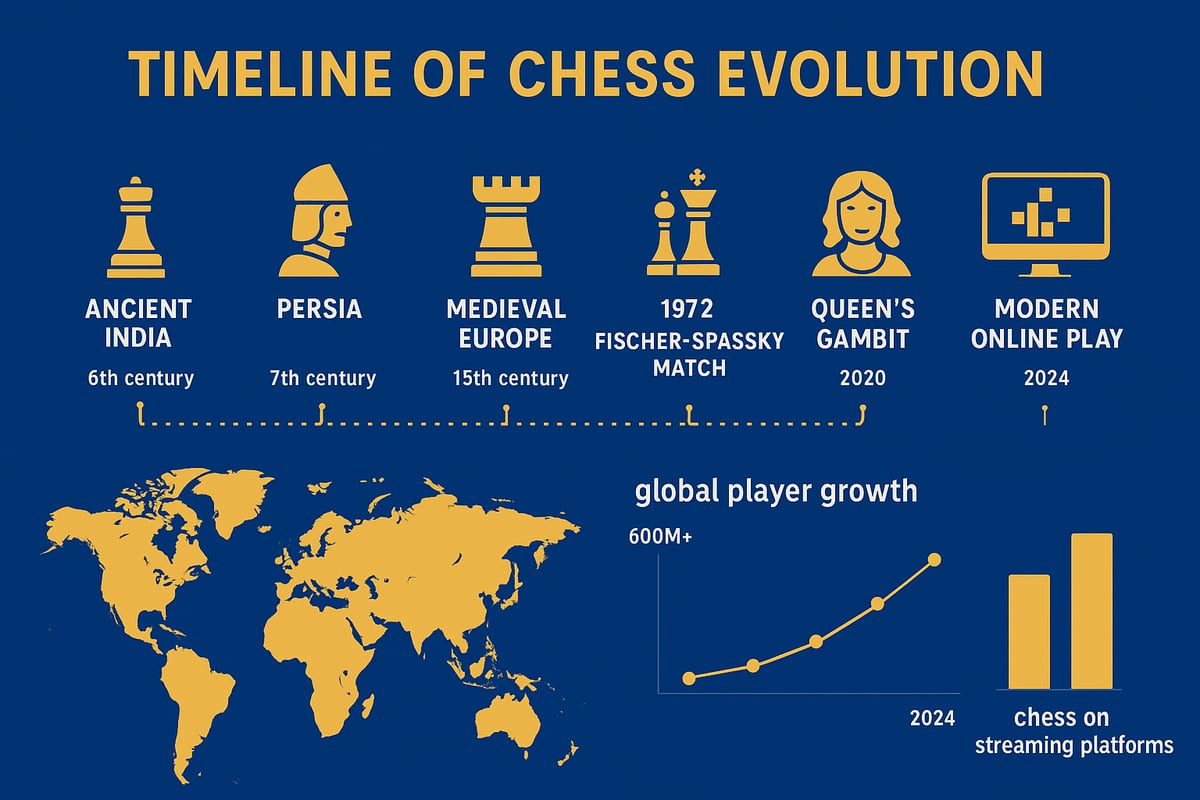
Let’s travel back in time. Chess began as chaturanga in 6th-century India, a game reflecting the strategies of war. As centuries passed, it journeyed through Persia, where it became shatranj, before reaching Europe and evolving into the game we recognize today.
Key historical milestones shaped chess and more:
- Standardized rules in the 15th century made the game faster and more dynamic.
- The rise of grandmasters in the 19th and 20th centuries, like Paul Morphy and José Capablanca, brought international prestige.
- The legendary 1972 Fischer-Spassky match ignited Western interest, turning chess into a Cold War symbol.
By 2024, FIDE reports over 600 million players worldwide. Chess and more is now a universal language, connecting people across continents. The game’s reputation as a symbol of intellect and strategy only continues to grow.
Here’s a quick look at chess’s global expansion:
| Era | Milestone | Impact |
|---|---|---|
| 6th Century | Chaturanga in India | Birth of chess |
| 10th Century | Shatranj in Persia | Spread across Asia |
| 15th Century | Rule standardization in Europe | Modern chess emerges |
| 20th Century | Fischer-Spassky match (1972) | Global chess boom |
| 21st Century | Digital era, online platforms | 600M+ players (FIDE, 2024) |
Chess in Popular Culture and Media
It’s impossible to talk about chess and more without mentioning its explosion in pop culture. Movies like “Searching for Bobby Fischer” and TV series such as “The Queen’s Gambit” have made chess cool again. The “Queen’s Gambit” effect saw board sales and online sign-ups skyrocket almost overnight.
But it doesn’t stop there. Chess influencers and celebrities have brought the game to new audiences. YouTube and Twitch are now packed with grandmasters streaming live games, analyzing openings, and hosting global tournaments.
Social media platforms are buzzing with chess memes, tutorials, and viral moments. Even non-players recognize the iconic chessboard, thanks to its appearances in books, fashion, and music videos. This cultural wave is a big part of why chess and more is on everyone’s radar in 2025.
Streaming numbers don’t lie. Platforms like Chess.com have reached 200 million members, showing just how much the chess and more movement has grown in recent years.
The Modern Chess Renaissance
The digital age has sparked a true renaissance for chess and more. During the pandemic, millions turned to online chess for connection and entertainment. Suddenly, players of all ages and backgrounds could face off in tournaments from their living rooms.
A remarkable shift is happening: more youth and women are taking up chess and more than ever before. The 2023 Chess Olympiad saw record participation, proving the game’s universal appeal.
Chess is also being recognized as a powerful tool for education and cognitive growth. Schools and after-school programs are adding chess to their curricula, with studies linking regular play to better focus, memory, and problem-solving skills.
Today, the world of chess and more is thriving. Whether you’re a seasoned player or just curious, the journey from ancient chaturanga to global online battles shows that chess has never been more relevant—or more exciting.
Mastering Chess in 2025: Strategies, Openings, and Endgame Essentials
Ready to elevate your game? Whether you’re a beginner or a seasoned player, mastering chess in 2025 means embracing both classic wisdom and fresh, tech-driven strategies. With chess and more resources available than ever, you can sharpen your skills and join the global chess movement.
Fundamental Principles for All Levels
To truly master chess and more, you need a solid foundation. The basics never go out of style, even as the game evolves. Focus on these core principles:
- Control the center: Place your pawns and pieces where they influence the most squares.
- Develop your pieces: Get your knights and bishops out quickly.
- King safety: Castle early and avoid exposing your king.
- Maintain pawn structure: Avoid unnecessary weaknesses.
- Use tempo wisely: Make every move count.
Magnus Carlsen, a modern legend, relies on these fundamentals in every game, proving that mastery starts with the basics. If you want to join the ranks of chess and more enthusiasts making rapid progress, revisit these timeless ideas regularly.
Popular Openings and Their Modern Variations
In 2025, chess and more fans see a blend of classic and cutting-edge openings at every level. The Queen’s Gambit, Sicilian Defense, and London System remain favorites, but AI is introducing new twists to familiar lines. For instance, the King’s Indian Defense has made a notable comeback, thanks to computer analysis revealing creative resources.
Here’s a quick look at the most-played openings on leading platforms:
| Opening | Popularity (%) | Notable Trend |
|---|---|---|
| Queen’s Gambit | 23 | AI-inspired novelties |
| Sicilian Defense | 21 | Aggressive variations |
| London System | 18 | Simplified setups |
Curious about in-depth strategies? Check out Chess Openings Explained for a comprehensive overview.
Endgame Techniques Every Player Should Know
No matter how sharp your opening or middlegame, the endgame often decides the result. To succeed at chess and more, master these critical ideas:
- Opposition: Outmaneuver your opponent in king-and-pawn endings.
- Zugzwang: Force your rival into a losing move.
- Triangulation: Use clever king moves to gain the upper hand.
Essential endgames include king and pawn vs. king, plus rook endgames. Recent tournaments have showcased dramatic saves and turnarounds, reminding us that every chess and more player should know these techniques by heart.
Advanced Tactics and Pattern Recognition
Ready to think several moves ahead? Tactics are the lifeblood of chess and more improvement. Focus on:
- Forks: Attack two pieces at once.
- Pins: Immobilize a piece by threatening what’s behind it.
- Skewers: Force a valuable piece to move, revealing a target.
- Discovered attacks: Unleash threats by moving a blocking piece.
Hikaru Nakamura is famous for lightning-fast calculation and visualization, especially in blitz formats. Practicing these patterns will help you spot winning opportunities and defend resourcefully in any situation.
Chess Cheat Sheets: Streamlining Your Chess Improvement
Want to accelerate your progress? Chess and more players in 2025 are turning to cheat sheets and visual guides for quick learning. Chess Cheat Sheets offer practical resources for openings, tactics, and endgames, making tough concepts easy to digest.

Visual aids, puzzles, and concise summaries help you absorb patterns faster. Whether you’re a beginner or intermediate looking for rapid improvement, these tools are designed for you. Many resources are free, with affordable lifetime options for deeper dives. Community feedback highlights real success stories, proving that chess and more is about learning smarter, not just harder.
Technology and Chess: AI, Apps, and Online Platforms
The world of chess and more is evolving at lightning speed, thanks to cutting-edge technology. Whether you are a seasoned grandmaster or just getting started, you have probably noticed how digital tools are reshaping the game. Let’s explore how artificial intelligence, online platforms, mobile apps, and even virtual reality are making chess and more more accessible, social, and fun than ever.

The Rise of Chess Engines and Artificial Intelligence
Artificial intelligence is rewriting the rules for chess and more. Advanced engines like Stockfish and Leela Chess Zero analyze millions of positions per second, offering insights no human could match. Players at every level are using these engines to study openings, spot tactical tricks, and discover new strategies.
AI’s influence isn’t just behind the scenes. In 2024, the world watched as Magnus Carlsen defeats ChatGPT in chess match, showing how even top grandmasters engage with AI. These interactions spark curiosity and push both humans and machines to new heights.
What does this mean for you? With chess and more, you can tap into AI-driven analysis, get instant feedback, and learn from the best. AI is not just a tool, it is your new sparring partner, coach, and analyst all in one.
Online Chess Platforms: Features and Growth
Online platforms have become the beating heart of chess and more. Sites like Chess.com, Lichess, and Chess24 offer live games, puzzles, and tournaments around the clock. You can challenge friends, join global events, or train with world-class tools.
Here is a quick comparison:
| Platform | Unique Features | 2024 User Base |
|---|---|---|
| Chess.com | Tournaments, lessons, anti-cheat | 20+ million |
| Lichess | Free/open source, variants | 8+ million |
| Chess24 | Live commentary, courses | 2+ million |
With chess and more, you are never alone. Join communities, climb leaderboards, and experience the thrill of real-time competition. The growth is staggering, and there is always someone to play, no matter the hour.
Chess Apps for Mobile Learning and Play
Want to sharpen your skills on the go? Chess and more is at your fingertips thanks to a wave of powerful apps. Top-rated options for Android and iOS include Chess.com, Lichess, and ChessKid, each packing puzzles, video lessons, and adaptive AI opponents.
Key features to look for:
- Daily puzzles that challenge your mind
- Interactive lessons from grandmasters
- Play vs. AI with customizable difficulty
- Progress tracking and achievement badges
Whether you are commuting or relaxing at home, chess and more apps make it easy to fit quality practice into your day. The best part? Many offer free versions, so you can start learning without breaking the bank.
Streaming, Content Creation, and Community Engagement
The digital era has unleashed a wave of chess and more content creators. Twitch streamers, YouTube personalities, and Discord groups are drawing millions of fans. Live commentary, blitz showdowns, and interactive lessons have turned chess into a spectator sport.
Why does this matter? You can watch top players break down their thought process, ask questions in real-time, and connect with fans from around the globe. Chess and more is not just about playing, it is about joining a passionate, ever-growing community.
If you love learning through stories and personalities, streaming is the perfect way to get inspired and pick up new tricks.
Future Trends: VR, AR, and Beyond
What is next for chess and more? Get ready for immersive experiences. Virtual reality chess lets you step into a 3D arena, facing opponents in lifelike settings. Augmented reality tools add interactive boards to your living room, blending physical and digital play.
Emerging trends to watch:
- VR training camps and global tournaments
- AR teaching tools for instant feedback
- AI-powered coaching in real time
Chess and more is on the cusp of a tech revolution. As these innovations roll out, the game will be more exciting, inclusive, and interactive than ever before.
Chess Education: Learning Resources, Schools, and Self-Improvement
Curious about how to level up your chess journey in 2025? With chess and more resources at your fingertips than ever before, now is the perfect time to explore fresh ways to learn, play, and connect. Whether you’re just starting out or aiming for mastery, a world of educational opportunities is waiting to help you unlock your full potential.
Structured Chess Learning: Schools and Academies
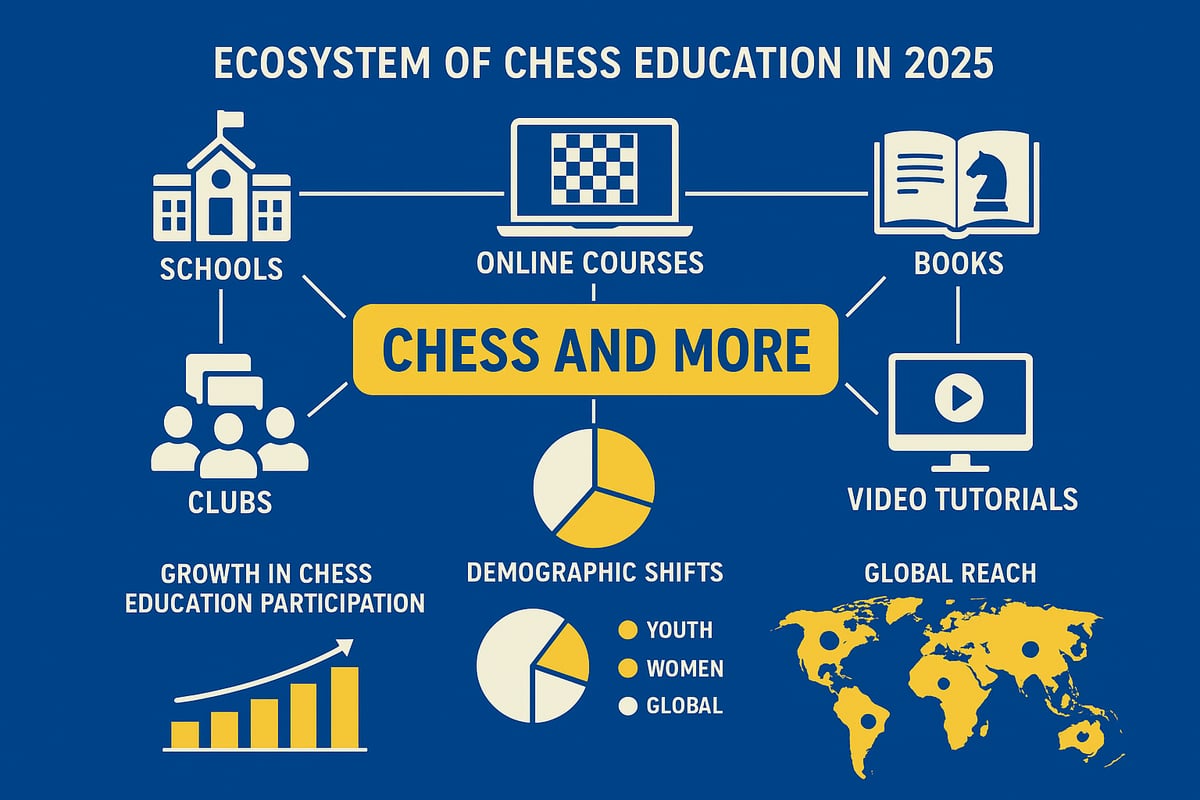
Let’s start with the foundation. Across the globe, schools and academies are embracing chess and more as vital parts of their curriculum. In classrooms, teachers use chess as a tool to boost focus, problem-solving, and creativity. After-school programs and specialized academies are popping up in cities big and small, offering structured lessons led by experienced coaches.
You’ll notice that leading chess schools don’t just teach moves—they foster strategic thinking and resilience. Some even weave chess and more into math and critical thinking classes, making learning both fun and challenging. Data shows that students involved in chess programs report better grades and improved memory, making chess and more a smart choice for academic success.
Many academies now offer hybrid formats, combining in-person instruction with digital resources. This flexibility lets students from all backgrounds join, learn, and compete, expanding the reach of chess and more education worldwide.
Online Courses, Books, and Video Tutorials
Prefer to learn at your own pace? The internet is bursting with chess and more options for digital learners. Top-rated online chess courses, often taught by grandmasters, break down complex ideas into easy-to-follow lessons. These courses are available on major MOOC platforms and specialized chess learning sites, giving everyone a chance to study with the best.
Books remain a classic choice for deep dives into theory and tactics. Modern chess literature often includes interactive diagrams and QR codes linking to online analysis. Meanwhile, YouTube is home to thousands of video tutorials, ranging from beginner basics to advanced strategies. You’ll find that chess and more content creators have made it easier than ever to learn, regardless of your skill level.
Want a quick tip? Mix and match resources—watch a video, read a chapter, then test yourself online. This blended approach helps reinforce lessons and keeps learning fresh.
Self-Study Techniques and Habit Building
If you’re an independent learner, self-study is where chess and more truly shine. Many players start by setting up daily routines—solving puzzles, reviewing their own games, and practicing openings. Consistency is key. Even 15 minutes a day can lead to big improvements over time.
One effective method is keeping a chess journal. By tracking your games, noting mistakes, and setting goals, you can spot patterns in your play. Many apps now offer built-in analysis tools, so you can review your moves and see what the engines suggest. Remember, with chess and more self-study tools available, improvement is always within reach.
Here’s a sample routine to try:
| Day | Activity |
|---|---|
| Monday | Tactics puzzles |
| Tuesday | Opening practice |
| Wednesday | Endgame study |
| Thursday | Game review |
| Friday | Play online |
Mix in some variety to keep things interesting and avoid burnout.
Community Learning: Clubs, Forums, and Social Play
Learning chess and more is even better with others. Chess clubs, both local and online, bring players together to share strategies, play friendly matches, and host tournaments. Being part of a club can accelerate your growth by exposing you to new ideas and friendly competition.
Online forums and social platforms are buzzing with active discussions, analysis threads, and event announcements. Many cities have seen a surge in chess meetups, making it easy to find a group near you. If you’re looking to connect with others, discover local events, or find a coach, the Coaches and Chess Clubs Directory is a fantastic resource to get started.
Community learning adds a social spark to chess and more, turning what can be a solitary game into a vibrant, shared experience. You’ll find yourself motivated, supported, and inspired by fellow enthusiasts.
The Competitive Chess Landscape: Tournaments, Rankings, and New Formats
Competitive chess and more is entering a new golden age, with tournaments drawing massive audiences and a fresh wave of talent. Let’s break down what’s changing on the global stage, how rankings work, and why the excitement around chess and more is only growing.
Major Tournaments and Global Events in 2025
If you follow chess and more, you know the tournament calendar is packed. The FIDE World Championship remains the crown jewel, drawing millions of viewers. Alongside, the Candidates Tournament spotlights the world’s rising stars. In 2024, Indian teenager Gukesh Dommaraju’s historic win in the Candidates set the internet buzzing—read more about his achievement in this Gukesh Dommaraju wins 2024 Candidates Tournament.
Hybrid events, blending online and offline play, are now standard. Participation records keep getting smashed, with more countries represented and larger prize pools. For fans of chess and more, 2025 is proving to be the most international and accessible year yet.
Chess Rankings and Titles: How They Work
Understanding chess and more means knowing how players climb the ranks. The Elo rating system is your guide to measuring progress, determining everything from club level to grandmaster status. FIDE titles—like GM and IM—are benchmarks every ambitious player dreams of.
Curious about who’s leading the pack? Check out the top classical chess players worldwide 2025 to see the current ranking giants. As chess and more evolves, young prodigies are breaking records, making the journey to the top more competitive than ever.
The Rise of Speed Chess and Alternative Formats
Chess and more isn’t just about slow, methodical battles anymore. Blitz and bullet formats are exploding in popularity, offering fast-paced action that’s easy to stream and fun to play. Chess960, also called Fischer Random, shakes up traditional opening theory and levels the playing field.
Online tournaments, like the Chess.com Global Championship, have pioneered new structures that keep fans engaged. Speed chess attracts a younger crowd and rewards quick thinking, making chess and more even more dynamic.
Inclusivity and Diversity in Competitive Chess
A new era for chess and more shines a spotlight on inclusion. Initiatives are booming for women, youth, and players from underrepresented regions. The Women’s Grand Prix and global youth championships are drawing record numbers.
Female participation is on the rise, and more countries are sending representatives to major events. With chess and more, the board truly welcomes everyone, regardless of age or background. Diverse voices and faces are now part of the mainstream conversation, driving the sport forward.
Chess Sponsorships and Professionalization
Today, chess and more is not just a game—it’s a career path. Sponsorships from tech giants, educational platforms, and esport brands are fueling growth. Prize pools are up, and players are gaining visibility outside traditional circles.
Many top players now stream, coach, and collaborate with brands, turning chess and more into a full-fledged profession. This shift is opening doors for aspiring talents and creating new opportunities for fans to connect with their heroes.
Chess and More: The Expanding Impact of Chess on Society
Have you ever wondered just how far chess and more can reach beyond the board? In recent years, this classic game has transformed lives, classrooms, workplaces, and even communities. Let’s explore how chess and more is shaping minds, creating new opportunities, and building a brighter, more connected world.
Chess as a Tool for Cognitive and Emotional Development
Did you know that playing chess and more can actually make you smarter? Studies show that regular chess play helps improve memory, problem-solving, and logical thinking. For example, many school programs report that students who play chess and more see higher academic achievement and better concentration.
Researchers have even linked chess and more to increased IQ scores. A 2022 study found students who played chess and more twice a week improved their math and reading skills by up to 17%. Want to boost your own skills? Check out this guide on How to Improve with Chess Puzzles for practical ways to sharpen your mind.
Chess and more isn’t just about logic, though. It also teaches emotional regulation, patience, and resilience. When you face setbacks on the board, you learn to bounce back, a life skill everyone can use.
Chess for Wellness and Mental Health
Chess and more goes beyond the mind—it also supports emotional well-being. Therapists are using chess and more in rehabilitation programs for seniors, helping maintain cognitive health and social connection. For individuals with disabilities, chess and more offers a level playing field where everyone can participate and shine.
Psychologists have found that chess and more can reduce anxiety and promote relaxation. Many players say the focus required helps them escape daily stress. Community chess and more clubs provide safe spaces for social interaction, which is crucial for mental health.
Programs around the world are now introducing chess and more as a therapeutic tool, recognizing its potential to support wellness at every age.
Chess in the Workplace and Leadership Training
Have you ever thought about bringing chess and more to your office? Companies are catching on to the benefits of chess and more for teamwork, strategic planning, and leadership development. Corporate chess and more clubs are popping up everywhere, offering employees a fun way to build problem-solving skills together.
Many organizations now use chess and more in leadership workshops. The principles you learn from chess and more—like thinking ahead, evaluating options, and handling setbacks—translate directly to business decision-making. Some companies even report increased collaboration and creativity after introducing chess and more activities.
Chess and more isn’t just a game, it’s a playbook for success in the modern workplace.
Chess and Social Inclusion
Chess and more is also a powerful tool for social change. Initiatives like Chess in Prisons and after-school programs for at-risk youth are making a real difference. By teaching chess and more, mentors help individuals develop confidence, discipline, and social skills.
Communities that embrace chess and more see improved social cohesion. In fact, studies show that participation in chess and more programs can reduce recidivism rates and help people reintegrate into society. Local tournaments and meetups create opportunities for everyone to connect, regardless of age, gender, or background.
With chess and more, everyone has a seat at the table.
The Future of Chess in Global Culture
So, where is chess and more headed next? Experts predict continued growth in education, entertainment, and technology. Virtual reality and online platforms are making chess and more more accessible than ever, breaking down barriers for new players worldwide.
We’re also seeing exciting crossovers between chess and more and other games or sports. As a lifelong pursuit, chess and more will keep building communities, fostering inclusion, and inspiring innovation. The best part? You’re part of this evolving story every time you play.
Chess and more is much more than a pastime—it’s a movement shaping the future.
So, after diving into how chess is evolving in 2025—blending tech, tradition, and community—you might be wondering, “Okay, but how do I actually start improving my own game without getting lost in endless theory?” Honestly, that’s where things get exciting. You don’t have to figure it all out alone. If you’re ready to take the next step and make your opening moves sharper without spending hours memorizing, why not check out this handy resource? You can Start Improving Your Openings and see real progress, one game at a time. It’s a game changer, trust me!


