

Are you ready to take your chess game to the next level? While online resources and video tutorials have their place, there's something timeless and effective about learning from well-crafted books for learning chess. You can study at your own pace, revisit challenging concepts, and build a personal library that grows with your skills. Books offer depth that quick tutorials often miss, helping you develop a solid foundation that will serve you for years to come. Whether you're just starting out or looking to refine your intermediate-level play, the right chess book can transform how you approach the game.

Why Books Remain Essential for Chess Improvement
You might wonder why you should invest in physical or digital books when there's so much free content available online. Here's the thing: books provide structured learning paths that random YouTube videos simply can't match. When you work through a chess book, you're following a carefully designed curriculum created by masters who understand exactly what you need to learn and in what order.
Books offer several unique advantages:
- Deep focus without distractions or notifications
- Comprehensive coverage of topics in logical progression
- The ability to annotate, highlight, and personalize your learning
- Proven teaching methods refined over decades
- Physical reference materials you can keep beside your board
Think about it this way: when you're studying a critical position from a book, you're not tempted to check social media or click on a suggested video. You're fully engaged with the material, which leads to better retention and understanding.
Finding the Right Book for Your Level
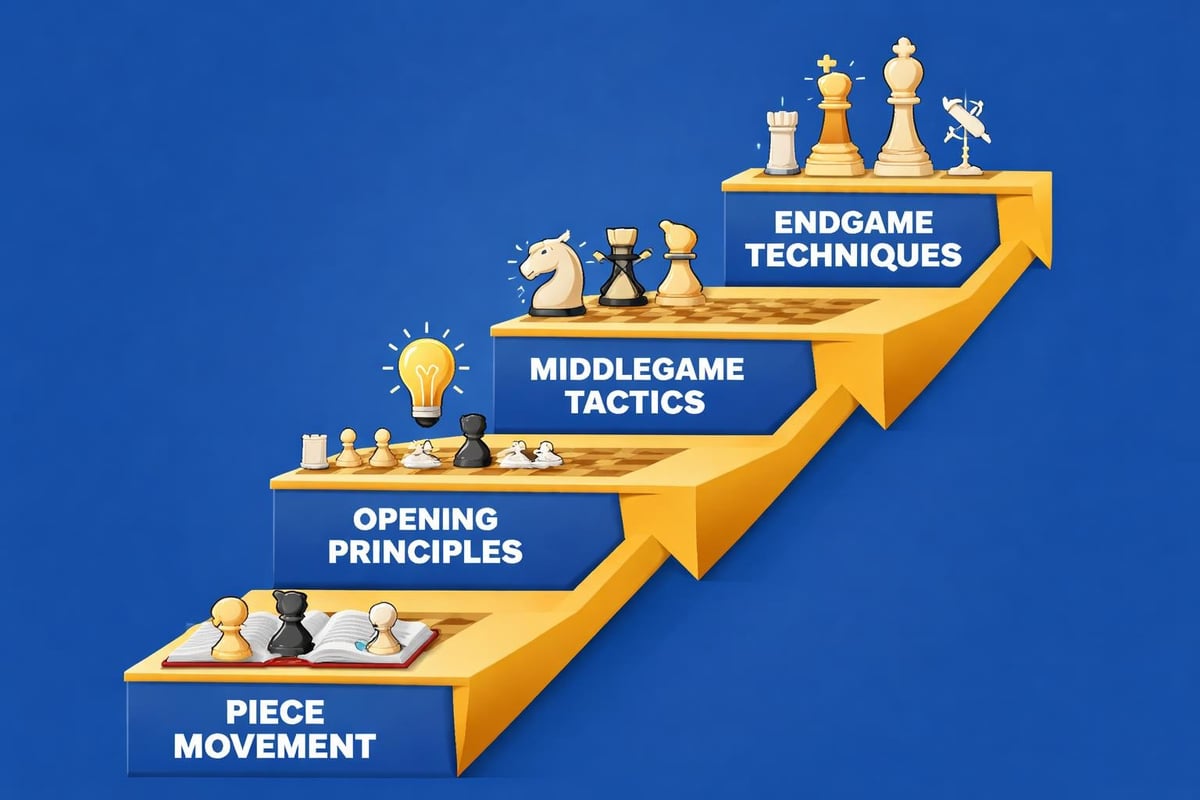
Not all books for learning chess are created equal, and what works brilliantly for a beginner might bore an intermediate player to tears. The key is matching your current skill level with the appropriate material. If you're just starting out, you need books that explain fundamental concepts clearly without overwhelming you with variations. Intermediate players, on the other hand, benefit from books that challenge their tactical awareness and introduce deeper strategic concepts.
The best chess books for beginners typically focus on basic principles, simple tactics, and essential endgames. These foundational texts teach you how pieces move, basic checkmates, and fundamental opening ideas without drowning you in theory.
Top Books for Beginning Chess Players
Let's talk about where you should start if you're new to chess or helping someone else learn. The best beginner books make learning feel natural and enjoyable rather than like studying a textbook. They use clear diagrams, explain concepts in plain language, and build your confidence step by step.
Bobby Fischer Teaches Chess
This classic remains one of the most effective books for learning chess at the beginner level. Bobby Fischer Teaches Chess uses a programmed learning approach where you actively solve problems rather than passively reading. You start with simple checkmate patterns and gradually work toward more complex positions. The book's genius lies in its interactive format, making you think through each position before revealing the answer.
What makes this book special:
- Over 300 progressive exercises
- Immediate feedback on your answers
- Focus on pattern recognition
- Minimal text, maximum practice
- Perfect for self-study
Chess Fundamentals by José Capablanca
Written by a former World Champion known for his crystal-clear playing style, this book breaks down essential concepts into digestible lessons. Capablanca's straightforward approach helps you understand what really matters in a chess position. You'll learn the importance of piece activity, pawn structure, and how to convert small advantages into wins.
The beauty of Capablanca's teaching is that he doesn't overcomplicate things. He shows you practical positions and explains the reasoning behind good moves in language anyone can understand. This approach aligns perfectly with how chess resources should work: making complex ideas accessible.
Essential Books for Tactical Improvement
Once you've grasped the basics, it's time to sharpen your tactical vision. Tactics are the heart of chess, the combinations and patterns that win material or deliver checkmate. Books focused on tactical training will dramatically improve your results by helping you spot opportunities your opponents miss.
The Chess Tactics Workbook
| Feature | Benefit | Best For |
|---|---|---|
| 1200+ puzzles | Extensive practice | Pattern recognition |
| Progressive difficulty | Builds confidence | All improving players |
| Thematic sections | Focused learning | Specific weaknesses |
| Solution explanations | Understanding why | Deep learning |
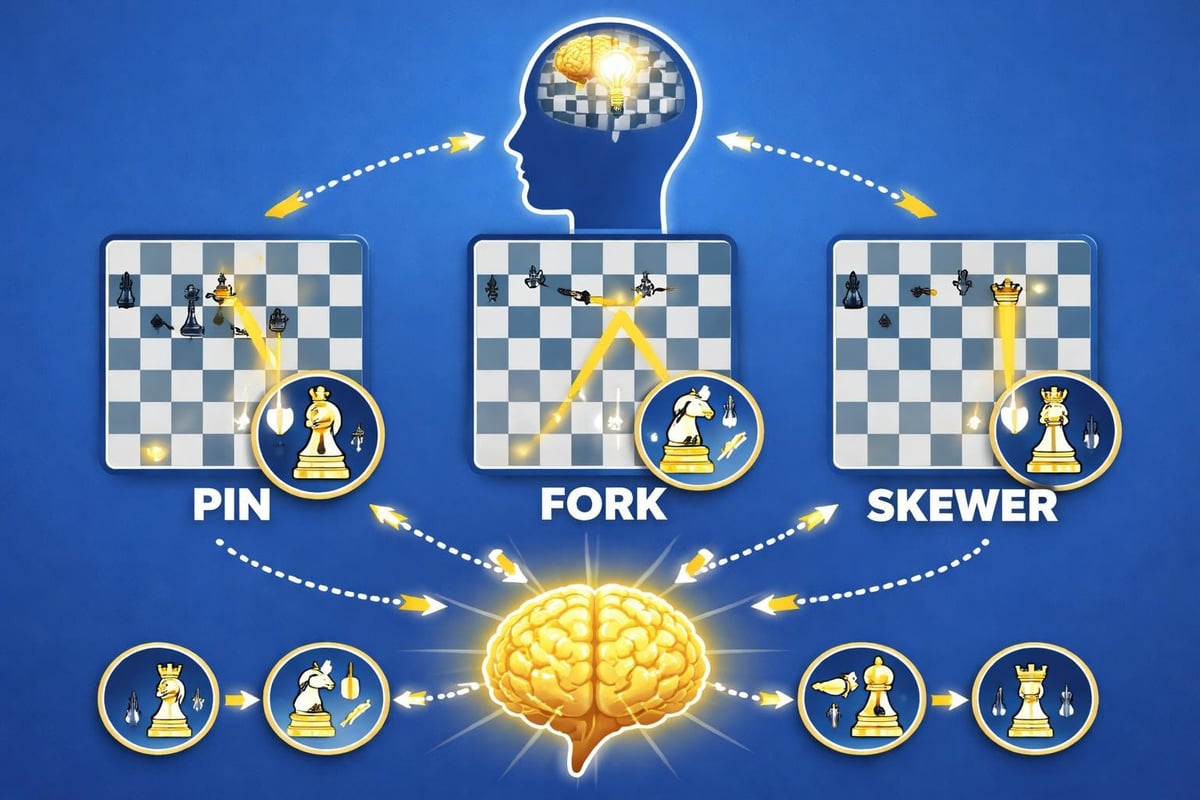
This workbook format means you're actively solving positions rather than just reading about tactics. You'll work through pins, forks, skewers, discovered attacks, and more complex combinations. The repetition builds pattern recognition, so you'll start spotting these tactics in your own games automatically.
Have you ever missed a simple tactic in your game and kicked yourself afterward? That's exactly what tactical training prevents. By working through hundreds of positions, you train your brain to recognize winning patterns instantly.
1001 Chess Exercises for Beginners
Franco Masetti and Roberto Messa created this comprehensive tactical trainer that takes you from basic one-move tactics to more sophisticated two and three-move combinations. The exercises are carefully graded, so you're always working at the edge of your ability without becoming frustrated. This is one of those books for learning chess that you'll return to repeatedly as your skills develop.
Strategic Understanding Through Classic Games
Learning from the games of great players gives you insight into chess strategy that no amount of tactical puzzles can provide. When you study annotated games, you see how masters plan, how they handle different pawn structures, and how they convert advantages into victories.
My 60 Memorable Games by Bobby Fischer
This masterpiece showcases Fischer's best games with his own detailed annotations. You're essentially getting a private lesson from one of history's greatest players. Fischer explains not just what he played, but why he played it, what he was thinking, and where his opponents went wrong. The depth of analysis makes this challenging but incredibly rewarding.
Key learning points:
- Opening preparation and middlegame planning
- Converting advantages in the endgame
- Attacking play and defensive techniques
- Psychological aspects of chess competition
- Practical decision-making under pressure
Reading through these games slowly, setting up positions on your board, transforms how you think about chess. You start understanding the game at a deeper level, seeing connections between opening choices and endgame possibilities.
Logical Chess: Move by Move
Irving Chernev's classic explains every single move of 33 complete games. Yes, every move. This might sound excessive, but it's exactly what beginners and intermediate players need. You'll understand why certain moves are strong, why alternatives fail, and how plans develop throughout a game. The comprehensive annotations leave no mystery about what's happening on the board.

Endgame Mastery Through Specialized Texts
Many players neglect endgame study, but this phase of the game is where technique matters most. You might outplay your opponent for 30 moves, but if you can't convert your advantage in the endgame, all that work means nothing. Books dedicated to endgames teach you the fundamental positions and techniques you absolutely need to know.
Silman's Complete Endgame Course
Jeremy Silman structures this book brilliantly, organizing endgame knowledge by rating level. You study the endgames appropriate for your current strength, then advance as you improve. This prevents the common problem of trying to memorize advanced endgames you'll rarely encounter while missing simple positions you should win every time.
The rating-based approach means you're always learning relevant material. A 1000-rated player needs different endgame knowledge than a 1800-rated player, and Silman respects that difference.
Basic Chess Endings
Reuben Fine's encyclopedic work covers virtually every endgame scenario you might encounter. While comprehensive, it's best approached as a reference rather than something you read cover to cover. When you reach a particular endgame type in your games, you can study the relevant section in depth. This practical approach makes the massive amount of information manageable.
Opening Books Versus Opening Understanding
Should you study opening books? The answer depends on your level and goals. Books for learning chess openings work best when you already understand basic opening principles. If you're still developing your fundamentals, focus on principle-based opening books rather than dense theoretical manuals.
Fundamental Chess Openings
Versus diving into 300 pages about the Sicilian Najdorf, start with books that teach opening principles applicable across multiple systems. Learn why you develop pieces before moving the same piece twice, why controlling the center matters, and how to connect your rooks. These principles serve you regardless of what specific opening you play.
When you do want opening-specific guidance, consider starting with streamlined opening guides that give you solid lines without overwhelming theory. You need enough knowledge to get playable positions, not enough to become a grandmaster theoretician.
Practical opening study approach:
- Master one or two openings as White
- Learn two defenses against 1.e4 and 1.d4
- Understand the key ideas and typical positions
- Review your games to identify where you went wrong
- Gradually expand your repertoire
Understanding the pros and cons of popular openings helps you make informed choices about what to study. Some openings require extensive memorization, while others rely more on understanding typical plans.
How to Study Chess Books Effectively
Buying books for learning chess accomplishes nothing if they sit on your shelf unread. You need a systematic approach to actually absorb and apply what you're learning. The difference between players who improve from books and those who don't usually comes down to study habits, not the quality of the books themselves.
Active Study Techniques That Work
First, always have a chess board beside you when studying. Set up the positions and move the pieces with your hands. This physical engagement helps your brain retain the patterns much better than just reading. When you see a position in a book, don't immediately look at the answer or continue reading. Stop and think about what you would play and why.
Your study session checklist:
- Set up each critical position on your board
- Spend genuine time thinking before checking answers
- Write down key insights in your own words
- Replay important games from start to finish
- Test yourself on material from previous sessions
Consider keeping a chess notebook where you record important concepts, positions you found difficult, and insights from your study. Writing things down in your own words forces you to truly understand rather than passively absorb information. This technique works whether you're studying tactics, strategy, or endgames.
Balancing Book Study with Practice
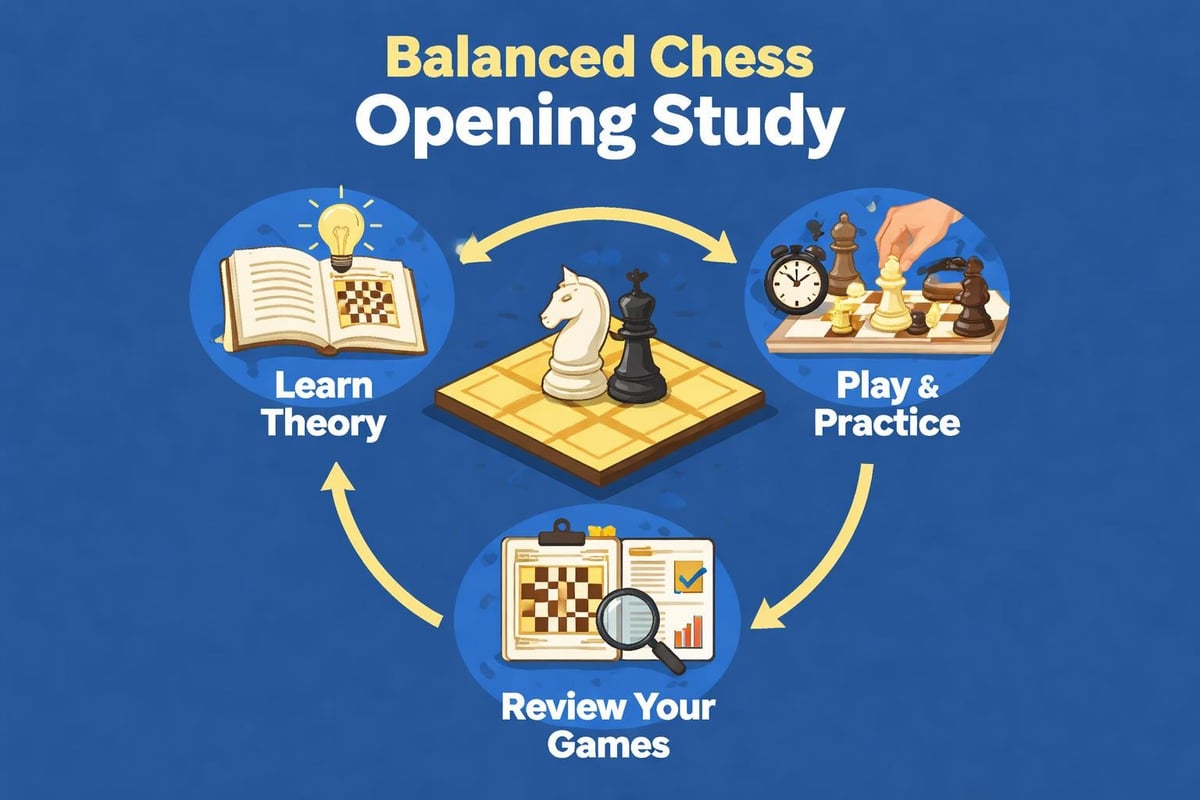
Reading books improves your understanding, but you need to test that knowledge in actual games. Try to play regularly, whether online, in clubs, or against friends. After each game, review it against the principles you've learned from your books. Did you follow opening principles? Did you miss tactical opportunities? How did you handle the endgame?
This feedback loop between study and practice accelerates your improvement. You identify weaknesses in your games, study the relevant book sections, then apply that knowledge in your next games. The best websites to learn chess complement your book study by providing practice opportunities and analysis tools.
Building Your Chess Library Strategically
You don't need 50 chess books. You need the right books for your current level and goals, studied thoroughly. Many improving players make the mistake of collecting books faster than they can study them. Start with a core collection covering tactics, strategy, endgames, and perhaps one opening book. Master these before expanding.
| Category | Recommended Number | Priority Level |
|---|---|---|
| General improvement | 1-2 books | High |
| Tactical training | 1-2 books | High |
| Endgame fundamentals | 1 book | High |
| Strategic concepts | 1-2 books | Medium |
| Opening repertoire | 1-2 books | Medium |
| Game collections | 1+ books | Low to Medium |
As you work through these books, you'll naturally identify gaps in your knowledge. Maybe you struggle with specific pawn structures or certain tactical motifs. That's when you add targeted books addressing those weaknesses. This strategic approach prevents overwhelm and ensures you actually use what you buy.
Quality beats quantity every time. One well-studied tactical book provides more value than five books you've only skimmed. The comprehensive guides and resources you choose should match where you are now, not where you hope to be someday.
Digital Versus Physical Chess Books
Should you buy physical books or digital versions? Both have advantages, and your choice might depend on how you prefer to study. Physical books let you keep them open beside your board easily, you can annotate in the margins, and there's something satisfying about building a physical library. However, digital books are searchable, portable, and often less expensive.
Many serious students use a combination. They might keep physical copies of their most important reference books while using digital versions for supplementary material or when traveling. The key is choosing the format that encourages you to actually study rather than collecting books you never open.
E-readers with large screens work well for chess books since diagrams need to be clear and readable. If you're considering digital formats, make sure the diagrams are well-formatted and easy to understand. Poor diagram quality can make even excellent content frustrating to study.
Supplementing Books with Other Resources
While we're focusing on books for learning chess, they work best as part of a broader learning ecosystem. Combine your book study with free online chess courses, practice puzzles, and game analysis. Each resource type offers unique benefits that complement the others.
Books provide depth and structured learning. Online puzzles offer convenient tactical training. Video lessons show dynamic ideas in motion. Game databases let you study master games and analyze your own play. The most effective chess improvement programs leverage all these tools together.
Balanced training routine:
- 30% book study for deep understanding
- 30% tactical puzzles for pattern recognition
- 20% playing games for practical experience
- 20% game analysis to identify weaknesses
This balanced approach ensures you're developing all aspects of your chess simultaneously. You build theoretical understanding from books, sharpen tactical vision with puzzles, test everything in games, and learn from your mistakes through analysis.
Common Mistakes When Learning from Chess Books
Have you ever studied a chess book only to feel like nothing stuck? You're not alone. Many players make predictable mistakes that undermine their book study. Recognizing these pitfalls helps you avoid them and get maximum value from your learning time.
The biggest mistake is passive reading. Chess isn't like reading a novel where you absorb the story while relaxing on the couch. You need active engagement with every position. If you're not setting up positions and thinking through the variations yourself, you're wasting your time. Your brain needs to work to form the neural pathways that improve your chess.
Another common error is studying material too advanced for your level. Yes, that 700-page opening encyclopedia looks impressive, but if you're rated 1200, you need fundamentals more than you need to know move 27 of the Anti-Moscow Gambit. Be honest about your level and choose books accordingly. The recommendations in guides like Chess.com's essential books list consider player level for good reason.
Avoiding Analysis Paralysis
Some players get so caught up in finding the "perfect" chess book that they never commit to studying any book thoroughly. They read reviews, compare tables of contents, and ask for recommendations endlessly. Here's the truth: almost any well-regarded chess book will improve your game if you actually study it properly. The best book is the one you'll actually work through consistently.
Pick a book appropriate for your level, commit to finishing it, and resist the urge to jump to a different book when studying gets challenging. Difficulty means you're learning. Work through the tough sections slowly, and the insights will come.
The journey to chess mastery starts with choosing the right learning materials for your current level and goals. Books for learning chess offer structured, comprehensive instruction that complements modern digital resources perfectly. While cheat sheets, video courses, and online puzzles all have their place, books provide the depth needed for genuine understanding and lasting improvement. Whether you're just learning how pieces move or refining your intermediate-level tactics and strategy, investing in quality chess books pays dividends in your playing strength. If you want to accelerate your improvement with streamlined, practical resources designed specifically for efficient learning, explore the comprehensive guides and training materials at Chess Cheat Sheets, where you'll find everything you need to master openings, sharpen your tactical vision, and build endgame confidence without endless study.


