

When you think about chess legends who shaped modern strategy, names like Capablanca, Alekhine, and Lasker immediately spring to mind. But there's one player whose influence runs just as deep, perhaps even deeper in certain aspects of the game: Akiba Rubinstein. This Polish grandmaster never became world champion, yet his contributions to endgame theory and positional play remain essential study material for anyone serious about improving their chess. His games are textbook examples of precision, patience, and strategic depth that every intermediate player should examine closely.
The Rise of a Self-Taught Genius
Rubinstein's story is quite remarkable, really. Born in 1880 in Stawiski, Poland, he didn't learn chess until he was 16 years old, which was considered incredibly late for someone destined to become a world-class player. Most of today's grandmasters start well before they're 10. Yet within just a few years, akiba rubinstein had transformed himself from a complete beginner into one of the strongest players on the planet.
What made this rapid improvement possible? Rubinstein possessed an extraordinary work ethic and an analytical mind that could dissect positions with surgical precision. He studied the games of the masters relentlessly, teaching himself through books and practice games. By 1903, he was already competing in major tournaments, and by 1907, he had established himself as a serious contender for the world championship.
Tournament Dominance in the Early 1900s
Between 1907 and 1912, Rubinstein enjoyed what many consider his peak years. He won tournament after tournament, often with commanding performances that left his competitors scrambling. His victories at major events demonstrated a level of consistency that few players could match.
Here's a glimpse at some of his most impressive tournament results:
| Year | Tournament | Result |
|---|---|---|
| 1907 | Carlsbad | 1st place |
| 1909 | St. Petersburg | 1st place |
| 1912 | San Sebastian | 1st-2nd place |
| 1912 | Breslau | 1st place |
| 1912 | Warsaw | 1st place |
The comprehensive record of Rubinstein's career shows that during this golden period, he was virtually unbeatable in tournament play. His style was so refined that many contemporaries considered him the natural challenger to Emanuel Lasker's world championship title.
The Endgame Virtuoso
What truly set akiba rubinstein apart was his endgame technique. While other players might rely on tactical fireworks in the middlegame, Rubinstein could grind down opponents in positions that looked completely drawn to everyone else. His understanding of rook endings, in particular, was revolutionary for his time.
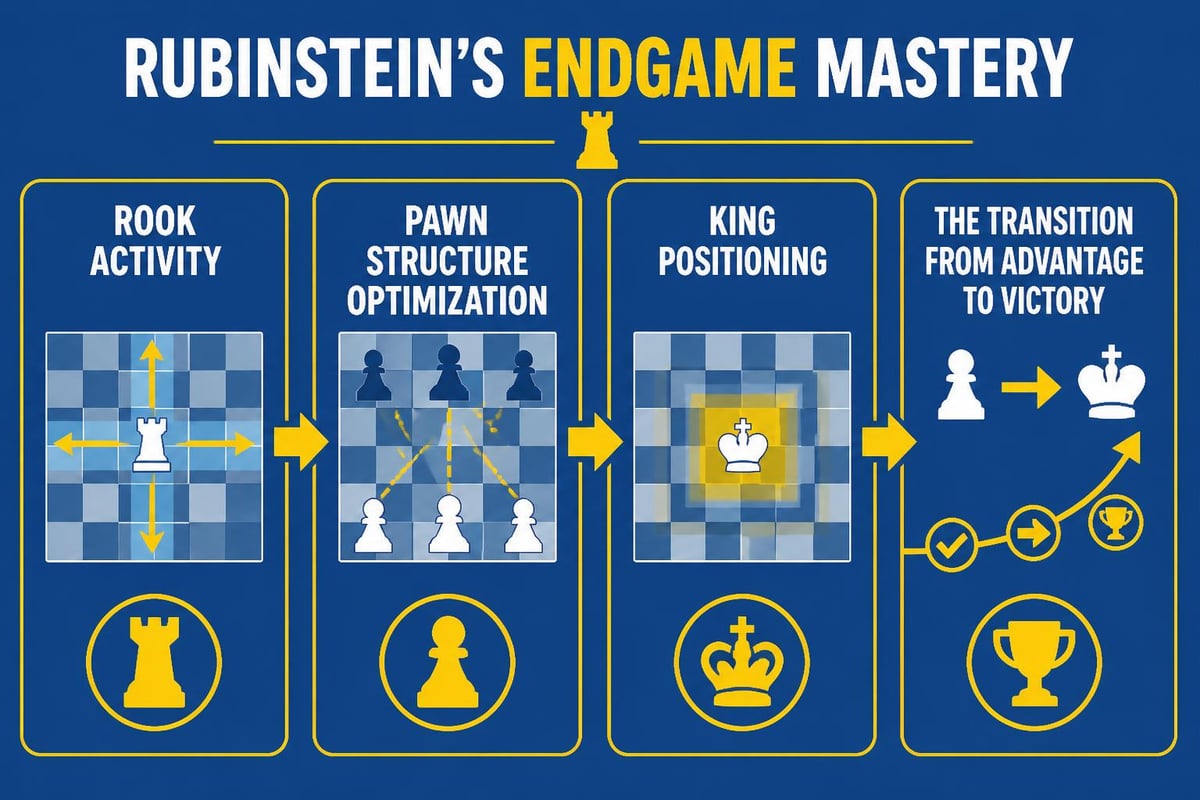
Key Principles of Rubinstein's Endgame Play
When you study Rubinstein's endgames, certain themes emerge repeatedly. These aren't just abstract concepts but practical techniques you can apply in your own games:
- Rook activity over material: Rubinstein often sacrificed pawns to activate his rooks
- King centralization: He understood the king's power in the endgame better than his contemporaries
- Passed pawn creation: His ability to generate and support passed pawns was exceptional
- Patience and precision: No premature breaks or hasty decisions
The detailed analysis of his endgame techniques reveals methods that remain relevant today. If you're working on your endgame skills, examining how Rubinstein converted small advantages into wins will teach you more than dozens of theoretical positions.

Positional Understanding That Changed Chess
Beyond the endgame, Rubinstein's positional play influenced generations of chess players. He had an intuitive grasp of piece coordination and pawn structures that seemed almost magical to his opponents. When facing akiba rubinstein across the board, you couldn't rely on tactical complications to save you because he'd simply outmanoeuvre you strategically.
His games often featured what we now call "quiet moves," subtle improvements in piece placement that slowly but surely built up overwhelming advantages. This approach requires deep understanding, not just calculation, which is why studying his games can dramatically improve your positional awareness.
The Rubinstein Attack in the French Defense
One of Rubinstein's lasting contributions to opening theory is the system bearing his name in the French Defense. After the moves 1.e4 e6 2.d4 d5 3.Nc3 dxe4 4.Nxe4, White can follow up with Nf3, c3, and Bd3, creating a solid setup that controls key central squares.
This strategic approach embodies Rubinstein's philosophy perfectly. It's not about immediate tactics or forcing sequences. Instead, it's about building a position where your pieces work harmoniously together, restricting your opponent's counterplay while maintaining flexibility for future plans.
If you're exploring different defensive systems, comparing strategies like those found in various opening repertoires can help you understand why Rubinstein's methodical approach worked so effectively.
Strategic Themes Worth Studying
What can modern players learn from akiba rubinstein? Quite a lot, actually. His games are masterclasses in several crucial aspects of chess strategy that remain just as important in 2026 as they were over a century ago.
Prophylactic Thinking
Rubinstein excelled at preventing his opponent's plans before they could materialize. He didn't just look for his own threats; he constantly asked himself what his opponent wanted to do and how to stop it. This prophylactic thinking is essential for advanced chess understanding.
The steps to incorporate this into your thinking:
- Identify your opponent's most dangerous piece or plan
- Calculate what would happen if you allowed it
- Find a move that prevents or minimizes that threat
- Only then look for your own active possibilities
- Balance prevention with progress
Piece Coordination Over Material
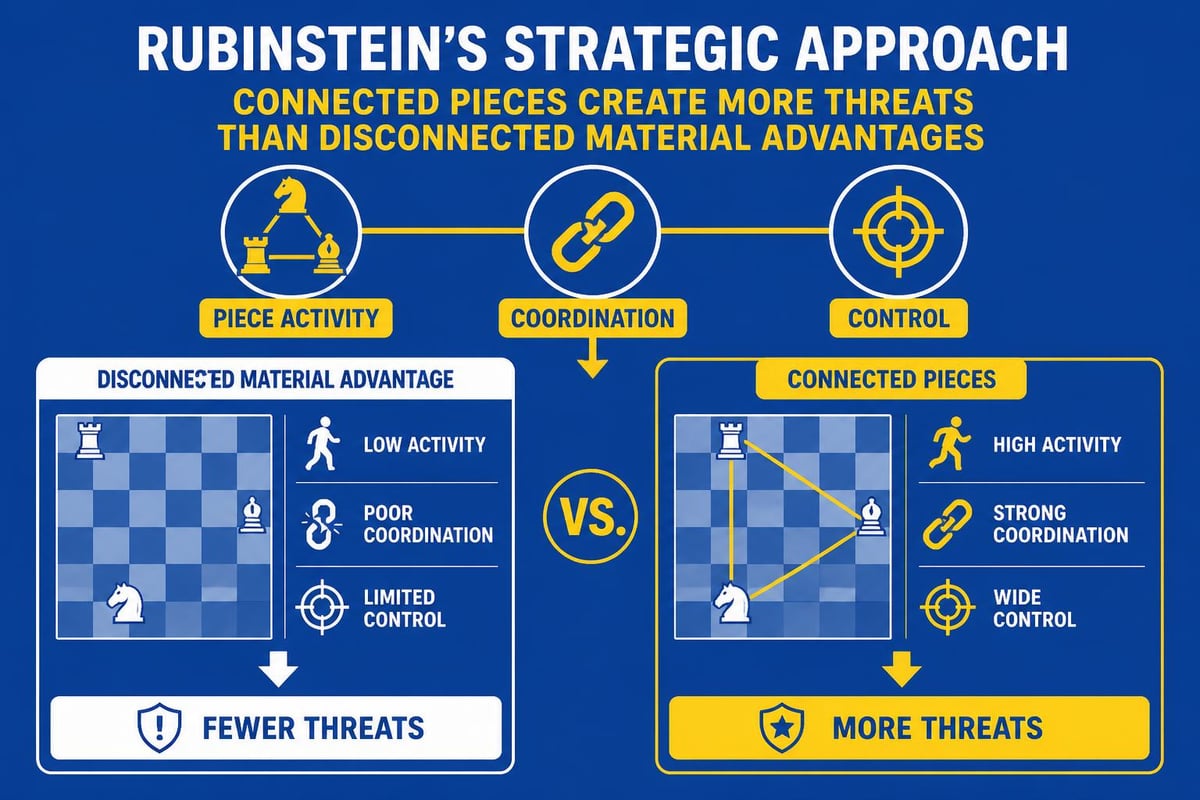
Throughout his career, Rubinstein demonstrated repeatedly that harmonious piece play beats extra material. He'd cheerfully sacrifice pawns if it meant his pieces could dominate the board. This principle challenges the beginner's instinct to grab everything available.
| Rubinstein's Priority | Traditional Thinking |
|---|---|
| Active pieces first | Count material first |
| Dynamic potential | Static evaluation |
| Long-term coordination | Immediate gains |
| Restricting opponent | Maximizing own space |
The World Championship That Never Was
Here's the tragic part of Rubinstein's story. Despite his overwhelming tournament success and his status as the logical challenger to Lasker, akiba rubinstein never got his world championship match. Various factors contributed to this, including financial difficulties in organizing such an event and the outbreak of World War I in 1914.
By the time conditions stabilized after the war, Rubinstein's form had declined. He began experiencing severe anxiety and psychological difficulties that affected his play. The player who once dominated the chess world struggled in tournaments during the 1920s and beyond.
Mental Health in Competitive Chess
Rubinstein's struggles highlight something we understand better today: the immense psychological pressure of elite competition. He reportedly developed what we'd now recognize as anxiety disorders, including debilitating fears that made tournament play increasingly difficult.
This aspect of his career reminds us that chess mastery isn't just about calculating variations or understanding strategy. Mental resilience matters enormously. The profile of Rubinstein's achievements and challenges provides context for understanding how psychological factors influenced his later career.
Games That Define a Legacy
Let's talk about some specific games that showcase why akiba rubinstein remains studied today. His combinations weren't flashy, but they were devastatingly effective because they emerged logically from superior positions.
Rubinstein vs. Rotlewi, 1907
This game features what many consider one of the most brilliant combinations in chess history. Rubinstein's queen sacrifice followed by a rook manoeuvre forced checkmate in a position that looked relatively normal just moves earlier. The beauty lies not in the sacrifice itself but in how naturally it flowed from his positional buildup.
The collection of Rubinstein's notable games demonstrates this pattern repeatedly: quiet positional play suddenly erupting into tactical brilliance.
Lessons from His Best Wins
When analyzing Rubinstein's victories, notice how he:
- Built up pressure gradually rather than forcing immediate confrontations
- Improved his worst-placed piece systematically
- Created multiple weaknesses in the opponent's position
- Only struck tactically when the position was completely ripe
These principles apply whether you're playing slow classical games or studying advanced strategic concepts in your training routine.
Rubinstein's Opening Contributions
While best known for his endgames, akiba rubinstein also contributed significantly to opening theory. Beyond the Rubinstein Attack in the French Defense, he developed various systems and demonstrated how to handle many different positions with strategic depth.
His approach to the Queen's Gambit Declined, for instance, showed methods that remain standard today. The idea of developing pieces harmoniously, fighting for central control, and maintaining flexibility influenced how generations of players approach classical openings like the Queen's Gambit.
Practical Opening Philosophy
Rubinstein's opening play embodied several key principles that work wonderfully for club players:
- Solid development over aggressive pawn-grabbing
- Control of central squares with pieces and pawns
- Delaying committal decisions until necessary
- Creating positions with clear long-term plans
The Rubinstein Legacy in Modern Chess
How does akiba rubinstein influence chess in 2026? Enormously, though perhaps not as obviously as players like Fischer or Kasparov. His fingerprints are all over modern endgame theory and positional understanding.
Today's grandmasters still study his games to understand subtle strategic concepts. Computer analysis has validated many of Rubinstein's intuitive judgements, proving that his positional understanding was objectively sound, not just aesthetically pleasing. The analysis of his peak playing years reveals techniques that translate directly to contemporary chess.
What Modern Players Can Learn
If you're trying to improve your chess systematically, Rubinstein's games offer incredible value. They teach you to think strategically, to value piece activity, and to convert advantages methodically. These skills matter at every level, from club player to titled master.
His games also demonstrate something crucial: chess mastery comes from understanding principles, not memorizing variations. While opening theory has exploded since Rubinstein's time, the strategic concepts he employed remain timeless.
Training Methods Inspired by Rubinstein
How can you incorporate Rubinstein's wisdom into your training? Here are practical approaches that align with his strategic philosophy:
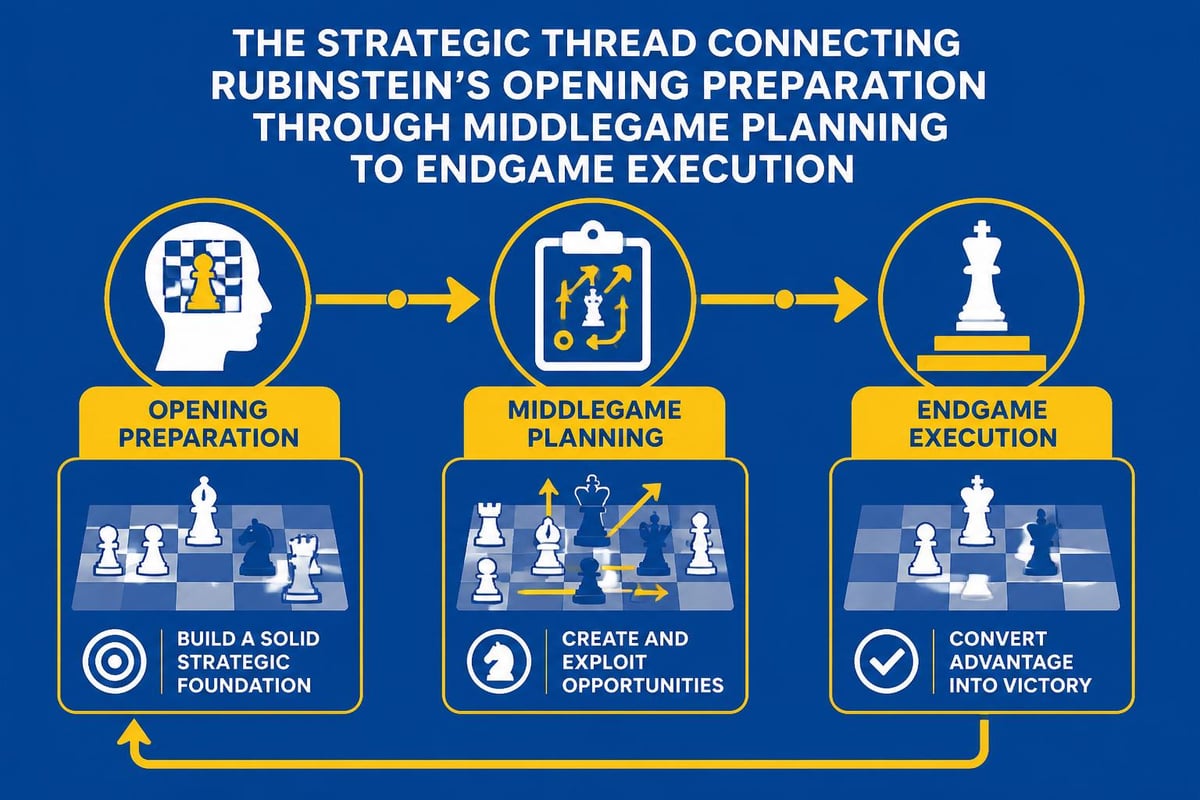
Study complete games, not just fragments: Rubinstein's brilliance emerges over entire games, showing how advantages accumulate. Don't just replay the moves; try to understand the strategic thread connecting opening to endgame.
Focus on endgame technique: Dedicate serious time to studying basic endgames. Rubinstein's ability to convert slight advantages came from mastering fundamental positions that many players neglect.
Practice prophylactic thinking: In your games, consciously ask what your opponent wants to do. This habit, central to Rubinstein's play, will improve your results immediately.
Analyze quietly: Not every position demands forcing tactics. Learn to recognize when quiet improvement is superior to aggressive complications.
When you're working through structured chess improvement resources, incorporating these methods will accelerate your development significantly.
Understanding Why He Matters Today
In an era dominated by computer analysis and opening databases, why should you study a player from the early 1900s? Because akiba rubinstein understood chess in ways that transcend calculation and memorization. His games teach strategic thinking, positional judgement, and endgame technique at the highest level.
Modern resources make studying historical masters easier than ever. You can replay games with computer analysis, read annotated collections, and watch video explanations of classic positions. This accessibility means Rubinstein's legacy continues influencing players worldwide, helping them develop the deep understanding that separates strong players from merely well-prepared ones.
The practical benefits are clear: better endgame skills, improved positional understanding, and strategic depth that serves you in every game you play. These aren't abstract benefits but concrete improvements that translate to rating points and tournament success.
Studying masters like Akiba Rubinstein reveals that chess excellence comes from understanding fundamental principles deeply rather than superficial knowledge of many variations. His endgame mastery, positional play, and strategic thinking offer invaluable lessons for anyone serious about improvement. Whether you're working on your endgame technique or developing strategic understanding, Chess Cheat Sheets provides the streamlined guides and resources you need to master these concepts efficiently, helping you translate classical wisdom into modern results without overwhelming study demands.


