
Are you ready to unlock the secrets the chess elite will use to dominate in 2026? The gap between casual players and true competitors often comes down to one thing: mastery of advanced chess moves that shift the balance at every stage of the game.
Chess is always evolving, and staying ahead means more than knowing the basics. It means learning the subtle, sophisticated techniques that decide games at the highest level. You do not have to be a grandmaster to learn them—just curious and committed.
In this guide, you will discover seven advanced chess moves that are defining the modern game. We will break each one down with clear explanations, real examples, and practical tips, so you can start using them right away.
Ready to step up? Let’s explore tactical combinations, strategic maneuvers, defensive resources, and innovative ideas that will set you apart from the crowd.
The Importance of Advanced Chess Moves in Modern Play
Chess is evolving faster than ever, and the secrets to success are shifting. If you want to keep up, understanding advanced chess moves is no longer optional. These moves are the secret sauce that separates top players from the rest, whether you play online, at your local club, or in tournaments.
The Evolving Chess Landscape
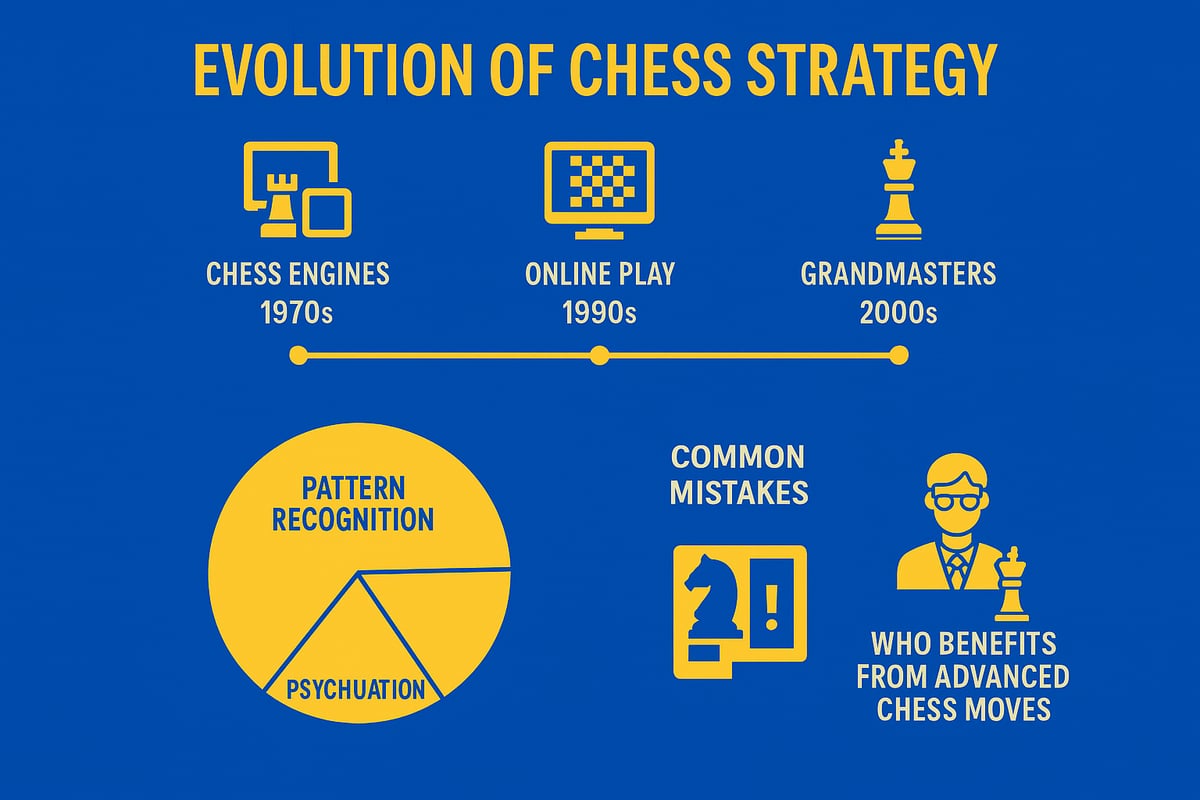
Over the past decade, chess has changed dramatically. Powerful engines and vast databases have raised the bar for everyone, making advanced chess moves the new standard. Online play lets you face strong opponents worldwide, exposing you to cutting-edge strategies every day.
Modern grandmasters rely on deep preparation and creative solutions at the board. They study opening novelties, engine-inspired ideas, and subtle resources that were barely known years ago. If you want to keep up, you need to embrace the world of advanced chess moves.

Why Advanced Moves Matter
Have you noticed how elite players squeeze wins from positions that seem equal? The answer is often advanced chess moves. These subtle maneuvers turn drawn games into victories by exploiting small advantages.
You will see these moves in every phase: openings that set deep traps, middlegames where a hidden tactic flips the script, and endgames where a single pawn break decides everything. Recent top-level games are full of moments where advanced chess moves made all the difference.
Skills Developed Through Advanced Moves
Mastering advanced chess moves builds essential skills like pattern recognition and deep calculation. You start spotting opportunities others miss and gain a psychological edge because you’re prepared for surprises.
If you want to dive deeper into the mindset and techniques behind these skills, check out Advanced Chess Strategies and Tactics for more examples and ideas. Over time, you’ll become more adaptable and able to handle complex positions with confidence.
Common Mistakes When Learning Advanced Moves
It’s easy to get carried away when learning advanced chess moves. Here are a few common pitfalls to watch for:
| Mistake | Why It Hurts Your Game |
|---|---|
| Overcomplicating positions | Creates unnecessary risks |
| Using tactics out of context | Leads to blunders |
| Forgetting basic principles | Weakens your foundation |
Stay grounded in chess fundamentals, and remember: advanced chess moves work best when used with a clear purpose.
Who Should Learn These Moves?
Are advanced chess moves just for grandmasters? Not at all. Club players, tournament competitors, and anyone serious about improvement can benefit from mastering these techniques.
Even if you’re an intermediate player, adding a few advanced chess moves to your toolkit will help you spot hidden chances and defend tricky positions. The sooner you start, the faster you’ll see results in your games.
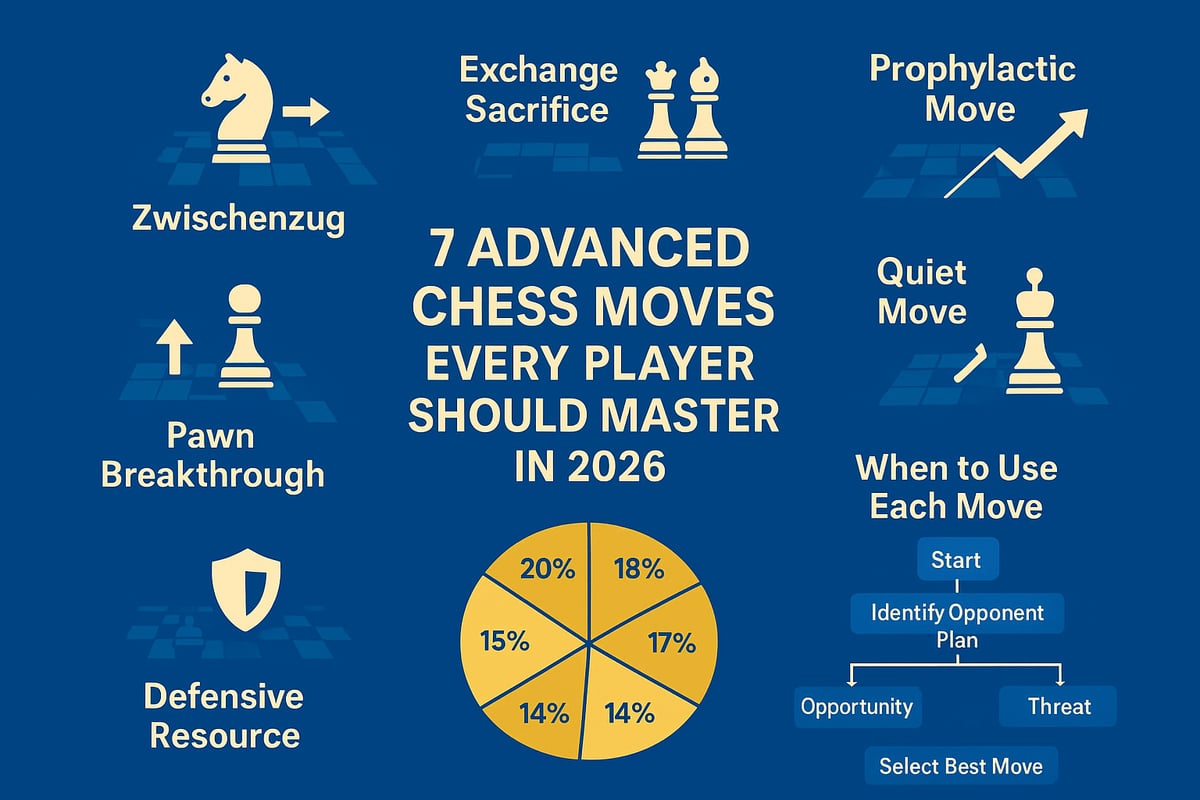
7 Advanced Chess Moves Every Player Should Master in 2026
If you want to take your game to the next level, it’s time to dive deep into the world of advanced chess moves. These seven techniques are the backbone of elite play in 2026. Whether you’re aiming for tournament glory or just want to outsmart your toughest rival, mastering these moves will give you that critical edge. Let’s break down each one with practical examples and actionable tips.
1. The Zwischenzug (Intermezzo)
Ever been surprised by an unexpected move that throws your plans off track? That’s the power of the zwischenzug, also known as the intermezzo. This advanced chess move is all about inserting a surprising intermediate move right in the middle of a seemingly forced sequence.
Imagine you’re about to recapture a piece, but suddenly, your opponent plays a check or threatens something even bigger. This forces you to respond, and the whole sequence shifts in their favor. Zwischenzugs are game-changers, especially when both players are calculating deep lines.
Why is the zwischenzug so powerful?
- It disrupts your opponent’s calculations.
- Can turn equal positions into winning ones.
- Often leads to unexpected material gains.
Let’s look at a famous example. In the 1953 Candidates Tournament, Bronstein played a spectacular zwischenzug against Boleslavsky. Instead of a routine recapture, he inserted a check that forced Boleslavsky’s king to move, completely changing the evaluation of the position.
Here’s a quick summary table:
| Scenario | Without Zwischenzug | With Zwischenzug |
|---|---|---|
| Material outcome | Equal | Advantage for initiator |
| Opponent’s calculation | Predictable | Disrupted |
| Tactical opportunities | Fewer | Increased |
To master zwischenzugs, train yourself to pause before making automatic recaptures. Ask, “Is there a forcing move here that changes the sequence?” This habit will help you spot advanced chess moves that others miss.
Zwischenzugs require sharp calculation and an awareness of all the tactical resources on the board. Start practicing with puzzles that highlight these themes, and you’ll soon see your calculation skills and tactical vision soar.
2. The Exchange Sacrifice
Ready to give up a rook for a minor piece and still come out ahead? The exchange sacrifice is one of the most dramatic advanced chess moves in a strong player’s toolkit. It’s not just about material—it’s about long-term compensation, strategic control, and piece activity.
So, why would anyone willingly lose a rook for a bishop or knight? The answer lies in the positional benefits. Sometimes, an exchange sacrifice opens key lines, activates your remaining pieces, or weakens your opponent’s pawn structure.
Karpov and Kasparov were famous for their fearless exchange sacrifices. In one classic battle, Kasparov sacrificed a rook on c3 to unleash a devastating attack on Karpov’s king. Modern grandmasters use this technique to break through stubborn defenses or to transform closed positions.
When should you consider this advanced chess move?
- In closed positions where your minor piece will dominate.
- When you can seize control of critical squares.
- If your opponent’s rook is trapped or inactive.
Here’s a checklist to help you decide:
- Is there a clear path to activate your minor piece?
- Will the sacrifice open lines for your attack?
- Can you weaken your opponent’s king or pawn structure?
Of course, there’s always risk involved. Make sure the compensation is real. If you’re not sure, calculate as far as you can, then trust your judgment.
If you want to deepen your understanding, check out Advanced Chess Tactics by Lev Psakhis for practical examples and strategic guidance on these sacrifices.
3. The Prophylactic Move
Have you ever made a move just to stop your opponent’s idea before it even started? That’s the art of the prophylactic move. It’s a subtle but incredibly important part of advanced chess moves, and it’s what separates casual players from true strategists.
Prophylaxis is all about asking, “What does my opponent want to do next?” Instead of only focusing on your own plans, you anticipate threats and neutralize them before they become problems. This approach is a hallmark of world champions like Tigran Petrosian and Magnus Carlsen.
Petrosian was famous for his king moves, quietly sidestepping potential checks. Carlsen often plays quiet pawn advances to restrict his opponent’s pieces, making it almost impossible for them to find active plans.
Why incorporate this advanced chess move into your game?
- You gain a psychological edge, as your opponent’s plans fizzle out.
- Your pieces become more flexible, ready for both defense and attack.
- You avoid falling into tactical traps or losing time to threats.
How do you spot prophylactic opportunities?
- Look at your opponent’s most dangerous ideas.
- Find simple moves that prevent those ideas without weakening your position.
- Balance defense with the ability to strike back when the time is right.
Prophylactic moves might not be flashy, but they’re essential for controlling the flow of the game. If you want to outmaneuver your rivals, make this concept a regular part of your thinking process.
4. The Pawn Breakthrough
Is your position locked up with pawns, and you’re not sure how to break through? The pawn breakthrough is one of those advanced chess moves that can turn a quiet game into a tactical explosion.
The idea is simple: by advancing or sacrificing a pawn, you open lines for your pieces and create new threats. Sometimes, just one pawn move is enough to break your opponent’s defenses wide open.
Let’s look at a classic endgame example. Imagine both sides have pawns on the kingside, locked up. Suddenly, you play g4, sacrificing a pawn to open the g-file. Your rook springs to life, and the game shifts in your favor.
Modern engines have taken this concept to new heights. Today’s grandmasters use pawn breakthroughs not just in endgames, but in the middlegame too. They’ll sacrifice a pawn on the queenside to open lines for their bishops or rooks, or push a central pawn to create chaos.
When should you look for this advanced chess move?
- When your pieces are stuck behind your own pawns.
- If the position seems static, and you need to shake things up.
- When you spot a tactical opportunity to break open the king’s defenses.
Calculation is key. Before sacrificing, make sure you can follow up with threats or piece activity. If you get it right, a pawn breakthrough can completely change the course of the game.
Try setting up training positions where you practice recognizing and executing pawn breakthroughs. The more you see the patterns, the more natural this advanced chess move will become.
5. The Quiet Move (Luft or Waiting Move)
Sometimes, the best move is the one your opponent doesn’t expect. The quiet move—whether it’s creating luft for your king or repositioning a piece—can be just as deadly as a direct attack. This advanced chess move is all about subtlety and patience.
What does a quiet move look like? Instead of launching an obvious threat, you improve your position, set a trap, or give your king some breathing room. For example, in a tense middlegame, you might play h3 or g3 to prevent a back-rank mate or stop a knight from jumping in.
Quiet moves often catch your opponent off guard. They’re looking for fireworks, but you quietly tighten the screws, waiting for the right moment to strike.
Here’s why you should add this advanced chess move to your arsenal:
- It helps you avoid tactical blunders, like back-rank mates.
- You can lure your opponent into overcommitting.
- Sometimes, a quiet move sets up a powerful tactic on the next turn.
Here’s a quick checklist:
- Are you about to get back-rank mated? Give your king an escape square.
- Is there a way to reposition a piece to a better square without forcing anything?
- Can you wait for your opponent to make a mistake before you commit?
Defensively, quiet moves are essential. In some endgames, a single waiting move puts your opponent in zugzwang, forcing them to make a losing move. Practice recognizing when a quiet move is stronger than a flashy one, and you’ll find your results improving fast.
6. The Defensive Resource: Perpetual Check and Fortress
What if you’re in a tough spot, under attack, and facing defeat? Sometimes, advanced chess moves aren’t about winning, but about saving a half-point from the jaws of defeat. Perpetual check and fortress are two classic defensive resources every serious player must know.
A perpetual check happens when you can repeatedly check the opponent’s king, with no way for them to escape. The game ends in a draw, even if you’re down material. Fortresses, meanwhile, are setups where your opponent simply can’t break through, no matter how hard they try.
Let’s look at some famous examples. In the 2008 World Championship, Anand saved a draw against Kramnik by finding a perpetual check in a lost position. In other cases, players build fortresses with pawns and minor pieces, creating an impenetrable wall.
When should you look for these advanced chess moves?
- If you’re losing and need to salvage a draw.
- When you spot a chance to set up an unbreakable defense.
- If your opponent’s king is exposed, and you can deliver endless checks.
Calculation is vital. Make sure your checks really are perpetual, or that your fortress cannot be broken by zugzwang or sacrifices.
Here’s a table to summarize:
| Defensive Resource | Typical Scenario | Goal |
|---|---|---|
| Perpetual Check | King exposed, material down | Draw by repetition |
| Fortress | Material deficit, no breakthrough | Draw by blockade |
Even the best players rely on these advanced chess moves to save points. Practice finding perpetual checks and fortress setups in your own games, so you’re never without hope.
7. The Double Attack (Fork)
What’s more satisfying than attacking two pieces at once and forcing your opponent to give something up? The double attack, or fork, is one of the most devastating advanced chess moves in every player’s toolkit.
The most common fork is with the knight, but queens, bishops, and even pawns can deliver this tactic. The key is to spot opportunities where you can threaten two (or more) valuable targets in a single move.
Classic games are full of beautiful forks. Think of Fischer’s famous knight fork against Spassky, or modern examples where a pawn advances and simultaneously attacks a rook and a queen.
Why is this advanced chess move so effective?
- It creates immediate, concrete threats.
- Forces your opponent to lose material or concede a strategic advantage.
- It can turn a balanced game into a win in a single move.
To get better at spotting double attacks, train your pattern recognition. Solve puzzles focused on forks, and pay attention to common piece placements that allow these tactics.
Combining double attacks with other tactics—like pins or skewers—can amplify the effect. For example, pinning a piece to the king, then forking it on the next move, is a classic combination.
If you want more practical examples and in-depth strategies, consider exploring advanced chess tactics books and resources. These will help you see how grandmasters weave double attacks seamlessly into their games.
By mastering the double attack, you’ll always have a weapon in your arsenal, ready to punish careless opponents and seize the initiative.
Integrating Advanced Moves into Your Training Routine
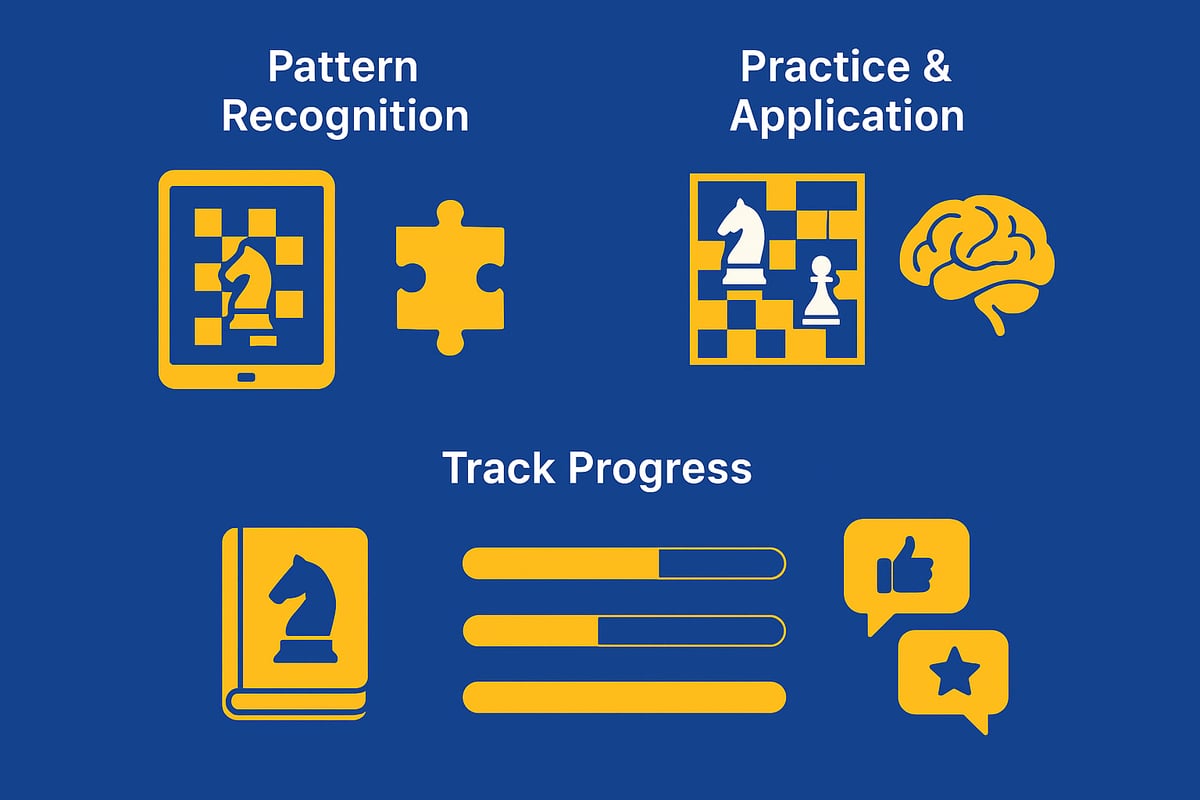
Looking to make advanced chess moves second nature? The secret is weaving focused training into your regular chess routine. When you break down the process into bite-sized steps, you’ll notice how quickly your skills and confidence grow.
Building Pattern Recognition
Pattern recognition is the backbone of mastering advanced chess moves. Want to spot tactical chances like a grandmaster? Start by solving themed puzzles every day. These help you internalize the patterns behind tactics such as forks, pins, and intermezzos.
You’ll also benefit from reviewing annotated games, pausing at critical moments to predict the next move. Try using digital resources or chess databases to focus on specific advanced motifs. For more on this, check out Improve Positional Skills with Chess Puzzles—it’s packed with tools to sharpen your eye for the hidden gems in every position.
Practical Application
Translating theory into practice is where advanced chess moves really come alive. Begin by analyzing your own games to spot missed opportunities. Did you overlook a quiet move or a pawn breakthrough?
Set up training positions from your games and test different continuations. This hands-on approach helps you recognize when to apply complex maneuvers. Incorporate advanced chess moves into your opening preparation too, so you’re ready to deploy them from the very first moves.
Tracking Progress and Avoiding Common Pitfalls
Keeping track of your journey makes improvement measurable. Use a chess journal to jot down positions, key lessons, and recurring mistakes.
Be mindful not to overuse advanced chess moves just for show. Focus on applying them when the position calls for it. Finally, seek feedback from stronger players or a coach to refine your approach and avoid getting stuck in bad habits.
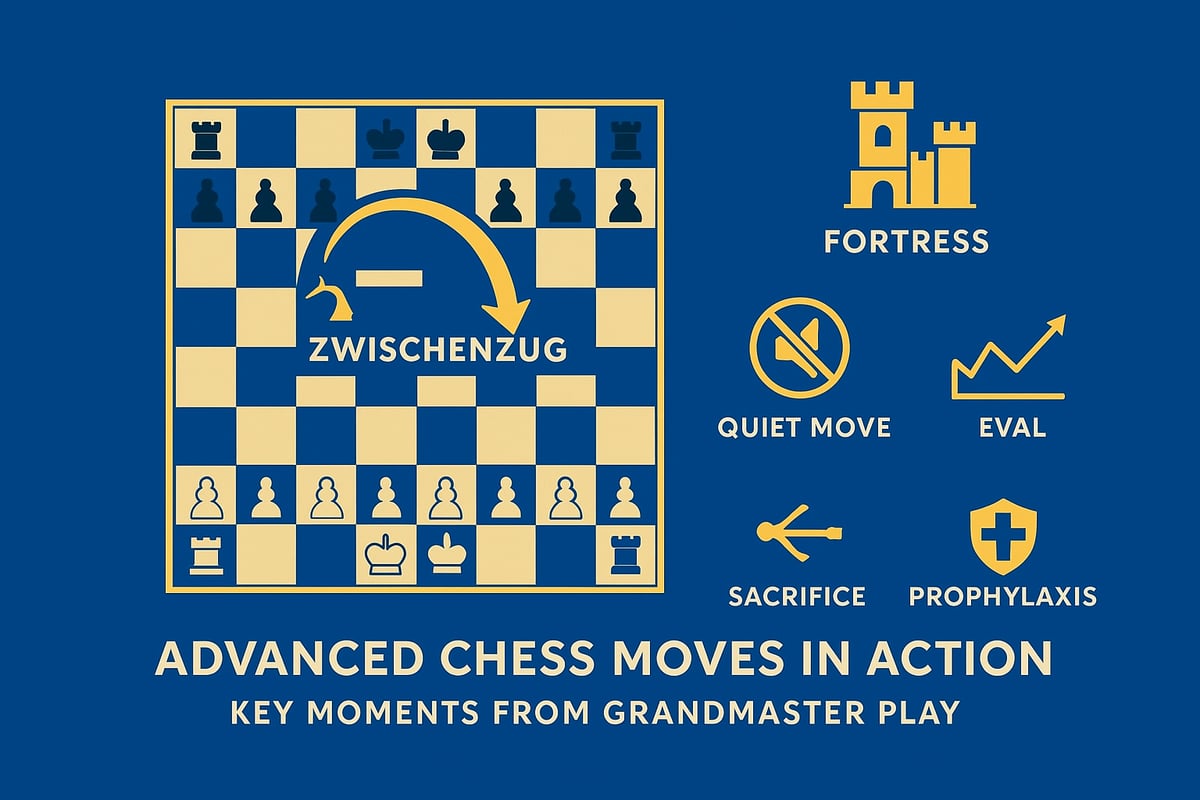
Advanced Chess Moves in Action: Illustrative Game Examples
When you watch top-level chess, seeing advanced chess moves unfold in real time is both inspiring and instructive. Take the 2023 clash between Carlsen and Firouzja—this game packed a punch with tactical shots and subtle maneuvers that turned the tables.
One remarkable sequence featured:
- A timely zwischenzug that disrupted expected exchanges.
- A quiet move improving piece placement before launching a decisive attack.
- A resourceful fortress setup in the endgame, saving a difficult position.
Each of these advanced chess moves played a crucial role, shifting the momentum and keeping both players on their toes. If you want to spot and use such techniques, study annotated grandmaster games and explore resources like the How to Play Chess Cheat Sheet for deeper insights into these strategies. Watching how the pros combine ideas in real battles is one of the best ways to integrate these concepts into your own play.
If you’re excited to put these advanced chess moves into practice but aren’t quite sure where to start, don’t worry—you’re not alone. We’ve all had that moment where a great move pops up in a game, only to realize we didn’t spot it in time. That’s why building a solid foundation with openings, tactics, and endgames is so important, especially as chess keeps evolving. If you want a shortcut to sharpening your game and turning these strategies into second nature, why not Get The FULL Chess Mastery Bundle? You’ll have everything you need to play with confidence—no endless studying required.


