

You've likely heard the old chess maxim: tactics are 99% of the game. But how do you actually develop the sharp tactical eye that separates confident players from those who constantly hang pieces? That's where structured practice comes in. The resource 1001 chess exercises for beginners has become something of a gold standard in chess education, and for good reason. It's not just another puzzle book gathering dust on your shelf-it's a systematic approach to building the pattern recognition skills that turn uncertain moves into confident strikes. Whether you're just learning to play chess or you've been stuck at the same level for months, understanding how to use these exercises effectively can completely transform your game.
What Makes 1001 Chess Exercises for Beginners Different
Here's something most chess books won't tell you: throwing random puzzles at yourself doesn't work. Your brain needs structure, repetition, and progressive difficulty to genuinely absorb tactical patterns. The 1001 Chess Exercises for Beginners workbook achieves this through carefully organized sections that build upon each other.
Think about how you learned maths at school. You didn't jump from addition straight to calculus, did you? The same principle applies here. This collection starts with fundamental tactical motifs-pins, forks, skewers-before progressing to more complex combinations. Each exercise reinforces the previous one, creating what psychologists call "spaced repetition" for your chess brain.
The Core Tactical Themes Covered
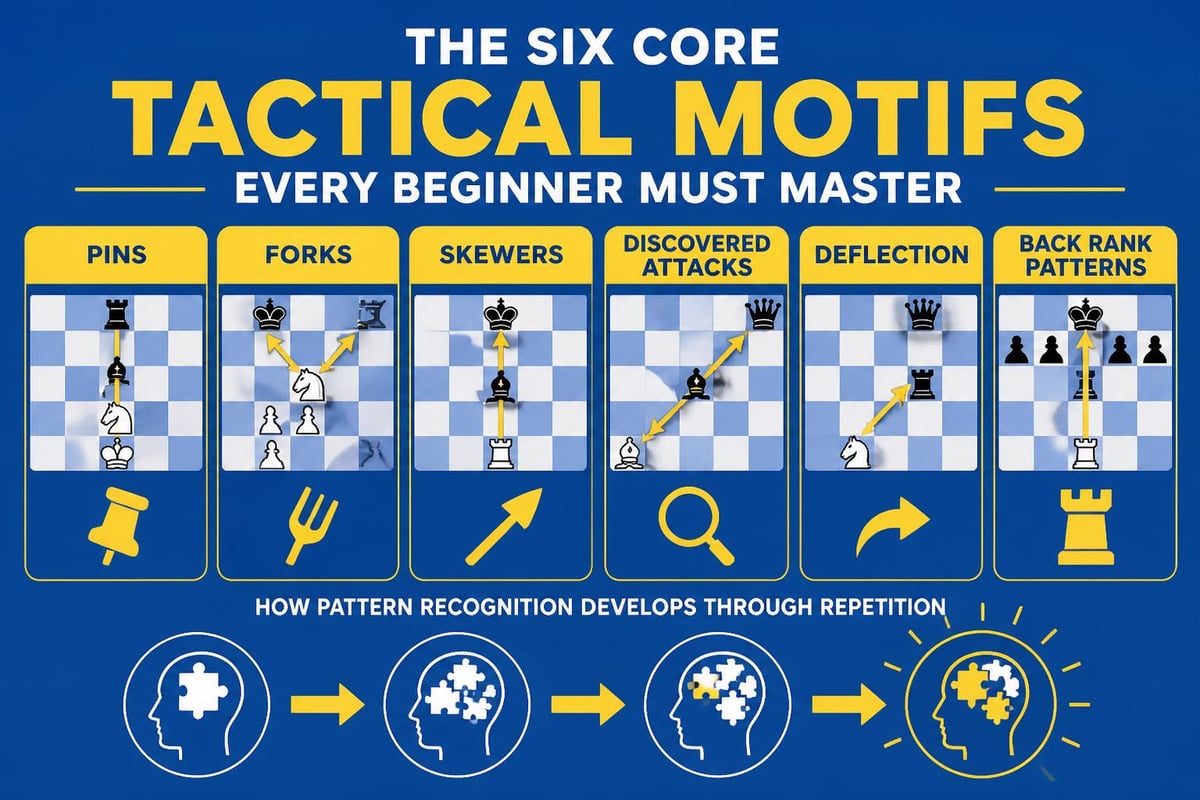
What exactly will you encounter in these exercises? Let's break down the essential categories:
- Pins and skewers: Learn to immobilize pieces and force devastating exchanges
- Forks and double attacks: Master the art of threatening multiple pieces simultaneously
- Discovered attacks: Understand how moving one piece can unleash another's power
- Removal of defenders: Identify when eliminating a key piece opens tactical opportunities
- Deflection and decoy: Force enemy pieces away from critical squares
- Back rank weaknesses: Exploit the most common beginner mistake
Each theme builds tactical awareness that transfers directly to your games. You'll start spotting opportunities three moves before your opponent even realizes they're in danger.
How to Structure Your Practice Sessions
Right, you've got the book. Now what? Simply flipping through pages won't cut it. You need a deliberate practice routine that maximizes retention whilst avoiding burnout.
Here's a practical approach that works brilliantly for most beginners:
- Start with 10-15 exercises daily rather than marathon sessions
- Set a timer for each puzzle (aim for 2-3 minutes initially)
- Mark incorrect answers but don't look at solutions immediately
- Review missed puzzles the following day with fresh eyes
- Track your accuracy percentage weekly to measure improvement
This method prevents mental fatigue whilst building consistent improvement. Think of it like going to the gym-you wouldn't do 200 press-ups on day one, would you? Your chess muscles need the same gradual conditioning.
Creating a Personal Progress Tracker
Consider maintaining a simple spreadsheet with these columns:
| Date | Exercises Completed | Accuracy Rate | Themes Practiced | Notes |
|---|---|---|---|---|
| 2 May 2026 | 15 | 73% | Pins, Forks | Struggled with knight forks |
| 3 May 2026 | 15 | 80% | Skewers | Better recognition today |
| 4 May 2026 | 20 | 78% | Mixed Review | Pins still challenging |
This visual feedback loop keeps you motivated and highlights specific weaknesses requiring extra attention. You'll be amazed how patterns emerge when you track your progress systematically.

The Science Behind Tactical Pattern Recognition
Why does practicing 1001 chess exercises for beginners actually work? It's not magic-it's cognitive science. Your brain excels at pattern matching once it's seen enough examples. Chess tactics aren't about memorizing specific positions; they're about recognizing structural similarities across thousands of positions.
Research in chess psychology shows that strong players don't calculate faster-they recognize familiar patterns faster. When a grandmaster looks at a position, they're not calculating 20 moves deep on every turn. They're instantly identifying patterns they've seen hundreds of times before, which tells them where to look for tactics.
Each exercise in the collection serves as a training example for your pattern recognition system. The Google Books preview demonstrates how the workbook systematically introduces these patterns, ensuring your brain builds a comprehensive tactical library.
Combining Exercises with Visualization Training
Want to supercharge your results? Pair your tactical exercises with chess visualization exercises that strengthen your ability to calculate without moving pieces. This dual approach creates remarkably rapid improvement.
Try this: after solving an exercise on the board, close your eyes and replay the solution in your mind. Can you see the pieces moving clearly? This mental rehearsal cements the pattern far more effectively than passive review.
Common Mistakes When Working Through Tactical Exercises
Let's talk about what not to do, because I've seen countless beginners sabotage their own progress. The biggest mistake? Rushing through exercises just to tick them off your list. Sound familiar?
Quality trumps quantity every single time. Solving ten puzzles with genuine understanding beats mindlessly blitzing through fifty whilst your mind wanders. When you encounter a puzzle, force yourself to identify the tactical theme before calculating the solution. Ask yourself: "What's vulnerable here? Which pieces lack defenders? Where are the alignment weaknesses?"
The "Guess and Check" Trap
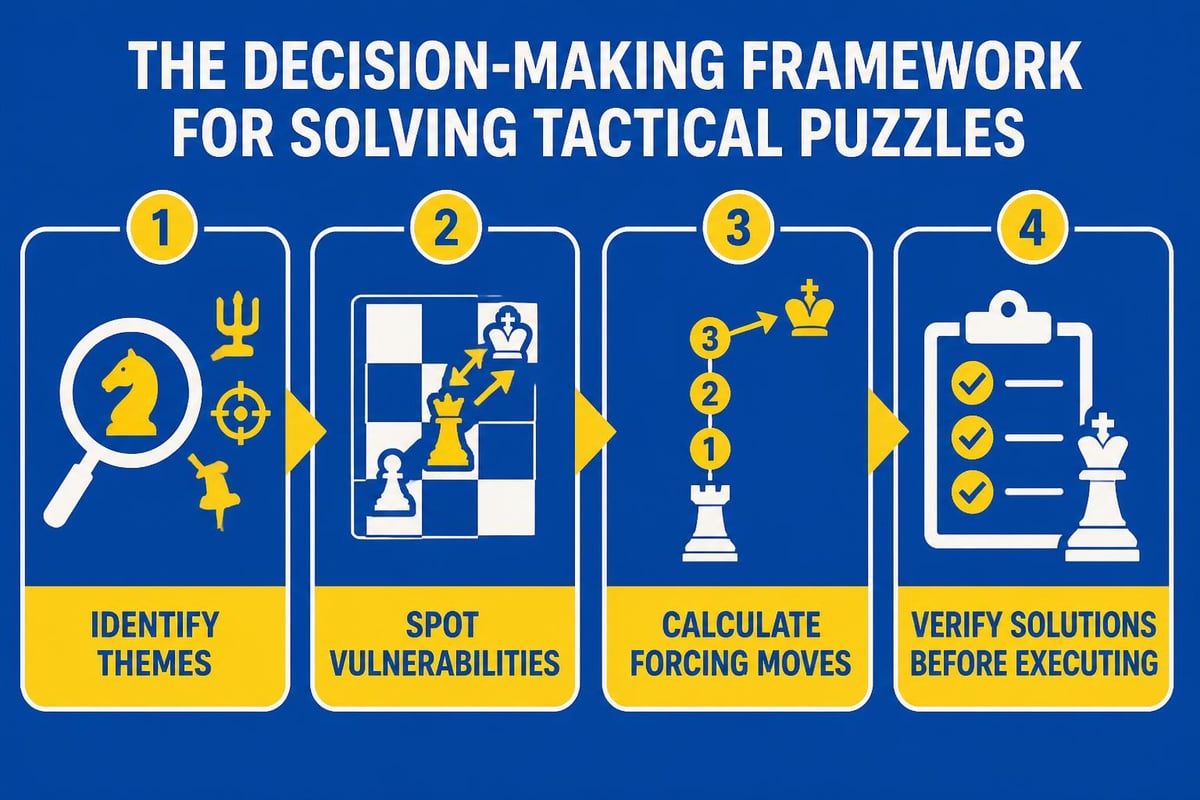
Another common pitfall is the guess-and-check approach. You spot a piece hanging, move it, and if that's wrong, try another piece. This develops zero transferable skills. Instead, follow this mental checklist:
- What tactical themes exist in this position?
- Which of my pieces can create threats?
- What's preventing the tactic from working right now?
- How can I remove that obstacle?
This analytical framework transforms each exercise from a puzzle into a learning opportunity. The structured approach at Chessity reinforces this methodical thinking through their interactive lessons.
Integrating Exercises with Opening Study
Here's where things get interesting. Many beginners treat tactics and openings as completely separate subjects. They're not. The tactical patterns you learn through 1001 chess exercises for beginners appear constantly in your opening play.
Consider the Italian Game, one of the most popular beginner openings. It's absolutely packed with tactical opportunities-discovered attacks from the bishop, knight forks on f7, pins along the e-file. When you've drilled these tactical motifs through exercises, you'll spot them instantly in your games.
The same applies to sharper openings. If you're studying the Sicilian Defense, you'll encounter countless tactical skirmishes. Players who've completed systematic tactical training navigate these complications confidently, whilst those without it stumble repeatedly.
Building an Integrated Study Schedule
Here's a weekly plan that balances tactical training with opening preparation:
| Day | Tactical Exercises | Opening Study | Game Analysis |
|---|---|---|---|
| Monday | 20 exercises (pins) | 30 min opening | Review 1 game |
| Tuesday | 20 exercises (forks) | Rest | Analyze losses |
| Wednesday | 20 exercises (mixed) | 30 min opening | Free play |
| Thursday | 15 exercises (review) | 45 min opening | Puzzle rush |
| Friday | 20 exercises (new) | Rest | Tournament prep |
This balanced approach ensures tactical sharpness whilst building opening knowledge. Notice the rest days for opening study? Your brain needs processing time.
Measuring Real Improvement in Your Games
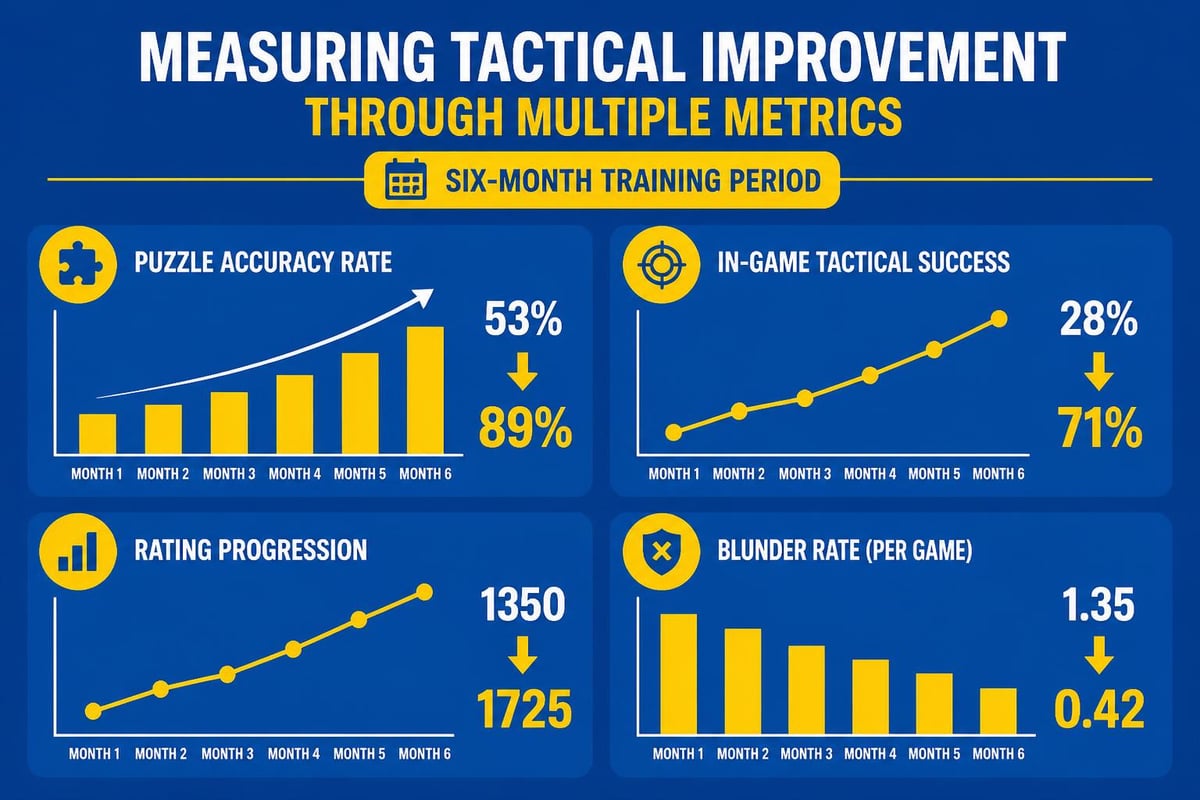
All this practice means nothing if it doesn't translate to the board, right? So how do you know if working through 1001 chess exercises for beginners is actually improving your play? Beyond your puzzle accuracy rate, watch for these concrete indicators:
You'll start noticing tactical opportunities in your games before your opponent does. Those "lucky" tactics your opponents used to find against you? Now you're spotting them first and avoiding the traps. Your blunder rate will decrease noticeably-you'll simply hang fewer pieces because your tactical radar has improved.
Track your rating over time, but don't obsess over daily fluctuations. Look for trends across months. Most players who complete tactical training systematically see a 100-200 rating point gain within six months. That's not a guarantee, but it's a realistic expectation with consistent effort.
Using Online Platforms to Test Progress
Platforms like Chessable offer the workbook in digital format, which can complement your physical book work. The digital version provides instant feedback and tracks your statistics automatically, showing improvement trends you might miss otherwise.
Consider mixing formats: work through physical exercises during focused study sessions, then use online tactical trainers for quick practice during breaks. This variety keeps training fresh whilst reinforcing the same underlying patterns.
Advanced Techniques for Maximum Retention
Once you've worked through several hundred exercises, your brain starts building that crucial pattern library. But how do you ensure those patterns stick permanently rather than fading after a few weeks? The answer lies in active recall and varied repetition.
Instead of simply redoing exercises you got wrong, try this: when you encounter a tactical theme in a real game, immediately note which exercise number from the book it resembled. This active connection between practice and application dramatically strengthens neural pathways. Your brain essentially says, "Aha! This is why we practiced those pin exercises!"
Another powerful technique: teach the concepts to someone else. Explaining why a particular tactic works forces you to articulate the underlying principles, which deepens your own understanding. Don't have a chess partner? Write out explanations in a journal or record yourself explaining the solution.
The Spaced Repetition Advantage
Space out your review sessions strategically. Research shows that reviewing material at increasing intervals-one day later, then three days, then a week, then a month-produces far better long-term retention than massed practice. When you miss an exercise, schedule it for review using this spacing pattern.
The second edition of 1001 chess exercises for beginners includes updated positions and themes that reflect modern chess understanding, making it even more relevant for today's players.
Adapting Exercises to Your Playing Style
Not all tactical patterns appear equally often in every opening system. If you primarily play positional openings like the London System, you'll encounter different tactical themes than someone who plays the sharp Sicilian variations.
This doesn't mean skipping certain exercise types-you need comprehensive tactical knowledge regardless of style. However, you might weight your practice toward themes common in your repertoire. London System players should particularly focus on:
- Minority attacks and pawn breaks that create tactical opportunities
- Knight outpost exploitation leading to forks and discovered attacks
- Weak square tactics around the opponent's king
- Bishop pair advantages creating pins and long-range threats
Meanwhile, if you're exploring advanced chess concepts, you'll want extra practice with complex combinative motifs that involve multiple tactical themes working together.
Troubleshooting Common Plateaus
Hit a wall where your accuracy rate isn't improving? That's completely normal. Progress isn't linear-you'll experience plateaus where improvement seems to stall. These periods are actually when your brain is consolidating previous learning before the next breakthrough.
When stuck, try these adjustments:
- Slow down further: Give yourself 5 minutes per puzzle instead of 2-3
- Switch themes: If you've been drilling pins for weeks, move to a different motif
- Reduce daily volume: Sometimes less is more when avoiding mental fatigue
- Add physical board work: If you've been using a screen, switch to a real board
- Review fundamentals: Revisit easier exercises to rebuild confidence
Remember, the goal isn't to complete all 1001 exercises as quickly as possible. The goal is to internalize tactical patterns so thoroughly that spotting them becomes automatic. That takes time and patience.
Complementary Resources and Next Steps
Whilst 1001 chess exercises for beginners provides exceptional tactical training, combining it with other resources creates a more comprehensive improvement program. Consider pairing your tactical work with endgame study, as many tactical opportunities arise from endgame patterns.
The Chess Openings Quiz at Chess Cheat Sheets helps you test your opening knowledge whilst identifying tactical themes within specific systems. This reinforces the connection between opening preparation and tactical awareness.
For visual learners, this YouTube guide on chess basics provides foundational knowledge that makes tactical concepts more intuitive. Understanding how pieces move optimally helps you spot when they're misplaced and vulnerable to tactics.
Building Your Personal Chess Library
Beyond tactical exercises, consider these complementary resources:
- Opening cheat sheets for quick reference during games
- Endgame manuals covering theoretical positions
- Annotated game collections showing tactics in context
- Strategy books explaining when to look for tactics
The free chess books available in PDF provide excellent supplementary material without additional cost. Mix tactical training with strategic understanding for well-rounded improvement.
How Long Until You See Results
Let's set realistic expectations. If you're working through 15-20 exercises daily with proper focus, you'll likely notice improved tactical awareness within three weeks. That doesn't mean you'll be spotting grandmaster-level combinations, but you'll catch more hanging pieces and simple two-move tactics in your games.
After three months of consistent practice, most players report that tactics feel less like searching for a needle in a haystack and more like recognizing old friends. You'll see a knight fork setup and think, "Oh, that's exercise 347!" The pattern recognition kicks in automatically.
Six months of dedicated work typically produces measurable rating improvement and a fundamental shift in how you approach positions. You'll stop playing hope chess and start playing pattern-recognition chess. That's when the real fun begins.
Working through 1001 chess exercises for beginners systematically builds the tactical foundation every improving player needs, transforming random puzzle-solving into structured skill development. Whether you're just starting out or looking to solidify your intermediate play, combining tactical training with comprehensive opening knowledge accelerates your progress dramatically. Chess Cheat Sheets complements your tactical work perfectly with streamlined guides, puzzles, and opening resources that help you connect tactical patterns to practical play, giving you everything you need to improve efficiently without overwhelming study commitments.


